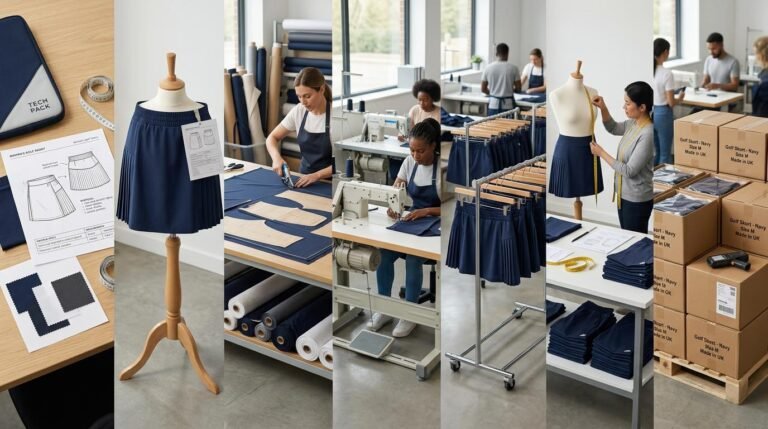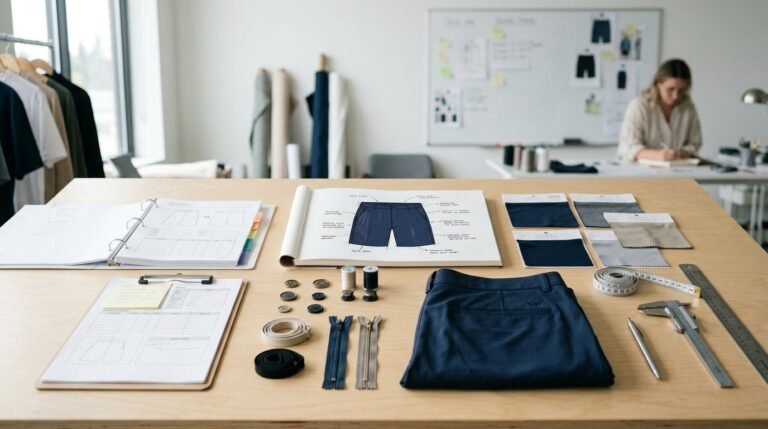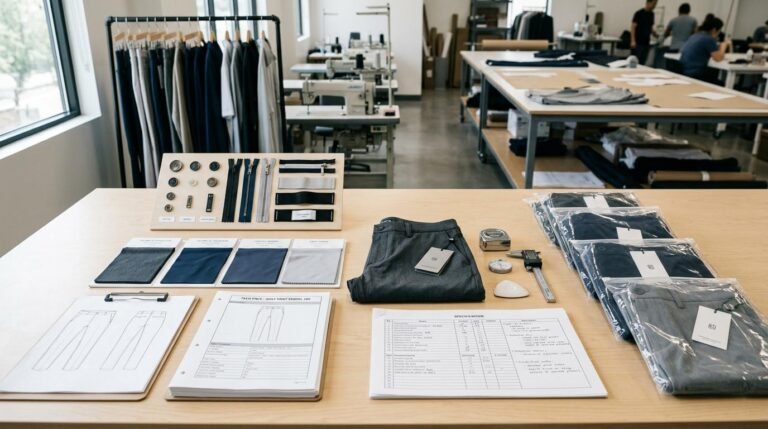
Starting a golf apparel brand does not require owning a factory, but it does require making the right product and manufacturing decisions early.
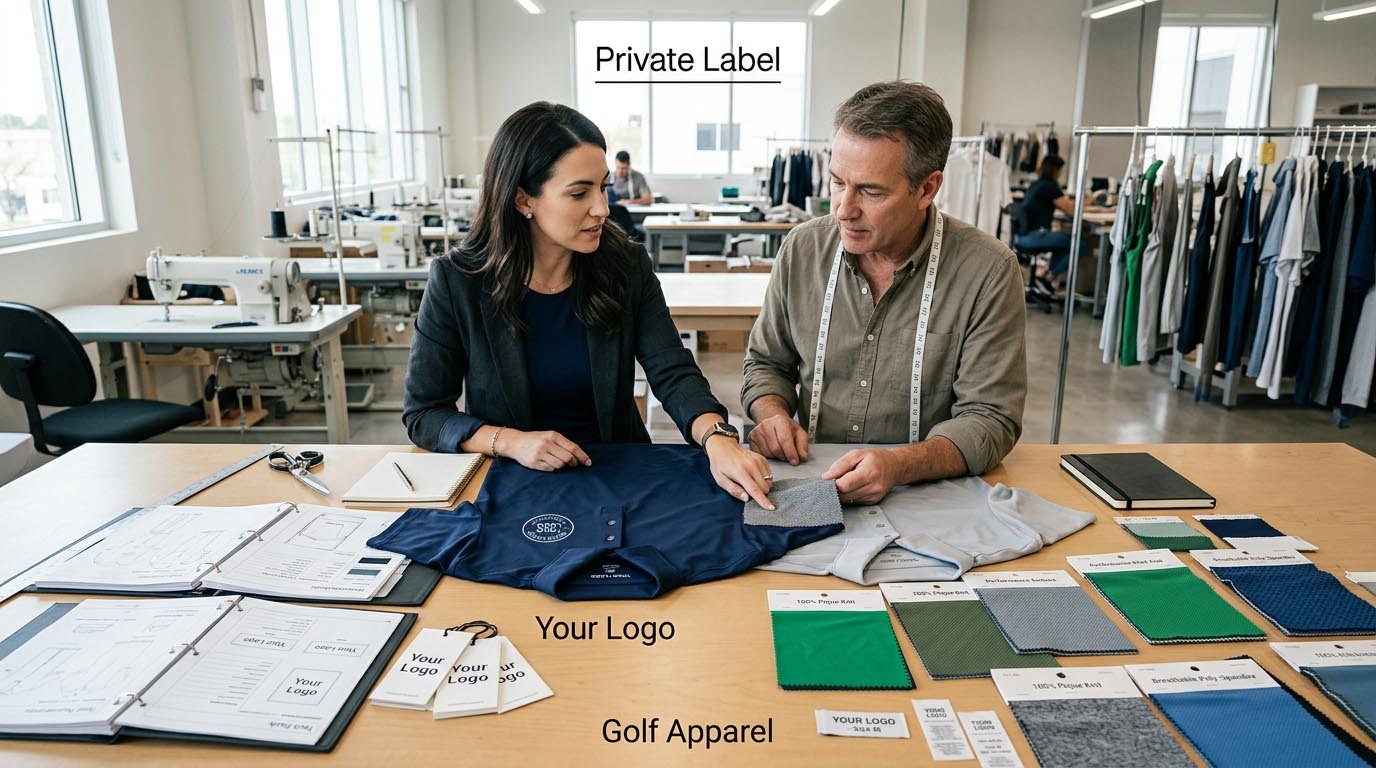
For most new brands, private label production is the most practical way to launch. It allows you to build your own brand identity, develop products under your name, and work with an experienced factory for sourcing, sampling, and bulk production.
In simple terms, private label golf apparel means a manufacturer produces golf clothing for your brand using your logo, labels, color direction, fit requirements, and product specifications.
This model works well for startups, growing ecommerce brands, golf lifestyle labels, clubs, and established companies expanding into golf.
At FUWAY, we work with performance and golf apparel projects from development to production. Some clients come to us with complete tech packs. Others only have reference products, sketches, or an idea of the market they want to target. In both cases, the real challenge is usually the same: turning a brand idea into a product line that is realistic to sample, cost, and manufacture well.
This guide explains how private label golf apparel works, which products are easiest to start with, what to customize, how to evaluate a manufacturer, and what first-time brands often overlook.
Quick Answer: What Is Private Label Golf Apparel?
Private label golf apparel is golf clothing made by a factory for your brand rather than sold under the factory's own name.
That usually means the manufacturer helps produce items such as:
- golf polos
- golf pants and shorts
- quarter-zips
- jackets and outerwear
- base layers
- accessories such as caps or simple soft goods
Your brand controls the market-facing identity, including:
- logo application
- main labels and size labels
- brand colors
- fit direction
- packaging
- product positioning
The manufacturer handles the production side, including fabric sourcing, sampling, pattern development, cutting, sewing, finishing, and quality control.
For most brands, private label sits between two simpler models:
- white label, where you add your logo to mostly ready-made products
- full custom development, where fabric, fit, trims, and construction are all built specifically around your product concept
Many first collections actually fall somewhere in between. A brand may start with existing performance fabrics and standard production-friendly silhouettes, then gradually move toward more customized development as volume grows.
How Private Label Golf Apparel Works
The private label process is usually more straightforward than new brands expect, but it still requires coordination at each stage.
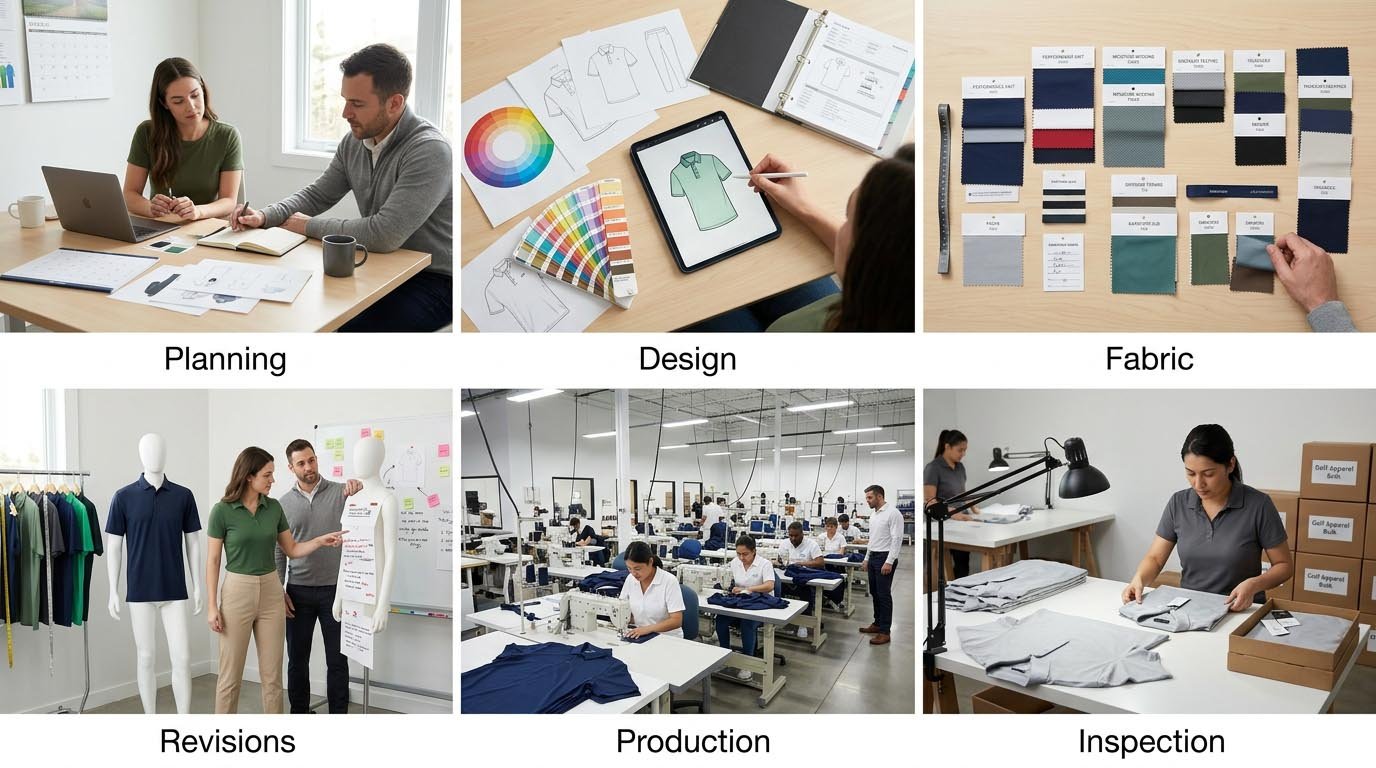
Most golf apparel projects follow a process like this:
- product planning
- design and specification review
- fabric and trim selection
- sample development
- sample revisions and approval
- bulk production
- inspection, packing, and shipment
1. Product planning
This is where the brand decides what it actually wants to launch.
That includes questions like:
- Which categories come first?
- Is the collection performance-focused, lifestyle-focused, or mixed?
- What price point is the brand targeting?
- Is the first launch intended for direct-to-consumer, retail, teamwear, or club sales?
- How many SKUs can realistically be supported?
This stage matters more than many founders think. A lot of first orders become difficult not because the brand lacks ideas, but because the launch is too broad too early.
2. Design and specification review
Some brands arrive with full tech packs. Others only provide reference garments, mood boards, logo files, and fit direction.
A manufacturer typically needs clarity on:
- garment type
- fabric direction
- fit expectation
- branding placement
- trim requirements
- color direction
- target quantity
If the information is incomplete, the factory may help fill in the gaps, but the more clearly the product is defined, the smoother the sampling process will be.
3. Fabric and trim selection
This stage usually includes:
- body fabric selection
- collar or rib choice if needed
- zipper, buttons, elastic, drawcord, or other trim decisions
- branding materials such as labels, hang tags, and packaging
For first-time brands, this is often where timing starts to shift. Fabric may be available quickly, but trims, labels, and custom packaging can add lead time.
4. Sampling
The factory makes a sample for review.
Depending on the product and the stage of development, this may be:
- a development sample
- a fit sample
- a salesman sample
- a pre-production sample
At this stage, the brand should review:
- overall silhouette
- fabric feel
- fit balance
- logo placement
- construction details
- color accuracy
- wash and wear response where relevant
5. Sample revisions
Very few projects move from first sample to bulk production without adjustment.
Common revision points include:
- body length
- sleeve length
- collar shape
- placket depth
- pocket placement
- logo size
- fabric substitution
- fit grading
This is normal. The key is to make revisions systematically rather than changing too many things at once.
6. Bulk production
Once the sample is approved and bulk details are confirmed, production begins.
At this point, the manufacturer generally locks in:
- final fabric
- final color
- trim details
- labeling
- size breakdown
- quantity by color and size
- packing method
This stage is where clear approvals matter most. Problems in bulk production often come from unclear approval history, late changes, or sample comments that were not documented properly.
7. Inspection and shipment
Before shipment, goods are typically checked for:
- workmanship
- measurements
- labeling accuracy
- quantity
- color consistency
- packing compliance
Depending on the brand and order size, inspection may be internal, third-party, or both.
What Products Should a New Golf Brand Start With?
For most new golf brands, the best starting point is not a full collection. It is a small, focused launch built around products that are easier to develop, easier to fit, and easier to sell repeatedly.
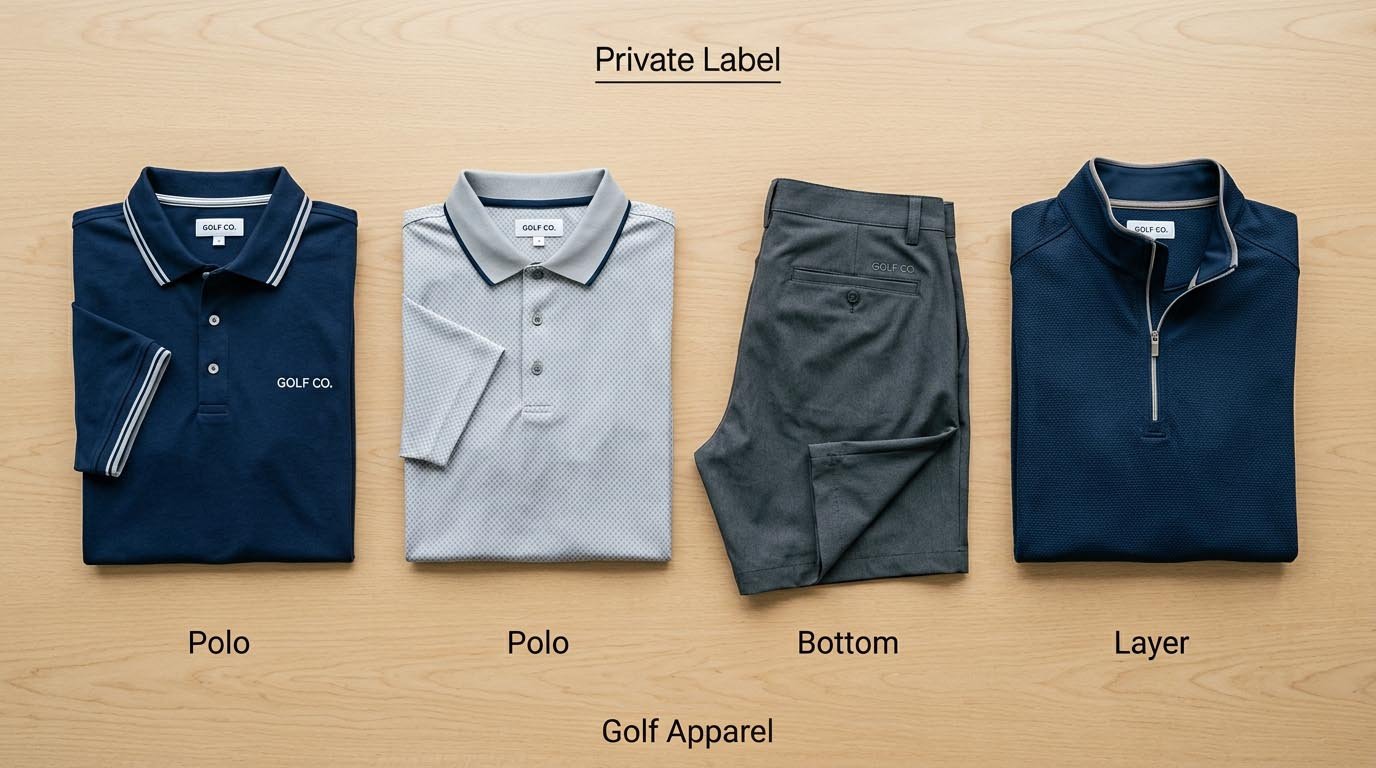
A practical first range often includes:
- 1-2 polo styles
- 1 bottom option such as pants or shorts
- 1 layering piece such as a quarter-zip or lightweight outer layer
Start with polos
Golf polos are often the most practical entry product for a new brand because they are:
- central to golf dress culture
- easier to fit than tailored bottoms
- suitable for multiple climates
- straightforward to brand
- repeatable across seasons
Polos also allow brands to establish visual identity through:
- collar shape
- placket construction
- fabric texture
- logo placement
- color direction
For many startups, polos are the safest category to develop first.
Add one bottom carefully
Pants and shorts are important, but they are also more fit-sensitive.
Compared with polos, bottoms usually involve more risk in:
- waistband comfort
- rise balance
- hip and thigh fit
- inseam consistency
- pocket construction
- grading across sizes
If your brand is just starting, one well-developed bottom style is usually better than multiple rushed ones.
Include one layering piece
A quarter-zip, lightweight jacket, or technical mid-layer can help your brand look more complete, but it should still be chosen carefully.
A good first layering piece is one that:
- works across seasons
- fits within your target price point
- does not require overly complex outerwear construction
- matches the look of the polos and bottoms
For many first launches, a quarter-zip or performance pullover is more manageable than a heavily technical jacket.
Do not start too wide
One of the most common mistakes new brands make is launching too many categories, too many colors, and too many style variations at once.
That creates pressure on:
- inventory
- fit approvals
- branding consistency
- cash flow
- production coordination
A smaller, cleaner first launch usually performs better than an oversized one with too many decisions layered into it.
Best Fabrics for Private Label Golf Apparel
Golf apparel depends heavily on fabric choice. A simple silhouette can still feel premium if the fabric performs well. A strong-looking design can fail quickly if the material feels wrong in wear.
For most golf apparel projects, the main fabric priorities are:
- comfort
- stretch
- breathability
- moisture management
- shape retention
- easy care
Polo fabrics
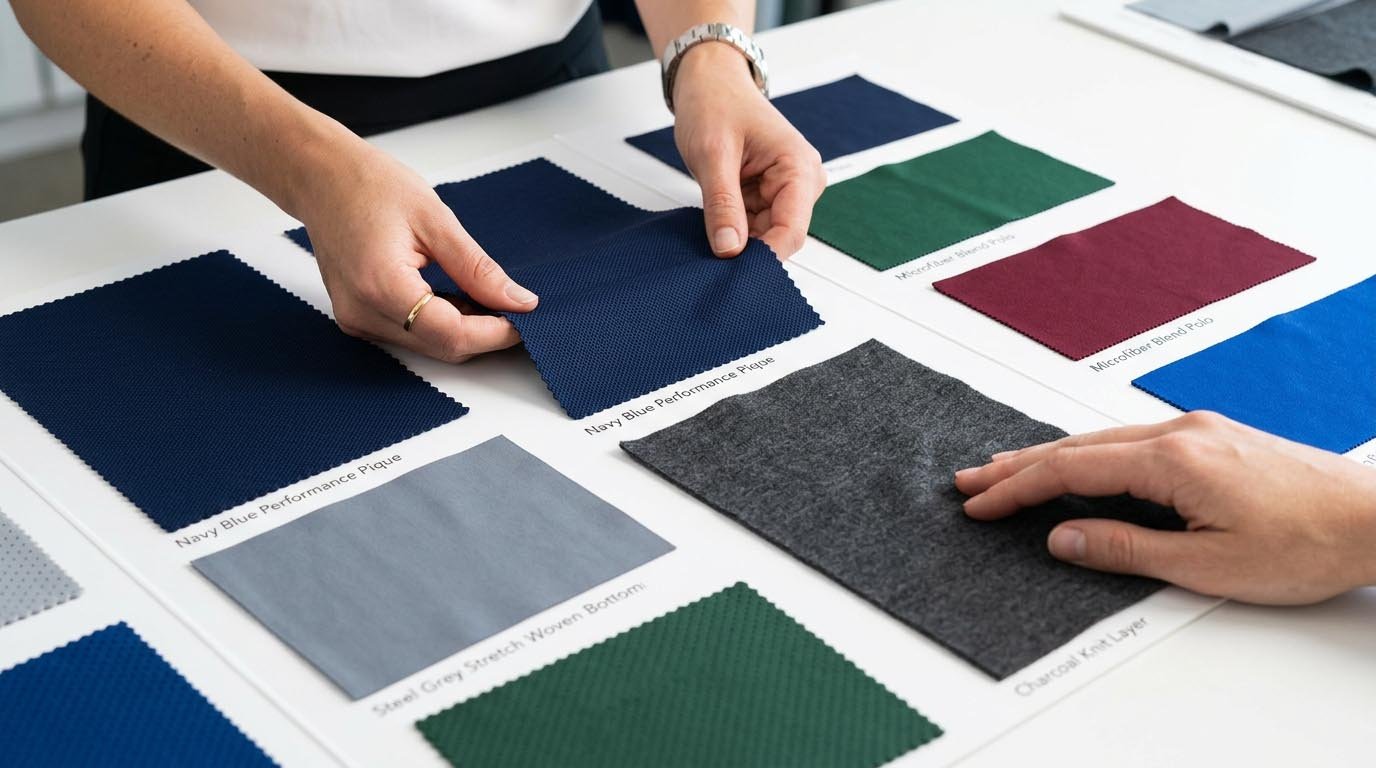
Common fabric directions include:
- performance pique
- interlock knit
- jersey knit
- jacquard knit
- micro-textured polyester blends
What matters most is not only the knit type, but also:
- weight
- stretch level
- surface feel
- recovery
- drape
- how the fabric behaves after logo application and washing
A lot of golf brands focus only on moisture-wicking claims, but actual wear comfort also depends on whether the polo feels smooth, breathable, and stable after repeated use.
Bottom fabrics
Golf pants and shorts usually need a woven fabric with enough stretch and recovery to move comfortably through the swing and throughout the day.
Common directions include:
- poly-spandex stretch woven
- nylon-blend technical woven
- lightweight twill with performance finish
For bottoms, pay close attention to:
- recovery after sitting and bending
- hand-feel against skin
- opacity
- drape
- wrinkle behavior
- pocket area stability
A fabric may feel acceptable in a hanger sample but still fail if it bags too easily at the knee or feels too rigid through the thigh.
Layering and outerwear fabrics
For quarter-zips, pullovers, and jackets, common choices include:
- brushed knits
- double knits
- fleece-backed performance fabrics
- softshell fabrics
- stretch woven outerwear fabrics
The right choice depends on whether the product is meant for:
- mild weather layering
- wind resistance
- light rain protection
- cooler season insulation
The key for golf is avoiding excessive bulk or stiffness. Outerwear that feels too rigid in the shoulder and upper back area will not perform well, even if the technical specs sound strong.
What Can You Customize in Private Label Golf Apparel?
This is one of the biggest advantages of private label production.
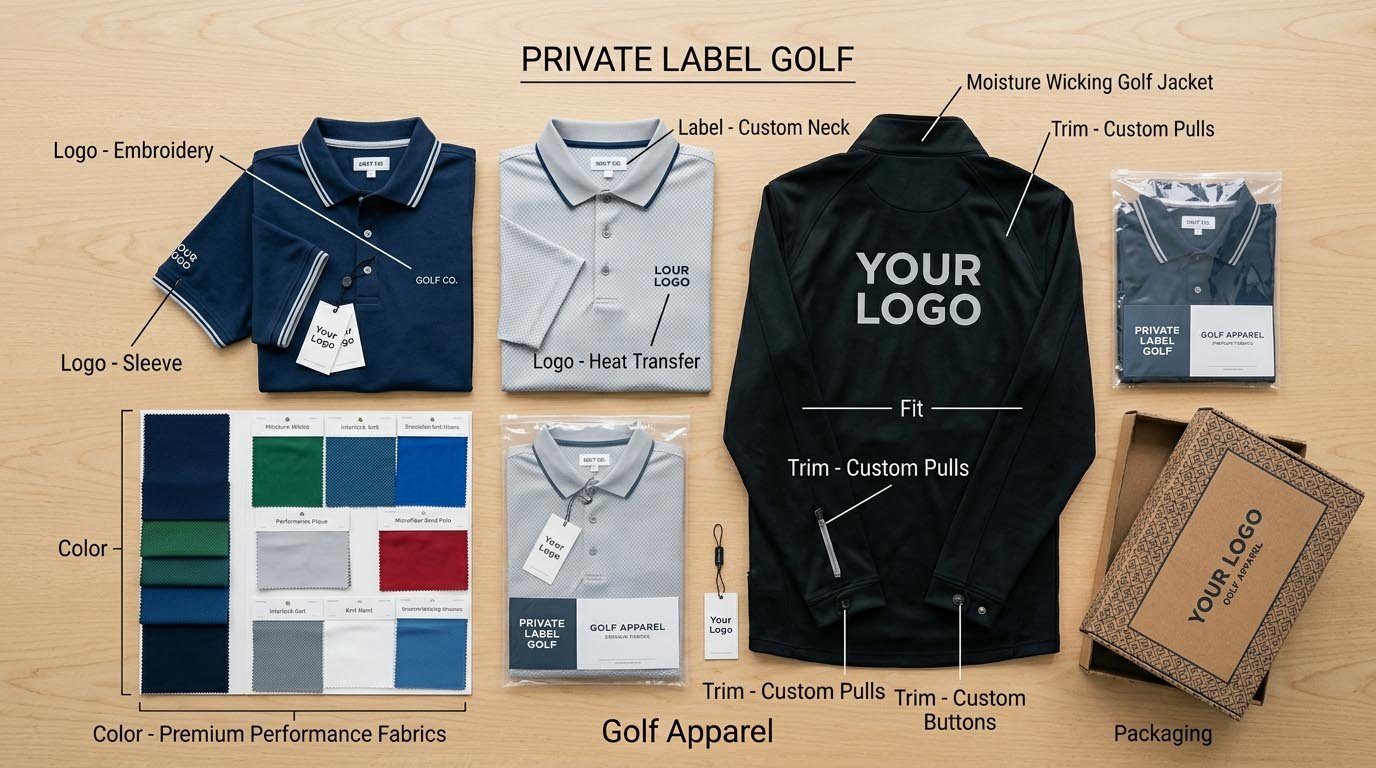
Depending on the factory's capabilities and your budget, you can usually customize:
- logo placement
- logo application method
- neck label and size label
- fabric selection
- garment color
- fit and measurements
- buttons, zippers, and other trims
- hang tags
- folding and packing method
- outer packaging
Logo application
The most common methods are:
- embroidery
- heat transfer
- screen printing
- sublimation, where suitable
- woven or rubber patch applications for some categories
The right choice depends on the product, fabric, logo complexity, and price level.
For example:
- embroidery works well on polos, caps, and outerwear, but stitch density should be checked on lightweight fabrics
- heat transfer is useful for clean performance looks, especially on technical tops
- sublimation works well for all-over design concepts on suitable polyester fabrics
Logo method should not be chosen only by appearance. It should also be checked for fabric compatibility, durability, and how it affects garment hand-feel.
Labels and trims
Common private label branding details include:
- woven main label
- heat transfer neck label
- size label
- care label
- branded zipper pull
- custom buttons
- branded drawcord end or stopper
- hang tags
For startup brands, it is often better to customize the most visible brand elements first, rather than over-customizing every trim in the first launch.
Fit and measurement adjustment
This is where private label can create real brand difference.
Possible fit changes include:
- body length adjustment
- chest width changes
- sleeve length changes
- collar proportions
- hem shape
- rise and inseam changes for bottoms
- overall grading direction
Fit is one of the most important parts of repeat business, especially in golf apparel. A clean, consistent fit can matter more than a complicated design.
Color and packaging
You can often choose between:
- stock-supported colors
- custom dyeing
- yarn-dyed or engineered pattern development in some programs
Packaging can range from basic polybag packing to branded retail-style presentation.
For most first launches, packaging should match the selling channel. If you are selling direct-to-consumer at a premium price point, more branded packaging may make sense. If you are testing a smaller launch or selling into practical club channels, simple and clean packaging is often enough.
How to Choose the Right Private Label Golf Apparel Manufacturer
Choosing the right manufacturer is not only about price.
The best partner is the one whose capabilities match your product type, order size, communication style, and growth stage.
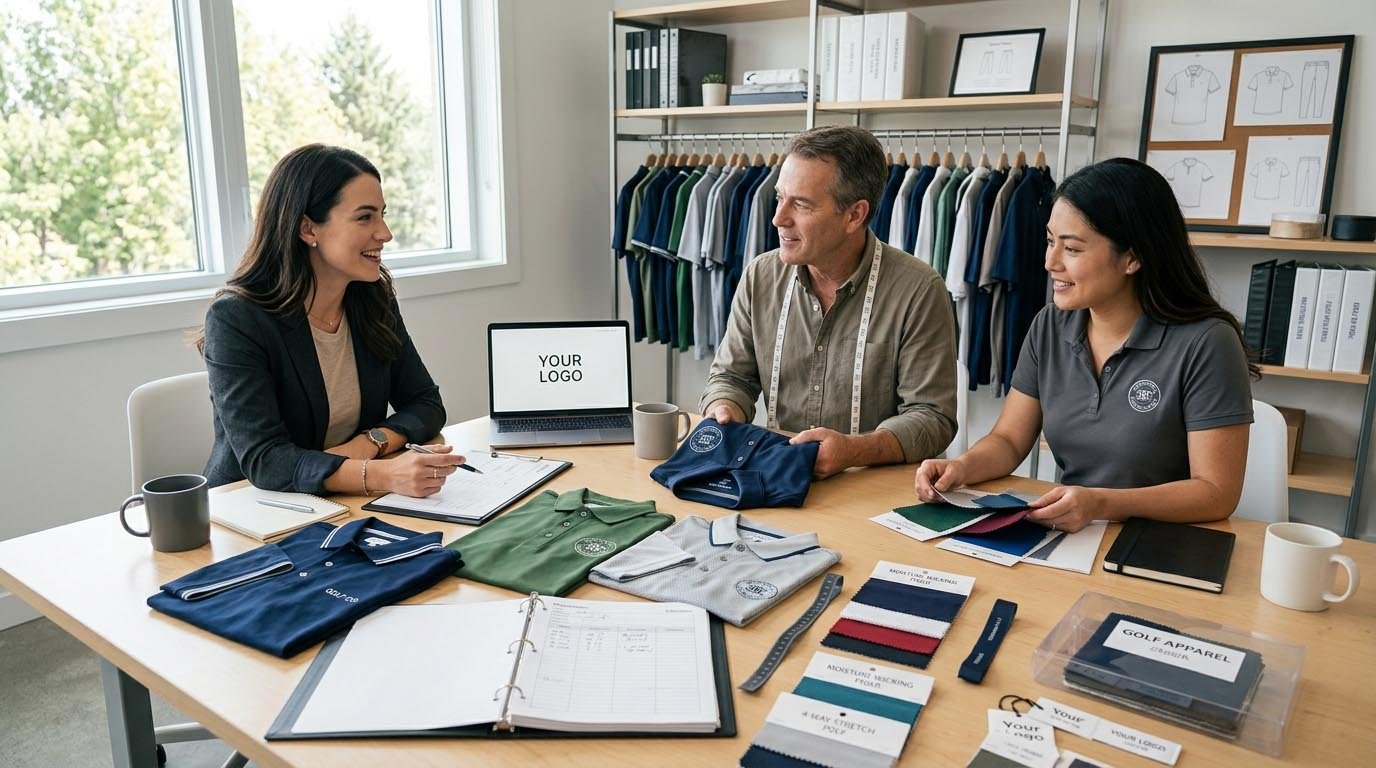
Look for golf or performance wear experience
A manufacturer with experience in golf or related performance categories is usually easier to work with because they already understand issues such as:
- stretch fabric handling
- collar performance on polos
- motion-friendly garment construction
- fit expectations in golf silhouettes
- moisture-management fabric sourcing
A general apparel factory may still be capable, but category familiarity often saves time and revisions.
Check whether their MOQ fits your stage
MOQ should be discussed early and honestly.
It is not just a factory policy. MOQ is also affected by:
- fabric sourcing realities
- dyeing minimums
- trim economics
- line efficiency
- packaging complexity
Some factories can support smaller first runs if the project stays simple. Others are better suited to larger and more standardized production.
The important thing is not finding the lowest MOQ. It is finding a production setup that is realistic for both sides.
Evaluate communication quality
Good communication is often a better predictor of project success than a low quoted price.
A strong manufacturing partner should be able to explain:
- what information is missing
- what can be customized realistically
- where timing risk may appear
- which decisions affect cost most
- what needs approval before bulk
If a supplier gives only generic answers or avoids technical detail, that usually creates more problems later.
Review samples carefully
Sampling tells you much more than a sales presentation.
When reviewing a factory, check whether the sample shows:
- clean sewing quality
- stable logo application
- balanced fit
- fabric appropriate to the category
- attention to construction details
Also pay attention to how the factory handles revisions. A capable manufacturer does not just make samples. They help identify what should be improved before production.
Ask about quality control and inspection
Quality control should not start only at final packing.
Ask whether the factory checks:
- incoming fabric
- cutting accuracy
- in-line sewing quality
- measurements during production
- finishing and pressing
- labeling and packing accuracy
If the supplier cannot explain its QC process clearly, that is a warning sign.
Do not choose based on price alone
A lower quote may reflect:
- lower fabric quality
- reduced QC control
- simpler trims than expected
- inconsistent workmanship
- missing services such as sampling support or packaging handling
The cheapest price is rarely the cheapest result if the product has to be remade, discounted, or delayed.
What First-Time Golf Brands Often Get Wrong
This is the part many startup articles skip.
Most first-time brand problems are not caused by a lack of creativity. They come from trying to customize too much, too early, without enough structure.
Here are some common issues we see in development:
1. Too many SKUs in the first launch
New brands often try to launch:
- multiple polo fits
- several bottoms
- outerwear
- accessories
- too many colors in each
That increases complexity fast. It also makes inventory planning much harder.
2. Over-customizing trims before the product is proven
Custom labels, branded zipper pulls, special packaging, and unique buttons can all be useful. But if the fit and fabric are not right yet, these extras do not solve the real problem.
3. Underestimating how long approvals take
Production time is only part of the calendar.
Delays often come from:
- waiting on logo files
- changing colors late
- revising measurements
- replacing trims
- approving samples slowly
4. Starting with difficult categories
Golf pants, lined jackets, or highly technical outerwear can all be successful, but they usually require more development control than a core polo or simple mid-layer.
5. Expecting the factory to define the whole brand
A manufacturer can help with sourcing, construction, and development. But the brand still needs to define:
- who the customer is
- where the product sits in the market
- what level of customization matters
- what price point it needs to achieve
The clearest projects usually move fastest.
What Information You Should Prepare Before Contacting a Manufacturer
You do not need a perfect tech pack to start a conversation, but you should be ready with at least the basics.
Helpful materials include:
- your brand introduction
- target market
- product categories
- estimated order quantity
- reference images or sketches
- logo files
- size range
- target price level
- expected launch timeline
If you already have more detailed product information, even better. That may include:
- fabric composition preference
- GSM target
- logo application method
- measurement chart
- trim preferences
- packaging requirement
The more clearly you define the project, the easier it is for a manufacturer to assess feasibility and quote accurately.
Final Thoughts
Private label golf apparel is one of the most practical ways to build a golf clothing brand, but the strongest launches usually come from clarity, focus, and realistic development choices.
Start with products that fit your stage.
Choose fabrics that support the way golfers actually wear the product.
Keep the first collection tight enough to manage well.
And work with a manufacturer that can communicate clearly, sample accurately, and help you avoid preventable mistakes.
A good private label partner does more than make garments. They help turn a product idea into something that can be produced consistently and sold with confidence.
Need Support with Private Label Golf Apparel Development?
At FUWAY, we support golf and performance apparel brands with:
- product planning
- fabric sourcing
- sampling
- logo and trim development
- private label production
- bulk manufacturing support
Whether you already have tech packs or are still shaping your first collection, we can help you evaluate the most practical path for development and production.
If you are planning a private label golf apparel project, feel free to contact us to discuss your ideas.