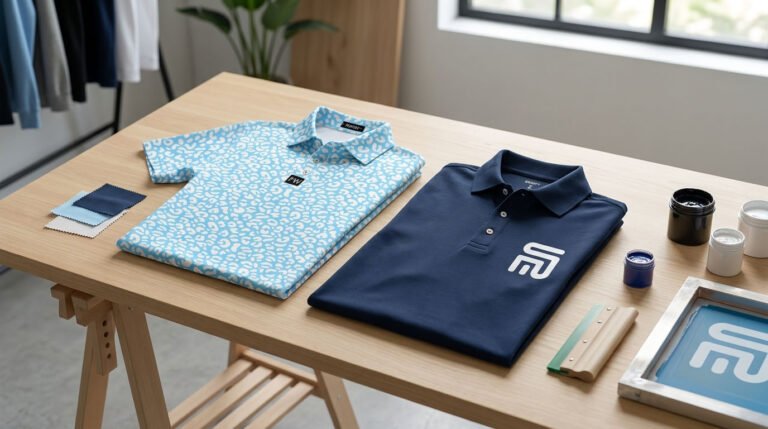
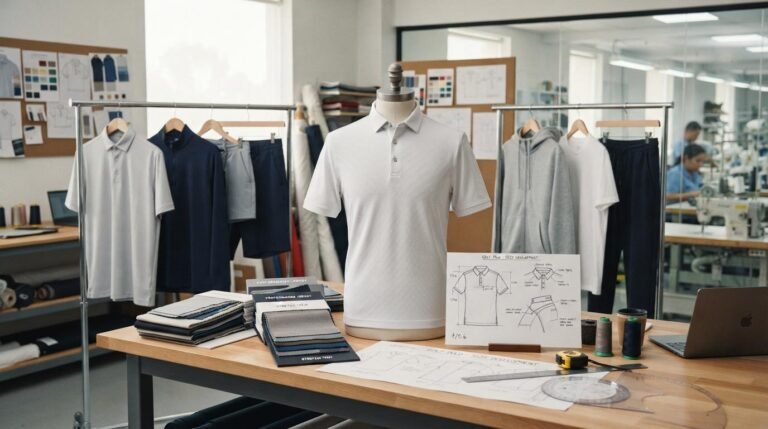
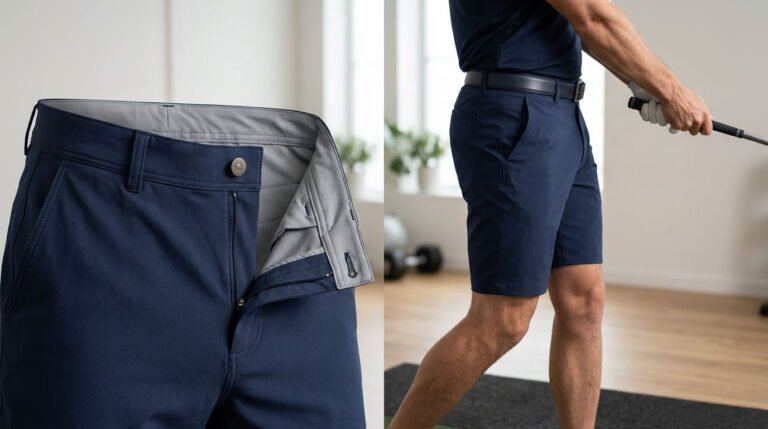
Not every custom golf polo needs a new pattern. A brand may want a distinctive fit, a different collar, or better freedom of movement during the golf swing—but some of these improvements can be achieved by modifying an existing factory pattern.
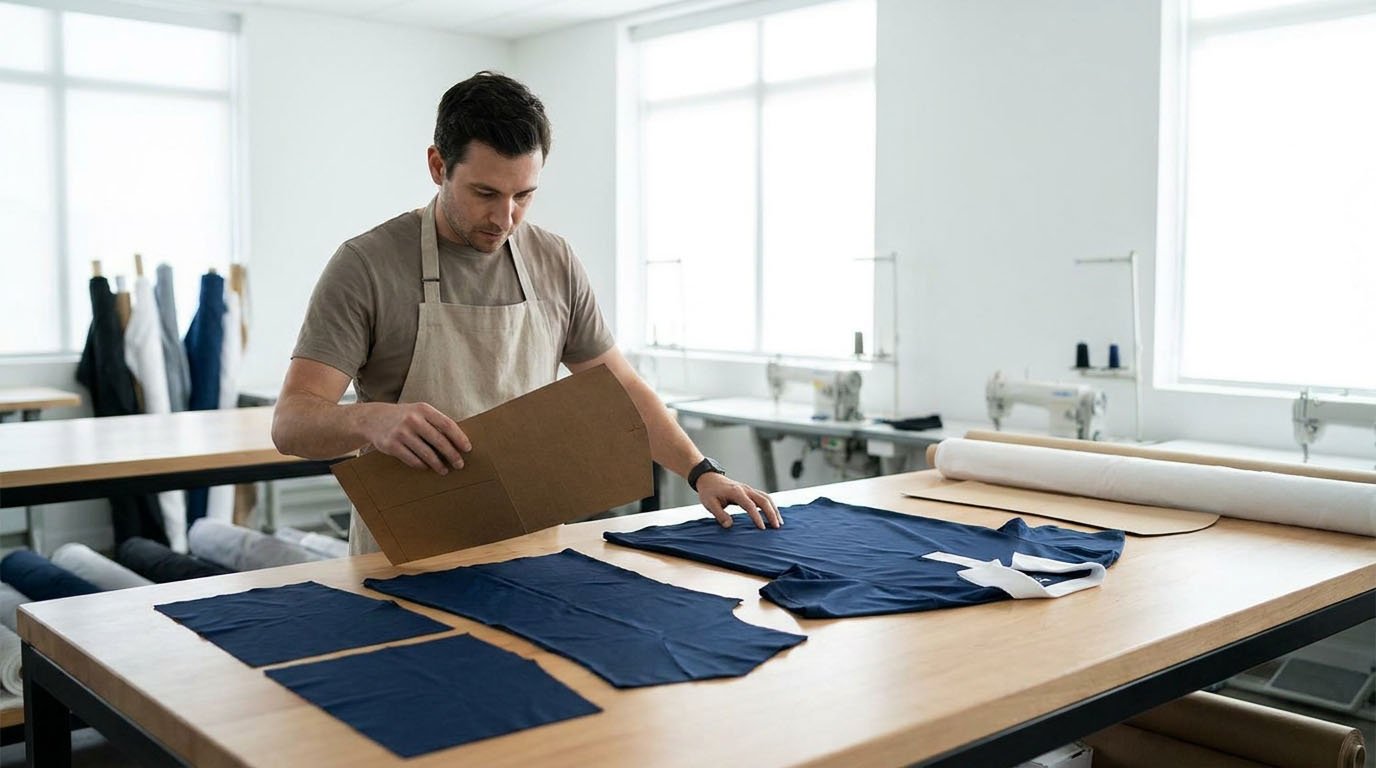
Cut-and-sew golf apparel manufacturing does not automatically mean developing a garment from scratch. It refers to cutting fabric into garment components and sewing those components together. The patterns used in that process may be existing factory blocks, modified patterns, or completely new designs.
For golf brands, the important decision is whether an existing pattern can deliver the intended product—or whether the design requires more extensive pattern development.
This guide explains how to make that decision, which construction changes matter most, and what to confirm with your manufacturer before sampling.
Key 1. What Does Cut-and-Sew Actually Mean in Golf Apparel?
Cut-and-sew is a garment manufacturing process, not a guarantee that every product uses an original pattern.
A factory can cut and sew a golf polo using an existing, approved pattern. The same factory may also modify that pattern or develop an entirely new one for a brand's requirements.
These approaches differ primarily in their development work.
| Pattern Development Route | What It Means | Typical Application |
|---|---|---|
| Existing Factory Block | Use an established pattern with no major structural changes | A standard golf polo that already meets the brand's fit requirements |
| Modified Factory Block | Adjust selected measurements or pattern components | Changes to sleeve length, body shape, collar details, or selected construction features |
| New Pattern Development | Develop a new pattern or substantially redesign the garment architecture | Proprietary fit, new panel configuration, specialized construction, or a new sizing system |
Cut-and-Sew Is Not the Same as Full-Custom Pattern Development
Suppose a brand selects an existing golf polo pattern and requests a different fabric, color, and embroidered logo.
The factory may still cut the chosen fabric into separate body, sleeve, and collar components before sewing the shirt.
That is cut-and-sew manufacturing, even though the underlying pattern already exists.
By contrast, a brand developing a new shoulder structure, distinctive body proportions, or unconventional panel arrangement may need additional pattern engineering.
The distinction matters because the amount of pattern development—not the term cut-and-sew alone—determines much of the technical work involved.
OEM, ODM, and private label describe broader manufacturing and branding arrangements. They should not be treated as fixed definitions of how a garment's pattern must be created.
For a comparison of those business models, see our OEM vs Private Label Golf Shirts guide.
Key 2. Can You Use an Existing Factory Pattern for Your Golf Apparel?
An existing pattern is a practical starting point when its silhouette, proportions, construction, and sizing are already suitable for the intended customer.
However, approving a factory's existing block should involve more than looking at a product photograph.
Check the Fit Before Deciding
Ask the manufacturer for an available reference sample and evaluate:
- Chest and waist: Does the garment provide the intended silhouette without unnecessary tightness or excess fabric?
- Shoulders and armholes: Does the shape allow comfortable arm movement?
- Body and sleeve length: Are the proportions appropriate for the target customer?
- Collar and placket: Do the existing construction and proportions match the design?
- Size range: Can the current grading serve the intended market?
A garment that looks acceptable on a hanger may still need adjustment after fitting and movement testing.
If the base fit is close to the intended result, selective pattern changes may be sufficient.
Check the Fabric Before Reusing the Pattern
An existing pattern does not guarantee the same fit when the fabric changes.
For example, switching between fabrics with different stretch, recovery, shrinkage, thickness, or drape may change how the garment behaves.
Important note on stretch fabrics and pattern compensation: When switching from a low-stretch woven fabric to a high-stretch knit, even if the visual design appears identical, the pattern must usually be redeveloped. High-stretch fabrics require negative ease adjustments—the pattern pieces are deliberately made smaller than the body measurements in both width and length. Without this compensation, the garment will appear baggy and shapeless once worn. The factory should confirm whether the existing block remains suitable after evaluating the new fabric's actual stretch percentage and recovery performance.
Before adopting a different material, confirm whether the existing block remains suitable after the relevant fabric and garment evaluations.
A pattern designed for one fabric may require adjustment when another behaves differently during cutting, sewing, washing, or wear.
When an Existing Block Is Not Enough
More extensive development may be necessary when:
- The target customer has body proportions poorly served by the available block.
- The garment requires a distinctive shoulder, sleeve, or panel arrangement.
- The intended fit cannot be achieved through limited adjustments.
- The brand requires a separate size and grading system.
- Construction changes substantially alter how the garment fits or moves.
The goal is not to avoid custom pattern development. It is to use it where an existing pattern cannot meet the product requirements.
Key 3. Which Golf Apparel Design Changes Actually Require Pattern Redevelopment?
A design change does not always require an entirely new pattern. The amount of work depends on the existing block, the selected fabric, the complexity of the change, and whether suitable pattern components are already available.
This comparison can help brands prepare a more precise development brief.
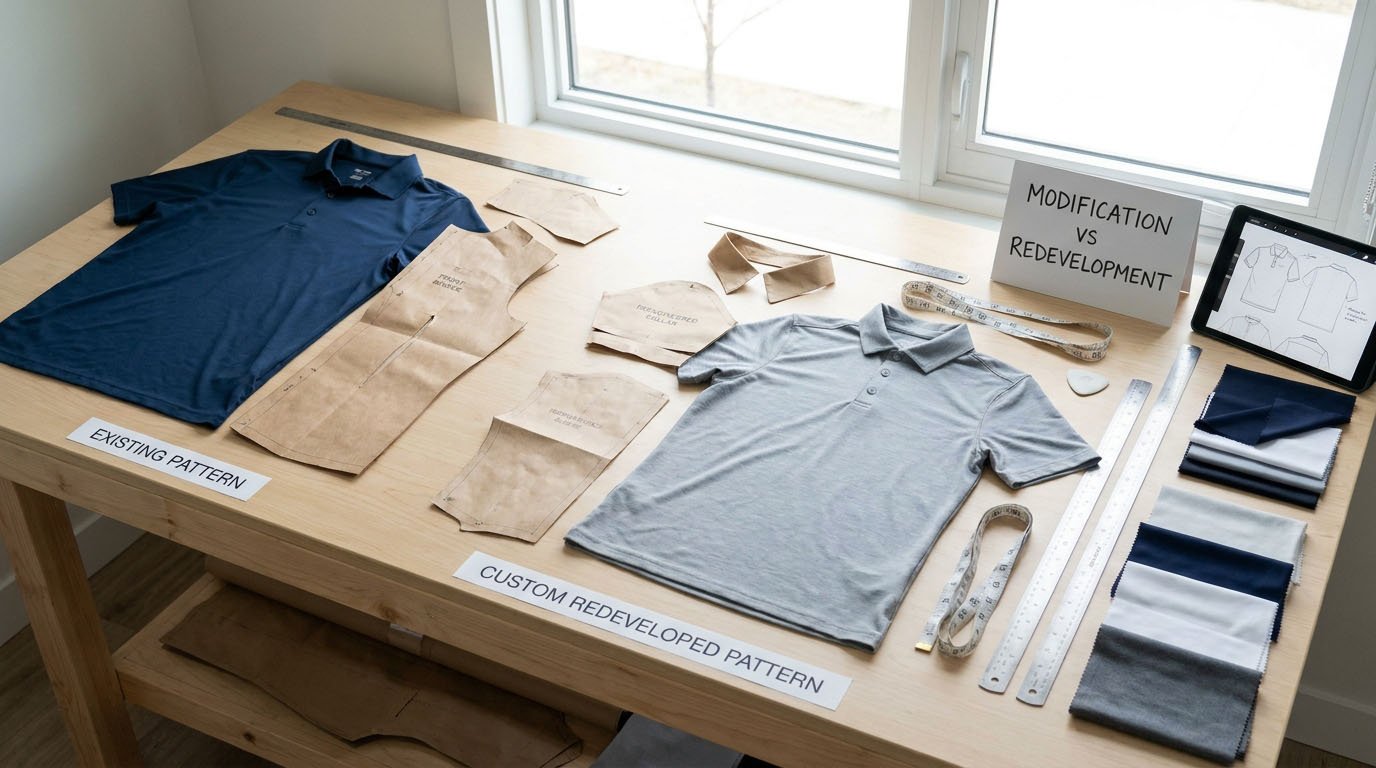
Practical Pattern Development Decision Table
| Requested Design Change | Likely Development Approach | What the Factory Must Confirm |
|---|---|---|
| Add an embroidered chest logo | Existing block | Logo placement, fabric compatibility, and decoration method |
| Change fabric color | Existing block may remain suitable | Fabric availability, dyeing requirements, and material consistency |
| Replace fabric with a different stretch construction | Assess existing block before reuse; redevelopment often required | Stretch percentage, recovery, shrinkage, and required negative ease adjustments |
| Shorten a sleeve by 1 cm | Local pattern adjustment may be sufficient | Sleeve proportions, hem construction, and size grading |
| Add collar tipping | Existing collar construction may be reusable | Whether the approved collar and trim construction can accommodate the detail |
| Introduce a new collar shape | Modify or replace collar pattern components | Collar geometry, neckline compatibility, and stability |
| Change a set-in sleeve to a raglan sleeve | Structural pattern modification | Whether a suitable raglan block exists and how the new seams affect fit |
| Add an underarm gusset | Develop or modify affected pattern components | Panel geometry, fabric compatibility, and seam assembly |
| Create a proprietary athletic fit | Modify substantially or develop a new block | Body proportions, ease, fabric behavior, and grading requirements |
| Introduce an entirely new panel arrangement | May require extensive redevelopment | Panel dimensions, seam intersections, fabric behavior, and assembly feasibility |
These are general technical assessment routes, not guaranteed production classifications. The final decision requires reviewing the actual design and available factory patterns.
Three Questions That Determine the Right Development Route
1. Can the Existing Pattern Meet the Target Fit?
If the answer is yes, creating an entirely new block may add work without meaningful product benefit.
If the answer is no, identify the specific fit problem before deciding how much redevelopment is necessary.
For example, an excessively loose waist does not automatically mean the shoulder, collar, and sleeve patterns must all be redesigned.
2. Does the Change Affect Only One Component or the Entire Garment?
Some requests can be handled by modifying a limited number of pattern pieces.
Others affect how multiple components connect.
A new pocket shape may mainly affect the pocket and its supporting panel. A redesigned sleeve and armhole arrangement can affect the front body, back body, sleeve, and adjoining seams.
The manufacturer should identify which pattern pieces require modification.
3. Will the Change Affect Sizing or Movement?
A revised pattern must still work across the intended size range.
Changes to chest-to-waist proportions, shoulder geometry, and sleeve placement may require reviewing grading rules or movement performance.
For golf apparel, fit should be evaluated during relevant movements rather than only in a standing position.
For detailed guidance on golf swing mobility and sizing, read our Golf Apparel Fit Guide.
Key 4. How Do Pattern Requirements Differ Across Golf Apparel Categories?
Different golf apparel categories have different structural priorities.
A pattern modification that is relatively straightforward for a golf polo may require different checks in golf trousers or a quarter-zip pullover.
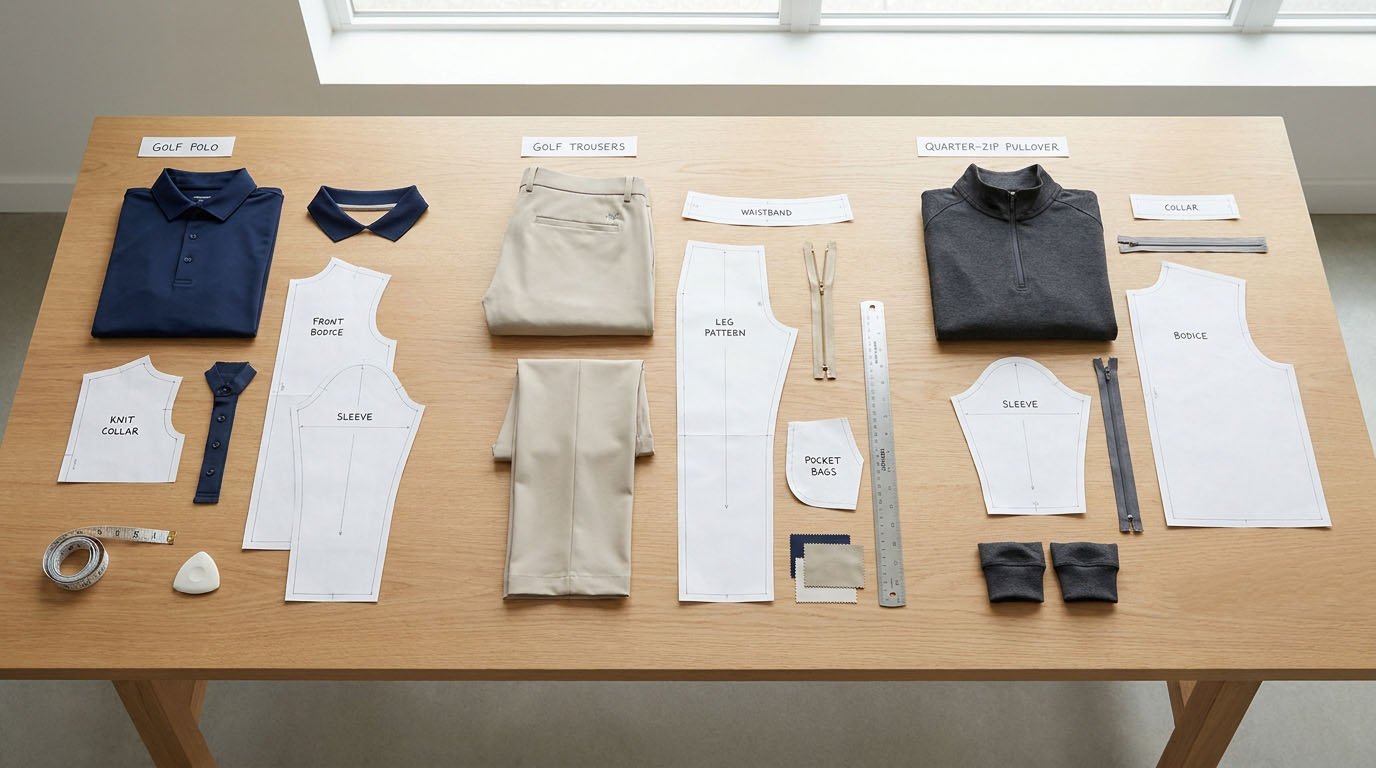
Golf Polo Shirts: Shoulder, Sleeve, Collar, and Placket
Golf polo development often involves balancing appearance, fit, and upper-body movement.
Important pattern areas include:
- Shoulder and armhole geometry
- Sleeve shape and opening
- Chest-to-waist proportions
- Collar and neckline compatibility
- Placket positioning
- Body length and hem construction
A brand requesting a different embroidered logo normally does not need a new garment pattern.
However, a new sleeve architecture, substantially different fit, or redesigned collar structure may require modification of the affected pattern components.
The factory should also confirm that the proposed construction is appropriate for the selected fabric.
Golf Trousers and Shorts: Rise, Waistband, and Pocket Construction
Golf bottoms require particular attention to the relationship between the waist, seat, rise, crotch curve, and leg shape.
Common development considerations include:
- Front and back rise balance
- Seat and thigh allowance
- Waistband construction
- Pocket bag placement and depth
- Leg taper or opening
- Inseam and outseam proportions
Changing a leg opening may be a localized adjustment, depending on the existing design.
Changing the rise, crotch shape, and seat proportions can affect several connected pattern pieces and require more extensive fitting.
Functional details such as hidden pockets or specialized waistbands should also be assessed for construction feasibility.
Quarter-Zip Pullovers: Neckline, Zipper, and Layering Fit
Quarter-zip development has its own requirements.
The manufacturer may need to assess:
- Neckline and collar shape
- Zipper opening and facing construction
- Shoulder and sleeve balance
- Fabric stretch around the zipper
- Layering allowance
- Hem and cuff construction
Replacing a zipper pull usually does not require a new body pattern.
Changing the neckline construction, introducing new panels, or redesigning the garment's layering fit may require adjustments to multiple components.
The same design request can involve different levels of pattern work depending on the garment category and the available factory blocks.
Key 5. How Do Custom Patterns Affect MOQ, Cost, and Sampling?
Custom pattern development can increase technical work, but it does not automatically require a higher garment MOQ or a fixed number of sample rounds.
These factors must be assessed separately.
MOQ Depends on More Than the Pattern
A custom pattern produced with available fabric and standard components may support a relatively flexible production quantity.
On the other hand, even a standard pattern may require a larger commitment when the order includes:
- Custom-dyed fabric
- Exclusive knitted material
- Specialized hardware
- Custom components with supplier minimums
- Materials that are unavailable in the requested quantity
For suitable FUWAY projects, the published starting MOQ is approximately 100 pieces per style. Eligible orders may be split into two colors, with 50 pieces per color.
These are starting conditions, not a guarantee for every custom pattern, fabric, or construction requirement.
Evaluate Cost by the Actual Development Work
A new pattern may require additional engineering, fitting, grading, or sample revisions.
However, the development workload does not translate into a universal additional charge or fixed price increase.
For a meaningful quotation, the factory needs to review the design, materials, quantity, branding, and required production work.
At FUWAY, project quotations should clearly identify the applicable sample and bulk garment production charges. Shipping is quoted separately when FUWAY arranges transportation.
Do not assume that pattern development, grading, labeling, inspection, or other production activities automatically carry separate customer fees.
Sampling Time Depends on Development Complexity
FUWAY's published standard sampling timeline is approximately 7–10 working days for suitable projects.
That period should not be interpreted as a guarantee that complex custom pattern development, multiple revisions, special material sourcing, and final approval will all be completed within the same window.
For projects requiring new construction, brands should confirm:
- Whether the proposed sample uses an existing or new pattern
- Whether the intended fabric is available
- Which construction details need validation
- How revisions and approvals will be handled
- When the full production schedule can be confirmed
The number of samples should depend on what needs to be validated—not an arbitrary target.
Key 6. What Should You Send the Factory Before Custom Pattern Development?
A factory cannot reliably determine the required pattern work from a message such as "We want a premium, athletic-fit golf polo."
The word premium does not establish measurements, construction, or performance requirements.
A useful development brief should explain both what the brand wants and what must be different from an existing garment.
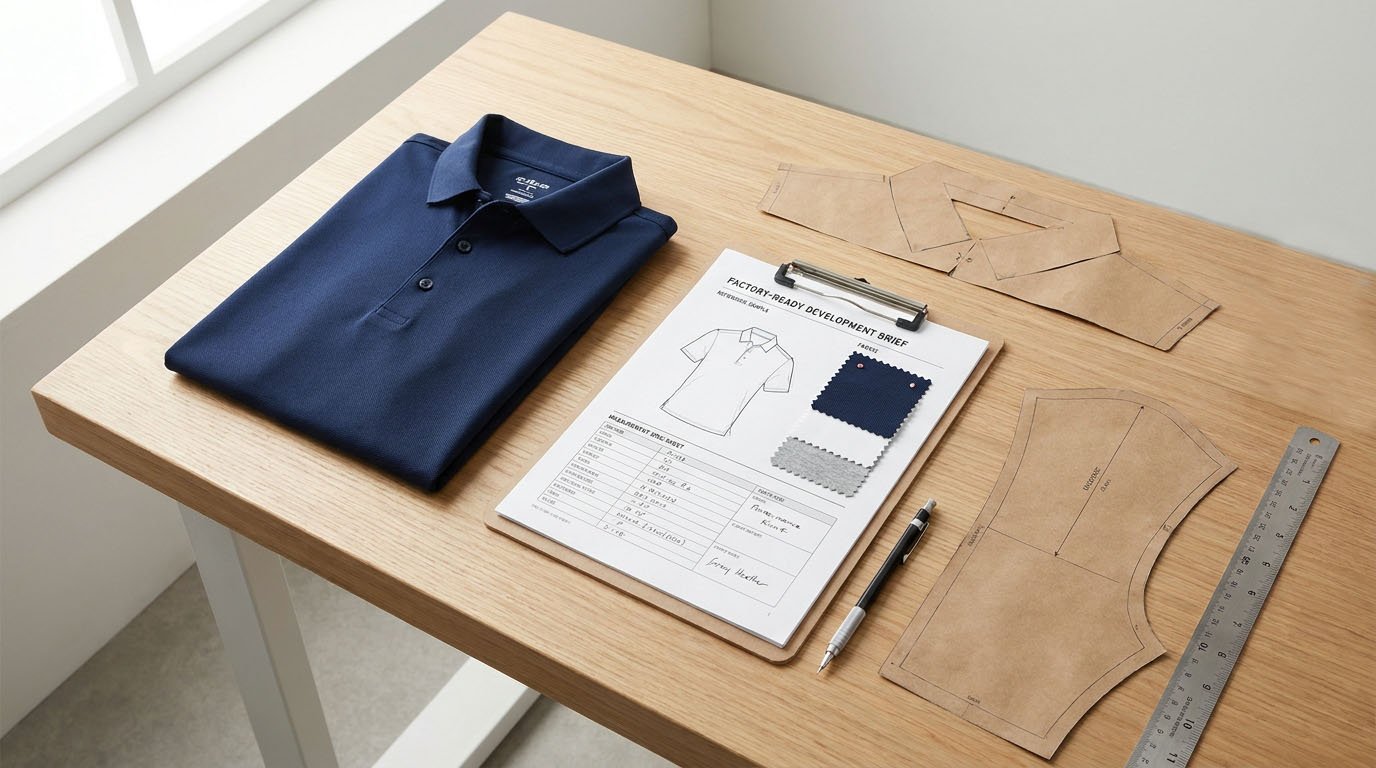
Custom Pattern Development Checklist
| Required Information | What to Provide | Why It Matters |
|---|---|---|
| Product category | Polo, shorts, trousers, quarter-zip, or another style | Identifies the relevant pattern and construction requirements |
| Target customer | Men's, women's, youth, and intended fit profile | Defines the intended proportions and sizing needs |
| Reference garment | Physical sample or clear reference images, if available | Gives the factory a starting point for comparison |
| Design drawings | Front and back views with relevant construction details | Identifies which components may require modification |
| Measurement specification | Sample size, garment POMs, size range, and grading requirements | Establishes measurable fit targets |
| Fabric requirements | Composition, structure, weight, stretch percentage, and intended properties | Helps assess material compatibility with the pattern and required ease adjustments |
| Structural changes | Collar, sleeves, panels, pockets, seams, or waistband changes | Identifies the affected pattern pieces |
| Order information | Estimated quantity, color split, and target schedule | Supports production feasibility and quotation planning |
| Approval requirements | Fit, movement, appearance, and relevant testing criteria | Defines what must be accepted before bulk production |
Identify What You Want to Keep and What You Want to Change
If your brand has an existing reference polo, separate your instructions into two groups.
Keep from the reference garment:
- Overall silhouette
- Approved shoulder fit
- Existing body construction
- Preferred fabric feel, where applicable
Change for the new design:
- Specific measurements
- Collar shape
- Sleeve configuration
- Selected panels or functional details
This approach makes the development request clearer than asking the factory to recreate a shirt "with some improvements."
Make Measurement Instructions Unambiguous
A size chart should specify not only measurement values but also how each point is measured.
For example:
| Point of Measurement | Measurement Method to Define |
|---|---|
| Half Chest Width | Flat garment width measured between the specified underarm reference points; not a body chest circumference |
| Shoulder Width | Defined shoulder-to-shoulder measurement, including the exact endpoints |
| Body Length from HPS | From the high point of shoulder to the specified front or back hem |
| Sleeve Length | Clearly define whether measured from the shoulder seam, center back, or another specified starting point |
| Hem Width | Flat garment width at the defined hem measurement line |
These definitions help prevent a brand and manufacturer from measuring the same garment differently.
A Note on Tolerances and Functional Fit Zones
For FUWAY projects, the standard finished-garment POM tolerance is ±1.0 cm, unless an approved Tech Pack specifies a tighter tolerance. The relevant measurement method and approved target remain essential.
However, brands should note that not all measurement points are equally sensitive to deviation. For golf apparel, certain areas directly affect swing mobility and should be treated as critical control points:
- Armhole depth and curvature: A deviation here can restrict arm lift during the backswing and follow-through.
- Back width (cross shoulder): Excess or insufficient width across the back alters how the garment moves during torso rotation.
- Sleeve cap height: Affects the sleeve's range of motion and how much the body lifts when the arms are raised.
If these functional zones require tighter control, specify them as key inspection points in your Tech Pack and confirm with the factory whether a tolerance tighter than ±1.0 cm is achievable for those specific measurements.
For detailed Tech Pack preparation, see our Custom Golf Polo Tech Pack and Pattern Making Guide.
What If You Do Not Have a Complete Tech Pack?
A finished Tech Pack is helpful, but it is not the only possible starting point.
A physical reference garment, annotated photographs, target measurements, and a clear list of requested changes can help the manufacturer begin an assessment.
The important point is to translate those inputs into an approved specification before production.
Key 7. How Do You Approve a Custom Pattern Before Bulk Production?
A pattern is not ready for bulk production simply because the first sample looks attractive.
Approval should confirm that the design meets the brand's intended fit, construction, and material requirements.
Step 1: Verify the Sample Against the Agreed Measurements
Measure the sample using the approved POM definitions.
Record any deviations from the target specification and determine whether corrections are necessary.
Do not rely solely on a visual review.
Step 2: Check the Garment During Relevant Movement
For a golf polo or quarter-zip, evaluate shoulder movement, arm extension, torso rotation, and garment balance.
For golf trousers or shorts, evaluate walking, bending, sitting, and other relevant movements.
These checks help identify fit or construction issues that may not appear while standing still.
Pay particular attention to the functional zones identified in Key 6. If the back width pulls tight during the address position or the armhole binds at the top of the swing, a measurement deviation that appeared minor on the flat table may actually be the cause. Record these observations and feed them back to the factory with specific reference to the affected pattern piece or seam.
Step 3: Check Construction and Material Compatibility
Review the affected structural features.
For example:
- Do newly designed panels align correctly?
- Does the collar sit as intended?
- Are pocket openings stable and functional?
- Does the selected fabric behave appropriately around the modified seams?
- Do the approved details retain their intended appearance after relevant care or wear checks?
When performance or material claims are important, identify the appropriate test evidence.
FUWAY publishes genuine Golf Shirts Test Reports, including reports covering fabric stretch and recovery, color fastness, pilling, and other evaluated properties.
Each report applies to its tested sample and stated conditions. A report for one golf shirt material should not be presented as proof that a different material, golf trouser, short, or future production batch has passed the same evaluation.
Step 4: Approve the Final Production Specification
Before bulk production, confirm that the approved sample and specification agree on:
- Pattern version
- Fabric and color
- Garment measurements and tolerances
- Size grading
- Construction and seam details
- Branding and trim placement
- Applicable performance or testing requirements
Any agreed corrections should be recorded in the final specification.
The approved production reference should make it clear which version the factory must manufacture.
Step 5: Preserve the Approved Pattern and Material Reference for Repeat Orders
A repeatable product needs more than an old sample photograph.
Keep the approved pattern version, measurement chart, construction notes, fabric details, and change history together.
Critical for reorders: fabric lot changes and shrinkage compensation. When placing a repeat order, the factory will typically source fabric from a new production lot. Even when the fabric specification (composition, weight, yarn) remains identical, the new lot may exhibit different shrinkage behavior due to natural variations in knitting, dyeing, or finishing.
Before cutting a reorder with the old pattern, the factory should compare the shrinkage test results of the new fabric lot against the original reference. If the new fabric shrinks more, the pattern must be enlarged by the corresponding percentage before cutting. If the new fabric shrinks less, the pattern should be reduced accordingly. Skipping this step can cause an entire production batch to come out measurably too small or too large after laundering—even though the correct pattern was used.
Before confirming a reorder, also ensure that any requested material substitutions or minor design adjustments have been reviewed against the previous approved standard.
For the complete prototype-to-production approval workflow, see our Golf Apparel Sampling Process Guide.
Frequently Asked Questions
Does Every Cut-and-Sew Golf Polo Require a New Pattern?
No. Cut-and-sew refers to cutting and sewing garment components. A manufacturer can use an existing factory pattern, modify that pattern, or develop a new one.
Can I Change a Golf Polo's Measurements Without Developing a New Pattern From Scratch?
Often, yes. Some measurement changes can be made by adjusting an existing pattern. Whether those changes remain localized depends on the garment's construction, grading, and intended fit.
A significant change to the shoulder, armhole, or body proportions may require more extensive redevelopment.
Does Changing Fabric Always Mean a New Pattern?
Not always, but it requires careful evaluation. Switching between fabrics with similar weight, stretch, and drape may allow the existing pattern to be reused with minor adjustments. However, changing to a fabric with significantly different stretch characteristics—such as moving from a mechanical stretch woven to a high-spandex knit—almost always requires pattern redevelopment to apply the correct negative ease.
Does a Custom Collar Require an Entirely New Golf Polo Pattern?
Not necessarily. If an existing compatible collar pattern is available, it may be reusable or adjustable.
A completely different collar and neckline construction may require new pattern components and changes to adjoining pieces.
Is a New Pattern Always More Expensive Than an Existing Factory Block?
Not always. New development can increase technical work, but actual project cost depends on materials, quantity, construction, sampling, and the manufacturer's quotation structure.
The correct comparison is between the specific approved production options.
Can a Startup Golf Brand Develop Its Own Fit at a Low MOQ?
It may be possible, depending on the factory, fabric availability, construction, and quantity requirements.
An original fit does not automatically require a large garment order. However, special materials or components may introduce additional minimums.
Confirm feasibility against your actual design before committing.
How Many Sample Rounds Does a Custom Pattern Need?
There is no fixed number that applies to every project.
A relatively simple modification may require fewer revisions than a new fit system or complicated multi-panel construction.
The required rounds depend on the initial brief, sample results, and approval criteria.
What Is the Most Important Thing to Confirm Before Starting Pattern Development?
Confirm exactly what the existing pattern cannot achieve.
A clear statement of the required fit or construction difference helps determine whether the project needs a small modification, substantial redevelopment, or a new pattern.
Why Did My Reorder Come Out a Different Size Even Though We Used the Same Pattern?
This usually points to a fabric lot variation that wasn't compensated for before cutting. Even when the fabric specification is unchanged, different production lots can have different shrinkage rates. If the factory does not compare the new lot's shrinkage test against the original and adjust the pattern accordingly, the finished garment measurements can shift. Always confirm that pre-production shrinkage testing and pattern grading adjustments have been completed for every new fabric batch, not just the first production run.
Conclusion: Use Custom Pattern Development Where It Creates Real Product Value
Full-custom pattern development can help a golf apparel brand create a distinctive product, but it is not necessary for every design.
If an existing factory block already provides the desired fit and construction, reusing it may reduce unnecessary development work.
If the product depends on proprietary body proportions, specialized paneling, a different sleeve architecture, or another structural feature the existing block cannot support, additional pattern development may be justified.
The best manufacturing decision starts with the product requirement—not with choosing the most complicated production route.
Before requesting a quotation, identify what needs to change, provide your reference materials, and ask the factory to assess which pattern components require modification.
Develop Your Custom Golf Apparel with FUWAY
FUWAY supports golf brands with custom fabric selection, fit development, pattern adjustments, sampling, and production.
Whether you want to refine an existing golf polo or develop a more distinctive design, the first step is to review your product requirements and identify a practical manufacturing route.
Explore our Custom Golf Shirts Manufacturing capabilities or contact FUWAY with your design, reference garment, target quantity, and preferred fabric.
We can review your requirements and help determine the appropriate next step before sampling.