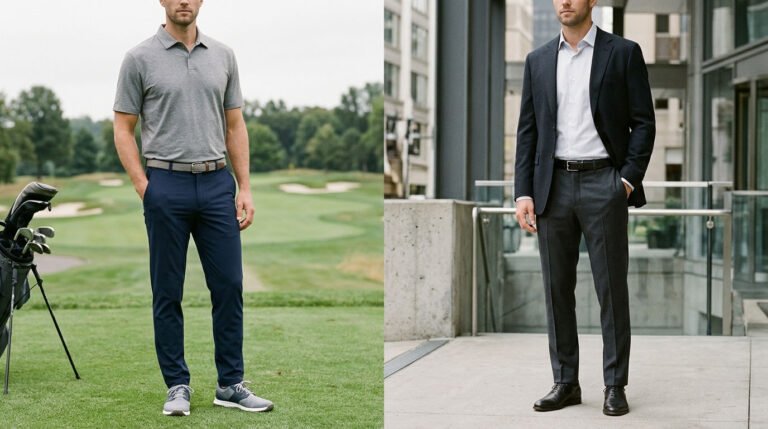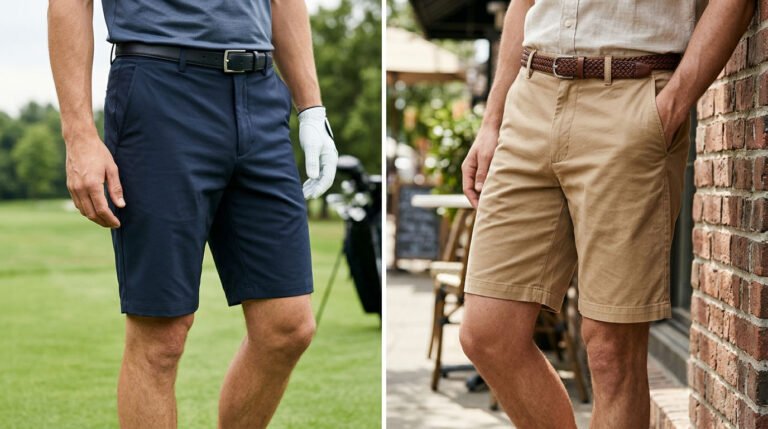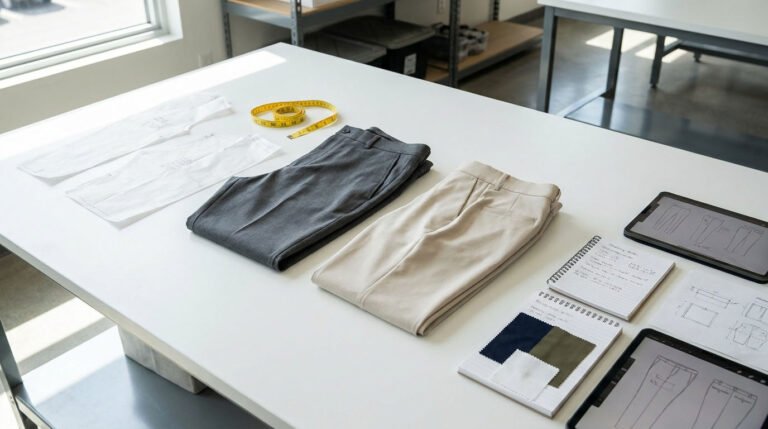
Men’s golf shorts should stay secure at the intended waist position, provide room through the seat and thigh, and allow walking, sitting, bending and swinging without uncomfortable pulling. The hem should suit the intended silhouette and wearer’s proportions.
For brands, achieving that result requires more than choosing a waist size. You need a defined target wearer, clear finished-garment measurements, the intended fabric and construction, and a repeatable fit review.
This guide explains how to develop and assess the base fit before extending it across your size range.
Define the Wearer and Fit Brief First
Begin with the people the shorts must fit and the appearance your brand wants to achieve. Age or selling region alone is not enough to select a pattern.
Record:
- Target body-measurement range and intended base size.
- Waistband wearing position.
- Preferred room through the seat and thigh.
- Straight or tapered leg shape.
- Proposed inseam options.
- Intended fabric and waistband construction.
- Reference garments, with notes explaining what should change.
A reference garment is most useful when the brief identifies what works and what does not. “Keep the waist position, allow more upper-thigh room, and retain the clean front appearance” is more actionable than “make it athletic.”
Translate Fit Names Into Observable Results
Fit terms vary between brands. Agree on the result behind each name.
| Fit direction | Development priority | What to verify |
|---|---|---|
| Slim | A closer silhouette | Seat and thigh remain comfortable during movement |
| Regular | Balanced room and clean drape | No concentrated pulling or unwanted volume |
| Athletic | Space for the intended seat and thigh proportions | Added room does not produce a loose waist |
| Relaxed | More generous room | Fullness remains intentional and balanced |
Describe leg taper separately. A brand can request more thigh room while retaining a controlled hem.
Separate Body Measurements From Garment Specifications
A customer size chart and a factory measurement sheet serve different purposes.
Body measurements describe the wearer. Finished-garment measurements describe the shorts. The difference between corresponding measurements helps explain the planned ease.
For example, a garment seat circumference of 106 cm on a wearer with a 100 cm seat provides 6 cm of circumference ease. This is an illustration, not a recommended allowance. The suitable amount depends on the silhouette, fabric and movement requirements.
Do not compare a flat half-seat measurement directly with a full body circumference.
Define the Measurement Method Before Discussing Numbers
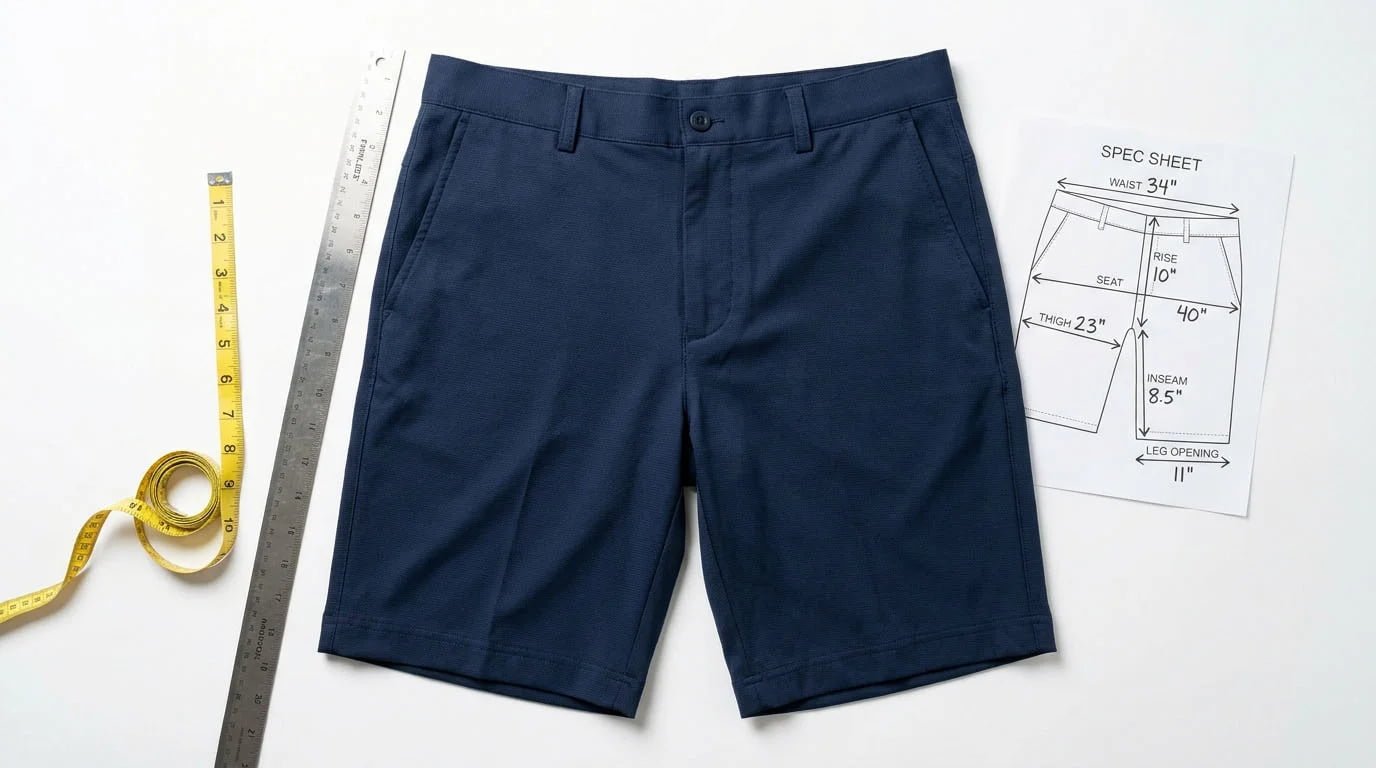
| Point of measure | Required measurement instruction | Fit question |
|---|---|---|
| Waist | Define flat or circumference measurement, closure state and relaxed condition | Does the waistband remain secure and comfortable? |
| Hip/seat | Mark the measurement level on the drawing | Is there sufficient room across the seat? |
| Front and back rise | Specify endpoints, seam path and waistband inclusion | Does the garment accommodate the intended posture? |
| Thigh | State the distance below the crotch and measurement direction | Can the wearer move without binding? |
| Inseam | Measure along the inside seam from crotch to finished hem | Is the intended length achieved? |
| Leg opening | State flat width or circumference | Does the hem hang and move correctly? |
For elasticated waistbands, define any extended measurement and the method used to obtain it. Hand-stretching to an unspecified maximum produces inconsistent readings.
Balance Rise, Seat and Thigh Before Adjusting the Hem
A waistband can measure correctly while the shorts still fit poorly elsewhere.
Rise, crotch extension, seat shaping and thigh room work together. Changing one can affect pocket position, side-seam balance and how the waistband sits.
Start by checking the sample against its approved measurements. Then evaluate it on a wearer whose measurements match the intended base size.
| Observed problem | Possible areas to investigate | Next review |
|---|---|---|
| Waist fits, but thighs bind | Thigh room, crotch extension, fabric behavior | Observe sitting, walking and a comfortable squat |
| Back waistband pulls downward | Back-rise balance, seat room, crotch shape | Compare standing and bent postures |
| Front pockets gape | Hip room, pocket placement or construction | Check with pockets empty, then loaded |
| Fabric pools below the seat | Seat shaping, rise balance or wearer mismatch | Review side and back views |
| Hem catches and rides upward | Opening size, taper, length or fabric friction | Observe walking and sitting |
| Waist gaps while the seat fits | Waist-to-seat shaping or waistband contour | Check the wearing position before changing size |
These are investigation points, not automatic pattern corrections. Increasing the back rise or widening the hip will not solve every problem with a similar appearance.
Write Fit Comments That Can Be Verified
Avoid comments such as “the fit feels wrong” or “make it more modern.”
A useful comment records:
- Sample size and revision.
- Wearer’s relevant body measurements.
- Actual garment measurements.
- The movement that triggers the problem.
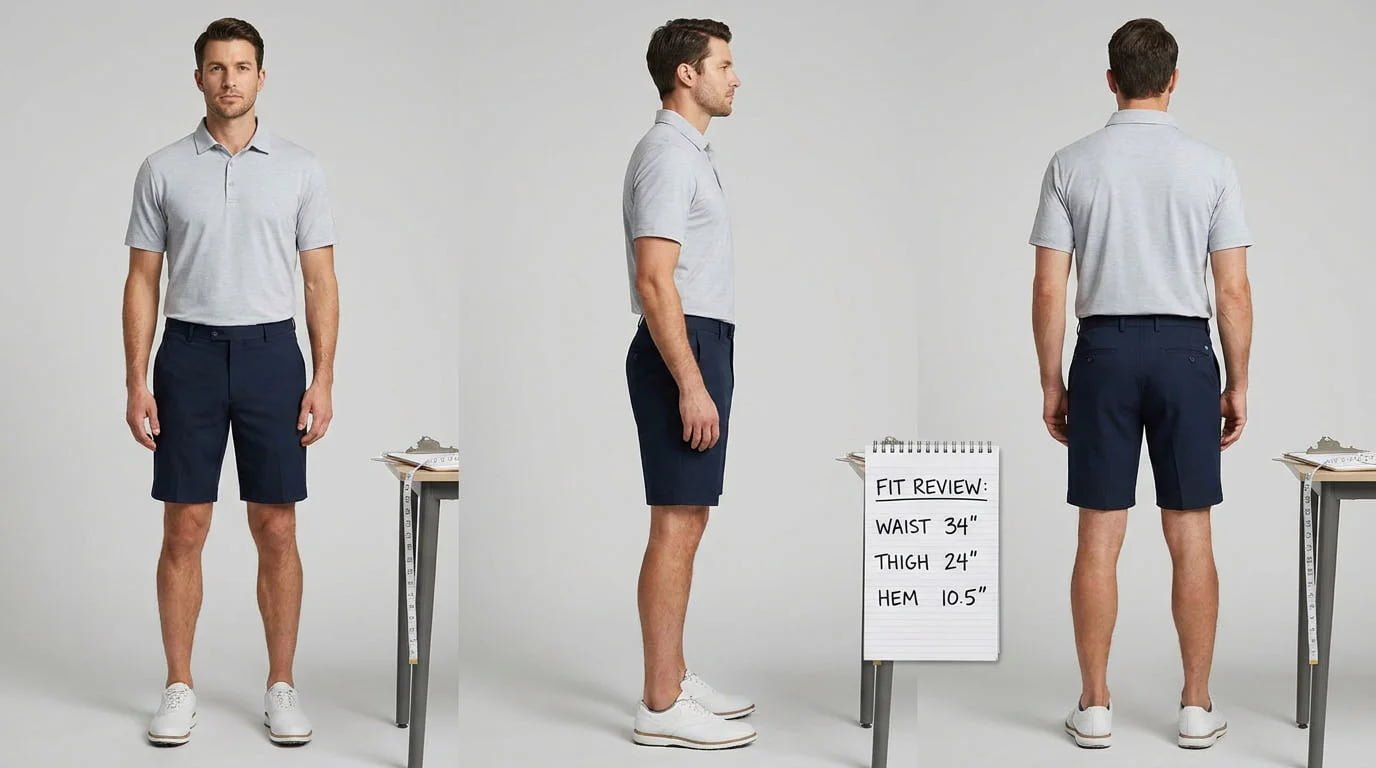
- Front, side and back photographs.
- Requested result and measurements that should remain unchanged.
For example:
The waistband is comfortable while standing. When seated, the sample pulls across the upper thigh and the hem catches. Please review thigh room and crotch balance while preserving the approved waist position.
This gives the pattern maker a problem to investigate without prescribing an unsupported correction.
Review Inseam and Leg Opening Together
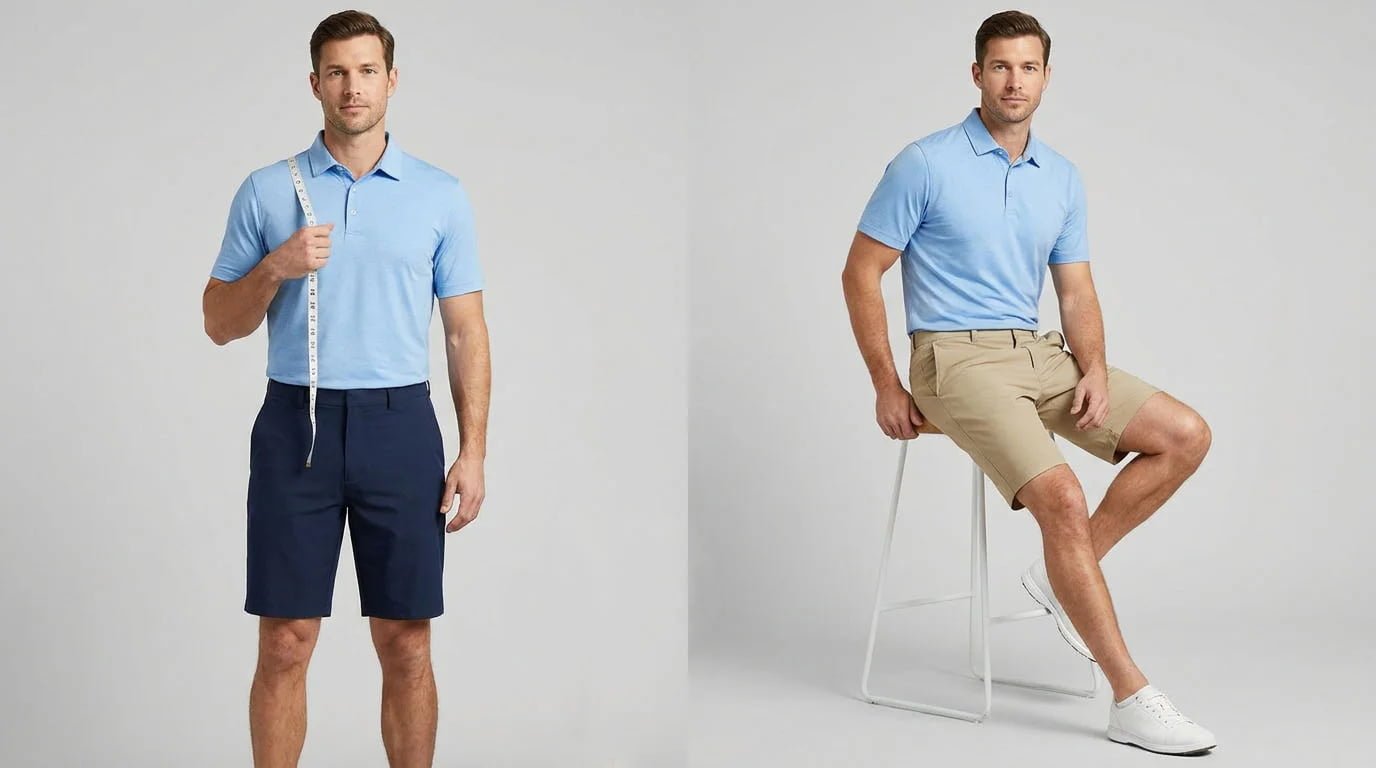
Inseam determines the inside-leg length. It does not guarantee a particular position above the knee: body proportions, rise and how the garment hangs also affect the result.
When developing two lengths from one block, check both on representative wearers. Shortening a tapered leg places the new hem at a different point in the pattern and on the body.
That may require an opening adjustment, but a shorter version does not automatically need a fixed increase in width. Review:
- Hem position while standing.
- Coverage while seated.
- Clearance around the thigh.
- Ride-up during walking.
- Front, side and back proportions.
Avoid using one opening measurement as a universal recommendation across different sizes and lengths.
Validate Fit in the Intended Fabric and Waistband
The same measurements can feel different in different fabrics.
Stretch direction, resistance to extension, recovery, drape and washing behavior all influence the result. Elastane percentage or fabric weight alone cannot determine the appropriate pattern ease.
A change from rigid fabric to stretch woven fabric is a reason to reassess the fit—not an instruction to reduce every measurement.
Likewise, a stretch shell does not guarantee a flexible waistband. Interlining, elastic, seams and other components influence how the completed waist behaves.
For detailed component choices, see our golf shorts fabric guide and golf shorts waistband types guide.
Keep Washing Changes Separate From Manufacturing Variation
Record measurements before and after the agreed wash-and-dry procedure. Reassess the garment’s comfort and appearance after it has dried and relaxed under the agreed conditions.
Initial measurement tolerance and dimensional change after washing are separate requirements. A sample can meet its initial specifications but change unacceptably after laundering.
Use a Repeatable Movement Test
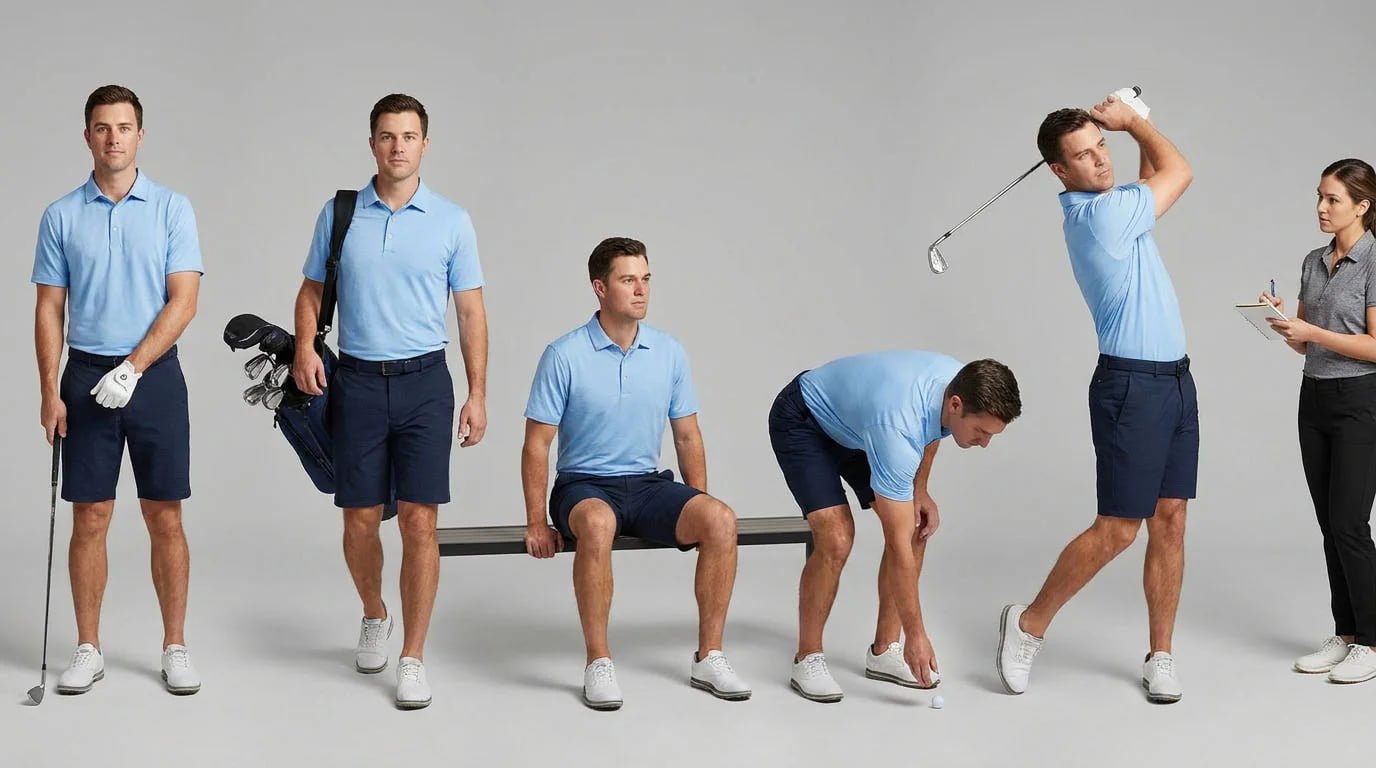
Review every revision using the same sequence and comparable conditions. Begin with empty pockets, then repeat relevant movements carrying the items the pockets are designed to hold.
| Test | Observe |
|---|---|
| Stand naturally | Waist position, seam balance, pocket appearance and drape |
| Walk | Thigh friction, hem catching and waistband movement |
| Sit in a chair or cart | Abdominal pressure, crotch comfort and coverage |
| Bend to retrieve a ball | Back coverage and seat tension |
| Take a golf address position and rotate | Hip restriction and seam or pocket distortion |
| Squat within a comfortable range | Thigh clearance and recovery after standing |
| Walk with loaded pockets | Garment distortion, waistband stability and pocket interference |
Record both the wearer’s feedback and visible changes. A sample that looks correct can still feel restrictive; a flat measurement check cannot replace a wearer review.
Approve the Base Fit Before Extending the Size Range
Once the base fit is acceptable, document the approved pattern and specification revision.
Then review representative smaller and larger sizes. A successful base-size sample does not prove that the complete size range fits correctly.
Keep the detailed grade increments in a separate grading specification. Our golf shorts size grading guide explains that stage.
Keep a Clear Fit Approval Record
The fit approval package should identify:
- Approved sample and pattern revision.
- Finished-garment targets and measurement methods.
- Fabric and waistband components.
- Fit-model measurements and review photographs.
- Movement and laundering observations.
- Outstanding corrections and final sign-off.
For FUWAY projects, the confirmed garment measurement tolerance is ±1.0 cm for each specified POM, with stricter approved tech pack requirements taking precedence. Apply the tolerance to the measurement as defined: a half-waist tolerance is not the same as a full-waist circumference tolerance.
Read our garment measurement tolerance guide for further explanation.
An approved block provides a reference for future styles. Revalidate it when fabric, construction, length or target wearers change.
For the wider production release covering branding, materials, construction and packaging, use our golf shorts sample checklist.
Frequently Asked Questions
Should a size 34 garment measure exactly 34 inches at the waist?
Not automatically. The size label, intended body measurement and finished waistband measurement must be defined separately. Wearing position, ease and waistband construction affect the relationship.
Can one fit model validate the whole collection?
One model can help establish a base fit. Additional representative wearers and sizes help assess whether the fit works across the intended customer range. Record their measurements so feedback can be interpreted consistently.
Why can different colors of the same shorts fit differently?
Possible causes include material-lot differences, finishing, relaxation, cutting or sewing variation. Compare measurements and material behavior before assigning a cause. Color alone does not establish why the fit changed.
How many fit sample rounds are necessary?
There is no fixed number. A new block, unfamiliar fabric or unresolved movement problem may require further revisions. Approve the fit when the agreed criteria are met rather than after a predetermined number of samples.
Develop Your Golf Shorts Fit With FUWAY
Share your reference garment, target wearer measurements, preferred silhouette, inseam options and known fit concerns. These details create a clearer starting point for pattern development and sample review.
Explore FUWAY’s custom golf bottoms development to discuss your next golf shorts collection.