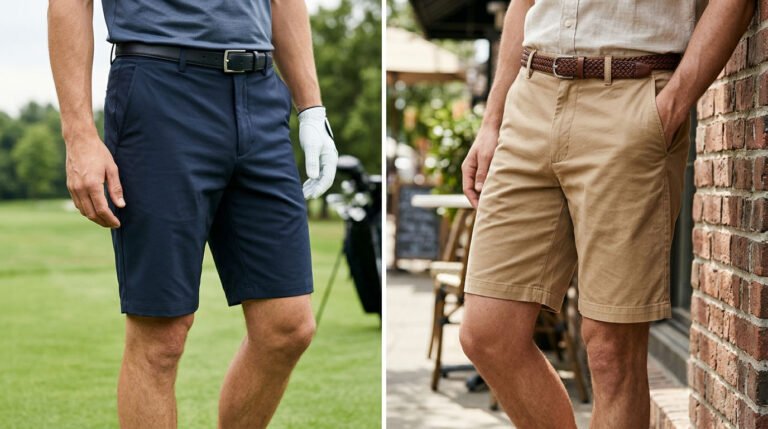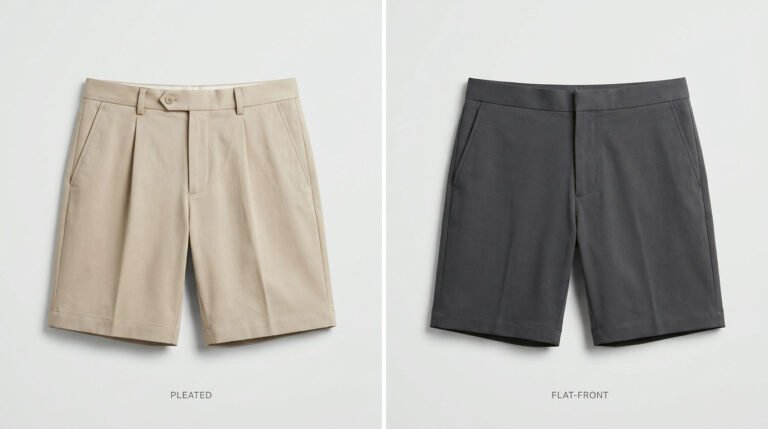
Golf pants and dress pants can look nearly identical. Both may feature a flat front, belt loops, tapered legs, and a tailored silhouette. But step onto a golf course, and the differences quickly become apparent.
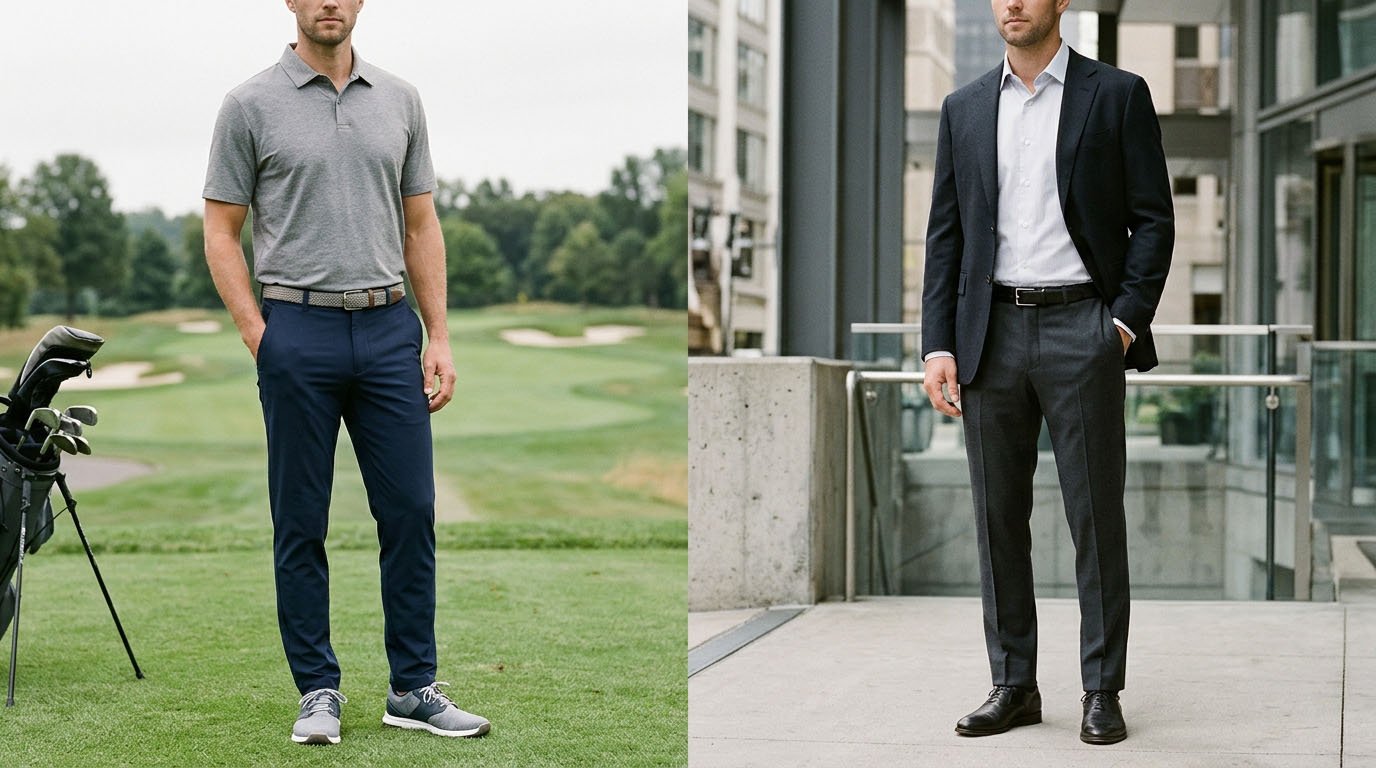
The core difference between golf pants and dress pants is purpose. Golf pants are built for movement, moisture management, and hours of activity. Dress pants prioritize refined drape, structure, and formal versatility.
Modern hybrid trousers blur the line between both. Understanding where they differ helps golfers make smarter choices—and helps apparel brands develop products that actually meet customer expectations.
Quick Answer: Are Golf Pants and Dress Pants the Same?
No. They may share similar styling cues, but golf pants and dress pants are engineered around completely different priorities.
| Feature | Golf Pants | Traditional Dress Pants |
|---|---|---|
| Primary use | Golf and active everyday wear | Business and formal occasions |
| Fabric | Performance synthetics or stretch blends (e.g., 88% nylon/12% elastane) | Wool, cotton, or tailored blends, often with minimal or no stretch |
| Stretch | Commonly 2-way or 4-way stretch | May be rigid or include subtle comfort stretch |
| Breathability | Prioritized for extended outdoor wear | Varies significantly by material |
| Fit | Built to accommodate rotational movement | Prioritizes clean tailoring |
| Waistband | May include flexible sections or shirt grippers | Typically structured and firm |
| Appearance | Ranges from athletic to tailored | Business casual to formal |
The distinction goes beyond whether a fabric stretches. It's about whether the complete garment delivers the mobility, comfort, look, and functionality the wearer actually needs.
7 Key Differences Between Golf Pants and Dress Pants
1. Fabric: Performance vs. Tailored Appearance
Golf pants typically rely on polyester, nylon, elastane, or blended fabrics engineered for movement, durability, and all-day comfort. A common performance blend might be 88% nylon with 12% elastane, giving the fabric four-way stretch without losing shape.
Dress pants lean toward wool, cotton, or polyester-viscose blends chosen for structure and drape. Many contain little to no elastane.
But fabric composition alone doesn't tell the full story. A pair of stretch wool dress trousers can offer excellent mobility, while a poorly constructed synthetic golf pant can still feel restrictive. The fabric's performance depends just as much on how it's cut and assembled.
For a deeper dive, see What Are Golf Pants Made Of?.
2. Stretch and Recovery
Golfers bend, rotate, squat, and walk for hours. Their pants need to move with them—without constantly pulling or riding up.
Two-way stretch gives flexibility in one direction. Four-way stretch stretches both lengthwise and crosswise, and is generally preferred for high-movement activities like golf.
But stretch alone isn't enough. Recovery is what keeps pants looking sharp after multiple swings. Fabric that stretches out and doesn't bounce back will bag around the knees and seat—a common failure point in poorly designed golf pants.
3. Breathability and Moisture Management
A round of golf means hours outdoors, often in shifting temperatures. Golf pants need to breathe, wick moisture, and dry quickly. Performance synthetics and merino wool blends both do this well, but through different mechanisms.
Dress pants prioritize a polished appearance, and breathability varies widely. Lightweight wool can be surprisingly airy, while cheap synthetic dress pants can feel clammy and trap heat. "Synthetic" doesn't automatically mean "breathable."
4. Fit and Movement
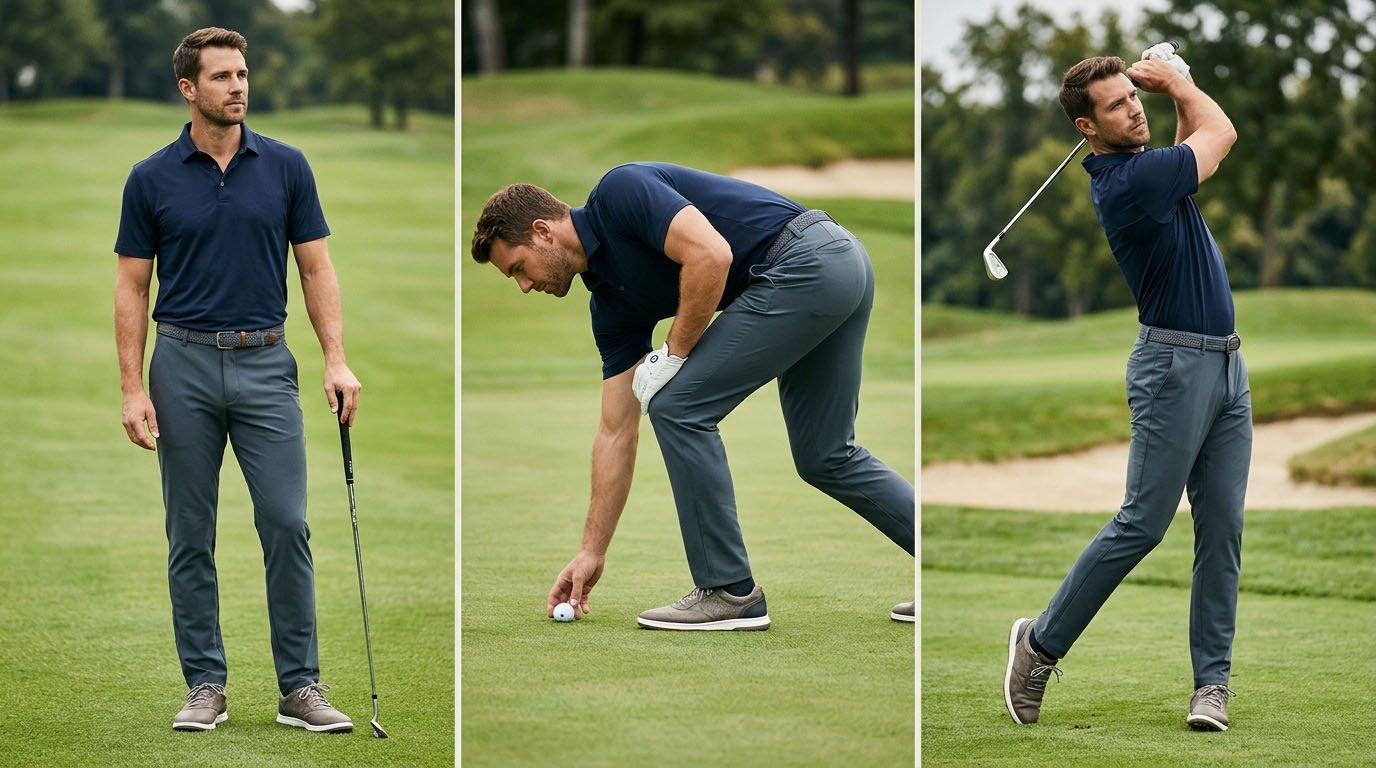
Golf pants must handle bending, walking, and rotational movement without binding. Key areas to watch: the waist, rise, seat, thigh, crotch, and knees.
A higher back rise or extra seat ease can help certain body types move more freely. But these adjustments aren't universal fixes. The real test is movement, not a mirror.
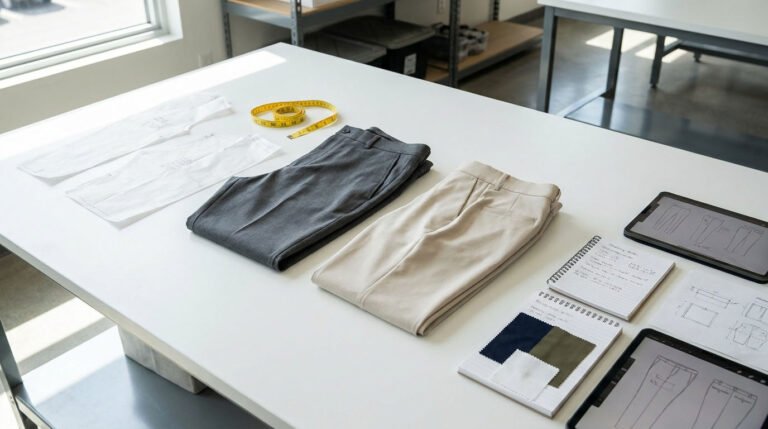
For apparel brands, converting a dress pant into a golf trouser requires more than changing the fabric. Stretch fabric cannot fully compensate for a pattern that restricts movement. A trouser may look correct during a standing fit assessment but become uncomfortable when the wearer bends or rotates.
Try This Before You Buy (or Approve a Sample)
- Stand naturally and check the overall silhouette.
- Take a golf stance and make a practice swing.
- Bend down as if picking up a ball.
- Squat and check for tightness at the seat and knees.
- Walk and sit. Note any pulling, bunching, or riding up.
A pant that looks great standing still but fails the squat test isn't a golf pant. For more detailed fit guidance, read How Should Golf Pants Fit?.
5. Waistband Construction
Dress waistbands are typically structured and crisp. Golf waistbands often incorporate flexible components—stretch inserts, elasticated sections, or silicone shirt-gripper tape to keep a polo tucked in during the swing.
These are optional design features, not hard requirements. The key is that the waistband works with the fabric and the intended silhouette. A rigid waistband can choke off an otherwise stretchy fabric's performance.
6. Pocket Functionality
Dress pants favor clean, streamlined pockets. Golf pants often go deeper, with more accessible openings, lighter pocket bags, and reinforcement at stress points.
Good pocket design supports the activity without adding visible bulk. It's a small detail that makes a big difference over 18 holes.
7. Appearance and Versatility
Dress pants lean on sharp creases, structured fabrics, and formal finishing. Golf pants span the spectrum—from overtly athletic designs to refined, tailored styles that pass easily for business casual.
Hybrid trousers sit right in the middle: understated styling combined with performance features. They're built for golf, travel, and everyday wear, making them one of the fastest-growing categories in men's bottoms.
Can You Wear Dress Pants for Golf?
Yes—but only if they meet three conditions:
- Movement: Can you swing, bend, walk, and sit without pulling or restriction? (See the movement test in Section 4 above.)
- Fabric: Is the material comfortable for the expected temperature and duration of play?
- Dress code: Does the course actually allow that style?
A flexible, breathable pair of tailored trousers might work fine for casual play or a charity scramble. But traditional formal pants—stiff, unforgiving, and often too warm—will make a long round feel even longer.
For frequent golfers, pants purpose-built for the game are nearly always the smarter investment.
Can Golf Pants Be Worn as Dress Pants?
In many business-casual settings, yes. As a replacement for formal suit trousers, usually no.
| Occasion | Golf Pants Suitability |
|---|---|
| Golf course | ✓ Suitable (check dress code) |
| Casual office | ✓ Often suitable |
| Business-casual meeting | ✓ Suitable with tailored styling |
| Travel and everyday wear | ✓ Commonly suitable |
| Formal business event | ⚠ Depends on requirements |
| Black-tie event | ✗ Generally unsuitable |
Golf pants look most "dressed up" when they feature matte fabrics, neutral colors, minimal visible athletic details, and a clean silhouette. For any occasion requiring a matched suit or formal evening wear, traditional dress trousers are still the right call.
Construction Details Brands Should Understand
The internal construction of golf trousers can influence comfort, mobility, and durability. Three areas deserve particular attention.
Waistband and Internal Components
Flexible waistband elements can dramatically improve comfort—especially when paired with stretch fabric. But the components must match the silhouette. A stiff waistband kills the performance of an otherwise stretchy fabric. An overly aggressive elastic can distort the look entirely.
Seams and Stress Points
Golf pants endure repeated stress around the seat, crotch, and thighs. Seam placement, stitch type, thread selection, and reinforcement all need to match both the fabric's stretch profile and the expected movement. Some designs benefit from a crotch gusset or alternative seam layout, but these are tools in the toolbox, not mandatory add-ons.
Pocket Bags and Finishing
Pocket fabric weight, belt loop construction, hem finish, and interlinings should all align with the garment's purpose. Lightweight pocket bags reduce bulk in performance styles. Structured alternatives suit more tailored hybrids.
Good construction is not about adding every available performance feature. It is about selecting details that solve genuine problems.
Should Your Brand Develop Golf Pants or Hybrid Trousers?
The right product depends entirely on who you're building for.
| Product Type | Target Customer | Development Priority |
|---|---|---|
| Performance Golf Pants | Frequent golfers | Mobility, comfort, real-world fabric performance |
| Hybrid Golf Trousers | Golfers who want everyday versatility | Balance of function and tailored appearance |
| Tailored Lifestyle Trousers | Business-casual customers | Refined styling and all-day comfort |
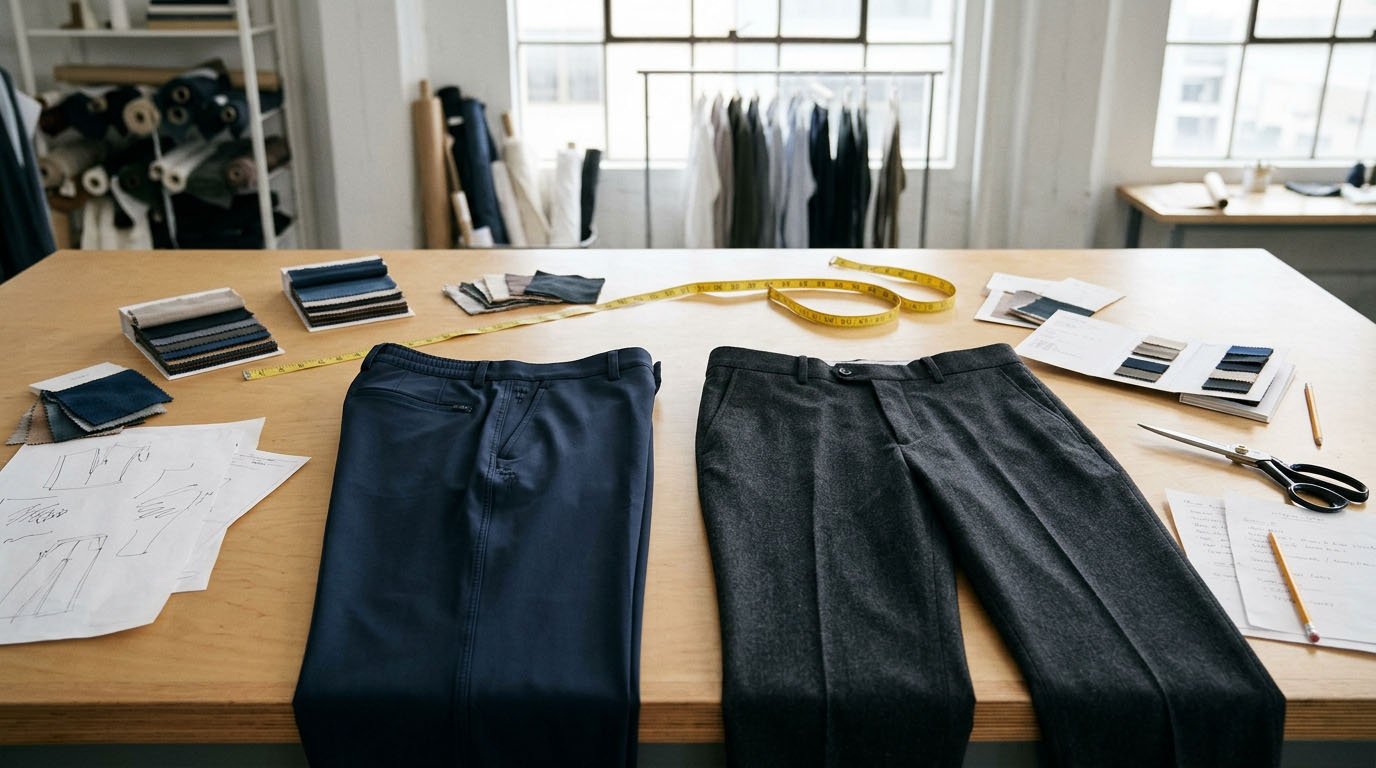
Performance Golf Pants
Prioritize movement, suitable fabric performance, comfortable construction, and extended wear. A clean appearance remains important, particularly for clubs with traditional dress expectations.
Hybrid Golf Trousers
Combine tailored styling with discreet performance features. Possible choices include matte stretch fabrics, concealed waistband flexibility, and conventional-looking pockets. The goal is everyday versatility without sacrificing essential golf comfort.
What to Lock Down Before Sampling
A clear development brief saves time, money, and costly sample rounds. Before reaching out to a manufacturer, define:
- Primary use: Golf, office, travel, or mixed use.
- Target customer: Activities, body proportions, and style preferences.
- Fabric: Desired look, stretch, recovery, and comfort requirements.
- Fit: Intended silhouette and movement needs.
- Construction: Waistband style, pocket details, seams, and finishing.
- Approval process: Fit checks, movement tests, and agreed quality standards.
Clear inputs reduce unnecessary sample revisions and speed up time-to-market.
FUWAY supports brands developing customized golf trousers and other golf bottoms. Explore our Custom Golf Bottoms manufacturing options.
For additional guidance on silhouettes, see Golf Pants Fit Types Explained.
Common Misconceptions
❌ "If it stretches, it's golf pants."
Plenty of stretch dress pants can't handle a golf swing. Fit pattern and construction matter as much as fabric content.
❌ "Synthetic fabric breathes better than wool."
Not automatically. Lightweight merino wool can outperform cheap polyester in breathability and temperature regulation.
❌ "As long as it looks good, it'll work."
The best-dressed golfer on the course is still uncomfortable if their pants don't move with them.
Frequently Asked Questions
Are golf pants just dress pants with stretch?
No. Some look similar, but golf pants often differ in fit pattern, waistband construction, pocket design, and overall fabric performance—not just stretch content.
Can you wear regular slacks golfing?
Yes, if they meet the course's dress code and let you move comfortably. But traditional slacks tend to be less practical for frequent or extended play.
Are golf pants business casual?
Many are—especially styles with matte fabrics, neutral colors, and tailored silhouettes. Suitability depends on the specific workplace or occasion.
Can a manufacturer convert a dress pant design into golf pants?
Yes. A dress pant can serve as a design reference, but the manufacturer should assess fabric suitability, pattern mobility, waistband construction, and sample performance before production approval.
Conclusion: Which One Is Right for You?
Neither category wins across the board.
Golf pants are the practical choice for regular golf. Dress pants are better suited to occasions that demand a more traditional, structured appearance. Hybrid trousers offer a versatile middle ground for those who want mobility without sacrificing everyday style.
For brands, successful development starts with one question: Who is your customer, and what do they actually need from this garment? From there, the right fabric, fit, and construction decisions follow.
Develop Custom Golf Pants With FUWAY
FUWAY provides OEM/ODM manufacturing for brands developing custom golf pants, shorts, polos, and other golf apparel.
Whether you're planning performance trousers or tailored hybrid styles, our team can support your product brief, fabric selection, customization requirements, and sample development.
Learn more about the Golf Pants OEM Process or contact FUWAY to discuss your project.