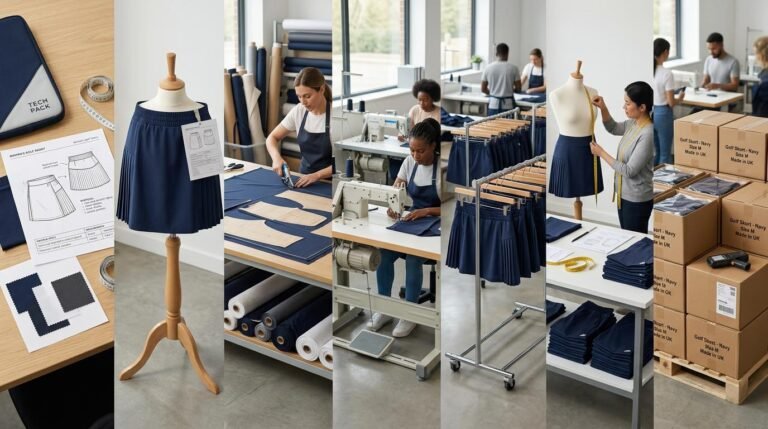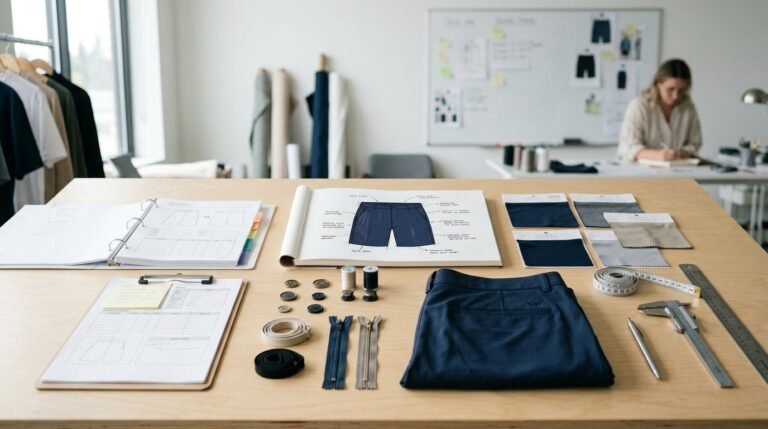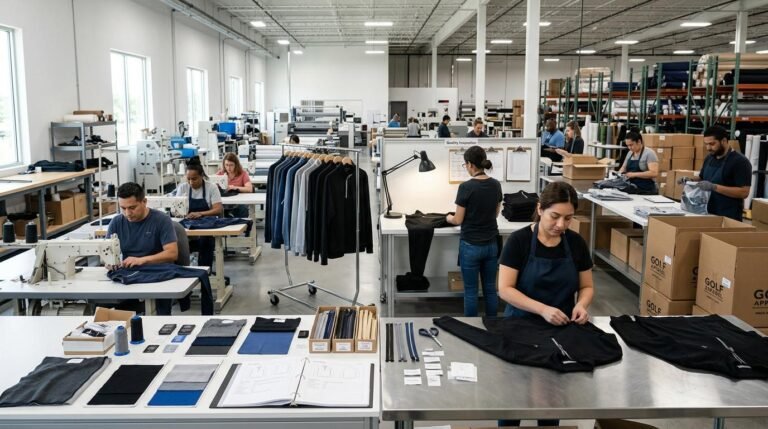
The golf pants OEM process usually includes product development, tech pack preparation, fabric sourcing, prototype sampling, pre-production approval, bulk manufacturing, quality control, and shipment coordination. For most projects, the full cycle takes about 60 to 90 days, depending on fabric availability, sample revisions, trim confirmation, and order quantity.
For brands entering the golf apparel market, understanding how custom golf pants move from concept to finished goods helps reduce delays, control quality, and improve communication with manufacturers. Whether the goal is to develop a premium performance style, a private label golf trouser line, or a tournament-ready uniform program, a structured OEM process makes production more predictable.
This guide explains how golf pants are manufactured from design to mass production, including the key stages, required documents, common delays, quality checkpoints, and what buyers should prepare before starting.
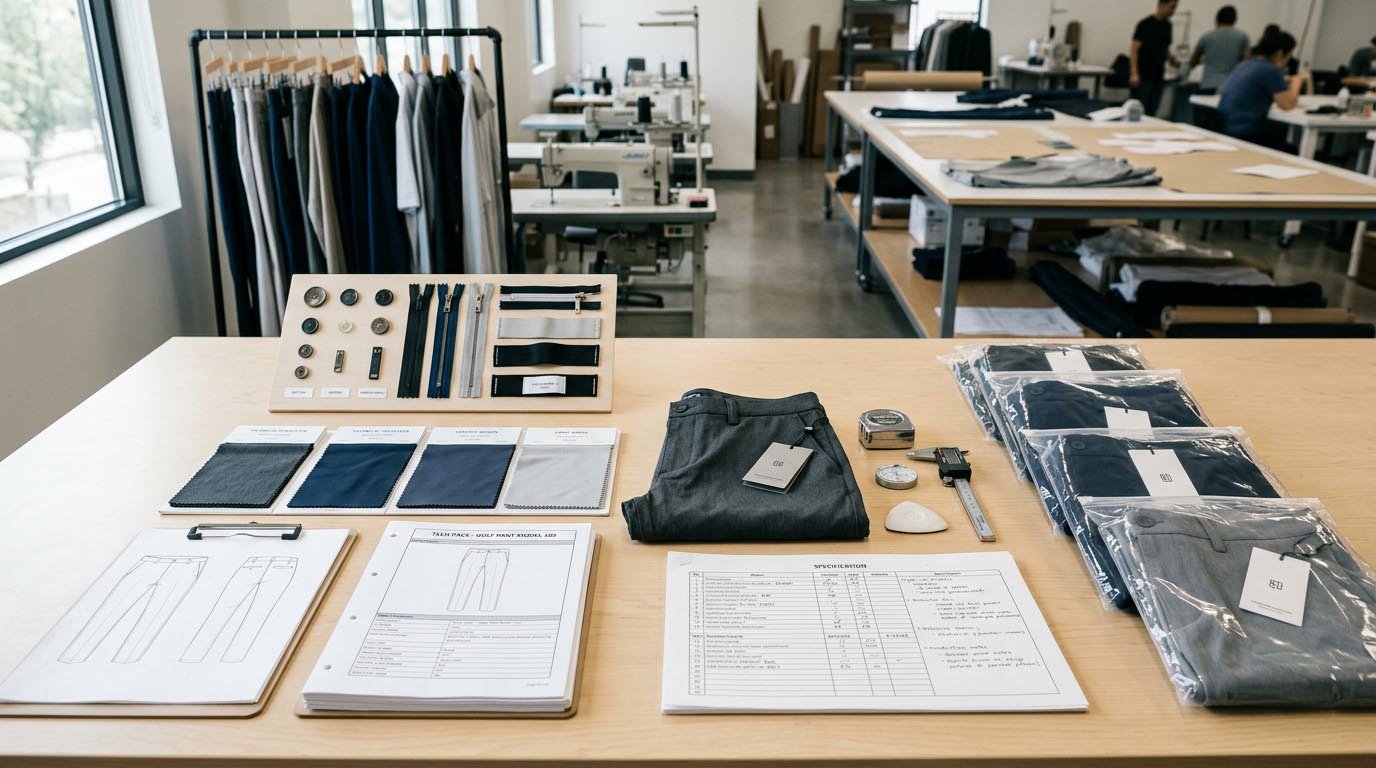
Quick Answers: Golf Pants OEM Process
How long does golf pants OEM production take?
A typical project takes 60 to 90 days, including development, sampling, approval, production, and shipping preparation. Timelines may be longer if fabric needs special sourcing or if multiple sample revisions are required.
What is the MOQ for custom golf pants?
MOQ depends on the fabric, trim complexity, and supplier production model. Many manufacturers require a few hundred pieces per style, while simpler private label projects may allow lower quantities.
What is included in a golf pants tech pack?
A standard tech pack usually includes design sketches, measurement charts, fabric details, trim notes, construction instructions, artwork placement, label information, and packing requirements.
What fabric is commonly used for golf pants?
Many golf pants are made with polyester-spandex performance fabrics because they offer stretch, shape retention, wrinkle resistance, and easier care. Some projects also use nylon blends, recycled fabrics, or cotton-blend constructions depending on positioning.
Can I request changes after bulk production starts?
Minor details may still be adjustable before fabric cutting or trim application, but major changes after production begins are usually costly and may delay delivery.
Golf Pants OEM Process Overview
The OEM process is not just placing an order with a factory. It is a step-by-step development cycle that turns a design concept into a repeatable production standard.
| Stage | Main Focus | Typical Output |
|---|---|---|
| Product Planning | Define style direction, market, specs | Product brief |
| Tech Pack Development | Translate design into production instructions | Tech pack |
| Fabric and Trim Sourcing | Select materials and accessories | Swatches and trim options |
| Prototype Sampling | Test fit, construction, and appearance | First sample |
| Pre-Production Approval | Confirm final details before bulk | Approved sample and size set |
| Mass Production | Cut, sew, finish, and pack goods | Finished order |
| Inspection and Shipping | Verify quality and prepare delivery | Shipped goods |
Each stage supports the next one. If the early steps are vague, later problems become harder and more expensive to fix.
Step 1: Define the Product Before Development Starts
Before a factory can quote or sample accurately, the basic direction of the golf pants needs to be clear.
Key questions to define early
- Is the product for retail, private label, uniforms, or tournament use?
- Is the fit classic, slim, athletic, or relaxed?
- Will the pants be designed for men, women, or both?
- Is the fabric intended for hot weather, year-round wear, or cooler conditions?
- What price range should the final product fit?
- Does the style need premium details or a simpler commercial structure?
A clearer product brief makes it easier to choose fabric, trims, and construction methods. It also helps the manufacturer understand whether the project is focused on performance, brand image, cost control, or speed to market.
Step 2: Create a Golf Pants Tech Pack
A golf pants tech pack is the core document used to guide sampling and production. It tells the manufacturer exactly what needs to be made.

What a golf pants tech pack usually includes
- front and back sketches
- pocket and waistband details
- measurement chart by size
- inseam and leg opening specifications
- fabric composition and weight
- trim list
- label and logo placement
- stitching and construction notes
- color references
- packaging instructions
Why tech packs matter
A detailed tech pack helps reduce confusion in areas such as:
- pocket depth
- waistband construction
- fit proportions
- taper shape
- trim placement
- logo positioning
If a tech pack is incomplete, the factory may have to guess key details during pattern development. That often leads to avoidable sample revisions.
What buyers should prepare before sending an inquiry
Try to provide:
- reference images or sketches
- size range
- target quantity
- preferred fabric direction
- logo files
- expected delivery timeline
- packaging requirements if any
The more complete the initial file set is, the easier it is for the supplier to review feasibility and pricing.
Step 3: Select Fabric and Trims for Golf Pants
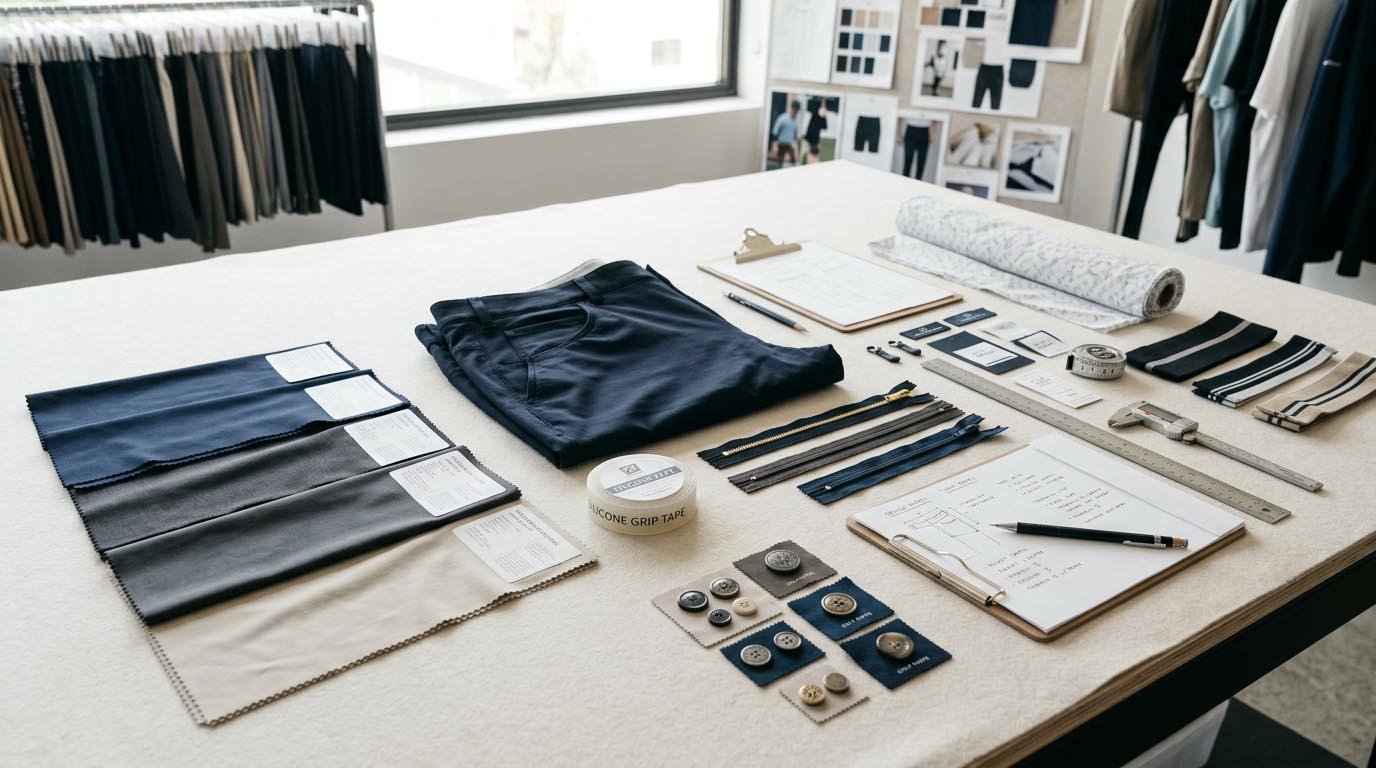
Fabric and trim sourcing is a major part of the custom golf pants manufacturing process. Performance, comfort, price, and brand positioning are all affected by this step.
Common golf pants fabric options
| Fabric Type | Best For | Main Benefits | Main Considerations |
|---|---|---|---|
| Polyester-Spandex | Performance golf pants | Stretch, easy care, wrinkle resistance | Common for active styles |
| Nylon-Spandex | Premium technical pants | Smooth hand feel, durability, mobility | Usually higher cost |
| Cotton-Poly Blend | Casual golf trousers | Softer touch, classic appearance | Less technical than performance blends |
| Recycled Performance Fabric | Sustainable collections | Eco positioning with performance features | Material availability may vary |
Performance features often requested
- four-way stretch
- moisture management
- wrinkle resistance
- UV protection
- easy-care finish
- shape retention
Trim items that usually need approval
- zipper type and size
- button style
- waistband interlining
- pocket lining fabric
- silicone grip tape if used
- care label
- woven brand label
- hang tag
- poly bag and carton marking
Material approval should happen before final sample development. Waiting too long to confirm trims often causes delays later.
Step 4: Develop the First Sample
After the tech pack and material direction are confirmed, the supplier creates the first prototype.
What happens during prototype sampling
- pattern making
- sample cutting
- garment sewing
- trim application
- internal review by factory
- sample shipment to buyer
The first sample is used to check whether the design works in physical form.
What to review on a golf pants sample
Check these details carefully:
- waist fit
- rise balance
- hip room
- thigh comfort
- knee shape
- leg taper
- inseam length
- pocket function
- zipper smoothness
- fabric stretch recovery
- waistband stability
- overall silhouette
A golf pants sample should not be reviewed only on a hanger. If possible, it should also be worn during movement. Golf-specific issues often appear when bending, walking, squatting, or rotating through a swing.
Common sample problems
- waistband feels too rigid
- pockets are too shallow
- inseam is too short or too long
- leg opening is too narrow
- seat area pulls during movement
- zipper placket does not sit flat
Most OEM projects require at least one sample review round before moving forward.
Step 5: Fit Testing and Sample Revisions
Fit testing is one of the most important steps in golf pants development because small proportion issues can strongly affect comfort and appearance.
Why fit testing matters
Golf pants need to perform in both movement and presentation. A style that looks sharp in a static fitting may still fail during actual wear if:
- the waistband digs in when bending
- the thigh feels restrictive
- the seat pulls during rotation
- the pockets gap open
- the hem breaks poorly over golf shoes
What manufacturers usually revise after fit comments
- waist measurement
- rise length
- hip and thigh ease
- knee width
- taper line
- inseam
- pocket opening
- waistband structure
If the comments are clear and measured, the second sample is usually much closer to production standard than the first.
Step 6: Approve the Size Set and Pre-Production Sample
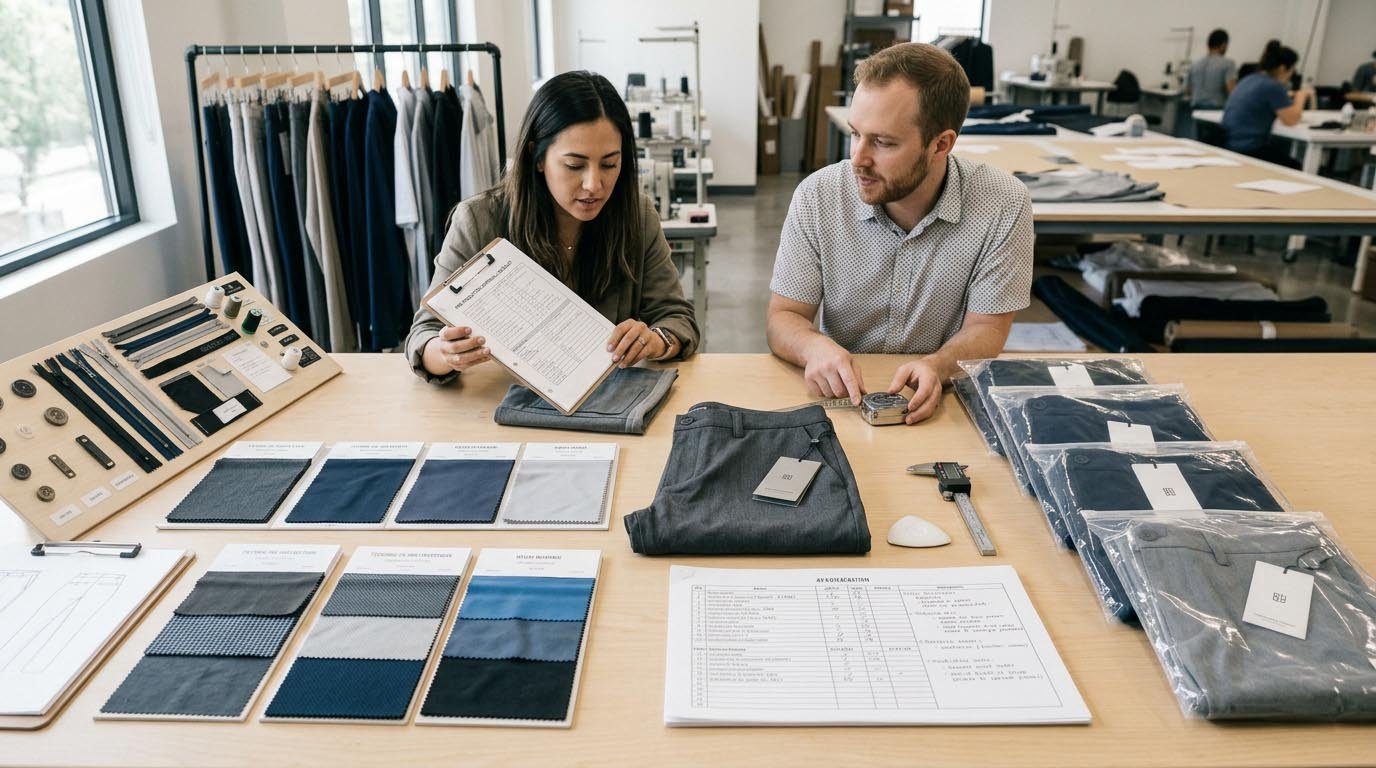
Before bulk production begins, buyers usually review a pre-production sample and sometimes a full size set.
What the pre-production stage confirms
- final fabric
- approved color
- final trims
- measurement consistency
- logo or label placement
- sewing quality
- packaging details
Why a size set matters
A sample in one size does not fully confirm how the style grades across the full range. A size set helps verify whether:
- proportions scale correctly
- inseam grading is consistent
- waistband growth between sizes is accurate
- pocket and leg balance remain proportional
What to approve before mass production
Do not move into bulk manufacturing until these points are clear:
- final measurement chart
- tolerance standard
- approved sample reference
- trim confirmation
- label wording
- packing instructions
- carton marks
- shipping method if time-sensitive
This step is often the last practical chance to prevent avoidable bulk issues.
Step 7: Start Mass Production
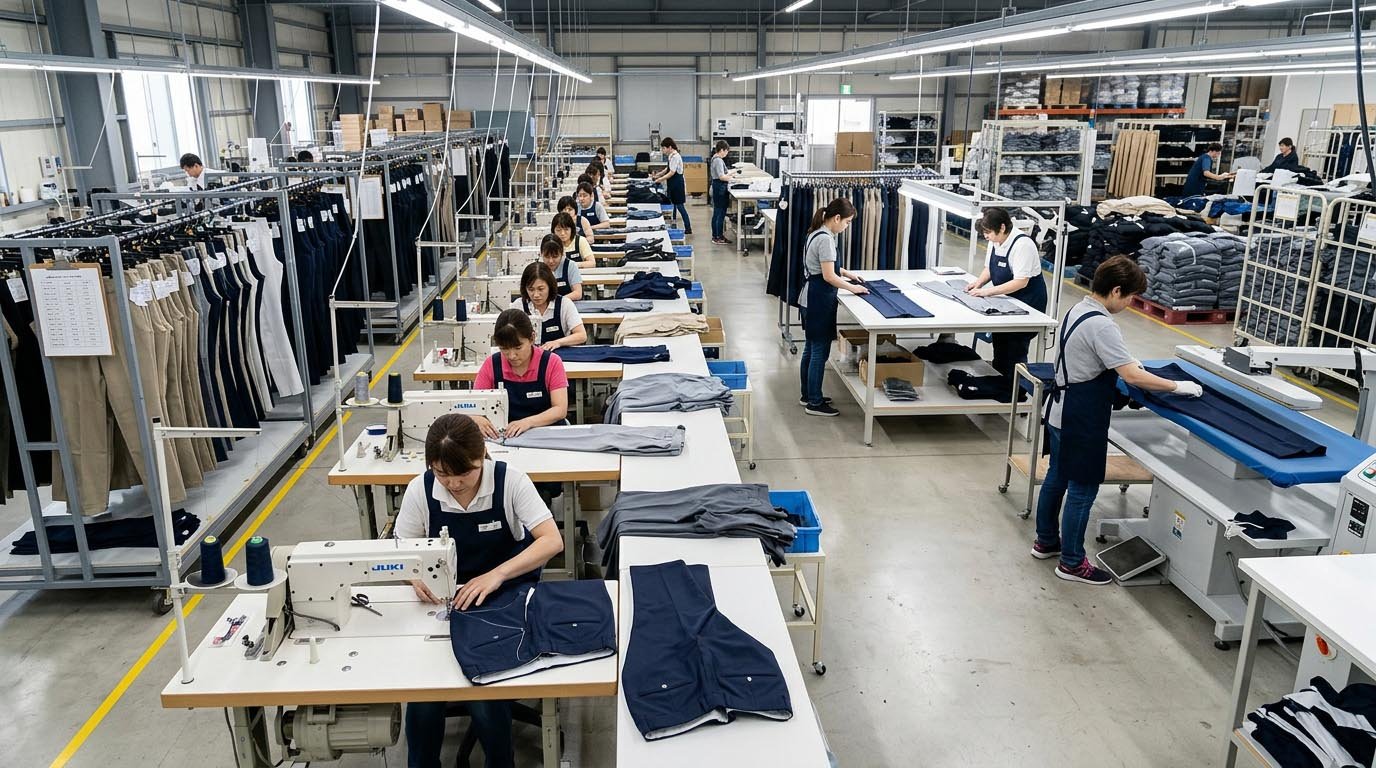
Once approvals are completed, the order enters bulk production.
Main stages of golf pants mass production
- bulk fabric arrival and inspection
- fabric relaxation or pre-treatment if needed
- marker making and cutting
- sewing line setup
- assembly
- finishing
- pressing
- labeling
- packing
What affects production lead time
- fabric lead time
- trim readiness
- order quantity
- number of colors
- factory schedule
- construction complexity
- whether special washing or finishing is required
Simple orders can move faster than heavily customized programs. Orders with new fabric development, branded trims, or multiple revision rounds usually take longer.
Step 8: Quality Control During Production
Quality control should happen throughout the order, not only at the end.
Common quality checkpoints
| Production Stage | What to Check |
|---|---|
| Fabric Inspection | Color consistency, defects, weight, hand feel |
| Cutting Stage | Pattern accuracy, panel matching, marker use |
| Sewing Stage | Seam quality, measurement control, workmanship |
| Finishing Stage | Thread trimming, pressing, labeling |
| Final Inspection | Appearance, measurements, packing accuracy |
Common defects in golf pants production
- wrong measurement
- shade variation
- uneven stitching
- twisted leg seam
- poor waistband finishing
- incorrect labels
- zipper malfunction
- puckering near pockets
- poor pressing or packing
Why inline quality control matters
If defects are found only after the entire order is finished, correction becomes slower and more expensive. Inline inspection helps identify repeated issues early, especially during sewing and finishing.
For larger projects, many buyers also use a pre-shipment inspection before the goods leave the factory.
Step 9: Packing, Shipping and Delivery
After final inspection, the goods move into export packing and shipment coordination.
Common shipping preparation items
- packing list
- commercial invoice
- carton labeling
- country of origin details
- barcode or SKU labels if required
- shipping marks
- carton count confirmation
Main shipping options
Air freight
Best for urgent deliveries or lower-volume orders with tight launch deadlines.
Sea freight
More cost-effective for larger shipments and standard replenishment timelines.
Rail or combined logistics
Sometimes used depending on destination and shipping strategy.
What can delay shipment
- unfinished documents
- carton count mismatch
- failed inspection
- customs compliance issues
- booking congestion
- peak season logistics pressure
Good communication between buyer, supplier, and freight partner is important at this stage, especially for time-sensitive launches.
What Causes Delays in Golf Pants OEM Projects?
Even well-planned orders can face delays. The most common causes include:
- incomplete tech packs
- late sample feedback
- fabric stock shortages
- trim color mismatch
- repeated fit revisions
- unclear approval records
- factory production congestion
- shipping season pressure
Many of these issues can be reduced with earlier planning and faster decision-making.
Main Cost Factors in Custom Golf Pants Manufacturing
Unit cost is influenced by more than sewing labor. The main factors usually include:
- fabric type
- stretch content
- fabric weight
- trim quality
- pattern complexity
- pocket structure
- branding details
- labels and packaging
- order volume
- inspection requirements
When comparing suppliers, it is important to understand what is included in the quote. A lower unit price may not include all trims, packaging, or quality control services.
OEM vs Private Label Golf Pants
Not every project requires full OEM development. Some brands start with private label programs before moving into deeper customization.
| Model | Meaning | Best For | Customization Level |
|---|---|---|---|
| OEM | Product made to buyer's specifications | Brands building unique products | High |
| Private Label | Existing style with custom branding | New brands and faster launch plans | Medium |
| Stock Program | Ready-made styles with limited customization | Events or quick projects | Low |
Choose OEM if:
- you want your own fit and construction
- long-term product differentiation matters
- you need unique materials or details
Choose private label if:
- you want faster development
- the budget is more limited
- you are testing the market first
Common Mistakes in Golf Pants OEM Development
Avoiding these mistakes can save time, money, and product quality.
1. Starting without a clear tech pack
This often leads to miscommunication in pattern making and sampling.
2. Choosing fabric based only on price
Low-cost fabric may reduce performance, recovery, and appearance.
3. Approving a sample without movement testing
Golf pants must work during play, not only in static fitting.
4. Rushing into bulk production
Skipping proper review of size sets, trims, or labels can create avoidable errors.
5. Ignoring packaging until the end
Packing details affect both presentation and export readiness.
6. Underestimating lead time
Golf apparel development usually takes longer than many first-time buyers expect.
Supplier Checklist Before Starting a Golf Pants OEM Project
Before choosing a factory, ask these questions:
- What is your MOQ for custom golf pants?
- Can you support both OEM and private label projects?
- What performance fabrics do you recommend?
- Can you help review or create a tech pack?
- How many sample rounds are typical?
- How do you control fit consistency in bulk production?
- What trims can be customized?
- Do you provide pre-shipment inspection support?
- What is the realistic lead time for sampling and production?
- What packaging and labeling options are available?
The answers help reveal whether the supplier is experienced in golf apparel or only general casualwear production.
FAQ: Golf Pants OEM Process
How long does the golf pants OEM process take?
Most projects take around 60 to 90 days, but the actual schedule depends on sample revisions, material sourcing, order quantity, and production planning.
What is the MOQ for custom golf pants?
MOQ varies by supplier and product complexity. Fully customized OEM styles usually require higher quantities than private label or stock-based programs.
What fabric is best for golf pants?
Performance polyester-spandex and nylon-spandex blends are commonly used because they provide stretch, comfort, and easy care.
What is included in a golf pants tech pack?
A tech pack usually contains sketches, measurements, materials, trims, construction notes, logo placement, and packaging instructions.
Can I make private label golf pants instead of full OEM?
Yes. Private label is a common option for brands that want faster launch timing and lower development complexity.
What should I approve before bulk production starts?
Buyers should approve the final sample, measurements, fabric, trims, labels, color, and packaging details before mass production begins.
Final Thoughts
The golf pants OEM process is a structured path from concept to finished product. It usually involves design planning, tech pack development, material sourcing, sample review, pre-production approval, bulk manufacturing, quality control, and shipping coordination.
For brands, clubs, and private label buyers, the key to a smoother project is simple:
- define the product clearly
- prepare complete documents
- review samples carefully
- confirm approvals before production
- work with a supplier that understands golf apparel requirements
When these steps are handled well, custom golf pants are easier to develop, easier to reproduce, and more likely to meet both performance and brand expectations.