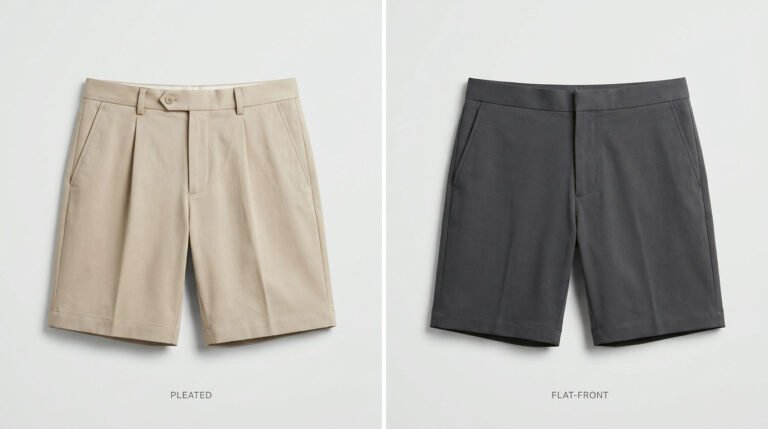
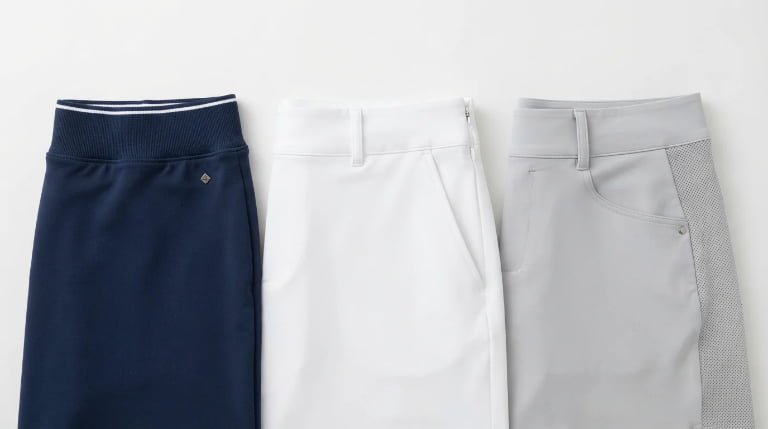
Developing men's and women's golf pants requires more than changing sizes or adjusting the appearance of an existing pattern.
Although both products may use similar fabrics and construction methods, their waist-to-hip shaping, rise balance, grading rules, and fit requirements must match their intended customers.
A common development mistake is assuming that a successful men's golf pants pattern can be scaled into a women's version without additional validation.
The main manufacturing differences between men's and women's golf pants involve pattern development, sizing and grading, fit validation, and selected construction details. Fabrics and trims may be shared, but each distinct fit must meet its own approved specifications.
For golf apparel brands developing both collections, understanding which specifications need separate approval—and which components can be shared—helps reduce unnecessary sample revisions and maintain production consistency.
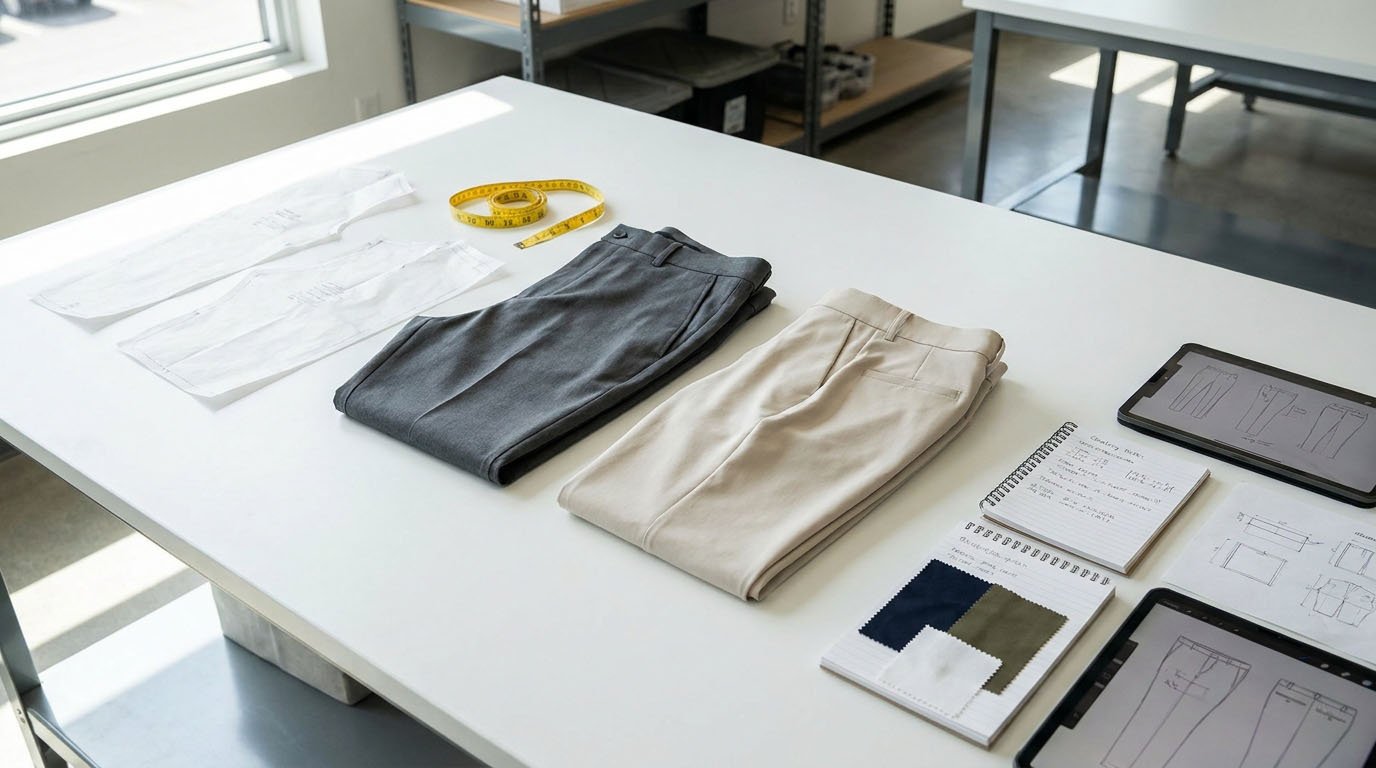
Key 1. Men's vs Women's Golf Pants: Manufacturing Differences at a Glance
The differences between men's and women's golf pants are primarily related to the intended fit and construction, not simply the gender label.
For example, a fitted women's trouser may need more pronounced waist-to-hip shaping than a traditional men's straight-leg trouser. However, a relaxed women's design may require less shaping than a fitted men's athletic style.
Manufacturers should therefore develop each style according to its target customer, silhouette, and size specifications.
| Manufacturing Variable | Men's Golf Pants | Women's Golf Pants | Production Decision |
|---|---|---|---|
| Base pattern | Based on the intended men's fit | Based on the intended women's fit | Separate approval |
| Waist-to-hip shaping | Depends on target proportions | May require different contouring | Separate validation |
| Rise construction | Based on waist position and fit | Based on waist position and fit | Style-specific |
| Leg silhouette | Straight, tapered, slim, or relaxed | Slim, straight, tapered, wide-leg, or cropped | Style-specific |
| Fabric | Stretch woven, knit, or blends | Similar fabric options | Can be shared if suitable |
| Waistband | Structured, contoured, or elasticated | Structured, contoured, or elasticated | Depends on design |
| Pockets | Functional layout based on style | Functional layout based on style | Separate testing |
| Size grading | Approved men's size specifications | Approved women's size specifications | Separate rules |
| Fit approval | Target fit models and size range | Target fit models and size range | Independent approval |
The key principle is simple: share compatible materials where practical, but do not assume that one approved fit validates another.
Key 2. How Do Pattern Blocks, Rise, and Waist-to-Hip Shaping Differ?
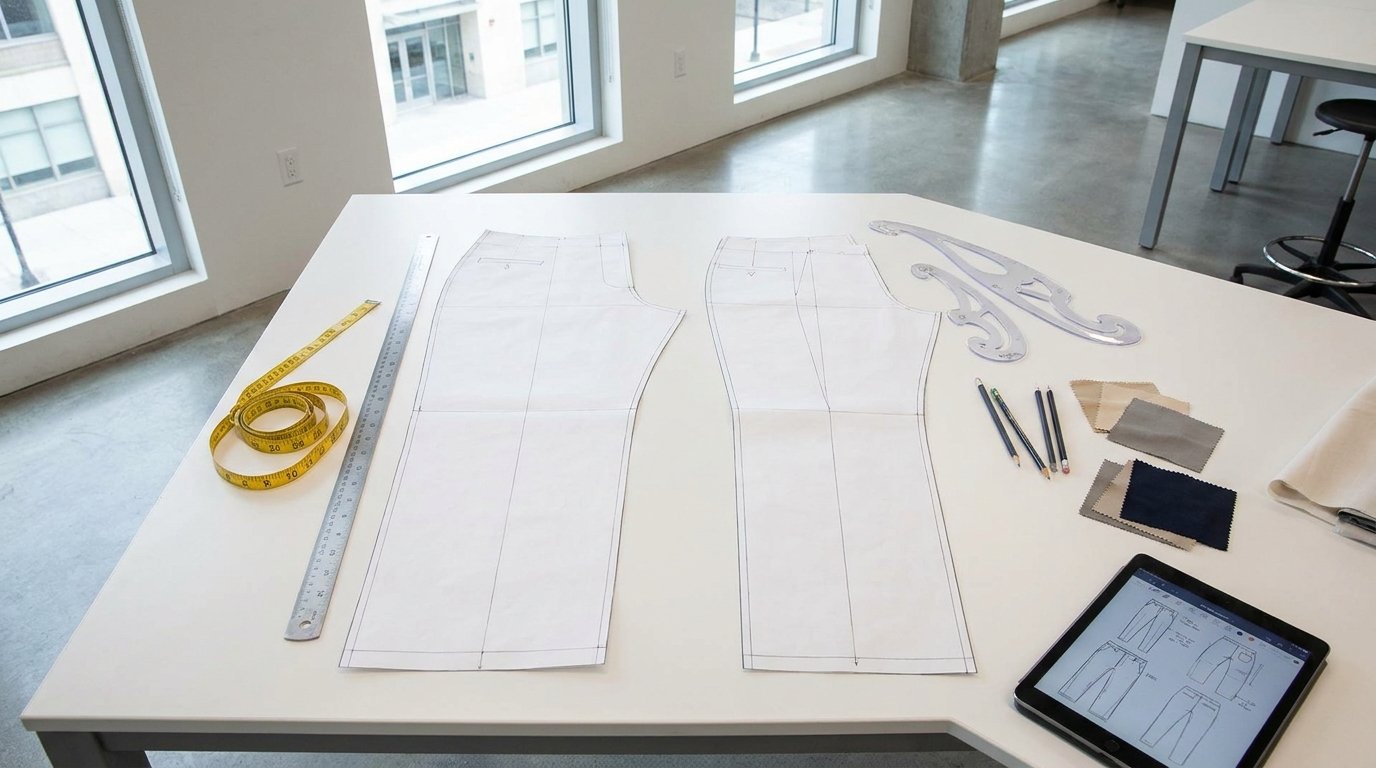
Pattern engineering is one of the most important considerations when developing men's and women's golf pants.
A well-developed trouser pattern must balance waist shaping, hip room, crotch geometry, thigh ease, and leg proportions.
Changing one of these elements can affect the fit of the entire garment.
Waist-to-Hip Shaping
Traditional men's tailored golf pants often use a relatively straight waist-to-hip profile, while certain fitted women's styles require more pronounced shaping.
However, this is a design tendency, not a universal rule.
For each style, manufacturers need to confirm:
- Target customer measurements and fit model.
- Intended waist position and garment silhouette.
- Waist and hip ease.
- Side-seam shaping and waistband curvature.
For example, if a sample gaps at the back waistband while fitting correctly through the hips, the problem may involve waistband curvature, back-rise balance, or the relationship between waist and seat measurements.
Simply reducing the entire waist measurement may create tightness elsewhere.
Front and Back Rise Balance
Rise construction affects how the pants sit at the waist and respond to movement.
The front rise, back rise, crotch extension, and seat shaping must work together.
| Pattern Area | What to Check | Potential Fit Issue |
|---|---|---|
| Front rise | Waist position and crotch balance | Pulling or excess fabric |
| Back rise | Seat coverage and movement | Waistband pulling down |
| Hip curve | Waist-to-seat relationship | Gaping or tightness |
| Crotch extension | Thigh and seat mobility | Restricted movement |
| Leg balance | Knee position and taper | Twisting or uneven drape |
Fit Testing for Golf Movement
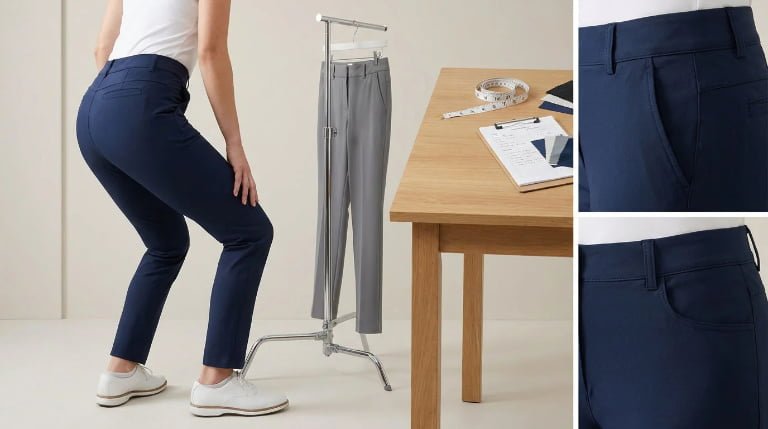
Golf pants should be evaluated during standing, walking, sitting, bending, and golf-address movements.
These checks help reveal problems that may not be visible when measuring the garment flat.
A brand should not treat a correctly measured garment as automatically having an approved fit.
For detailed explanations of rise, knee position, hem opening, and movement allowance, see FUWAY's Golf Pants Patterning Guide.
Key 3. How Do Men's and Women's Golf Pants Sizing and Grading Differ?
Sizing and grading determine whether an approved pattern maintains its intended fit across the complete size range.
Men's and women's golf pants may use different size systems, body measurement references, and grading increments.
Grading should follow the brand's approved size specifications, rather than applying one fixed percentage increase to every garment measurement.
Real Example: FUWAY Men's Golf Pants Size Chart
The following chart is a real adult men's pants specification provided by FUWAY.
It illustrates how finished garment measurements change across sizes 30–40.
FUWAY Men's Pants Size Chart — All Measurements in Centimeters (cm)
| Measurement / Size | 30 | 32 | 34 | 36 | 38 | 40 |
|---|---|---|---|---|---|---|
| Pants Length | 104 | 105 | 107 | 109 | 111 | 113 |
| Waist | 82 | 87 | 92 | 97 | 102 | 107 |
| Hip / Seat | 104 | 109 | 114 | 119 | 124 | 129 |
| Leg Opening | 32.5 | 35 | 37.5 | 40 | 42.5 | 45 |
| Inseam | 78 | 79 | 80 | 81 | 82 | 83 |
Source: FUWAY-provided adult men's pants size chart. These are finished garment specification values for one style, not universal measurements for all men's golf pants. Measurement methods must be defined in the corresponding tech pack.
What Does This Size Chart Tell Us About Grading?
The chart shows that different measurement points follow different increments.
Across the six sizes:
- Waist increases by 5 cm between consecutive sizes.
- Hip / Seat increases by 5 cm between consecutive sizes.
- Leg Opening increases by 2.5 cm between consecutive sizes.
- Inseam increases by 1 cm between consecutive sizes.
- Pants Length increases by 1 cm from size 30 to 32, then by 2 cm for each subsequent size.
This illustrates an important manufacturing principle: not every point of measure follows the same grading increment.
The size labels (30, 32, 34, etc.) are not themselves a substitute for finished garment measurements. For example, the chart specifies an 82 cm finished waist measurement for size 30.
Brands must confirm how each measurement relates to the intended wearer and approved fit.
The provided chart does not include front-rise, back-rise, or thigh measurements. These should be specified separately where required rather than inferred from the existing figures.
Why Can't Brands Apply the Same Grading Rules to Women's Pants?
A women's golf pants collection may use a different size system, silhouette, target body proportions, and fit requirements.
Consequently, copying the increments from FUWAY's men's chart would not establish an appropriate women's size range.
Instead, the brand should provide or approve an independent women's measurement chart.
The same principle applies when developing different silhouettes within one collection.
A slim-fit trouser and a relaxed-fit trouser may require different specifications even when they target the same customer group.
Key Measurements to Validate
Before approving a graded size chart, confirm the following:
| Point of Measure (POM) | What Must Be Defined |
|---|---|
| Waist | Measurement position and elastic condition, if applicable |
| Hip / Seat | Distance below the waistband and measuring direction |
| Front Rise | Starting and ending points, including waistband treatment |
| Back Rise | Starting and ending points, including waistband treatment |
| Thigh | Measurement location relative to the crotch |
| Inseam | Crotch seam intersection to finished hem |
| Leg Opening | Whether the specification is a flat width or circumference |
These definitions are especially important when comparing specifications supplied by different brands or factories.
FUWAY's Finished Garment Measurement Tolerance
At FUWAY, the finished garment measurement tolerance is ±1.0 cm for each point of measure (POM) unless a tighter tolerance is specified in the approved tech pack.
For example, using the size 34 measurements from FUWAY's actual men's pants chart:
| Measurement | Target | Acceptable Range |
|---|---|---|
| Pants Length | 107 cm | 106–108 cm |
| Waist | 92 cm | 91–93 cm |
| Hip / Seat | 114 cm | 113–115 cm |
| Leg Opening | 37.5 cm | 36.5–38.5 cm |
| Inseam | 80 cm | 79–81 cm |
These tolerance ranges are calculated from FUWAY's stated ±1.0 cm requirement. They assume the corresponding POMs are measured using the approved method and refer only to dimensional acceptance, not overall fit approval.
A garment may fall within these numerical tolerances while still requiring further fit or construction review. Dimensional inspection and fit approval are separate checks.
The same ±1.0 cm tolerance policy can apply to different approved men's and women's specifications, but it does not mean that both collections use identical measurements.
Key 4. Can Men's and Women's Golf Pants Use the Same Fabric?
Yes. Brands can use the same base fabric for men's and women's golf pants if it meets the performance requirements of both styles.
However, identical fiber composition or fabric weight does not guarantee the same behavior in different silhouettes.
Stretch and Recovery
A relaxed trouser may achieve sufficient mobility through pattern ease and moderate fabric stretch.
A closer-fitting trouser may need greater stretch or recovery to accommodate movement without excessive restriction.
These requirements depend on the garment design rather than gender alone.
Opacity and Drape
Fabric opacity becomes particularly important in light-colored or close-fitting designs.
When fabric stretches across the seat or thigh, pocket bags, undergarments, and seam allowances may become more visible.
Drape must also match the intended appearance. A fabric suitable for structured trousers may not deliver the same look in a flowing, wide-leg style.
Fabric Validation Checklist
| Performance Factor | What to Evaluate |
|---|---|
| Stretch | Comfortable movement in the finished garment |
| Recovery | Shape retention after repeated movement |
| Drape | Appearance matches the target silhouette |
| Opacity | Acceptable coverage under wearing tension |
| Pocket visibility | Pocket bags and seams do not create unwanted lines |
| Dimensional stability | Acceptable change after laundering |
| Color consistency | Matches the approved color standard |
If both styles meet their respective requirements, sharing fabric may help simplify sourcing and color coordination.
For more information about fibers, fabric constructions, and performance properties, read What Are Golf Pants Made Of?.
Key 5. How Do Waistbands, Pockets, and Closures Differ?
Construction details affect comfort, function, appearance, and manufacturing consistency.
Men's and women's golf pants may use similar components, but each style needs its own construction approval.
Waistband Construction
Common waistband options include structured waistbands, contoured waistbands, partially elasticated designs, and full pull-on constructions.
A contoured waistband can help follow the shape of a fitted garment. An elasticated waistband may provide additional flexibility.
Neither option is exclusive to men's or women's pants.
During sampling, check waistband alignment, comfort, stability, and recovery.
Pocket Design
Golfers may carry tees, balls, divot tools, or scorecards.
Pocket depth and opening placement should therefore be based on the product's intended function.
Deep pockets on close-fitting pants may introduce unwanted bulk or pulling. A shallower design may improve appearance but offer insufficient storage.
Pocket function should be tested with the items customers are expected to carry.
Fly and Closure Construction
Common options include zipper flies, buttons, hook-and-bar closures, concealed zippers, and pull-on waistbands.
Each design has its own sewing and inspection requirements.
| Component | Main Inspection Point |
|---|---|
| Waistband | Shape, alignment, and recovery |
| Pocket opening | Placement and stability |
| Pocket bag | Depth, bulk, and visibility |
| Zipper / Fly | Operation and alignment |
| Closure | Secure fastening |
| Reinforced seams | Strength and construction quality |
The objective is not to assign a specific construction to men or women, but to select and validate the components that meet the approved design.
Developing different fits does not require completely separate sourcing and manufacturing resources.
Brands should identify which items must be approved independently and which can be shared.
Shared vs. Separate Development Matrix
| Development Item | Share or Separate? | Recommended Approach |
|---|---|---|
| Base pattern | Separate approval | Validate each intended fit |
| Size chart | Separate | Use the target customer specifications |
| Grading rules | Separate | Approve increments by style |
| Fabric | Conditionally shared | Test performance in both garments |
| Fabric colors | Conditionally shared | Confirm shade and availability |
| Waistband components | Conditionally shared | Match the approved construction |
| Pocket materials | Conditionally shared | Verify function and appearance |
| Zippers and buttons | Conditionally shared | Match component specifications |
| Labels and hangtags | Often shareable | Verify required product information |
| Fit samples | Separate | Approve each style independently |
| QC procedures | Shared workflow | Inspect against separate specifications |
How Shared Materials Can Help
For example, a brand launching men's and women's straight-leg golf trousers may evaluate the same stretch-woven fabric and core colors for both collections.
If the fabric performs satisfactorily in both garments, purchasing and color coordination may become simpler.
However, sharing materials does not automatically mean sharing garment minimum order quantities.
Each style may have different cutting, construction, trim, or material requirements.
The factory should confirm the order arrangement before production planning.
The most practical approach is to share compatible resources while maintaining separate approvals for fit-critical specifications.
Key 7. How Should Brands Approve Samples and Control Quality?
Before bulk production, brands should confirm that both men's and women's product specifications are complete.
An approved base-size sample alone does not establish correct grading across every size.

Pre-Production Approval Checklist
| Approval Item | Men's Line | Women's Line |
|---|---|---|
| Target customer and fit profile | Confirm | Confirm |
| Base pattern | Approve | Approve |
| Size chart and grading rules | Approve | Approve |
| Fabric performance | Test | Test |
| Waistband and closure | Check | Check |
| Pocket function | Check | Check |
| Movement and wear testing | Complete | Complete |
| Size-set review | Complete | Complete |
| Pre-production sample | Approve | Approve |
| Final POM specifications | Confirm | Confirm |
How FUWAY Applies Measurement Control
The approved size chart establishes the target measurements for each style and size.
During garment inspection, the actual measurements should be compared against those targets using the agreed measurement methods.
FUWAY's standard finished-garment POM tolerance is ±1.0 cm, unless the approved tech pack requires tighter limits.
For example, a size 34 men's pant with a target waist measurement of 92 cm should measure within 91–93 cm under the specified inspection method.
Measurements outside the approved tolerance require review and appropriate corrective action.
Passing a measurement inspection does not replace checks for fabric defects, stitching, closure function, appearance, or fit.
Documents to Keep for Reorders
To maintain consistency between an initial order and future production, brands should retain:
- Final approved tech pack and revision number.
- Approved pattern and graded size chart.
- POM definitions and measurement tolerances.
- Approved fabric and trim specifications.
- Fit comments and sample approval records.
- Final construction and quality requirements.
These records help the manufacturer identify the correct specifications when reproducing a style.
For a complete explanation of size-set validation and sample approval, see FUWAY's Garment Fit Approval Checklist.
For the broader development and manufacturing workflow, refer to the Golf Pants OEM Process.
Frequently Asked Questions
Can Men's and Women's Golf Pants Use the Same Pattern?
An existing pattern can serve as a development reference, but each distinct fit must be validated against its intended customer and specifications.
A shared pattern should not be assumed suitable solely because the garments have a similar appearance.
Can Men's and Women's Golf Pants Use the Same Fabric?
Yes, if the fabric meets the stretch, recovery, drape, opacity, and other performance requirements of both designs.
Each finished garment should be evaluated independently.
Are Women's Golf Pants Always Higher-Rise?
No. Rise depends on the intended waist position, silhouette, size specifications, and target customer.
Both men's and women's collections can include different rise options.
What Is the Difference Between Body Measurements and Garment Measurements?
Body measurements describe the wearer, while finished garment measurements describe the physical dimensions of the clothing.
The relationship between them depends on the intended fit, ease, material stretch, and construction.
A numeric size label should not be interpreted as a finished waist measurement without checking the brand's specification.
What Is FUWAY's Measurement Tolerance for Golf Pants?
FUWAY uses a standard finished-garment POM tolerance of ±1.0 cm unless a tighter requirement is specified in the approved tech pack.
The tolerance applies to the approved garment specifications and does not replace fit, construction, or material inspections.
Can Men's and Women's Styles Share the Same MOQ?
Not automatically.
MOQ arrangements depend on the styles, fabrics, colors, trims, and production requirements.
Brands should confirm the quantity requirements for each style with the manufacturer before placing an order.
Conclusion
The main manufacturing differences between men's and women's golf pants involve pattern shaping, grading, fit validation, and selected construction requirements.
These differences should be determined by the intended customer and garment silhouette rather than fixed assumptions about gender.
FUWAY's actual men's pants size chart demonstrates how different points of measure follow different grading increments. It also illustrates why manufacturers need clear specifications and consistent measurement controls.
For brands developing both collections, the most reliable approach is to approve each fit independently, share suitable materials where practical, and control production against the correct specifications.
Develop Custom Men's and Women's Golf Pants With FUWAY
FUWAY provides OEM and ODM golf apparel manufacturing services for brands developing custom trousers, shorts, and other golf apparel.
Our services include custom pattern development, performance fabric sourcing, waistband and pocket customization, private labeling, and bulk production.
If you are planning a men's and women's golf pants collection, share your design sketches or tech packs, target size charts, preferred fabrics, and estimated order quantities.
Our team can review the requirements and discuss suitable development and manufacturing options.
Explore FUWAY Custom Golf Bottoms to start your project.