Golf pants can look perfectly tailored when you stand still but feel uncomfortable as soon as you address the ball. A tight seat, slipping waistband, or restricted thigh can turn an otherwise good pair of trousers into a poor choice for the course.
The right golf pants should look clean, stay comfortable, and allow natural movement during a full round. Getting that balance depends on more than your waist size.
This guide explains how golf pants should fit at each key area, how to test them before buying, and how apparel brands can identify fit problems before production.
Quick Answer: How Should Golf Pants Fit?
Golf pants should fit securely at the waist without pinching or sliding, drape smoothly through the seat, and provide enough thigh room for bending and rotation. The hem should sit neatly around your golf shoes, usually with no break or a slight break.
A good fit should pass five basic checks:
| Fit Area | What to Look For |
|---|---|
| Waist | Secure without digging into the body |
| Seat | Smooth drape without excessive pulling or sagging |
| Thighs | Enough room for walking, bending, and swinging |
| Rise | Comfortable when sitting and addressing the ball |
| Length | Clean hem with no excessive bunching around shoes |
The most important test: Golf pants should remain comfortable during movement, not just look good in a mirror.
Step 1 — Check the Waist and Rise
The waist is the starting point for a proper golf pants fit. If the waistband is unstable, the entire garment can shift when you bend or rotate.
How Tight Should the Waist Be?
A well-fitting waistband should:
- Stay in place when you walk and bend.
- Feel secure without uncomfortable pressure.
- Allow you to sit naturally without digging into your abdomen.
- Remain reasonably stable during a practice swing.
If the waistband slides down unless your belt is very tight, the waist may be too large or the rise may not suit your body.
If it creates pressure around your stomach when sitting, the waist may be too small or the waistband construction may be unsuitable.
A belt can provide additional security, but it should not compensate for a major sizing problem.
Why Does the Rise Matter?
The rise describes the distance from the crotch seam to the waistband. Front and back rise measurements work together to determine how the pants sit on your body.
A rise that is too short may cause the rear waistband to pull down when you bend. An unsuitable front rise can create discomfort or excess fabric around the lower abdomen.
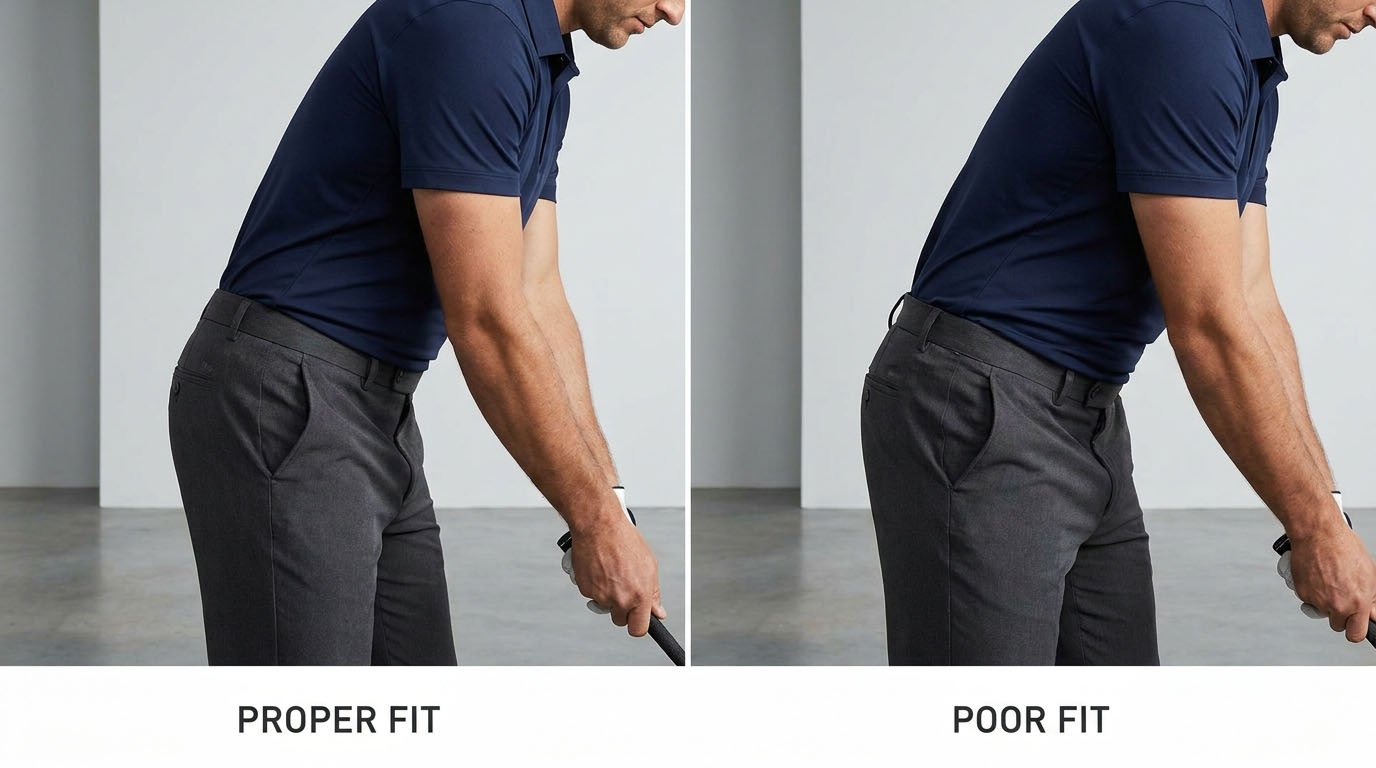
Quick test: Stand in your normal golf address position, then bend forward slightly. The waistband should remain comfortable without significant gaping or pulling.
A mid-rise design works for many golfers, although the best position depends on body proportions and personal preference.
Step 2 — Check the Seat and Thigh Fit
The seat and thighs are two of the most important areas for golf pants comfort.
A pair can fit correctly at the waist but still feel restrictive through the hips or upper legs.
How Should Golf Pants Fit Around the Seat?
The fabric should follow your body without excessive tension or loose folds.
Look for these warning signs:
- Horizontal pull lines: The seat may be too tight, or the rise may need adjustment.
- Sagging fabric: There may be too much room through the seat.
- Side pockets pulling open: The hip or upper-thigh area may be restrictive, although pocket construction can also contribute.
- Discomfort when crouching: The seat, rise, or crotch shape may not provide enough movement room.
Minor wrinkles are normal. The goal is a balanced fit, not a completely wrinkle-free garment.
How Much Room Should Golf Pants Have in the Thighs?
The thighs need enough room for walking, squatting, and rotating during your swing.
The pants should not cling tightly to your quadriceps or create noticeable tension when you bend your knees.
However, too much fabric can produce a bulky appearance and unnecessary bunching.
A simple check: Stand naturally, bend your knees, and rotate your hips. The fabric should move comfortably without pulling tightly across the front or back of your thighs.
Does the Fit Type Change the Answer?
Yes. Slim, straight, athletic, and relaxed pants create different silhouettes, but all should provide appropriate movement allowance.
A golfer with muscular thighs may prefer more room through the upper leg without necessarily choosing a larger waist size.
For a detailed comparison of different cuts and their intended customer profiles, read our Golf Pants Fit Types Explained guide.
The important point is that a closer-fitting silhouette should not mean restricted movement.
Step 3 — Choose the Right Golf Pants Length and Leg Opening
The correct golf pants length depends on your inseam, leg opening, preferred style, and golf shoes.
Pants that are too long can bunch around the ankles, while an excessively short inseam may create an unintended cropped appearance.
How Long Should Golf Pants Be?
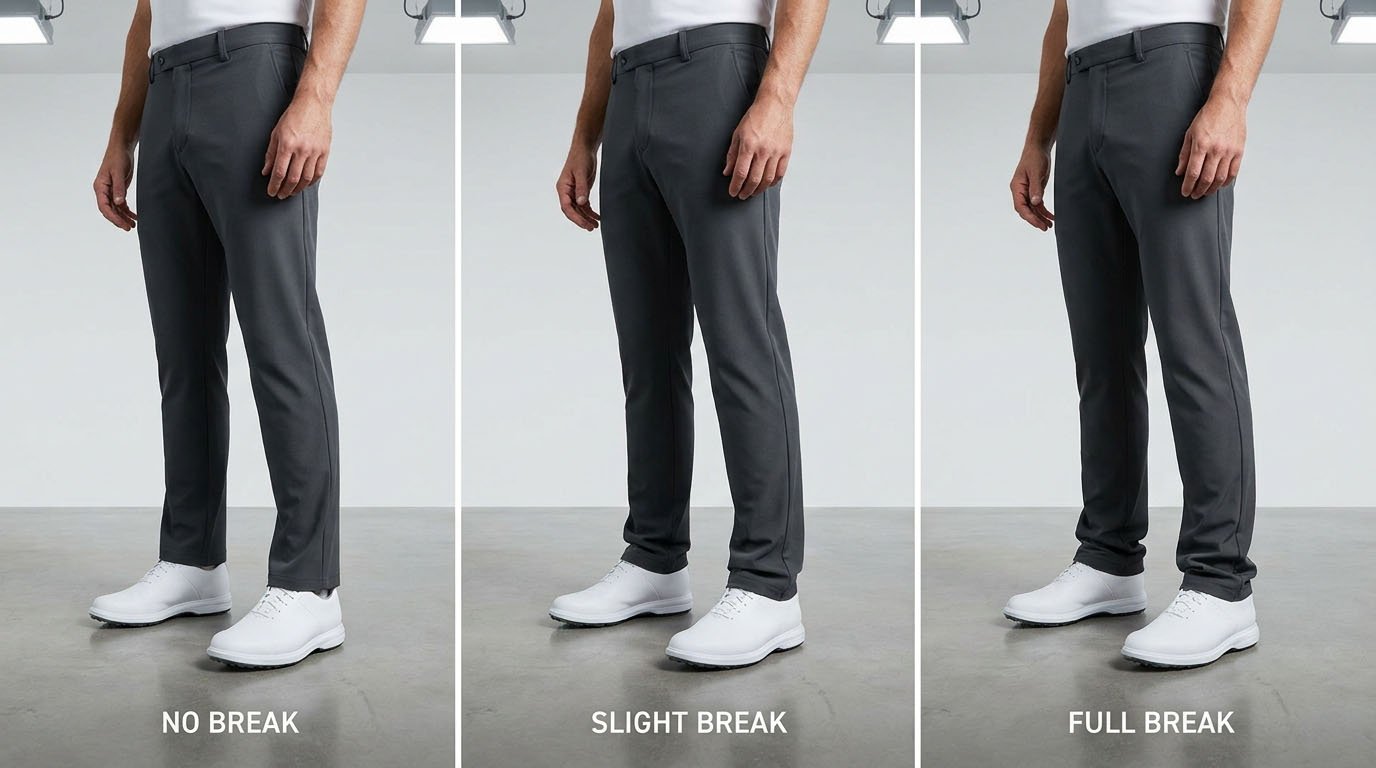
For most golfers, a no-break or slight-break length creates a clean appearance.
| Hem Style | Appearance | Practical Consideration |
|---|---|---|
| No break | Hem reaches near the top of the shoe with little or no fold | Modern, streamlined appearance |
| Slight break | Small fold where the fabric meets the shoe | Versatile choice for many golf pants |
| Full break | Multiple folds gathering over the shoe | May create excess bunching around the ankle |
A slight break is a useful starting point, but there is no universal length that suits every golfer.
How Should the Leg Opening Fit?
The leg opening should complement the overall cut while allowing the hem to sit naturally around your shoes.
Check that:
- The hem does not drag on the ground.
- The fabric does not bunch excessively around the ankle.
- The opening is not so narrow that it catches on the shoe.
- Both legs appear balanced when standing.
Try on golf pants with the shoes you normally wear on the course. Bulky golf shoes can change how the same inseam looks compared with regular sneakers.
What Does W32/L30 Mean?
On many men's golf pants, W32/L30 indicates a nominal 32-inch waist and 30-inch inseam.
However, size labels and actual garment measurements can vary between brands.
Always compare the brand's size chart with your measurements rather than relying on the label alone.
Step 4 — Perform a 60-Second Golf Pants Fit Test
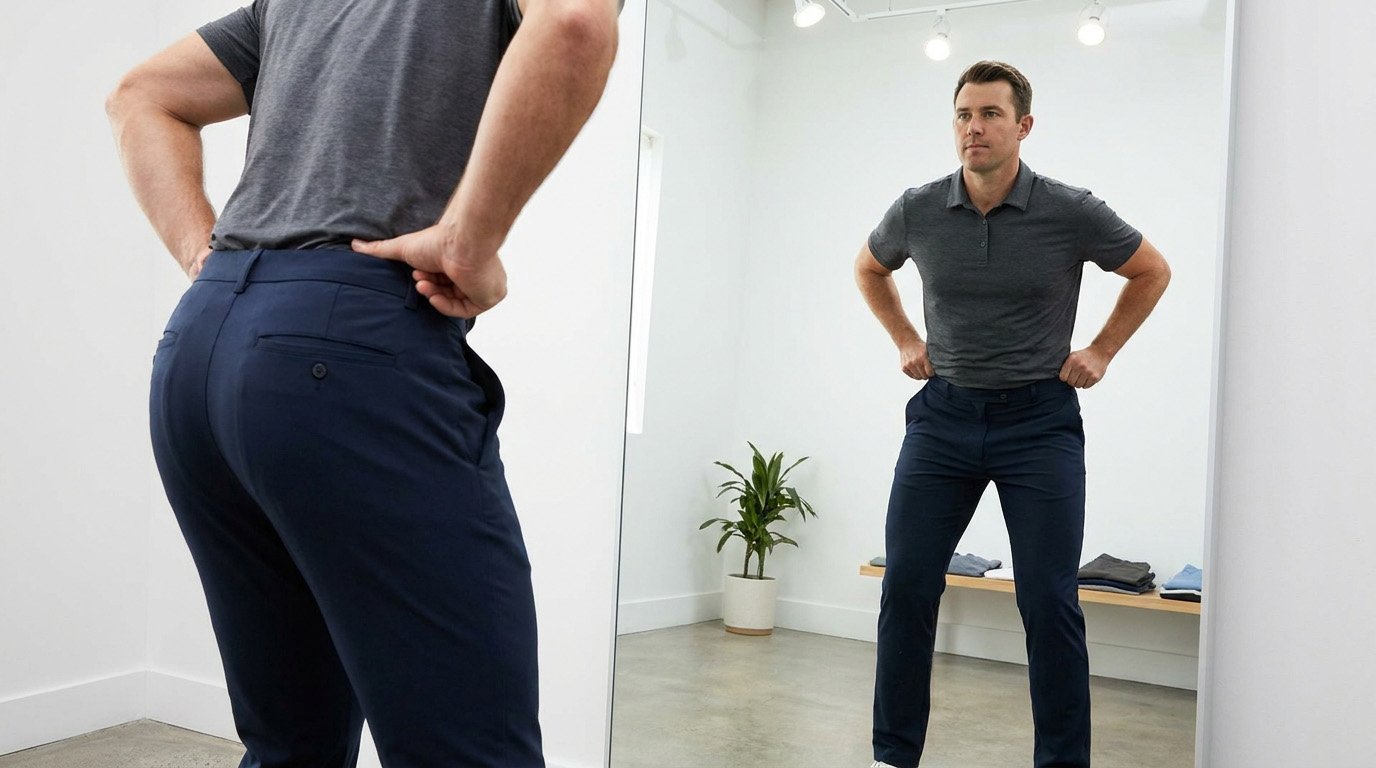
Standing in front of a mirror cannot reveal every fit problem.
Golf involves bending, walking, crouching, and rotating. Pants that feel comfortable when stationary may behave differently during these movements.
Use this five-part check before deciding whether the pants fit correctly.
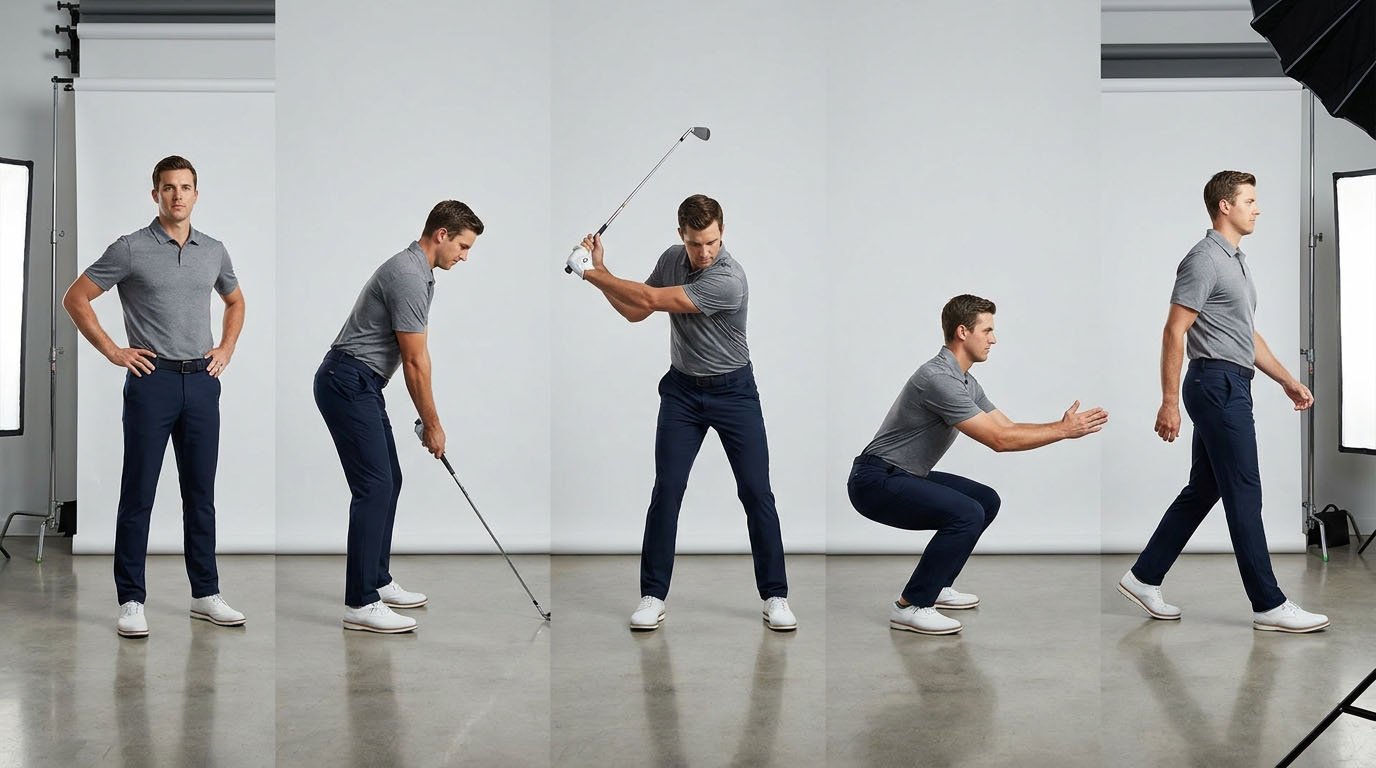
| Test | Action | What to Check |
|---|---|---|
| 1. Stand | Stand naturally with feet shoulder-width apart | Smooth seat, stable waist, balanced length |
| 2. Address | Bend into your normal golf stance | No waistband pulling or uncomfortable pressure |
| 3. Swing | Perform a slow practice swing | No significant restriction through hips or thighs |
| 4. Squat | Bend your knees as if reading a putt | Seat and knees move without binding |
| 5. Walk | Take several steps and turn | Waist stays stable and legs move naturally |
What If the Pants Look Good but Fail the Movement Test?
Do not assume additional fabric stretch will automatically solve the problem.
Stretch can improve comfort, but it cannot always compensate for an unsuitable rise, narrow thigh, or incorrect crotch shape.
A good golf pants pattern should provide suitable movement allowance before relying heavily on fabric elasticity.
If the waistband repeatedly shifts or the thighs feel restrictive, compare another size or fit rather than choosing based on appearance alone.
Step 5 — Identify Common Golf Pants Fit Problems
Many golf pants fit problems become easier to understand once you identify where the fabric pulls, bunches, or shifts.
The following table outlines common symptoms and possible solutions.
Golf Pants Fit Troubleshooting Guide
| Fit Problem | Possible Cause | What to Try |
|---|---|---|
| Waist slides down | Waist too large or rise unsuitable | Check another waist size or rise |
| Waist digs in when sitting | Tight waist or restrictive waistband | Try a different size or waistband |
| Side pockets flare open | Hip or upper-thigh area too tight; pocket construction | Compare a roomier cut |
| Horizontal wrinkles across seat | Tight seat or unsuitable back rise | Check seat room and rise |
| Thighs feel tight during swing | Insufficient thigh room | Try an athletic or roomier fit |
| Excess fabric around knees | Leg shape or taper unsuitable | Compare a different leg cut |
| Fabric gathers at ankles | Inseam too long or opening unsuitable | Try shorter inseam or hemming |
These are diagnostic clues rather than definitive causes. Fabric behavior, posture, and garment construction can create similar symptoms.
Should You Size Up or Change the Fit?
Size up when: The waist and several other areas are consistently too tight, and the next size offers better overall proportions.
Change the fit when: The waist feels correct but the seat or thighs are restrictive. A different cut may solve the problem without creating excess waist room.
Consider alterations when: The main issue is excessive trouser length. Hemming is generally simpler than correcting an unsuitable rise or narrow thigh.
Can Stretch Fabric Fix Tight Golf Pants?
Not necessarily.
Stretch fabric can improve movement and comfort, but recovery, construction, and pattern shape also affect how pants fit.
If the base pattern is too restrictive, additional stretch may reduce discomfort without solving the underlying fit problem.
For that reason, fit and fabric performance should be evaluated together rather than independently.
Step 6 — How Should Brands Check Golf Pants Fit Samples Before Production?
For golf apparel brands, the same fitting principles apply during sample development.
However, reviewing one attractive sample is not enough. A brand must also ensure that its chosen fit can be reproduced consistently across the intended size range.
At FUWAY, golf pants development considers both appearance and movement when reviewing fit.
Check 1: Define the Intended Fit
Specify the target silhouette and customer body proportions before approving samples.
Avoid relying only on labels such as "slim" or "regular."
Brands developing a new bottoms collection should also consider how waistbands, pockets, and fabric choices influence the final product. These decisions are covered in our Golf Shorts and Pants Design Guide.
Check 2: Review Key Measurement Points
Compare the sample against the approved size specification.
Important measurements include:
- Waist and hip circumference
- Front and back rise
- Thigh and knee width
- Inseam length
- Leg opening
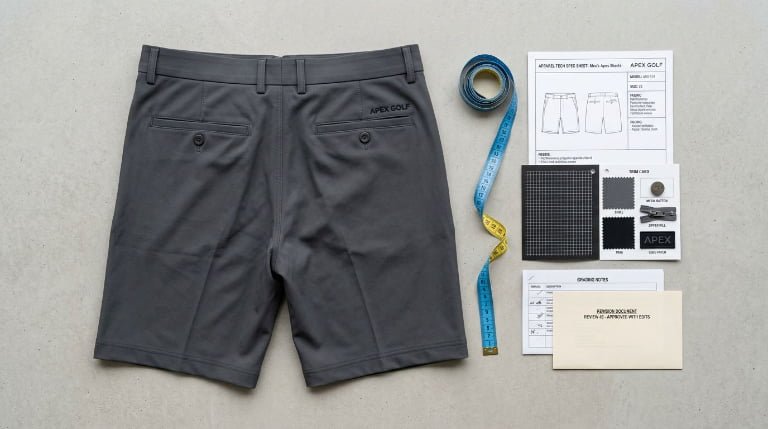
The precise measurement locations and garment dimensions should be defined in the tech pack.
For detailed pattern measurements and mobility allowances, see our Golf Pants Patterning Guide.
Check 3: Evaluate Static and Dynamic Fit
Review the sample while the wearer stands, walks, bends, and simulates a golf swing.
Record visible fit issues, movement restrictions, and any differences from the approved reference.
When possible, assess more than one relevant body proportion instead of relying on a single fit model.
Check 4: Confirm Corrections Before Approval
If the sample requires adjustments, document the problem, proposed correction, and revised measurements.
Recheck the affected areas after the sample is modified. Once the fit is approved, retain the reference sample and approved specifications for production.
For brands, a good-looking sample is only the starting point. The objective is a repeatable fit that meets the agreed specifications.
Brands planning a custom collection can explore FUWAY's private label golf apparel manufacturing services for product development and customization options.
Frequently Asked Questions
Should Golf Pants Be Tight or Loose?
Golf pants should be comfortably fitted rather than extremely tight or excessively loose. The waist should remain secure, the seat should drape naturally, and the thighs should allow unrestricted everyday golf movements.
Should Golf Pants Touch Your Shoes?
Usually, yes. Many golfers prefer a hem that reaches the top of the shoe with no break or a slight break. The ideal length depends on the shoe shape, leg opening, and preferred appearance.
Why Do Golf Pants Feel Tight When I Swing?
Possible causes include insufficient thigh or seat room, an unsuitable rise, limited fabric stretch, or a pattern that does not accommodate movement effectively. Check the specific area where tension develops before changing sizes.
Should I Size Up if Golf Pants Are Tight in the Thighs?
Not always. If the waist already fits correctly, sizing up may create excess room around the waistband. Trying a different cut with more thigh space may provide a better overall fit.
Conclusion
The best-fitting golf pants balance a stable waist, comfortable seat, adequate thigh room, and a clean leg length.
Check the fit while standing, but make the final decision after testing real golf movements. A pair that looks sharp but restricts bending or rotation is not the right fit.
For golfers, these checks help identify the right size and cut. For apparel brands, they provide a practical starting point for reviewing samples and reducing avoidable fit problems before production.
FUWAY supports brands developing custom golf pants and bottoms with fabric selection, fit development, sampling, and OEM/ODM manufacturing.
If you are creating a new golf pants collection or improving an existing fit, contact FUWAY to discuss your design and production requirements.