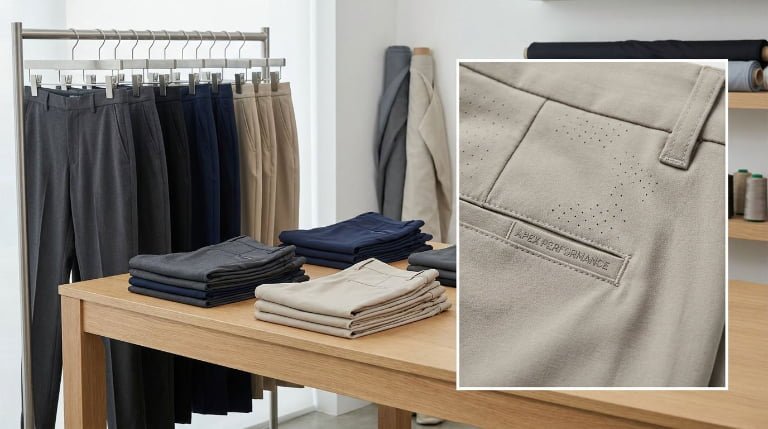
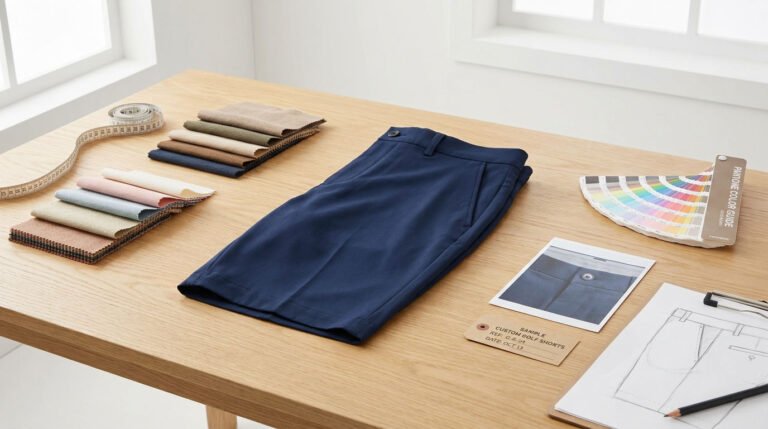
Approving a golf shorts sample may feel like a simple design decision. But once bulk production begins, a small mistake in fit, pockets, waistband construction, fabric performance, or logo placement can be repeated across the entire order.
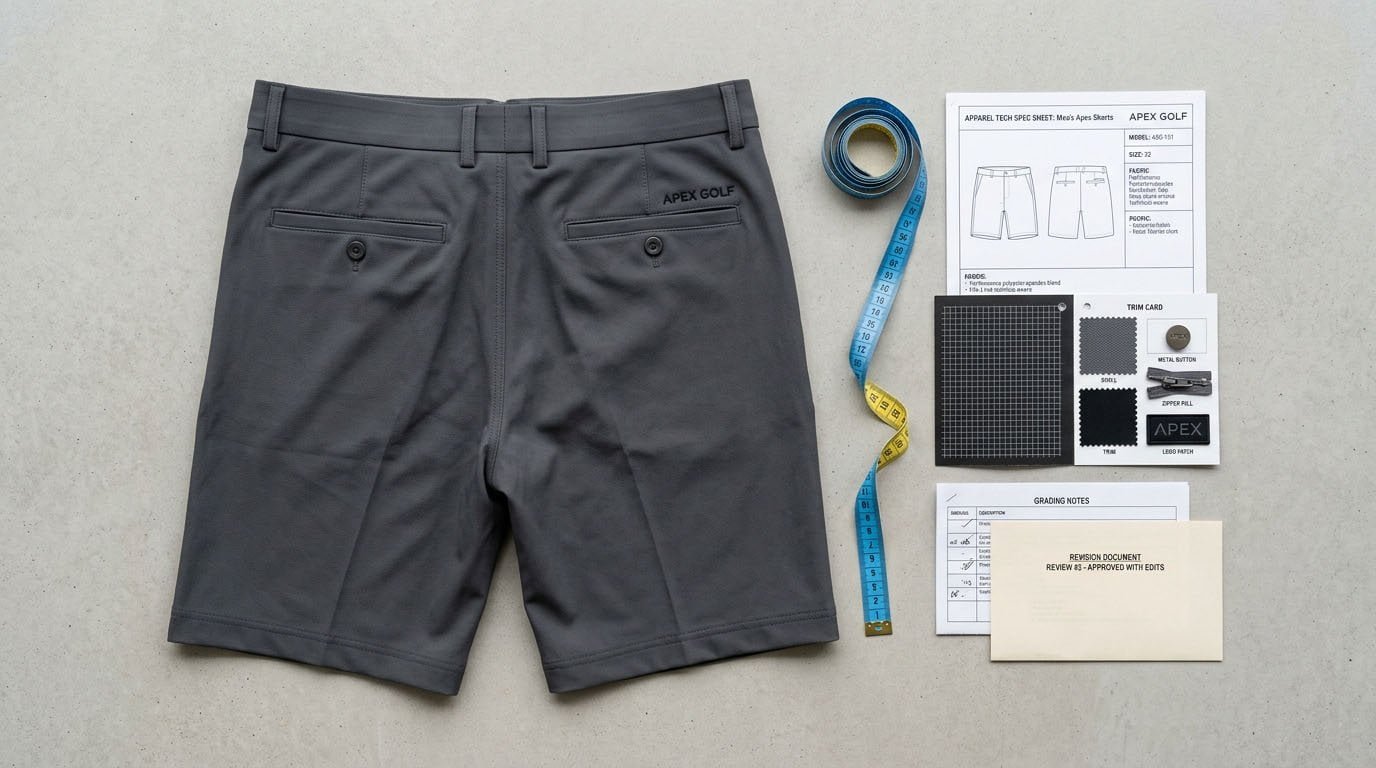
Before bulk production, you should freeze one traceable approval package: the approved sample, measurement specifications with agreed tolerances, grading rules, material and trim references, branding details, and documented revision history.
This turns a sample from something that simply “looks right” into a production standard your manufacturer can reproduce consistently.
For brands developing custom golf apparel through a private label manufacturing program, the key question is not:
Does this sample look good?
The better question is:
Can the factory reproduce this exact standard consistently across every size and the full production order?
That is what a proper golf shorts sample checklist should help you determine.
Quick Answers: What Should You Check Before Golf Shorts Bulk Production?
Before approving golf shorts for bulk production, verify:
- Fit during movement, not only while standing.
- Measurements against the final specification sheet.
- Size grading across the required size range.
- Fabric hand feel, stretch, recovery, color, and shrinkage behavior.
- Waistband construction and closures.
- Pocket placement, depth, reinforcement, and function.
- Stitching, seams, and stress points.
- Logo size, placement, color, and decoration method.
- Labels, hangtags, folding, and packaging.
- Final revision history and written approval.
Most importantly, do not approve the sample as a visual reference only.
The approved sample should be connected to the same specifications, materials, trims, grading rules, and revision documents that will control bulk production.
Golf Shorts Pre-Production Audit Matrix
A simple audit matrix can help brands identify what should be approved before releasing the bulk production order.
| Verification Area | What to Check | Main Bulk Risk If Missed |
|---|---|---|
| Fit & Movement | Waist, hip, rise, seat, thigh, leg opening, swing and sitting comfort | Restricted movement or poor fit |
| Measurements | Final points of measurement and agreed tolerances | Inconsistent sizing |
| Size Grading | Proportional changes between sizes | Good base size but poor extended sizes |
| Fabric | Hand feel, stretch, recovery, color, shrinkage | Bulk fabric performs differently from sample |
| Waistband | Construction, elastic, grip, closure, internal finish | Comfort and fit problems |
| Pockets | Placement, opening, depth, reinforcement | Poor functionality |
| Construction | Stitching, seam finish, bar tacks, stress points | Durability issues |
| Branding | Logo method, size, position, color | Brand inconsistency |
| Labels & Packaging | Main label, care label, hangtag, folding, polybag | Incorrect final presentation |
| Documentation | Sample version, spec sheet, trim references, revision history | Factory and buyer working from different standards |
This matrix does not replace a technical specification sheet. It helps confirm that the essential production decisions have actually been finalized.
Why Does Golf Shorts Sample Approval Matter Before Bulk Production?
Sample approval matters because the approved sample becomes the practical reference for production.
A good sample proves that the design can be made once.
It does not automatically prove that:
- every size will fit correctly,
- every waistband will behave the same,
- every pocket will be positioned consistently,
- bulk fabric will perform like sample yardage,
- or every logo will be placed correctly.
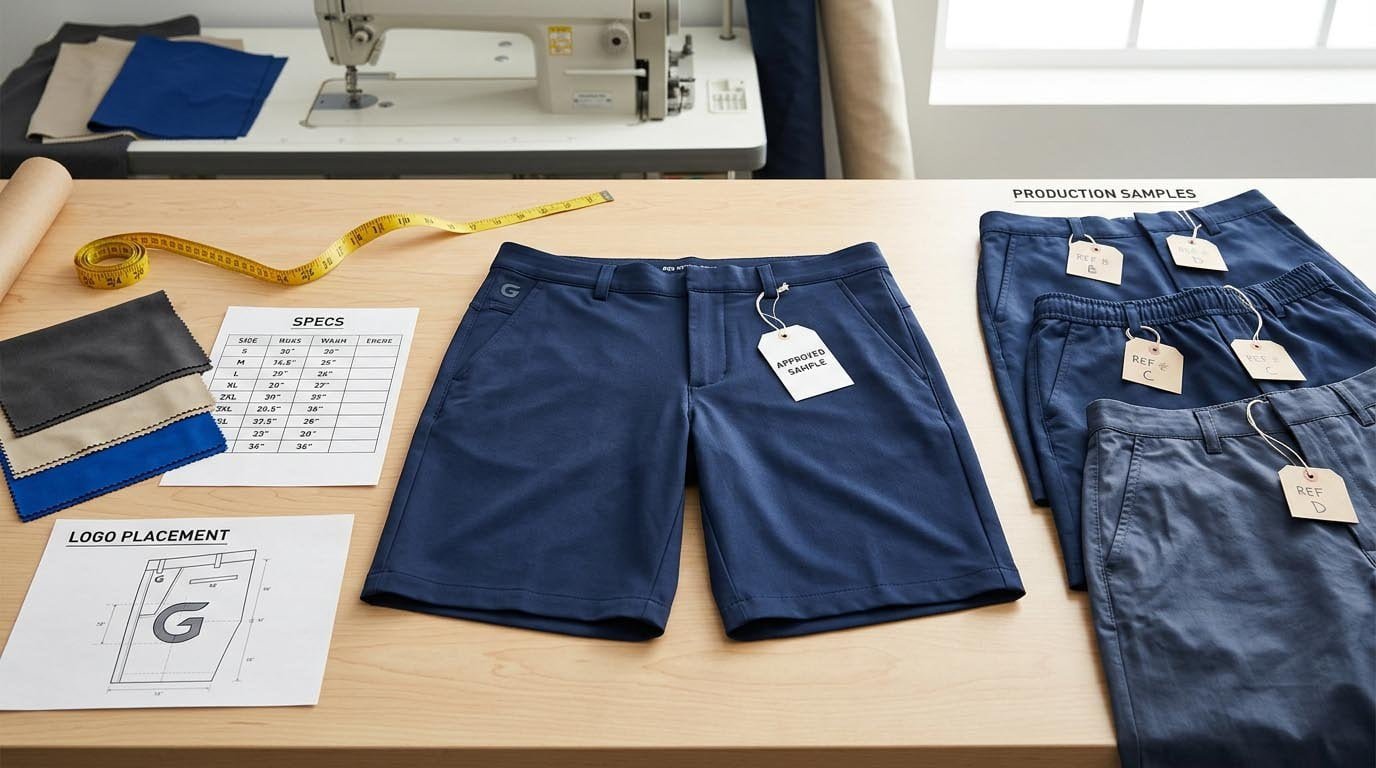
The Real Decision You Are Making
When approving the final sample, you are not simply deciding whether the shorts look acceptable.
You are deciding whether the design, materials, measurements, construction details, and branding instructions are clear enough for repeated production.
That distinction matters.
If the sample looks correct but the specifications remain unclear, production teams may still have to interpret details during cutting, sewing, decoration, or finishing.
Common Sample-to-Bulk Handoff Failures
Typical problems include:
| Problem | Possible Cause | Bulk Risk |
|---|---|---|
| Wrong sizing | Measurements or tolerances not finalized | Batch-wide sizing inconsistency |
| Different fabric feel | Material approved by description only | Product feels different from sample |
| Logo shifted | Placement not measured | Rework or inconsistent branding |
| Pocket shape changes | Construction detail not documented | Function differs from approved sample |
| Waistband behaves differently | Component specification unclear | Fit and comfort problems |
| Old sample version used | Revision history incomplete | Factory reproduces an outdated design |
The safest approach is simple:
Freeze the standard first. Then start bulk production.
What Should the Golf Shorts Fit, Measurements, and Size Grading Checklist Include?
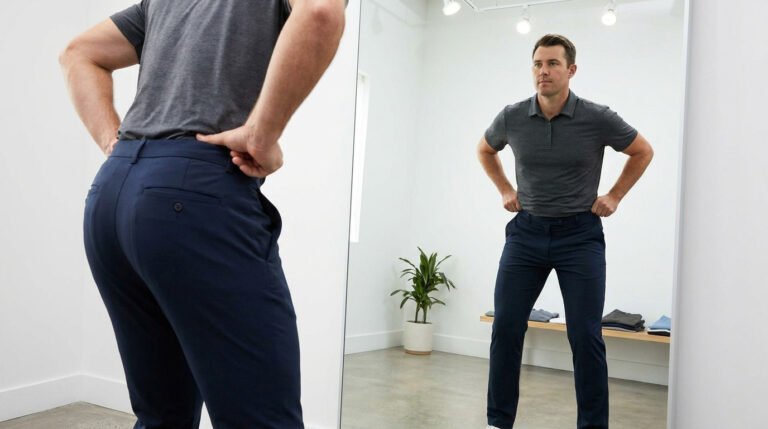
Golf shorts should be evaluated on the body and during movement—not only while lying flat on a measurement table.
Golf involves rotation, bending, sitting, walking, and repeated changes in posture. A sample that looks clean while standing may still pull across the seat, restrict the hips, or ride up during movement.
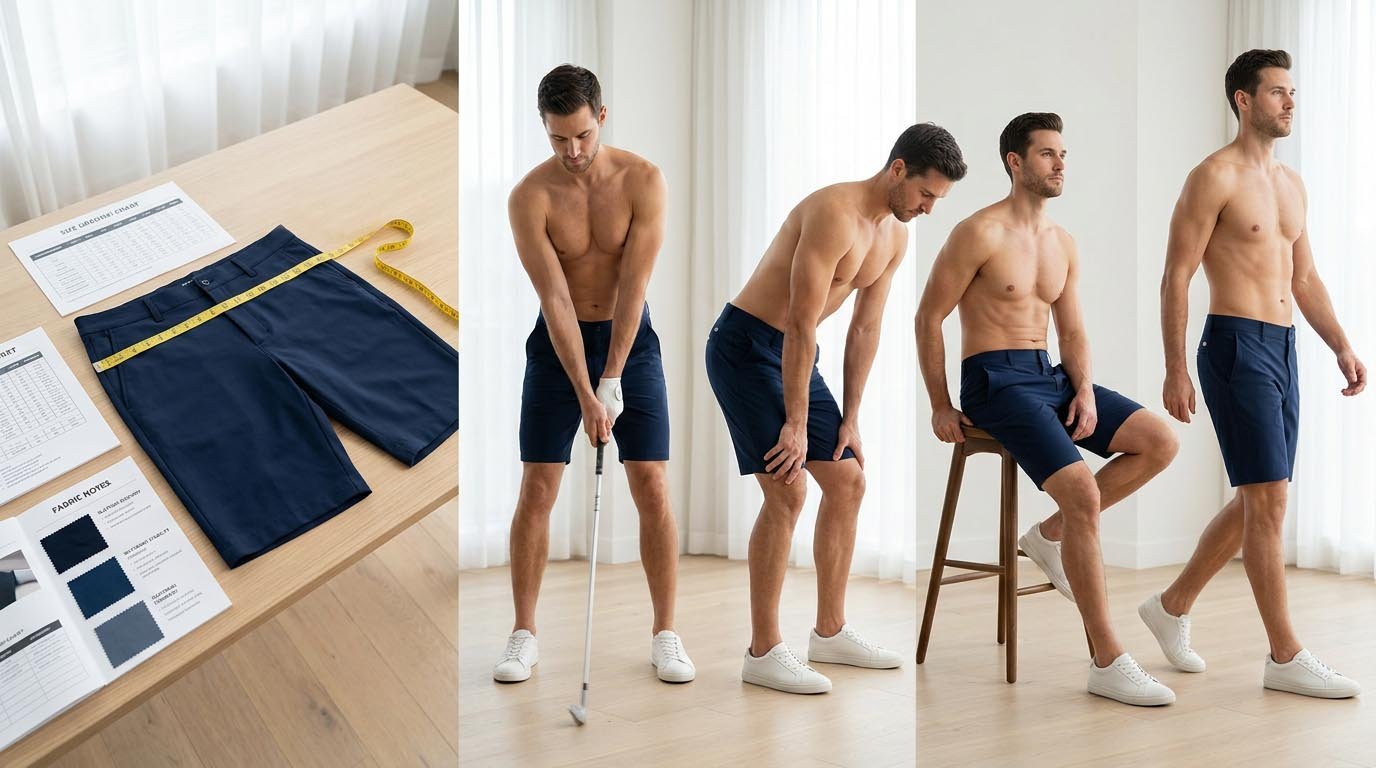
Check Fit During Movement
Ask the fit model to:
- Walk naturally.
- Sit in a chair.
- Bend forward.
- Perform a golf address position.
- Rotate through a swing motion.
- Squat or bend to pick up a ball.
Observe:
- waistband stability,
- crotch tension,
- seat pulling,
- thigh restriction,
- leg opening movement,
- pocket opening,
- and overall silhouette.
Fit approval should reflect how the shorts behave during actual use.
Why Can One Pattern Change Affect Other Measurements?
One of the most common sample-development mistakes is treating pattern adjustments as isolated changes.
They usually are not.
For example:
Inseam Length Change
→ May Require Leg Opening Review
Rise Adjustment
→ May Affect Waistband Position and Fly Balance
Hip or Seat Adjustment
→ May Affect Thigh Width and Side-Seam Shape
Base Size Adjustment
→ Requires Size-Grading Review
If a brand asks the factory to lengthen the shorts, the resulting silhouette may also change.
If the rise changes, the waistband position and crotch balance may change with it.
For this reason, every sample revision should identify:
- What measurement is changing?
- Which related measurements may also be affected?
- Does the grading still work across the full size range?
This is especially important before approving the final pre-production sample.
Lock the Final Measurement Specification
Your final measurement specification should identify the critical points of measurement for the style.
Depending on the golf shorts design, these may include:
- Waist
- Hip
- Front rise
- Back rise
- Inseam
- Outseam
- Thigh
- Leg opening
- Fly length
- Pocket opening
- Pocket depth
- Waistband width
Each measurement should have:
- an approved target,
- an agreed measurement method,
- and a project-specific tolerance where required.
Do not copy generic tolerance numbers from another garment.
Acceptable tolerances depend on the fabric, construction, pattern, sewing method, and measurement point.
How Should You Verify Golf Shorts Size Grading?
A sample in one base size does not prove that every size will fit correctly.
Before bulk production, review the grading rules for the complete size range you intend to order.
Check whether increases or decreases in:
- waist,
- hip,
- rise,
- thigh,
- inseam,
- and leg opening
remain proportional.
The goal is not simply to make each size larger or smaller.
The goal is to preserve the intended fit and silhouette across the size range.
For larger orders or broader size ranges, a size-set sample may be useful before final bulk approval.
What Fabric, Color, Shrinkage, and Performance Checks Do Golf Shorts Need?
Never approve golf shorts fabric based only on a generic fabric name such as:
4-way stretch polyester
or:
nylon-spandex performance fabric.
Those descriptions can cover many different textiles.
Two fabrics with similar composition can still differ significantly in:
- weight,
- hand feel,
- stretch,
- recovery,
- surface appearance,
- breathability,
- shrinkage,
- and color.
For custom programs, fabric selection should therefore be connected to the actual material approved during fabric sourcing, rather than relying only on a composition description.
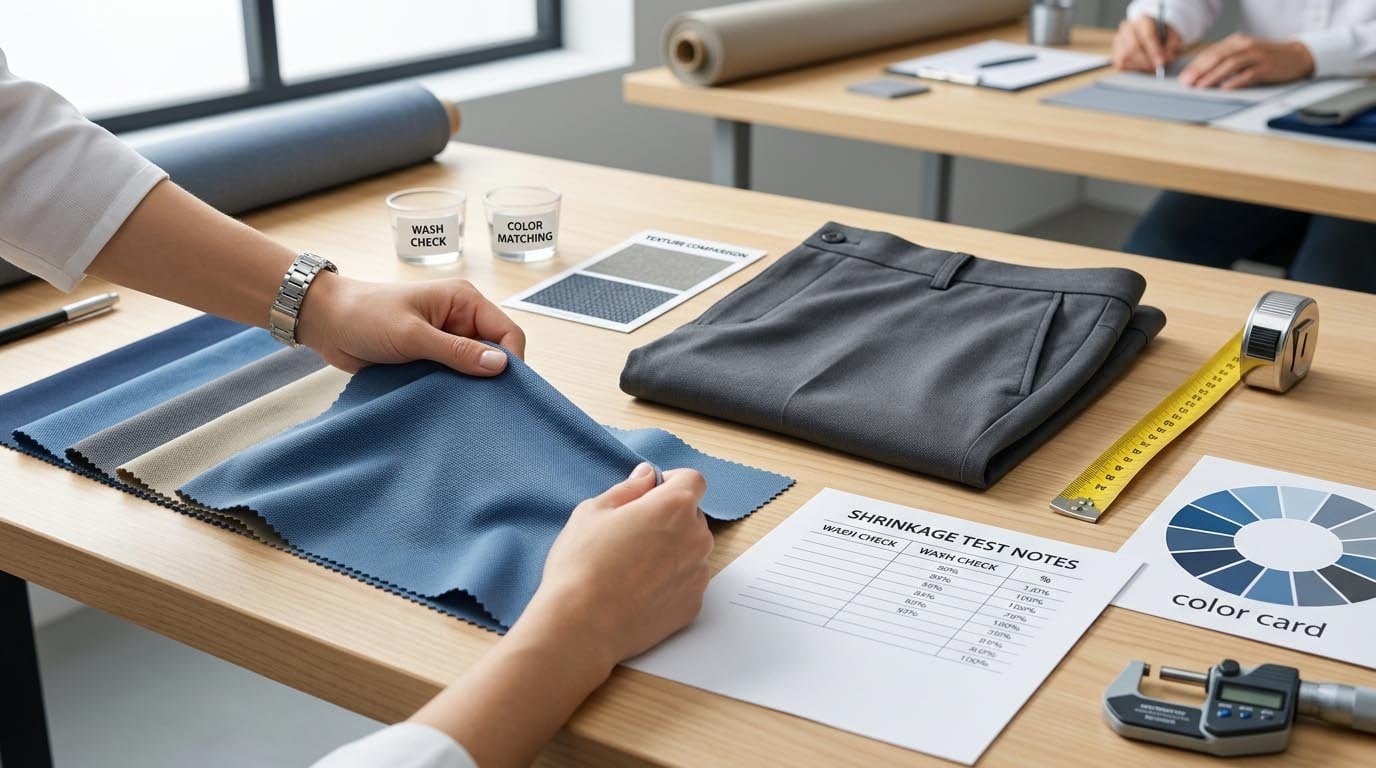
Check the Actual Fabric
Before bulk production, confirm:
- Fabric composition
- Fabric weight where relevant
- Surface appearance
- Hand feel
- Stretch direction
- Stretch recovery
- Color
- Shrinkage behavior
- Wash performance
- Required functional finishes
Stretch the material and release it.
Does it return to its original shape?
Wash the sample according to the intended care instructions.
Does the waistband twist?
Does the fabric shrink?
Does the color change noticeably?
Does the leg opening distort?
These practical checks can reveal problems that are difficult to identify from a fabric swatch alone.
Tie Performance Claims to Evidence
If your product is marketed with performance claims, connect those claims to actual material specifications or testing.
| Performance Claim | What to Verify |
|---|---|
| Moisture management | Relevant fabric specification or test |
| Shrinkage control | Wash-test result |
| Colorfastness | Relevant colorfastness record |
| Stretch performance | Physical stretch and recovery check |
| UV protection | Relevant test evidence where claimed |
| Water repellency | Relevant finish or test where applicable |
Where performance claims are important to the purchasing decision, brands can also review available testing and quality reports instead of relying only on supplier descriptions.
Performance results should be verified for the actual material used in the project.
Do not assume that every batch performs identically simply because the fabric description is the same.
How Do You Verify the Golf Shorts Waistband?
The waistband has a major influence on golf-short comfort and fit.
Depending on the design, check:
- Waistband width
- Internal construction
- Elastic type
- Hidden elastic sections
- Shirt-gripper tape
- Button or snap
- Hook-and-bar closure
- Belt loops
- Fly alignment
- Inner waistband finish
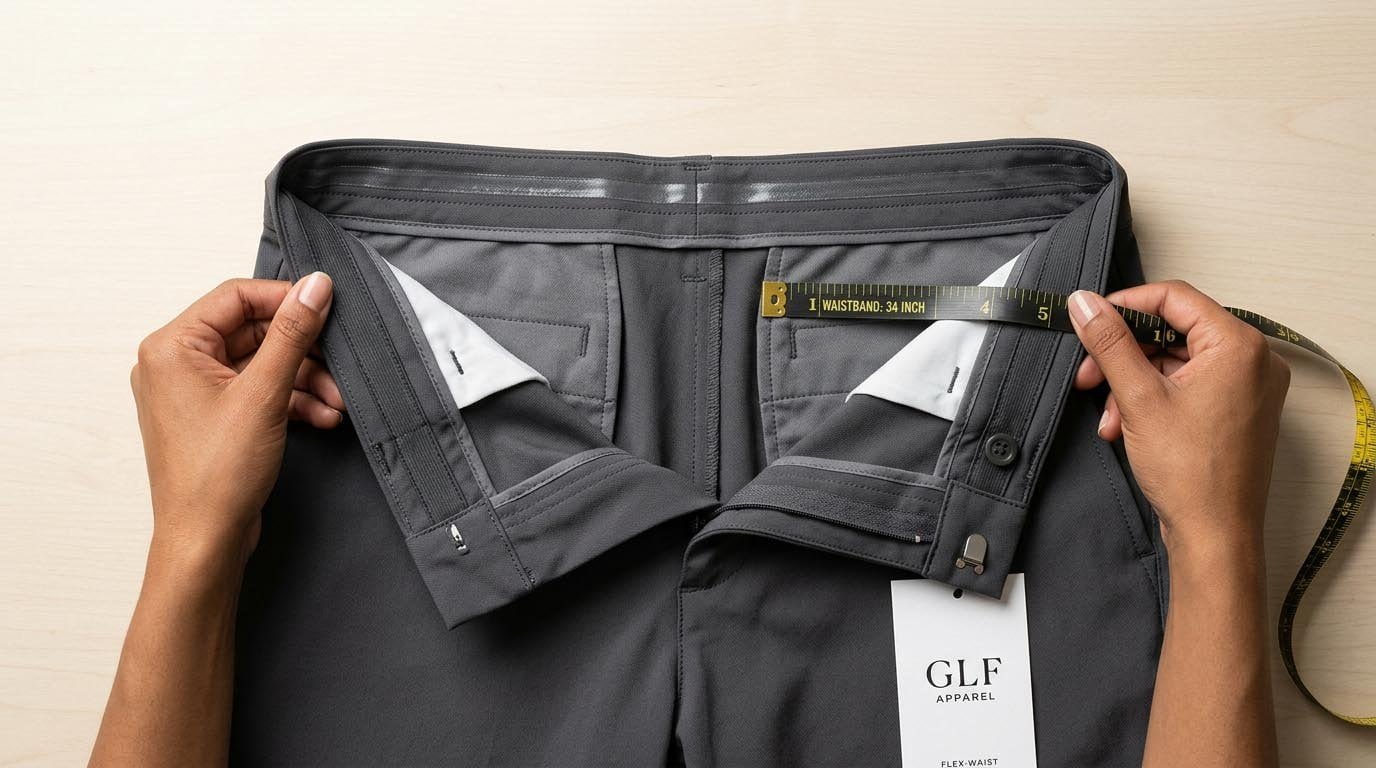
If the shorts use an expandable or partially elastic waistband, check whether both sides expand consistently.
If the style uses a flat-front appearance with hidden expansion, confirm that the elastic does not create visible gathering or distortion.
The waistband should also remain stable when the wearer sits, bends, and rotates.
How Do You Verify Golf Shorts Pockets?
Golf shorts pockets are functional components, not only visual details.
Golfers may carry:
- tees,
- ball markers,
- scorecards,
- phones,
- wallets,
- and other small accessories.
Your sample checklist should therefore verify:
- Pocket position
- Opening width
- Pocket depth
- Pocket bag construction
- Reinforcement
- Zipper function where applicable
- Alignment between left and right sides
A pocket can look correct while standing but perform poorly when the golfer sits or bends.
Test it in actual use conditions.
How Do You Verify Stitching and Construction?
Inspect the parts of the garment that experience regular tension.
These may include:
- Pocket corners
- Side seams
- Inseams
- Crotch seams
- Fly construction
- Waistband attachment
- Belt loops
- Hem
- Closure attachment
Check:
- Stitch consistency
- Seam appearance
- Loose threads
- Puckering
- Uneven tension
- Bar tacks or reinforcement
- Alignment between garment panels
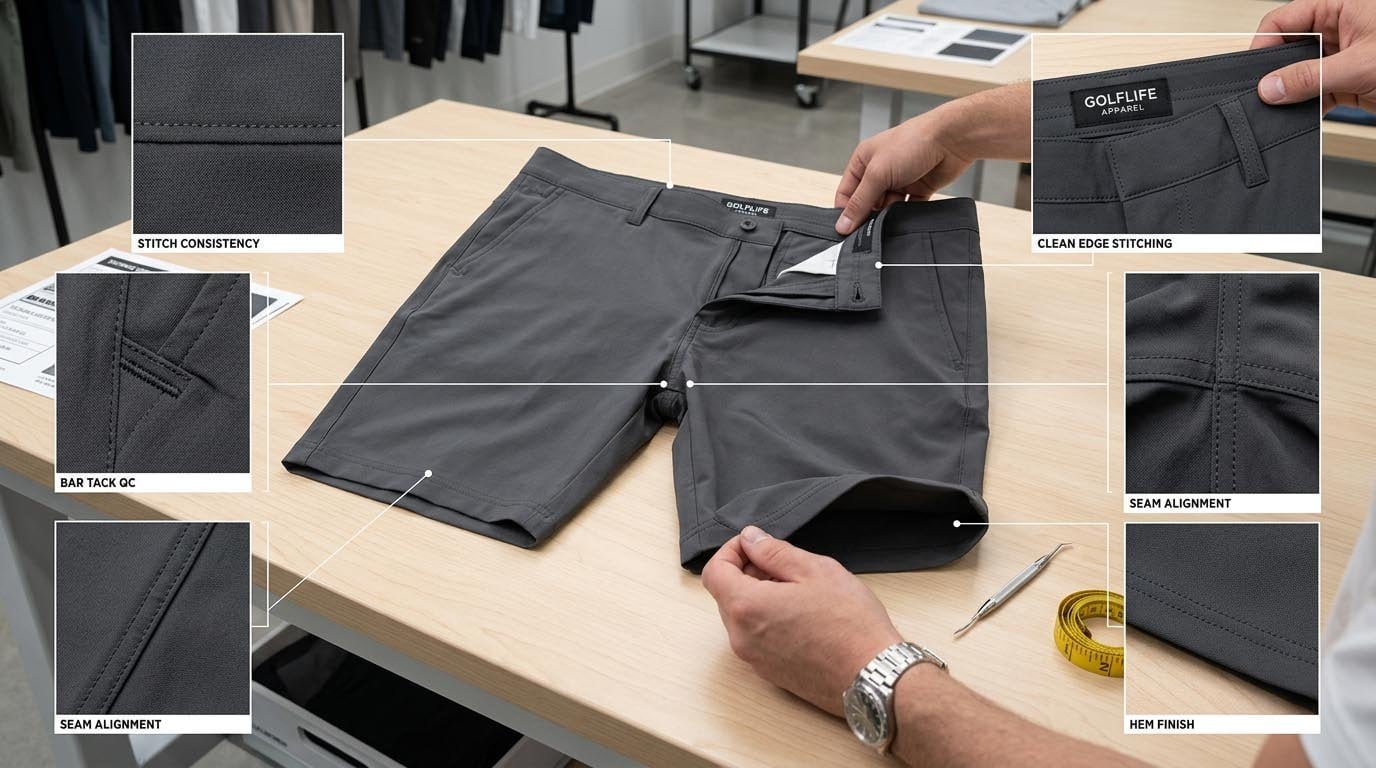
Do not focus only on visible exterior stitching.
Internal construction also affects durability and consistency.
How Do You Confirm Golf Shorts Logos and Branding?
Approve the branding in the same form that will be used during production.
Do not rely on instructions such as:
Put the logo on the left leg.
Instead, document:
- Decoration method
- Logo dimensions
- Exact placement
- Color reference
- Orientation
- Artwork file
- Relevant embroidery or print file
- Relationship to seams, pockets, or hem
Depending on the design, golf shorts branding may use several decoration methods.
Embroidery
For an embroidered logo, verify:
- finished logo dimensions,
- stitch appearance,
- placement,
- backing where required,
- thread colors,
- and distortion around the fabric.
Brands planning this decoration method can review FUWAY's custom embroidery capabilities when deciding how the approved logo should translate into production.
Screen Printing
For printed artwork, verify:
- artwork dimensions,
- placement,
- color,
- print surface,
- adhesion,
- and appearance after washing.
For suitable designs, screen printing can also be evaluated during sample development before the bulk decoration process is approved.
The final approved sample should show exactly how the branding should appear in bulk.
Brand presentation continues after the garment leaves the sewing line.
Before bulk production, verify the following items.
Main Label
Check:
- Correct brand name
- Position
- Size
- Attachment method
Care Label
Check the required:
- Fiber content
- Care instructions
- Country-of-origin information
- Size information
- Other market-specific information where applicable
Hangtags
Confirm:
- Artwork
- Text
- Barcode or SKU where required
- Attachment location
Packaging
Confirm:
- Folding method
- Polybag
- Size sticker
- Barcode
- Carton marking
- Packing ratio
These details should be part of the same final approval package as the garment itself.
What Should Be Included in the Final Golf Shorts Sample-to-Bulk Approval Package?
Once the golf shorts sample is approved, freeze the final production reference package.
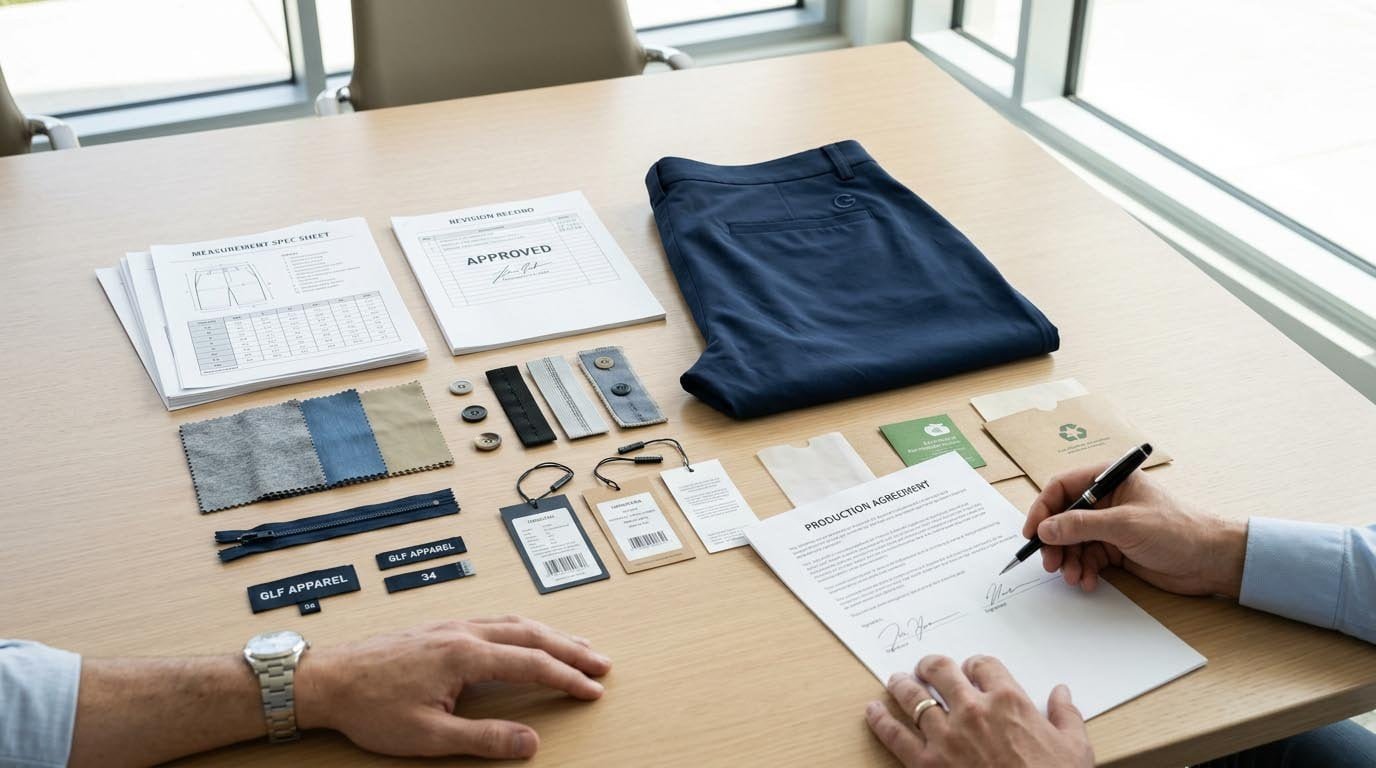
1. Approved Final Sample
Keep a clearly identified final sample that represents the approved:
- fit,
- construction,
- materials,
- trims,
- branding,
- and workmanship.
This may be referred to as a pre-production sample, PP sample, or Golden Sample, depending on the factory's process.
2. Final Measurement Specification
Include:
- Approved measurement points
- Final target measurements
- Agreed tolerances where applicable
- Measurement method
3. Size-Grading Specification
Record the approved grading rules for the required size range.
4. Approved Fabric and Trim References
These can include:
- Main fabric
- Pocketing
- Waistband materials
- Elastic
- Buttons
- Snaps
- Zippers
- Thread
- Labels
- Decoration materials
5. Branding Specifications
Include:
- Artwork
- Logo size
- Color
- Placement
- Decoration method
6. Packaging Specification
Record the agreed:
- Folding
- Polybag
- Stickers
- Hangtags
- Carton marks
- Packing requirements
7. Revision History
Every major sample change should be traceable.
For example:
| Version | Change | Status |
|---|---|---|
| Sample 1 | Initial prototype | Revised |
| Sample 2 | Fit and pocket adjustment | Revised |
| Final Sample | Final approved construction | Approved |
The exact format is less important than ensuring both buyer and manufacturer are working from the same final version.
8. Written Approval
Final approval should be documented.
Avoid relying only on scattered messaging-app conversations or verbal confirmation.
The objective is simple:
One sample. One specification. One approved version.
Final Golf Shorts Sample Approval Checklist
Before authorizing bulk production, work through this final checklist.
Fit
- Does the waistband sit correctly?
- Is there enough hip and seat movement?
- Does the crotch remain comfortable?
- Does the leg opening work during movement?
- Does the sample maintain the intended silhouette?
Measurements
- Have all critical measurements been checked?
- Are measurement methods clear?
- Are agreed tolerances documented?
Grading
- Has the full size range been reviewed?
- Do grading changes preserve the intended proportions?
Fabric
- Is the correct fabric approved?
- Has hand feel been checked?
- Has stretch and recovery been checked?
- Has wash behavior been reviewed?
- Is the correct color approved?
Construction
- Is the waistband correct?
- Are pockets correct?
- Are seams and stress points reinforced appropriately?
- Are closures functioning properly?
Branding
- Is logo size correct?
- Is placement measured?
- Are colors correct?
- Is the correct decoration method approved?
Labels and Packaging
- Are labels correct?
- Are hangtags correct?
- Is folding correct?
- Is packaging correct?
Documentation
- Is the final sample clearly identified?
- Is the latest tech pack being used?
- Are material and trim references approved?
- Is the revision history complete?
- Has final approval been documented?
If any major item remains unresolved, the sample should not yet be treated as the final bulk-production reference.
FAQ: Golf Shorts Sample Checklist Before Bulk Production
Is an Approved Sample Enough to Start Bulk Production?
Not by itself.
The sample should be connected to the final measurement specification, grading rules, approved materials and trims, branding requirements, packaging specifications, and revision history.
The documentation helps the factory reproduce the approved result consistently.
What Is a Golden Sample?
A Golden Sample is the final approved garment used as a physical production and quality reference.
Terminology varies between manufacturers. Some factories may call it a PP sample or final pre-production sample.
What matters is that the physical sample is clearly tied to the correct approved documentation.
Do I Need to Check Golf Shorts Fit During Movement?
Yes.
Golf shorts are performance garments. Sitting, bending, walking, and rotating can reveal fit problems that are not visible when the garment is inspected flat or while the wearer stands still.
Can One Pattern Change Affect Other Measurements?
Yes.
Changing inseam length, rise, hip shape, or waistband position may affect other parts of the garment.
After a meaningful pattern adjustment, review related measurements and size grading before approval.
Can I Use Standard Measurement Tolerances for Every Golf Shorts Style?
Not necessarily.
Appropriate tolerances depend on the fabric, construction, pattern, measurement point, and manufacturing process.
They should be agreed for the specific project rather than copied blindly from another garment.
Should I Approve Golf Shorts Fabric Based on Composition Alone?
No.
Similar fabric compositions can have different weight, stretch, recovery, hand feel, finishing, color, and wash behavior.
Approve the actual material reference intended for production.
Conclusion: Freeze the Production Standard Before Bulk Manufacturing
A golf shorts sample should not be approved simply because it looks good.
The real objective is to create a repeatable production standard.
Before bulk production, verify:
Fit → Measurements → Grading → Fabric → Waistband → Pockets → Construction → Branding → Packaging → Documentation
Then connect the final physical sample to one controlled approval package containing the correct specifications, material references, branding details, grading rules, and revision history.
For brands working with an OEM or private label golf apparel manufacturer, this documented handoff is what helps bridge the gap between a successful sample and consistent bulk production.
The safest transition is not simply:
“Sample approved.”
It is:
“Sample approved, specifications frozen, materials confirmed, and production standard documented.”
If you are preparing a golf shorts style for sampling or bulk production and need to review fabric selection, customization, testing, or production requirements, you can contact FUWAY to discuss your project.