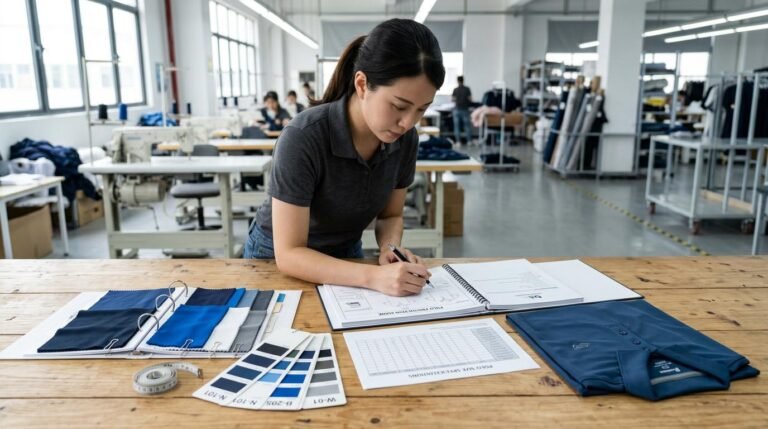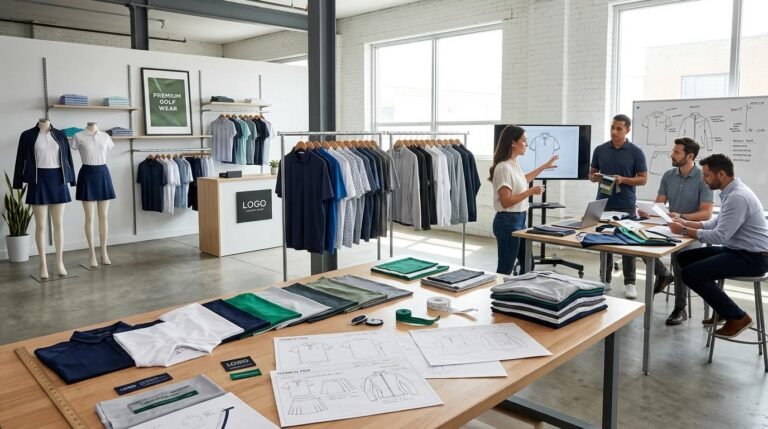
You've launched your golf apparel line, but returns keep piling up. Customers complain pants feel too tight, too baggy, or just "off." The real problem? Fit labels don't mean what you think they do.
Golf pants fit types—slim, regular, relaxed, and athletic—aren't fixed standards. Each manufacturer uses different base patterns, so "regular fit" from one supplier may fit like "slim" from another. Choosing the right fit for your brand means understanding your customer's body type, playing style, and how production constraints affect your options.
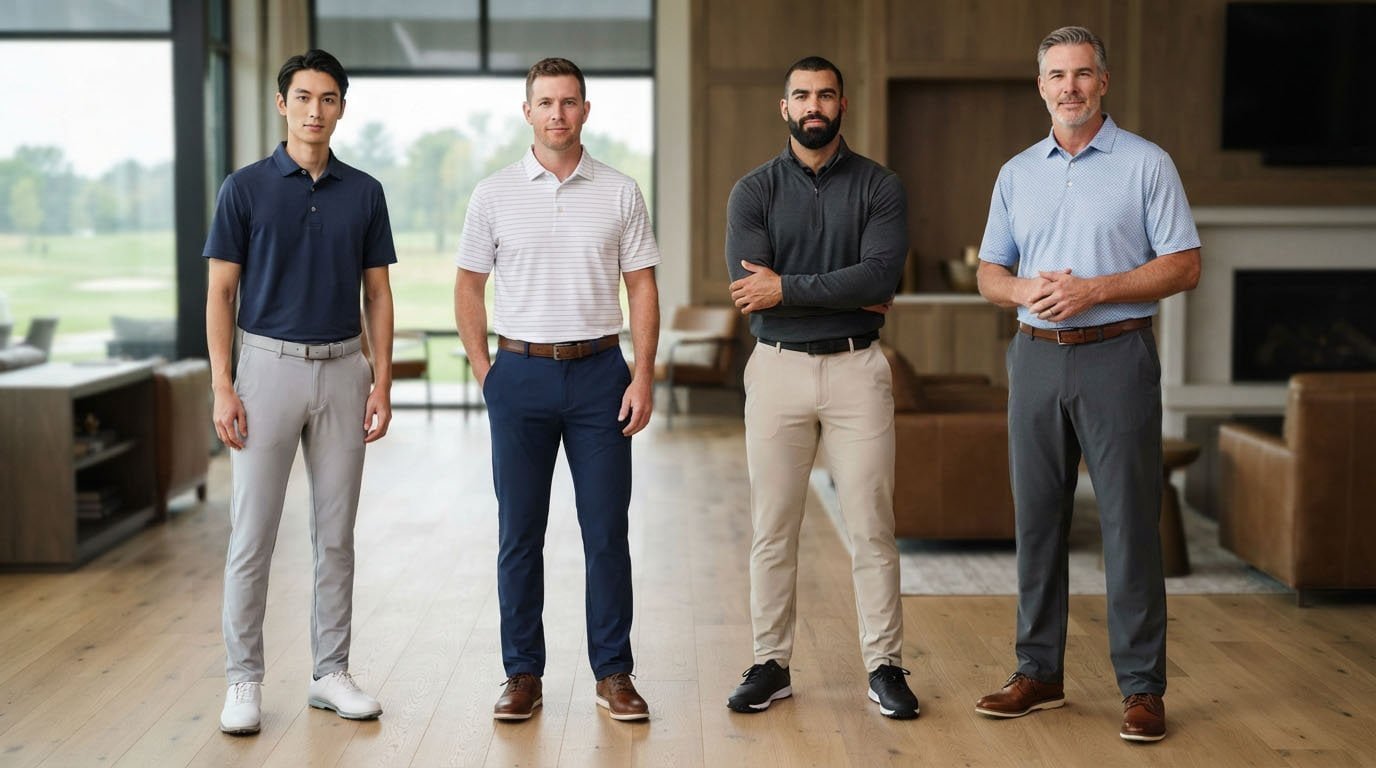
Here's what I've learned after a decade helping brands configure their golf pants lineup. When buyers come to me asking for all three fits, I stop them right there. More fits don't solve fit problems—they create SKU complexity that drives up costs and return rates. Let me walk you through what actually matters.
Quick Answers: Golf Pants Fit Types at a Glance
What's the main difference between slim and regular fit golf pants?
Slim fit has 2-3 inches less in thigh and leg opening compared to regular fit. However, these measurements vary by manufacturer—always request graded spec sheets.
Which fit type has the lowest return rate?
In our sampling experience, athletic fit generates fewer returns because it balances mobility (wider thigh) with modern styling (tapered leg). Regular fit often splits customer preferences.
Can I offer multiple fits without increasing costs?
Only if your order volume supports 500+ pieces per fit type per size run. Below that threshold, pattern development and inventory risk outweigh sales benefits.
How do I know which fit matches my target customer?
Check your existing sales data for waist-to-inseam ratios. Customers ordering W34/L32 or shorter usually prefer relaxed or athletic fit; W32/L34+ lean toward slim or regular.
What fit type do competitive golfers prefer?
Most competitive players (handicap under 10) choose slim or athletic fit for reduced fabric bulk during rotation. Recreational golfers prioritize comfort over swing mechanics.
Why Golf Pants Fit Matters for Comfort and Performance?
Golf pants fit directly affects swing mechanics, walking endurance, and repeat purchase rates. A poor fit restricts hip rotation, causes chafing over 18 holes, and drives customers to competitors. For brands, wrong fit decisions multiply into return costs and inventory dead stock.
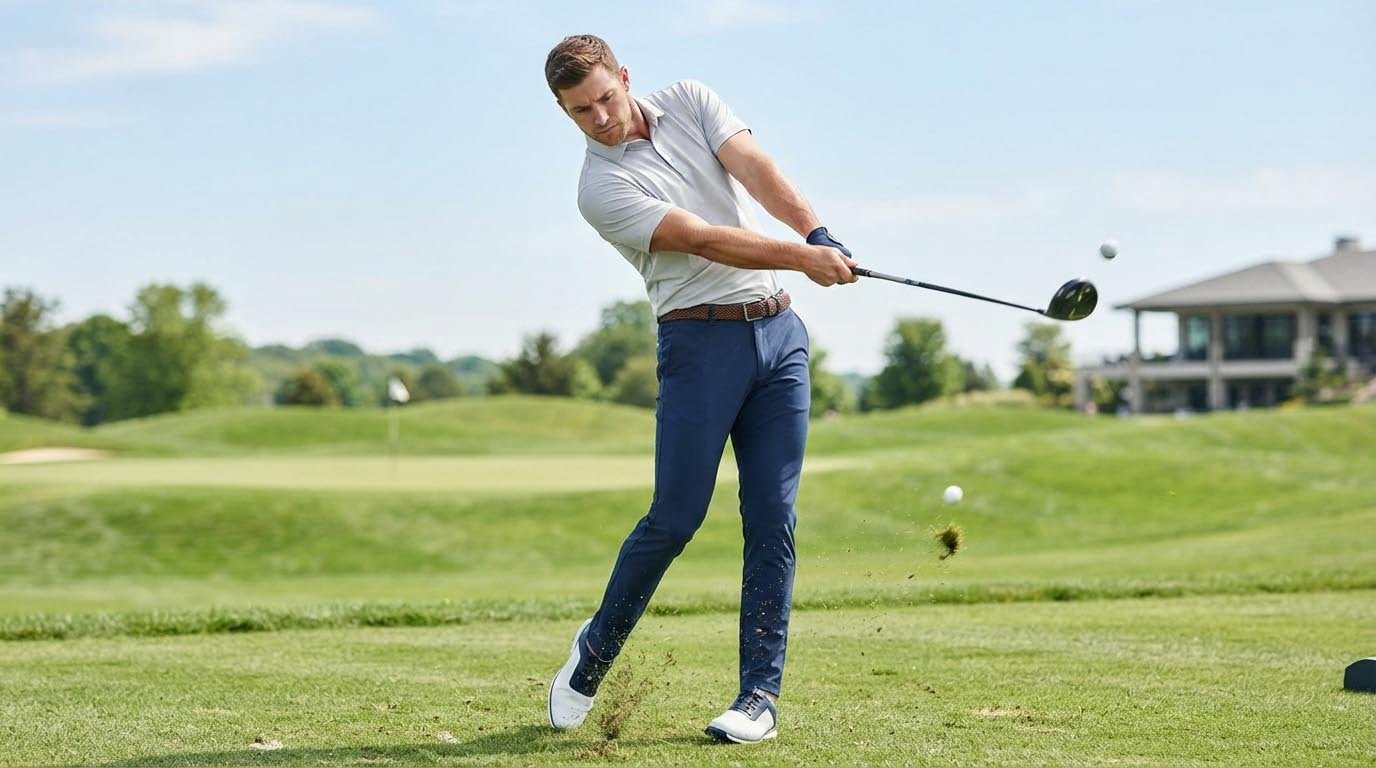
I see this pattern repeat across client consultations. A brand launches with only slim fit because it looks modern in product photos. Three months later, they're dealing with 30-40% return rates and review complaints about restricted movement. The issue isn't the fit itself—it's the mismatch between fit distribution and actual customer body clusters.
Your decision matrix should start here:
- Swing mechanics priority: Competitive players need unrestricted hip rotation and minimal fabric drag. Excess material around thighs interferes with weight transfer.
- All-day comfort priority: Recreational players walk 5-7 miles per round. Tight waistbands and restrictive thighs cause fatigue and poor reviews.
- Body proportion variance: Your target market's height-to-weight distribution determines which fit types reduce returns. A younger demographic (25-40) typically has different proportions than mature golfers (50+).
The commercial reality is stark. Each additional fit type increases your:
- Pattern development costs (one-time, but significant)
- Minimum order quantities (usually 300-500 pieces per fit)
- Warehouse SKU count (exponential growth)
- Return processing complexity
When brands ask me whether to add a third fit option, I ask them to calculate their actual body cluster distribution from past orders. Most discover that 70-80% of customers fall into two fit profiles, not three.
Slim, Regular, Relaxed and Other Golf Pants Fit Types Explained?
Each fit type uses different measurement specs for thigh width, leg opening, and rise height. But here's the catch: "regular fit" means different things to different suppliers. Without comparing graded spec sheets, fit labels alone tell you almost nothing about actual dimensions.
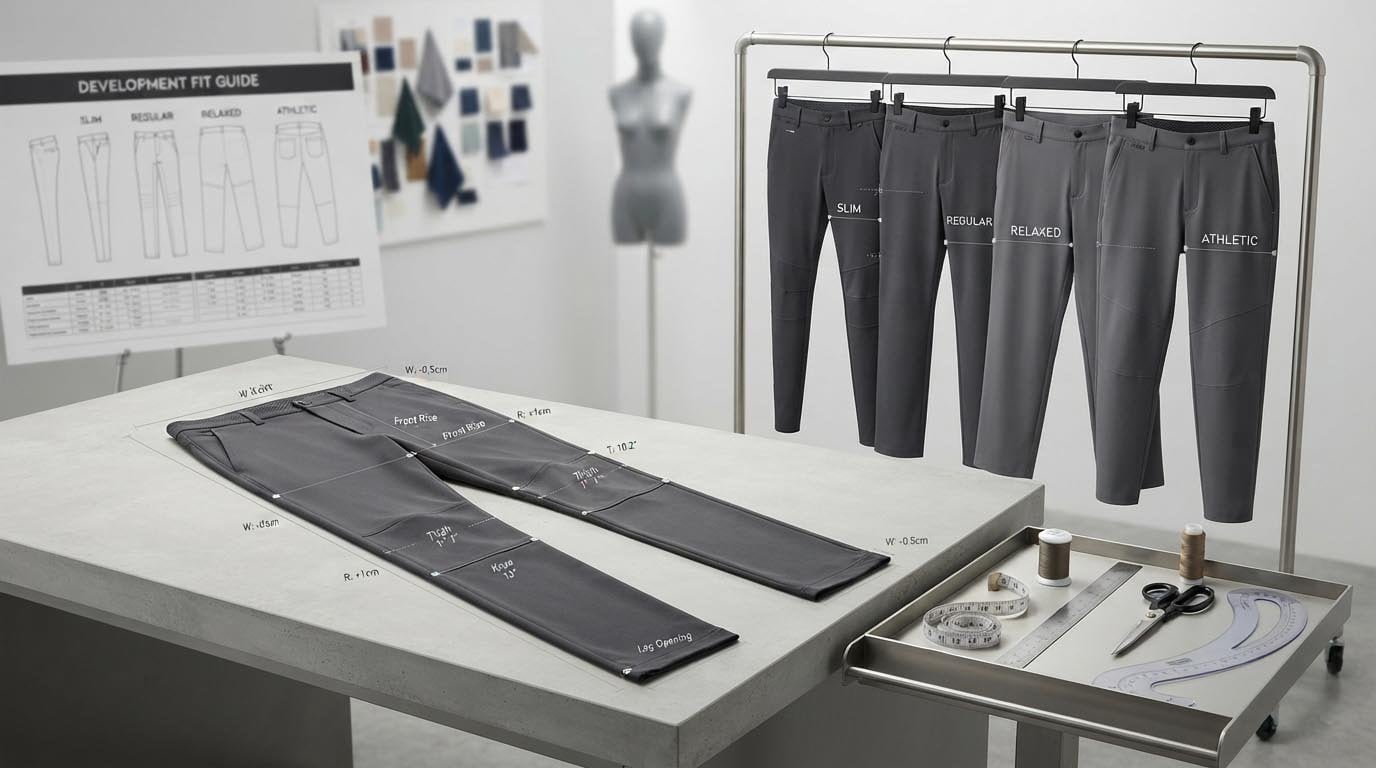
Let me break down what these terms actually mean in production terms, not marketing copy.
Fit Type Specifications Breakdown
| Fit Type | Thigh Width (vs. Regular) | Leg Opening | Rise Height | Typical Customer Profile |
|---|---|---|---|---|
| Slim | -2 to -3 inches | 14-15 inches | Mid to low | Younger players, athletic build, competitive focus |
| Regular | Baseline | 16-17 inches | Mid | General market, compromise fit |
| Relaxed | +2 to +4 inches | 18-20 inches | Higher | Mature players, comfort priority, casual rounds |
| Athletic | +1 inch (thigh), -1 inch (opening) | 15-16 inches | Mid | Active players, modern aesthetic with mobility |
| Straight | Baseline (thigh), +1 inch (opening) | 17-18 inches | Mid | Classic styling, consistent leg line |
Here's where brands get confused. These measurements are relative to each manufacturer's base block. When you source from different suppliers, their "regular" baseline might already be what another factory calls "slim." I've seen this cause massive headaches during reorders.
What Each Fit Actually Delivers
Slim fit uses less fabric through the leg, creating a closer silhouette. In manufacturing terms, this means:
- Lower fabric consumption per unit (saves 5-8% on material costs)
- Easier grading (fewer adjustment points between sizes)
- Higher return risk if customer base includes stocky builds
When brands choose slim fit, they need to know their customer's thigh circumference distribution. A size 34 waist doesn't predict thigh measurement—some customers are runners with developed quads, others are average builds.
Regular fit serves as the middle ground, but here's the problem I see repeatedly: it satisfies nobody particularly well. Competitive players find it baggy. Recreational players find it restrictive. You're trying to average out two different use cases, which creates mediocre results for both.
Relaxed fit adds room where customers need it most—through the seat and thigh. This accommodates:
- Longer periods of sitting (cart golf)
- Mature body types with different weight distribution
- Players who prioritize breathability and ease
The trade-off is aesthetic. Relaxed fit reads as "traditional" or "dated" in product photos, which affects click-through rates if your brand targets younger buyers.
Athletic fit has become my most recommended option for brands launching their first pants line. It combines a modern tapered leg (reduces fabric bunching around ankles) with adequate thigh room (preserves mobility). The fit distribution works across more body types than slim or relaxed.
Straight fit maintains consistent leg width from knee to ankle. It's falling out of favor in performance golf, but some brands use it for:
- Heritage or classic positioning
- Older demographic (55+) who associate taper with "too trendy"
- Price-sensitive lines where simpler patterns reduce costs
The Label Reliability Problem
Here's a real example from a client consultation last year. They ordered samples marked "regular fit" from three different manufacturers. When the samples arrived:
- Supplier A: thigh measured 24 inches at size 34
- Supplier B: thigh measured 26 inches at size 34
- Supplier C: thigh measured 25.5 inches at size 34
That 2-inch variance is the difference between a good fit and a return. The lesson? Always request graded spec sheets with actual measurements, not just fit labels.
How Different Fits Affect Mobility, Style and Function on the Course?
Fit type changes how fabric moves during swing rotation, how heat escapes during summer rounds, and how pants photograph for e-commerce. Slim fits restrict heat dissipation but photograph well. Relaxed fits offer ventilation but can bunch around shoes. These trade-offs determine your target customer and channel strategy.
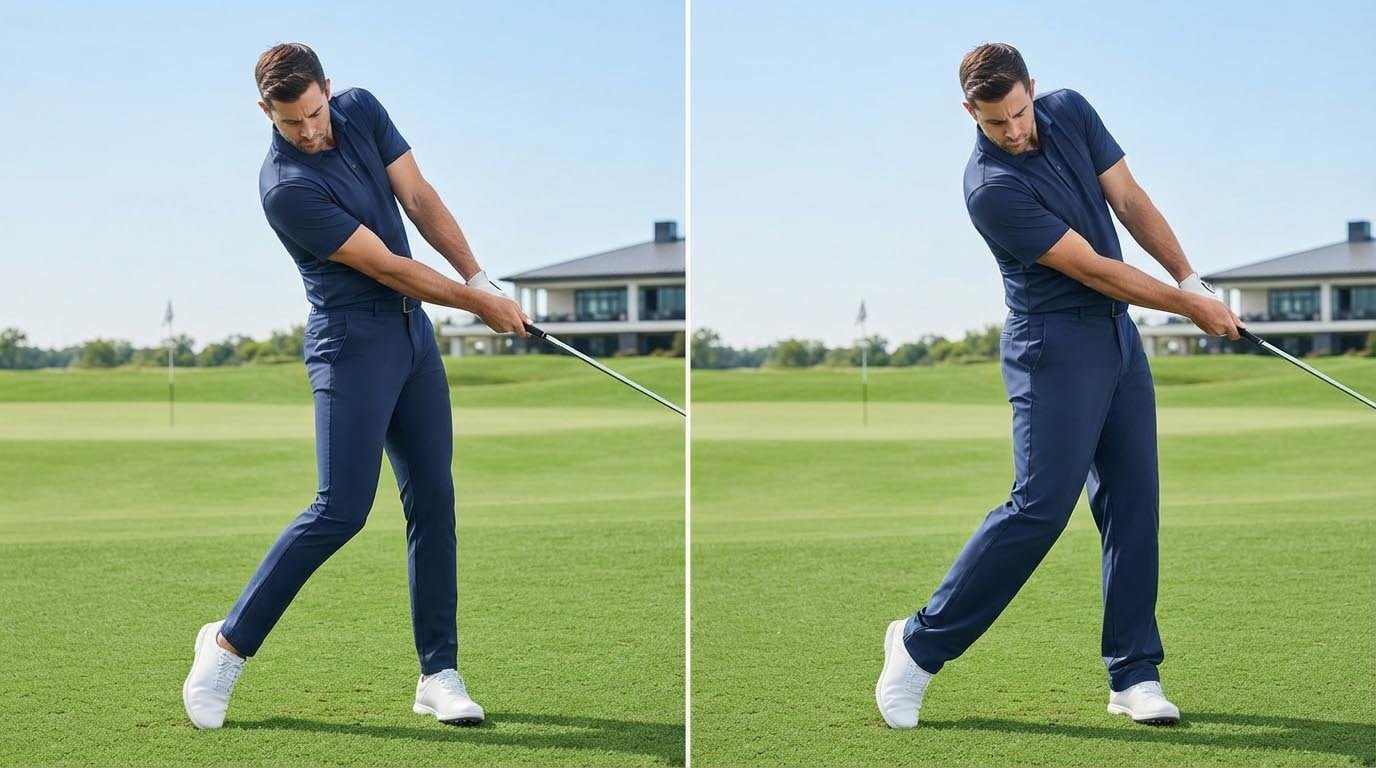
Let me explain how fit type affects the three key performance factors I evaluate during sampling.
Swing Mechanics and Range of Motion
During a full golf swing, hips rotate 45-60 degrees while legs stabilize the lower body. Fabric that's too tight restricts this rotation. Fabric that's too loose creates drag and inconsistent contact with skin.
In our sampling tests with client feedback:
- Slim fit: Works when fabric has 15%+ stretch content. Without adequate stretch, customers report restriction at top of backswing. The tighter silhouette also increases seam stress during rotation.
- Athletic fit: Provides clearance for hip rotation while keeping fabric close enough to prevent bunching. This is why it works across skill levels.
- Relaxed fit: Rarely causes mobility complaints, but excess fabric can interfere with weight transfer feedback. Some players report feeling "disconnected" from their lower body.
The mechanical constraint is simple: you need enough fabric to accommodate hip rotation without pulling on the waistband. This is determined by thigh width and rise height working together, not just one measurement.
Heat Management and Breathability
Fit affects how much air circulates between fabric and skin. During summer rounds in humid climates, this becomes your most important performance factor.
Key differences I've observed:
- Slim fits create more skin contact, reducing airflow. This works in cool weather but becomes uncomfortable above 80°F.
- Relaxed fits allow more air circulation but can feel "billowy" in wind conditions.
- Athletic fits balance coverage with ventilation by using tapered legs (reduces excess fabric) and gusseted crotch (increases movement space).
When brands ask about fabric weight, I remind them that fit type matters as much as gsm. A 210gsm fabric in relaxed fit may breathe better than 180gsm in slim fit, simply due to air gap volume.
Visual Presentation and Channel Strategy
Here's where commercial reality hits hard. Fit types photograph differently, which affects conversion rates across sales channels.
| Sales Channel | Optimal Fit Presentation | Why It Matters |
|---|---|---|
| E-commerce | Slim or athletic | Clean silhouette in product photos, reads as "modern" |
| Wholesale (pro shops) | Regular or relaxed | Fits mature demographic, try-before-buy reduces risk perception |
| DTC (brand website) | Athletic or slim | Younger audience, lifestyle photography benefits from fitted look |
| Amazon/Marketplaces | Athletic (safest) | Reduces returns across diverse customer base |
I've seen brands lose sales because their product photos showed baggy relaxed fit, even though the actual target customer needed that room. The visual disconnect killed conversion before customers read descriptions.
How to Choose the Right Golf Pants Fit for Your Body Type and Playing Style?
Start with your customer's waist-to-inseam ratio from existing sales data, not their stated preference. Players ordering W36/L30 have different proportion needs than W32/L34. Then layer in playing frequency (competitive vs. recreational) and age demographic. This data-driven approach cuts return rates by 20-30% compared to offering "all fits."
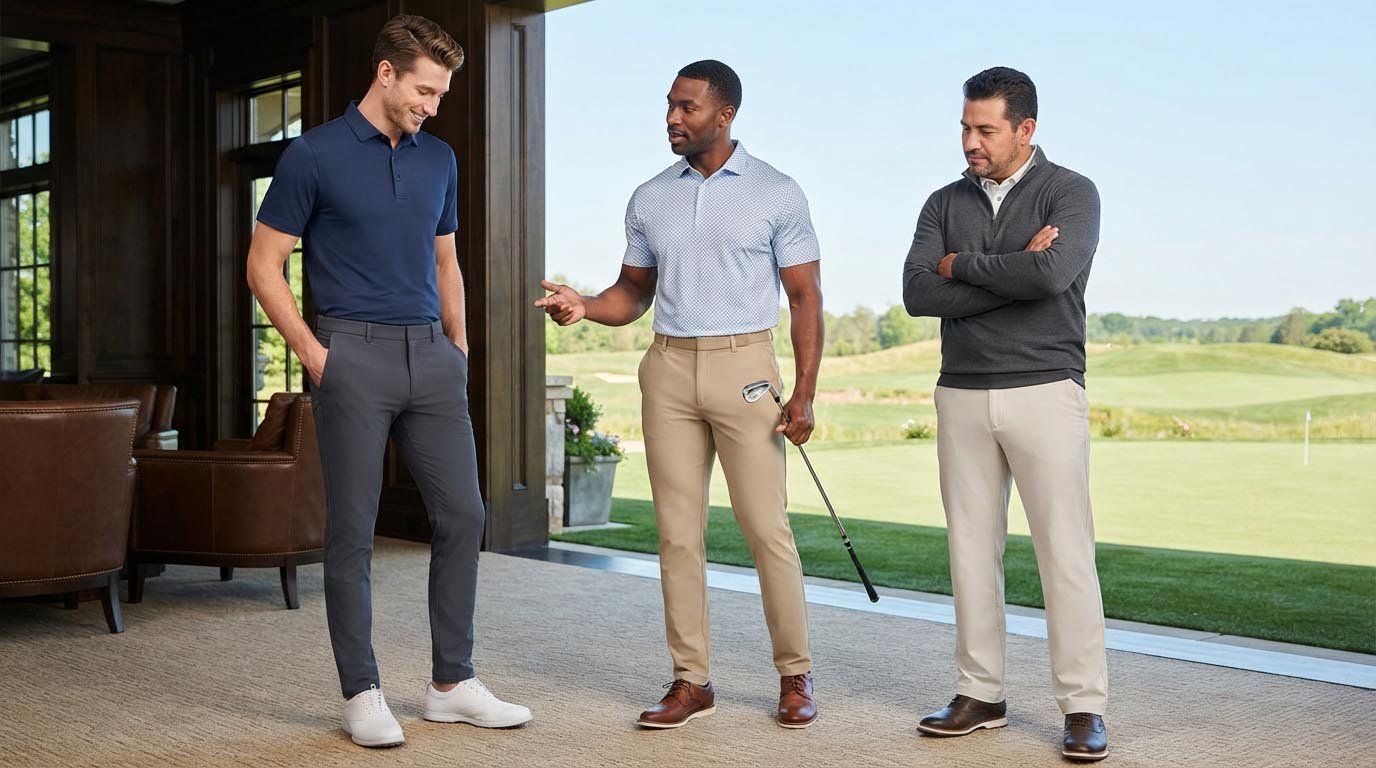
Let me walk through the selection framework I use with clients during product development.
Step 1: Analyze Your Customer Body Clusters
Pull your sales data and segment by waist-to-inseam ratios. Most brands discover their customers fall into three clusters:
Cluster A: Proportional builds (W32-36, L32-34)
These customers can wear any fit type. Your decision should optimize for aesthetic preference and playing style rather than fit accommodation.
Cluster B: Stocky builds (W36-40, L30-32)
These customers need relaxed or athletic fit with higher rise and more thigh room. Slim or regular fits generate returns.
Cluster C: Tall/lean builds (W30-34, L34-36)
These customers often prefer slim or regular fit. Relaxed fits bunch excessively at the waist and create awkward proportions.
If 60%+ of your customer base falls into Cluster B or C, offering a "complete range" wastes resources. Focus on the fit that matches your dominant cluster.
Step 2: Map Playing Style to Fit Requirements
Your customer's handicap and playing frequency predict fit preference better than age alone.
Competitive players (handicap 0-10, plays 3+ times/week):
- Prioritize swing mechanics over all-day comfort
- Prefer slim or athletic fit to reduce fabric interference
- Accept higher price points for performance features
- Usually specify mid to low rise for modern aesthetic
Recreational players (handicap 15+, plays 1-2 times/week):
- Prioritize comfort during 4-5 hour rounds
- Prefer athletic or relaxed fit for ease of movement
- More price-sensitive, less concerned with technical details
- Usually prefer mid to high rise for better coverage
When your target customer plays infrequently, fit forgiveness matters more than optimization. Athletic fit provides the widest margin for error.
Step 3: Account for Age and Body Composition Shifts
This is uncomfortable territory for marketing copy, but it's reality in manufacturing. Body composition changes with age, which affects fit requirements.
Customers 25-40:
- More likely to have athletic builds
- Prefer modern, tapered silhouettes
- Respond to performance marketing
- Lower tolerance for traditional styling
Customers 45-60:
- Body weight often redistributes to midsection
- Need higher rise and more room through seat
- Value comfort over aesthetics
- Higher tolerance for relaxed fits
Customers 60+:
- Often need relaxed fit with comfort waistband
- Less concerned with fashion trends
- Prioritize ease of dressing and all-day wear
- May have mobility limitations that require generous fit
When I see brands targeting "all golfers," I know they haven't thought through these distribution differences. A 28-year-old and a 65-year-old rarely want the same fit type.
Step 4: Consider Your MOQ and Inventory Constraints
Here's where production reality constrains your options. Each fit type multiplies your SKU count:
- 1 fit type × 6 sizes × 3 colors = 18 SKUs
- 2 fit types × 6 sizes × 3 colors = 36 SKUs
- 3 fit types × 6 sizes × 3 colors = 54 SKUs
Most manufacturers require 300-500 pieces minimum per SKU for custom patterns. If you're a new brand, offering three fit types means:
- Higher initial investment ($15,000-$25,000 just for first production)
- Greater inventory risk (some fits will sell slower)
- More complex warehouse management
- Harder to maintain stock across all size/fit combinations
My recommendation for brands ordering under 2,000 pieces total: start with one fit type that matches your dominant customer cluster. Add a second fit only when sales data proves demand.
Common Mistakes to Avoid When Buying Golf Pants?
The biggest mistake is assuming fit labels are standardized. Buyers order "regular fit" from multiple suppliers and get completely different dimensions. Other critical errors include ignoring graded spec sheets, choosing fits based on personal preference rather than customer data, and underestimating how SKU complexity drives return costs.
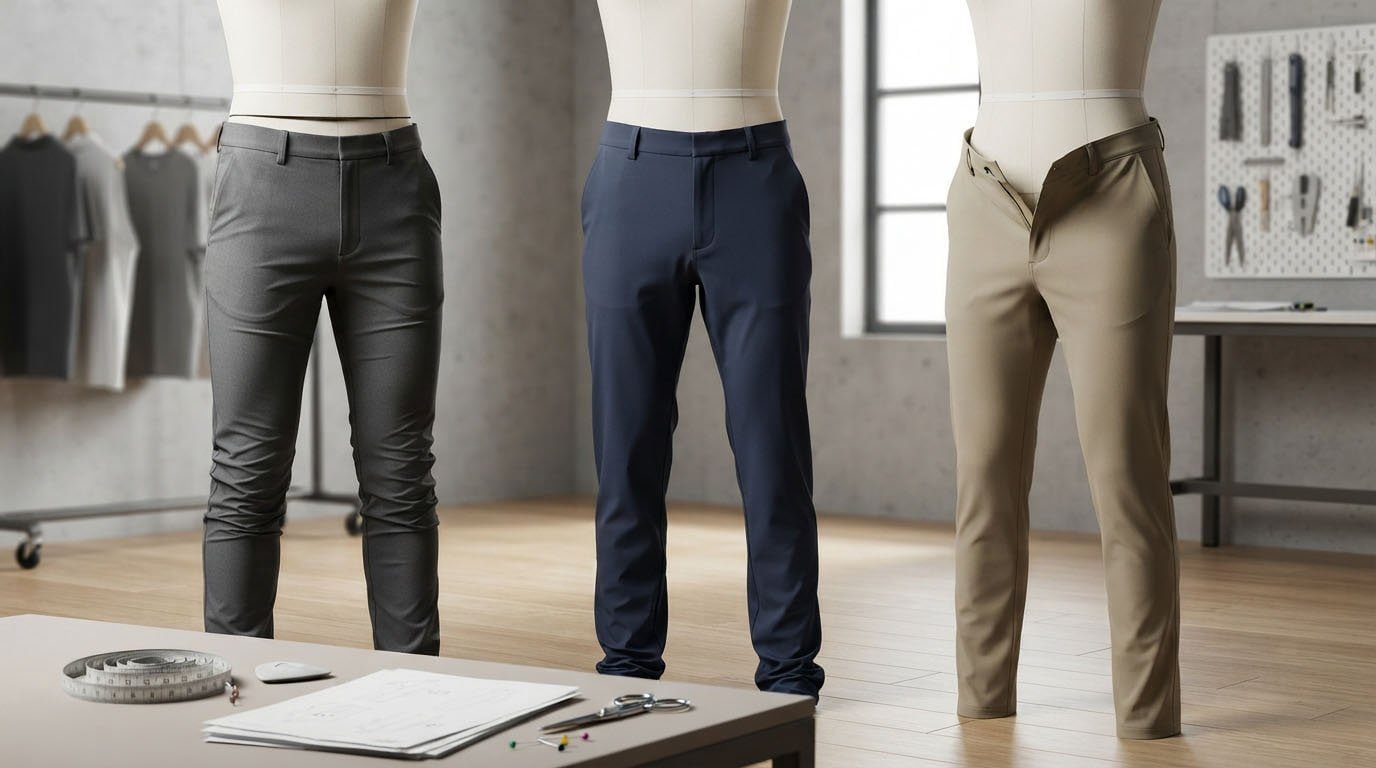
Let me highlight the mistakes I see most often during buyer consultations, and what they actually cost you.
Mistake 1: Trusting Fit Labels Without Measurement Verification
A brand ordered 1,200 pieces of "athletic fit" pants based on sample approval. When bulk production arrived, customers immediately complained about tight thighs. What happened?
The sample was made from the supplier's pre-production pattern. Bulk production used a slightly different base block due to factory changes. The difference was only 1 inch in thigh circumference, but it pushed the fit outside acceptable tolerance.
How to avoid this:
- Request graded spec sheets with measurements for every size
- Compare key points: thigh width at 1" below crotch, knee width, leg opening, front rise, back rise
- Include tolerance ranges in your purchase order (+/- 0.5 inches is standard)
- Order a pre-production sample from bulk fabric before approving full production
Mistake 2: Offering Multiple Fits Too Early
A startup brand launched with slim, regular, and relaxed fits because "that's what big brands do." Their first order was 600 pieces total, split across three fits.
Results:
- Slim fit sold out in 6 weeks
- Regular fit moved slowly over 4 months
- Relaxed fit still had 40% inventory remaining after 8 months
- They couldn't reorder slim fit fast enough, losing peak season sales
The lesson: Start with your strongest customer cluster. Expand fits only when data proves secondary demand. Most brands find that 80% of customers prefer one or two fits, not all three.
Mistake 3: Choosing Fit Based on Personal Preference or Trends
I've had buyers tell me "I like slim fit, so that's what we're making." Then their customer reviews tell a different story: "runs small," "too tight in thighs," "can't bend comfortably."
Your personal preference doesn't matter. Your customer data matters. If your target demographic is mature recreational golfers, slim fit will generate returns regardless of how good it looks in your product photos.
The fix: Build customer profiles based on:
- Actual purchase data (waist/inseam distribution)
- Playing frequency from surveys or market research
- Age demographics from your marketing analytics
- Return reasons from past collections
Mistake 4: Ignoring Rise Height in Fit Selection
Rise height (waist position) affects comfort as much as thigh width, but buyers often overlook it. I see brands approve samples while standing, but customers wear pants for 4-5 hours while sitting in carts, bending for putts, and walking hills.
Low rise pants that work fine while standing become uncomfortable when sitting. High rise pants that feel secure while standing can restrict hip rotation during swings.
Standard rise heights by fit type:
- Slim fit: 9.5-10.5 inches (front rise at size 34)
- Regular/Athletic: 10.5-11.5 inches
- Relaxed fit: 11.5-12.5 inches
When customers between fits complain about both tightness and gaping waistbands, the issue is usually rise height mismatch, not overall fit.
Mistake 5: Underestimating How Stretch Content Affects Fit Category
A non-stretch slim fit and a 15% stretch slim fit behave completely differently on the body. The stretch version will accommodate 1-2 sizes more body variance before feeling restrictive.
This creates a hidden problem: if you switch fabric suppliers between productions, and the new fabric has different stretch recovery, your "same fit" will perform differently. Customers notice.
Before approving any fabric change:
- Test stretch and recovery using same protocol (ASTM D2594 is standard)
- Verify stretch direction (2-way vs. 4-way affects mobility differently)
- Sample the new fabric in your approved pattern before bulk ordering
FAQ: Golf Pants Fit Types Explained
What fit type do most professional golfers wear?
Most tour players wear slim or athletic fit with custom tailoring. However, tour players have body dimensions (W30-34, athletic builds) that don't represent recreational golfers. Don't base your product line on tour preferences unless your target market matches that demographic.
Can I customize fit types when ordering from manufacturers?
Yes, but you'll need 500+ pieces minimum for custom pattern development. Most manufacturers offer 2-3 standard fits at lower MOQs (300 pieces). Custom fit costs an additional $800-$1,500 for pattern development and grading.
How do I know if pants will fit without trying them on?
Compare your measurements to the graded spec sheet, not size labels. Measure your actual thigh circumference 1 inch below the crotch, then compare to the manufacturer's spec at that point. A 2-inch difference between your measurement and the spec gives comfortable fit.
Should I size up in slim fit golf pants?
Only if your thigh measurement exceeds the spec by more than 1 inch. Sizing up increases waist size, which can cause gaping and require belts. Better solution: choose athletic fit in your true size.
Do golf pants fit differently than regular pants?
Yes. Golf pants typically have higher rise, more stretch, and different thigh proportions than casual pants. A size 34 in regular chinos may not match a size 34 in golf pants from the same brand, because golf pants account for swing mechanics and extended wear.
What's the return rate difference between fit types?
In our client data, slim fit averages 25-30% returns when sold to general golf demographics. Athletic fit averages 12-18% returns. Relaxed fit averages 15-20% returns. The variance depends on how well the fit matches the actual customer base, not the fit type itself.
Can you alter golf pants if the fit is wrong?
Leg tapering and hemming are straightforward. Taking in the waist works up to 1-2 inches. Letting out thighs or seat is nearly impossible without reconstruction. If fit is wrong in thigh or rise, alteration won't fix it—you need a different fit type.
Conclusion
Golf pants fit isn't about following trends or offering every option. It's about matching your manufacturing decisions to real customer body clusters and playing needs. Start with data, verify measurements, and remember that fewer fits done well beat many fits done poorly.