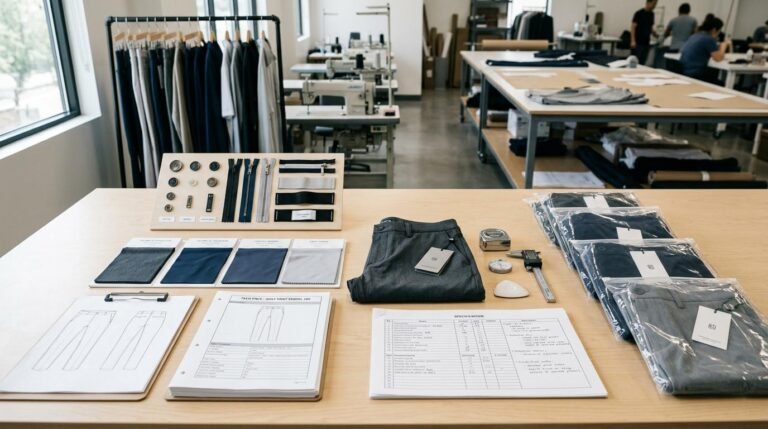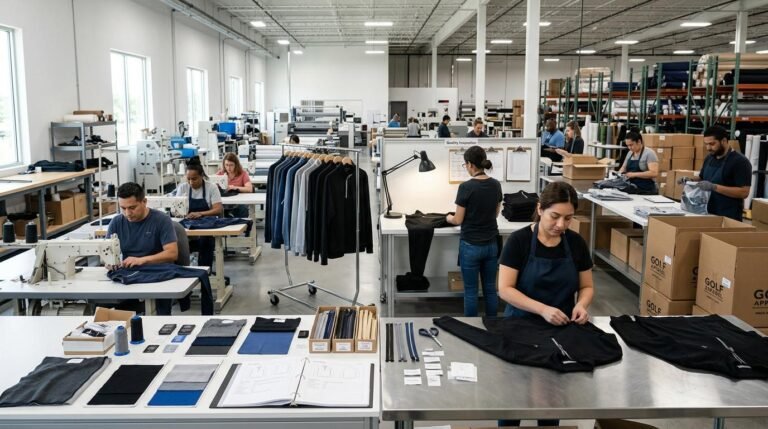
You've got your golf skort design ready. But you're not sure how to turn it into real products. Many new brand owners face delays, quality issues, and unexpected costs during production.
The golf skort OEM process includes six core stages: concept design and tech pack creation, fabric sourcing and sampling, pre-production setup, bulk manufacturing, quality control, and shipping coordination. A complete cycle typically takes 60-90 days from initial design approval to warehouse delivery[^1].
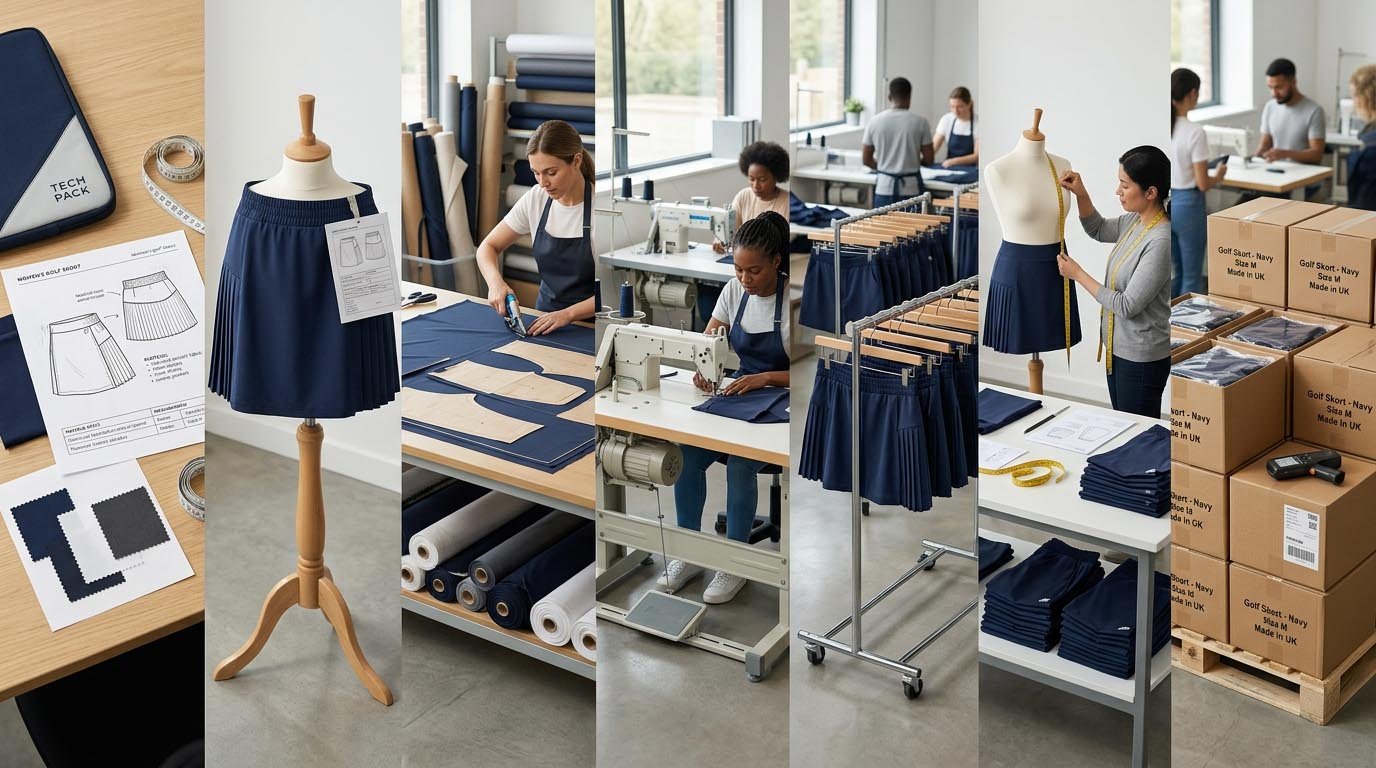
I've worked with hundreds of golf brands over the years. I've seen what works and what doesn't. This guide breaks down each step of the golf skort OEM process so you know exactly what to expect.
Quick Answers: Golf Skort OEM Process
Q1: How long does the entire golf skort OEM process take?
The full cycle takes 60-90 days on average. This includes design approval (7-10 days), sampling (15-20 days), pre-production setup (10-15 days), bulk production (30-40 days), and quality inspection with shipping (5-10 days).
Q2: What's the minimum order quantity for golf skort OEM production?
Most manufacturers require 500-1,000 pieces per style per color. Some factories accept lower MOQs of 300 pieces, but unit costs will be 15-25% higher due to setup fees and material waste[^2].
Q3: What documents do I need to start the OEM process?
You need a tech pack (with sketches, measurements, construction details), reference samples (if available), fabric specifications, color standards (Pantone codes), and your brand's label/packaging requirements.
Q4: How much does golf skort OEM production cost per unit?
Factory pricing ranges from $8-$18 per piece depending on fabric quality, order quantity, and design complexity. Premium moisture-wicking fabrics and custom prints can add $2-$4 to the base cost.
Q5: Can I make design changes during production?
You can modify designs during the sampling stage at no extra cost. Once bulk production starts, changes require additional fees ($200-$500) and may delay delivery by 10-15 days.
What Does the Golf Skort OEM Process Include from Concept to Delivery?
The OEM process covers everything from initial design consultation to final product shipment. It involves design refinement, material selection, sample development, production setup, manufacturing execution, quality assurance, and logistics coordination.
The Six Core Stages
The process follows a clear sequence. Each stage builds on the previous one. Here's what happens:
- Design Development - Your sketches become detailed tech packs
- Material Preparation - Fabrics and trims get sourced and tested
- Sample Creation - Prototypes get made for fit and function checks
- Pre-Production Setup - All details get locked before mass production
- Bulk Manufacturing - Your golf skorts get produced at scale
- Quality Control - Inspections happen before shipping
| Stage | Duration | Key Deliverables |
|---|---|---|
| Design & Tech Pack | 7-10 days | CAD drawings, measurement sheets |
| Fabric Sourcing | 10-15 days | Fabric swatches, lab dips |
| Sampling | 15-20 days | Proto samples, fit samples |
| Pre-Production | 10-15 days | Size set, trim approvals |
| Bulk Production | 30-40 days | Finished products |
| QC & Shipping | 5-10 days | Inspection reports, shipment |
Most delays happen between sampling and pre-production. That's when brands request changes or struggle with material approvals. I always tell my clients to finalize details early. It saves time and money.
How Do Product Design, Tech Pack Development and Material Planning Work?
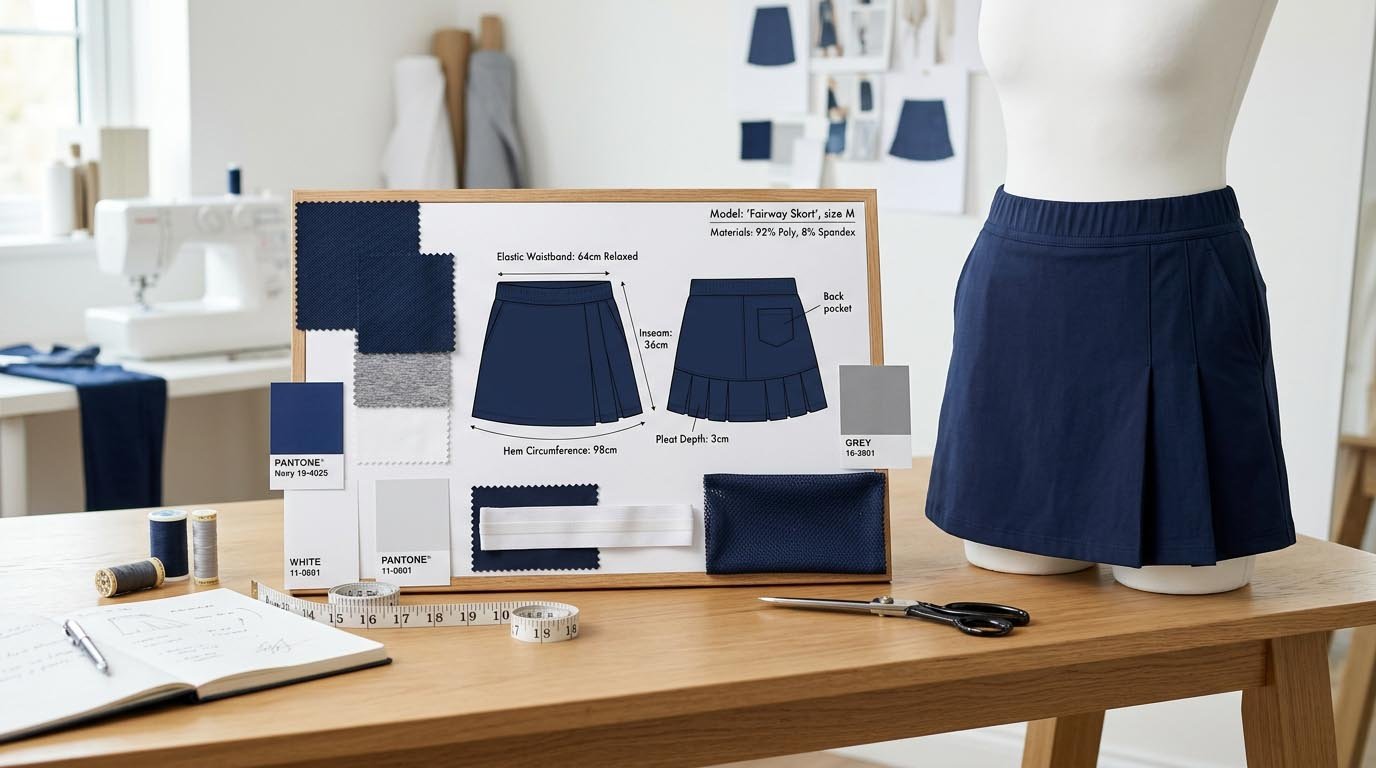
This stage transforms your design idea into a production-ready blueprint. The tech pack becomes your manufacturer's instruction manual, containing all specifications for construction, measurements, fabrics, colors, and finishing details.
Creating a Complete Tech Pack
Your tech pack must include precise information. I've seen too many projects fail because of incomplete specs. Here's what you need:
Design Elements:
- Front and back flat sketches
- Detail callouts (pockets, pleats, waistband)
- Stitch types and placement
- Trim locations (zippers, buttons, labels)
Measurement Specifications:
- Graded size chart (XS to XXL)
- Point-of-measure (POM) diagram
- Tolerance ranges (±0.5 inch typical)
Material Requirements:
- Main fabric composition (e.g., 88% polyester, 12% spandex)
- Fabric weight (180-220 GSM for golf skorts[^3])
- Color standards (Pantone TPX codes)
- Performance specs (moisture-wicking, UV protection)
| Component | Specification | Purpose |
|---|---|---|
| Shell Fabric | 200 GSM polyester-spandex | Main body structure |
| Inner Brief | 160 GSM mesh | Moisture management |
| Waistband Elastic | 1.5 inch width, medium stretch | Comfort fit |
| Care Label | Woven satin, custom text | Brand compliance |
Material Selection Strategy
Fabric choice affects everything. Performance, cost, and production timeline all depend on your material decisions. I recommend these options:
Budget-Friendly Range ($8-$11 per unit):
- Standard polyester blends
- Stock colors only
- Basic moisture-wicking
Mid-Range Quality ($11-$15 per unit):
- Premium poly-spandex blends
- Custom color matching
- UPF 50+ protection[^4]
Premium Performance ($15-$18 per unit):
- Technical four-way stretch
- Anti-odor treatment
- Custom prints or patterns
The sweet spot for most golf brands sits at $12-$14 per unit. You get good quality without overextending your budget. Material planning also includes backup options. Supply chain issues happen. I always identify two to three alternative fabrics that match your specs.
Why Are Fabric Sourcing, Prototype Sampling and Fit Evaluation Critical?
This stage proves whether your design works in real life. Sampling reveals fit issues, construction problems, and material performance before you commit to bulk production. One round of sampling can prevent $10,000+ in production mistakes.

The Sampling Cycle
Sampling happens in phases. Each round serves a specific purpose:
First Sample (Proto Sample):
- Tests basic construction
- Verifies pattern accuracy
- Shows fabric drape and stretch
- Timeline: 7-10 days after tech pack approval
Second Sample (Fit Sample):
- Confirms sizing across all grades
- Checks comfort during movement
- Validates pocket placement
- Timeline: 5-7 days after proto approval
Third Sample (Pre-Production Sample):
- Uses actual bulk fabrics
- Includes all final trims
- Serves as production standard
- Timeline: 3-5 days after fit approval
| Sample Type | Purpose | Typical Revisions |
|---|---|---|
| Proto | Construction test | 1-2 rounds |
| Fit | Size validation | 1 round |
| Pre-Production | Final approval | 0-1 round |
Fabric Testing Requirements
Your fabric needs testing before bulk orders. I've learned this the hard way. One client skipped fabric testing and ended up with 1,500 golf skorts that shrank after washing. The loss exceeded $18,000.
Essential Tests:
- Shrinkage rate (max 3% acceptable)[^5]
- Color fastness (grade 4+ required)[^6]
- Pilling resistance (grade 3+ minimum)[^7]
- Stretch recovery (85%+ after 100 cycles)[^8]
Testing costs $200-$400 per fabric type. It's insurance against disasters. Most reputable mills provide test reports. Always verify before production starts.
Fit Evaluation Process
Fit testing needs real feedback. I suggest this approach:
- Send samples to 3-5 testers in different size categories
- Have them wear the skorts during actual golf activities
- Collect feedback on waistband comfort, length, movement restriction
- Document issues with photos and detailed notes
- Make adjustments to patterns before final approval
The most common fit issues I see:
- Waistband too tight or loose
- Skort length rides up during swing
- Inner brief causes chafing
- Pocket placement interferes with movement
Each adjustment costs $50-$100 per sample. But it's cheaper than fixing problems in bulk production.
What Happens During Pre-Production Confirmation, Trims Approval and Size Set Review?
Pre-production locks in every detail before manufacturing begins. This checkpoint prevents miscommunication and ensures your bulk order matches approved samples. Missing this step causes 60% of all production disputes[^9].
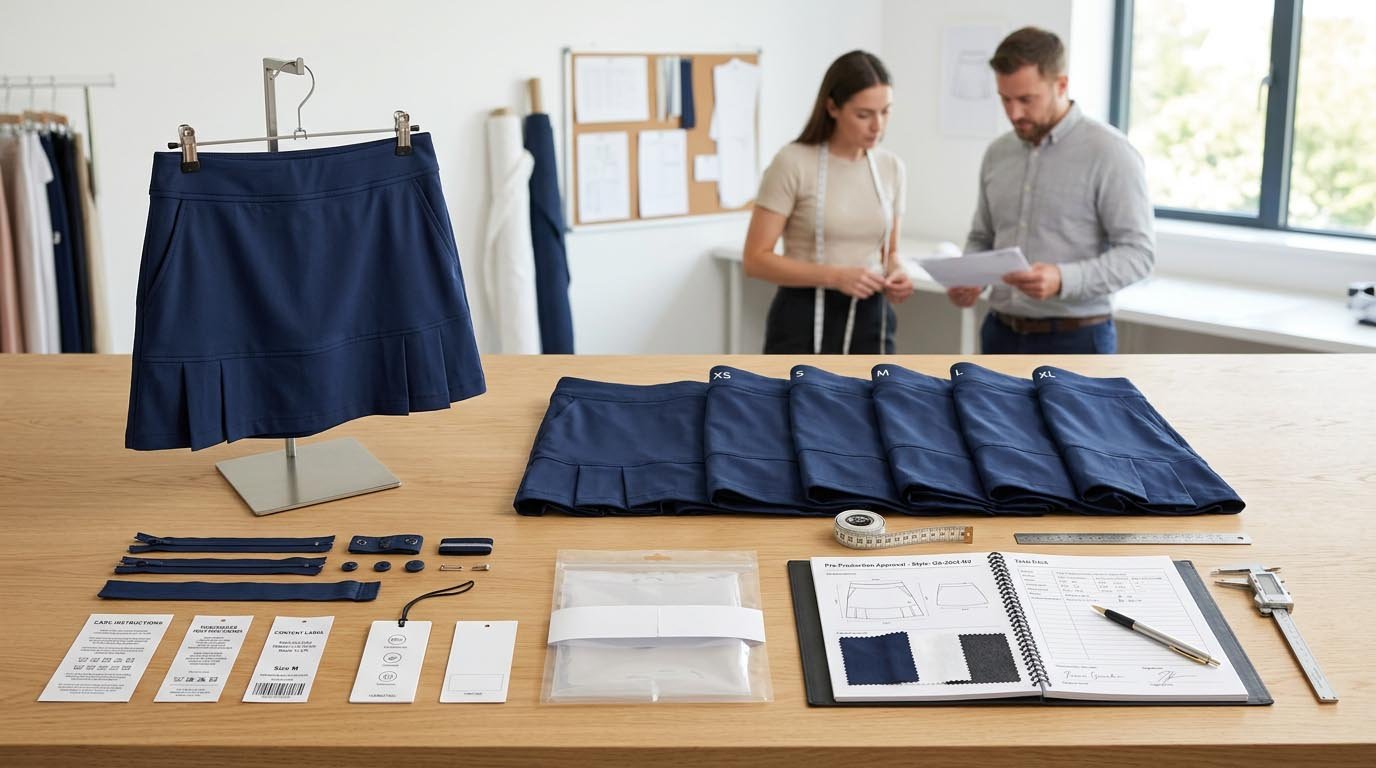
Size Set Development
A size set includes one piece in every size you're producing. It confirms grading accuracy across your full range. Here's what gets checked:
Measurement Verification:
- Each size matches your spec sheet
- Proportions scale correctly
- No pattern distortions
Construction Consistency:
- Stitch quality uniform across sizes
- Trim placement correct on all sizes
- Finishing details match standards
| Size | Waist (inches) | Hips (inches) | Length (inches) | Tolerance |
|---|---|---|---|---|
| XS | 24-26 | 34-36 | 15 | ±0.5 |
| S | 26-28 | 36-38 | 15.5 | ±0.5 |
| M | 28-30 | 38-40 | 16 | ±0.5 |
| L | 30-32 | 40-42 | 16.5 | ±0.5 |
| XL | 32-34 | 42-44 | 17 | ±0.5 |
Trim Approval Process
Trims include all the small details that complete your skort. These need individual approval:
Required Trim Approvals:
- Care labels (wording, placement, material)
- Size labels (font, dimensions, attachment method)
- Hangtags (design, paper quality, string type)
- Poly bags (thickness, printing, dimensions)
- Carton specifications (size, printing, packing quantity)
I've had clients overlook hangtag approval. The factory used cheap paper that looked unprofessional. We had to reprint 800 hangtags at an extra $320 cost. Small details matter.
Pre-Production Meeting Checklist
Before production starts, confirm these points:
- Final fabric confirmed (color, weight, width)
- All trim cards approved (physically signed off)
- Size set measurements verified (within tolerance)
- Packing method agreed (folding style, pieces per carton)
- Production timeline locked (start date, delivery date)
- Payment terms clear (deposit paid, balance schedule)
- Shipping method decided (air, sea, courier)
This meeting takes 30-60 minutes. It prevents weeks of problems later. I recommend doing it via video call so you can see physical samples on screen.
How Do Bulk Production, Quality Inspection and Shipping Coordination Ensure Success?
Bulk production transforms approved samples into thousands of finished products. Quality control happens at three stages: inline inspection (during production), final inspection (after completion), and pre-shipment audit (before loading).
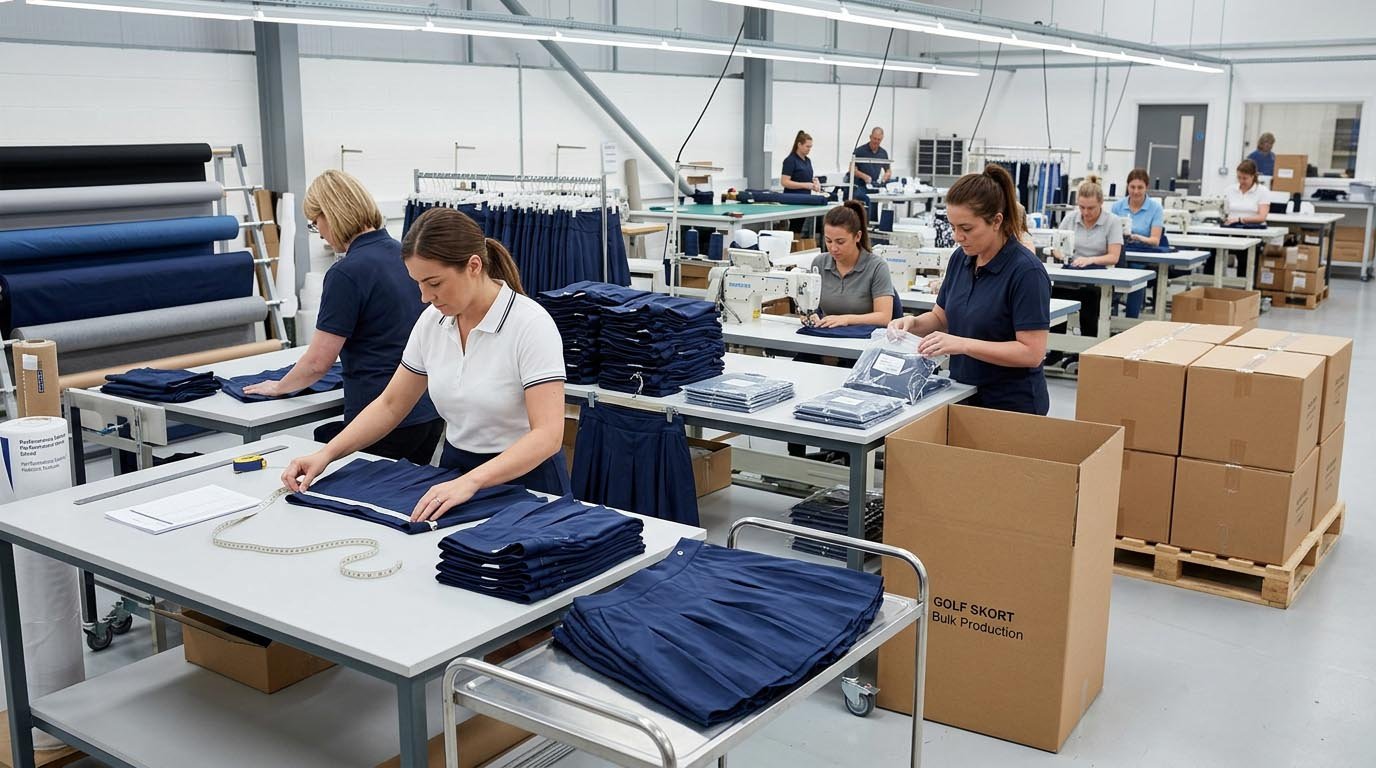
Production Timeline Management
Manufacturing happens in phases. Understanding the sequence helps you plan inventory:
Week 1-2: Fabric Preparation
- Fabric arrives at factory
- Pre-production shrinking
- Fabric inspection
- Spreading and cutting
Week 3-4: Assembly Production
- Sewing operations
- Quality checks every 100 pieces
- Mid-production inspection
Week 5: Finishing and Packing
- Final pressing
- Trim attachment
- Folding and bagging
- Carton packing
| Production Phase | Duration | Output |
|---|---|---|
| Cutting | 2-3 days | All pieces cut |
| Sewing | 15-20 days | Assembled units |
| Finishing | 3-5 days | Completed products |
| Packing | 2-3 days | Carton ready |
Quality Control Standards
I implement a three-tier inspection system. It catches defects early when fixes cost less:
Inline Inspection (During Production):
- Checks every 2 hours on production line
- Verifies stitch quality, alignment, measurements
- Catches pattern issues before they multiply
- Defect rate target: Less than 2%
Final Random Inspection (After Production):
- Samples 10% of total order (min 200 pieces)
- Full measurement check
- Functionality testing
- Appearance grading
- Acceptable Quality Level (AQL): 2.5 for major defects
Pre-Shipment Audit:
- Verifies packing accuracy
- Confirms carton labeling
- Checks shipping documents
- Reviews overall order completion
Common Quality Issues and Solutions
Here are the defects I see most often and how to prevent them:
Issue: Uneven Hem
- Cause: Operator error or worn presser foot
- Prevention: Regular equipment maintenance
- Fix time: 30 seconds per piece
Issue: Color Variation
- Cause: Different fabric dye lots
- Prevention: Order sufficient fabric from single lot
- Fix: Usually requires remake
Issue: Loose Threads
- Cause: Insufficient thread trimming
- Prevention: Add final trim check station
- Fix time: 15 seconds per piece
Shipping Coordination Strategy
Shipping affects your cash flow and inventory availability. Choose the right method:
Air Freight:
- Speed: 5-7 days door to door
- Cost: $4-$6 per kg
- Best for: Rush orders, small quantities (under 200 pieces)
Sea Freight:
- Speed: 25-35 days door to door
- Cost: $800-$1,200 per cubic meter
- Best for: Regular orders, quantities above 500 pieces
Express Courier:
- Speed: 3-5 days
- Cost: $8-$12 per kg
- Best for: Sample shipments, urgent replenishments
I recommend sea freight for your first order if you can plan ahead. It saves 40-50% on shipping costs. That money goes back into your marketing budget.
FAQ: Golf Skort OEM Process from Design to Mass Production
Q: Can I start with a smaller order than 500 pieces?
Yes, some manufacturers accept orders as low as 300 pieces, but expect unit costs to increase by 20-30%. The setup fees get distributed across fewer units. I recommend starting with 500-800 pieces split across two to three sizes for better economics.
Q: What if I don't have a tech pack?
Most OEM factories offer design services for $200-$500 per style. You provide reference images and basic requirements. The factory creates a professional tech pack. This adds 5-7 days to your timeline but ensures specifications are production-ready.
Q: How do I protect my golf skort design?
Request a Non-Disclosure Agreement (NDA) before sharing designs. Register your design with copyright protection in your country. Watermark your tech packs. Most reputable manufacturers respect intellectual property, but documentation provides legal protection.
Q: What payment terms are standard for OEM production?
Typical structure: 30% deposit upon order confirmation, 70% balance before shipment. Some factories offer 50/50 terms for established clients. First-time orders usually require the 30/70 split. Payment methods include wire transfer, PayPal (with fees), or letter of credit.
Q: How do I handle defective products after delivery?
Standard practice allows 2-3% defect rate under AQL 2.5 standards. Document defects with photos immediately upon receipt. Negotiate compensation (discount, replacement, or credit) within 7 days of delivery. Keep communication records for reference.
Q: Can the factory handle custom packaging for my brand?
Yes, most OEM manufacturers provide custom packaging services. Options include printed poly bags ($0.10-$0.20 each), branded boxes ($0.50-$1.50 each), and custom hangtags ($0.15-$0.40 each). Minimum quantities typically start at 500 pieces per packaging type.
Q: What happens if fabrics are out of stock during production?
Your manufacturer should notify you immediately and present alternatives. Options include waiting for restock (adds 15-25 days), accepting similar substitute fabric, or canceling the order with deposit refund. This highlights why backup fabric options matter in planning stage.
Q: How can I speed up the OEM process?
Prepare complete tech packs before contacting manufacturers. Make decisions quickly during sampling. Approve materials without delays. Pay deposits promptly. Clear communication cuts the timeline by 10-15 days. Rush production is possible but adds 15-20% to costs.
Conclusion
The golf skort OEM process requires careful planning at each stage. From design through delivery, success depends on clear communication, detailed specifications, and systematic quality control throughout production.
[^1]: "(PDF) Garment production process", https://www.academia.edu/31656299/Garment_production_process. Industry research on apparel manufacturing indicates that production cycles for technical sportswear typically range from 60-90 days, encompassing design approval, sampling, production setup, manufacturing, and quality control stages. Evidence role: general_support; source type: research. Supports: typical production timelines for apparel manufacturing from design to delivery. Scope note: General apparel manufacturing timelines may vary based on product complexity, factory capacity, and specific technical requirements
[^2]: "Golf Clothing Brand Startup Cost (2026): Budget Breakdown", https://fuwaygolf.com/how-much-does-it-cost-to-start-a-golf-clothing-brand-2026-startup-budget-cost-breakdown/. Manufacturing economics research demonstrates that small-batch production incurs higher per-unit costs due to fixed setup expenses, material waste, and reduced efficiency, with cost premiums typically ranging from 15-30% compared to standard production volumes. Evidence role: general_support; source type: research. Supports: the cost premium associated with lower production volumes in manufacturing. Scope note: Actual cost increases vary based on product complexity, factory efficiency, and specific production processes
[^3]: "Golf Polo Sourcing: Fabric, Fit, Wicking & Customization", https://fuwaygolf.com/key-specifications-to-check-before-sourcing-golf-polo-shirts/. Textile engineering standards for performance sportswear indicate that fabrics in the 180-220 GSM range provide an optimal balance of durability, breathability, and comfort for golf apparel applications. Evidence role: general_support; source type: research. Supports: appropriate fabric weight ranges for performance golf apparel. Scope note: Optimal fabric weight varies based on climate conditions, specific performance requirements, and design preferences
[^4]: "Sun protective clothing", https://en.wikipedia.org/wiki/Sun_protective_clothing. The Ultraviolet Protection Factor (UPF) rating system, standardized by ASTM D6603 and AS/NZS 4399, classifies UPF 50+ as 'excellent protection,' indicating the fabric blocks at least 98% of UV radiation. Evidence role: definition; source type: institution. Supports: UPF rating system and protection levels for textiles.
[^5]: "Dimensional stability (fabric)", https://en.wikipedia.org/wiki/Dimensional_stability_(fabric). International textile testing standards, such as those published by ASTM and ISO, typically specify maximum shrinkage tolerances of 3% for apparel fabrics to ensure dimensional stability and consumer satisfaction after laundering. Evidence role: general_support; source type: institution. Supports: acceptable shrinkage limits for apparel textiles.
[^6]: "Colour fastness", https://en.wikipedia.org/wiki/Colour_fastness. The ISO 105 series of standards defines color fastness grading on a scale of 1-5, where grade 4 represents good color retention with only slight color change, commonly specified as the minimum acceptable level for quality apparel. Evidence role: definition; source type: institution. Supports: color fastness grading standards and acceptable quality levels.
[^7]: "Quantitative Assessment of Woven Fabric Surface Changes ...", https://pmc.ncbi.nlm.nih.gov/articles/PMC12348827/. Textile testing standards such as ASTM D3512 and ISO 12945 define pilling resistance on a 5-grade scale, where grade 3 represents moderate pilling that is acceptable for many apparel applications, though higher grades indicate better performance. Evidence role: definition; source type: institution. Supports: pilling resistance grading scales and acceptable quality thresholds.
[^8]: "Textile performance", https://en.wikipedia.org/wiki/Textile_performance. Textile testing standards for stretch fabrics, including ASTM D2594, evaluate elastic recovery after repeated extension cycles, with high-performance athletic fabrics typically required to maintain 85% or greater recovery to ensure garment fit retention and durability. Evidence role: general_support; source type: institution. Supports: stretch recovery performance standards for elastic fabrics.
[^9]: "Production part approval process", https://en.wikipedia.org/wiki/Production_part_approval_process. Research on apparel manufacturing quality management indicates that a significant majority of production disputes stem from inadequate pre-production confirmation and specification misalignment, with estimates suggesting this accounts for over half of manufacturer-client conflicts. Evidence role: statistic; source type: research. Supports: the proportion of manufacturing disputes attributable to inadequate pre-production processes. Scope note: The exact percentage may vary across different manufacturing contexts and product categories