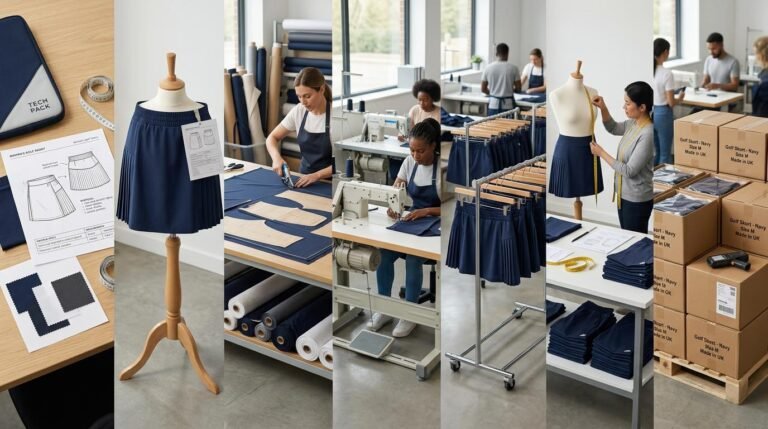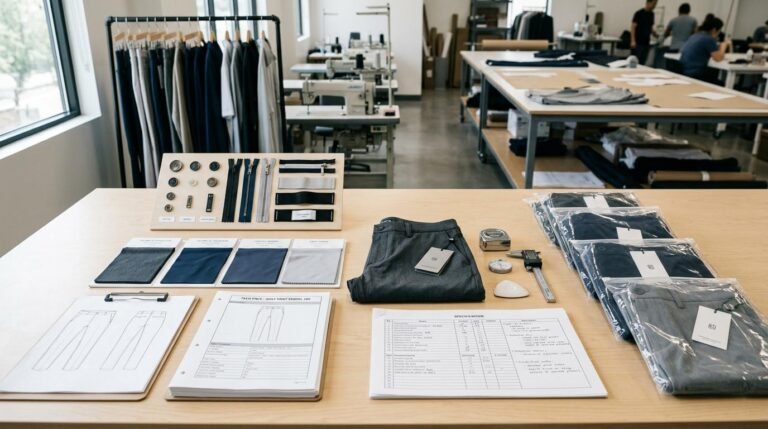
I've seen too many brands rush into production without checking the right specs. They end up with polos that shrink, fade, or feel uncomfortable on the course. The result? Unhappy customers and wasted money.
Before you source golf polo shirts, check these five core specifications: fabric composition and GSM (180-220 is ideal), fit standards with proper size grading, construction quality including collar and stitching, performance tests for colorfastness and shrinkage, and customization options that match your brand identity.
I started FUWAY in a small textile factory years ago. Back then, I learned the hard way that missing even one specification could derail an entire production run. Now, I help brands like yours avoid those costly mistakes.
Quick Answers: Golf Polo Sourcing Checklist
1. What's the best fabric weight for golf polos?
Between 180-220 GSM. This range offers the perfect balance of breathability and durability for active play.
2. Which performance tests matter most?
Focus on three: colorfastness (Grade 4+), shrinkage (under 3%), and pilling resistance (Grade 3-4). These directly impact customer satisfaction.
3. How do I ensure proper sizing?
Request a complete size chart with tolerance range (±1-2cm) and physical samples in at least three sizes before bulk production.
4. What customization minimums should I expect?
Most manufacturers require 300-500 pieces per design. However, some (like us at FUWAY) can work with 100-200 pieces for new brands.
5. Can I test fabric before ordering?
Always. Request strike-off samples and lab dips before committing to production. This saves money and prevents disappointments.
Fabric & Knit Specs: Composition, GSM, UPF and Wicking
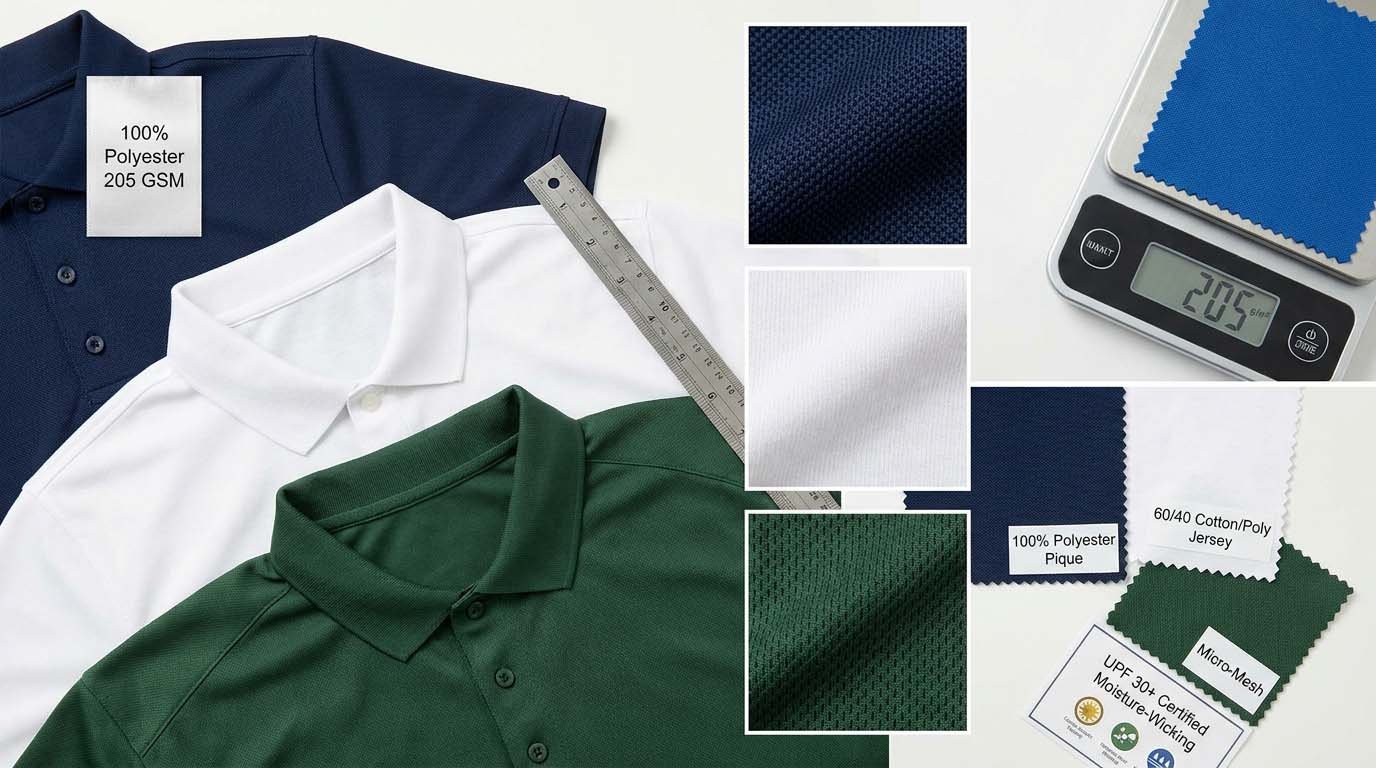
The fabric you choose determines 70% of your polo's performance. Check the fiber composition (100% polyester or poly-cotton blend), GSM weight (180-220 for golf), UPF rating (30+ minimum), and moisture-wicking finish certification.
I remember working with Bobby, a new brand owner from California. He wanted premium polos but didn't know where to start. The first thing I told him? Get the fabric right, and everything else follows.
Understanding Fabric Composition
The base material sets everything in motion. 100% polyester offers superior moisture management and quick-dry properties. Poly-cotton blends (65/35 or 50/50) give you a softer hand feel but slightly less performance.
Here's what I check for every order:
- Fiber content certification from the mill
- Yarn count (typically 24s to 32s for golf polos)
- Knit structure (pique, jersey, or mesh)
- Chemical-free dyes when possible
GSM Weight Matters More Than You Think
GSM (grams per square meter) determines how the polo feels and performs. Too light, and it looks cheap. Too heavy, and players overheat.
| GSM Range | Best Use | Feel |
|---|---|---|
| 160-180 | Training/practice wear | Very light, almost sheer |
| 180-200 | Most golf polos | Perfect balance |
| 200-220 | Premium retail | Substantial, quality feel |
| 220+ | Winter/layering | Too heavy for active play |
I always recommend 190-200 GSM for golf. It feels premium without compromising breathability.
UPF and Moisture Wicking
Every golf polo needs sun protection. I insist on UPF 30 minimum, though UPF 50+ is becoming the standard. This isn't optional anymore—golfers spend 4+ hours in direct sunlight.
For moisture wicking, don't just trust marketing claims. Ask for:
- AATCC Test Method 195 results
- Actual drying time data
- Wash durability tests (at least 20 cycles)
Fit & Pattern Standards: Size Charts, Grading and Ease
A great polo with poor fit never sells. Verify your manufacturer provides detailed size charts, consistent grading rules between sizes (2-3cm increments), and appropriate ease allowance (6-8cm in chest for athletic fit, 10-12cm for regular fit).
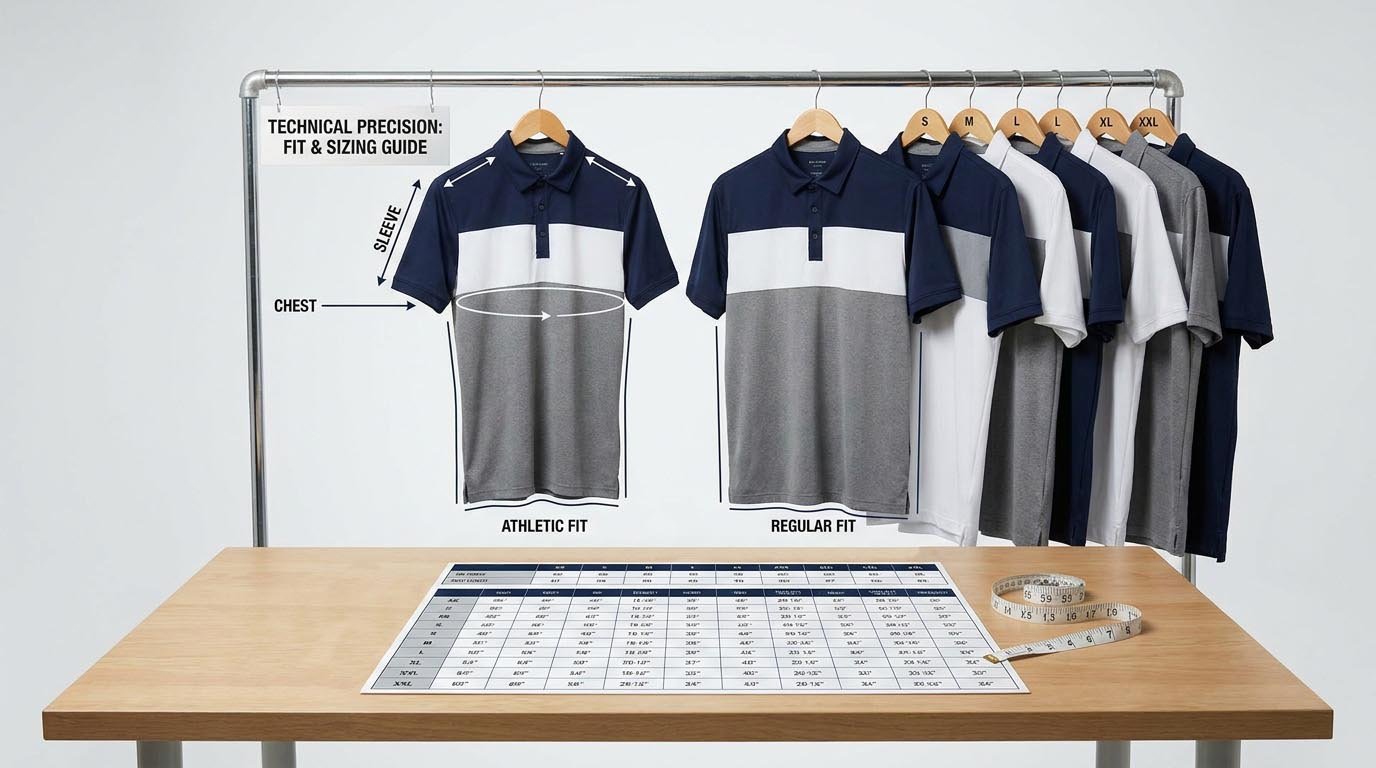
Bobby learned this lesson when his first sample run came back. The medium fit perfectly, but the large was disproportionate. The grading was off by nearly 2cm in some measurements.
Size Chart Essentials
Your manufacturer should provide a comprehensive tech pack. Here's what I include:
Critical Measurements:
- Chest width (measured 1" below armhole)
- Body length (HPS to hem)
- Shoulder width (seam to seam)
- Sleeve length (from shoulder seam to cuff)
- Collar height and spread
- Hem opening
Each measurement needs a tolerance range. I use ±1cm for chest and length, ±0.5cm for details like collar height.
Grading Rules Make or Break Your Range
Consistent grading ensures every size fits proportionally. I follow these standards:
| Size Jump | Chest | Length | Sleeve |
|---|---|---|---|
| S to M | +5cm | +2cm | +1.5cm |
| M to L | +5cm | +2cm | +1.5cm |
| L to XL | +5cm | +2.5cm | +1.5cm |
| XL to 2XL | +6cm | +2.5cm | +2cm |
The increase should be proportional. A bigger chest needs a longer body, but not always a longer sleeve.
Athletic vs. Regular Fit
Golf brands typically need both fits. Here's how I differentiate:
Athletic Fit:
- 6-8cm ease in chest
- Tapered side seams
- Shorter body length (-2cm)
- Fitted sleeve
Regular Fit:
- 10-12cm ease in chest
- Straight side seams
- Standard body length
- Relaxed sleeve
Construction & Trims: Collar, Placket, Stitching and Finishes
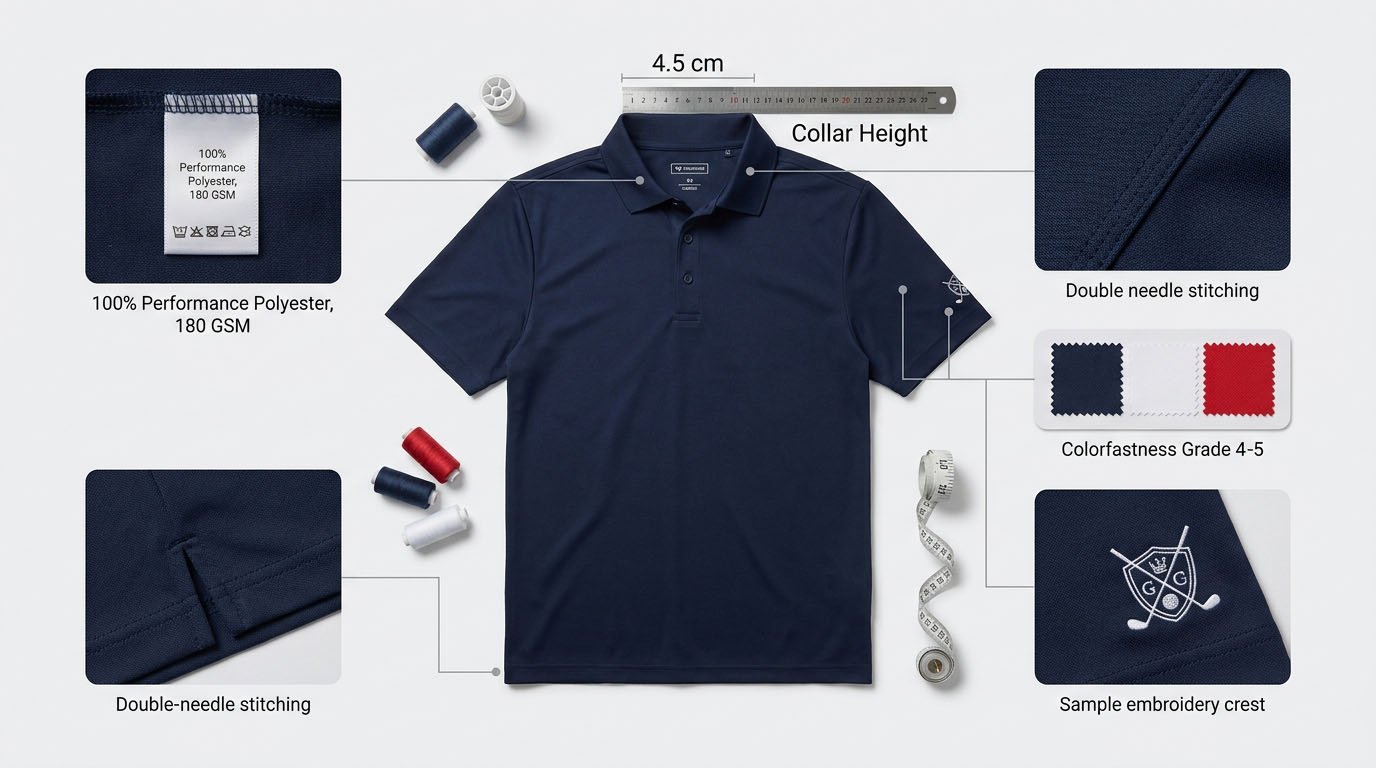
Quality construction shows in the details. Inspect collar construction (fused or sewn-in stays), placket reinforcement, stitch density (12-14 stitches per inch), and hem finishes before approving production.
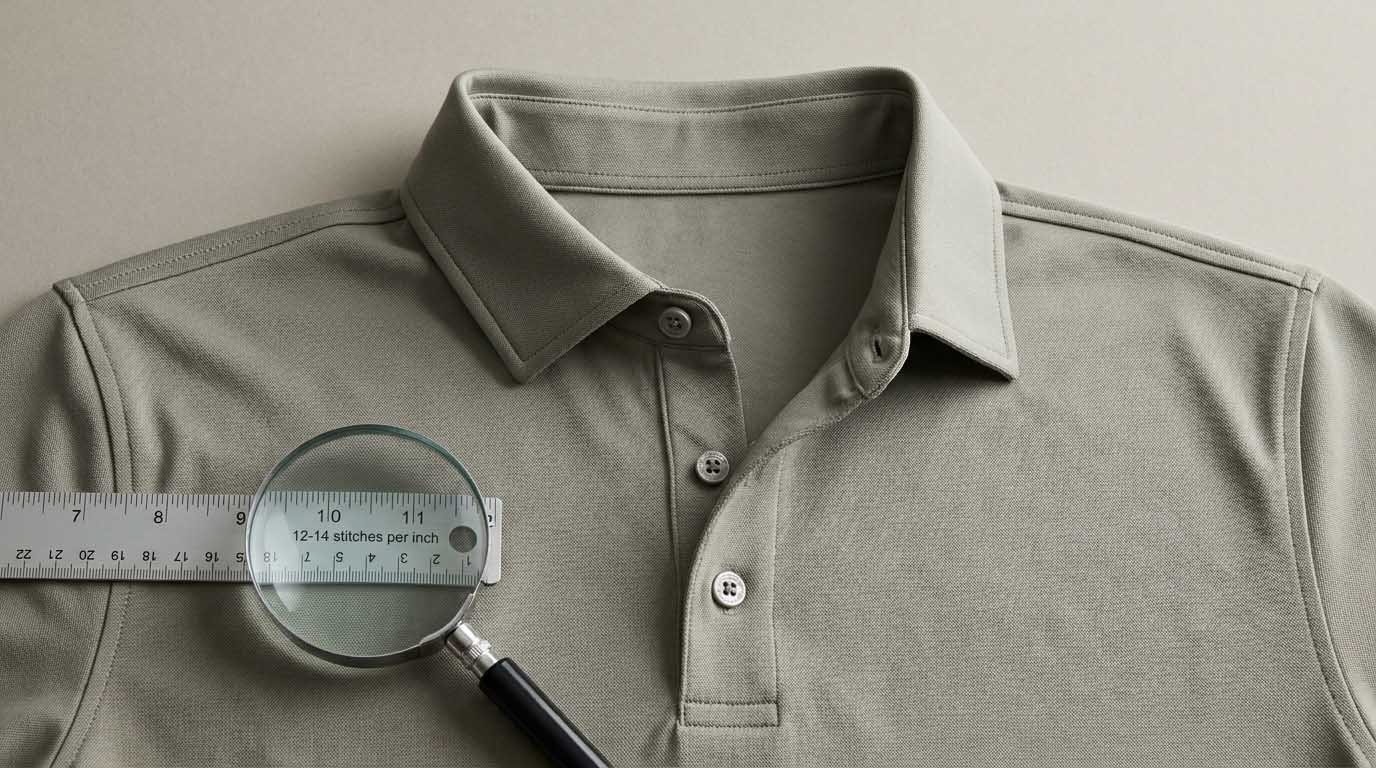
I've rejected entire shipments because of poor collar construction. The collar is the first thing customers notice—it has to be perfect.
Collar Construction Standards
A golf polo collar must hold its shape after 50+ washes. Here's my specification:
- Interlining material: Fusible or sewn-in (I prefer fusible for consistency)
- Collar band height: 3.5-4cm standing
- Collar points: 7-9cm length with proper curve
- Top-stitching: 0.3cm from edge, 12 SPI minimum
Some manufacturers skip the interlining to save $0.15 per unit. Don't let them. A collar without proper support looks cheap within weeks.
Placket and Button Details
The placket takes constant stress from opening and closing. I reinforce it with:
- Back-stay tape underneath the placket
- Buttonhole bar-tack at both ends
- Button quality: Minimum 2-hole, resin or natural shell
- Button attachment: Cross-stitch or shank button with reinforcement
Stitch Specifications
| Area | Stitch Type | SPI | Thread |
|---|---|---|---|
| Side seams | 401 (lockstitch) | 12-14 | Poly core-spun |
| Shoulders | 401 (lockstitch) | 12-14 | Poly core-spun |
| Collar attachment | 401 (lockstitch) | 14-16 | Poly core-spun |
| Hem | 406 (cover-stitch) | 12-13 | Poly core-spun |
| Sleeve hem | 406 (cover-stitch) | 12-13 | Poly core-spun |
Stitch-per-inch (SPI) matters. Fewer than 12 SPI creates weak seams. More than 16 SPI can damage lightweight fabrics.
Performance & Durability: Colorfastness, Shrinkage and Pilling Tests
Don't skip lab testing. Require colorfastness Grade 4 minimum (AATCC 61), dimensional stability under 3% shrinkage (AATCC 135), and pilling resistance Grade 3-4 (ASTM D3512). These tests predict real-world performance.
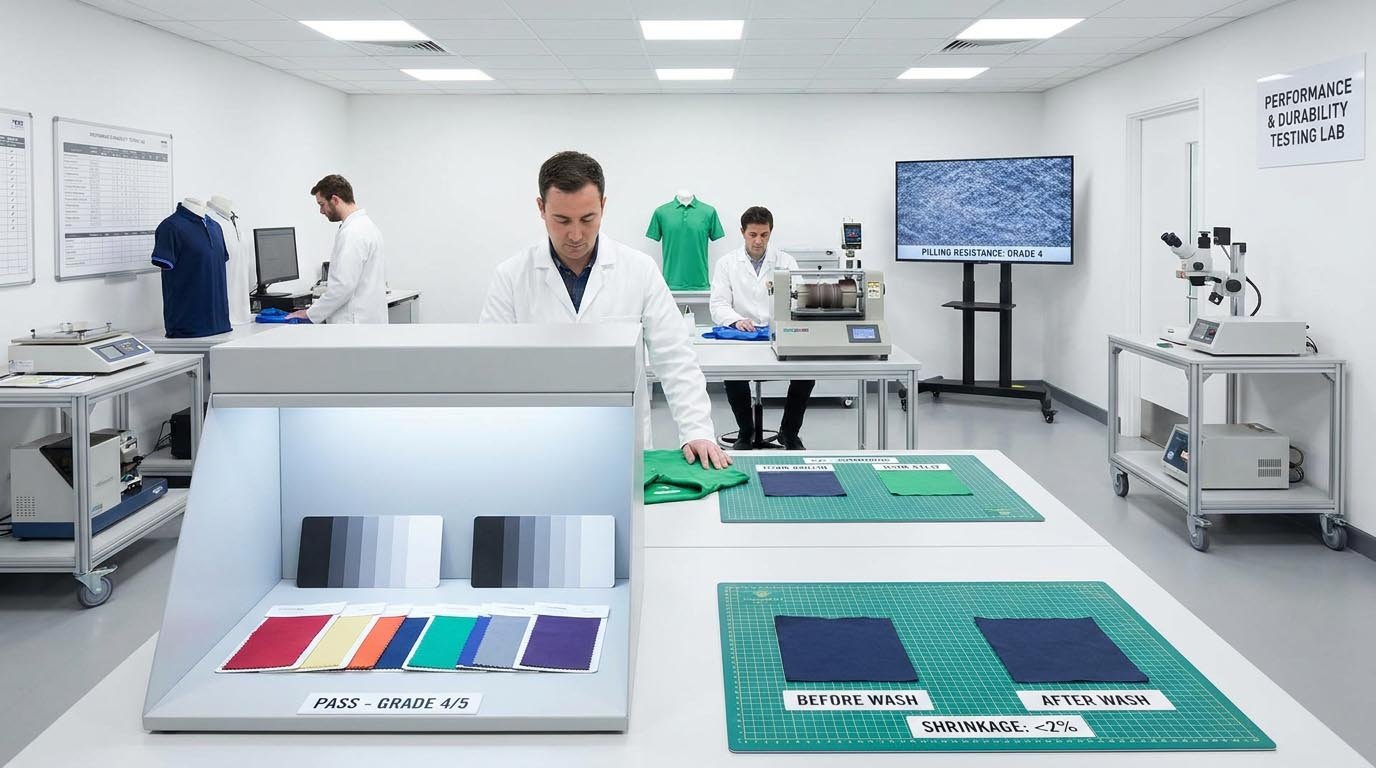
I once worked with a brand that skipped testing to save time. Their first shipment hit stores, and within two weeks, customers reported fading. The entire batch—2,000+ pieces—became markdowns.
Colorfastness Testing
Color fading ruins reputation faster than anything else. I require three tests:
Essential Colorfastness Tests:
- To washing (AATCC 61): Grade 4 minimum
- To light (AATCC 16): Grade 4 minimum after 40 hours
- To perspiration (AATCC 15): Grade 4 minimum (critical for activewear)
Dark colors (navy, black, burgundy) are hardest to stabilize. I insist on Grade 4-5 for these.
Shrinkage Control
A polo that shrinks 5% becomes unwearable. I follow these standards:
| Fabric Type | Max Shrinkage | Test Method |
|---|---|---|
| 100% Polyester | <2% | AATCC 135 |
| Poly-Cotton | <3% | AATCC 135 |
| 100% Cotton | <5% | AATCC 135 |
Test after 5 consecutive washes at 40°C. Some fabrics initially pass but fail after multiple cycles.
Pilling Resistance
Pills make new polos look old. This test matters for customer satisfaction:
- Method: ASTM D3512 (Martindale or random tumble)
- Minimum grade: 3 (moderate pilling acceptable)
- Target grade: 4 (slight pilling)
- Premium grade: 4-5 (no pilling)
Pro tip: Polyester resists pilling better than cotton. Blends fall somewhere in between.
Customization & Branding: Embroidery, Heat Transfers and Badges
Your brand identity lives in the customization details. Specify embroidery thread count (minimum 5,000 stitches), heat transfer durability (50+ washes), and badge attachment methods before production starts.
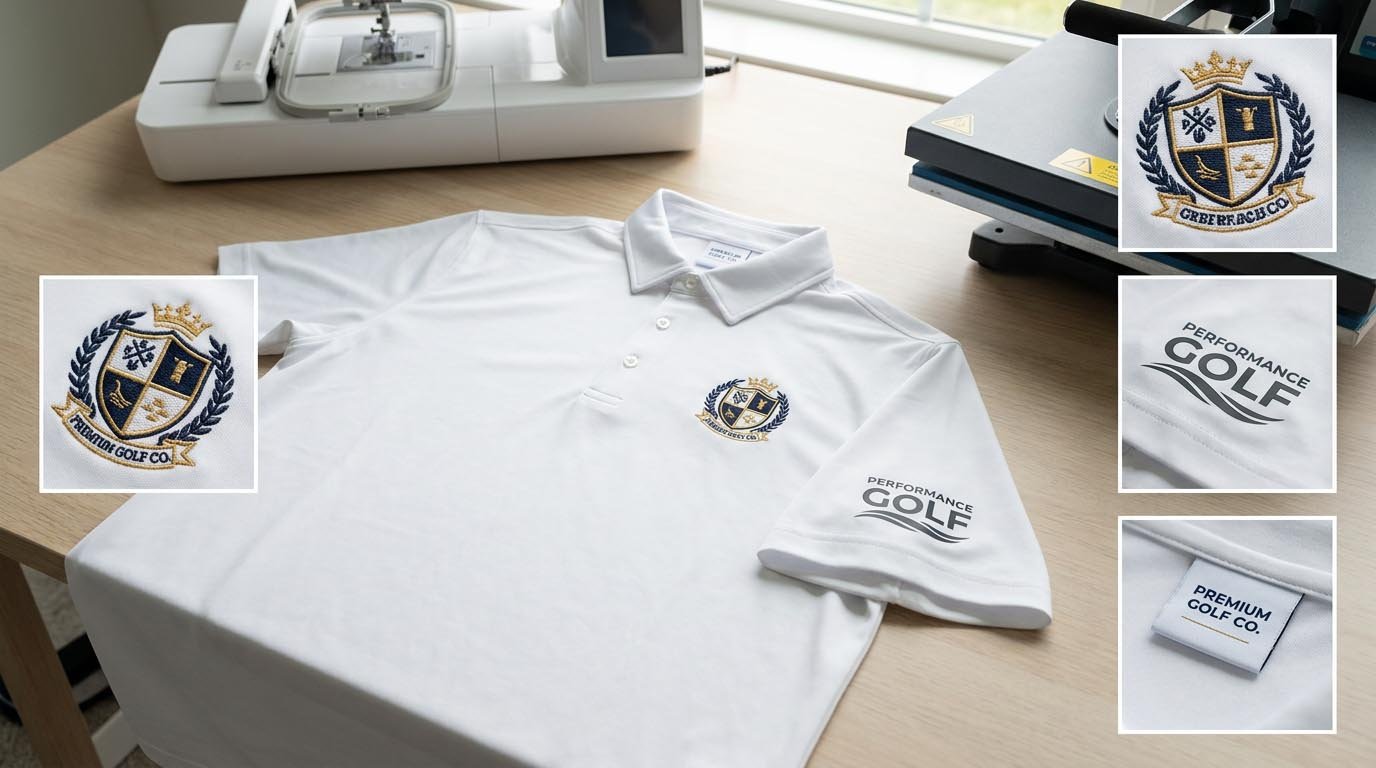
Bobby wanted his logo embroidered on the chest. Simple, right? Not quite. The first samples came back with uneven density and thread breaks. We had to specify every detail.
Embroidery Specifications
I've embroidered millions of polos at FUWAY. Here's what works:
Key Embroidery Specs:
- Thread quality: Rayon or polyester (I prefer polyester for durability)
- Stitch count: 5,000-8,000 for most logos
- Underlay: Essential for dimensional stability
- Density: 0.4-0.6mm for most designs
- Backing: Tear-away for lightweight fabrics
Placement standards matter too. I position logos:
- Left chest: 8-10cm from shoulder seam, 8-10cm from center front
- Back yoke: Centered, 3-4cm below collar
- Sleeves: 8-10cm from shoulder seam
Heat Transfer and Screen Printing
Some brands prefer heat transfers for complex designs. I recommend:
| Method | Best For | Durability | MOQ |
|---|---|---|---|
| Embroidery | Simple logos, premium feel | 100+ washes | 100+ pieces |
| Screen print | Large designs, chest graphics | 50+ washes | 300+ pieces |
| Heat transfer | Photo-realistic, full color | 30-50 washes | 50+ pieces |
| Sublimation | All-over prints | 100+ washes | 200+ pieces |
Heat transfer specs I require:
- Vinyl quality (premium grade only)
- Temperature: 160-180°C
- Pressure: 4-6 bar
- Time: 10-15 seconds
Woven Labels and Badges
Premium brands often add woven labels. I source these separately and attach during production:
- Material: Damask or satin
- Folding: End fold or center fold
- Attachment: Clean finish stitching, no raw edges
- Placement: Side seam or center back neck
Cost impact: Adding a woven label increases unit cost by $0.30-0.50, but it elevates perceived quality significantly.
Conclusion
Getting specifications right from the start saves money and protects your brand reputation. Focus on fabric, fit, construction, testing, and customization details before production begins.