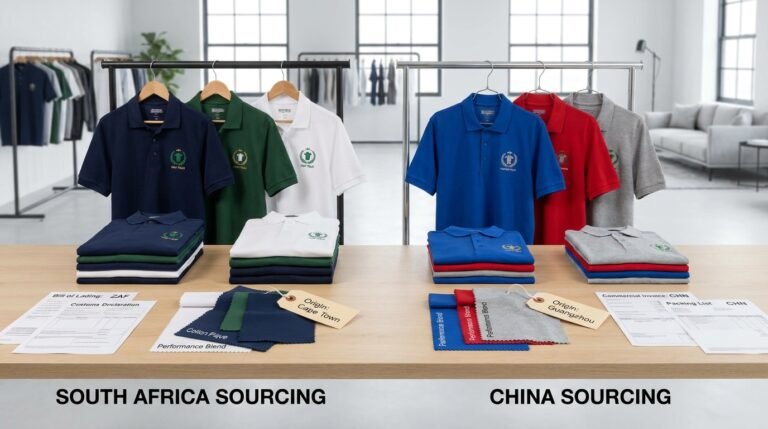
You send the same golf polo design to two factories. One quotes $12 per shirt, while the other offers $14. Both received the same reference image and order quantity.
Why is there a difference—and which price should you trust?
Two golf apparel factories may quote different prices because they are not necessarily pricing identical materials, garment construction, customization, quality requirements, or delivery terms. Even when specifications match, sourcing costs, production efficiency, and factory margins can differ.
The key is to identify what each quotation actually includes before comparing the numbers.
At FUWAY, we have seen how changes in fabric and customization requirements can affect pricing within the same customer project. Later in this guide, we share a real example involving two quotations for 200 men's golf polos.
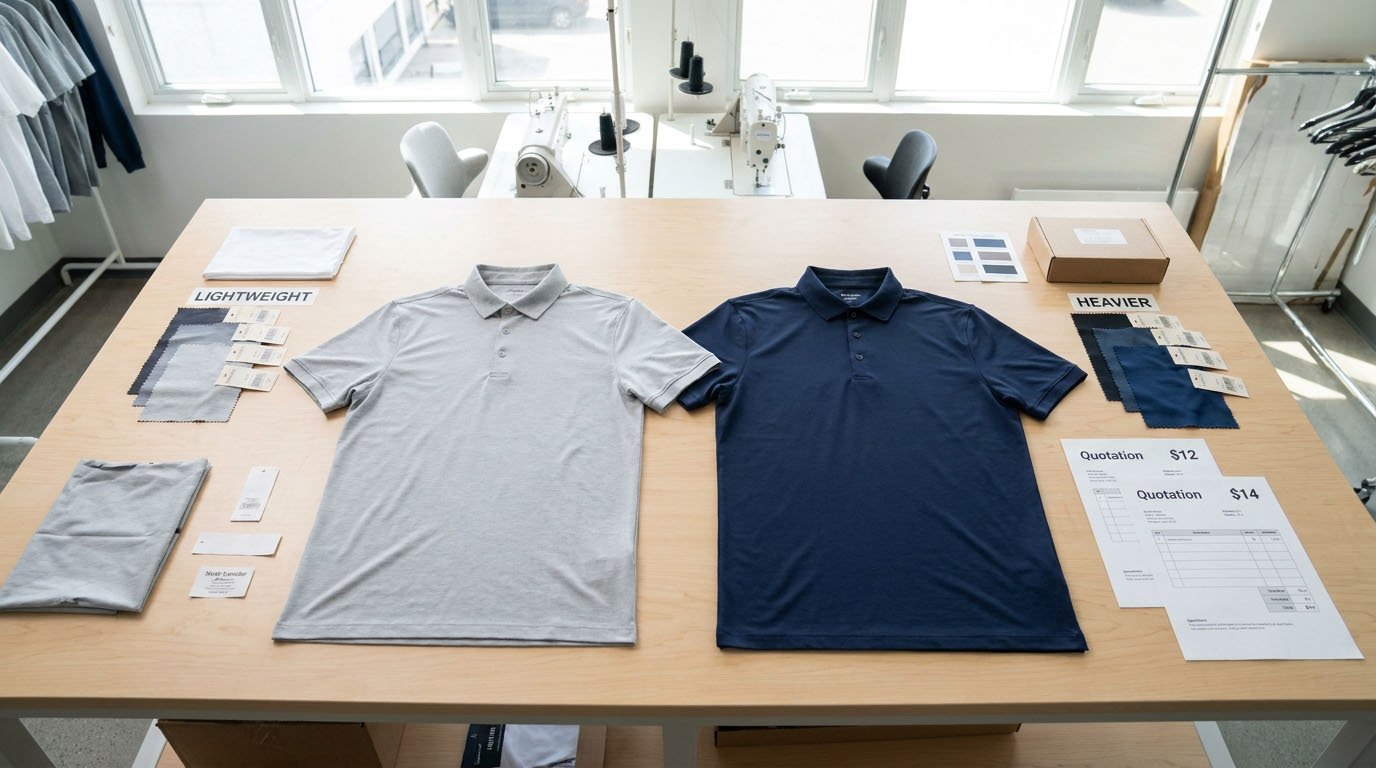
Quick Answer: Why Are Golf Apparel Factory Quotes Different?
The most common reasons involve differences in product specifications or quotation assumptions.
| Possible Difference | What Buyers Should Check |
|---|---|
| Fabric | Composition, GSM, construction, and required performance |
| Garment construction | Collar, placket, seams, fit, and finishing |
| Logo customization | Printing materials, embroidery, heat transfers, and labels |
| Order quantity | Total pieces, color breakdown, and material minimums |
| Quality requirements | Inspection scope, measurement tolerances, and testing |
| Packaging | Materials, labels, and individual packing requirements |
| Commercial terms | Included services, Incoterms, named place, and quotation validity |
A lower quote does not automatically mean lower quality, and a higher quote does not guarantee better manufacturing.
The first step is to establish whether the factories are offering the same product under comparable conditions.
Key 1: Why Does the Same Golf Apparel Design Receive Different Quotes?

A Reference Image Does Not Define the Complete Product
A reference photo shows the appearance of a golf shirt, but it cannot reliably reveal its fabric composition, weight, internal construction, or performance properties.
Consider two factories receiving the same performance golf polo image.
Factory A might assume a standard polyester jersey fabric with a basic collar.
Factory B might propose a polyester-spandex interlock with a different collar construction and more demanding decoration requirements.
Both factories may believe their proposals match the image, but the resulting products are not technically identical.
What a Design Image Cannot Confirm
A photograph normally cannot establish:
- Exact fiber composition and fabric weight.
- Knit structure, stretch recovery, or tested performance.
- Internal collar and placket construction.
- Sewing specifications and measurement tolerances.
- Printing materials or heat-transfer label requirements.
- Packaging specifications and inspection requirements.
These details need to be confirmed separately.
Even when two suppliers receive the same technical specifications, their quotations can still differ because of sourcing arrangements, production efficiency, available capacity, overhead, and pricing policies.
For a detailed explanation of manufacturing cost components, see FUWAY's Golf Polo Cost Breakdown.
Key 2: Seven Factors That Explain Factory Price Differences
The following factors help buyers identify why apparently similar quotations may not be directly comparable.
| Factor | Why Quotations May Differ | What to Confirm |
|---|---|---|
| 1. Fabric sourcing | Different fiber blends, GSM, constructions, finishes, or supplier prices | Exact approved fabric specifications |
| 2. Garment construction | Different collars, seams, plackets, and finishing operations | Construction details and workmanship |
| 3. Logo and branding | Different inks, embroidery requirements, heat-transfer labels, or decoration quantities | Method, materials, dimensions, and quantities |
| 4. MOQ and order structure | Different material minimums, cutting arrangements, and production setups | Quantity per style, color, and size |
| 5. Quality requirements | Different inspections, tolerances, testing methods, or acceptance criteria | Agreed QC and testing scope |
| 6. Packaging and services | Different packaging materials or quotation inclusions | Included and excluded deliverables |
| 7. Factory cost structure | Differences in sourcing, labor efficiency, overhead, capacity, and margins | Whether the proposed product and commercial terms match |
Why Quantity and Color Distribution Matter
A 500-piece order in one color may be priced differently from 500 pieces divided across five colors.
Depending on the sourcing arrangements, a larger number of colorways can affect material purchasing, fabric availability, cutting plans, and production changeovers.
However, more colors do not automatically mean higher costs. Stock fabric availability, printing requirements, and production planning can change the result.
Similarly, a factory quoting 200 pieces with an unspecified color breakdown may need to revise its quotation when the buyer confirms the exact quantities per color.
Always confirm that the quoted unit price applies to the actual style, color, and size breakdown—not just the total number of garments.
Step 3: Real FUWAY Case Study — Why Two Golf Polo Quotes Differed by $2 Per Shirt
A real quotation example demonstrates how product specifications can affect manufacturing prices.
For the same customer and the same men's golf polo project, FUWAY prepared two quotation options.
Both quotations covered 200 pieces across two colors, with finished garments, fabric, logo applications, and packaging included.
Both used FOB Yantian Port, Shenzhen, China.
However, the two options were based on different fabric and customization requirements.

Actual FUWAY Quotation Comparison
| Specification | Option A | Option B |
|---|---|---|
| Customer and project | Same customer and project | Same customer and project |
| Product | Men's Golf Polo | Men's Golf Polo |
| Order quantity | 200 pieces | 200 pieces |
| Number of colors | 2 | 2 |
| Fabric composition | 88% Polyester / 12% Spandex | 90% Polyester / 10% Spandex |
| Fabric weight | 180 GSM | 210 GSM |
| Printing ink | Different ink specification | Different ink specification |
| Heat-transfer labels | Different quantity | Different quantity |
| Packaging materials | Different materials | Different materials |
| Included scope | Garments, fabric, logo, packaging | Garments, fabric, logo, packaging |
| Trade term | FOB Yantian Port, Shenzhen, China | FOB Yantian Port, Shenzhen, China |
| Unit price | USD $12.00 | USD $14.00 |
| Total quoted goods value | USD $2,400 | USD $2,800 |
The price difference was $2 per polo, or approximately 16.7% above Option A.
For the entire 200-piece order, the difference amounted to $400.
Both options had the same total order quantity, number of colors, included service categories, and stated FOB port. The confirmed differences were in the proposed materials and customization requirements.
What Caused the $2 Price Difference?
FUWAY identified four contributing factors.
1. Different Fabric Specifications
Option A used 88% polyester and 12% spandex at 180 GSM.
Option B used 90% polyester and 10% spandex at 210 GSM.
These were different material specifications.
The higher fabric weight in Option B does not, by itself, establish better quality, comfort, or durability. Performance depends on additional fabric properties and relevant testing.
The available quotation information does not isolate the individual cost difference between the two fabrics.
2. Different Printing Inks
The two options used different printing ink specifications.
The printing materials contributed to the quotation difference, but the specific ink formulations and their individual costs were not separately established in the available case information.
3. Different Heat-Transfer Label Quantities
The quantities of heat-transfer labels differed between the two options.
Although both quotations included logo applications, their customization requirements were not identical.
The exact label quantities and their separate cost contributions are not specified in this case.
4. Different Packaging Materials
Both quotations included packaging, but different packaging materials were specified.
The packaging difference contributed to the overall price variation.
The precise packaging materials and their individual cost impact were not separately established.
What Does This Real Example Prove?
The FUWAY case demonstrates that the same manufacturer can offer different prices for the same customer's project when the proposed materials and customization requirements change.
The $2 difference resulted from multiple confirmed factors. It cannot be attributed entirely to the fabric, printing inks, heat-transfer labels, or packaging without additional cost data.
This example compares two options from one manufacturer—not quotations from two competing factories.
Nevertheless, the purchasing principle applies when comparing different manufacturers:
Before assuming one factory is cheaper, confirm whether both suppliers are pricing the same specifications and deliverables.
Step 4: How Should Buyers Diagnose Two Different Factory Quotations?
Once quotations have been received, the next step is to identify differences and obtain clarification.
This is different from preparing an initial RFQ. The objective is to reconcile actual supplier responses before making a purchasing decision.
Use a Quotation Difference Checklist
| What to Compare | Possible Problem | What to Request |
|---|---|---|
| Fabric | Composition or GSM differs | Exact material specification or equivalent alternative |
| Construction | Collar or sewing details are unclear | Written construction confirmation |
| Logo applications | Different inks, techniques, or quantities | Decoration specification and included scope |
| Order structure | Total quantity matches, but color or size allocation differs | Revised price for the same order breakdown |
| Quality requirements | Inspection or testing scope is undefined | Written quality and acceptance requirements |
| Packaging | Different materials or packing arrangements | Matching packaging specification |
| Delivery terms | Incoterm or named place differs | Quotation on an agreed commercial basis |
| Price validity | Different expiration dates or conditions | Validity and price-adjustment terms |
Request a Revised Quotation Where Necessary
If Factory A proposes 180 GSM fabric and Factory B proposes 210 GSM fabric, ask them to quote against the same approved material specification.
If the materials cannot be matched, request clearly identified alternatives rather than treating the original prices as equivalent.
The same approach applies to decoration, labels, packaging, and quality requirements.
A useful clarification request is:
Please confirm whether your quotation includes all items in our approved specification. Identify any deviations or exclusions and provide a revised price using the same quantity, color breakdown, packaging requirements, and delivery terms.
Do not estimate missing costs on the supplier's behalf.
A revised quotation should come from the supplier and identify the agreed product and commercial scope.
Brands preparing their first inquiry can use FUWAY's Golf Apparel RFQ Template. The template explains what to submit before requesting prices, while this guide focuses on resolving differences after quotations arrive.
Step 5: Check Quotation Inclusions and Delivery Terms
Even when two factories quote identical garment specifications, differences in commercial terms can affect the buyer's total purchasing cost.
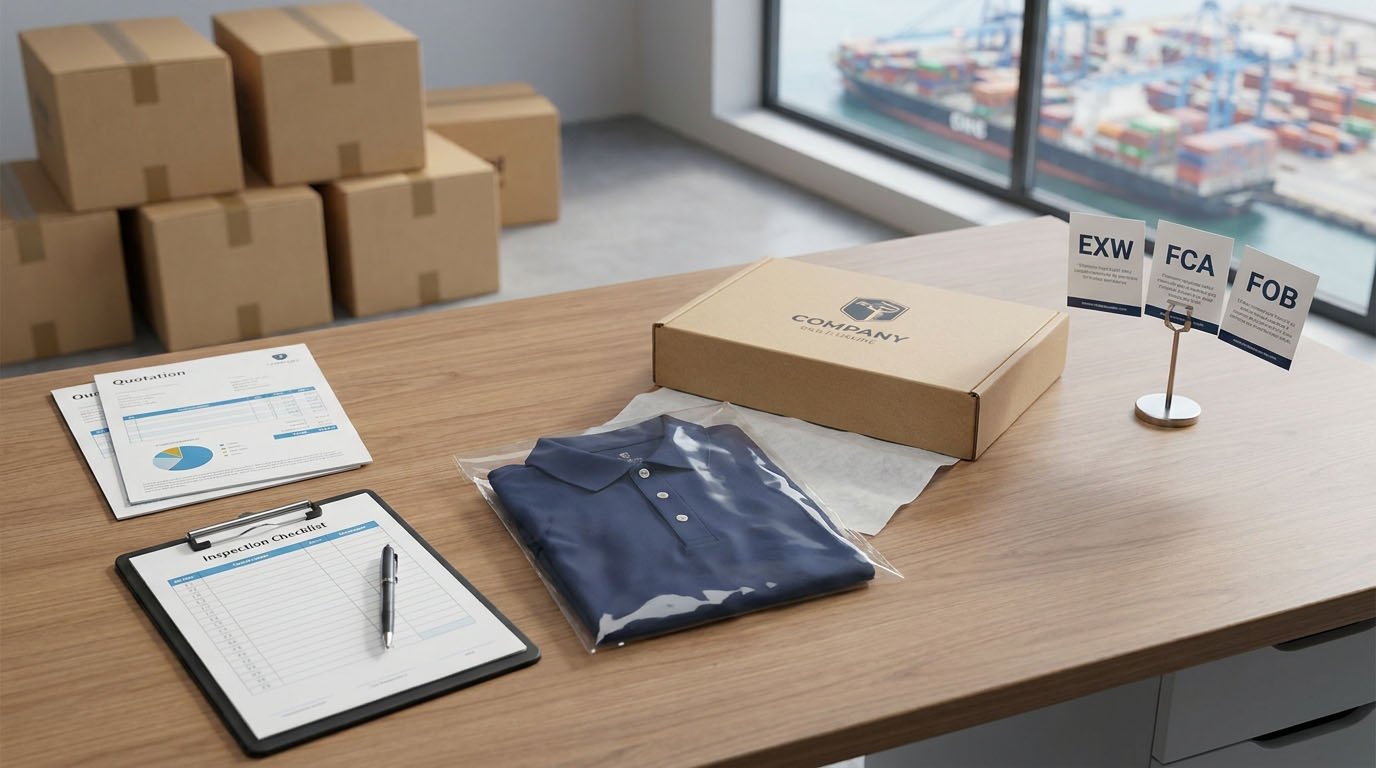
What Is Included in the Factory Price?
Check the quotation for:
| Item | What to Clarify |
|---|---|
| Sampling | Sample charges, revision conditions, and approval requirements |
| Branding | Included logo applications, labels, and trims |
| Packaging | Agreed packing materials and presentation |
| Quality control | Inspections and any required testing |
| Production | Order quantity, manufacturing schedule, and starting milestone |
| Shipping | Incoterm, named place, and transportation responsibilities |
| Quotation validity | Expiration date and conditions that require repricing |
These items do not necessarily create separate charges.
Manufacturers may include agreed services within the garment unit price or structure their quotations differently.
For example, FUWAY's real 200-piece case included garments, fabric, logo applications, and packaging in both quoted prices. The packaging specifications differed, but packaging was included in both options.
Why FOB and EXW Prices Cannot Be Compared Directly
International trade terms determine how delivery responsibilities, costs, and risks are allocated between the buyer and seller.
Under Incoterms 2020:
- EXW (Ex Works): The seller makes goods available at the named place, with substantial onward transport and export responsibilities generally falling to the buyer.
- FCA (Free Carrier): The seller delivers goods to the designated carrier or person at the agreed place, subject to the applicable terms.
- FOB (Free On Board): The seller delivers goods on board the vessel at the named shipment port, with risk transferring at that point.
FOB is intended for appropriate sea or inland-waterway shipments. For containerized cargo handed to a carrier at a terminal before vessel loading, FCA may be more appropriate.
The International Chamber of Commerce's official FOB guidance explains the delivery and risk-transfer requirements.
In the FUWAY case, both quotations specified FOB Yantian Port, Shenzhen, China.
That provides a consistent stated trade-term basis for the two options, but it does not establish the final delivered cost in the buyer's country.
International freight, insurance, import duties, and destination charges must be considered according to the agreed shipping arrangements.
A lower FOB product price is not necessarily a lower landed cost.
Step 6: Verify Quotation Differences Before Placing an Order
Once the quotation specifications and commercial terms are aligned, the buyer should verify that the proposed product meets the agreed requirements.
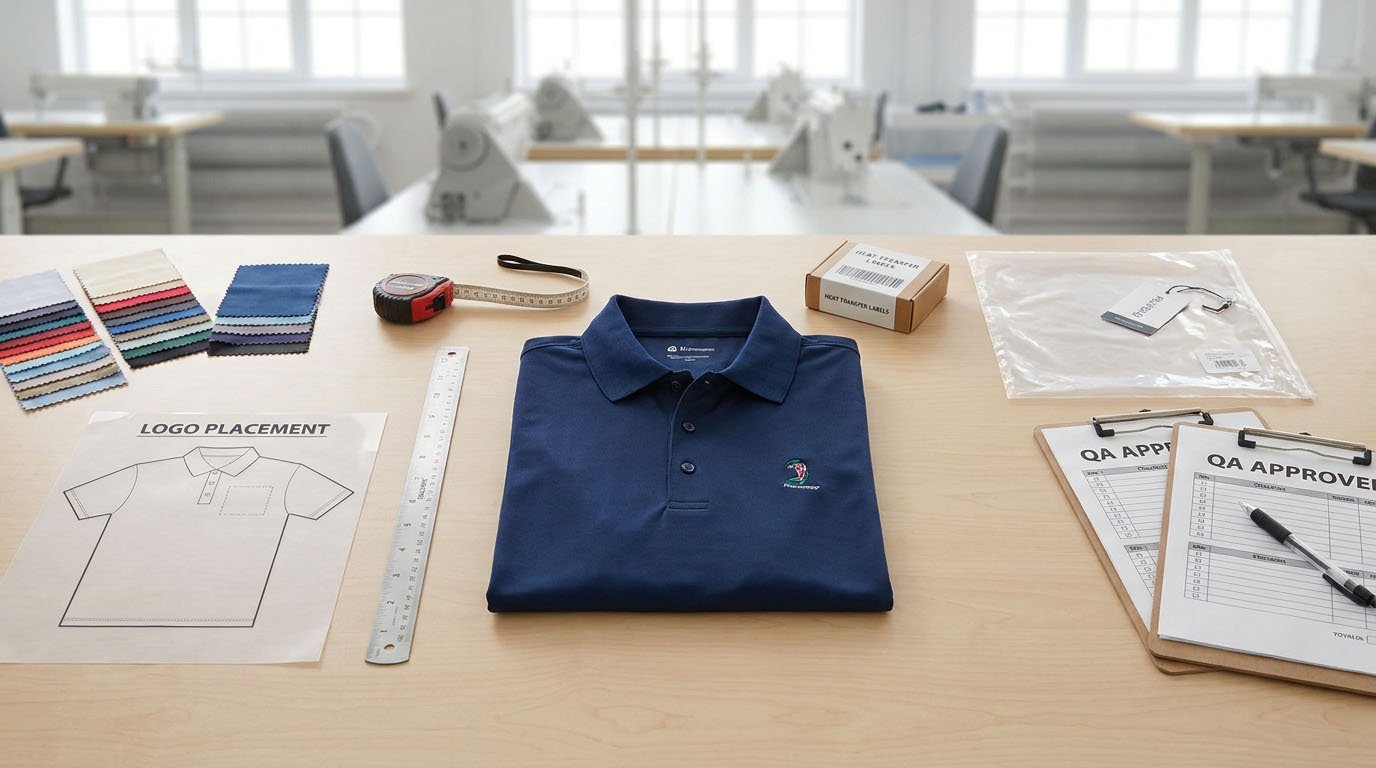
Compare Samples Against the Same Specifications
For golf polos, useful sample checks include:
- Fabric composition, GSM, and approved appearance.
- Garment fit and measurements.
- Collar, placket, seam, and finishing details.
- Logo method, position, dimensions, and appearance.
- Heat-transfer labels and other specified trims.
- Packaging materials and presentation.
- Performance requirements supported by appropriate evidence where applicable.
A higher-priced sample is not automatically better.
Similarly, visual appearance alone cannot verify fiber composition, colorfastness, stretch recovery, or other technical properties.
Where testing is required, confirm the applicable methods, material identification, and acceptance criteria.
FUWAY provides available golf apparel test reports for reference. Buyers should confirm whether any report applies to the specific material or product being ordered.
Keep a Final Quotation Confirmation Record
Before approving production, retain the following documents:
| Document | Why It Matters |
|---|---|
| Final quotation | Confirms the agreed price and commercial conditions |
| Approved specification | Defines the product to be manufactured |
| Material and trim approvals | Identifies approved components |
| Final quantity breakdown | Confirms sizes, colors, and total units |
| Approved sample reference | Establishes the physical product standard |
| Quality requirements | Defines measurements, inspections, and testing |
| Delivery confirmation | Records the schedule and trade terms |
| Written change records | Documents any approved revisions |
These records are also valuable for future reorders.
They help a brand distinguish between a genuine supplier price increase and a price change caused by revised product requirements.
Once quotations are comparable, broader supplier selection should consider manufacturing capability, quality consistency, communication, and delivery reliability—not only price.
For that next decision, FUWAY's Golf Apparel Supplier Scorecard provides a separate evaluation framework.
Step 7: Request a Clear Golf Apparel Manufacturing Quote From FUWAY
FUWAY works with golf apparel brands on OEM/ODM manufacturing, including custom golf polos, bottoms, outerwear, and private label products.
Our custom golf shirts manufacturing service supports fabric selection, fit development, branding, packaging, sampling, and bulk production.
For suitable custom golf polo projects:
| Manufacturing Detail | FUWAY Reference |
|---|---|
| MOQ | Approximately 100 pieces per style |
| Color options | Eligible orders may be divided across two colors |
| Sampling | Typically 7–10 working days |
| Bulk production | Approximately 3–4 weeks after approved sampling |
| Customization | Fabric, fit, colors, logos, labels, and packaging |
Final minimums, lead times, and prices depend on material availability, product specifications, and order requirements.
If you already have a design reference, tech pack, or quotation from another supplier, FUWAY can review your requirements and identify specifications that need clarification before pricing.
Ready to discuss your golf apparel project?
Contact FUWAY with your product design, quantity, fabric requirements, and customization details to request a project-specific quotation.
Frequently Asked Questions
Why Can Two Golf Apparel Factories Quote Different Prices for the Same Design?
A design image does not define every manufacturing requirement. Factories may assume different fabrics, construction methods, branding details, quality standards, or delivery terms.
Even with matching specifications, suppliers can have different sourcing costs, production efficiency, overhead, and commercial margins.
Does a Higher Golf Apparel Factory Quote Mean Better Quality?
No. A higher quote may reflect different materials, more complex customization, or stricter requirements, but it does not guarantee better product quality.
Compare approved samples, technical specifications, and relevant quality evidence before deciding.
Can Fabric Weight Affect a Golf Polo's Manufacturing Price?
Yes. Fabric weight can influence material consumption and sourcing costs.
However, GSM alone does not determine price or quality. Fiber composition, knit structure, fabric width, finishing, and sourcing conditions also matter.
Why Does a Factory Change Its Price After Sampling?
The final approved sample may include fabric, fit, decoration, label, or packaging changes that were not covered by the initial quotation.
A revised quotation should identify the agreed specification changes and their effect on price before bulk production is approved.
What Should I Do When One Factory Is Much Cheaper?
Request written confirmation of its fabric specifications, construction, decoration, packaging, quality requirements, order breakdown, and commercial terms.
If important details differ, ask both suppliers to provide quotations based on the same approved requirements.
Is FOB Pricing the Same as the Final Delivered Cost?
No. FOB does not normally include the buyer's main international ocean freight, import duties, and destination costs.
The final landed cost depends on the applicable logistics arrangements, destination, customs requirements, and additional expenses.
Conclusion
Two golf apparel factories may quote different prices because their product specifications, production conditions, and commercial terms are not identical.
FUWAY's real 200-piece golf polo case demonstrates this clearly: two options for the same customer and project were priced at $12 and $14 per shirt because of differences in fabric, printing inks, heat-transfer label quantities, and packaging materials.
The example does not establish which individual factor contributed the most, nor does it prove that a higher price means better quality.
Before choosing a golf apparel manufacturer, compare the actual product specifications, confirm quotation inclusions, verify samples, and obtain written approval of the final price and requirements.
A reliable sourcing decision starts with understanding what each quotation represents—not simply selecting the lowest number.