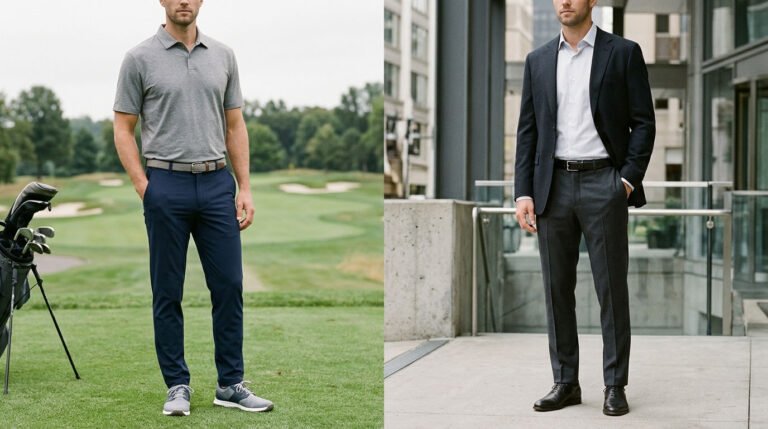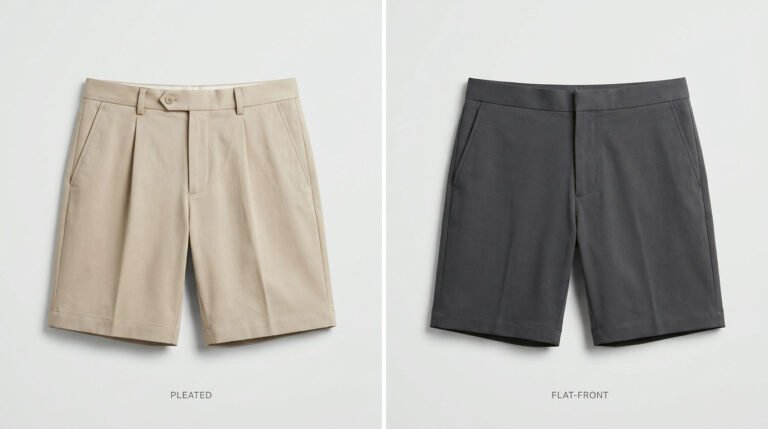
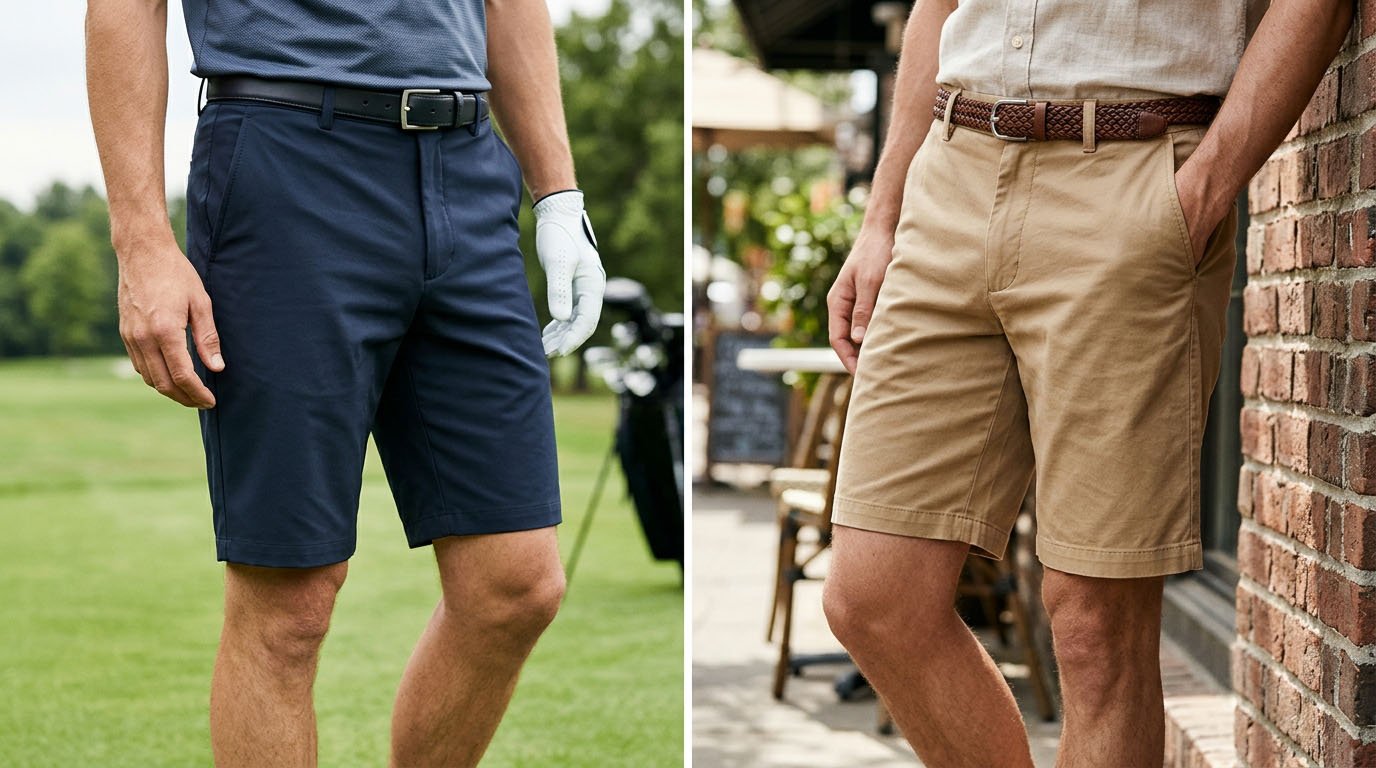
Golf shorts and chino shorts can look almost identical. Both may feature a flat front, belt loops, tailored pockets, and a clean silhouette. So what actually makes them different?
The main difference between golf shorts and chino shorts is their intended use, not necessarily their appearance. Performance golf shorts typically emphasize mobility, moisture management, and comfort during play. Traditional chino shorts emphasize a tailored appearance and everyday versatility. However, modern stretch chinos can combine both functions.
For private-label golf brands, understanding this overlap is important. Choosing the wrong fabric, fit, or construction can lead to unnecessary sample revisions and a product that does not meet customer expectations.
Core principle: The decision is not about which category name sounds more premium. It is about which wearing experience the customer actually expects.
This guide compares the practical differences and explains how to select the right product direction before requesting samples from a manufacturer.
Key 1. Golf Shorts vs Chino Shorts: Quick Comparison
Golf shorts are generally developed around on-course comfort and movement, while traditional chino shorts emphasize a structured casual appearance. However, these categories overlap, and neither fabric composition nor waistband style alone determines the product category.
| Feature | Performance Golf Shorts | Traditional Chino Shorts | Hybrid Golf-Chino Shorts |
|---|---|---|---|
| Primary use | Golf and active wear | Everyday casual wear | Golf and lifestyle |
| Typical fabric | Stretch polyester or nylon blends | Cotton twill or cotton-blend woven fabric | Stretch woven fabric with a tailored appearance |
| Stretch | Often moderate to high | Low to moderate | Moderate to high |
| Moisture management | Common performance priority | Depends on fabric | Depends on fabric |
| Fit | Designed for movement and comfort | Designed for casual fit and appearance | Tailored appearance with movement allowance |
| Waistband | Fixed, stretch, or gripper options | Usually structured with belt loops | Structured appearance with optional hidden flexibility |
| Pockets | Designed around on-course usability | Standard everyday pockets | Traditional appearance with practical storage |
| Visual style | Sporty to tailored | Classic and casual | Clean and versatile |
| Typical customer | Active golfer | Lifestyle customer | Golfer seeking on- and off-course versatility |
These are common design directions, not universal manufacturing rules.
For brands, the most important question is not which category sounds more premium. It is which wearing experience the customer expects.
A performance golf collection may prioritize freedom of movement and easy-care fabrics. A lifestyle collection may favor a cotton-rich fabric and a more structured appearance. A crossover collection can combine these characteristics, but the specifications must be selected deliberately.
For a broader introduction to golf-short styles, see our Golf Shorts Explained: Styles, Fit & Comfort guide.
Key 2. Can You Wear Chino Shorts for Golf?
Yes. Chino shorts can be suitable for golf if their fit, fabric, and construction allow comfortable movement and they meet the dress requirements of the course. They do not need to be marketed as performance golf shorts to be worn on the course.
Some chino shorts already include elastane, lightweight woven fabrics, and flexible waistbands. These features can make them practical for recreational golf.
However, not every pair of chinos will provide the same experience.
When Traditional Chino Shorts May Work
Chino shorts may be suitable for golfers who:
- Prefer a classic, understated appearance.
- Play occasionally or in moderate weather.
- Value everyday versatility.
- Do not require specialized moisture-management features.
- Find the garment comfortable when walking, bending, and swinging.
When Performance Golf Shorts May Be Better
Performance-oriented golf shorts may be preferable when the wearer expects:
- Greater freedom of movement in a closer-fitting silhouette.
- Faster drying after perspiration or light rain.
- Lightweight comfort in warm conditions.
- Pockets designed for golf accessories.
- Additional waistband stability during movement.
A Practical Warning
If a chino short lacks stretch, is cut too slim through the seat and thigh, or uses a pattern designed only for standing and walking, the wearer may experience restricted movement, limited stride length, or discomfort when squatting. These issues are often invisible during a brief static try-on but become obvious over 18 holes.
These performance features vary by product. A performance label does not automatically guarantee better mobility or comfort.
Private-label takeaway: Do not assume that a conventional chino pattern becomes a performance golf short simply by replacing its cotton fabric with polyester-spandex.
The entire garment must be evaluated against the intended wearing task. Now let's examine how the key components actually differ.
Key 3. How Do Fabric, Fit, and Construction Differ?
The practical difference between golf shorts and chino shorts comes from how the fabric, pattern, waistband, and pockets work together.
Changing one component can affect the performance of the others.
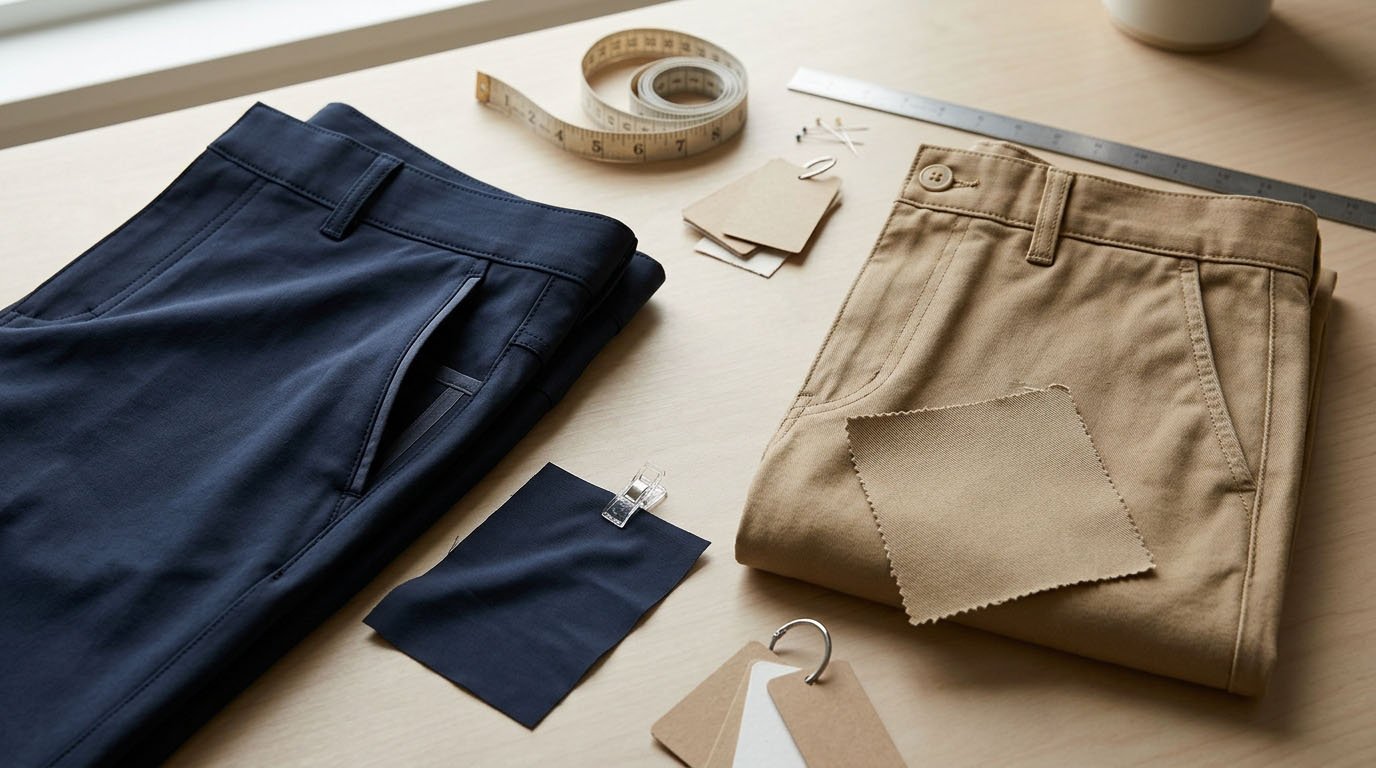
Fabric: Stretch and Function vs Structure and Appearance
Performance golf shorts frequently use polyester-spandex, nylon-spandex, or other stretch woven fabrics.
Depending on the specification, these materials may offer improved stretch recovery, lighter weight, moisture management, or quicker drying.
Traditional chino shorts commonly use cotton twill or cotton-blend woven fabrics. Their appeal often comes from texture, drape, and a familiar tailored appearance.
However, cotton chinos can incorporate stretch, and performance golf shorts can use matte, cotton-touch fabrics.
| Fabric Consideration | Golf-Oriented Specification | Chino-Oriented Specification |
|---|---|---|
| Surface appearance | Technical or cotton-touch | Matte, textured, or traditional twill |
| Stretch | Selected for fit and movement | Selected for comfort and appearance |
| Drape | Balanced with performance and silhouette | Often emphasizes structured appearance |
| Drying performance | May be a priority | Depends on fabric requirements |
| Recovery | Important for maintaining fit | Also relevant when stretch is included |
Neither category requires a universal fabric weight or elastane percentage.
The right material depends on the garment's fit, target market, and desired wearing experience.
Fit: Movement Must Be Tested, Not Assumed
Golf shorts should allow the wearer to walk, sit, bend, and rotate comfortably.
But this does not mean every golf-short pattern requires a higher back rise, wider crotch curve, or larger thigh measurement than every chino pattern.
Core insight: A higher back rise alone does not guarantee better mobility. Fit results from the interaction of fabric stretch, crotch curve design, thigh ease, and multiple other factors in the pattern.
Fit depends on several interacting factors:
- Fabric stretch and recovery.
- Hip and thigh ease.
- Front and back rise balance.
- Inseam length and leg opening.
- Waistband construction.
- Intended silhouette.
For example, a relaxed chino short made from moderately stretchy fabric may provide more movement room than a very slim performance short.
Similarly, increasing the back rise without evaluating the rest of the pattern can create unwanted bulk or poor fit balance.
The correct approach is to test the proposed fit on the target wearer rather than relying on category assumptions.
For detailed pattern and construction considerations, see How to Design Golf Shorts and Pants.
Waistbands and Pockets: Functional Differences
A traditional chino appearance is often associated with a flat waistband, belt loops, and conventional pocket openings.
Golf shorts may use similar exterior details while incorporating functional adjustments.
| Component | Golf-Oriented Common Practice | Chino-Oriented Common Practice |
|---|---|---|
| Waistband | Stretch construction or internal grip | Structured waistband with belt loops |
| Pocket bags | Lightweight woven or mesh pocketing | Cotton or woven pocketing |
| Pocket access | Placement evaluated during golf movements | Standard casual pocket placement |
| Closure | Selected for comfort and security | Traditional button or hook closure |
| Exterior appearance | Performance or tailored styling | Classic flat-front styling |
Silicone shirt-gripper tape, hidden elastic, and special pockets are optional features—not mandatory requirements for golf shorts.
For instance, a golfer who typically wears an untucked polo may not benefit from a shirt-gripper waistband.
Adding unnecessary features can also increase manufacturing complexity without improving the customer's experience.
A more detailed comparison of construction options is available in our Golf Shorts Waistband Types Guide.
Key 4. Should Private Label Brands Develop Hybrid Golf-Chino Shorts?
Hybrid golf-chino shorts combine a classic chino-inspired appearance with selected performance features. They can be a practical product direction for golf brands targeting customers who want to wear the same shorts on and off the course.
The goal is not to combine every available feature. It is to identify the attributes customers value most.
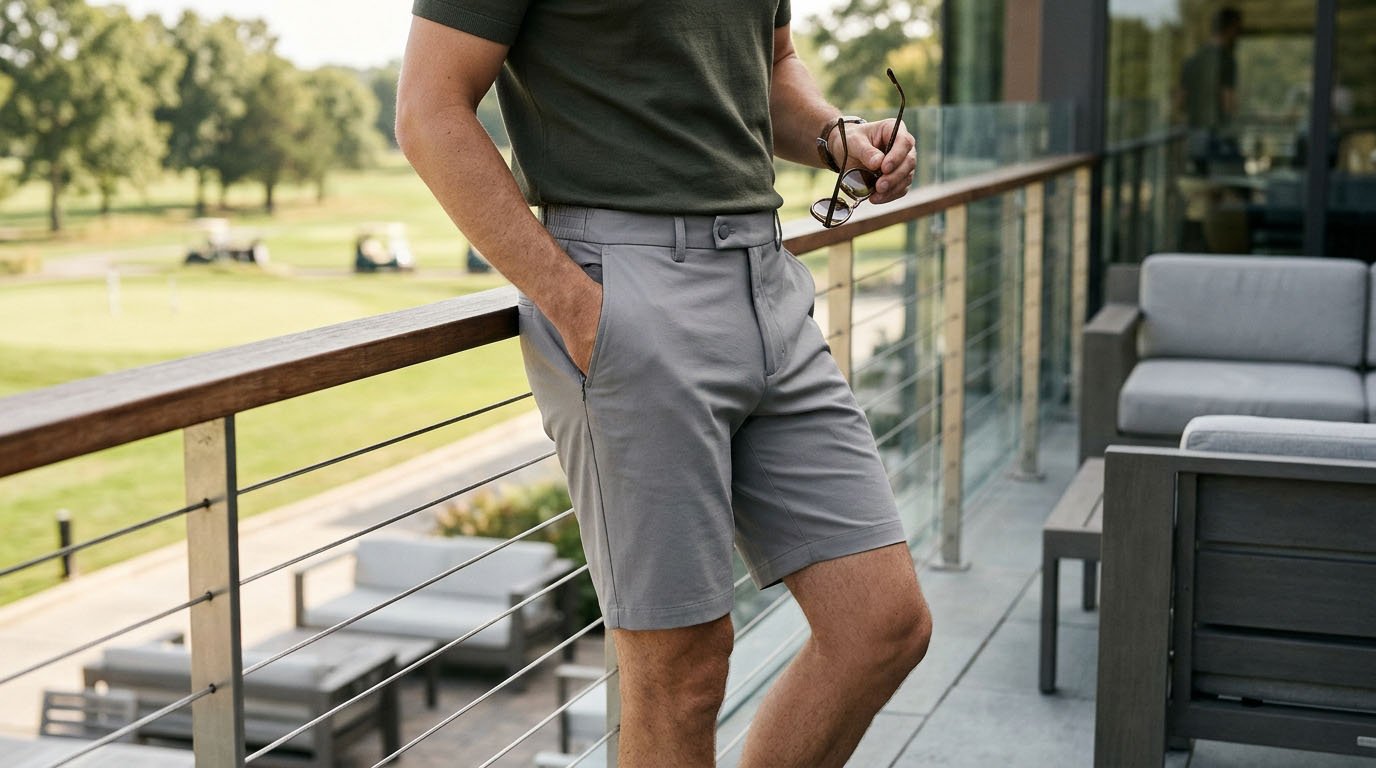
Example: Building a Hybrid Short Specification
Consider a hypothetical startup golf brand targeting recreational golfers who prefer a clean, tailored appearance.
Its initial product brief might look like this:
| Specification | Proposed Direction | Reason |
|---|---|---|
| Product positioning | Golf-to-lifestyle hybrid | Versatility |
| Fabric | Matte stretch woven | Combines clean appearance and movement |
| Fit | Regular or tailored | Balances comfort and silhouette |
| Waistband | Flat front with optional hidden stretch | Maintains chino styling |
| Pockets | Traditional openings with secure, practical depth | Everyday and on-course usability |
| Branding | Small tonal logo | Subtle appearance |
| Testing | Walking, sitting, bending, golf swing | Verifies intended use |
This is an illustrative development brief, not a tested FUWAY production specification.
What Happens When Parameters Conflict
To understand the importance of deliberate trade-offs, consider a poor combination:
If a brand pursues an ultra-minimal chino exterior, adds a thick silicone gripper waistband, oversized waterproof zippers, and selects a shiny technical fabric, the result satisfies neither goal. It looks over-functional for casual wear and not sport-specific enough for serious golfers. The mismatch undermines the product's credibility in both contexts.
The Trade-Offs Brands Should Consider
A hybrid product still requires priorities.
Appearance vs technical performance: A structured, cotton-rich material may deliver the desired traditional texture but may not dry as quickly as a suitable lightweight synthetic alternative.
Slim fit vs movement: A close-fitting silhouette may require greater attention to fabric elasticity and pattern ease.
Minimalist styling vs added features: Extra pockets, visible elastic, or prominent grip tape may conflict with a clean chino appearance.
Versatility vs specialization: A hybrid short can serve multiple occasions, but it may not provide every feature required by highly performance-focused customers.
For startup brands, developing one well-defined hybrid style may simplify the initial collection compared with launching two separate designs.
However, the commercial benefit depends on actual demand, sourcing requirements, and inventory planning. A hybrid design is not automatically cheaper or easier to manufacture.
Key 5. Are Golf Shorts More Expensive to Manufacture Than Chino Shorts?
Not necessarily. Golf shorts are not inherently more expensive than chino shorts. Manufacturing cost depends on fabric selection, construction complexity, trims, order quantity, and other confirmed production requirements.
A straightforward performance short may cost less than a premium cotton chino. A highly customized golf short with specialized materials and internal components may cost more than a basic chino.
The category name alone does not determine the quotation.
What Actually Changes Manufacturing Cost
| Cost Factor | How It Affects the Quotation |
|---|---|
| Fabric | Fiber content, fabric quality, sourcing, and finishing affect material costs |
| Waistband | Hidden elastic, grip tape, or customized construction may add materials and labor |
| Pockets | Additional pockets, zippers, and complex pocket bags increase components and operations |
| Trims | Buttons, labels, zippers, and custom branding influence the bill of materials |
| Pattern and sampling | Additional development revisions may require further sampling |
| Order quantity | Smaller orders may have different unit economics from larger production runs |
| Packaging | Custom packaging specifications affect the final quotation |
There is no reliable universal price difference between the two categories.
How to Compare Factory Quotations Fairly
When requesting quotations for golf shorts and chino shorts, ask the supplier to price clearly defined specifications.
Practical tip: Send the exact same specification sheet to each factory. A lower quotation for a "chino short" may simply reflect a simpler product, not better manufacturing value. Comparing quotes is only meaningful when the underlying product is identical.
For example, compare:
- The same order quantity and size range.
- Confirmed fabric compositions and quality requirements.
- Identical or clearly documented branding requirements.
- Agreed pocket and waistband constructions.
- Consistent packaging specifications.
- The same shipping terms.
Otherwise, a lower quotation may simply reflect a different product specification rather than better manufacturing value.
For FUWAY projects, typical MOQ starts at approximately 100 pieces per style, with color breakdowns subject to confirmation. Sampling generally takes 7–10 days, and bulk production typically takes 3–4 weeks, depending on the approved design, materials, order requirements, and production schedule.
These are planning references, not guaranteed lead times or a fixed quotation for either short category.
Key 6. What Should Brands Confirm Before Sampling?
Before requesting a sample, brands should define the product's primary use and establish a specification that reflects that decision.
A clear brief helps the factory understand the intended result and gives the buyer a consistent basis for evaluating samples.
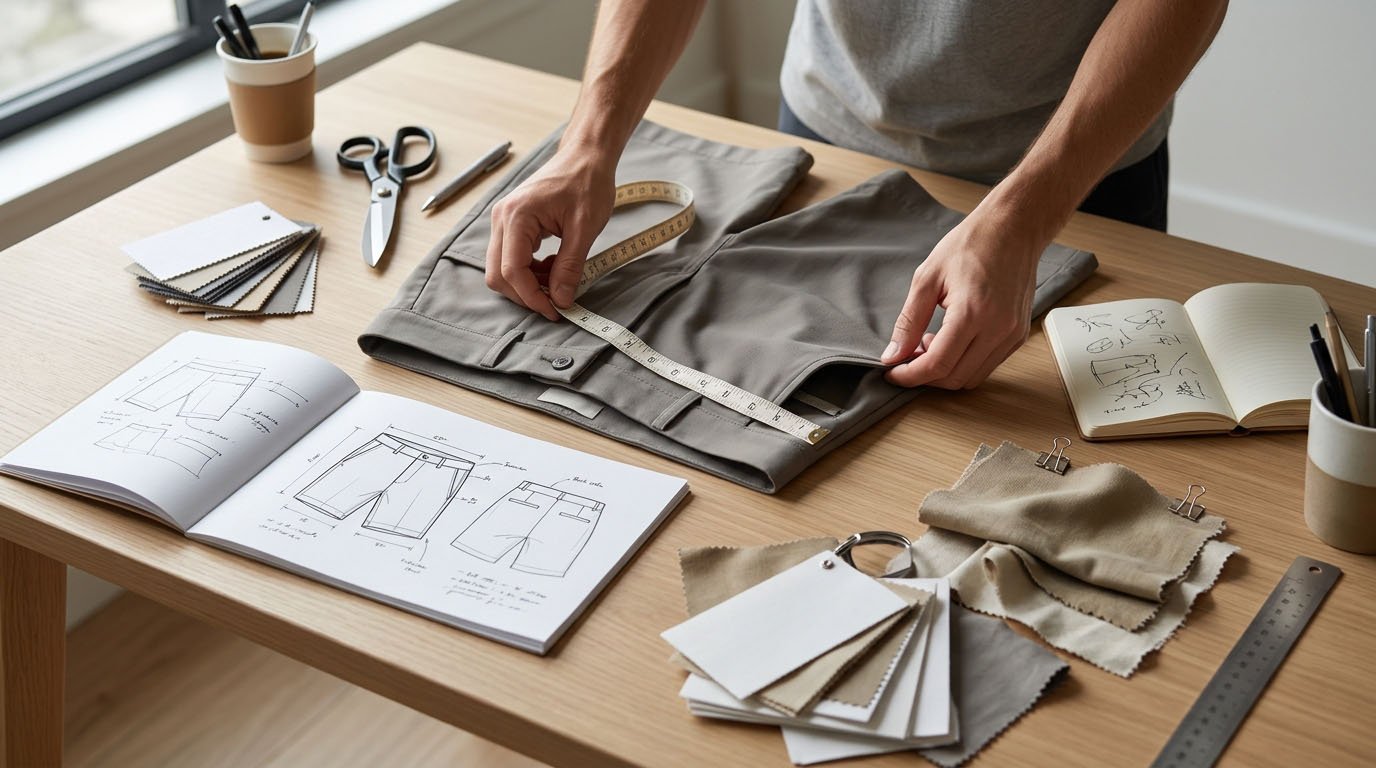
Pre-Sampling Decision Checklist
| Decision | Questions to Answer |
|---|---|
| Wearing task | Primarily golf, casual wear, or both? |
| Target customer | Who will wear the product, and in what conditions? |
| Fabric | What composition, appearance, stretch, and performance are required? |
| Fit | Regular, slim, relaxed, or a custom silhouette? |
| Waistband | Fixed, partially elastic, or another approved construction? |
| Pockets | What items must the pockets hold securely? |
| Branding | What logo application, placement, and labels are required? |
| Sizing | Which markets, size ranges, and measurement points apply? |
| Sample approval | Which fit, appearance, and functional checks must pass? |
What Should Be Checked on the First Sample?
The first sample should be evaluated against the agreed product brief.
For a golf-oriented or hybrid short, checks may include:
- Fit during movement: Walk, sit, bend, squat, and perform a golf swing.
- Waistband comfort: Check pressure, stability, and unwanted movement.
- Pocket usability: Confirm the intended items fit and remain secure during normal use.
- Fabric behavior: Review stretch recovery, drape, appearance, and comfort.
- Visual consistency: Confirm the finished silhouette matches the approved design.
Any required tests for shrinkage, colorfastness, durability, or functional finishes should be agreed upon before sample approval.
At FUWAY, the standard finished-garment measurement tolerance is ±1.0 cm at specified measurement points unless a tighter tolerance is agreed in the approved tech pack.
For a complete inspection procedure, refer to our Golf Shorts Sample Checklist Before Bulk Production.
FAQ: Golf Shorts vs Chino Shorts
Can chino shorts be worn on a golf course?
Yes. Chino shorts may be suitable for golf when they provide comfortable movement and meet the specific course's dress requirements. Stretch chinos are one option for golfers who prefer a traditional appearance.
What is the main difference between golf shorts and chino shorts?
The main difference is the intended product brief. Performance golf shorts generally emphasize golf-related comfort and movement, while traditional chinos emphasize tailored casual styling. Modern designs can combine both characteristics.
Do golf shorts need four-way stretch?
No. Two-way stretch, four-way stretch, or appropriately designed lower-stretch fabrics may be suitable depending on the fit and intended use. Actual sample testing is more important than assuming a single stretch requirement.
Can a manufacturer turn chino shorts into golf shorts by changing the fabric?
A fabric change may help, but it does not guarantee suitable performance. The factory should also review fit, waistband construction, pocket design, seam behavior, and the proposed sample's movement comfort.
Are hybrid golf-chino shorts suitable for startup brands?
They can be, particularly when a brand targets customers seeking versatile on- and off-course clothing. However, brands should confirm market demand and define the design priorities before sampling.
If I can only develop one style, should I choose pure golf or hybrid?
It depends on your target customer profile. If your audience is primarily core golfers, a performance-focused design is the safer choice. If your customers value both on-course functionality and everyday wearability, a well-executed hybrid may offer broader market compatibility. Review best-selling styles in your target price range for additional guidance.
Conclusion: Choose the Wearing Task Before the Category Name
Golf shorts and chino shorts are not completely separate product categories. Their designs can overlap significantly, especially when traditional tailoring is combined with modern stretch fabrics.
For private-label brands, the best starting point is the customer's intended wearing experience.
Choose a performance-oriented design when on-course comfort and functionality are the priorities. Choose a traditional chino direction when tailored everyday styling matters most. Consider a hybrid when the target customer expects both.
Most importantly, align the fabric, fit, waistband, pockets, and sample-approval criteria with the same product objective.
At FUWAY, we support custom golf shorts development for brands seeking OEM/ODM manufacturing, including fabric selection, fit customization, branding, sampling, and bulk production.
If you are developing a new golf shorts collection, contact FUWAY with your reference images, intended fabric, size range, target quantity, and design requirements to discuss a suitable sampling direction.