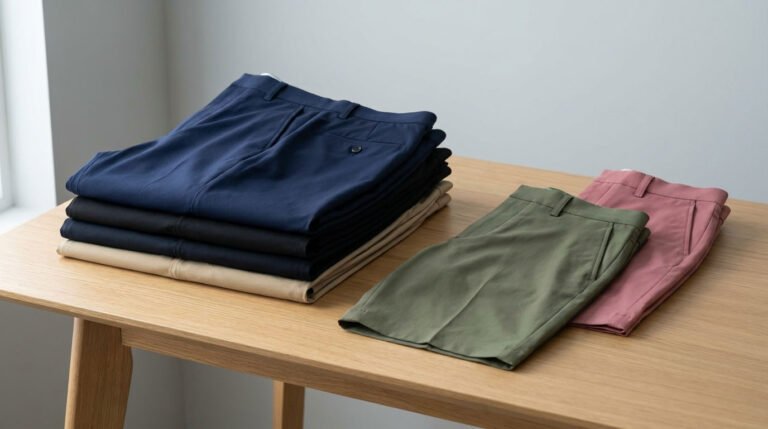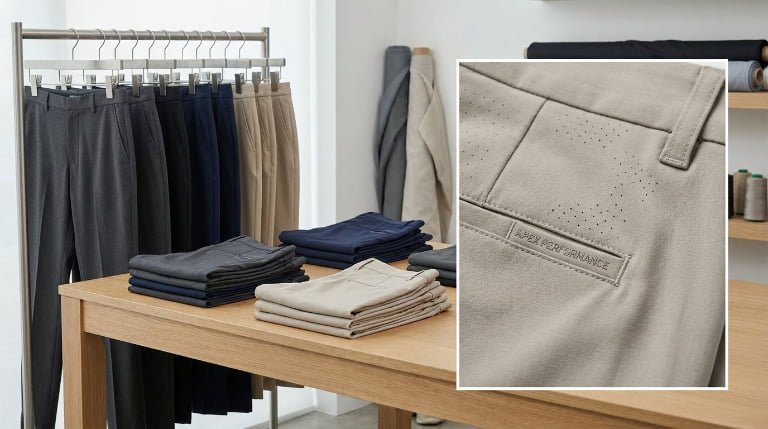
Golf shorts are designed to combine the polished appearance expected on many golf courses with the flexibility and comfort needed during play. Unlike running shorts or basic casual shorts, they commonly feature tailored styling, functional pockets, comfortable waistbands, and fabrics that support movement.
However, not all golf shorts look or perform the same. Flat-front, pleated, five-pocket, Bermuda, and pull-on styles offer different silhouettes, while fabric and fit determine how comfortable each style feels on the course.
This guide explains the main types of golf shorts, how they differ from regular shorts, what inseam lengths mean, and which details matter most for comfort. It also highlights practical considerations for brands developing custom golf shorts.
Quick Answer: What Are Golf Shorts?
Golf shorts are shorts intended for golf, typically combining a clean, course-appropriate appearance with freedom of movement, comfortable waist construction, and functional pockets.
Many are made from stretch woven fabrics, although traditional cotton-blend and other constructions can also be suitable.
Good golf shorts usually provide:
- A tailored or clean athletic appearance.
- Comfortable movement during walking, bending, and swinging.
- A waistband that remains secure without excessive pressure.
- Suitable hip, thigh, and leg-opening room.
- Pockets that hold essentials without excessive bulk.
- Fabric suited to the intended climate and wearing conditions.
The right choice depends on the golfer, the fit, and the dress expectations of the course.
Key 1: Golf Shorts vs Regular Shorts — What's the Difference?
Golf shorts and regular shorts can look similar, especially when both use a chino-style design. The main difference is their intended use rather than one mandatory feature.
Golf shorts typically balance appearance, movement, and practical on-course details. Running and gym shorts prioritize athletic movement, while everyday casual shorts may place greater emphasis on fashion or relaxed comfort.
| Feature | Golf Shorts | Regular Casual Shorts | Running or Gym Shorts |
|---|---|---|---|
| Appearance | Usually clean and tailored | Varies from chinos to denim | Typically sporty |
| Fabric | Often stretch woven | Cotton, denim, blends, or synthetics | Often lightweight knits or technical fabrics |
| Waistband | Fixed, stretch, or concealed elastic | Fixed or elastic | Usually elastic |
| Pockets | Functional, often low-profile | Depends on style | Often minimal or sport-specific |
| Movement | Designed for walking, bending, and swinging | Depends on construction | Designed for athletic activity |
| Golf course suitability | Usually suitable where shorts are permitted | Depends on style and course rules | Frequently restricted at more traditional clubs |
Why Does the Difference Matter?
A pair of chino shorts may look appropriate for golf but feel restrictive if its fabric and pattern provide limited mobility.
Running shorts may offer excellent movement but have a silhouette or waistband that does not meet a particular course's dress expectations.
Golf shorts aim to bridge these requirements.
That does not mean every garment marketed as golf shorts is automatically better than an ordinary pair of shorts. Actual comfort depends on fit, fabric construction, and overall design.
Key 2: What Are the Main Types of Golf Shorts?
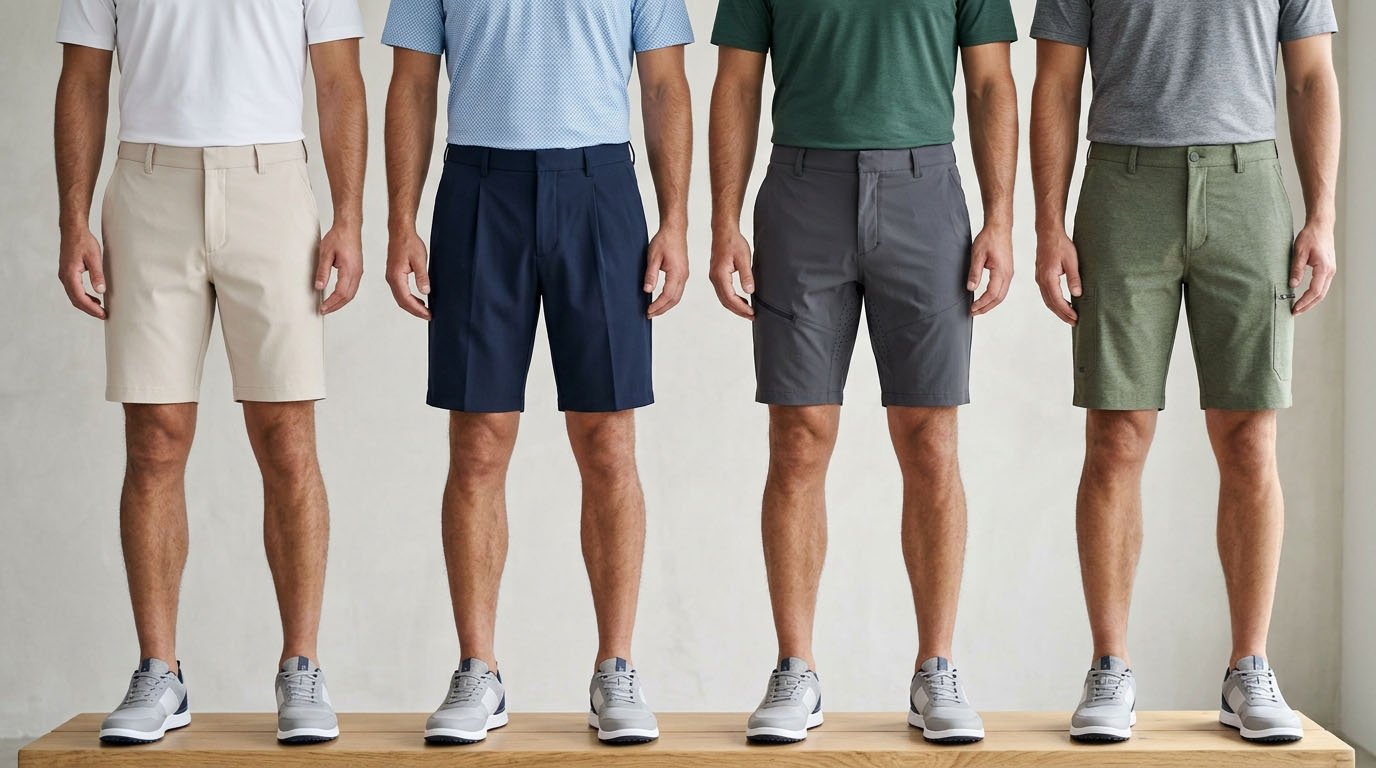
Golf shorts are available in several recognizable styles. Understanding their differences makes it easier to choose a suitable silhouette for either personal wear or a branded collection.
| Golf Shorts Style | Identifying Features | Typical Positioning |
|---|---|---|
| Flat-front / chino-style | Smooth front, tailored shape, usually belt loops | Classic and versatile golfwear |
| Pleated | One or more front pleats adding fullness | Traditional or relaxed styling |
| Five-pocket | Jean-inspired pocket arrangement | Modern golf lifestyle |
| Bermuda | Longer silhouette with greater leg coverage | Classic or coverage-focused collections |
| Pull-on | Elasticated waistband, often without a traditional fly | Comfort-oriented or casual golfwear |
These categories are not mutually exclusive. For example, Bermuda shorts can have a flat front, while pull-on shorts can use performance fabric.
Flat-Front Golf Shorts
Flat-front shorts have a smooth front panel without pleats. They commonly feature belt loops, a structured waistband, and a clean silhouette.
They work particularly well for brands seeking a versatile style that can be worn both on and off the course.
Pleated Golf Shorts
Pleats introduce additional fabric fullness near the front waist. They create a more traditional appearance and can provide additional shaping through the upper body of the shorts.
However, pleats do not automatically guarantee a more comfortable fit. Fabric drape and pattern proportions still matter.
Five-Pocket Golf Shorts
Five-pocket golf shorts borrow elements from jeans, often including curved front pockets, rear patch-style pockets, and a small additional pocket.
They are frequently positioned as lifestyle golfwear, although some traditional clubs may prefer more tailored designs.
Bermuda and Longer Golf Shorts
Bermuda-style shorts generally have a longer cut and greater coverage than shorter modern silhouettes.
They can suit golfers who prefer a more traditional appearance, but the final look also depends on body proportions.
Pull-On and Performance Golf Shorts
Pull-on designs emphasize easy wear and waistband flexibility.
Performance golf shorts, meanwhile, are defined more by their fabric and functional construction than by a specific silhouette. A flat-front or pull-on style can both be performance-oriented.
For brands, silhouette, fabric performance, and intended wearing occasion should be treated as separate product decisions.
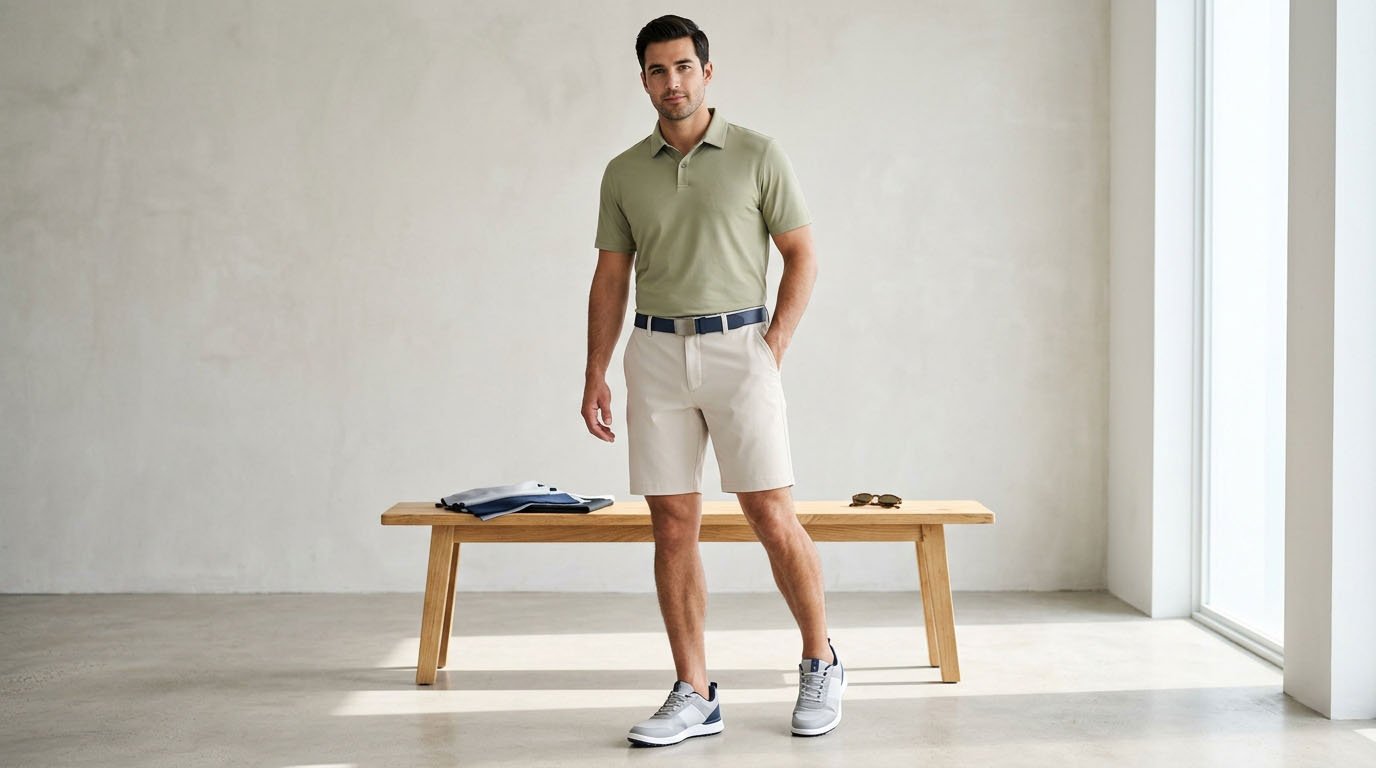
Key 3: How Should Golf Shorts Fit?
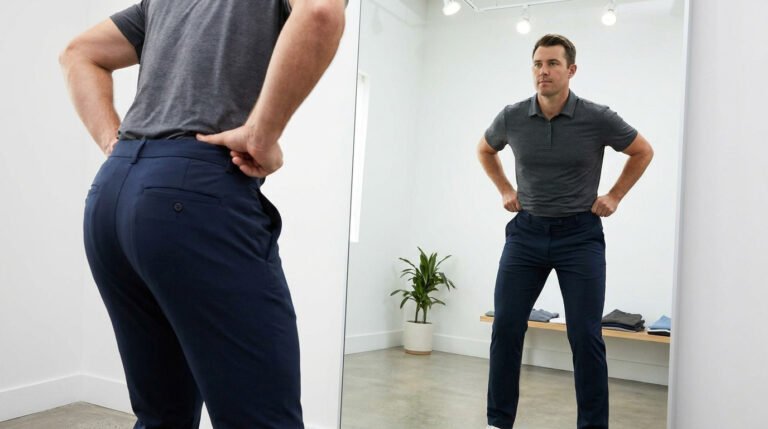
Good golf shorts should look balanced while allowing the wearer to walk, bend, sit, and swing comfortably.
Fit is influenced by several measurements working together—not simply the labeled waist size.
Waistband Comfort
The waistband should stay in place without digging into the body.
Common constructions include:
- Fixed waistbands for a traditional tailored appearance.
- Concealed stretch waistbands for additional flexibility.
- Partial elastic waistbands for a balance of structure and comfort.
- Full elastic waistbands for casual pull-on styles.
A waistband that feels comfortable while standing may still create pressure when the golfer bends or sits.
For a more detailed construction comparison, see our golf shorts waistband types guide.
Rise and Seat Balance
Rise affects where the waistband sits and how much room is available through the body.
An unsuitable rise can cause pulling, discomfort, or unwanted movement during a golf swing.
The seat should have enough ease for bending and sitting without excessive loose fabric.
Hip and Thigh Room
Slim golf shorts can look modern, but they should not restrict movement through the hip and thigh.
Regular and relaxed fits provide different amounts of ease. The correct choice depends on body shape, fabric stretch, and intended silhouette.
Leg Opening
The leg opening determines how the shorts hang around the thigh.
A narrow opening can feel restrictive, particularly in lower-stretch materials. An excessively wide opening can create a less tailored appearance.
The goal is to balance visual proportions with mobility.
For a more detailed approach to selecting a fit for different customer groups, read our guide to choosing golf shorts for function and fit.
Key 4: What Length Should Golf Shorts Be?
Golf shorts commonly come in several inseam lengths.
The inseam is measured from the crotch seam to the bottom hem along the inside leg. It does not indicate the complete outseam length.
There is no universally correct golf shorts inseam because the same length can look different on golfers with different leg proportions.
Golf Shorts Inseam Length Comparison
| Inseam | General Appearance | Typical Style Direction |
|---|---|---|
| 7 inches | Shorter, above-knee appearance for many adults | Modern and athletic |
| 8 inches | Moderately short | Contemporary golfwear |
| 9 inches | Balanced mid-length appearance | Versatile golf collections |
| 10 inches | Longer with more coverage | Classic or relaxed styling |
| 11 inches | Long-inseam appearance | Traditional or Bermuda-oriented |
These are approximate style references, not universal fitting standards or golf course dress-code requirements.
Is a 7-Inch or 9-Inch Inseam Better?
A 7-inch inseam often creates a shorter, sportier look. A 9-inch inseam generally provides more coverage and may appeal to golfers who prefer a classic silhouette.
Neither is inherently more comfortable.
For example, shorter shorts can still restrict movement if the thigh opening is too tight, while longer shorts may feel comfortable when the pattern allows sufficient mobility.
Does Height Affect Golf Shorts Length?
Yes.
The same inseam can sit at different positions above the knee depending on the golfer's height and leg proportions.
When reviewing the fit, consider:
- Where the hem falls when standing.
- How the shorts look while sitting.
- Whether the hem or thigh feels restrictive during a swing.
- How the length balances with the rise and leg opening.
For apparel brands, evaluating actual samples on representative fit models is more reliable than selecting inseam length from product photographs alone.
Key 5: What Fabrics and Features Make Golf Shorts Comfortable?
Comfort comes from the interaction of fabric, fit, and garment construction.
Many modern performance golf shorts use stretch woven polyester or nylon blends, but fiber content alone does not establish garment quality.
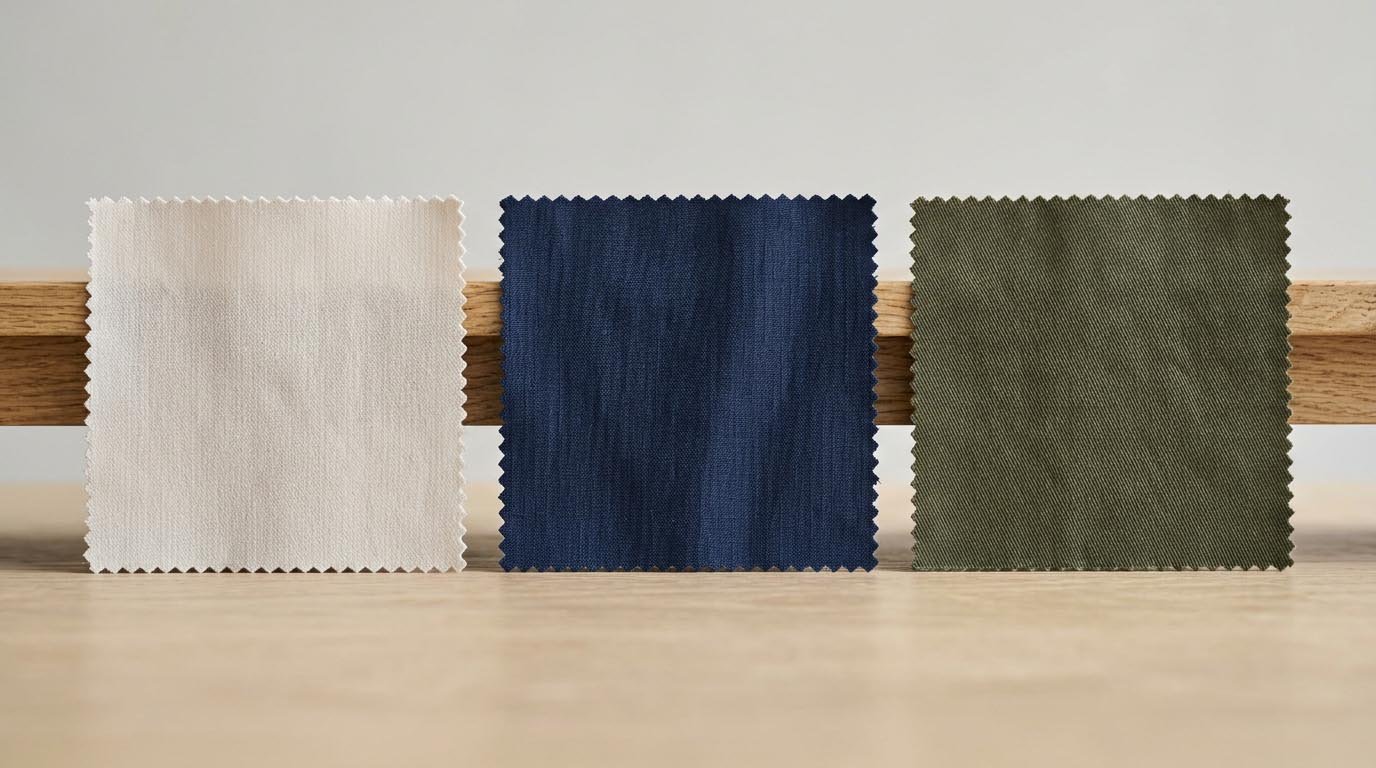
Common Fabric Options
| Fabric Type | Typical Characteristics | Suitable Direction |
|---|---|---|
| Polyester or polyester-elastane woven | Wide range of weights and stretch options; durable constructions available | Everyday performance golf shorts |
| Nylon or nylon-elastane woven | Often selected for smooth hand feel and flexible performance options | Premium and lifestyle-performance collections |
| Cotton or cotton-blend woven | Traditional appearance and natural-fiber feel | Casual and classic golf shorts |
Actual performance varies with yarns, weave, fabric weight, finishing, and garment construction.
For a technical comparison of fiber choices, review our polyester vs nylon vs spandex golf shorts fabric guide.
Is Four-Way Stretch Necessary?
Not always.
Four-way stretch can be particularly useful in close-fitting athletic golf shorts, where the fabric needs to accommodate movement in multiple directions.
However, some classic or relaxed golf shorts provide comfortable mobility with two-way or mechanical stretch.
More stretch does not automatically mean better comfort. The fabric also needs suitable recovery, and the pattern must allow movement.
Breathability and Moisture Management
Golf shorts used in warm conditions should help manage heat and moisture without unnecessary fabric bulk.
Important considerations include:
- Air permeability.
- Fabric weight and construction.
- Moisture-management performance.
- Drying behavior.
- The amount of fabric contacting the skin.
A lightweight fabric is not automatically breathable, and polyester does not automatically provide strong moisture-wicking performance simply because it is synthetic.
Pockets and Small Construction Details
Pockets are a practical part of golf shorts design.
Useful pocket construction should allow access to everyday essentials without creating excessive bulk or distorting the garment.
Other details that can affect comfort include smooth interior finishing, appropriate waistband support, and sufficient room through the rise and thighs.
For most golfers, a well-balanced combination of these features is more useful than having the largest number of technical features.
Key 6: Can You Wear Regular Shorts on a Golf Course?
Sometimes. The answer depends on the shorts and the specific course's dress code.
Many golf courses permit tailored shorts or performance golf shorts, but rules vary by club, event, and location.
For courses with traditional dress expectations, the following are often safer choices:
- Flat-front or tailored golf shorts.
- Clean chino-style shorts.
- Belt loops or a neat waistband.
- Functional but understated pockets.
- A polished woven appearance.
Running shorts, basketball shorts, denim, and large cargo-style pockets may be restricted at certain clubs.
Always check the course's published dress code before playing. There is no single dress-code rule that applies to every golf course worldwide.
For brands supplying tournaments, pro shops, or golf clubs, this also means the intended customer and venue should influence the product's appearance.
Key 7: What Should Brands Consider When Developing Golf Shorts?
For golf apparel brands, golf shorts are not simply casual shorts with a logo added.
The key product-development challenge is translating a preferred appearance into a garment that fits comfortably and performs consistently.
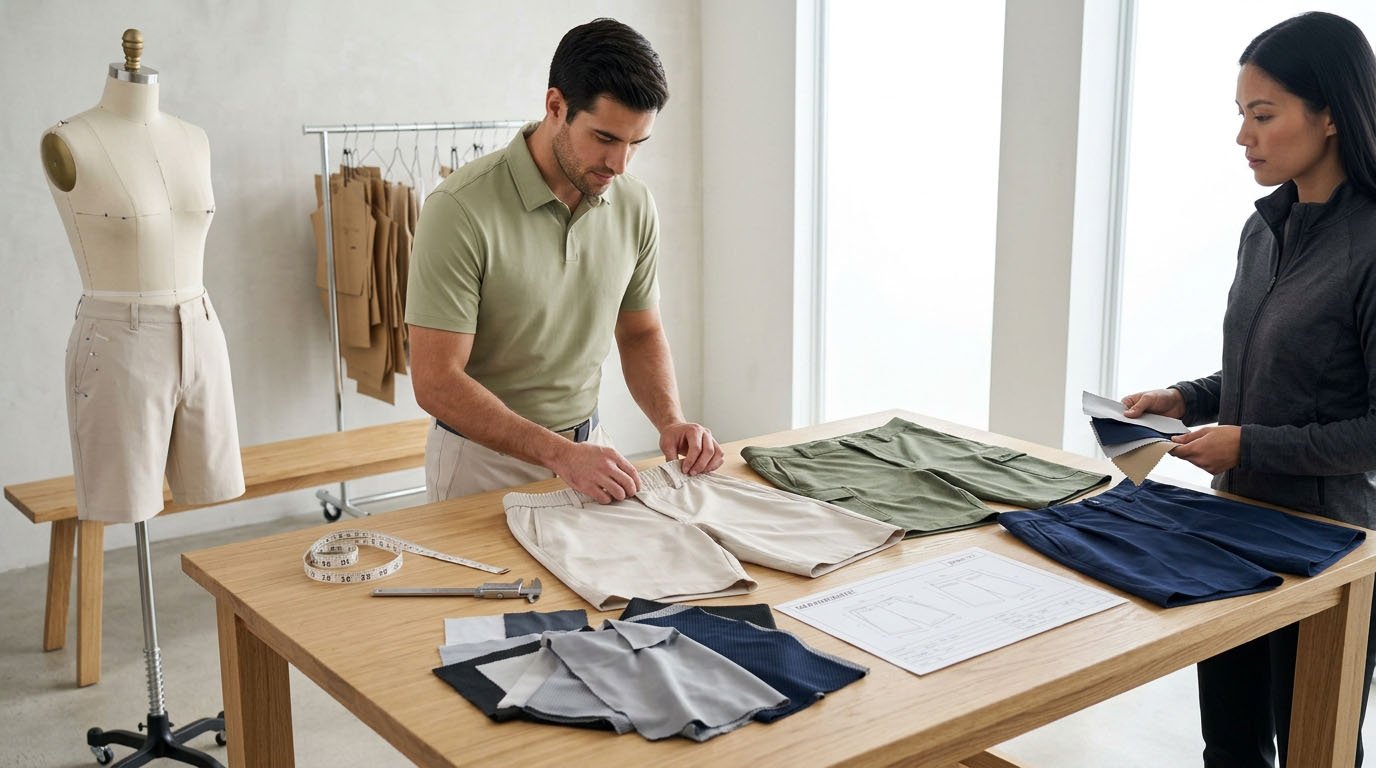
Start With the Intended Customer
Before selecting fabric or details, define:
- The target golfer and market.
- The preferred silhouette and inseam range.
- The expected wearing climate.
- Performance versus lifestyle positioning.
- The desired appearance and retail price range.
A traditional pro-shop collection may have different priorities from a modern athletic golf brand.
Review the Finished Garment, Not Just the Fabric
A comfortable fabric does not guarantee comfortable shorts.
During product development, the garment should be evaluated in realistic movement conditions, including walking, sitting, bending, and making a golf swing.
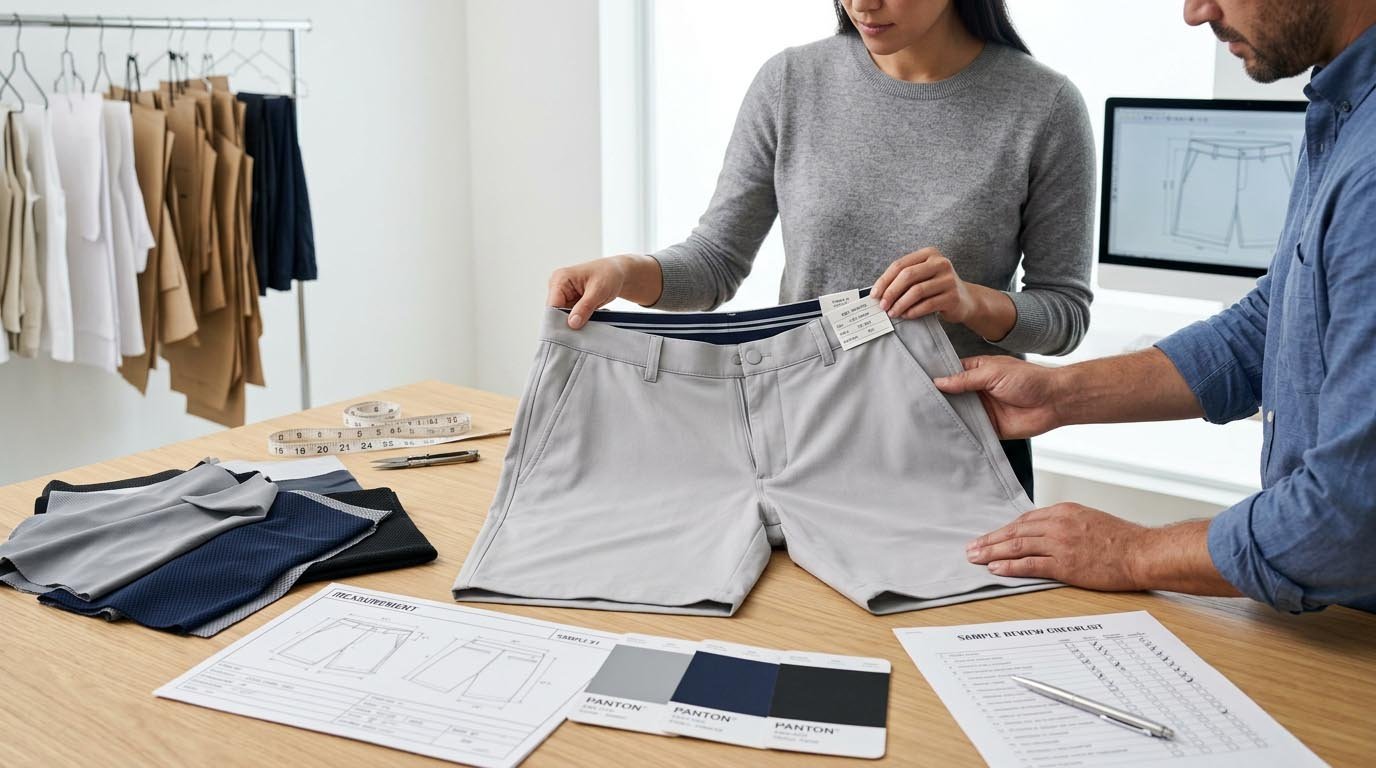
For an initial product review, check:
| Review Point | What to Look For |
|---|---|
| Waistband | Secure fit without pressure or rolling |
| Rise and seat | Comfortable bending and sitting |
| Thigh and leg opening | Freedom of movement |
| Pockets | Usability without excessive bulk |
| Fabric | Suitable stretch, recovery, drape, and comfort |
| Appearance | Consistency with the intended silhouette |
This is an initial comfort and design review, not a replacement for a complete production approval process.
For detailed checks before manufacturing, see our golf shorts sample checklist.
Connect Design Choices to Production Feasibility
A style may look straightforward but still require specific fabric sourcing, waistband construction, trims, or pattern adjustments.
Brands should confirm these requirements before assuming a design can be manufactured at a particular quantity or price.
For the complete purchasing process, including RFQs, customization, and minimum order quantities, refer to our custom golf shorts sourcing guide.
Frequently Asked Questions About Golf Shorts
Are Golf Shorts Different From Chino Shorts?
Not necessarily in appearance.
Many golf shorts use a chino-style silhouette. The difference is that performance golf shorts may incorporate additional stretch, waistband comfort, moisture management, or functional construction.
A suitable pair of chino shorts can also work for golf, depending on its fit and the course's dress requirements.
Should Golf Shorts Be Slim or Loose?
Golf shorts should provide enough room for natural movement without excessive bulk.
Slim fits offer a closer silhouette, while regular and relaxed fits provide different amounts of ease. The best choice depends on body proportions, fabric stretch, and individual comfort.
Are Golf Shorts Suitable for Everyday Wear?
Yes. Many golf shorts are designed for both on-course and off-course use.
Flat-front, chino-style, and five-pocket designs are particularly versatile when they use understated colors and clean construction.
Do Women's Golf Shorts Need Different Features?
The same basic principles apply: comfortable movement, appropriate coverage, useful pockets, and fabric suited to the climate.
However, women's golf shorts may require different pattern proportions, rise, hip shaping, inseam options, and waistband construction according to the intended customer.
Fit should be developed for the target size range rather than simply adapting a men's pattern.
Are Expensive Golf Shorts Always More Comfortable?
No.
Higher prices do not guarantee better comfort. Fabric quality, fit, construction, and personal preference all influence the wearing experience.
A simpler pair of well-fitting shorts may feel better than a more expensive pair with unsuitable proportions or excessive features.
Conclusion: What Makes a Good Pair of Golf Shorts?
Good golf shorts balance appearance, freedom of movement, and everyday practicality.
Flat-front and chino-style shorts offer versatile styling. Pleated, five-pocket, Bermuda, and pull-on designs provide alternatives for different preferences. Inseam length, waistband construction, fit, and fabric all influence how the finished garment looks and feels.
For golfers, the best shorts are the ones that fit comfortably, suit the playing environment, and allow natural movement.
For golf apparel brands, understanding these fundamentals is the starting point for building a product that matches the intended customer.
Developing Custom Golf Shorts for Your Brand?
FUWAY supports custom and private label golf apparel development, including fabric sourcing, fit development, sampling, and bulk production.
Explore our Custom Golf Bottoms capabilities or contact FUWAY to discuss your design requirements, target quantity, and customization options.