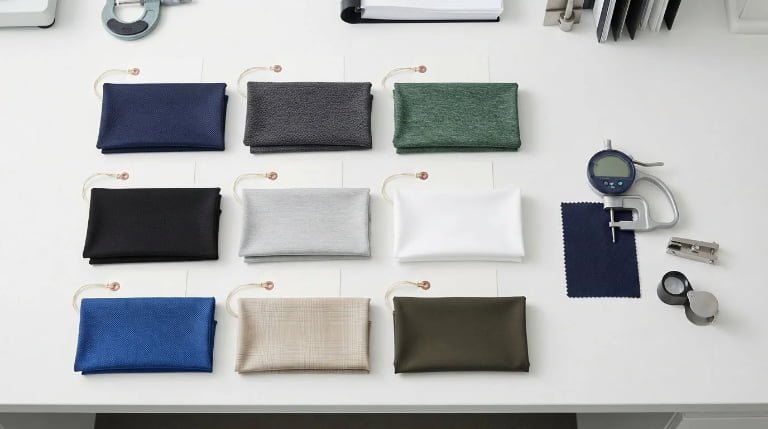
To keep golf polo fit consistent across reorders, compare each production run with the current approved pattern, measurement specifications, and reference garment. Verify material changes, check both dimensions and movement, and approve the required samples before bulk cutting.
An unchanged size chart does not control every factor that affects fit. Fabric behavior, collar components, sewing, and finishing can change how a polo feels even when individual measurements remain within tolerance.
For brands restocking an established style, the goal is to reproduce the approved fit while documenting any intentional changes.
| Control Area | What to Confirm on Every Reorder |
|---|---|
| Approved baseline | Correct pattern, graded measurements, reference sample, and revision |
| Materials | Actual fabric lots, relevant test results, and component substitutions |
| Measurement method | Same POM definitions, garment condition, and measuring technique |
| Wearing performance | Comparable body balance, sleeve comfort, collar position, and movement |
| Production release | Recorded approval, unresolved issues, and checks during bulk production |
Step 1: Confirm the Current Approved Fit Baseline
A reorder should reference a style code and approved revision—not an instruction to “make it like last time.”
Keep the following records together:
| Baseline Record | Required Detail |
|---|---|
| Pattern and grading | Approved revision, date, and size range |
| Measurement specification | Target dimensions and tolerance for each point of measure |
| POM guide | Diagrams showing measurement locations and methods |
| Material specification | Fabric reference, construction, weight, finish, and relevant components |
| Reference garment | Approval date, size, revision, and wash condition |
| Change history | Approved changes, reasons, and affected orders |
The physical sample supports the specification, but it should not silently redefine the target measurements. An approved sample may itself have small deviations from the nominal dimensions.
For example, if a sample measures slightly wider than the target, its actual width should not automatically become the target for the next order.

Use the Current Approved Version
If the brand deliberately changes sleeve length or body shape, approve a revised baseline and archive the previous version.
Avoid using a randomly selected garment from the latest shipment as a replacement standard. That can allow small production differences to become unrecorded design changes.
Protect the reference garment from washing, stretching, light, and damage. Check its condition before reuse and agree a replacement if it no longer provides a reliable comparison.
Step 2: Verify the Actual Fabric and Component Lots
Matching fiber content and GSM does not prove that two fabric lots will behave identically.
Review the actual materials allocated to the reorder, including any differences from the approved specification.
| Variable | Fit Risk | Evidence to Review |
|---|---|---|
| Knit construction or yarn change | Different drape or resistance to stretch | Material reference and supplier change record |
| Stretch and recovery | Different restriction or residual stretching | Results obtained using the agreed method |
| Dimensional stability | Changes in length, width, or garment balance after care | Lot-linked wash-test records |
| Collar rib or interlining | Different neckline feel, stiffness, or collar shape | Component specification and sample comparison |
| Decoration or finishing | Local puckering, distortion, or changes in hand feel | Sample made with the intended production process |
Do not assume that a darker color will always shrink more or feel tighter. Treat color lots as traceable material groups and assess their actual behavior.
If a new lot differs materially, investigate before adjusting the pattern. A predictable dimensional change may justify a controlled correction, followed by sampling and approval. Unstable or inconsistent material may need replacement.
For the testing workflow, see our golf apparel fabric shrinkage testing guide.
Step 3: Measure Consistently and Check the Wearing Fit
Two inspectors can obtain different measurements from the same polo if they use different methods.
Before comparing orders:
- Prepare garments in the same agreed condition.
- Lay them flat and relaxed.
- Use the specified button and placket position.
- Follow the approved measurement locations.
- Avoid stretching the fabric unless the method requires it.
- Record units and use checked measuring tools.
“Chest width” needs a defined location. Body length needs defined start and end points. Sleeve measurements need a clear route.
At FUWAY, specified finished-garment measurements must remain within ±1.0 cm of the approved targets, with tighter requirements applied where confirmed in the Tech Pack. Our measurement tolerance guide explains how those limits are documented.
Review Related Measurements Together
A reorder can meet individual limits while several fit-sensitive points shift toward the same end of their ranges.
For example, a narrower chest combined with reduced shoulder width and sleeve opening may feel more restrictive. These deviations should be reviewed together; they cannot be added together to calculate a universal “half-size” change.
Use both measurement records and a fit assessment.
| Fit Zone | Measurement Review | Wearing Check |
|---|---|---|
| Chest and torso | Chest, waist, and hem widths | Comparable ease without new pulling or cling |
| Shoulder and armhole | Shoulder width and specified armhole dimensions | Arms raise and rotate without excessive body lift |
| Sleeve | Length, upper-arm width, and opening | Similar comfort and position during movement |
| Collar and placket | Neck opening and approved construction dimensions | Comparable neckline pressure and collar balance |
| Body length | Approved front and back length measurements | Similar coverage and tuck retention |

Use the same fit model where practical and record the model’s relevant body measurements. A dress form helps assess shape and balance; movement checks require a wearer.
Compare construction as well. Seam stretch, collar components, and decoration can affect wearing behavior even when the main body measurements match.
Step 4: Compare Fit Before and After the Agreed Care Process
Fit consistency includes what happens after the customer washes the polo.
Keep an unwashed reference garment and a separate wash-test control. Repeatedly washing the sealed reference changes the benchmark.
For a useful comparison, align:
- Wash and drying procedures
- Number of care cycles
- Measurement preparation and conditioning
- POM definitions
- Appearance and wearing checks
- Agreed acceptance limits
Compare unwashed garments with unwashed garments, and garments tested under equivalent care conditions with one another. An old customer-worn shirt is useful feedback, but its unknown care history makes it an unreliable production standard.

Check body dimensions, sleeve opening, collar shape, placket balance, and twisting after care.
AATCC TM150 addresses garment dimensional changes after home laundering. Its published scope notes that it may not apply to garments made from certain stretch fabrics, so confirm method suitability with the testing laboratory.
Agree the method and acceptance criteria before testing. Initial measurement tolerance and wash-related dimensional-change limits are separate requirements.
Step 5: Match Sample Approval to the Reorder Risk
Every reorder needs a documented review. The extent of renewed sampling should reflect the changes, production history, and buyer requirements.
A new dye lot requires verification, but it does not automatically mean the complete size range must be redeveloped.
| Reorder Situation | Recommended Validation |
|---|---|
| Verified retained material lot, unchanged approved specifications, stable previous results | Confirm material condition, review measurements, and document the agreed sample and production checks |
| New fabric or dye lot using the approved material specification | Review lot results and approve a production-material PPS covering the identified fit risks |
| Changed fabric source, construction, finish, collar, or interlining | Reassess fit and care behavior before cutting; expand size checks where the change could affect grading |
| Revised pattern, grading, or added sizes | Approve the revision and relevant size set before bulk production |
| Previous fit complaints or unexplained batch differences | Investigate affected sizes and lots; strengthen validation before release |
A simplified route for a stable reorder must be agreed in writing. It should not be assumed because the product name is unchanged, and it does not override a buyer’s required PPS procedure.
Keep PPS and TOP Checks Separate
A pre-production sample, or PPS, confirms the intended product using production materials before bulk cutting.
A top-of-production sample, or TOP sample, checks garments from the beginning of the bulk run. It helps verify that the production line is reproducing the approved standard.
TOP inspection does not replace a necessary pre-production approval.
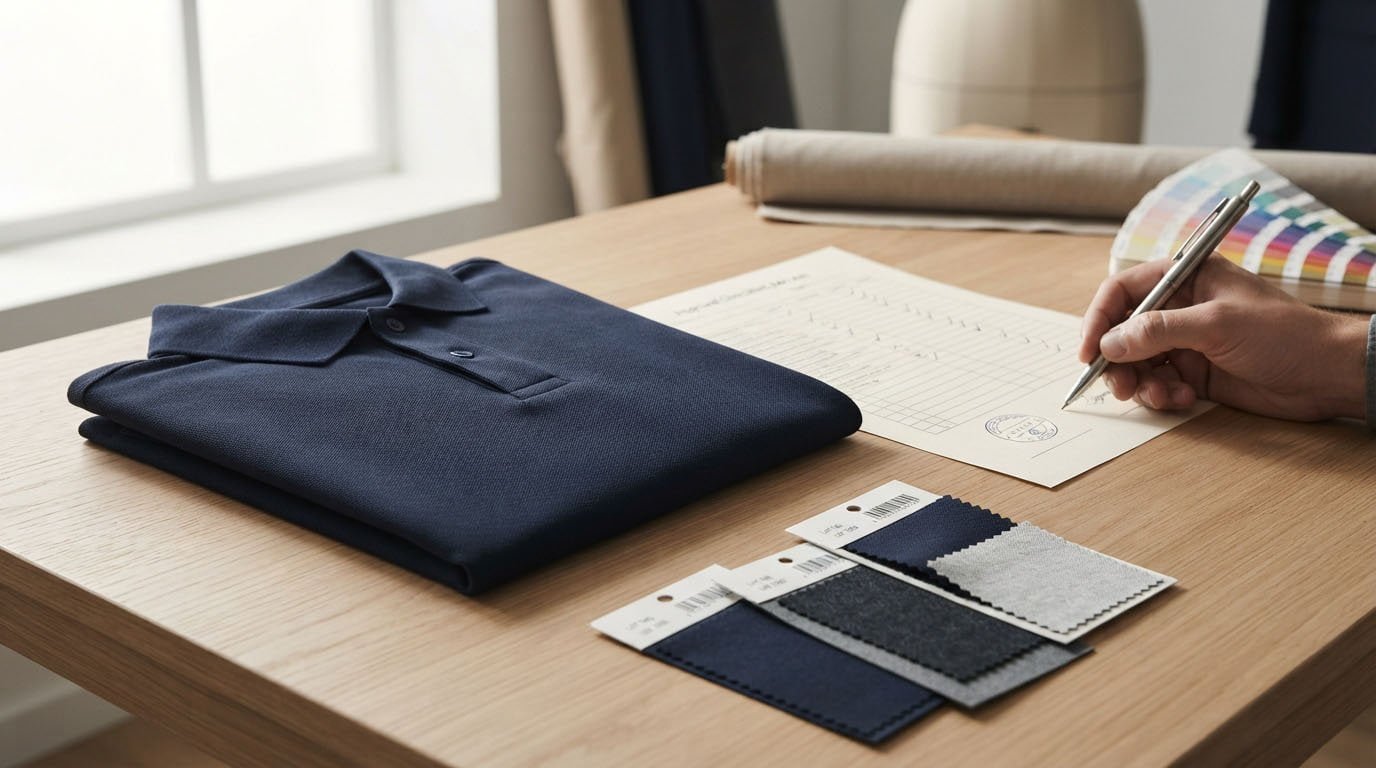
For broader sample definitions, see our golf apparel sampling process.
Record the Release Decision
Before authorizing bulk cutting, confirm:
- Style code and approved revision
- Reference garment identification
- Fabric and relevant component lot references
- Changes from the previous approved order
- Measurement and care-test results
- Fit comments and required corrections
- Sample approval scope
- Approver, approval date, and outstanding holds
Any unresolved issue should have a clear action and owner.
Step 6: Track Fit During Bulk Production and Across Orders
An approved PPS validates a sample. Production checks are still needed to confirm repeatability.
Compare early bulk output with both the approved specifications and reference garment. Continue measurement checks across the agreed sizes, colors, and material lots.
Keep a record for each reorder using fields such as:
| Record Field | Purpose |
|---|---|
| Order, style, and revision | Identify the approved product |
| Size, color, fabric lot, and sample count | Show what the inspection represents |
| POM target and tolerance | Preserve the acceptance standard |
| Individual measured values | Reveal piece-to-piece variation |
| Observed range and average deviation | Help identify a shift within the inspected group |
| Fit and wash-test comments | Capture issues beyond flat measurements |
| Corrective action and approval | Document how the issue was resolved |
Review individual results as well as averages. Averages can hide out-of-tolerance garments, and sampled results do not prove that every piece conforms.
If several orders move progressively toward one tolerance boundary, investigate before the next run. Do not recenter the specification simply to make the latest production pass.
The broader inspection stages are covered in our golf apparel quality control guide.
Frequently Asked Questions
What if the original approved sample is missing?
Reconstruct the baseline from the approved pattern, specification, material records, inspection reports, and an identifiable retained garment where available. Resolve discrepancies and approve a replacement reference before treating it as the production standard.
Can an older customer-worn polo help investigate a complaint?
Yes. It can show where customers notice a difference. Record its purchase date, size, and known care history, then compare it with retained production samples and inspection records. Avoid using it alone to reset measurements.
What if the supplier says the approved fabric is unavailable?
Request the proposed replacement specification, swatch, and relevant test results. Assess its effect on fit, care behavior, and construction through sampling. Approve the substitution and its affected orders explicitly.
What should buyers do if a reorder has already arrived with a fit problem?
Identify the affected sizes, colors, quantities, and material lots. Recheck measurements using the agreed method and separate dimensional failures from wearing-fit complaints. Preserve samples and records while the cause is investigated.
Our guide to bulk production differences from approved samples explains the broader investigation and corrective-action process.
Conclusion
Consistent golf polo fit depends on preserving a clear approved standard and checking how each new production run reproduces it.
Keep pattern revisions, material lots, measurement methods, care-test conditions, and approval records connected. Use sampling to resolve risk before cutting, then monitor the actual bulk output for variation and drift.
For an upcoming custom golf polo production run, send FUWAY your current tech pack, approved reference details, previous measurement records, and any proposed changes. Contact our team to discuss the validation needed for your reorder.