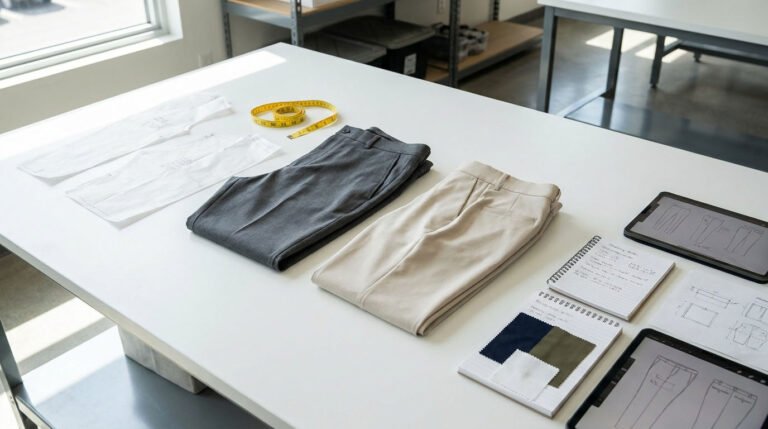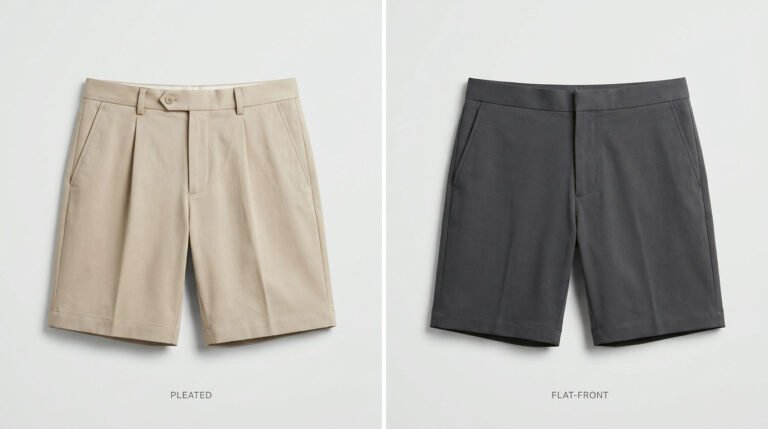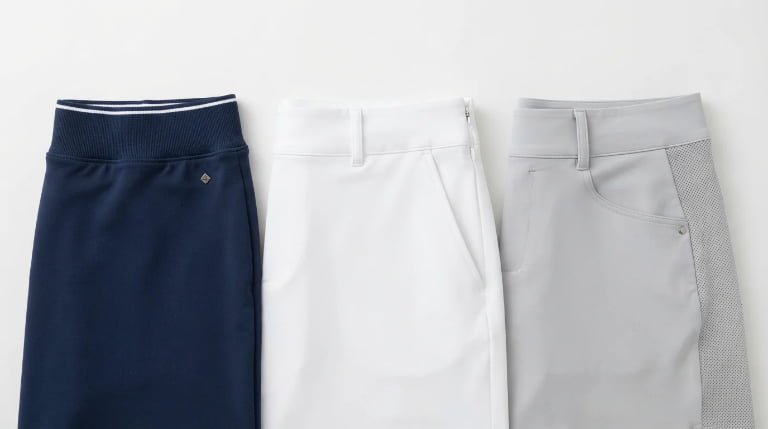
The wrong golf pants waistband can cause shirt slippage, discomfort during a swing, or poor stretch recovery. For golf apparel brands, the challenge is balancing appearance, movement, and long-term performance.
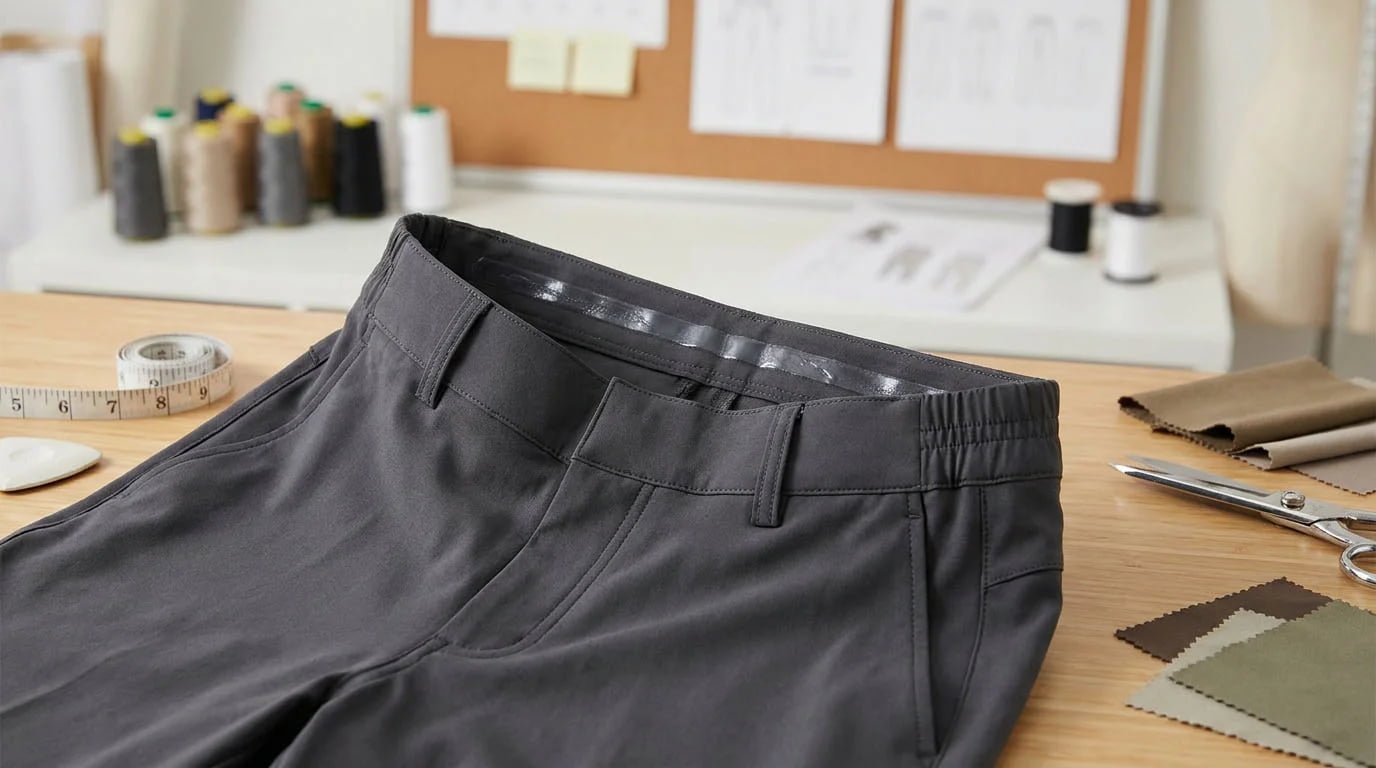
A standard waistband provides a tailored look, elastic adds waist flexibility, and grip tape helps keep tucked-in polo shirts in place. These features are not mutually exclusive: one waistband can combine structured construction, concealed stretch, and internal grip tape.
The right choice depends on your target golfer, product positioning, and approved performance requirements.
This guide focuses on waistband selection and sample validation. For broader construction decisions, see our guide to designing golf shorts and pants.
Quick Comparison: Grip Tape vs Elastic vs Standard Waistbands
The first distinction is important: standard and elastic describe waistband construction, while grip tape is an additional shirt-retention feature.
| Design | Main Benefit | Main Limitation | Best For |
|---|---|---|---|
| Standard / Fixed | Clean, structured appearance | Limited expansion | Classic golf trousers |
| Concealed Elastic | Stretch with a tailored look | Requires controlled tension | Performance golf pants |
| Partial Elastic | Flexibility in selected areas | More construction complexity | Modern golf trousers |
| Full Elastic | High flexibility | More casual appearance | Golf joggers |
| Internal Grip Tape | Helps retain tucked shirts | Performance varies by shirt fabric | Tucked-polo styles |
| Hybrid | Combines structure, stretch, and grip | More components to validate | Premium performance pants |
For tailored performance trousers, a structured waistband with controlled stretch is a practical starting point. Grip tape can then be added if shirt retention is a priority.
How Does Grip Tape Work in Golf Pants Waistbands?
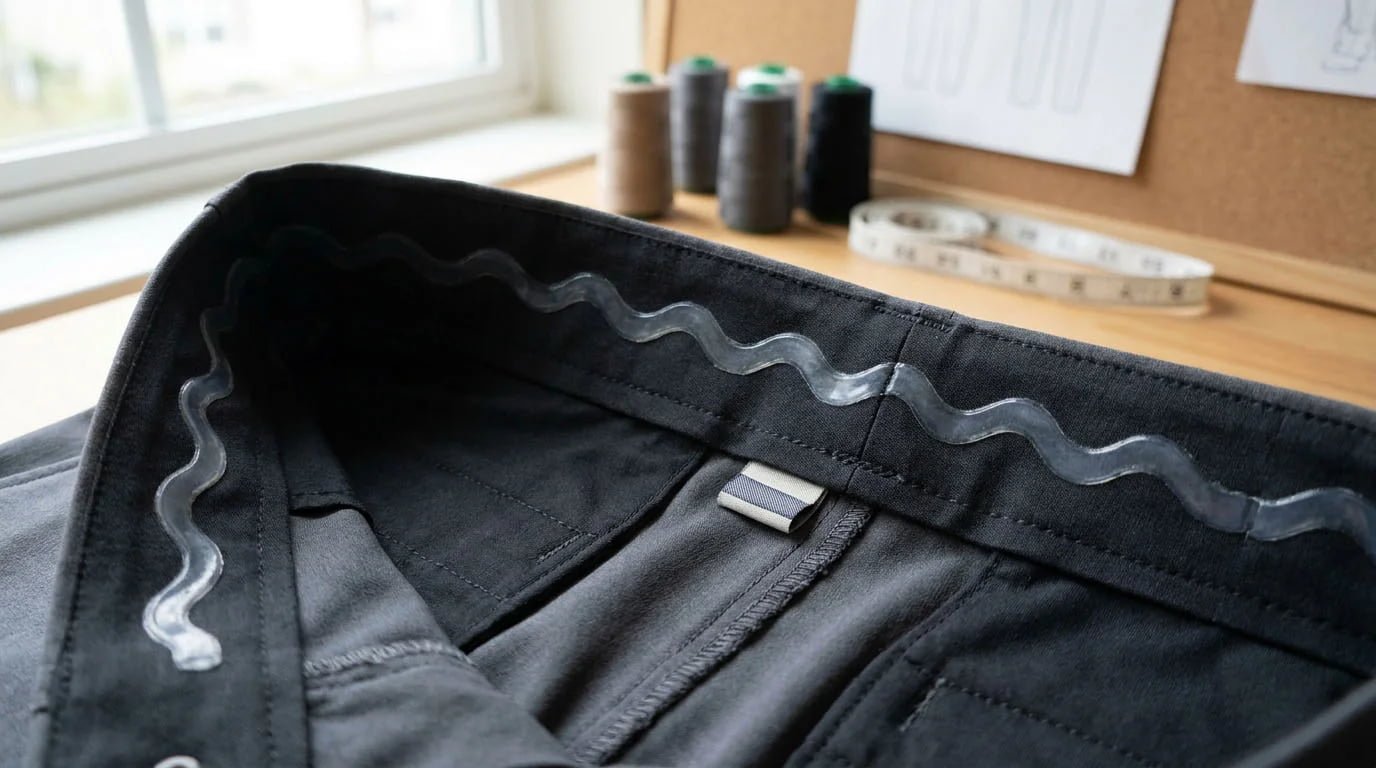
Grip tape uses a friction-enhancing surface, commonly silicone, along the inside of the waistband to reduce movement between the trousers and a tucked shirt.
Benefits and Limitations
Internal grip elements can help keep polo shirts tucked during swings and bending without noticeably changing the pants' exterior appearance.
However, grip tape cannot guarantee that every shirt stays tucked in.
Its effectiveness depends on:
- Shirt fabric, length, and fit.
- Waistband position and trouser rise.
- Grip material and application method.
- Movement during play.
A slippery polyester polo may behave differently from a cotton-blend shirt. Brands should therefore test grip performance with representative shirts from their collection.
What Should Buyers Check?
Ask the manufacturer to confirm grip material, placement, application method, and compatibility with the planned care instructions.
Inspect samples for peeling, unwanted residue, fabric damage, and changes after laundering.
Grip tape is worth considering for performance collections built around tucked-in polos, but it may add unnecessary complexity to casual styles designed for untucked wear.
For more on garment components, see FUWAY's Golf Apparel Trim Guide.
Elastic Golf Pants Waistbands: Which Construction Works Best?
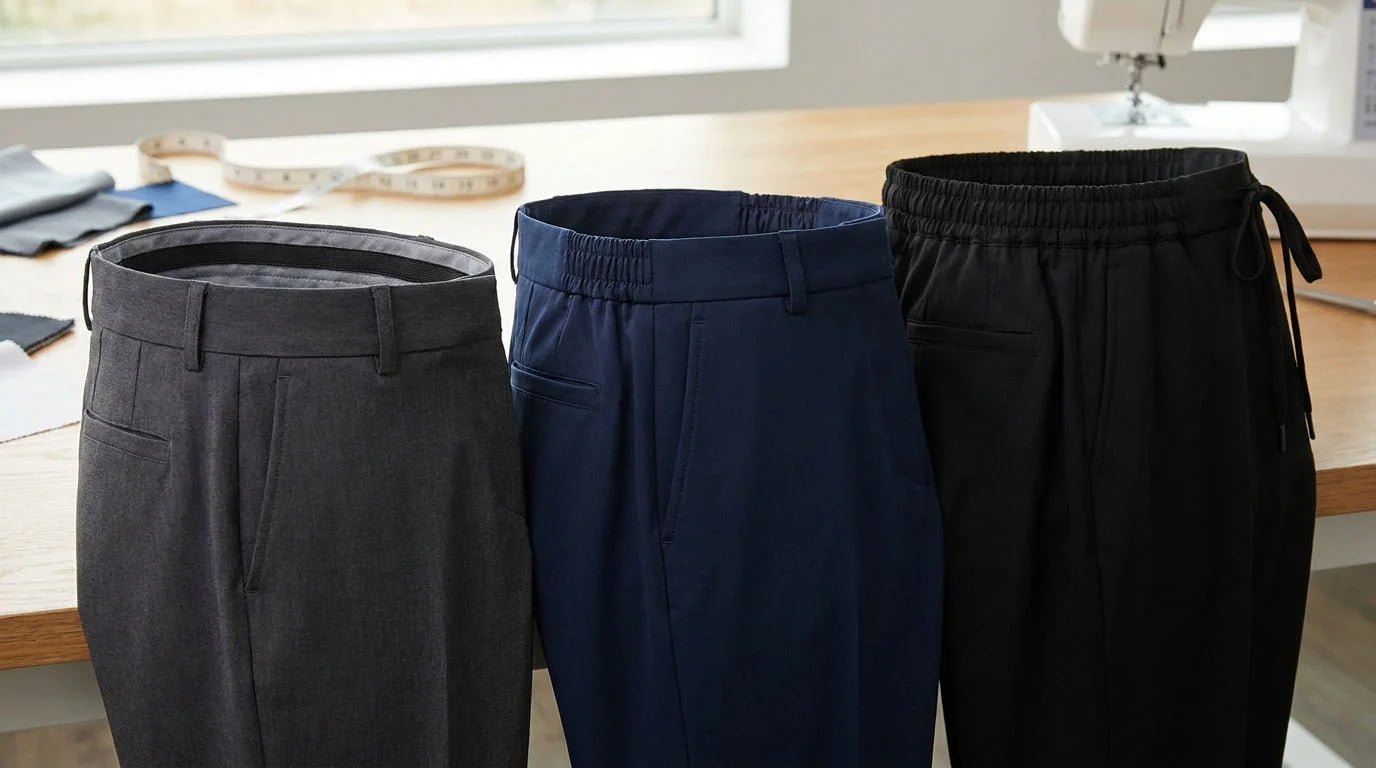
Elastic waistbands allow controlled expansion when golfers bend, sit, or rotate. The construction determines how much flexibility is available and how the finished trousers look.
Concealed Elastic
Concealed elastic sits within the waistband construction, helping preserve a tailored exterior.
It works well for performance golf trousers requiring movement comfort without an obvious athletic waistband.
Poor tension control, however, can cause visible puckering or uneven expansion.
Partial Elastic
Partial elastic uses stretch sections, commonly around the sides or back.
It offers targeted flexibility while maintaining a structured front. Seam placement and component compatibility are important to avoid bulky junctions or uneven gathering.
Full Elastic
Full elastic suits relaxed golf joggers and lifestyle pants where flexibility takes priority over a traditional trouser appearance.
It may be less appropriate for formal golf collections requiring a crisp waistband and conventional belt support.
For every elastic construction, stretch recovery matters more than maximum expansion alone. An excessively soft waistband may stretch easily but become loose or distorted during wear.
When Should You Choose a Standard Golf Pants Waistband?
A standard waistband uses a relatively fixed structure, often supported by interlining, closures, and belt loops.
It remains appropriate for classic golf trousers and premium collections emphasizing clean lines and a tailored fit.
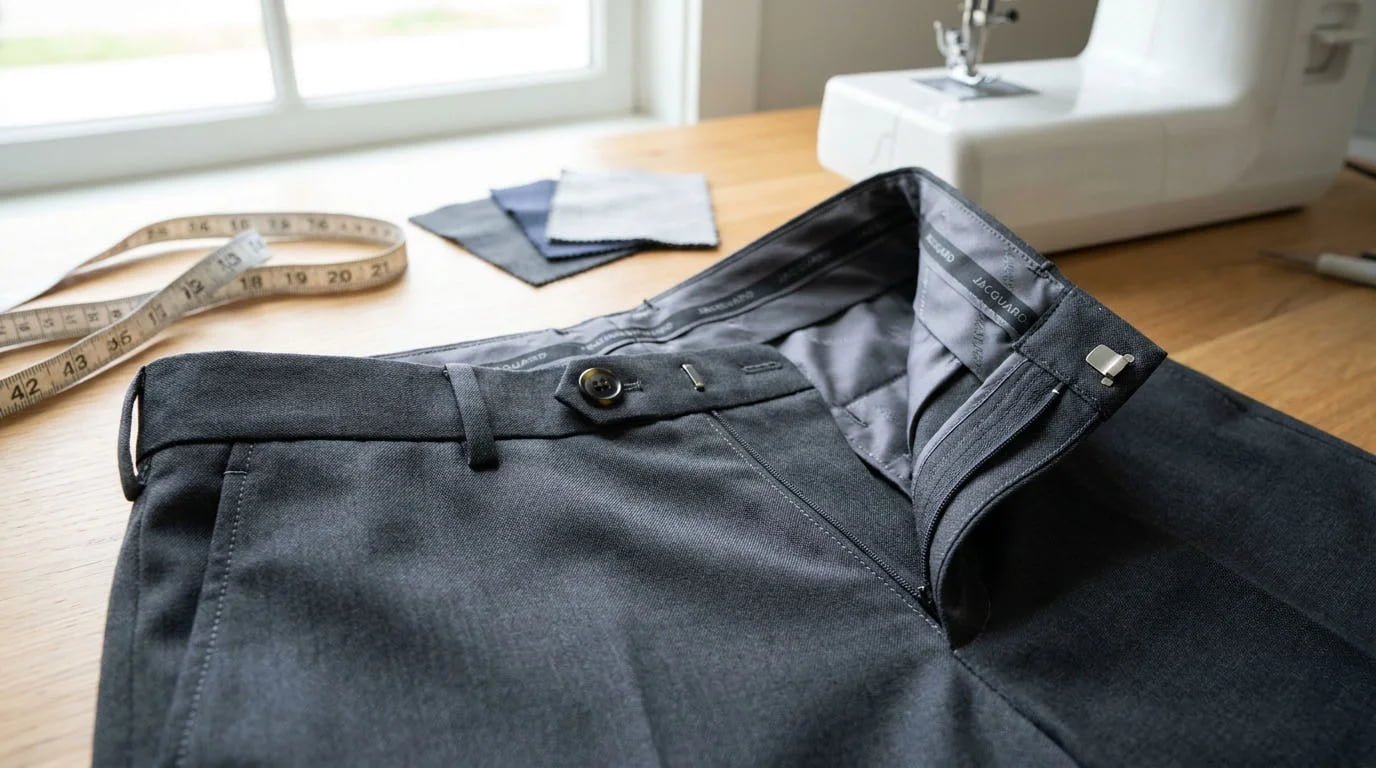
Its main advantages include stable belt support, controlled shaping, and a structured appearance.
However, fixed waistbands offer less waist expansion than elastic-assisted designs.
A standard waistband does not necessarily feel rigid. Stretch woven fabrics and suitable supporting materials can provide some flexibility without dedicated elastic inserts.
For guidance on waist placement, rise, and overall trouser fit, see How Should Golf Pants Fit?.
Which Waistband Design Should Your Golf Brand Choose?
Start with the customer's expected wearing experience rather than selecting the construction with the most features.
| Product Positioning | Recommended Construction | Grip Tape |
|---|---|---|
| Classic Golf Trousers | Standard / Fixed | Optional |
| Performance Golf Pants | Concealed or Partial Elastic | Evaluate |
| Premium Clubhouse Pants | Structured Hybrid | Optional |
| Golf Joggers | Full Elastic | Usually optional |
| Tournament Uniforms | Fixed or Structured Hybrid | Based on requirements |
Before sampling, answer three questions:
- Will customers regularly tuck in their polos? If yes, consider testing internal grip tape.
- Does the collection require a tailored or casual appearance? This determines whether structured, concealed, or full elastic is appropriate.
- How much waist flexibility is required? Define the intended movement and recovery performance rather than requesting maximum stretch.
A premium golf pant does not automatically require every available waistband feature. The best construction is the one that meets the product brief without unnecessary complexity.
What Should Buyers Specify Before Sampling?
Once the construction is selected, document the required components and measurements.
| Specification | Required Information |
|---|---|
| Base Construction | Fixed, concealed, partial, or full elastic |
| Waist Measurements | Finished dimensions and measurement points |
| Elastic Components | Material, placement, and required recovery |
| Grip Tape | Type, width or pattern, and position |
| Supporting Materials | Interlining and fabric compatibility |
| Closure | Button, hook, zipper, or approved alternative |
| Performance | Movement, grip, recovery, and wash requirements |
Stretch Expansion Is Not Manufacturing Tolerance
Stretch expansion describes how far the waistband extends during wear.
Manufacturing tolerance describes the acceptable difference between a specified finished garment measurement and the actual production measurement.
These are different requirements.
FUWAY's standard finished-garment measurement tolerance is ±1.0 cm for specified points of measurement (POMs), unless a stricter tolerance is required by the approved tech pack.
A stretch waistband does not automatically justify larger production measurement deviations.
For complete specification documentation, use the Golf Apparel Tech Pack Checklist.
How to Test a Golf Pants Waistband Before Bulk Production
Waistband components should be evaluated within the finished garment, not only as separate materials.
A waistband may pass an isolated stretch test but still slip, roll, or pull downward when the golfer moves.
Golf Pants Waistband Sample Approval Checklist
| Check | What to Verify |
|---|---|
| Waist Measurement | Meets approved dimensions and tolerances |
| Movement Comfort | No unacceptable pressure during swings, sitting, or bending |
| Waistband Stability | No excessive slipping or rolling |
| Stretch Recovery | Returns within the agreed performance criteria |
| Grip Performance | Holds representative polo fabrics without unacceptable damage |
| Wash Durability | No unacceptable peeling, deformation, or recovery loss |
| Appearance | Matches approved waistband shape and finish |
| Production Consistency | Components and construction match the approved reference |
Testing conditions and acceptance criteria should be documented before sample approval.
Why Is Finished-Garment Testing Important?
Waistband performance also depends on trouser rise, shell fabric, shirt length, and overall garment construction.
For example, insufficient back-rise allowance may pull the waistband downward when bending, reducing the benefit of grip tape.
Likewise, elastic can provide adequate extension but still perform poorly if the finished waistband does not recover properly.
Before bulk production, brands should approve the final sample, confirm its materials and measurements, and document any revisions.
A successful sample establishes a repeatable production reference, not simply an acceptable appearance.
Frequently Asked Questions
Does Grip Tape Keep Every Golf Shirt Tucked In?
No. Grip tape can improve shirt retention, but its effectiveness depends on shirt fabric, length, waistband fit, and movement. Testing with intended polo styles is recommended.
Is an Elastic Waistband Better Than a Standard Waistband?
Not universally. Elastic provides greater flexibility, while standard construction offers a more structured appearance. The choice depends on the intended fit and product positioning.
Can a Standard Waistband Include Grip Tape?
Yes. Grip tape can be added to a suitable standard or elastic waistband. The gripping feature and base construction should be specified separately.
Are Hybrid Golf Pants Waistbands More Expensive?
They can be. Additional elastic sections, grip materials, and construction operations may increase costs. Actual pricing depends on materials, complexity, and order quantity.
Conclusion
The best golf pants waistband design balances appearance, comfort, and practical performance.
Standard construction provides structure, elastic introduces flexibility, and internal grip tape helps retain tucked-in shirts. These features can be combined when the product requires them.
For golf apparel brands, the priority is to choose the right construction, document the specifications, and validate the finished garment before bulk production.
At FUWAY, we support OEM and ODM golf apparel development, including waistband construction, material selection, sampling, and bulk production coordination.
Explore our custom golf bottoms manufacturing services or contact FUWAY to discuss your next golf pants collection.