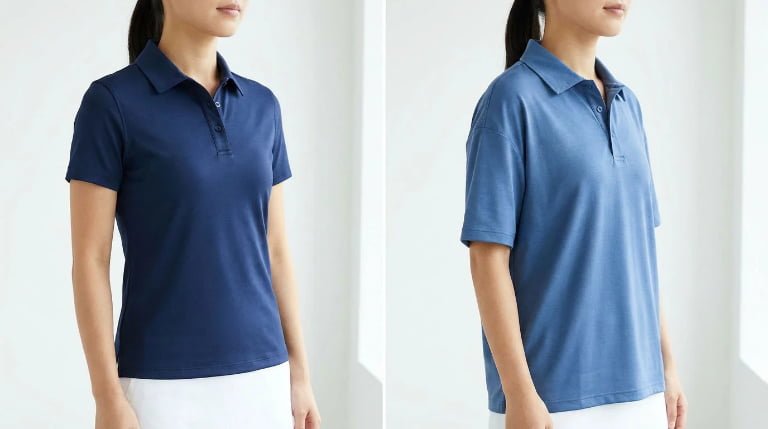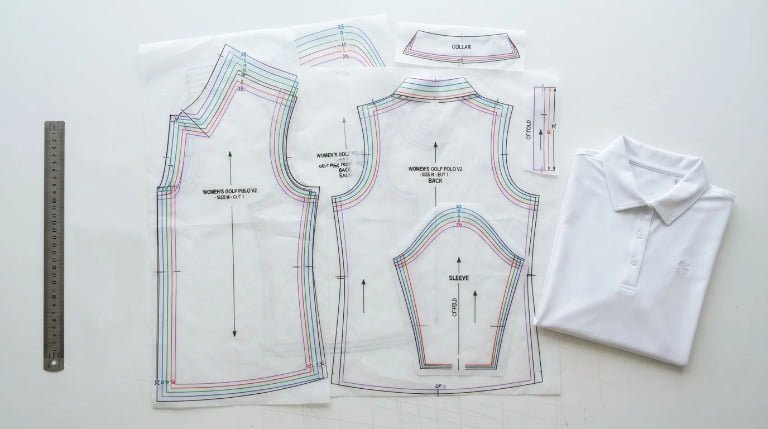
Women’s golf pants need a pattern that matches the intended customer’s proportions, the chosen fabric, and the way the garment will move. Making a men’s pattern smaller does not establish those requirements.
For apparel brands, the key development decisions are waist-to-hip shaping, front-to-back rise balance, seat and thigh allowance, and fit consistency across the size range. Stretch supports these decisions, but it cannot replace them.
There is also no single women’s body shape. A pattern that suits one customer group may gap, pull, or feel restrictive on another—even when both customers select the same labeled size.
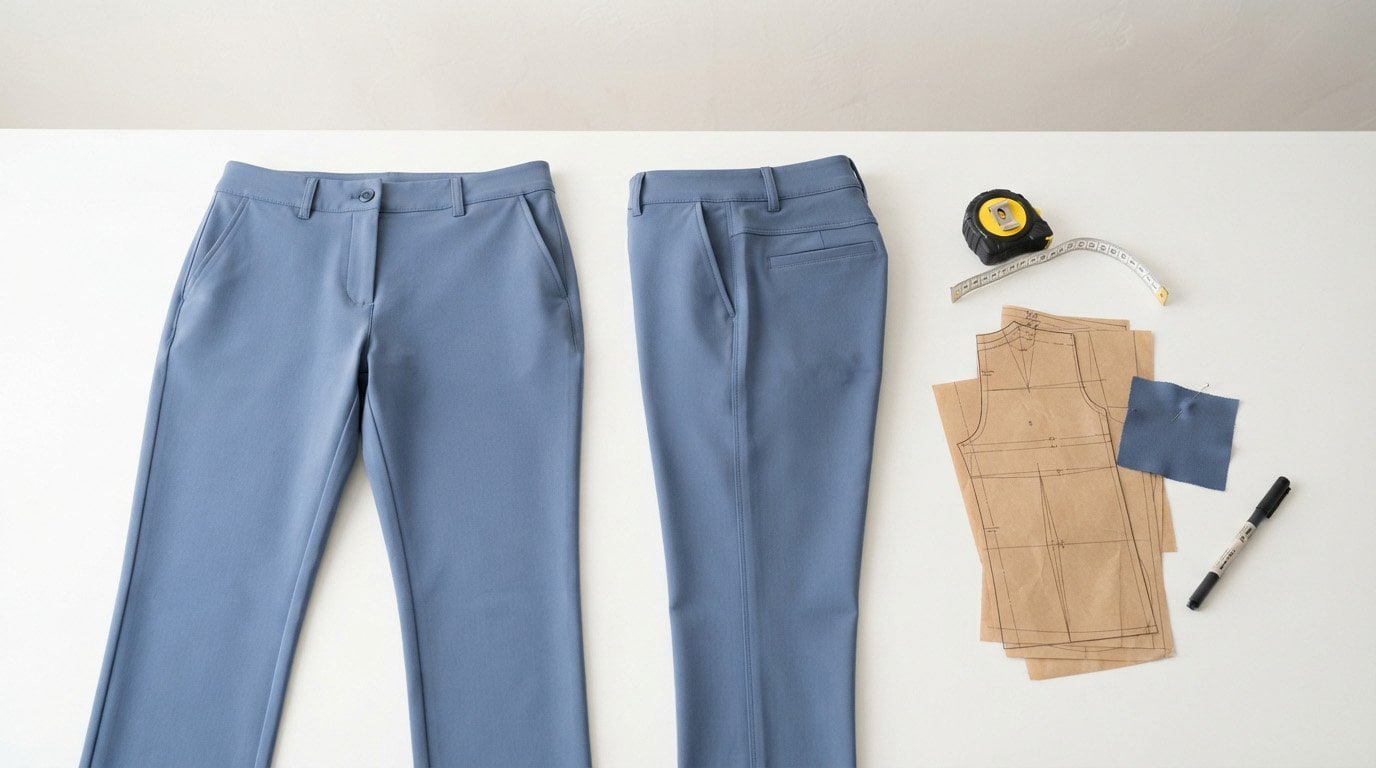
Start With the Target Customer’s Proportions
Before approving a silhouette, define the body measurements and fit preferences the product will serve.
A brief that says “women’s slim-fit golf pants” leaves important questions unanswered:
- Where should the waistband sit?
- What waist, high-hip, and full-hip measurements define the base size?
- How much room is intended through the abdomen, seat, and thighs?
- Which heights and inseam options will the range cover?
- Will the pants have a structured closure or a pull-on waistband?
Separate body measurements from finished garment measurements. The body chart describes the intended wearer. The garment specification describes the product, including its planned ease.
Two customers can share a full-hip measurement while having different waist sizes, abdominal profiles, seat shapes, and thigh proportions. Those differences help explain why a garment can meet its measurement chart yet fit them differently.
Use reference garments to communicate preferences, but record what works about them: waistband position, seat room, leg shape, or fabric feel. A reference size label alone is not a development specification.
Which Pattern Areas Need Separate Attention?
A dedicated women’s fit block provides a starting point for the intended customer group. It may be developed from an existing suitable block or through substantial revision of another pattern.
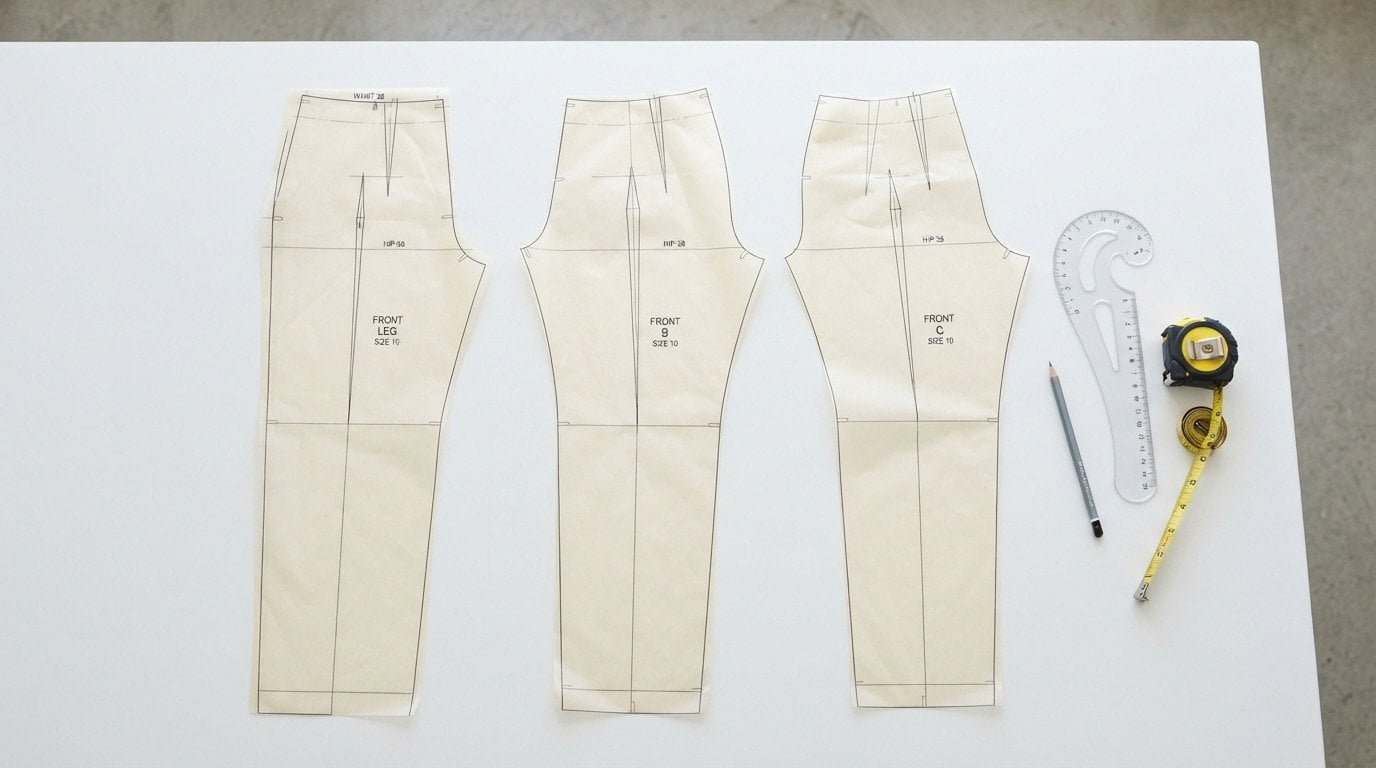
The essential requirement is validated fit, rather than a particular starting method.
| Pattern Area | What Brands Need to Define | What to Check During Fitting |
|---|---|---|
| Waist-to-hip shaping | Waistband position and transition through high and full hip | Back-waist gaps, pressure, or uneven side seams |
| Front rise and abdomen | Front coverage and room for the target profile | Pulling, excess folds, or seated discomfort |
| Back rise and seat | Length and volume supporting the intended seat shape | Waistband drag, tightness, or fabric pooling |
| Crotch shape and extension | How the front and back pattern accommodate the body | Pinching, low-hanging fabric, or restricted stride |
| Thigh and lower leg | Movement room, knee position, calf clearance, and taper | Binding, twisting, or the leg catching during movement |
Waist-to-Hip Shaping
A smaller waist combined with a fuller hip may require more shaping between those levels. A straighter target profile may need less.
Shaping can be distributed through side seams, darts, panel seams, and waistband construction. The best combination depends on the silhouette and fabric.
A contoured waistband can help follow the body at the intended wearing position, but it does not automatically solve gaping. The upper trouser pattern and waistband must work together.
For construction choices, see our golf pants waistband design guide.
Front Rise, Back Rise, and Crotch Shape
Rise length and crotch depth describe different aspects of fit.
Front and back rise measurements normally follow their respective crotch seams to the defined waistband endpoint. Crotch depth concerns the vertical relationship between the wearing waist and crotch level. The tech pack should specify the exact measuring methods.
Increasing back rise can help some coverage problems, but it is not a universal correction. The pattern maker may also need to review seat volume, crotch extension, waist position, and fabric behavior.
Likewise, a deeper crotch curve is not automatically a better women’s fit. An unsuitable change can create new looseness or disturb the balance.
Seat, Thigh, and Leg Shape
The desired appearance should not force every part of the pant to become narrower.
A tapered lower leg can be combined with room through the seat and thigh. However, calf clearance and knee position still need checking so the leg can move and settle naturally.
For petite and tall options, assess where the knee and other shaping fall on the wearer. Altering only the hem length may leave those features in the wrong position.
Match the Pattern to the Fabric and Construction
Fabric composition alone does not establish how a finished pant will fit.
Two fabrics with the same elastane percentage can differ in stretch direction, resistance to extension, recovery, thickness, and drape. Waistband components, pocket bags, interlining, and seams can also restrict a garment made from a stretchy shell fabric.
Review these factors together:
| Fabric or Construction Factor | Development Question |
|---|---|
| Stretch direction | Does extension occur where the pattern needs movement? |
| Resistance to stretch | Does the garment move comfortably, or require excessive force? |
| Recovery | Does the seat or knee remain distorted after wear? |
| Weight and drape | Does the fabric support the intended silhouette? |
| Opacity | Is coverage acceptable in the intended colors and fitted positions? |
| Supporting components | Can the waistband, pockets, and seams accommodate the required movement? |
There is no universal best elastane percentage or fabric weight for women’s golf pants. A lightweight summer woven pant and a structured winter style require different balances.
Early prototypes can use substitute materials to investigate shape, provided their limitations are recorded. Final fit approval should use the intended production fabric and relevant components.
The amount of ease must also suit the construction. A tailored woven pant and a close-fitting knit pull-on style should not automatically share the same ease assumptions.
Diagnose Fit Symptoms Before Changing Measurements
A visible fit problem is a starting point for investigation. It rarely proves one specific cause.
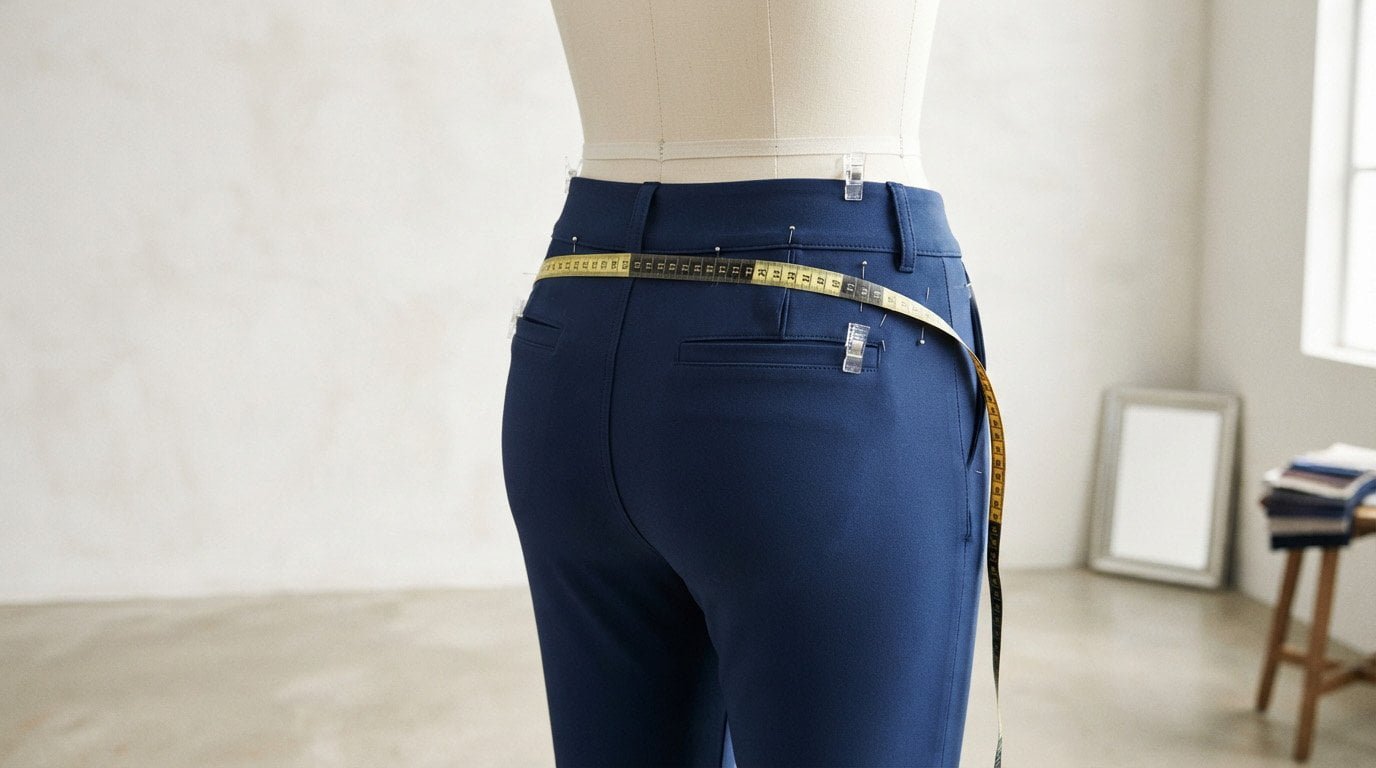
Check the sample against its specification first, then assess it on the intended wearer from the front, side, and back.
| Fit Symptom | Areas to Investigate | Avoid This Automatic Response |
|---|---|---|
| Back-waist gap with acceptable hip fit | Waistband contour, upper-hip shaping, and wearing position | Reducing the entire garment size |
| Rear waistband pulled down at address | Back rise, seat allowance, crotch extension, and fabric restriction | Adding height only at the waistband |
| Front crotch pulling or excess folds | Front rise, abdominal room, crotch shape, and overall balance | Deepening every crotch curve |
| Side pockets standing open | Hip or thigh tension, pocket angle, bag construction, and edge stability | Assuming the hip is always too small |
| Tightness during a putting crouch | Seat, thigh, knee, rise balance, and component stretch | Increasing only the waist |
| Leg seams twisting | Grain alignment, cutting, sewing, fabric distortion, and pattern balance | Adding stretch as the only correction |
Make a clear revision, document the intended effect, and repeat the same fitting checks. Changing several unrelated measurements at once can make it difficult to identify what solved—or worsened—the problem.
For general measurement definitions, use our golf pants patterning guide.
Test Movement on the Intended Wearer
Use a consistent fit model to track revisions, then add wearers who represent relevant variations within the target customer group.
The purpose is to understand whether the fit serves the defined customer—not to make one pattern fit every possible body shape.
A practical movement session should include:
- Standing and walking: Check waistband position, stride comfort, and leg alignment.
- Golf address: Observe rear coverage, abdominal pressure, and seat tension.
- Backswing and follow-through: Check binding, garment rotation, and pocket behavior.
- Putting crouch or comfortable squat: Assess pressure through the seat, crotch, thighs, and knees.
- Sitting and standing again: Check closure comfort, waistband pressure, and whether the garment settles back into position.
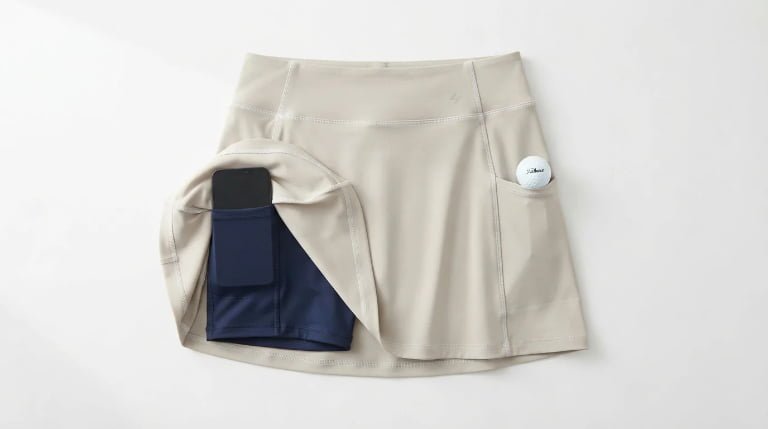
Repeat relevant checks with the intended pocket load, such as a phone or golf ball. Record which pocket holds each item so comparisons remain consistent.
Photograph the same views and positions for each revision. Note discomfort, repeated adjustment, and persistent distortion rather than demanding a completely wrinkle-free garment.
Also reassess fit after the agreed care procedure. A sample that changes shape or dimensions after washing needs further review.
Validate Grading Without Losing the Intended Fit
A successful base-size sample is the foundation of the range, not proof that every size will fit.
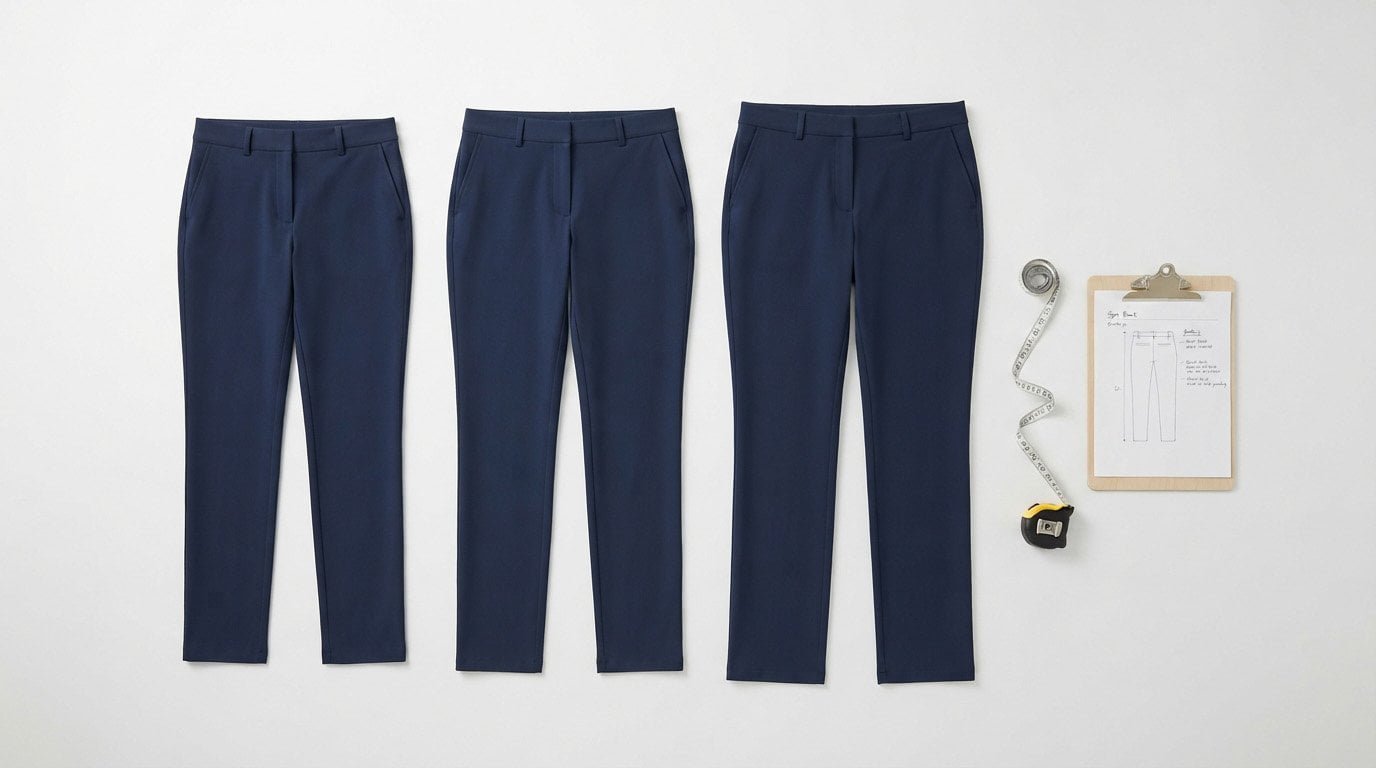
Grading uses defined changes at individual pattern points. CAD software applies those rules; the development team must decide whether they preserve the intended proportions.
For women’s golf pants, review:
- The relationship between waist, high hip, and full hip.
- Front and back rise progression.
- Seat and thigh allowance.
- Knee position, calf clearance, and leg opening.
- Pocket and closure placement.
- The interaction between size and inseam options.
Start with the base size and representative smaller and larger sizes. Add checks around grade-rule changes, extended sizes, or separate fit blocks where relevant.
An extended range may require additional fit development, but a separate block is a decision to validate rather than an automatic requirement.
Keep grading, fit ease, and manufacturing tolerance separate. Grading changes size; ease supports the intended fit; tolerance controls acceptable production variation.
For the wider sample approval process, see our garment fit approval checklist.
What Should Brands Confirm With the Manufacturer?
Before closing development, make sure the approved fit can be understood and reproduced.
The handoff should identify:
- Target body chart and intended waistband position.
- Finished garment measurements with illustrated measuring methods.
- Approved fabric, waistband components, and construction.
- Base pattern revision and graded specifications.
- Fit comments resolved through sample review.
- Movement and care checks completed on the relevant samples.
- Approved reference sample and written production decision.
Do not rely on comments such as “make it more feminine” or “add comfort.” State where the problem occurs, in which posture, and what result the next sample must achieve.
Frequently Asked Questions
Can a brand use one unisex block for golf pants?
It may suit a deliberately relaxed silhouette and a defined customer group. However, a unisex label does not demonstrate fit suitability. Validate the intended wearers, size range, and movement requirements before choosing this approach.
Does a “curvy fit” label need a different size chart?
Define what the label means for the brand. If it represents a different waist-to-hip relationship, that difference should appear clearly in the body chart and product guidance. The term alone does not provide a usable specification.
Do women’s golf pants need darts or a back yoke?
Not necessarily. Shaping may come from darts, seams, waistband contour, fabric behavior, or a combination. Choose the construction that supports the intended fit and appearance.
Should an existing shorts block be used for full-length pants?
It can provide a starting point if the upper-body fit is appropriate. Full-length pants still require development through the knee, calf, taper, and hem, followed by movement testing.
Conclusion
Develop women’s golf pants around the target customer’s proportions, then coordinate waist shaping, rise balance, seat allowance, fabric, and construction. Diagnose specific fit problems before changing the pattern, and verify that the intended fit continues across representative sizes.
FUWAY supports custom golf bottoms development and OEM/ODM production. Explore our custom golf bottoms service with your target body chart, reference garment, fabric requirements, and planned size range to discuss the next development step.