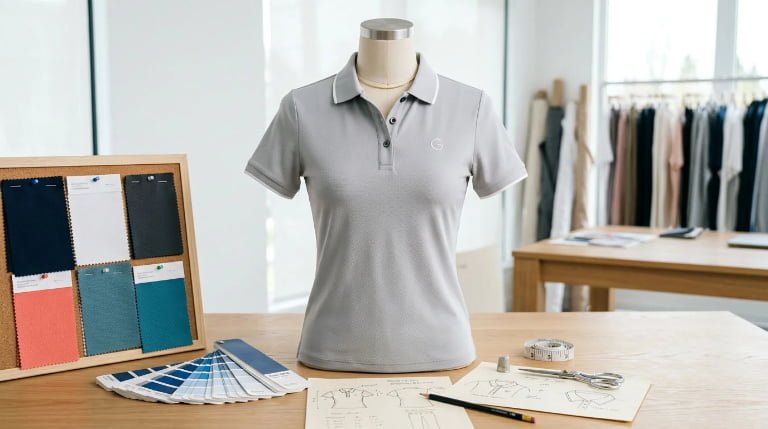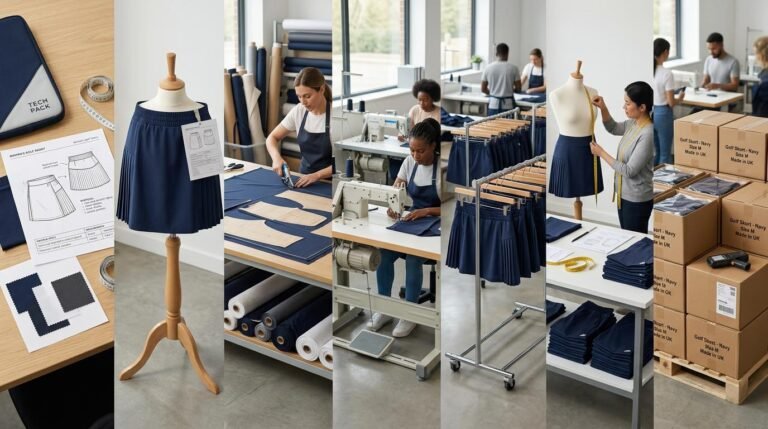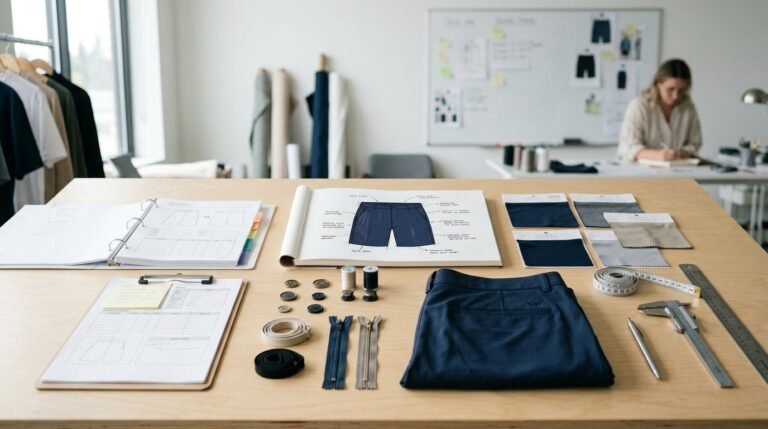
Starting a golf apparel brand in the USA can be a smart opportunity, but it is also easy to waste money on the wrong products, the wrong supplier, or too much inventory too early.
To start a golf apparel brand in the USA, you need to define a clear niche, choose a focused product line, understand your target price point, work with the right manufacturer, build a realistic budget, and launch with controlled inventory and a simple marketing plan. For most new founders, success comes from starting small, testing demand early, and improving each collection based on real customer feedback.
If you are looking for an experienced golf apparel manufacturer to help support your launch, this guide will help you understand the key decisions before moving into sampling and production.
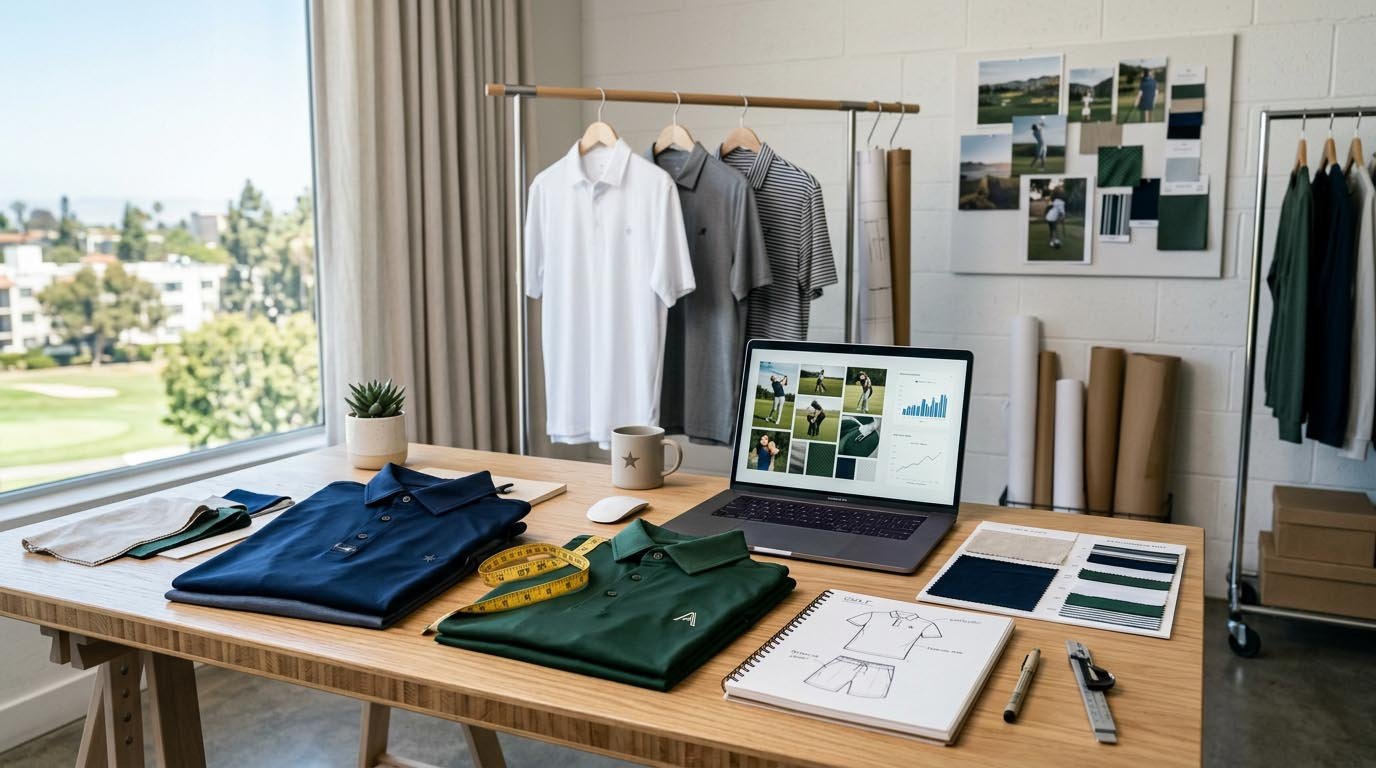
If you want to build a golf clothing brand, launch custom golf apparel, or find a golf apparel manufacturer for your first collection, this guide walks through the key decisions step by step.
Quick Answer: How Do You Start a Golf Apparel Brand in the USA?
The fastest way to start a golf apparel brand is to choose a narrow customer niche, launch a small collection of proven products, work with a manufacturer that supports your budget and MOQ, and test demand before expanding.
For many startups, the easiest first category is custom golf polo shirts, because polos are a core golf product with strong branding potential and broad customer appeal.
Start with These 5 Basics
-
Pick a clear target customer
- men
- women
- juniors
- country club buyers
- younger golf lifestyle customers
- team and event buyers
-
Launch a small first collection
- often 3 to 5 styles is enough
-
Choose the right supplier
- check MOQ
- check sampling process
- check fabric capability
- check communication quality
-
Build pricing before production
- know your target landed cost
- know your retail and wholesale margin goals
-
Launch small and learn
- many new brands can validate demand with a limited run before scaling
Quick Startup Table
| Area | What to Focus on First | Why It Matters |
|---|---|---|
| Market | Niche customer | Helps your brand stand out |
| Product | Small first range | Lowers risk and complexity |
| Manufacturing | Supplier fit, MOQ, quality | Protects cash flow and consistency |
| Pricing | Margin structure | Supports sustainable growth |
| Launch | Controlled inventory and simple marketing | Reduces dead stock risk |
Why the U.S. Golf Apparel Market Still Has Opportunity
The U.S. golf apparel market is competitive, but there is still room for new brands with a clear identity and focused offer.
You do not need to compete with every major sportswear brand. You need to offer something more specific to a certain type of golf customer.
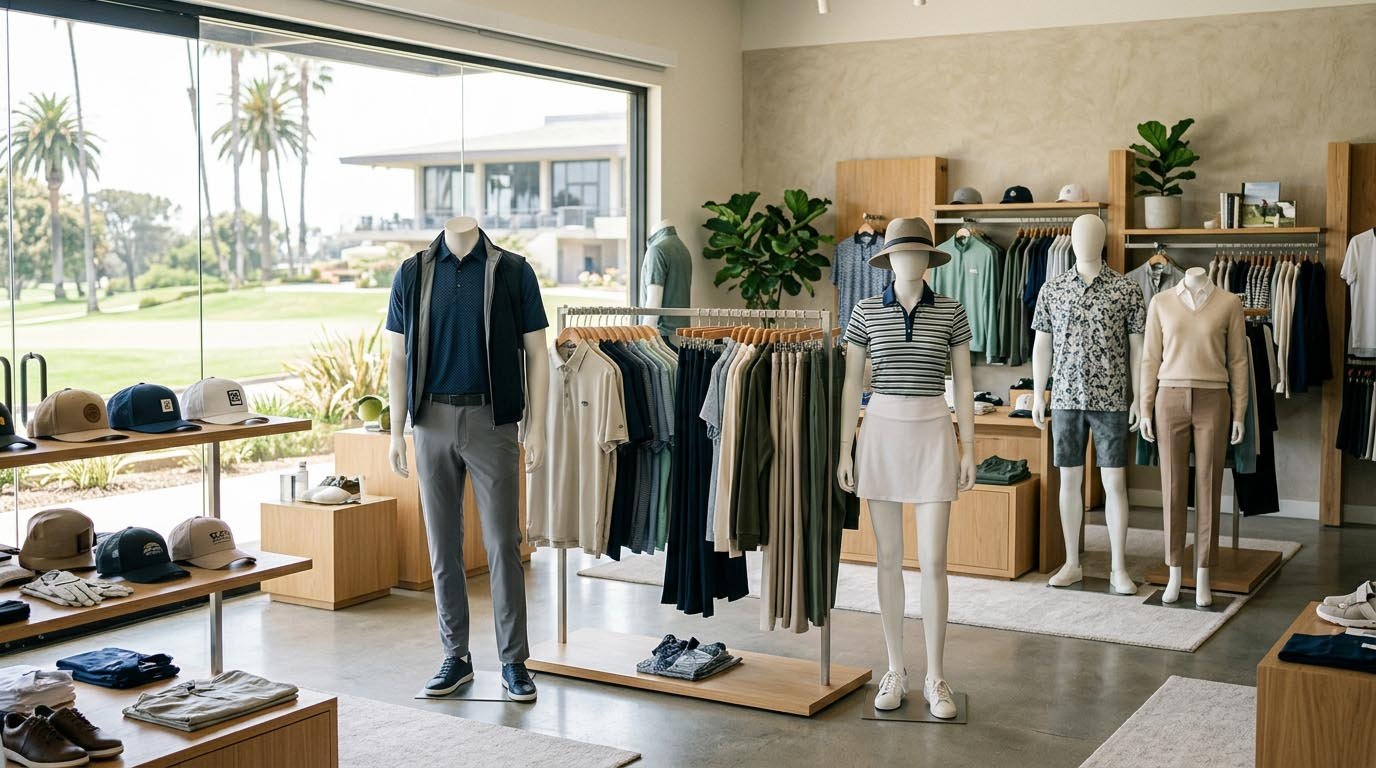
New brands can still enter by focusing on:
- modern golf lifestyle apparel
- women’s golf apparel
- younger street-to-course crossover styles
- premium country club aesthetics
- affordable performance essentials
- custom golf team and club apparel
- niche fit solutions or climate-based apparel
The market is crowded, but many buyers are still looking for:
- better fit
- fresher design
- clearer brand identity
- more lifestyle appeal
- more specialized products
- better value at a given price point
That is why your first question should not be, “How do I make everything?” It should be, “Who am I making this brand for?”
Step 1: Define Your Niche and Brand Positioning
Before you design products, you need to define what kind of golf apparel brand you want to build.
Strong positioning helps with product design, pricing, branding, content, and supplier decisions. Weak positioning makes everything more expensive and less effective.
Questions to Answer First
- Who is your ideal customer?
- What age group are you targeting?
- Is your brand performance-driven, fashion-driven, or both?
- Are you trying to look premium, value-focused, or modern lifestyle?
- Will you sell direct to consumers, to golf clubs, or both?
- Why would someone choose your brand over a known competitor?
Common Golf Apparel Positioning Angles
- Affordable performance golf basics
- Premium country club apparel
- Women-focused golf clothing
- Youthful golf lifestyle brand
- Street-to-course golf fashion
- Custom golf team and club apparel
Price Positioning Table
| Brand Positioning | Example Polo Retail Range | Customer Expectation |
|---|---|---|
| Value | $35–$55 | Clean design, basic performance |
| Mid-market | $60–$90 | Better fabrics, branding, and fit |
| Premium | $95+ | Elevated materials, story, finish, status |
Your positioning affects everything else. If you want a premium golf clothing brand, your fabric quality, fit consistency, logo execution, packaging, website, and product photography all need to support that claim.
Step 2: Choose the Best First Products for Your Golf Brand
Many new founders try to launch too many products at once. That usually creates unnecessary development cost and inventory risk.
A better strategy is to start with a small collection of proven golf apparel basics that are easier to sell, easier to explain, and easier to reorder.
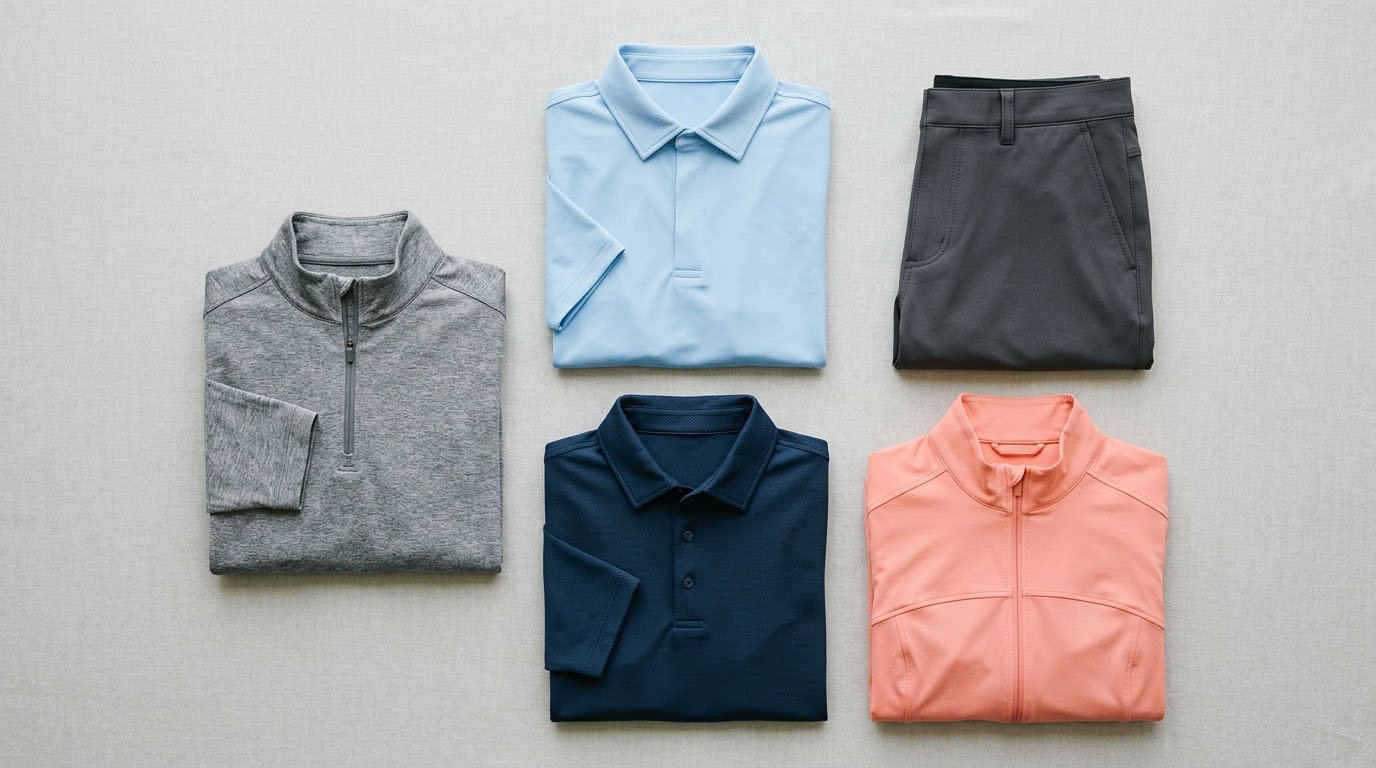
Best First Products for a New Golf Apparel Brand
- Golf polos
- Quarter-zips
- Golf shorts
- Women’s golf skirts
- Base layers
- Lightweight outerwear
Why These Products Work
Golf Polos
- Core product category
- Easy for customers to understand
- Strong repeat purchase potential
- Good for branding and logo placement
If you are choosing a starting product, custom golf shirts are often the most practical first step.
Quarter-Zips
- Popular layering item
- Good for spring and fall
- Works well in both sport and lifestyle positioning
Golf Shorts
- Strong summer staple
- Good companion product to polos
- Useful for increasing average order value
Women’s Golf Skirts
- Strong category if your brand targets female golfers
- Helps create a more complete collection
Lightweight Outerwear
- Good for climate flexibility
- Often carries higher retail value
Recommended Small First Collection
A practical first launch might include:
- 2 polo styles
- 1 quarter-zip
- 1 short
- 1 women’s skirt or 1 lightweight layering piece
This is enough to test demand without overbuilding the line.
Step 3: Select Fabrics and Performance Features
Fabric selection matters as much as design. A golf shirt can look good in photos but still fail if it feels hot, stiff, or unstable after washing.
For golf apparel, your fabrics should match your target customer, climate, price point, and brand promise.
If you need help with material development or performance fabric selection, working with a supplier that offers fabric sourcing can reduce mistakes early in the process.
Common Fabrics for Golf Apparel
| Product | Common Fabric Type | Typical Performance Features |
|---|---|---|
| Polo | Polyester-spandex knit | Moisture-wicking, stretch, quick dry, UV |
| Quarter-zip | Performance poly knit | Breathability, light warmth, easy layering |
| Shorts | Woven poly-spandex | 4-way stretch, quick dry, mobility |
| Skirt | Poly-spandex blend | Comfort, stretch, liner support |
| Outerwear | Lightweight performance shell | Wind resistance, low weight, layering |
Features Many Golf Buyers Expect
- moisture management
- stretch
- shape retention
- easy care
- breathability
- UV protection
- soft hand feel
- lightweight construction
Think About Climate
U.S. demand changes by region.
- Florida, Texas, Arizona, California
- light, breathable, quick-dry apparel
- Northeast and Midwest
- layering pieces for cooler mornings and seasonal play
- Multi-region brands
- balanced product mix with both warm-weather and layering options
Fabric Testing Checklist
Before bulk production, test:
- fabric hand feel
- stretch recovery
- colorfastness
- shrinkage
- wash performance
- logo compatibility
- opacity
- fit retention after washing
If available, ask your supplier for supporting quality documentation or a test report.
Step 4: Decide Between Private Label and Custom Manufacturing
One of the most important early decisions is whether to use a private label supplier or develop custom products with an OEM manufacturer.
Private label is usually faster and simpler. Custom manufacturing offers stronger brand differentiation but requires more development time and planning.
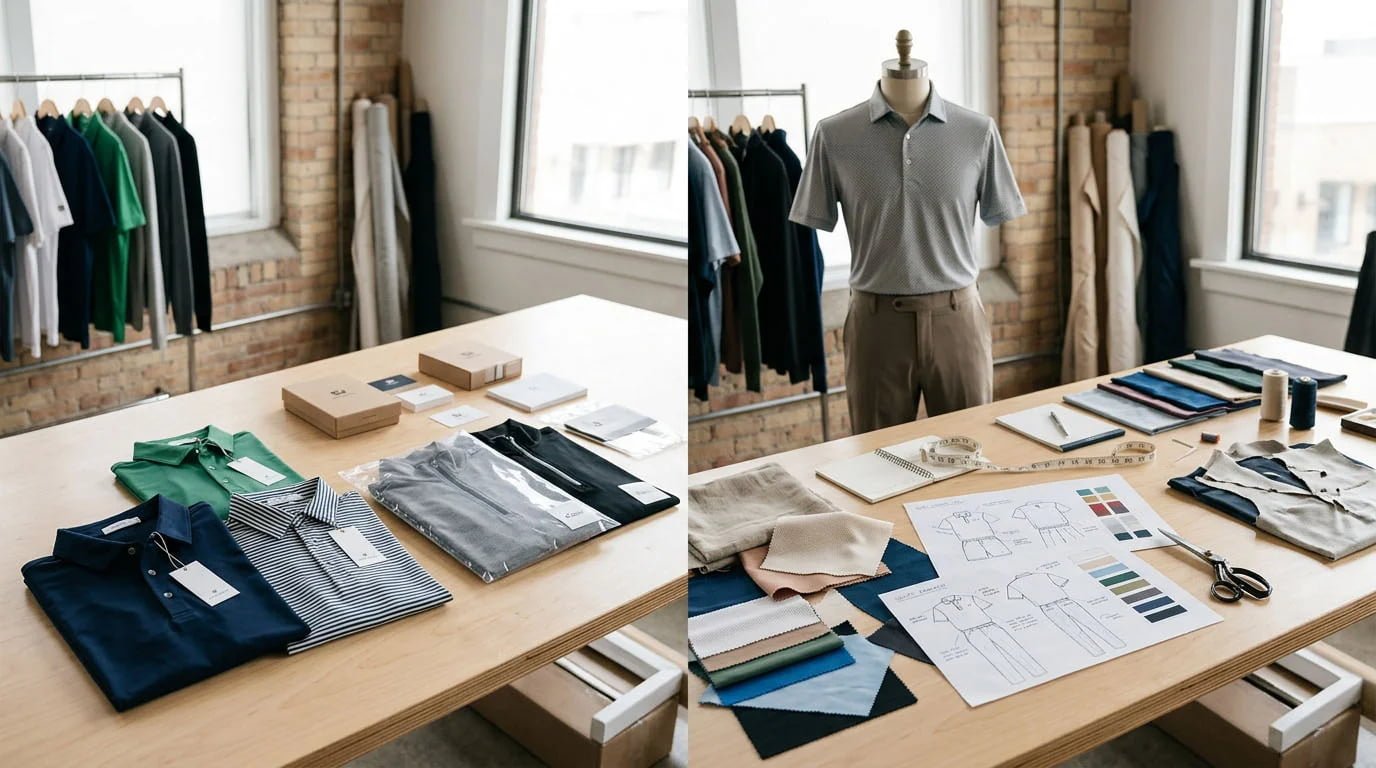
Private Label Golf Apparel
Private label means using existing product templates and adding your own brand elements, such as:
- neck labels
- hangtags
- packaging
- logo embroidery or printing
- selected color options
If you want a faster way to launch, private label golf apparel can be a practical starting option.
Best for:
- faster launch
- lower development complexity
- startups with limited budget
- testing product categories before deeper custom work
Custom Golf Apparel Manufacturing
Custom manufacturing lets you control more elements, including:
- fit
- fabric choice
- trims
- silhouette details
- branding details
- packaging design
- construction specifications
Best for:
- brands that want stronger differentiation
- founders with a clear product vision
- businesses planning long-term brand building
Private Label vs OEM Table
| Option | Best For | Pros | Cons |
|---|---|---|---|
| Private Label | Fast startup | Faster launch, lower complexity | Less unique product identity |
| OEM / Custom Manufacturing | Strong brand differentiation | More control, better long-term branding | Higher development time and cost |
| Domestic Production | Easier communication, shorter shipping | Faster logistics | Higher cost |
| Overseas Manufacturing | Better unit economics and scale | More options and lower cost in many cases | Longer lead times, more coordination |
For many first-time founders, a hybrid approach works well: start with private label or semi-custom basics, then move into more custom development once sales data improves.
Step 5: Find a Reliable Golf Apparel Manufacturer
Your supplier will influence product quality, lead time, consistency, and customer experience. This is one of the most important decisions in your business.
The best golf apparel manufacturer for a startup is not always the cheapest one. It is the one that matches your MOQ, communication needs, quality expectations, and stage of growth.
What to Look for in a Supplier
- MOQ that fits your startup stage
- sampling support
- experience with golf or performance apparel
- fabric sourcing capability
- custom labeling and packaging options
- clear lead times
- consistent communication
- quality control process
Questions to Ask a Golf Apparel Manufacturer
- What is your MOQ per style and color?
- Do you support startups or low-MOQ orders?
- How long does sampling take?
- Can you source moisture-wicking and stretch golf fabrics?
- Can you provide private label options?
- What customization options do you offer?
- What are your standard production lead times?
- How do you handle quality control?
- What file formats do you need for logos and labels?
- Can you share sample photos, fabric swatches, or size charts?
Supplier Type Comparison
| Supplier Type | Best For | Main Risk |
|---|---|---|
| Private label supplier | Quick launch | Less product uniqueness |
| OEM manufacturer | Custom branding and fit | Longer development process |
| Domestic supplier | Easier communication | Higher per-unit cost |
| Overseas manufacturer | Better cost and scale | More logistics coordination |
Always Test Samples First
Before placing a bulk order:
- wear the sample
- wash the sample
- compare it with known brands
- test fit movement
- review stitching and finishing
- check logo application quality
- confirm measurements against the size chart
A sample tells you much more than a price quote. If you want to discuss your project directly, you can also contact us.
Step 6: Build Your Startup Budget and Pricing Strategy
One of the biggest mistakes new founders make is focusing only on product cost instead of total startup cost and margin structure.
You should build your pricing from landed cost, not from guesswork or competitor pricing alone.
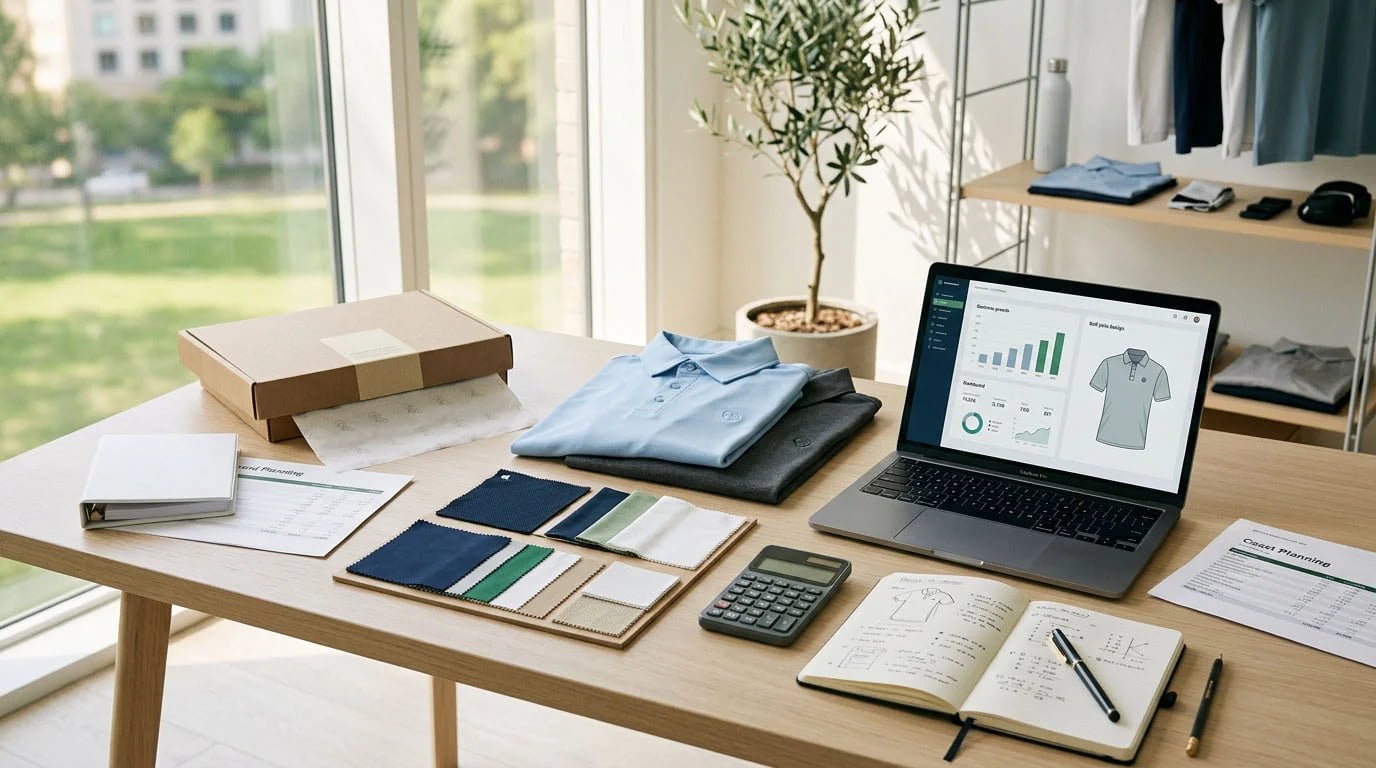
Typical Startup Cost Areas
| Cost Area | What It May Include |
|---|---|
| Sampling | Proto samples, fit samples, revisions |
| Production | Bulk order cost |
| Freight and duty | Shipping, import fees if applicable |
| Branding | Logo, labels, hangtags, packaging |
| Website | Shopify, design, apps, setup |
| Photography | Product and lifestyle shoots |
| Marketing | Ads, creator seeding, launch content |
Example Cost Structure Per Unit
| Cost Area | Example |
|---|---|
| Production cost | $14 |
| Freight and duty | $3 |
| Packaging | $1 |
| Landed cost | $18 |
If your landed cost is $18, a possible pricing structure might be:
- Wholesale: $36–$40
- Retail: $72–$85
This depends on your positioning, target customer, and channel strategy.
How to Think About Pricing
Ask:
- What margin do I need to grow?
- Will I sell direct-to-consumer, wholesale, or both?
- Can my branding justify my retail price?
- Does my fabric and fit quality support the price point?
A premium price without premium product execution will slow down sales quickly.
Step 7: Choose the Right Sales Channels
A new golf apparel brand does not need to be everywhere at once. In most cases, focus beats expansion.
The best sales channel strategy for a startup is usually one main channel and one support channel.
Common Sales Channels
- Shopify store
- Amazon
- TikTok
- Email marketing
- Pop-up events
- Golf clubs and pro shops
- Boutiques and specialty retailers
Good Channel Combinations for Startups
Option 1: DTC Brand Launch
- main channel: Shopify store
- support channel: Instagram + email
Option 2: Community-Driven Launch
- main channel: Shopify store
- support channel: creators + local golf events
Option 3: Product Validation Through B2B
- main channel: pro shops or golf clubs
- support channel: simple website for credibility
What Most Startups Should Avoid Early
- too many marketplaces at once
- expensive retail expansion before product-market fit
- heavy paid advertising before testing content and conversion basics
Step 8: Plan Inventory for a Small First Launch
Your first launch should be a learning launch, not a scale launch.
The goal of your first inventory order is to validate demand, not to maximize volume. Controlled inventory reduces risk and gives you data for smarter reorders.
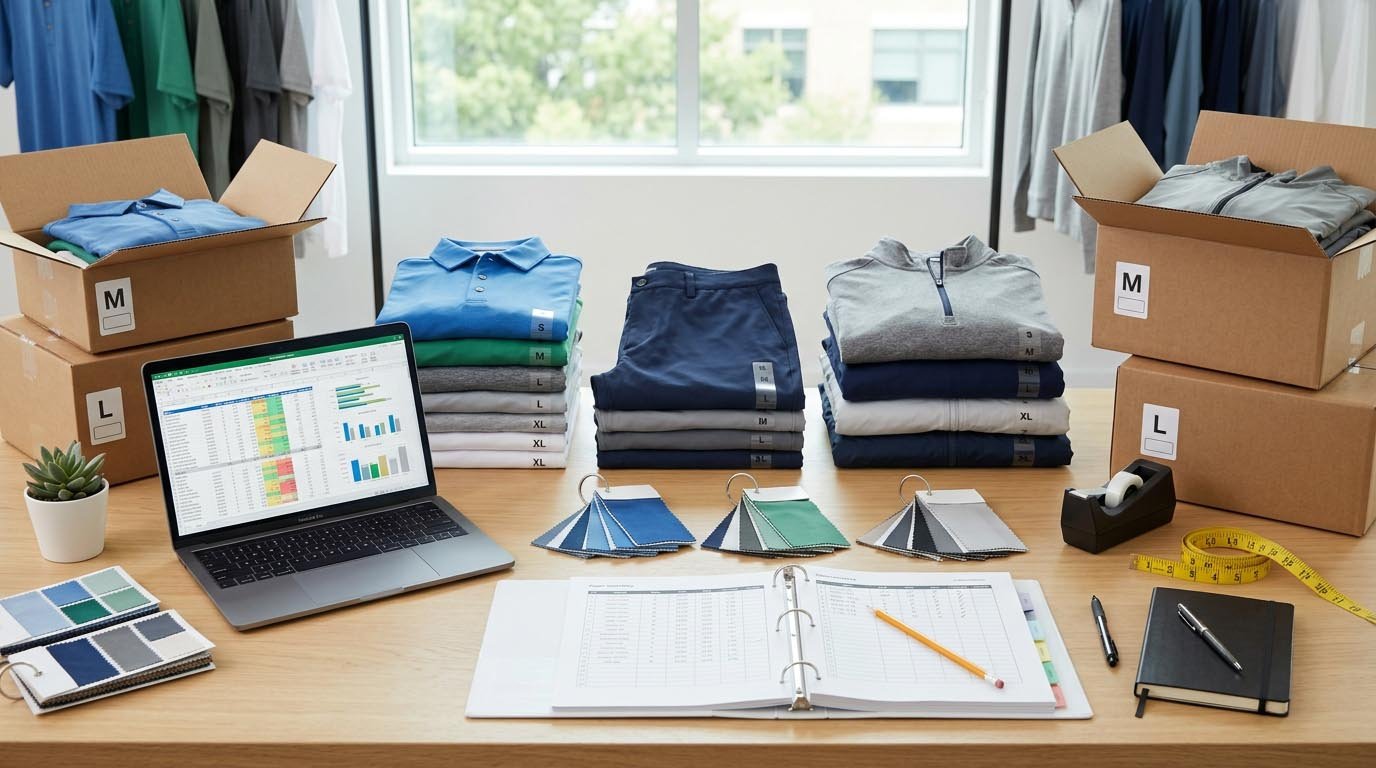
Good First Inventory Practices
- launch fewer styles
- reduce color count
- focus on core sizes
- order your strongest product concepts first
- avoid too many experimental fits
Example of a Small First Launch
- 3 to 5 styles
- limited colors
- core size range
- smaller test quantities by style
The right numbers depend on your supplier MOQ, budget, and expected demand, but many startups benefit from a measured first order instead of trying to look fully scaled on day one.
What to Consider Before Ordering
- total budget
- MOQ by color and size
- expected conversion rate
- product photography timeline
- delivery timing
- storage and fulfillment process
Step 9: Prepare Your Brand Identity and Launch Marketing
A new golf clothing brand needs more than products. It needs a clear identity and a launch plan people can understand.
Brand identity includes your logo, visual style, message, packaging, photography, tone of voice, and how you explain your product quality.
Brand Identity Basics
Make sure these feel consistent:
- logo
- color palette
- packaging
- website design
- product naming
- photography style
- product descriptions
- social media tone
Pre-Launch Marketing Ideas
- founder story posts
- behind-the-scenes design content
- fabric previews
- fit previews
- email signup for early access
- waitlist campaigns
- creator seeding
- limited release countdown
Simple Launch Timeline
| Stage | What to Do |
|---|---|
| 8–12 weeks before launch | Finalize products and confirm supplier |
| 6–8 weeks before launch | Build website and create product content |
| 3–4 weeks before launch | Start email capture and social teasers |
| 1 week before launch | Push early access and launch countdown |
| Launch week | Announce, retarget, gather feedback |
What to Measure After Launch
- which styles get the most clicks
- which sizes sell fastest
- which product pages convert best
- which social content drives traffic
- what questions customers ask most often
- which products deserve reorder attention
This data is what helps you build a stronger second collection.
Common Mistakes to Avoid When Starting a Golf Clothing Brand
Most early brand problems come from lack of focus, not lack of ambition.
The most common mistakes are launching too many SKUs, ordering too much inventory, choosing suppliers only by price, and building a brand without a clear customer.
Mistake 1: Trying to Sell to Everyone
A golf brand that targets everyone usually has weak branding and weak messaging.
Mistake 2: Launching Too Many Products
More SKUs create more complexity in development, inventory, sizing, and marketing.
Mistake 3: Choosing a Supplier Only by Low Price
Low prices do not help if quality, fit, communication, or delivery fail.
Mistake 4: Skipping Sample Testing
Never approve production from mockups alone.
Mistake 5: Weak Pricing Discipline
If you do not understand landed cost and margin, growth becomes difficult.
Mistake 6: Spending Too Much on Inventory Before Validation
A small, smart launch often performs better than a large, unfocused one.
Mistake 7: Waiting Too Long to Start Marketing
Interest should begin before stock arrives.
FAQ: How to Start a Golf Apparel Brand in the USA
How much does it cost to start a golf apparel brand?
The budget can vary widely based on product count, level of customization, order size, branding, and marketing. Costs usually include sampling, production, packaging, shipping, website setup, and launch promotion.
Can I start a golf clothing brand with low MOQ?
Yes. Many startups begin with low-MOQ private label or semi-custom manufacturing. This can reduce risk and make product testing easier.
Should I use private label or custom manufacturing?
Private label is usually better for speed and lower complexity. Custom manufacturing is better if you want stronger product differentiation and more control over fit, materials, and details.
What products should I launch first for a golf apparel brand?
Golf polos, quarter-zips, shorts, skirts, and lightweight outerwear are common starting categories because they are easier to market and easier for customers to understand.
How do I find a golf apparel manufacturer?
Look for a manufacturer with golf or performance apparel experience, suitable MOQ, sample support, customization capability, and clear communication. Always test samples before bulk production.
Is the golf apparel market in the USA competitive?
Yes, it is competitive, but there are still opportunities for brands with a clear niche, strong product-market fit, and a focused launch strategy.
What fabrics are best for golf apparel?
Many golf brands use polyester-spandex blends, performance knits, and stretch woven fabrics because they support moisture management, flexibility, and comfort on the course.
What is the biggest mistake when starting a golf brand?
A common mistake is trying to do too much too early: too many styles, too many colors, too much inventory, and not enough validation.
Conclusion
Starting a golf apparel brand in the USA is not only about design. It is about making smart early decisions on positioning, product line, fabric selection, supplier choice, pricing, and launch strategy.
The best way to start is to choose a specific customer, launch a focused collection, work with the right manufacturer, and test demand before scaling. A smaller, better-planned launch usually gives new golf brands a better chance of long-term success than trying to look big too soon.
If you are planning to build a golf clothing brand, launch private label golf apparel, or source from a custom golf apparel manufacturer, your first priority should be clarity. Know who you are serving, what you are selling, and what kind of business model you want to build.
Need Help Developing Your First Golf Apparel Collection?
Before contacting a supplier, prepare these details:
- target customer
- product list
- expected quantity
- target price range
- fabric requirements
- logo and branding files
- launch timeline
- private label or custom development preference
This will help you get faster, more useful feedback from a golf apparel manufacturer and reduce delays in sampling and production.
If you need support with custom golf shirts, fabric sourcing, private label development, or production planning, feel free to contact us.