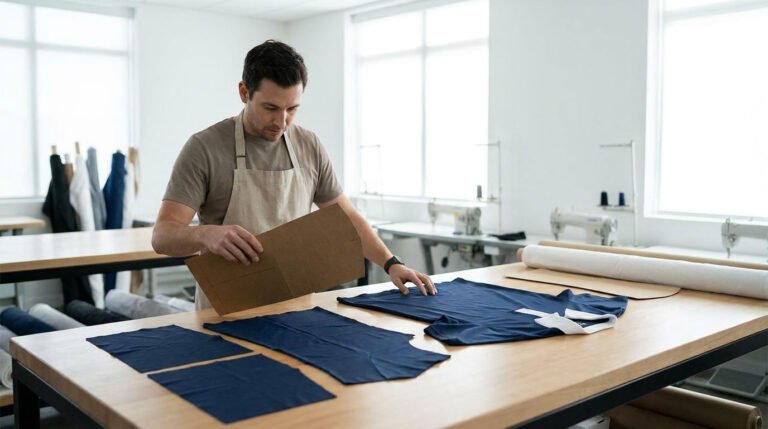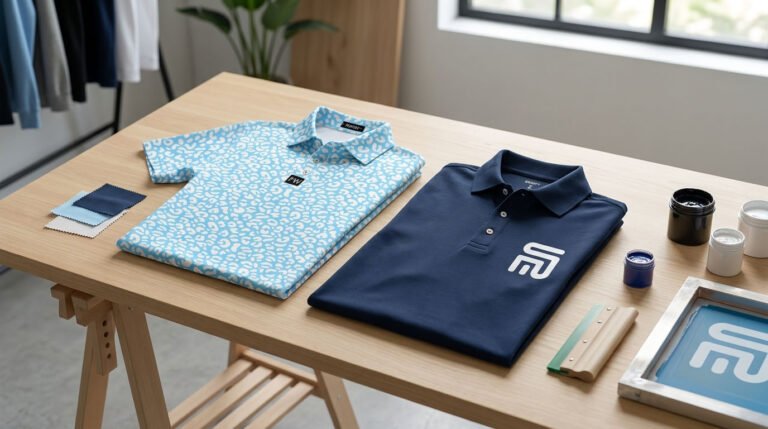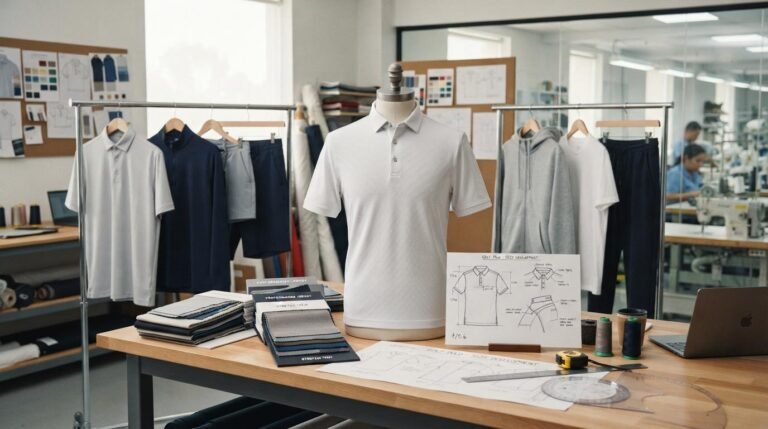
The golf apparel market is competitive, and adding a logo to a standard polo is rarely enough to create a memorable brand. Golfers have plenty of choices, from established performance labels to emerging lifestyle brands.
To stand out, private label golf apparel brands need to solve a specific golfer's problem through the right combination of fabric performance, fit, signature design, and consistent product quality.
The goal is not to customize everything. It is to choose the features customers will notice, develop them within a realistic manufacturing budget, and verify they perform as promised.

This guide explains how to build meaningful product differentiation without unnecessary development costs or manufacturing complexity.
Quick Answer: What Makes Private Label Golf Apparel Stand Out?
A successful private label golf apparel brand usually differentiates itself through one or two clear advantages rather than trying to outperform competitors in every category.
Those advantages might include exceptional hot-weather comfort, a recognizable collar design, a more consistent women's fit, or verified fabric durability.
| Differentiation Strategy | Customer Benefit | Manufacturing Priority |
|---|---|---|
| Performance fabrics | Better comfort during golf | Fabric selection and testing |
| Signature fit | Improved comfort and appearance | Pattern development and fit approval |
| Unique design details | Stronger brand recognition | Collar, placket, trim, and construction |
| Durable branding | Consistent premium appearance | Logo method and wash validation |
| Reliable quality | Confidence in repeat purchases | Approved samples and production consistency |
The most practical starting point is one core product with a clear benefit, supported by a small number of distinctive details.
For brands still deciding how private label manufacturing works, see our Private Label Golf Apparel Guide.
Step 1. Define a Clear Performance Positioning
Before selecting fabrics or customization options, identify the golfer your product is designed for.
A polo developed for competitive golf in hot, humid conditions has different requirements from one intended for premium golf-club lifestyle wear.
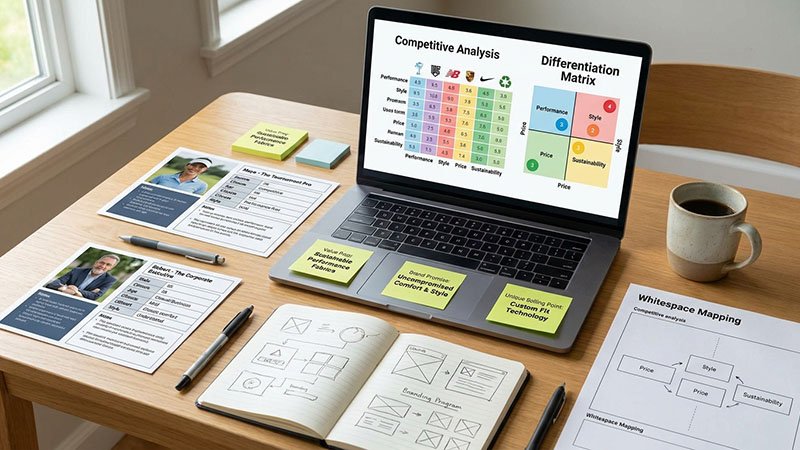
Identify the Customer's Main Problem
Start with the conditions in which customers will wear your products.
| Target Customer | Primary Requirement | Recommended Differentiation |
|---|---|---|
| Hot-weather golfers | Moisture management and comfort | Lightweight, breathable fabrics |
| Premium lifestyle golfers | Refined appearance and soft hand feel | Structured collars and elevated fabric texture |
| Women's golf apparel customers | Fit, mobility, and comfortable coverage | Dedicated patterns and fit testing |
| Tournament and club buyers | Consistent appearance and durability | Reliable colors, branding, and replenishment |
These are starting points, not fixed rules. Validate them against your customers' actual preferences.
For example, a brand targeting golfers in Florida might prioritize moisture management and fast drying rather than decorative design complexity.
A premium lifestyle brand may benefit more from a well-structured collar, consistent fit, and refined fabric surface than from additional technical finishes.
Identify Your Competitive Advantage
Review competing products in your intended retail price range.
Compare their fit, fabric composition, styling, performance claims, customer complaints, and product positioning.
Look for problems that competitors have not addressed effectively, such as:
- Polo collars that lose their shape after washing.
- Performance shirts that feel uncomfortable in humid conditions.
- Limited fit choices for specific body types.
- Premium-looking products with poor logo durability.
Choose one primary benefit and one supporting feature.
A focused product promise is easier to develop, test, and communicate than a long list of generic performance claims.
Step 2. Prioritize Performance Features That Matter
Terms such as moisture-wicking, four-way stretch, and breathable appear across the golf apparel market.
These features can improve comfort, but they only create meaningful differentiation when they match the intended use and perform consistently.
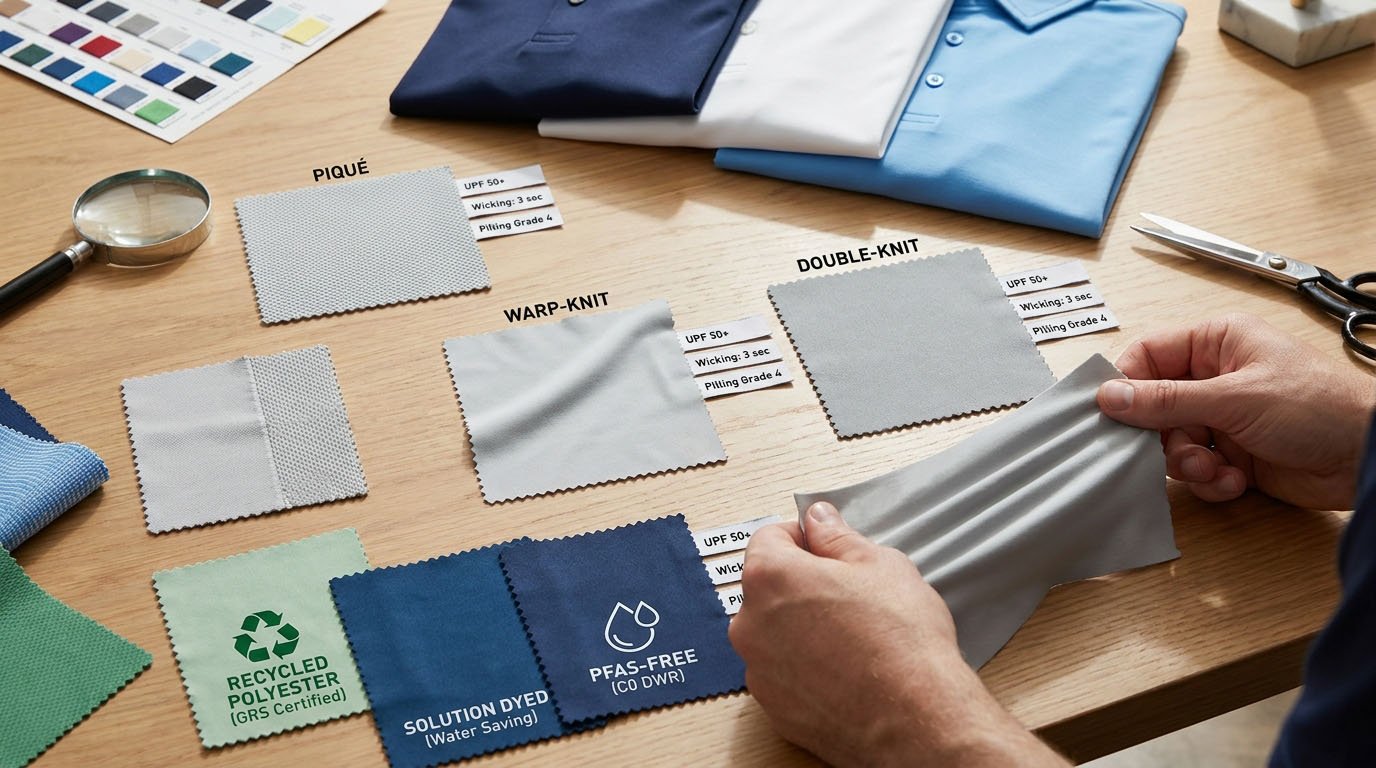
Match Fabric Construction to the Product
Different fabric constructions deliver different characteristics.
Piqué knits offer a recognizable textured appearance and are frequently used for traditional golf polos.
Jersey knits provide a smoother surface and can work well for lightweight, modern performance styles.
Interlock and other double-knit constructions can provide a smoother or more structured appearance, depending on yarns, weight, and finishing.
Fiber composition also matters. Polyester blends, nylon blends, cotton blends, and elastane-containing fabrics offer different combinations of drying behavior, comfort, stretch, and durability.
However, fabric composition alone cannot guarantee performance.
A heavier polyester polo is not automatically more durable, and a lighter fabric is not necessarily more breathable.
For a detailed material comparison, refer to our Best Fabrics for Golf Apparel Guide.
Choose Performance Requirements by Use Case
Instead of adding every available function, establish a small set of relevant requirements.
| Performance Feature | When It Matters | How to Validate |
|---|---|---|
| Moisture management | Hot-weather and active golf | Appropriate moisture-management or wicking tests |
| Stretch and recovery | Athletic fits and movement-intensive designs | Fabric-specific stretch and recovery testing |
| Air permeability | Warm or humid playing conditions | Airflow testing and wear assessment |
| Pilling and snag resistance | Frequent use and repeated washing | Suitable durability tests |
| Dimensional stability | Consistent sizing after washing | Controlled wash and measurement tests |
| UV protection | Products marketed with a sun-protection claim | Applicable UPF testing |
The test method and acceptance criteria should be agreed upon before testing.
For example, AATCC TM195 evaluates liquid moisture management, while AATCC TM197 evaluates vertical wicking to specified distances. These are different measurements and should not be treated as interchangeable.
Similarly, stretch and recovery testing should match the fabric construction rather than applying one universal percentage to every garment.
Consider Durability and Responsible Materials
A premium garment must maintain its appearance after repeated wear and care.
Focus on properties that affect customer satisfaction:
- Collar shape retention.
- Fabric pilling and snag resistance.
- Colorfastness to washing and perspiration.
- Shrinkage and dimensional stability.
- Stretch recovery where relevant.
If sustainability is part of your positioning, consider traceable recycled materials or suitable lower-impact production processes.
Recycled-content and chemical-related claims require appropriate evidence. A supplier's general certificate does not necessarily verify every fabric or finished product.
The strongest performance claim is one supported by relevant testing on the actual material or product configuration.
Step 3. Build a Recognizable Fit and Signature Design
Fabric performance helps golfers feel comfortable. Fit and design determine how the garment looks, moves, and becomes recognizable.
For a private label brand, a consistent fit system and a few repeatable signature details are often more valuable than developing a completely new garment structure for every collection.
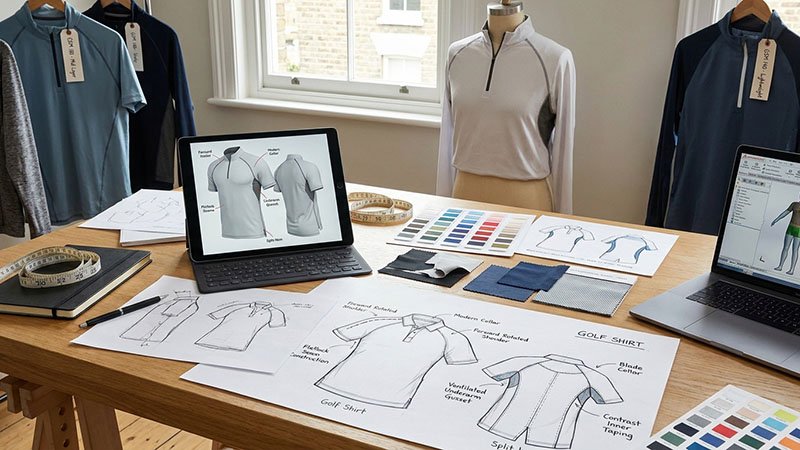
Develop Two or Three Signature Details
Consider features that customers can recognize without relying entirely on a large logo.
Examples include:
- A distinctive blade collar or structured collar shape.
- Contrast tape inside the placket or neckline.
- A subtle jacquard or micro-texture pattern.
- A recognizable sleeve or hem detail.
- Carefully positioned ventilation panels.
Choose details that support your brand identity and can be reproduced consistently.
A custom jacquard collar may provide stronger visual differentiation, but it can also introduce additional material requirements and manufacturing costs.
A simpler contrast detail may achieve a similar visual objective with less development complexity.
Design the Fit Around Golf Movement
A golf shirt should remain comfortable during shoulder rotation, bending, walking, and the full golf swing.
Important fit considerations include shoulder mobility, armhole shape, sleeve comfort, body length, and hem stability.
Depending on the design, a modified shoulder seam, suitable armhole allowance, or split hem may improve comfort. These features should be evaluated through physical fitting rather than assumed to work for every silhouette.
Develop consistent fit blocks such as:
- Athletic Fit: A closer silhouette with appropriate movement allowance.
- Classic Fit: A more relaxed shape with comfortable proportions.
Women's styles may require separate pattern development rather than simply scaling down a men's garment.
Validate the Design Before Final Approval
Ask fit-test participants to perform common golf movements, including a full swing, reaching overhead, and bending to retrieve a ball.
Review whether the collar sits correctly, the hem stays comfortable, the fabric pulls across the back, and the garment returns to its intended shape.
A signature design only becomes valuable when it looks and performs consistently across the approved size range.
Step 4. Choose Branding That Supports the Product
Branding should complement the garment rather than interfere with its performance.
A logo may look excellent on a sample but become distorted, uncomfortable, or less durable after washing if the application method is unsuitable for the fabric.
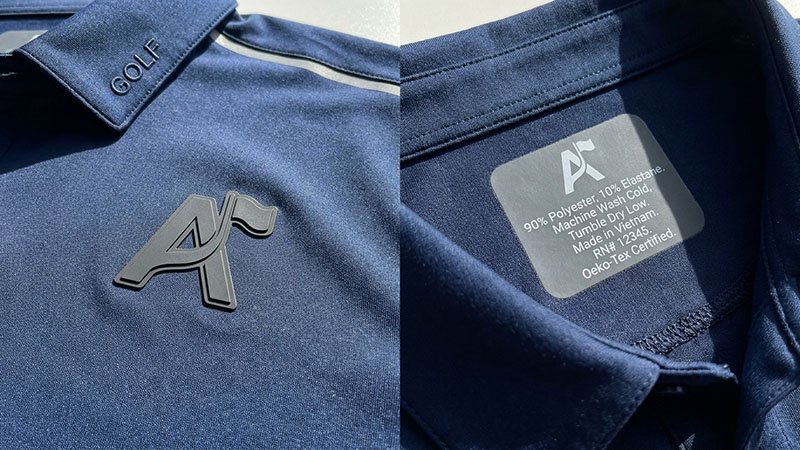
Select the Right Decoration Method
| Branding Method | Suitable Applications | Main Consideration |
|---|---|---|
| Embroidery | Classic chest logos and stable fabrics | Puckering, backing, and stitch density |
| Heat transfer | Fine details and lightweight logos | Adhesion, wash durability, and dye migration |
| Screen printing | Selected graphic applications | Fabric compatibility and print durability |
| Sublimation | Compatible polyester-based designs | Material suitability and artwork coverage |
For polyester fabrics, test heat-transfer applications for dye migration where relevant. Transfer materials, application conditions, and fabric dye behavior all affect the result.
Embroidery requires similar attention. Excessive stitch density can distort lightweight or stretch fabrics.
For a more detailed comparison, see our Best Logo Methods for Golf Apparel.
Control Placement, Comfort, and Labels
Avoid large, stiff decorations in areas that require flexibility or are exposed to repeated friction.
Check embroidery backing, transfer edges, and the comfort of any decoration that contacts the skin.
Private label garments also need appropriate fiber-content, care, and country-of-origin labeling for their destination markets. Requirements vary by country; in the United States, relevant rules include 16 CFR Part 303 and the FTC Care Labeling Rule under 16 CFR Part 423.
Strong branding is recognizable, comfortable, durable, and consistent with the product's positioning.
Step 5. Balance Differentiation with MOQ and Development Cost
One of the biggest mistakes emerging golf brands make is investing in customization that their first order cannot economically support.
Distinctive products do not always require exclusive fabric development or completely new patterns.
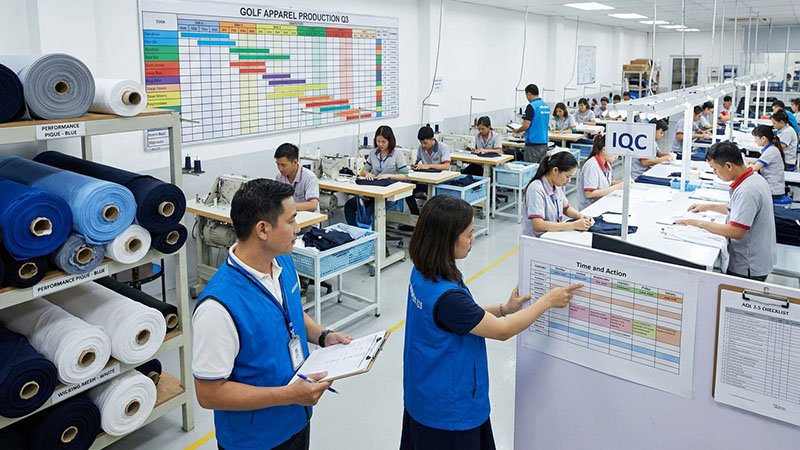
Choose the Right Customization Level
| Development Level | Typical Customization | Best Fit | Main Trade-Off |
|---|---|---|---|
| Level 1 — Brand Identity | Stock fabric, existing colors, logo, labels | First collections and market testing | Limited product exclusivity |
| Level 2 — Signature Product | Fit adjustments, special collar, placket or trim details | Brands developing a recognizable core style | More samples and approvals |
| Level 3 — Proprietary Performance | Custom fabric, exclusive colors, specialized construction | Established brands with validated demand | Higher material minimums and development investment |
These levels are planning categories, not fixed factory packages.
At FUWAY, a common starting MOQ is approximately 100 pieces per style, with flexibility depending on the product and customization requirements.
However, stock fabrics, custom colors, special trims, and exclusive fabric development may have different minimum quantities.
A low garment MOQ does not automatically mean that every custom material is available at that volume.
Invest in Features Customers Will Notice
Consider two hypothetical development approaches.
Option A: Fully customized performance polo
The brand requests exclusive fabric development, a custom collar, multiple new trims, and specialized finishing.
This may produce a distinctive garment, but development costs, material minimums, and testing requirements can increase before demand has been confirmed.
Option B: Focused signature polo
The brand uses an existing performance fabric, adjusts the fit, adds a distinctive collar detail, and applies a durable logo.
This approach may provide a recognizable product with fewer development dependencies.
Neither approach is universally better.
The choice depends on expected sales, target retail positioning, available budget, and how strongly each customization supports the customer's needs.
Protect Consistency Across Repeat Orders
A signature product should be reproducible.
Before approving a fabric or trim, confirm whether the manufacturer can source the same specification again.
Maintain records of approved materials, colors, patterns, measurements, decoration artwork, and relevant processing requirements.
If a unique fabric or design must remain exclusive, clarify ownership, permitted use, confidentiality, and any exclusivity terms in an appropriate written agreement.
For detailed MOQ and customization choices, read our Private Label Golf Apparel Customization Guide.
Step 6. Validate Your Product Before Bulk Production
Differentiation is only meaningful if the final garments match the approved design and performance requirements.
A brand might approve an attractive sample but later encounter inconsistent fit, collar distortion, color differences, or logo issues in bulk production.
These risks should be addressed before production rather than left until customers report problems.
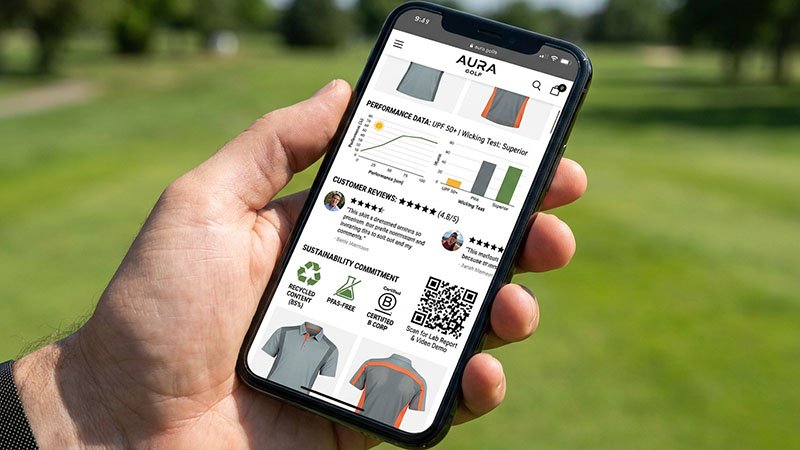
Use Four Product Approval Gates
| Approval Gate | What to Check | Required Evidence |
|---|---|---|
| Gate 1 — Fabric Approval | Composition, weight, hand feel, color, relevant performance | Approved swatch and applicable test records |
| Gate 2 — Fit & Design Approval | Measurements, golf movement, collar, construction | Approved fit sample and size specifications |
| Gate 3 — Branding Approval | Placement, appearance, adhesion or embroidery quality | Approved artwork and decoration sample |
| Gate 4 — Bulk Consistency | Material, workmanship, sizing, branding, packaging | Approved production reference and inspection results |
Each gate should have a clear acceptance decision before the next stage proceeds.
For instance, if the product is marketed as providing UV protection, obtain supporting testing using an applicable method such as AATCC TM183 and ensure the claimed rating matches the evidence.
If the main selling point is a durable, structured collar, prioritize collar appearance and shape retention after agreed washing conditions.
Check the Evidence Behind Performance Claims
Ask your manufacturer to identify:
- The fabric or garment tested.
- The applicable testing method.
- The test conditions and date.
- The reported result.
- The agreed acceptance criteria.
- Whether the tested material matches the intended production specification.
FUWAY provides examples of available Golf Apparel Test Reports. For a specific order, buyers should confirm which reports apply to their actual materials and requested claims.
Third-party laboratory evidence can support performance claims, while physical wear testing helps assess comfort and fit. Both can be useful, but they answer different questions.
Prepare a Focused Product Brief
Before requesting a quotation, define the features that genuinely distinguish your product.
For example, a hot-weather performance polo brief could include:
| Requirement | Example Specification |
|---|---|
| Target user | Golfers in hot and humid climates |
| Core product | Short-sleeve performance polo |
| Fabric objective | Lightweight feel and effective moisture management |
| Signature feature | Distinctive collar with stable shape |
| Fit direction | Athletic fit with comfortable shoulder movement |
| Branding | Small chest logo with appropriate durability |
| Validation | Moisture management, fit, washing, and logo checks |
| Order quantity | Initial quantity for manufacturer assessment |
This gives the factory a clearer starting point than requesting a generic "premium golf polo."
For quotation preparation, use our Golf Apparel RFQ Template, which covers specifications, quantity, branding, and commercial requirements.
Final Product Differentiation Checklist
Before approving bulk production, confirm that:
- [ ] The product solves a clearly defined golfer's need.
- [ ] One or two meaningful differentiating features have been selected.
- [ ] The approved fabric supports the intended positioning.
- [ ] Fit and movement have been checked on physical samples.
- [ ] Signature design details can be reproduced consistently.
- [ ] Logo appearance and durability have been reviewed.
- [ ] Relevant performance claims have supporting evidence.
- [ ] MOQ, customization costs, and production specifications are confirmed.
- [ ] Bulk production has a clearly approved reference sample.
Completing these checks helps reduce the gap between an attractive product concept and a reliable finished garment.
Frequently Asked Questions
Can a Small Private Label Golf Brand Compete with Established Brands?
Yes, but smaller brands usually benefit from a focused niche rather than trying to compete across every product category.
A startup might develop a particularly comfortable hot-weather polo, a refined classic-fit shirt, or a distinctive women's golf collection.
The objective is to solve a specific customer problem better, not to claim superiority across every performance feature.
Can I Create Unique Golf Apparel with an MOQ of Around 100 Pieces?
In many cases, yes.
Using existing fabrics with customized branding, selected colors, and limited design modifications can make smaller orders more practical.
However, custom-dyed fabrics, proprietary knits, and specialized trims may require higher minimums. The factory should evaluate these requirements separately.
How Can My Brand Prove Its Golf Shirts Are High-Performance?
Match each performance claim to suitable evidence.
For moisture management, use appropriate fabric testing. For fit and comfort, assess physical samples through relevant movement and wear checks. For durability, review wash, colorfastness, pilling, or stretch-recovery results as applicable.
Avoid claiming that a garment performs better than competitors unless comparative evidence supports that conclusion.
How Can I Protect My Signature Golf Apparel Design?
Document your original artwork, patterns, fabric specifications, and approved product details.
Where appropriate, use confidentiality agreements and clearly define ownership or exclusive-use rights for custom-developed materials and designs.
An NDA alone does not automatically provide exclusive ownership of every fabric, pattern, or manufacturing technique. Contract terms should reflect the actual development arrangement.
Conclusion: Make Performance a Recognizable Part of Your Brand
Standing out in private label golf apparel requires more than adding features to a standard garment.
The strongest products connect a specific golfer's needs with deliberate choices in fabric, fit, design, and quality.
Start with a focused product promise. Invest in features customers can recognize or experience. Then validate those features through samples, testing, and consistent production standards.
At FUWAY, we help golf apparel brands turn product ideas into manufacturable designs through fabric sourcing, customization, sampling, and production support.
Ready to develop a distinctive private label golf apparel collection?
Contact FUWAY to discuss your product concept, target quantity, signature features, and manufacturing requirements.