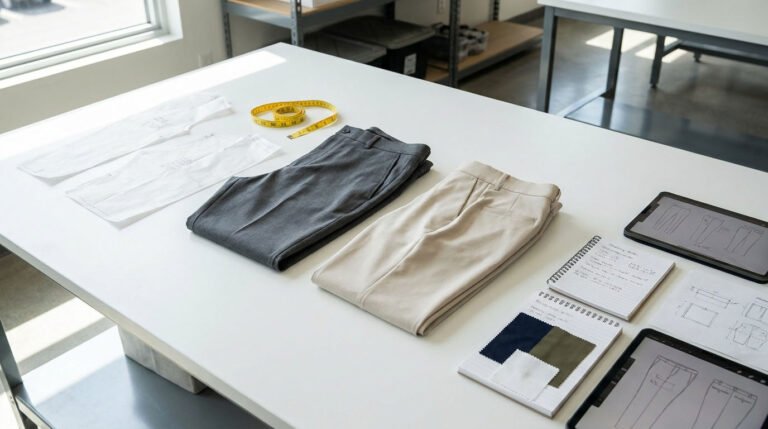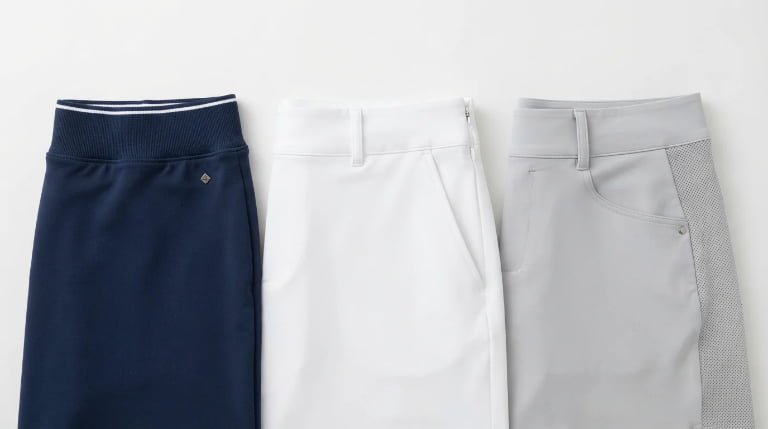
Golf shorts may look simple, but poorly designed pockets can create problems that only become obvious during play. A phone pulls one side down, a front pocket gaps when sitting, or a scorecard becomes difficult to retrieve.
Effective golf shorts pocket design starts with what golfers need to carry. Pocket type, placement, opening dimensions, bag construction, and closures should work together to provide easy access, secure storage, and a clean silhouette.
For golf apparel brands, these decisions should be tested on physical samples before bulk production.
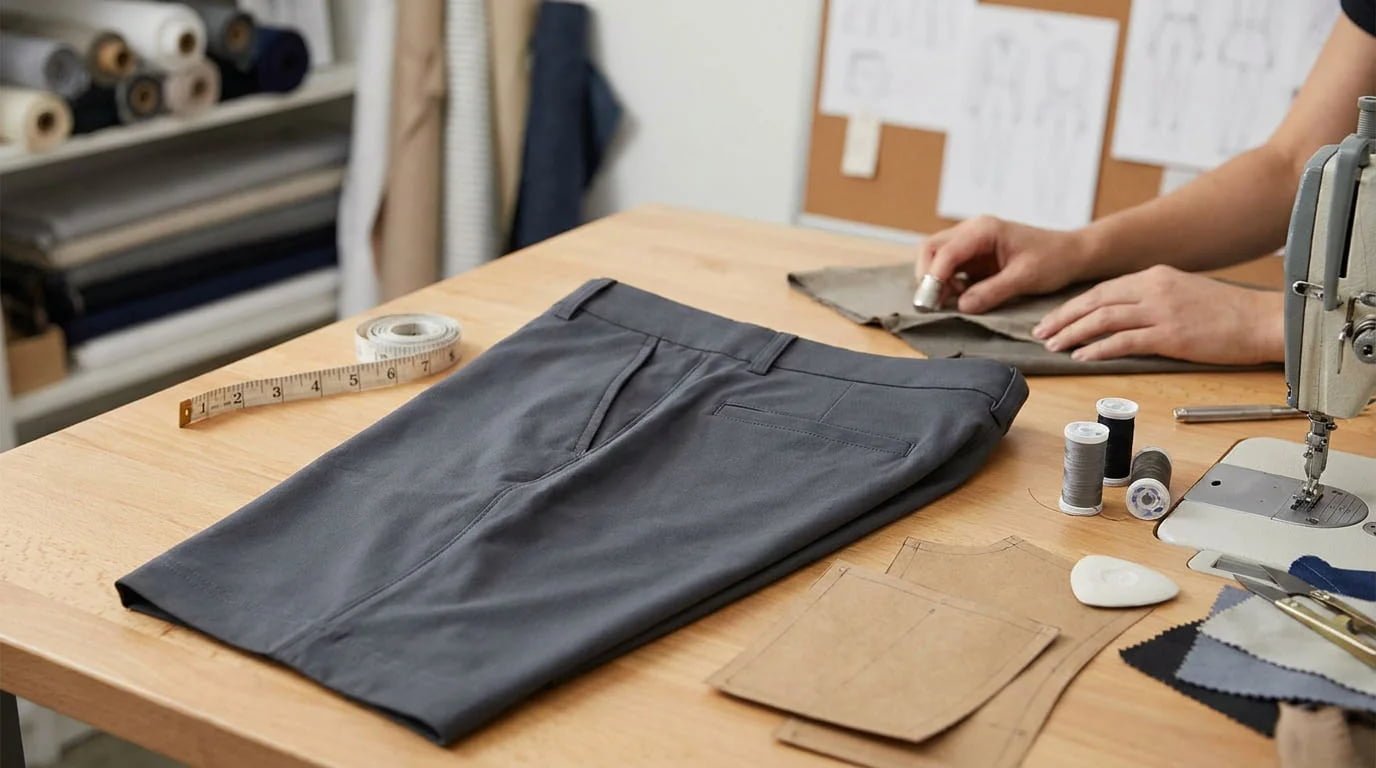
This guide focuses specifically on pocket engineering. For broader decisions involving fabric, overall fit, waistband construction, and inseam length, see our guide to designing golf shorts and pants.
What Are the Main Types of Golf Shorts Pockets?
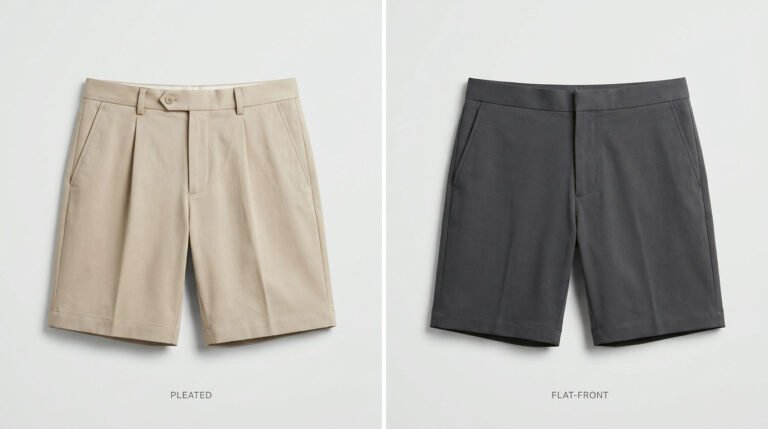
Most golf shorts use a combination of front hand pockets and rear pockets. Additional compartments should serve a specific purpose rather than simply increase the pocket count.
Golf Shorts Pocket Types Compared
| Pocket Type | Best Use | Main Advantage | Design Consideration |
|---|---|---|---|
| Front slash pocket | Hands, tees, small accessories | Easy access and clean appearance | Opening may gape if placement or fit is incorrect |
| On-seam pocket | Everyday storage | Discreet appearance | Access and capacity depend on seam position |
| Rear welt pocket | Scorecard, glove, wallet | Classic tailored look | Requires accurate welt construction |
| Five-pocket style | Casual golf and lifestyle shorts | Familiar jeans-inspired styling | Small coin pocket may have limited practical use |
| Hidden zipper pocket | Keys, phone, valuables | Improved item retention | Adds bulk and construction complexity |
| Dedicated phone pocket | Smartphone storage | Helps control device position | Must accommodate actual phone dimensions and movement |
Slash Pockets vs Five-Pocket Construction
Traditional tailored golf shorts commonly use angled front slash pockets and rear welt pockets. This combination offers convenient access without adding unnecessary visual details.
Five-pocket construction usually features jeans-style front scoop pockets, a small additional coin pocket, and two rear patch pockets. It creates a more casual silhouette but does not automatically provide better storage.
For a classic golf collection, slash pockets with carefully constructed rear pockets are a practical starting point.
For lifestyle-oriented golf shorts, five-pocket construction may better match the intended appearance.
When Should Golf Shorts Have Zipper Pockets?
Zippers are useful when the wearer needs additional item security, particularly for keys or other valuables.
However, a zipper is not necessary for every pocket.
A concealed zipper may also require additional facing, zipper tape, seam allowances, and reinforcement. These components must be evaluated for comfort and bulk.
Design recommendation: Add a secure compartment only when the intended carry items justify it.
How Should Golf Shorts Pockets Be Positioned and Sized?
Pocket placement affects accessibility, appearance, and how the garment behaves when loaded.
The correct dimensions depend on the short's size, inseam, rise, silhouette, fabric, and intended contents. There is no single pocket depth or opening angle suitable for every golf shorts design.
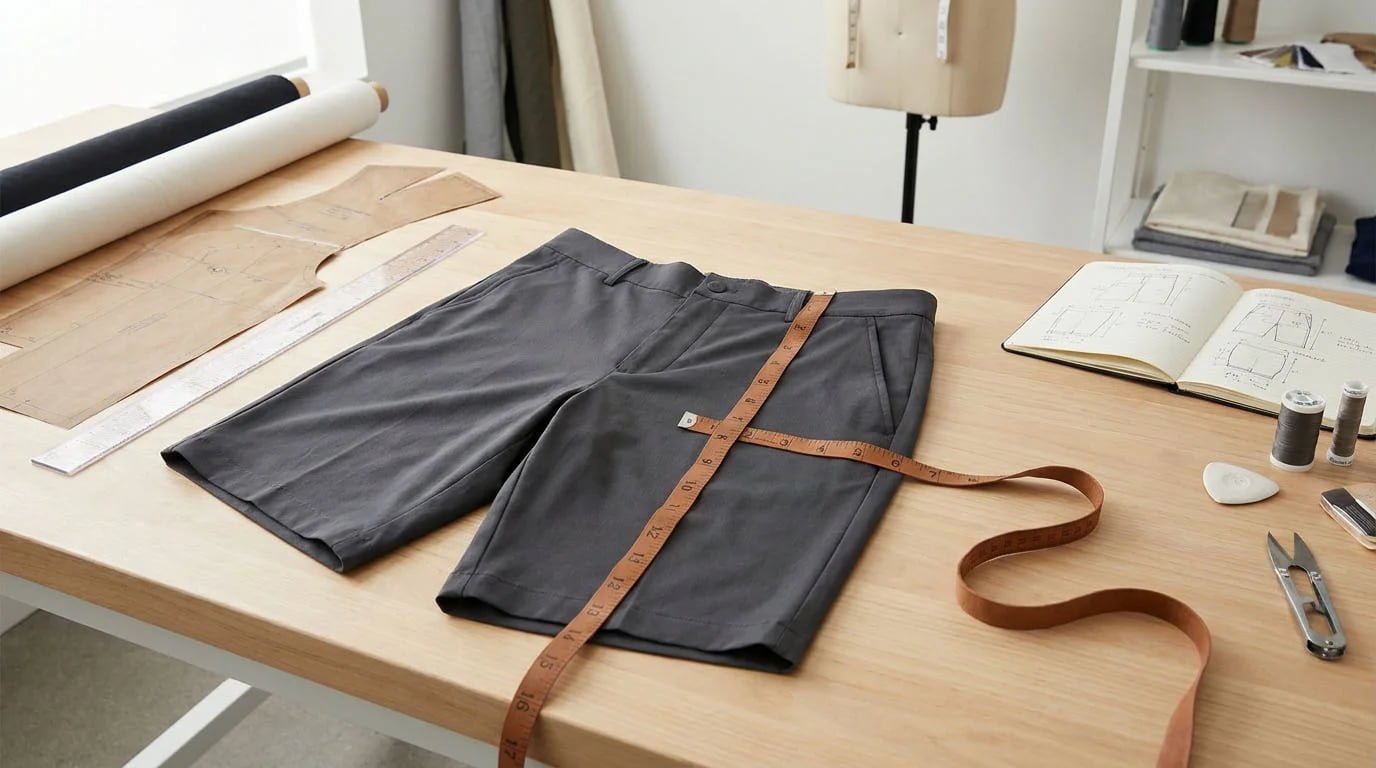
Front Pocket Opening and Depth
A front pocket should allow natural hand entry without creating excessive tension or gaping across the hip.
Three dimensions are especially important:
- Opening length: The finished usable distance along the pocket opening.
- Pocket bag depth: The usable internal depth measured from a clearly defined opening reference to the bottom of the pocket bag.
- Opening position: The location of the pocket opening relative to specified waistband, side-seam, or other pattern reference points.
For angled openings, the angle can also be recorded relative to the garment's defined vertical reference line.
The factory and buyer must use the same measurement method. Otherwise, an apparently identical pocket-depth specification can produce different results.
How Does Inseam Length Affect Pocket Design?
A pocket that works on longer golf shorts may be unsuitable for a shorter inseam.
When the inseam becomes shorter, the available space between the hip, pocket opening, and leg hem changes.
A long pocket bag may extend too far down the thigh or become visible through lightweight fabric.
Instead of transferring the same pocket pattern between styles, review:
- Available internal space below the pocket opening.
- Pocket bag clearance from the hem.
- Position of the loaded pocket during walking and sitting.
- Visibility of the pocket bag through the outer fabric.
Should Pocket Dimensions Change Across Sizes?
Yes, when necessary.
Pocket placement and dimensions should be reviewed as part of size grading, but not every measurement needs to increase proportionally with waist size.
For example, a phone pocket may require a consistent usable internal size across several garment sizes, while its position relative to the side seam may need adjustment.
Check smaller and larger sizes rather than approving pocket construction from the base-size sample alone.
How Do You Design Pockets for Phones, Tees, and Scorecards?
Different golf accessories create different demands.
Designers should consider each item's dimensions, weight, shape, and frequency of use before deciding where to position it.
Phone Pocket Design
Smartphones are often among the heaviest items carried in golf shorts.
A poorly positioned phone can move excessively during walking or create visible distortion around the hip.
A functional phone pocket should provide:
- Sufficient internal space for the target phone, including its case.
- Convenient access without excessive opening tension.
- Controlled device movement during walking and bending.
- A location that does not create uncomfortable pressure when sitting.
A separate internal compartment or secured pocket may help reduce movement, but it should be tested rather than assumed to work.
Tee and Ball Marker Storage
Golf tees, ball markers, and divot repair tools are small but may have hard or pointed edges.
These items can accelerate localized pocket-bag wear.
For pockets intended to carry such accessories, evaluate lining abrasion resistance, bottom-seam strength, and easy retrieval.
A dedicated small compartment can improve organization, but may be unnecessary when the standard front pocket already performs well.
Rear Scorecard and Glove Pockets
Rear pockets should accommodate the specific items the target golfer carries.
A scorecard holder and a folded glove have different size and access requirements.
Avoid specifying rear-pocket width from a generic template without checking the actual accessory dimensions.
Also consider sitting comfort. A heavily loaded rear pocket may create pressure against the body when the golfer sits in a cart.
Practical approach: Build the pocket dimensions around a representative set of real accessories rather than an assumed universal size.
Which Pocket Bag Fabrics and Reinforcements Work Best?
Pocket bags must balance low bulk, durability, and compatibility with the outer fabric.
A pocket lining that is too heavy can create visible outlines. One that is too delicate may wear prematurely when carrying tees or other hard accessories.
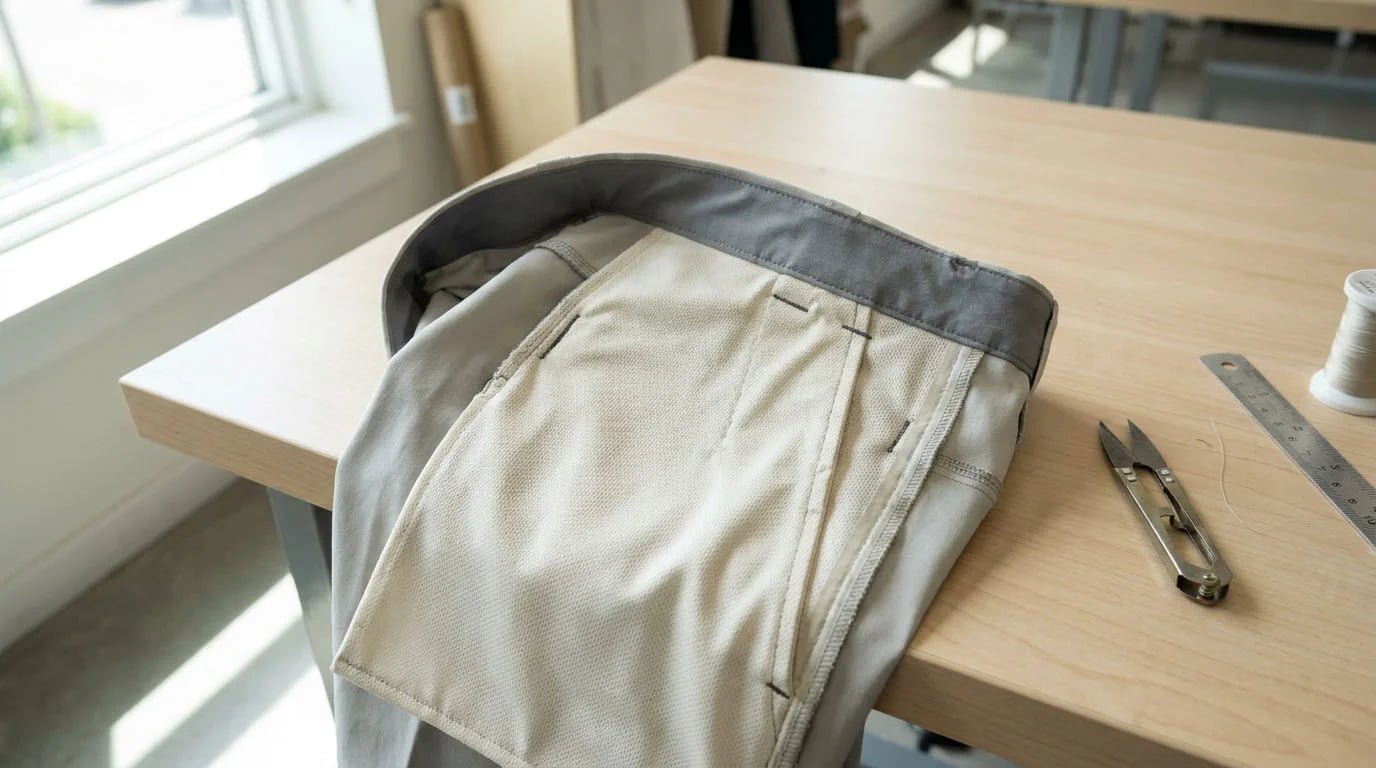
Pocket Bag Material Comparison
| Material | Potential Benefit | Main Limitation |
|---|---|---|
| Lightweight woven polyester | Smooth surface, relatively low bulk | May restrict movement if insufficiently sized |
| Polyester mesh | Breathability and low weight | Open structures may snag or abrade under pointed items |
| Stretch woven lining | Movement compatibility | Recovery and dimensional stability require evaluation |
| Self-fabric pocket bag | Consistent appearance and material behavior | May create additional thickness or show-through |
Choose material based on actual performance, not GSM alone.
For lightweight or pale-colored golf shorts, check whether the pocket bag becomes visible when the garment is worn.
Pocket Bag Anchoring and Reinforcement
The pocket bag can be integrated into the waistband seam, secured to adjacent construction, or supported through an appropriate pocket-stay design.
The suitable method depends on the pattern and construction.
Reinforcement may also be needed at pocket-opening stress points.
Common construction problems include:
- Pocket bags that twist or fold inside the garment.
- Opening corners that stretch or become distorted.
- Excessive seam bulk showing through the outer fabric.
- Pocket linings that restrict shell-fabric movement.
- Abrasion or seam damage from sharp accessories.
Bar tacks can reinforce appropriate localized stress points, but they should not be treated as a substitute for correct pocket pattern design and bag support.
How Should Brands Test Golf Shorts Pockets Before Production?
A pocket can look correct on a flat sketch and still fail during actual use.
The most useful evaluation combines dimensional inspection with a loaded wear test using representative accessories.
Golf Shorts Loaded Pocket Test
| Test | Procedure | What to Evaluate |
|---|---|---|
| Standing | Load designated items into pockets | Sagging, distortion, opening gaping |
| Walking | Walk at a normal pace with pockets loaded | Excessive bouncing, movement, discomfort |
| Golf swing | Perform normal practice swings | Item stability and movement restriction |
| Sitting | Sit in a golf cart or chair | Pressure, accessibility, pocket opening |
| Bending | Bend to retrieve a ball or place a tee | Item retention, fabric tension |
| Repeated access | Insert and remove accessories several times | Ease of use, catching, opening deformation |
| After washing | Recheck the approved pocket construction | Shrinkage, twisting, shape changes |
Establish Pass/Fail Criteria Before Testing
Terms such as "comfortable," "secure," or "minimal sagging" are not sufficiently precise unless the buyer and factory agree on how to assess them.
For example:
- The designated phone must remain inside its assigned pocket during the agreed movement sequence.
- The pocket opening must remain accessible without snagging on the defined test items.
- There must be no visible seam damage following the specified repeated-access test.
- Pocket distortion must remain within the appearance limits established by the approved sample.
Record the test items, sample size, fabric, activities, observed results, and required corrections.
For the complete garment approval process, refer to the Golf Shorts Sample Checklist.
What Pocket Specifications Should Go Into the Tech Pack?
Before sampling, the manufacturer should receive enough information to reproduce the intended pocket construction without guessing.
For this component, a pocket specification table is more useful than a general instruction such as "make the front pockets deeper."
Golf Shorts Pocket Specification Worksheet
| Specification | What to Define |
|---|---|
| Pocket ID | Front left, front right, rear left, etc. |
| Pocket type | Slash, welt, on-seam, zipper, or other |
| Opening length | Target finished measurement and method |
| Opening position | Defined reference points and target position |
| Pocket bag depth | Usable depth and measurement reference |
| Pocket bag width | Specified internal width and measuring method |
| Pocket material | Approved composition, construction, and reference |
| Reinforcement | Type and exact location |
| Closure | Zipper, button, or open |
| Size grading | Dimensions or position changes by size |
| Functional approval | Required carry items and test criteria |
For FUWAY production, the standard finished-garment measurement tolerance is ±1.0 cm for specified POMs, unless a stricter requirement is agreed in the Tech Pack.
This is a dimensional tolerance, not an automatic acceptance criterion for pocket functionality. A pocket may measure within tolerance and still fail an item-retention or access test.
Small details such as zipper positioning or opening alignment may also require tighter project-specific limits.
A complete apparel Tech Pack includes additional requirements beyond pocket design. See our Golf Apparel Tech Pack Checklist for the broader documentation framework.
Golf Shorts Pocket Design FAQs
How many pockets should golf shorts have?
There is no universal ideal number. A conventional arrangement includes front hand pockets and rear pockets, while additional compartments depend on the intended carry items. Pocket function matters more than pocket count.
What is the best pocket depth for golf shorts?
The best depth depends on the intended contents, garment size, pocket position, and inseam length. Measure representative accessories and test the finished pocket on a worn sample rather than relying on one fixed dimension.
Are zippered pockets better for golf shorts?
Not necessarily. Zippers can improve security for valuables, but they also introduce additional components and potential bulk. Open pockets may offer more convenient access for frequently used accessories.
Why do golf shorts front pockets gape open?
Possible causes include insufficient hip ease, an unsuitable opening shape or position, pocket-bag tension, and incorrect construction. Review the garment both empty and loaded before changing the opening angle.
Can the same pocket pattern be used across all sizes?
Some internal dimensions may remain consistent, but pocket placement, overall proportions, and grading should be checked across the intended size range.
Final Thoughts: Design Pockets Around Real Golf Use
Good golf shorts pocket design is not about adding the most features. It is about placing the right storage in the right location, choosing suitable construction, and verifying performance with real accessories.
For apparel brands, three decisions matter most:
- Define the carry task: Identify the items golfers actually need to store.
- Specify the construction: Document pocket type, placement, dimensions, materials, and reinforcement.
- Test before production: Confirm access, retention, comfort, and appearance on physical samples.
At FUWAY, we help golf apparel brands develop customized pocket details as part of their OEM/ODM shorts and bottoms programs.
If you're developing a new collection, explore our custom golf bottoms manufacturing services to discuss pocket construction, sampling, and production requirements.