Golf apparel is changing quickly.
Performance still matters, but brands are now balancing technical function with lifestyle styling, better fit, sustainability expectations, fabric innovation, and more flexible merchandising.
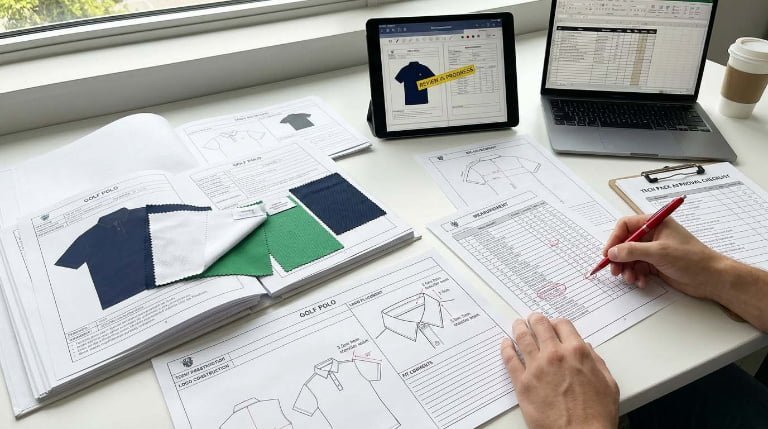
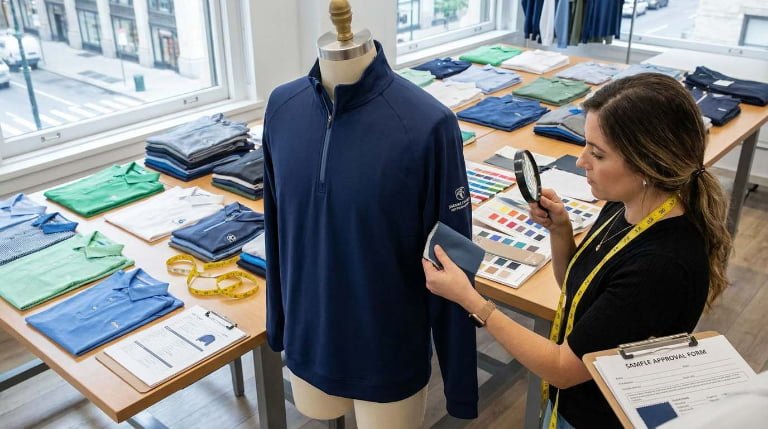
At FUWAY, we see these changes from the manufacturing side through fabric sourcing, sample development, RFQs, fit requests, decoration requirements, and production planning.
This guide looks at the golf apparel trends likely to matter most in 2027 — and, more importantly, what those trends mean for brands developing their next collection.
Quick Answer: What Will Define Golf Apparel in 2027?
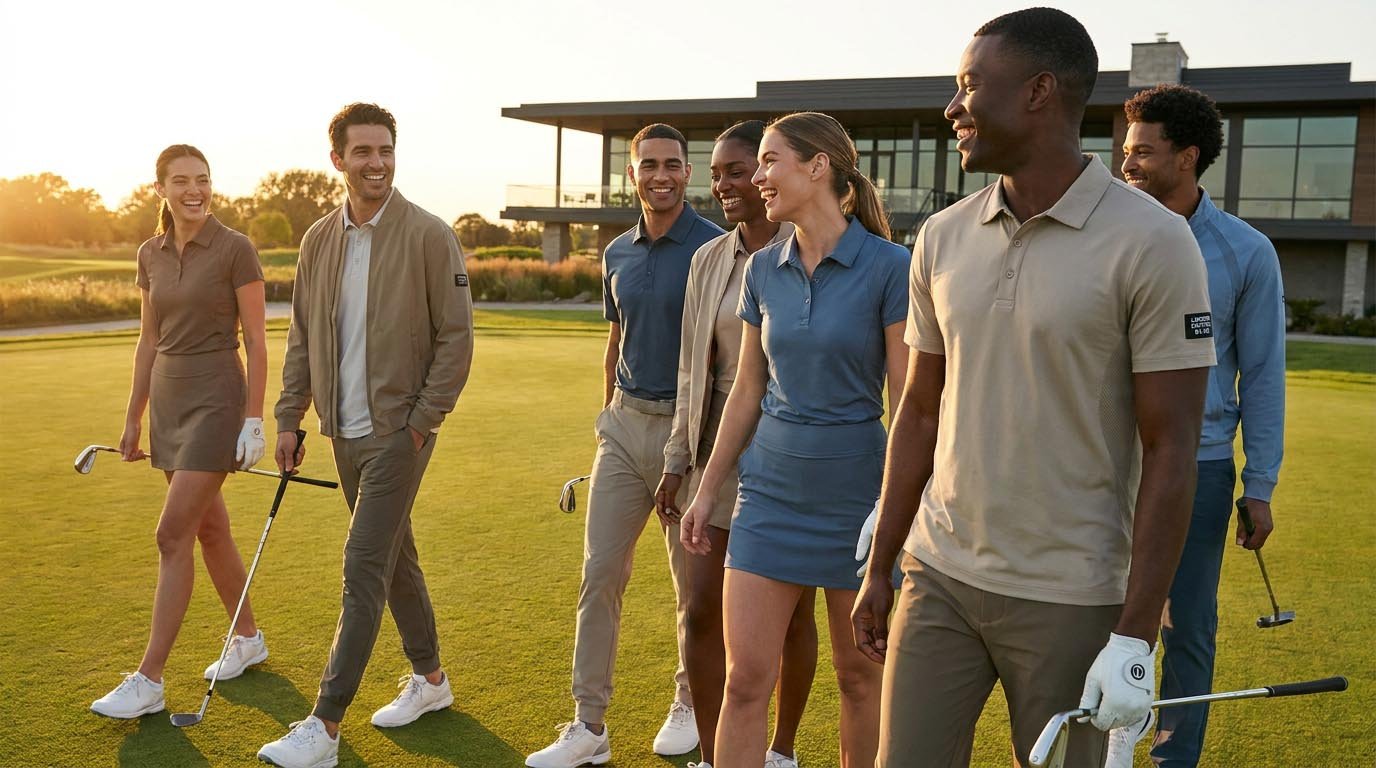
The strongest golf apparel directions heading into 2027 are likely to include:
- golf-to-lifestyle crossover
- relaxed but refined silhouettes
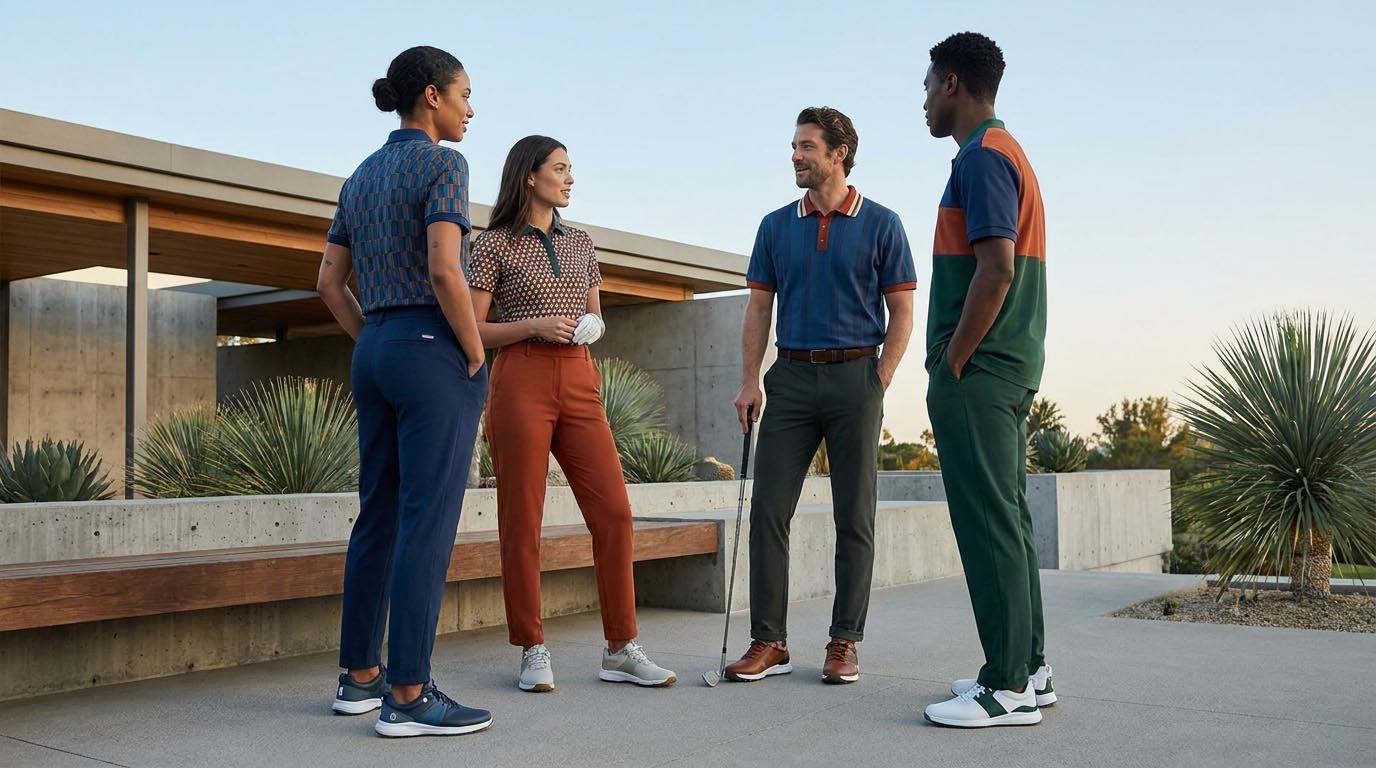
- modern heritage and retro details
- earth-led colors with controlled brighter accents
- cooling, breathability, stretch, and moisture management as baseline performance
- greater demand for verified recycled and lower-impact materials
- stronger women's fit development
- broader size ranges
- smaller capsule collections
- more flexible customization
The bigger shift is that brands are becoming more selective about which trends deserve production investment.
How We Identified These 2027 Trends
This outlook is based on a combination of:
- current golf and sportswear collections
- supplier and textile presentations
- fabric sourcing requests
- sample and RFQ discussions
- changing fit requirements
- performance-fabric development
- retail and club merchandising direction
Some trends are already established and likely to continue into 2027. Others are still emerging.
Brands should therefore treat them as product-development directions to evaluate, rather than guaranteed bestsellers.
2027 Golf Apparel Trends at a Glance
| Trend | What Is Changing | Brand Opportunity | Production Consideration |
|---|---|---|---|
| Lifestyle crossover | Golfwear looks less overtly technical | Wider off-course use | Drape, hand feel, silhouette |
| Relaxed refined fits | Easier proportions | Modern premium positioning | Pattern and fit sampling |
| Modern heritage | Retro cues return in cleaner forms | Stronger brand identity | Collar, piping, artwork |
| Earth-led color | More seasonal depth | Capsule storytelling | Lab dips and shade control |
| Cooling performance | Heat comfort becomes expected | Warm-weather positioning | Breathability and wash testing |
| Stretch and moisture | Higher baseline performance | Better comfort | Stretch recovery and dry-down |
| Verified sustainability | Proof matters more than claims | Stronger credibility | Certification and traceability |
| Women's fit | More dedicated development | Growth opportunity | Separate blocks and grading |
| Extended sizing | Broader ranges | Larger customer base | Size-set review |
| Limited capsules | Smaller seasonal drops | Lower trend risk | MOQ and reorder planning |
The Big Direction: Golf Apparel Is Becoming More Lifestyle-Led
Golf apparel will still need to perform in 2027, but performance alone is no longer enough.
One of the clearest directions is the blending of:
technical function + casual versatility + elevated everyday styling
Brands increasingly want garments that can move between:
- the golf course
- travel
- the clubhouse
- casual work
- everyday wear
That is pushing golf clothing closer to premium athleisure and refined sportswear.
Why This Matters
This shift is influencing:
- fabric hand feel
- drape
- surface finish
- branding
- silhouette
- color
Technical fabrics increasingly need to look and feel better, not simply perform well.
Trend 1: Relaxed but Refined Silhouettes
A slightly easier silhouette is likely to remain important heading into 2027.
This does not mean oversized or shapeless golfwear.
It means garments that feel:
- more comfortable
- less restrictive
- less aggressively athletic
- easier to wear outside the course
What Brands Are Exploring
Common development directions include:
- easier chest and waist proportions
- softer shoulder lines
- more balanced sleeves
- stronger collar presence
- cleaner body shapes
- fabrics with better drape
Compared with older performance polos, these products often look less rigid and less synthetic.
Fabric Has to Support the Fit
Brands are showing more interest in:
- smooth performance knits
- slightly more substantial fabrics
- softer-touch polyester blends
- matte finishes
- stable stretch materials
Fabric direction also affects collar stability, placket behavior, seams, and overall garment shape. For the engineering side, see our Golf Polo Construction Guide covering fabric, pattern, collar, placket, and seam construction.
Fit and material choice should therefore be developed together.
Brands comparing hand feel, stretch, structure, and performance can review FUWAY's fabric sourcing service.
Trend 2: Modern Heritage and Retro Golf Details
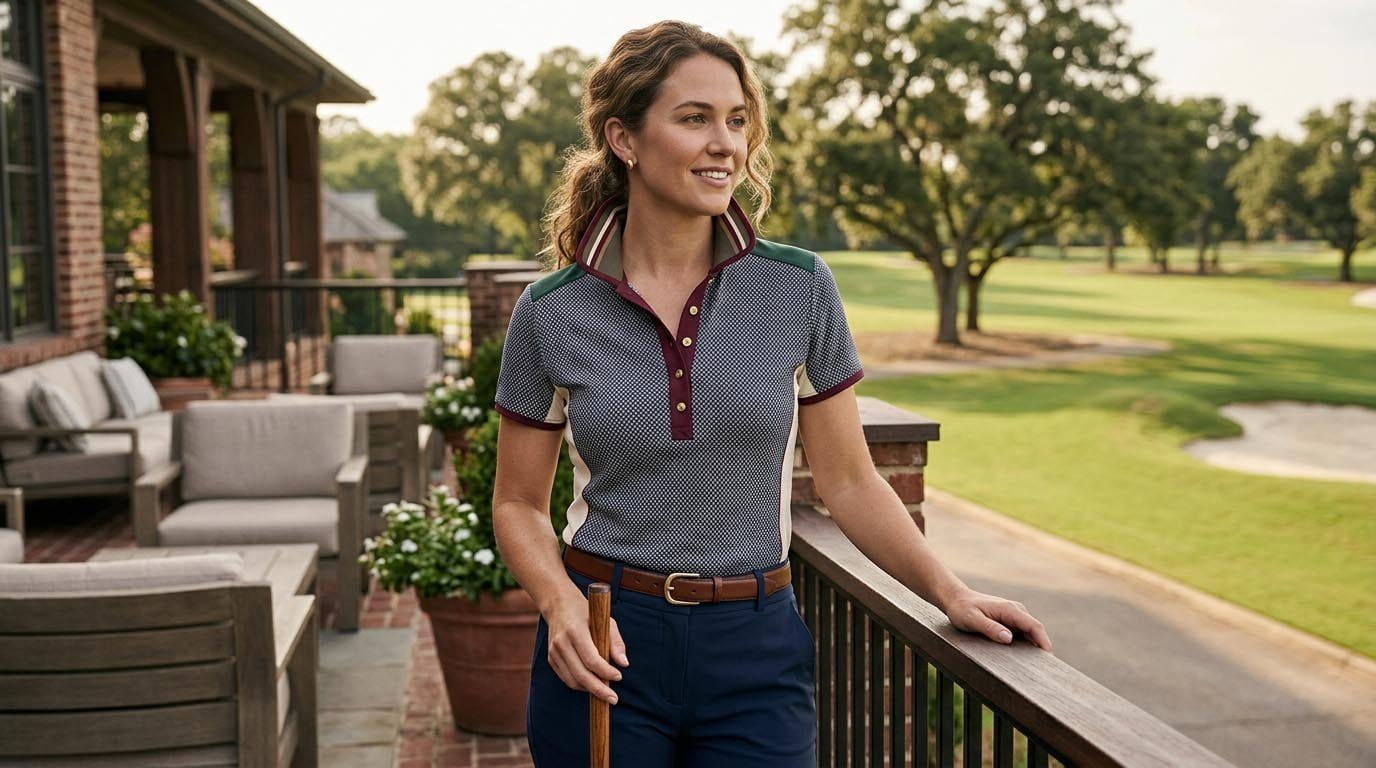
Retro golf styling is continuing, particularly through cleaner reinterpretations of earlier golf and sportswear aesthetics.
The strongest versions tend to be controlled rather than costume-like.
Details to Watch
These may include:
- contrast piping
- larger collar shapes
- geometric patterns
- vintage-inspired typography
- restrained color blocking
- heritage stripes
- traditional trim references
The strongest formula is usually:
heritage detail + modern fit + modern fabric
That creates familiarity without making the product look outdated.
Trend 3: Earth Tones, Neutrals and Controlled Brights
Navy, white, black, grey, and blue will remain important commercial colors.
What is changing is the palette around them.
Color Directions to Watch
Brands are likely to continue exploring:
- sage
- olive
- sand
- stone
- clay
- terracotta
- burgundy
- muted coral
- selected stronger blues
A practical collection can combine:
- proven core colors
- a smaller number of directional seasonal shades
- one or two stronger colors for capsules or storytelling
Production Consideration
Directional colors need more control around:
- lab dips
- fabric-to-trim matching
- shade consistency
- decoration color coordination
A fashionable color is only useful if it can be reproduced consistently.
Trend 4: Cooling and Breathability Become Baseline Performance
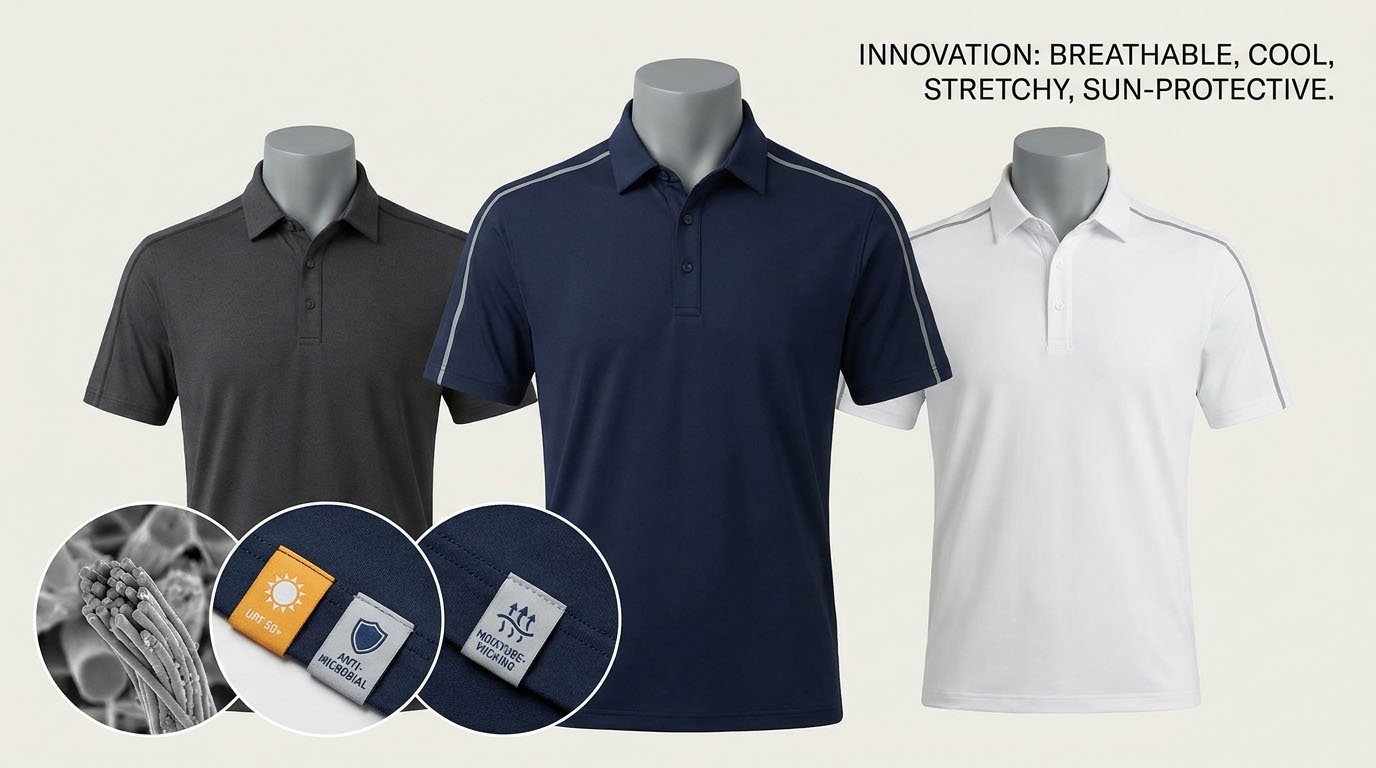
Cooling comfort is moving from a premium story toward a more normal expectation in warm-weather golf markets.
Basic moisture-wicking alone is becoming less differentiated.
What Buyers Actually Want
Brands increasingly look for fabrics that:
- breathe well
- dry quickly
- stay light during wear
- feel comfortable against the skin
- retain performance after laundering
Possible development directions include:
- engineered ventilation
- lightweight stable knits
- better moisture spreading
- quick-dry structures
- selected cooling yarn technologies
What Brands Should Check
If cooling is part of the product story, ask:
- Is the effect structural or finish-based?
- How breathable is the fabric?
- How quickly does it dry?
- Does the effect remain after washing?
- Does the material still feel comfortable?
The goal should be noticeable comfort, not just technical-sounding claims.
Trend 5: Stretch, Recovery and Moisture Management Matter More
Stretch and moisture management are increasingly expected.
The quality difference is now in how well these properties actually perform.
A useful golf fabric should provide:
- comfortable movement
- good recovery
- stable shape
- moisture transport
- reasonable dry-down
- durability after repeated wear
A fabric that stretches but bags out quickly is not performing well.
Likewise, a fabric may technically wick moisture while still feeling heavy or uncomfortable.
Fit and Stretch Are Connected
Stretch affects more than swing movement.
It also influences comfort around:
- shoulders
- chest
- torso
- upper arms
That is especially important in polos, quarter-zips, jackets, and layering pieces.
Trend 6: Sustainability Moves From Claims to Verification
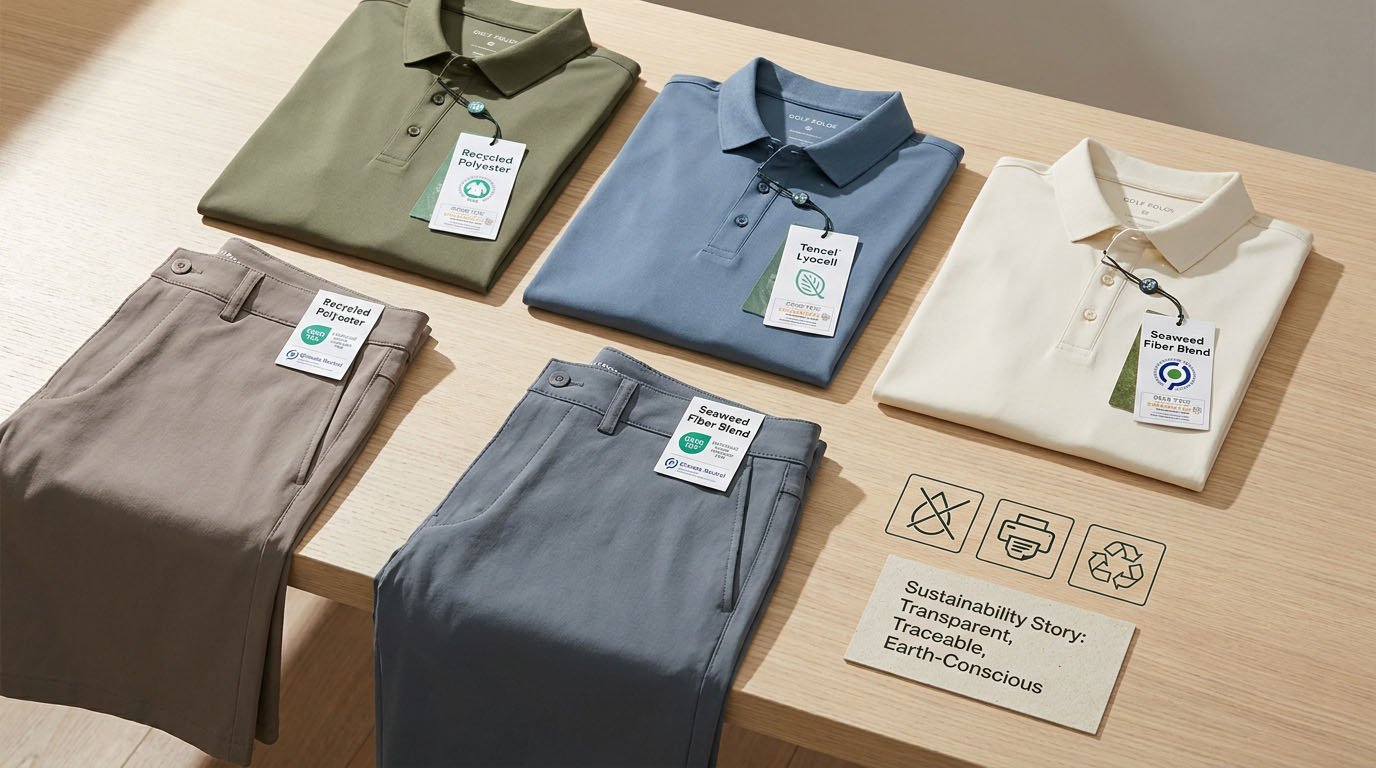
Sustainability remains important, but the conversation is becoming more disciplined.
Recycled polyester itself is no longer unusual.
The bigger questions now are:
- What percentage is recycled?
- Is the source documented?
- Is the certification valid?
- Can the supplier support the claim?
Common Sourcing Directions
Brands continue to explore:
- recycled polyester
- recycled nylon
- recycled stretch blends
- lower-impact dyeing
- traceability
- certified materials
Depending on the project, buyers may also ask about standards such as:
- GRS
- OEKO-TEX Standard 100
- bluesign-related sourcing
- GOTS where relevant
Not every project needs every certification.
But sustainability claims increasingly need clear support.
Alternative Fibers Still Need Testing
Materials such as lyocell blends and other bio-based options may offer useful hand feel or sustainability benefits.
But they still need to be evaluated for:
- shrinkage
- pilling
- color consistency
- recovery
- durability
A sustainable fabric still has to perform as a golf garment.
Trend 7: Women's Golf Fit Development Becomes More Sophisticated
Women's golf apparel continues to become a more important development category.
One of the biggest improvements is the shift away from simply adapting a men's garment.
Stronger Women's Programs Usually Require
- dedicated fit blocks
- women-specific proportions
- better torso shaping
- more balanced garment lengths
- more thoughtful stretch placement
The category also supports broader product development across:
- polos
- sleeveless tops
- skorts
- skirts
- dresses
- jackets
- pullovers
Manufacturing Implication
Women's programs benefit from separate:
- pattern development
- fit samples
- grading
- size-set review
These issues are much easier to solve during development than immediately before bulk production.
If your collection includes women's polos, skorts, dresses, bottoms, or layering pieces, our Women's Golf Apparel Manufacturer guide explains how to evaluate women's pattern capability, fabric sourcing, sampling, customization, and bulk consistency.
Trend 8: Extended Sizing Requires Better Grading
Broader size ranges are becoming more relevant across golf apparel.
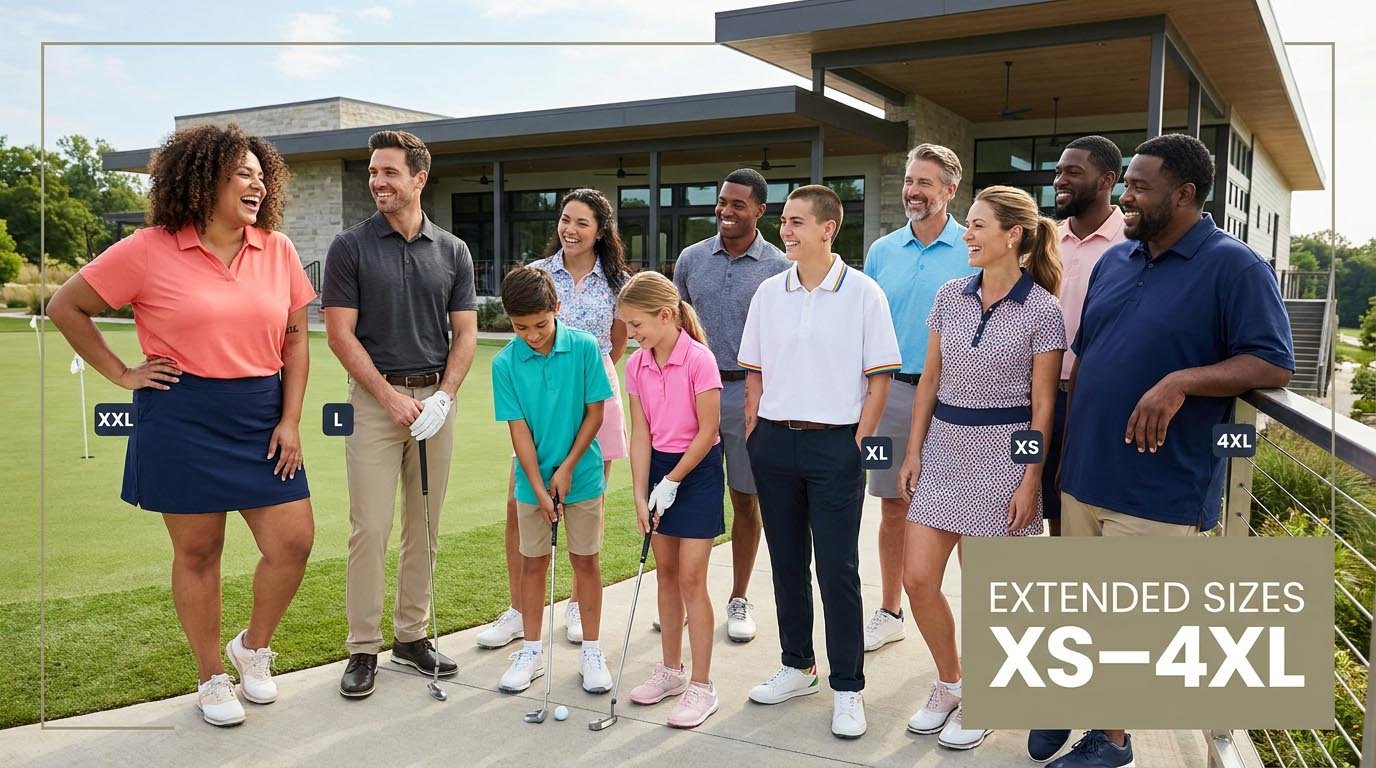
But adding more sizes is not simply a matter of extending measurements.
What Brands Need to Review
Brands should also check:
- grading
- body proportions
- sleeve balance
- garment length
- fit consistency
This is why size-set sampling becomes more important as ranges expand.
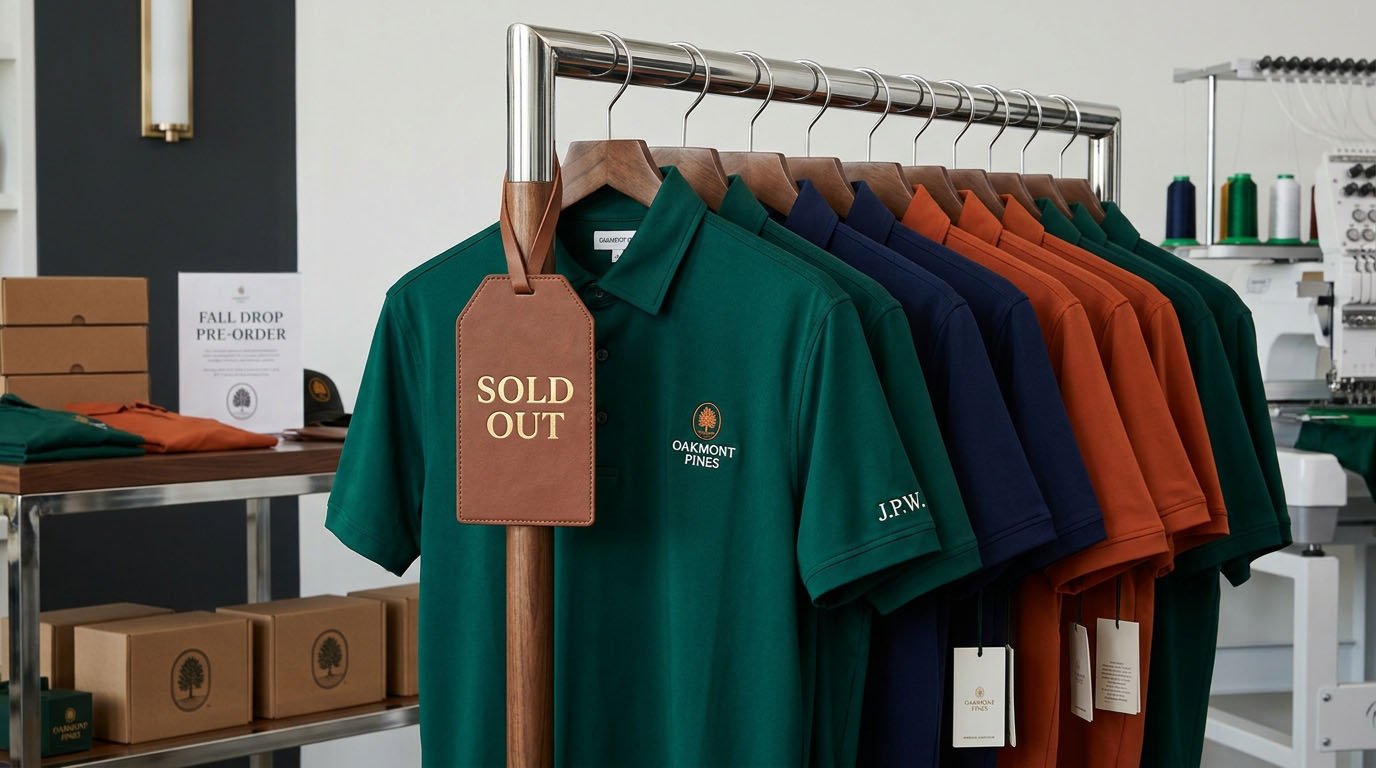
Trend 9: Limited Capsules Reduce Trend and Inventory Risk
Smaller capsule collections can help brands stay current without rebuilding the full assortment every season.
Why Capsules Work
They can help brands:
- test new colors
- introduce trend-led styling
- create launch stories
- reduce exposure to unproven designs
- give repeat customers something new
The strongest capsule programs usually sit beside a stable core range.
Production Planning Still Matters
Before developing a capsule, brands should consider:
- MOQ
- fabric availability
- decoration
- sampling
- production lead time
- reorder feasibility
Trend agility still depends on production reality.
Smaller drops only work when SKU count, MOQ, inventory depth, and reorder capital are planned together. See our Golf Apparel Startup Budget & Launch Strategy guide for first-collection planning.
Trend 10: Custom and Club Programs Become More Refined
Club, pro-shop, event, and private-label programs continue to evolve.
Customers increasingly want more than a standard blank garment with a logo.
What These Programs May Include
- exclusive colors
- custom embroidery
- event capsules
- coordinated tops and bottoms
- custom labels
- more differentiated product design
FUWAY supports golf polo embroidery, screen printing, and sublimation printing depending on fabric, artwork, and design requirements.
Brands that want to turn these ideas into a branded collection can also review our Private Label Golf Apparel Guide for product planning, customization, sampling, manufacturer selection, and first-launch development.
Which 2027 Trends Should Your Golf Brand Actually Use?
Not every trend belongs in every collection.
The right priorities depend on:
- target customer
- selling price
- sales channel
- brand identity
- development budget
- production model
| Brand Type | Trends to Prioritize |
|---|---|
| Startup golf brand | Lifestyle crossover, core polos, controlled colors, small capsules |
| Premium golf brand | Refined silhouettes, elevated fabrics, clean branding |
| Performance brand | Cooling, stretch, moisture management, UPF |
| Women's golf brand | Dedicated fit, grading, broader product range |
| Club / pro shop | Core colors, embroidery, reliable reorders |
| Fashion-led golf brand | Heritage details, directional colors, seasonal drops |
| Sustainability-led brand | Verified recycled materials and traceability |
The goal is not to use the most trends.
It is to identify the trends that strengthen the brand's existing position.
How to Turn a 2027 Trend Into a Production-Ready Golf Product
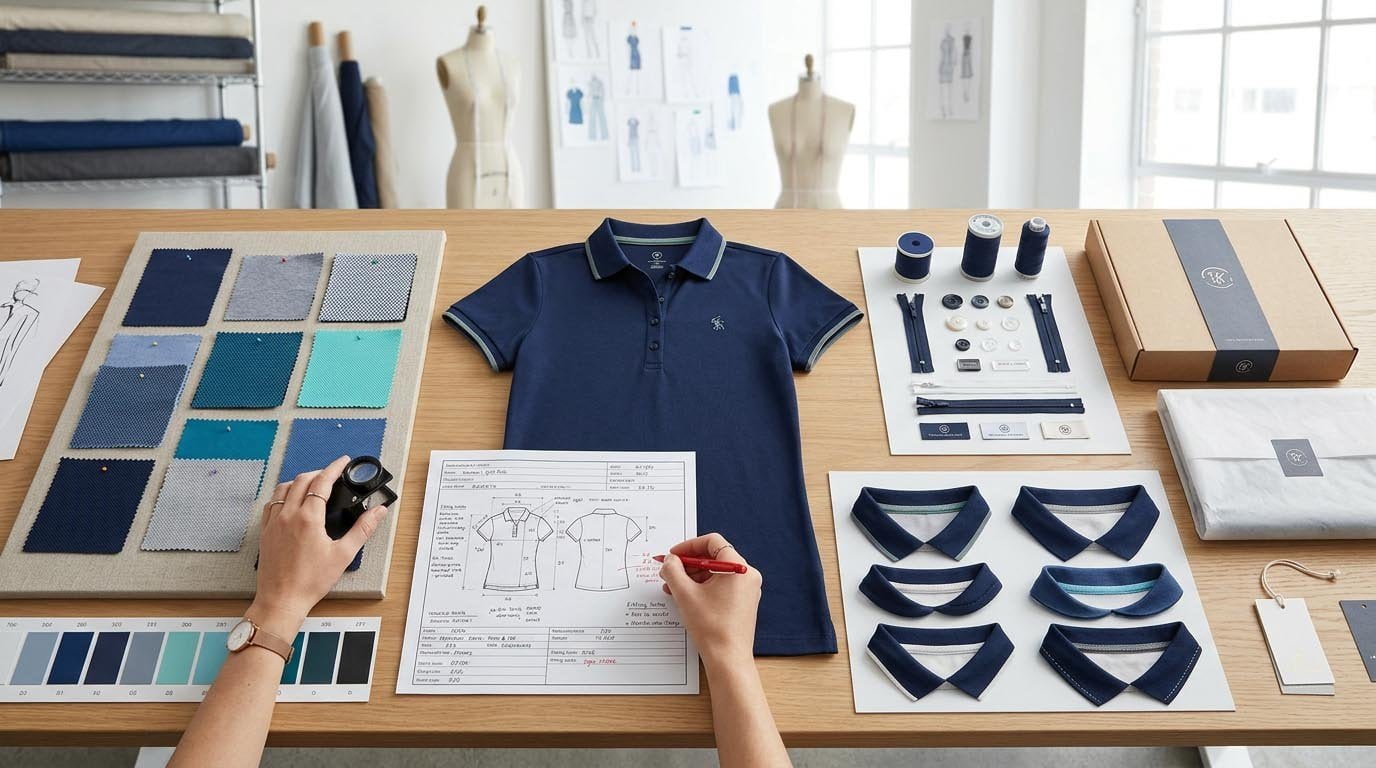
A trend only creates value once it can be converted into a stable product.
Step 1: Define the Trend Precisely
Avoid briefs such as:
We want something retro.
Instead define the actual details:
- collar shape
- piping
- stripe
- color
- fit
- fabric
- logo style
Step 2: Translate It Into Product Specifications
The concept should become clear specifications for:
- fabric
- weight
- knit construction
- fit
- measurements
- collar
- placket
- seams
- logo method
- color
- trims
- labels
- packaging
Brands developing polos can review FUWAY's custom golf shirts options when planning the construction.
If you are building the full product architecture rather than developing one individual style, see our How to Develop a Golf Apparel Line guide for product selection, fabric, fit, tech pack, MOQ, sampling, and bulk-readiness planning.
Step 3: Sample the Highest-Risk Element First
Different trends create different risks.
For example:
Directional color
→ approve the lab dip
Retro collar
→ approve collar shape and construction
Cooling fabric
→ evaluate material performance
Women's fit
→ conduct fit sampling
Print design
→ approve artwork or strike-off
New fabric
→ evaluate shrinkage, hand feel, and recovery
This allows problems to be identified earlier.
Step 4: Separate Core Product From Directional Product
A collection does not need every SKU to be trend-driven.
A safer structure is to keep most of the assortment around proven commercial styles while using a smaller group for:
- new colors
- heritage details
- prints
- experimental fabrics
- seasonal capsules
This creates freshness without making the entire collection dependent on one trend.
Step 5: Approve Before Bulk Production
Before production, confirm the approved standard for:
- fit
- measurements
- color
- fabric hand feel
- logo placement
- decoration
- shrinkage
- relevant performance claims
- packaging
The approved sample should then become the reference for bulk production and QC.
What Brands Should Prioritize for 2027
If the 2027 market is reduced to a few practical priorities, these stand out.
1. Design Beyond the Golf Course
Lifestyle crossover is becoming part of the buying logic.
Fit, fabric, styling, and branding should support both performance and everyday wear.
2. Improve Comfort Customers Can Actually Feel
Cooling, breathability, stretch, recovery, and better fabric hand feel matter more than complicated technical language.
3. Support Sustainability Claims With Proof
Recycled materials remain relevant, but documentation and traceability are becoming more important than vague claims.
4. Take Fit More Seriously
Women's fit, grading, and wider size ranges are areas where poor development quickly becomes visible.
5. Use Trends Selectively
Strong collections usually combine:
commercial continuity + controlled innovation
rather than changing everything every season.
6. Check Production Feasibility Early
Before committing to a trend, review:
- material availability
- MOQ
- color development
- fit complexity
- decoration
- testing
- lead time
- reorder feasibility
A trend that cannot be produced reliably is not yet a viable product strategy.
FAQ: Golf Apparel Trends 2027
What Colors Are Likely to Matter in Golf Apparel in 2027?
Classic navy, white, black, grey, and blue should remain important, while earth-led shades such as sage, olive, sand, stone, and clay are likely to continue gaining attention.
Are Relaxed Golf Fits Replacing Traditional Fits?
Not completely.
Tailored and athletic fits will remain relevant, but brands are increasingly exploring slightly easier silhouettes that work both on and off the course.
Is Recycled Polyester Still an Important Trend?
Yes, although recycled polyester itself is becoming more normal.
The stronger trend is toward better documentation, traceability, and verified sustainability claims.
Should a Startup Golf Brand Follow Every 2027 Trend?
No.
Smaller brands usually benefit more from choosing a few trends that fit their target customer while keeping the core collection commercially stable.
Final Thoughts
Golf apparel in 2027 is moving toward a more mature combination of:
performance + lifestyle + product discipline
The most promising brands will not necessarily use the largest number of trends.
They will be the brands that identify which trends fit their customer and turn them into products that:
- fit properly
- perform well
- look current
- survive repeated wear
- can be produced consistently
The most useful question is therefore not simply:
What will be fashionable in golf apparel in 2027?
It is:
Which trends fit our customer, and can we turn them into products worth reordering?
Develop Your 2027 Golf Collection With FUWAY
Not every trend belongs in every collection.
The goal is to identify the directions that fit your:
- customer
- market
- price point
- sales channel
- production model
Then validate them through fabric selection, sampling, testing, and approval before bulk production.
FUWAY supports brands with:
- custom golf shirts
- fabric sourcing
- men's and women's fit development
- private label golf apparel
- embroidery and printing
- sampling
- testing
- MOQ planning
- bulk production
If you are preparing a 2027 golf apparel collection and want to turn trend ideas into production-ready products, contact FUWAY to discuss your project.