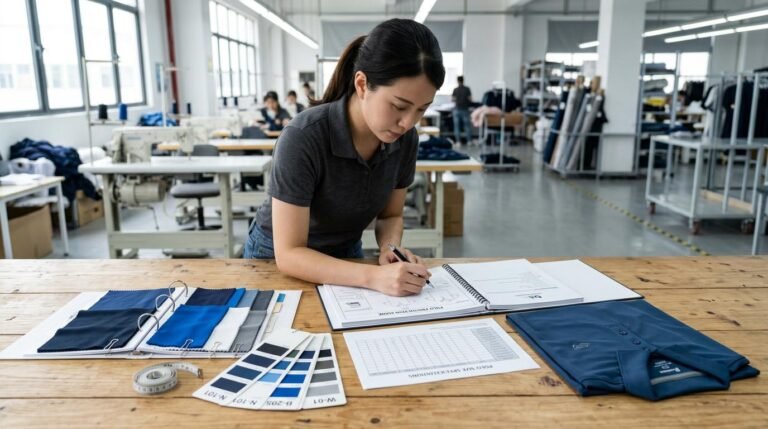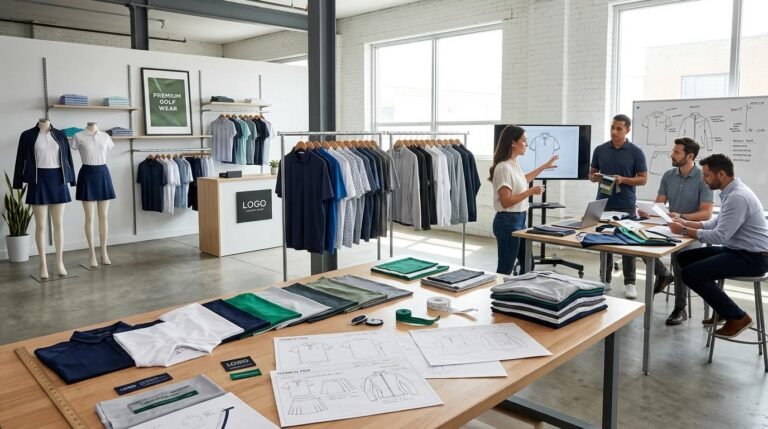
Every month, I speak with founders who have already spent $10,000–$20,000 on samples, fabric trials, and first runs that never gain traction. In most cases, the problem is not manufacturing itself. It is poor product planning before development starts.
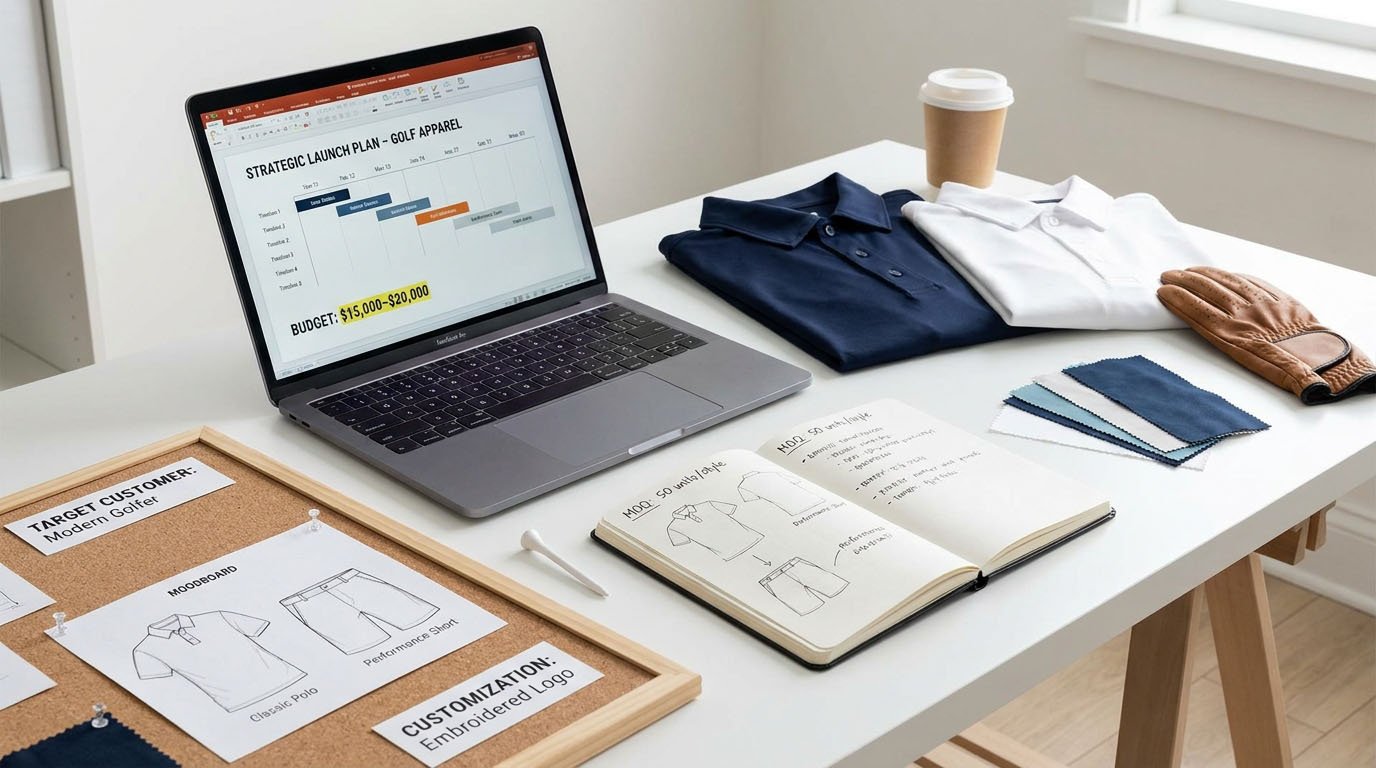
A successful golf apparel launch begins with three decisions: who you are designing for, which 2–3 products will prove your concept, and what level of customization your MOQ and budget realistically allow. Most first collections fail because brands optimize for supplier convenience instead of golfer fit, comfort, and use case.
This guide is for:
- entrepreneurs launching a new golf apparel brand
- activewear sellers expanding into golf
- wholesalers developing private label golf clothing
- founders comparing stock vs. custom manufacturing options
Quick Answers: What You Need to Know Before Starting
Q1: What is the minimum budget to launch a golf apparel line?
A realistic budget falls into three levels:
- Lean validation launch: $8,000–$12,000
2 products, stock fabrics, limited customization, smaller first run - Recommended first launch: $15,000–$20,000
2–3 products, proper sampling revisions, inspection, freight, duties, and contingency included -
More differentiated launch: $25,000+
custom colors, upgraded trims, better fabric flexibility, stronger brand presentationIf you want a deeper breakdown of development, production, freight, and contingency, see how much it costs to start a golf apparel brand. Once you know your likely budget, the next step is making sure your margins still work, which we explain in how to price golf apparel.
Q2: Should I start with polos or bottoms?
Start with polos if your brand promise is centered on style, comfort, or technical performance. Start with shorts or pants if you are solving a fit problem for a specific body type. If you're still comparing categories, read best first products for a golf apparel brand. If you already know which route you want to take, see how to design a golf polo shirt or how to design golf shorts and pants.
Q3: What MOQ should I expect for custom golf apparel?
Most suppliers require 300–500 pieces per style per colorway for standard development. Meaningful customization usually becomes easier at 800+ pieces per style per color, where mills and factories are more willing to support custom dyeing, trims, and fabric treatments.
For a deeper look at why factories require these quantities and how colorways multiply inventory risk, see golf apparel MOQ explained.
Q4: How long does it take to launch a golf apparel line?
Plan on 4.5–6 months from finalized tech pack to inventory in hand. Sampling usually takes 3–5 weeks, revisions add 2–4 weeks, production takes 45–60 days, and shipping/customs often take another 3–4 weeks.
Q5: What is the biggest mistake new golf apparel brands make?
Launching too many SKUs too early. Most first collections should start with 2–3 products maximum, not a full head-to-toe range.
A Simple 5-Step Framework for Launching a Golf Apparel Line
Before contacting factories, work through these five steps:
- Define your target golfer
- Choose 2–3 launch products — see best first products for a golf apparel brand
- Match fabric and fit to real on-course use — see best fabrics for golf apparel and golf apparel fit guide
- Build around realistic MOQ and budget — see golf apparel MOQ explained and cost to start a golf apparel brand
- Launch small, learn fast, and reorder winners
This framework sounds simple, but it prevents the most expensive early mistakes: poor fit, weak differentiation, and inventory that does not move.
What It Takes to Start a Golf Apparel Line
Launching a golf apparel line requires more than sketches and a logo. At minimum, you need:
- a clear customer hypothesis
- a practical product plan
- enough budget for sampling and production
- time for at least one fit revision round
- realistic expectations about MOQ and customization limits
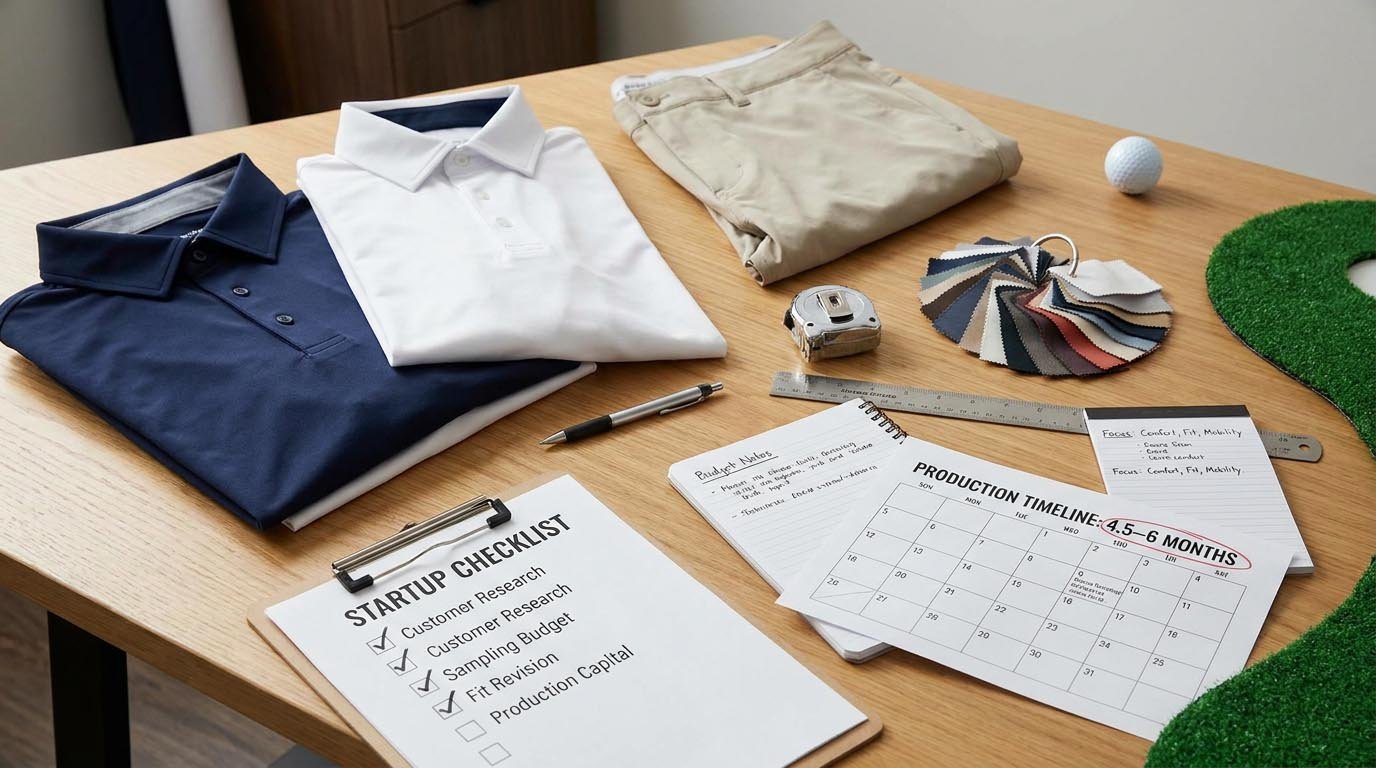
Golf apparel is not just general activewear with a collar. The products need to work through a full swing, stay presentable for clubhouse settings, and remain comfortable over 4–5 hours on the course. That changes how you should approach fabric, pattern shape, collar construction, length, and mobility details.For more detail, see our guides to the best fabrics for golf apparel and our full golf apparel fit guide.
Here is what most first-time founders need before reaching out to suppliers:
| Resource | Why It Matters | Typical Cost |
|---|---|---|
| Customer research | Defines fit needs, performance expectations, and price tolerance | Low cost |
| Product focus | Limits sampling waste and inventory risk | Strategic decision |
| Sampling budget | Covers first prototypes, fit revisions, and pre-production samples | $1,500–$3,000 |
| Production capital | Covers MOQ, packaging, inspection, freight, and duties | $6,000–$15,000+ |
| Timeline buffer | Prevents rushed approvals and missed launch windows | 4.5–6 months |
The key point is simple: the hardest part is not finding a factory. It is making the right product decisions before the factory starts building.
Step 1: Define Your Target Golfer Before Building the Collection
Your target golfer should shape every major decision: fit, fabric weight, silhouette, feature set, and price point. If you design for “golfers in general,” the result is usually a product that does not fit anyone especially well.
Before development, define:
- Body type and fit preference
athletic, modern, classic, or relaxed - Play frequency and conditions
occasional weekend player vs. serious frequent golfer - Climate and wear environment
hot and humid, mild, windy, or mixed-season - Style priorities
technical performance, elevated basics, or fashion-first - Price expectations
value-focused, mid-premium, or premium
A golfer who walks 18 holes in Florida heat needs something very different from a golfer who rides a cart twice a month and buys based on style.
A practical starting point is to interview 10–15 people who match your target customer. Ask:
- What do you dislike about your current golf shirts or shorts?
- Where do fit issues usually show up?
- What price feels reasonable?
- What details actually matter when you play?
This research does more than improve marketing. It gives direction to pattern development, fabric choice, and SKU planning.
Step 2: Choose 2–3 Core Products for the First Launch
Your first launch should be narrow enough to control risk, but broad enough to generate useful data. In most cases, that means:
- 1 hero product
- 1 complementary product
- optionally 1 third product only if it serves the same customer and same brand story
If you are still deciding between polos, shorts, pants, or layers, start with best first products for a golf apparel brand. Once you have chosen your core category, you can go deeper into how to design a golf polo shirt or how to design golf shorts and pants.
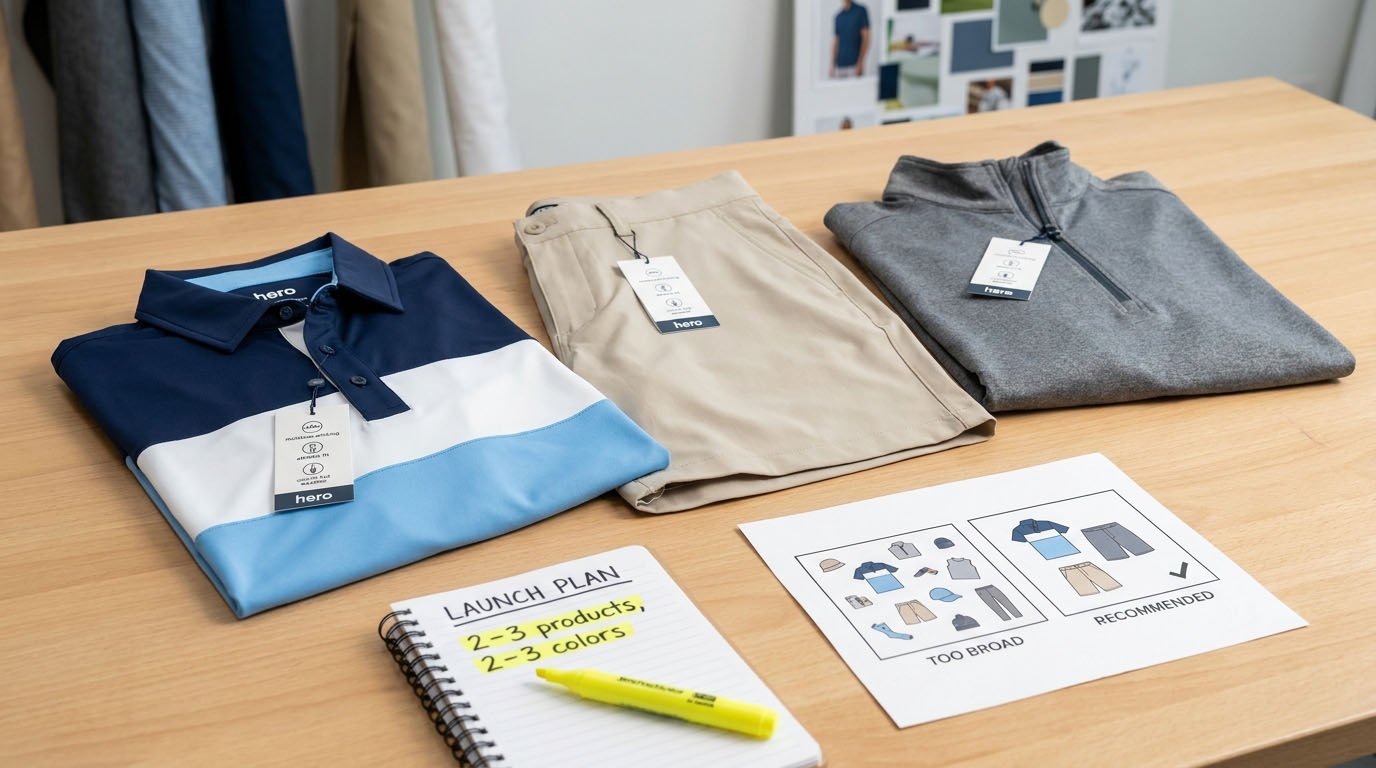
A good first launch usually looks like:
- polo + short
- polo + pant
- polo + layering vest
- performance short + polo
The hero product should prove your main concept. For example:
- better fit for athletic or larger golfers
- lighter, cooler performance for hot climates
- cleaner modern styling than traditional golf brands
The second product should increase average order value and test whether your customer buys into the broader look.
| Launch Strategy | Products | Inventory Complexity | Risk Level |
|---|---|---|---|
| Too broad | 4–5 products, many colors | High | High |
| Recommended | 2–3 products, 2–3 colors each | Moderate | Moderate |
| Too narrow | 1 product only | Low | Low, but limited learning |
Launching with too many SKUs ties up cash, spreads MOQ too thin, and makes it harder to identify what customers actually want. A focused launch teaches you faster.
Step 3: Understand How Golf Apparel Differs from General Sportswear
Golf apparel has performance requirements that many general activewear patterns do not address well. The product has to move through rotation, stay comfortable over extended wear, and still look polished enough for golf settings.
Compared with standard sportswear, golf clothing usually needs:
- better rotational mobility for the swing
- more stable collar construction so it keeps shape
- longer body length or back hem to prevent ride-up
- balanced fabric weight for both performance and appearance
- durability at friction points from bags, straps, and repeated motion
Here is the practical difference:
| Feature | Standard Sportswear | Golf-Specific Design |
|---|---|---|
| Stretch priority | General movement | Rotation and horizontal mobility |
| Sleeve/armhole design | Standard activewear block | Improved clearance for swing motion |
| Body length | Shorter athletic cut | Longer hem, especially at back |
| Collar | Soft basic collar | More structured collar with better hold |
| Fabric weight | Often very light | Usually 140–180 GSM for balance |
This is why golf apparel cannot be treated as generic activewear with a logo. A sample may look fine on a hanger and still fail once someone takes a full swing.
To build these differences into the product correctly, review our golf apparel fit guide and our breakdown of the best fabrics for golf apparel.
Step 4: Build the Right Fabric Strategy
Fabric drives a large share of customer satisfaction in golf apparel, but manufacturers often recommend what is already available or easiest to source. That makes it even more important for you to know what you are selecting for.
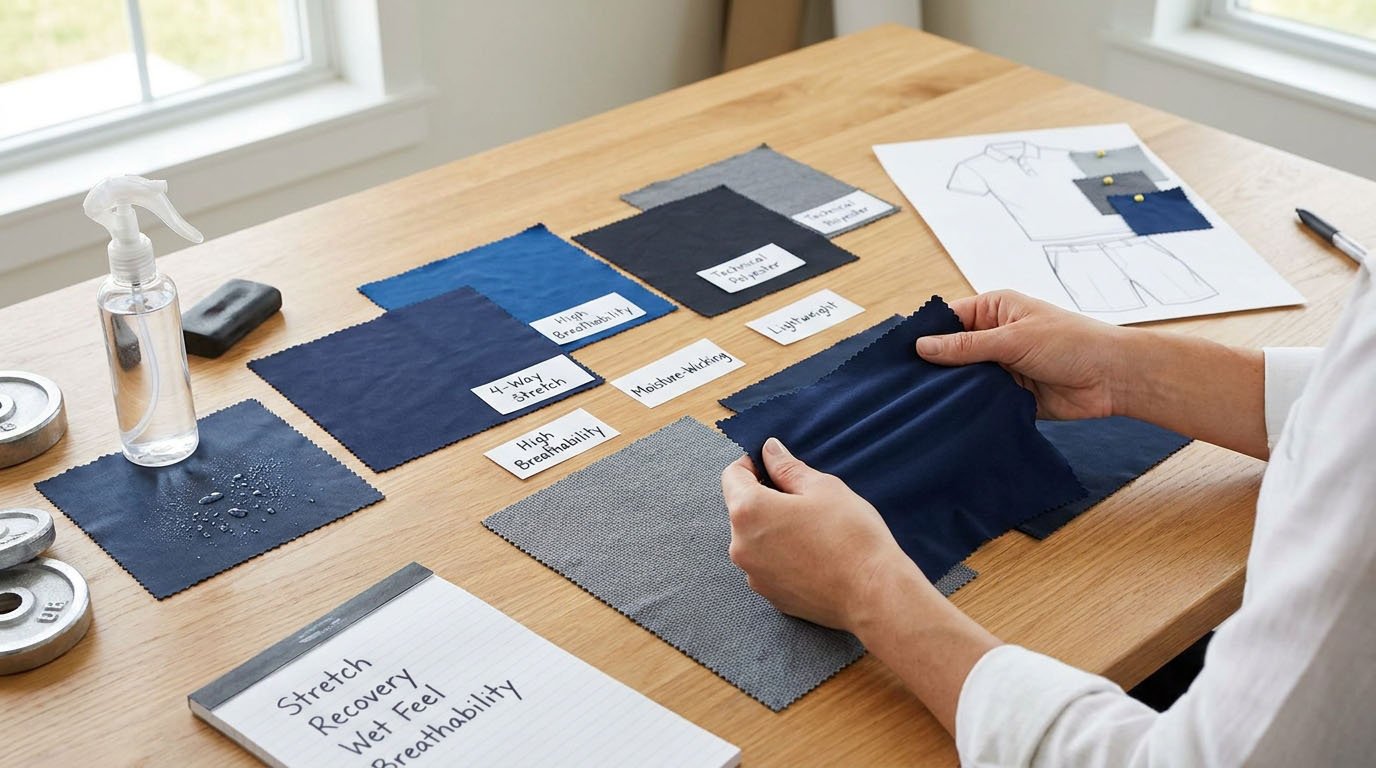
For golf polos, shorts, and pants, evaluate fabric on these points:
- stretch direction
not just whether it stretches, but how it stretches - recovery
whether the fabric returns to shape after movement - hand feel dry and wet
some fabrics perform well on paper but feel clingy in use - breathability and moisture management
especially for hot-weather golfers - pilling resistance
important for repeat wear and wash durability - color retention
especially for sun exposure and repeated laundering
If you want a broader sourcing overview across categories, read best fabrics for golf apparel. If you are specifically developing polos, our guide to the best fabrics for golf shirts goes deeper into piqué, jersey, blend ratios, and wash durability.
| Supplier Claim | Better Question to Ask |
|---|---|
| “Four-way stretch” | What is the stretch percentage in each direction? |
| “Moisture wicking” | How does it feel when wet, and what is the dry time? |
| “Anti-microbial” | How long does the treatment last after washing? |
| “UPF protection” | Is the UPF rating tested on the finished fabric? |
A good fabric decision is not about choosing the most technical fabric available. It is about choosing the right fabric for your customer and price point.
For example:
- Hot-climate performance brand: prioritize breathability, dry hand feel, and moisture transport
- Style-led premium brand: prioritize drape, texture, and visual quality
- Value-focused launch: choose reliable stock performance fabrics rather than overreaching on custom development
Always compare multiple swatches. Stretch them, handle them, and if possible, test them in real wearing conditions.
Step 5: Develop the Right Fit for Mobility, Comfort, and Style
Fit is one of the biggest reasons early apparel launches struggle. Many new brands copy a competitor’s size chart, adjust a few measurements, and assume that is enough. It rarely is.
For a deeper technical breakdown of movement testing, grading, and key fit zones, see our full golf apparel fit guide.
A good golf fit needs to balance:
- mobility during the swing
- comfort during long wear
- appearance on and off the course
- consistency across graded sizes
Before finalizing patterns, decide:
- Who is the fit block built for?
- How close or relaxed should the silhouette feel?
- Where do you need more mobility: shoulders, chest, hips, thighs?
- What trade-off are you willing to make between a modern silhouette and unrestricted movement?
Common fit issues in golf apparel include:
| Fit Issue | Likely Cause | Typical Fix |
|---|---|---|
| Restriction across shoulders | Armhole or upper back too tight | Adjust armhole shape and back mobility |
| Shirt rides up during swing | Body too short | Add body length or back hem |
| Sleeves feel tight | Bicep opening too narrow | Increase sleeve circumference |
| Waistband digs in | Insufficient ease or rigid construction | Add waist ease or improve waistband design |
| Lower back bunching | Poor body balance | Adjust back length and side seam shape |
Whenever possible, test samples on 5–8 people who match your target customer. Do not just ask if the garment fits while standing still. Have them swing, bend, walk, and wear it for a while.
For most first collections, at least one fit revision round should be assumed from the start.
Plan SKUs, Colorways, and MOQ Around Your Budget
MOQ is not just a quantity issue. It determines how much freedom you have in fabric, color, trims, and construction.
If you need to understand how quantity thresholds affect cost, style count, and reorder flexibility, read golf apparel MOQ explained. For the financial side, see how much it costs to start a golf apparel brand, and for category prioritization, review best first products for a golf apparel brand.
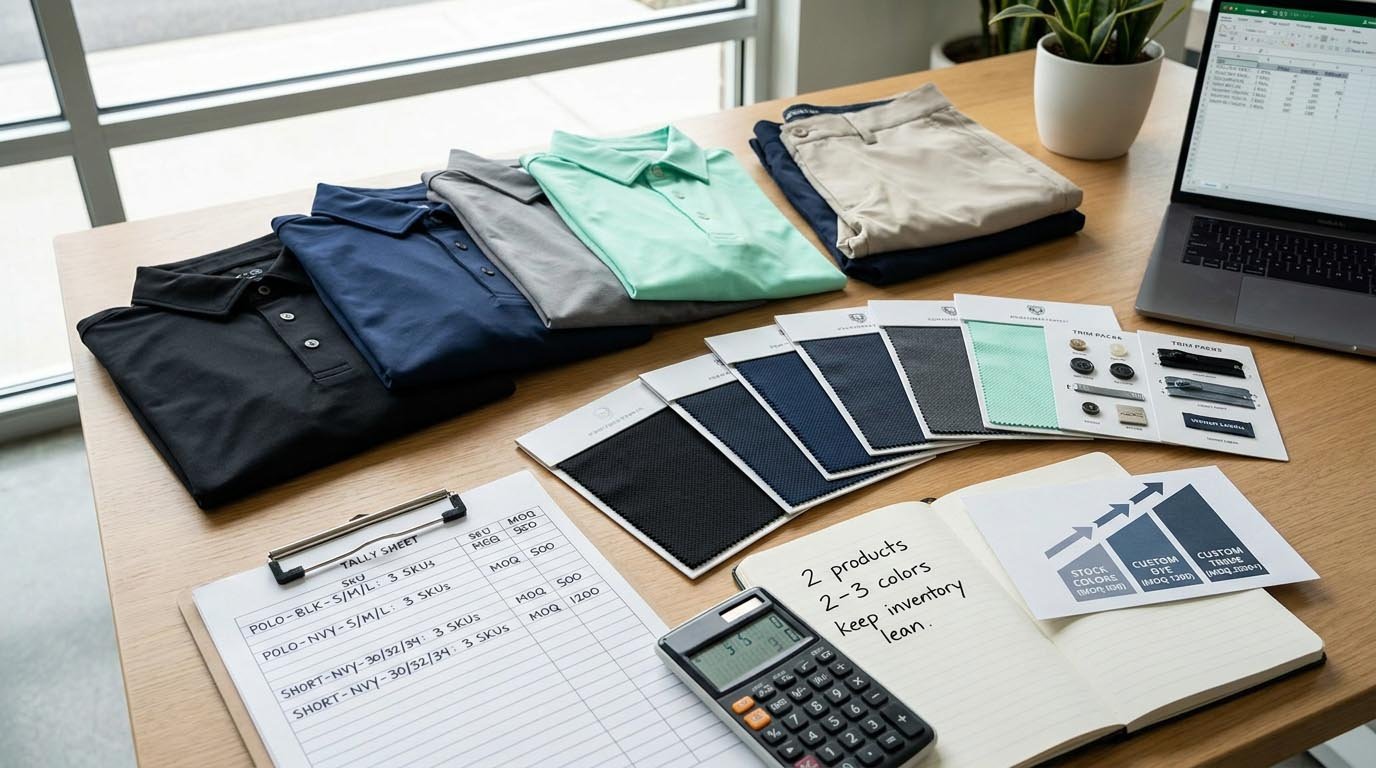
In general:
At 300–500 pieces per style per color
You are usually limited to:
- stock fabrics
- standard colors
- simpler trims and construction
- less negotiating power on price and lead time
At 800–1,200 pieces per style per color
You may gain access to:
- custom dye lots
- more trim flexibility
- some finishing or treatment customization
- better supplier responsiveness
At 2,000+ pieces per style per color
You may be able to support:
- custom fabric development
- broader trim and construction control
- stronger differentiation
- better long-term cost structure
Here is a practical planning guide:
| Budget Level | Recommended Product Plan | Customization Reality |
|---|---|---|
| $8,000–$12,000 | 2 products, 2 colors each | Mostly stock fabrics and colors |
| $15,000–$20,000 | 2–3 products, 2–3 colors each | Some color and trim flexibility |
| $25,000+ | 3 products, broader range | Better room for customization |
For most new brands, the smartest move is to keep the first launch tight:
- 2 products
- 2–3 colors each
- neutral base colors plus one accent option
- enough depth in each SKU to reorder winners confidently
Too many colorways create inventory complexity faster than most founders expect.
Recommended First Launch Setup for New Golf Brands
For most new golf apparel brands, this is the most practical starting point:
Lean Validation Launch
- Products: 2
- Colors: 2 each
- Total order: roughly 800–1,200 pcs
- Fabrics: stock performance fabrics
- Budget: $8,000–$12,000
- Best for: validating demand and fit with limited differentiation
Recommended First Launch
- Products: 2–3
- Colors: 2–3 each
- Total order: roughly 1,200–1,800 pcs
- Fabrics: stock plus limited custom options
- Budget: $15,000–$20,000
- Best for: serious brand launch with room for proper revisions, inspection, freight, duties, and contingency
More Differentiated First Launch
- Products: 3+
- Colors: broader range
- Total order: 2,000+ pcs depending on structure
- Fabrics: custom color or deeper fabric/trims development
- Budget: $25,000+
- Best for: brands with stronger funding and clearer brand positioning
The goal of the first launch is not to build a complete collection. It is to test product-market fit with enough quality and focus to generate clear feedback.
Estimate Your Real Costs Before You Start
Many founders only budget for unit price and MOQ. For a full startup budget example, see how much it costs to start a golf apparel brand. Once you know your total landed cost, the next step is how to price golf apparel correctly.In reality, first-launch costs usually include four separate categories:
- sampling and development
- bulk production
- freight, duties, and delivery
- branding, packaging, and contingency
A realistic cost structure for a recommended first launch might look like this:
| Cost Category | Typical Range |
|---|---|
| Sampling and revisions | $1,500–$3,000 |
| Production | $8,000–$12,000+ |
| Inspection, freight, duties | $2,500–$4,500 |
| Branding and packaging | $500–$1,500 |
| Contingency | $1,500–$2,500 |
| Total | $15,000–$20,000+ |
This is why it is important to distinguish between a lean validation launch and a fully prepared first launch. Yes, you can start more cheaply, but lower budgets usually mean tighter compromises on product range, differentiation, and risk protection.
A simple rule: budget at least 15–20% more than your initial estimate.
Build a Realistic Product Development Timeline
Even when everyone moves quickly, golf apparel development takes time. The biggest delays usually come from fit revisions, fabric changes, and shipping.
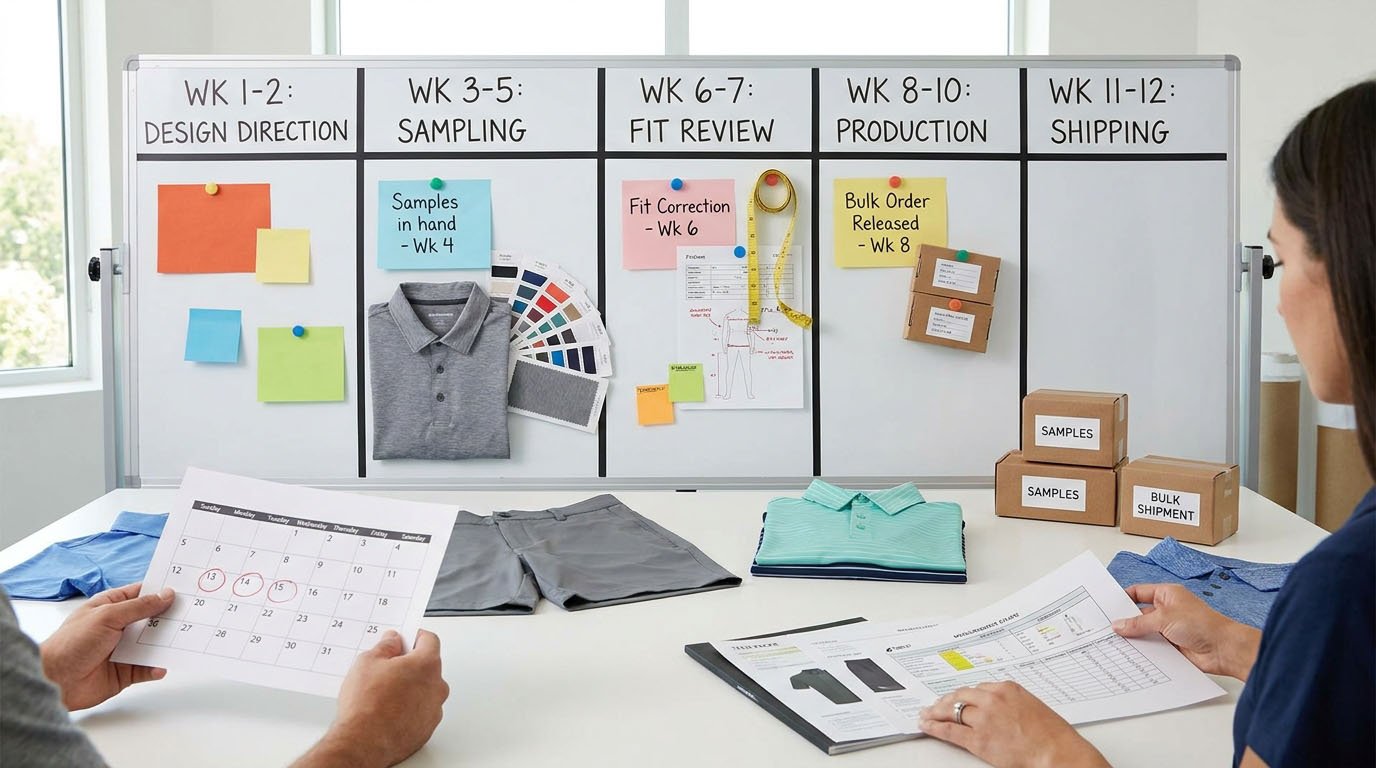
A realistic timeline looks like this:
Weeks 1–2: Finalize Design Direction
- finalize product scope
- confirm materials direction
- prepare tech packs and target measurements
Weeks 3–5: First Sampling
- factory sources fabric and trims
- first samples are produced and shipped for review
Weeks 6–8: Fit Review and Revisions
- test with target users
- correct fit, construction, or detail issues
- approve revised sample direction
Week 9: Pre-Production Approval
- final confirmation of fit, colors, and construction
- release bulk order
Weeks 10–16: Bulk Production
- full production run
- pre-shipment inspection if required
Weeks 17–20: Shipping and Customs
- ocean or air shipment
- customs clearance
- final delivery to warehouse or fulfillment center
Total typical timeline: 18–24 weeks
Common risks that add time include:
| Timeline Risk | Typical Impact |
|---|---|
| Fit revisions | +2–4 weeks |
| Fabric unavailability | +3–5 weeks |
| Peak season factory delays | +1–3 weeks |
| Shipping disruption | +1–2 weeks |
| Quality rework | +2–4 weeks |
The safest approach is to set your public launch date only after development is underway and your timeline is clearer.
Align Product Decisions With Pricing Strategy
Pricing should shape your development decisions early. If you build the product first and calculate pricing later, you may discover that your target customer will not support the retail price you need.
If you want a deeper pricing framework, including landed cost, DTC vs wholesale markup, and price tiers, read how to price golf apparel. If you are still building your budget assumptions, start with how much it costs to start a golf apparel brand.
Start with three questions:
- What retail range fits your customer?
- What margin do you need to sustain the business?
- What landed cost does that leave you?
For direct-to-consumer brands, a rough benchmark is often 3x–4x landed cost.
For wholesale models, the math is tighter because wholesale pricing must still leave margin for the retailer.
Here is a simple DTC reference:
| Retail Price | Target Landed Cost |
|---|---|
| $45–$55 | ~$12–$15 |
| $65–$75 | ~$17–$21 |
| $85–$95 | ~$22–$27 |
If your intended product design pushes landed cost too high, you usually have three options:
- simplify the product
- increase price
- change target customer
It is better to make that decision early than after development is complete.
For launch strategy, most new brands should:
- start direct-to-consumer first
- soft launch to existing audience or email list
- gather feedback before broader marketing spend
- hold cash for early reorders instead of overbuilding initial inventory
How to Work With a Golf Apparel Manufacturer Efficiently
Factories can provide real value, but they will naturally prefer options that are easier to source, easier to produce, or better aligned with their current system. That is normal. Your job is to make sure convenience does not override product fit.
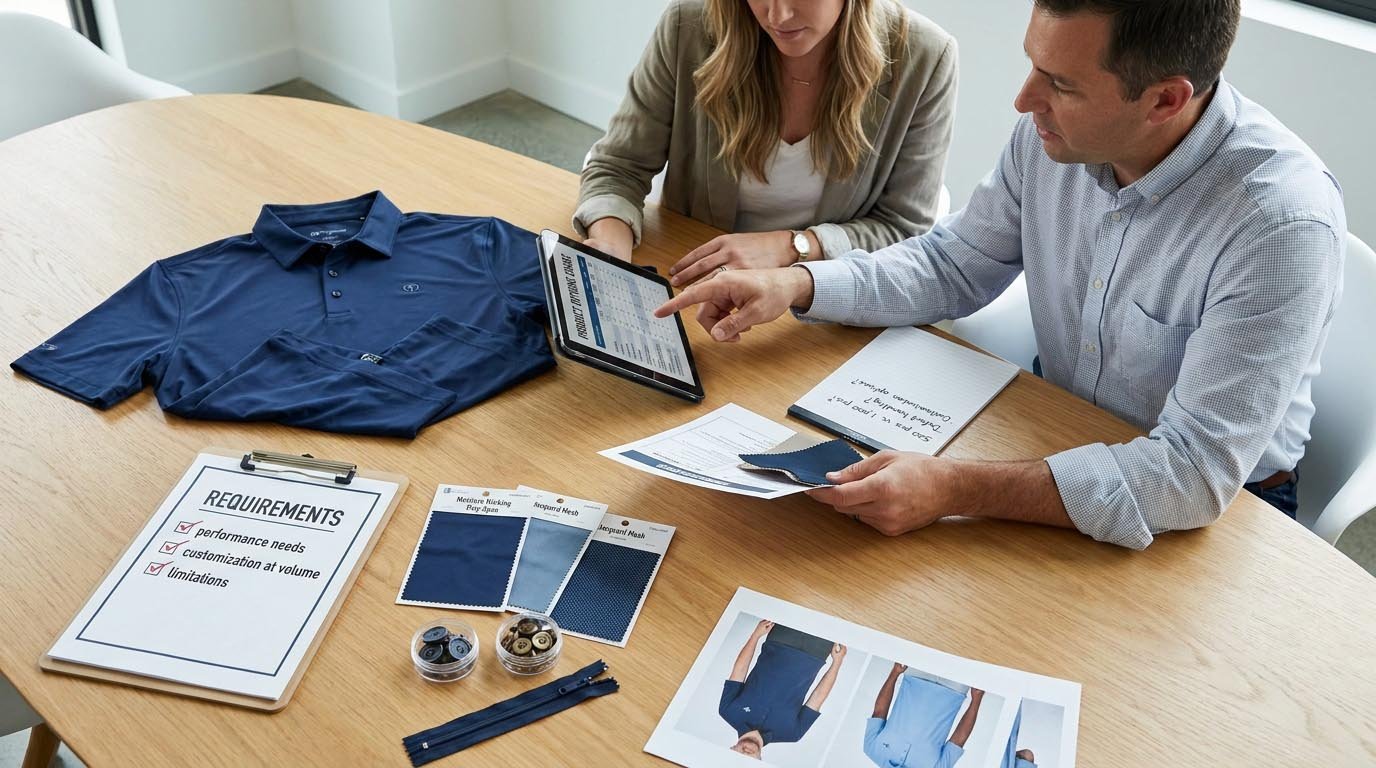
A better way to work with manufacturers is to lead with clear requirements.
Instead of asking:
- “What fabric should we use?”
- “What MOQ do you have?”
- “Can you do this?”
Ask:
- “Which fabric options meet these specific performance needs?”
- “At 500 pcs vs. 1,000 pcs, what customization do we gain or lose?”
- “What limitations should we expect at this volume and price point?”
These discussions become much easier when you already understand MOQ structure, fabric trade-offs, and fit priorities before the first supplier call.
Also verify claims early:
- ask for examples of similar products
- request swatches and construction samples
- confirm what is included in the sampling process
- ask how they handle defects, color mismatch, or rework
Good suppliers do not say yes to everything. They explain trade-offs clearly.
Common Mistakes to Avoid
Most failed launches are not caused by one catastrophic error. They are caused by a series of small decisions that make the product weaker, less focused, or harder to sell.
Avoid these common mistakes:
-
Skipping fit revisions to save time or money
This often creates higher returns and weak reviews later.See our golf apparel fit guide for a better testing process. -
Launching too many products at once
More SKUs do not automatically make a new brand look more credible.A better starting point is covered in best first products for a golf apparel brand. -
Accepting the first fabric option offered
Always compare alternatives.Our guide to the best fabrics for golf apparel explains what to evaluate. -
Copying competitor size charts without testing
Fit has to match your own target customer.See our golf apparel fit guide. -
Setting the launch date before understanding development timing
This usually leads to rushed approvals and preventable compromises. -
Underbudgeting freight, duties, inspection, and contingency
These costs are not optional. -
Believing every promise a supplier makes at low MOQ
Real customization has practical limits.Read golf apparel MOQ explained.
A useful rule for every decision is this:
Does this choice serve the target golfer, or does it only make development easier?
Need Help Developing Your Golf Apparel Line?
We work with brands developing private label and custom golf apparel, from early concept planning to bulk production.
We can help with:
- product planning for a realistic first launch
- fabric and trim selection based on budget and positioning
- fit development for golf-specific movement and comfort
- sampling revisions and production coordination
- MOQ planning and scale-up after validation
If you already have sketches, samples, or a rough product plan, we can help you evaluate whether the line is commercially realistic before you commit to bulk production.