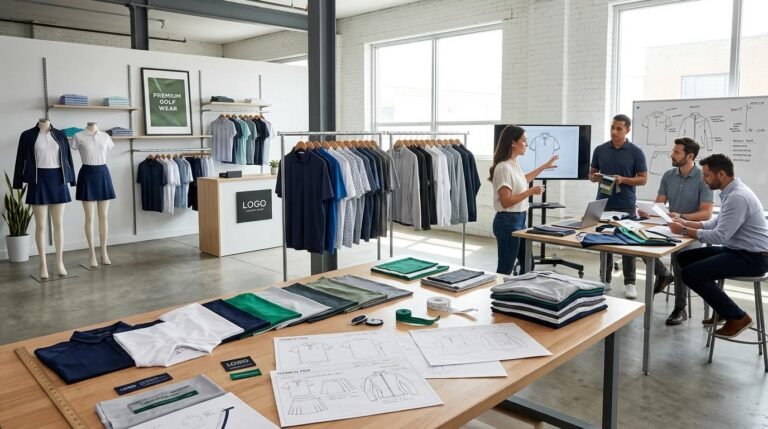
A client came to me last April with $18,000 to invest in their first spring/summer golf line. They wanted 12 different polo styles across 4 colors each—48 SKUs total. I asked about layering pieces. They said "it's summer, nobody needs layers." By July, they were out of stock on core polos and getting customer requests for lightweight quarter-zips they did not have.
Spring/summer golf collections fail when brands treat warm-weather months as "polo-only season," ignoring the 15-25°C morning temperatures, wind exposure on exposed courses, and 4-5 hour wearing duration that create demand for layering pieces accounting for 35-45% of successful collection volume—not the 10-15% most first-time brands allocate.
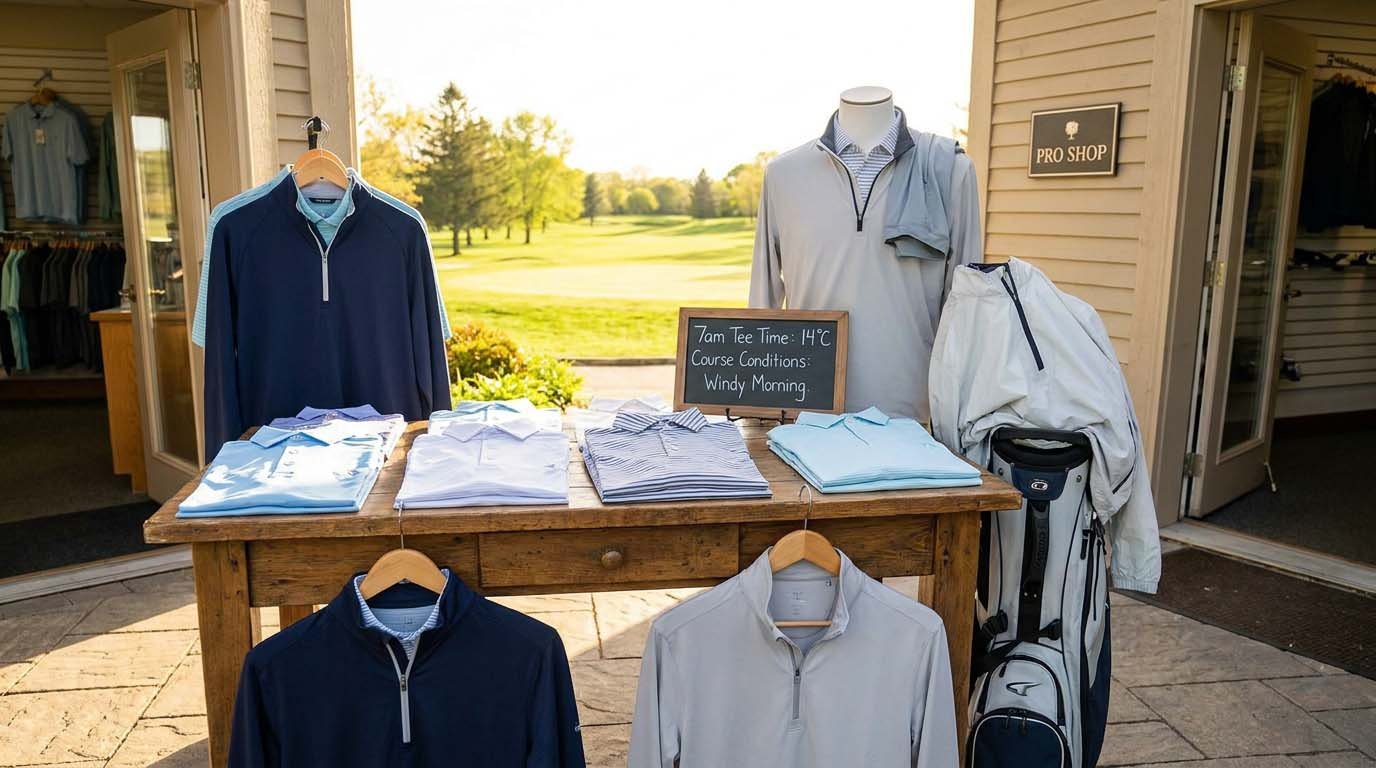
I see this pattern repeatedly: brands enter spring/summer thinking "hot weather = fewer layers," then discover golf's temperature variance creates layering demand they did not plan for. Morning tee times at 7-8am face 12-18°C temperatures. Evening rounds cool down rapidly after 6pm. Coastal courses have persistent wind regardless of air temperature. The result: polo-heavy inventory sits while customers ask for quarter-zips and vests that do not exist. I have worked with 50+ golf brands on seasonal collection planning. The ones that succeed understand spring/summer requires functional range across 12-30°C, not just peak summer heat. This guide shows you how to structure your spring/summer lineup to capture revenue across actual playing conditions, not theoretical "summer weather."
Quick Answers: What Brands Get Wrong About Spring/Summer Golf Collections
Q: Why do layering pieces matter even in spring/summer?
Morning/evening temps (14–20°C) drive year-round demand for quarter-zips, vests, and light hoodies.
Winning brands allocate 30–40% of SKUs and make 35–45% of revenue from layers. Over-indexing on polos leads to stockouts/reorders for essential layering.
Q: Shorts or pants for spring/summer? What’s the right ratio?
Both are essential. Shorts outsell pants 3:1 in summer but pants capture 20–35% of bottoms sales for transitional months and dress codes.
Optimal mix: 60–70% shorts, 30–40% pants.
Q: Is UPF and wickability just nice-to-have?
No—they’re core requirements for golf.
UPF (+$0.50–1.00/m) and moisture-wicking (+$0.40–0.70/m) prevent sun complaints, justify higher price, and keep apparel comfortable for 4–5 hour rounds. Brands skipping them face returns and reputation risk.
Q: Why spend on garment ventilation if the fabric wicks?
True ventilation engineering—mesh panels, vented yokes, perforation—cuts warm-weather returns in half.
Feature adds $0.80–1.40/unit and is expected above $65 retail. Lowers “too hot” returns, delivers real on-course comfort.
Q: Should we bother with rain shells in spring/summer?
Yes—even if worn rarely, they’re margin drivers.
Packable rain shells: 5–8% of inventory, 8–12% of revenue, 65–75% gross margins. Golfers buy pro-actively before trips/tournaments; these SKUs almost never need discounting.
Heat-Ready Tops: Performance Polos and UPF Sun Shirts?
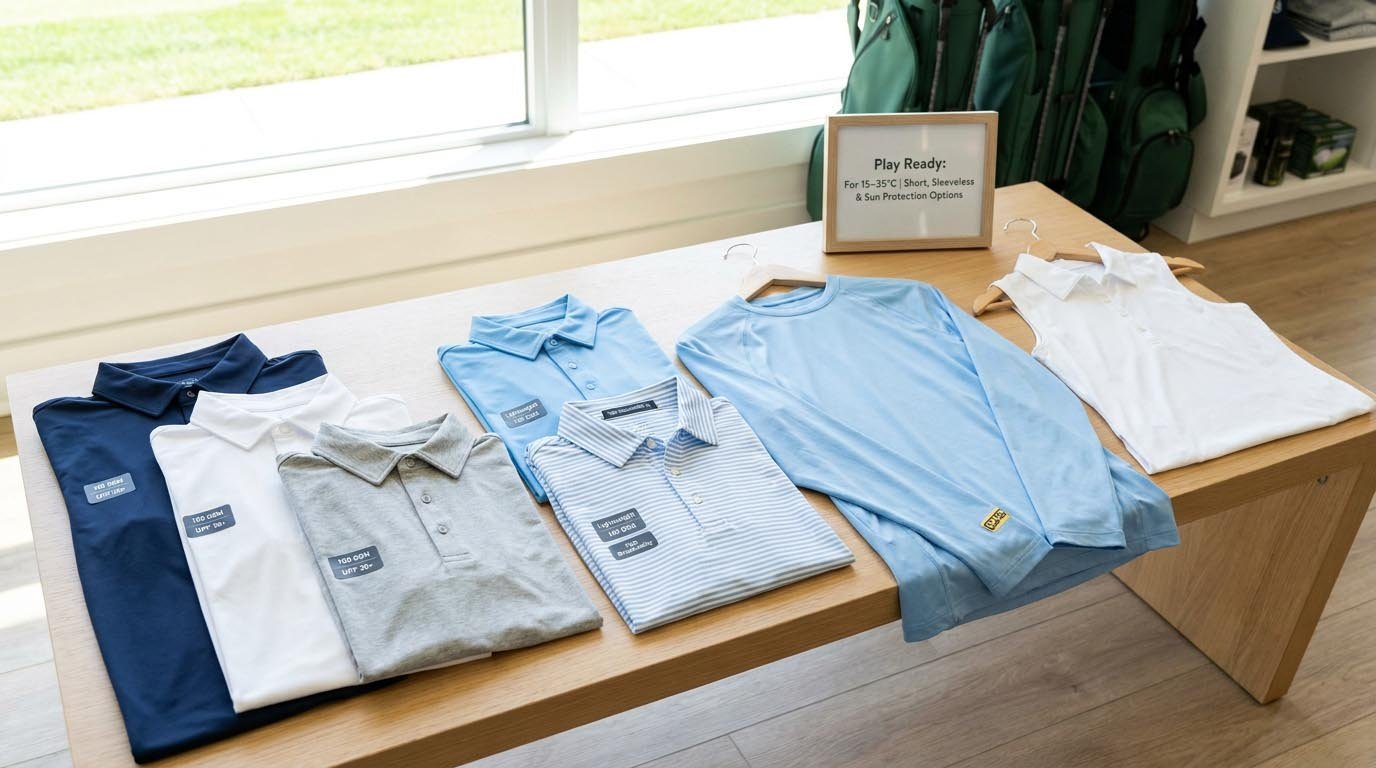
Allocate 50-60% of spring/summer inventory to performance polos and sun shirts, but structure this allocation across fabric weight tiers (160-180 GSM lightweight, 180-200 GSM standard) and sleeve lengths (short sleeve, sleeveless) rather than multiplying color variants that fragment inventory without functional differentiation.
Performance tops form your collection base, but the mistake is treating all polos as equivalent. Temperature variance across April-September creates demand for different fabric weights and coverage options.
Fabric Weight Strategy for Temperature Range
Lightweight Polos (160-180 GSM)
Target conditions:
- Peak summer heat: 28-35°C temperatures
- High humidity regions: Southeastern US, coastal areas
- Maximum breathability priority
Fabric specifications:
- Polyester-dominant blend: 92-95% polyester, 5-8% spandex
- Open knit structure: Allows maximum airflow
- Moisture-wicking essential: Without it, lightweight fabric feels clammy
Cost structure:
- Fabric cost: $4.50-6.00 per meter
- Production cost: $12-15 per piece at 800-1,000 units
- Retail positioning: $55-70
Inventory allocation:
- 35-40% of total polo volume in hot-climate markets
- 20-25% in temperate markets
Common mistake:
Brands make lightweight polos too light (140-160 GSM) to emphasize breathability, creating transparent-looking garments that appear cheap. The 160-180 GSM range is minimum for maintaining structure and opacity.
Standard Weight Polos (180-200 GSM)
Target conditions:
- Spring/fall temperatures: 18-26°C
- Early morning/evening rounds: Cooler tee times
- Temperate summer climates: Northern regions, elevated courses
Fabric specifications:
- Polyester-spandex blend: 88-92% polyester, 8-12% spandex
- Standard knit density: Balance breathability and structure
- UPF treatment recommended: Extended wear creates sun exposure
Cost structure:
- Fabric cost: $5.00-7.00 per meter
- Production cost: $13-17 per piece at 800-1,000 units
- Retail positioning: $60-80
Inventory allocation:
- 60-65% of total polo volume (workhorse tier)
- Serves broadest temperature range and customer needs
Why this weight dominates:
Players wear 180-200 GSM polos from April through September with only peak summer heat requiring lighter options. This weight feels substantial enough to justify golf apparel pricing while remaining comfortable in most conditions.
Sleeve Configuration Decision
Short Sleeve (Standard)
Best for:
- Universal appeal: 85-90% of polo sales
- Dress code compliant: Accepted at all courses
- Broadest sizing needs: Must stock S-XXL adequately
Inventory allocation:
- 80-85% of polo inventory
Sleeveless/Tank Style
Best for:
- Peak summer: Very hot climates only
- Younger demographics: Ages 25-45 primarily
- Casual courses: Many traditional clubs restrict sleeveless
Inventory allocation:
- 10-15% of polo inventory maximum
- Risk: Dress code limitations reduce market size
Cost difference:
Sleeveless saves $0.80-1.20 per piece in fabric, but does not command higher pricing—often priced $5-10 lower than short sleeve. The savings mostly benefit customer, not margin.
Long Sleeve Sun Shirts
Best for:
- Sun protection focus: Players concerned about arm exposure
- Spring/fall comfort: 15-22°C temperatures
- Layering versatility: Can wear under vests or jackets
Inventory allocation:
- 5-10% of spring/summer top inventory
- Niche but growing category
Cost structure:
- Production cost: $15-19 per piece (more fabric than short sleeve)
- Retail positioning: $70-90 (premium over short sleeve)
Why brands skip this:
Long sleeve in spring/summer feels counterintuitive, but sun-conscious players and cooler-climate markets create steady demand. The category differentiates your collection while serving real needs.
UPF Treatment: Worth the Investment?
UPF Cost-Benefit Analysis
UPF treatment options:
- Fabric-level treatment: $0.50-1.00 per meter additional
- UPF 30-40: Adequate protection, $0.50-0.70 per meter
- UPF 50+: Maximum protection, $0.80-1.20 per meter
Real-world impact:
- Polyester fabric naturally provides UPF 15-25 untreated
- UPF treatment adds $0.60-1.20 per piece in landed cost
- Allows $10-15 higher retail pricing with "sun protection" positioning
Customer perception:
Players cannot verify UPF ratings during purchase or wear, but "UPF 50" specification signals quality positioning. More importantly, it addresses legitimate concern—4-5 hour sun exposure during rounds creates actual protection need.
My recommendation:
- UPF 30-40 for value-tier polos ($55-65 retail): Adequate protection at reasonable cost
- UPF 50+ for premium polos ($75+ retail): Justifies pricing and meets expectations
- Skip UPF certification only if positioning as value/budget brand under $50 retail
Performance Polo SKU Structure
Successful SKU allocation for 800-piece polo order:
| Polo Type | Piece Count | Colors | Why This Proportion |
|---|---|---|---|
| Standard weight, short sleeve | 500-550 (65%) | 3-4 core colors | Workhorse tier, serves most customers |
| Lightweight, short sleeve | 150-200 (20%) | 2-3 colors | Peak summer demand, hot climates |
| Long sleeve sun shirt | 50-80 (8%) | 1-2 colors | Niche but differentiating |
| Sleeveless | 50-70 (7%) | 1-2 colors | Optional—skip if conservative positioning |
This structure provides:
- Adequate depth in core products (500+ pieces across 3-4 colors = 125-180 per color)
- Functional variety without excessive fragmentation
- Entry into differentiated categories (long sleeve, lightweight) without overcommitment
Failed allocation pattern:
Equal distribution across 6-8 polo styles in 4 colors each = 24-32 SKUs at 25-35 pieces per SKU. This creates:
- Stockouts in popular combinations within 2-3 weeks
- Dead inventory in slow styles/colors
- Insufficient volume to reorder efficiently
The principle: Depth beats variety in core products. Better to have 150 pieces of your #1 polo in navy than 40 pieces each of 4 different navy polos.
Light Layers: Quarter-Zips, Breathable Hoodies and Vests?
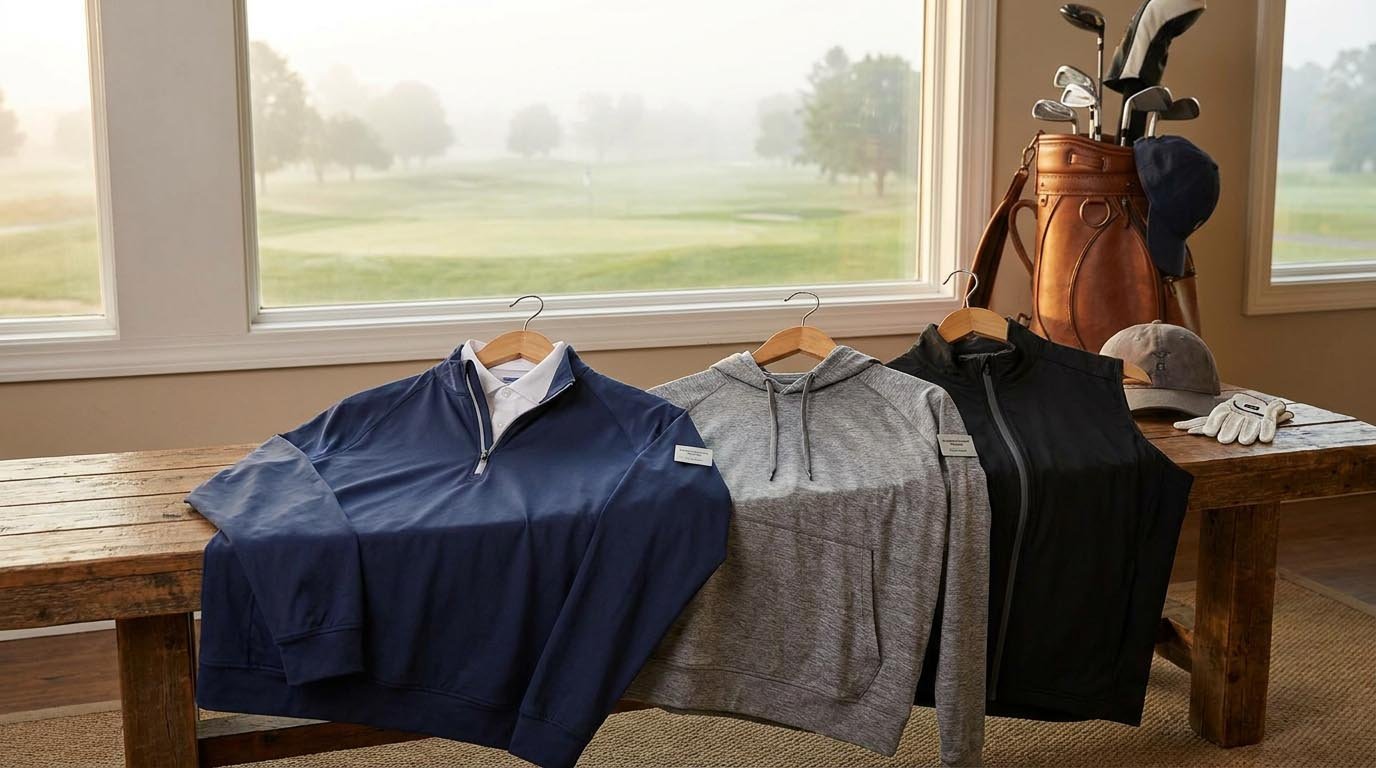
Allocate 30-40% of spring/summer inventory to layering pieces despite first instinct to minimize "winter items"—morning tee times, evening rounds, and wind exposure create consistent layering demand that generates 35-45% of revenue at superior margins (65-70% vs 60-65% for polos).
The most common spring/summer planning mistake: under-allocating layering inventory because brands mentally associate layers with cold weather. But golf's extended playing duration and temperature variance make layering essential even in warm months.
Temperature Reality vs Brand Assumptions
Actual Spring/Summer Golf Temperatures:
Morning tee times (7-9am):
- April-May: 12-18°C in most regions
- June-August: 15-22°C even in hot climates
- September: 14-20°C transitional temperatures
Midday play (10am-2pm):
- Peak temperatures: 25-35°C depending on region
- Polos sufficient: Layering removed and stored
Evening rounds (5-8pm):
- Temperatures drop 5-8°C from peak
- Wind increases: Coastal courses particularly exposed
- Layering returns: Players put quarter-zips back on
The pattern: Spring/summer golf happens across 12-30°C range, not just the 25-30°C peak heat brands imagine when planning.
Quarter-Zip Pullovers: The Underestimated Essential
Why quarter-zips generate disproportionate revenue:
Performance data from 20+ client collections:
- Volume: 25-30% of spring/summer pieces (not including polos)
- Revenue: 35-40% of spring/summer dollars
- Margin: 65-70% gross margin (higher pricing with manageable cost)
Quarter-Zip Fabric Specifications for Spring/Summer:
Lightweight Performance Fleece:
- Weight: 220-260 GSM (much lighter than fall/winter 280-320 GSM)
- Construction: Thin fleece with moisture-wicking treatment
- Breathability: Must work when temperature rises to 22-25°C
Cost structure:
- Fabric cost: $5.50-7.50 per meter
- Production cost: $18-24 per piece at 800-1,000 units
- Retail positioning: $75-95
Why this works commercially:
- Production cost only $5-9 higher than polos
- Retail price is $15-25 higher than polos
- Margin dollars per piece: $30-40 vs $22-30 for polos
Quarter-Zip Inventory Allocation:
For 800-piece total layering order:
- Quarter-zips: 450-500 pieces (55-60%)
- Colors: 3 core colors (navy, black, gray)
- Sizing: S-XXL (5 sizes)
- Per-SKU depth: 30-35 pieces (adequate for testing without overcommitment)
Breathable Hoodies: Lifestyle Differentiation
Hoodie positioning in spring/summer collections:
Hoodies serve different needs than quarter-zips:
Quarter-zips:
- Traditional golf aesthetic
- Universal course acceptance
- Functional focus (remove/add easily during rounds)
Hoodies:
- Lifestyle crossover appeal
- Younger demographic resonance (ages 25-45)
- Casual comfort (worn before/after rounds, not during)
Spring/Summer Hoodie Specifications:
Different from fall/winter hoodies:
Fabric weight:
- 240-280 GSM (lighter than fall 300-320 GSM)
- French terry or lightweight performance fleece
- Breathability critical—players wear 18-24°C conditions
Construction:
- Thinner hood: Less insulation than cold-weather versions
- No lining: Single-layer construction for breathability
- Lighter zipper: Reduces weight and bulk
Cost structure:
- Production cost: $20-26 per piece at 800-1,000 units
- Retail positioning: $80-100
Hoodie Inventory Allocation:
For 800-piece total layering order:
- Hoodies: 200-250 pieces (25-30%)
- Colors: 2-3 colors (navy, black, gray or heather)
- Sizing: S-XXL
- Per-SKU depth: 35-45 pieces
Why lower allocation than quarter-zips:
- Dress code concerns at 20-30% of courses
- More lifestyle than functional (limits on-course use)
- Competes with off-course casual wear (broader market, more competition)
But hoodies differentiate your brand:
- Lifestyle positioning attracts younger customers
- Higher perceived value (customers wear off-course frequently)
- Instagram/social media appeal (lifestyle photography)
Vests: Niche But High-Margin Opportunity
Vest positioning in spring/summer:
Vests seem like fall/winter products, but spring/summer versions serve specific needs:
Lightweight vest use cases:
- Morning rounds: Core warmth without arm restriction (14-20°C)
- Wind protection: Coastal courses, elevated terrain
- Layering flexibility: Over polos when temperature is borderline
Spring/Summer Vest Specifications:
Critically different from fall/winter vests:
Insulation:
- Thin synthetic fill or no insulation (just shell with light lining)
- 30-50 gram fill vs 80-120 gram fall/winter
- Priority: Wind protection, not warmth
Fabric:
- Lightweight shell: 180-220 GSM polyester
- Water-resistant treatment: Light rain/morning dew protection
- Breathability: Must work when temperature hits 22-25°C
Cost structure:
- Production cost: $22-28 per piece at 800-1,000 units
- Retail positioning: $90-120
Vest Inventory Allocation:
For 800-piece total layering order:
- Vests: 100-150 pieces (15-20%)
- Colors: 2 colors maximum (navy, black)
- Sizing: S-XXL
- Per-SKU depth: 25-30 pieces (testing allocation)
Commercial logic:
- Vests generate highest margins (68-75% gross) in layering category
- Limited on-course use means less promotional pressure
- Strong gift-purchase appeal (Father's Day, birthdays)
When to skip vests:
- First spring/summer collection with limited capital (under $15,000)
- Hot-climate-only markets (Florida, Arizona, Texas summer)
- Budget-conscious positioning (under $60 average retail)
Layering SKU Structure Decision
Complete layering allocation for 800-piece order:
| Product Type | Piece Count | % of Total | Colors | Rationale |
|---|---|---|---|---|
| Quarter-zips | 450-500 | 55-60% | 3 (navy, black, gray) | Workhorse layering, highest volume |
| Hoodies | 200-250 | 25-30% | 2-3 (navy, black, heather) | Lifestyle differentiation |
| Vests | 100-150 | 15-20% | 2 (navy, black) | Premium margin, niche appeal |
This creates 7-8 layering SKUs (quarter-zips 3 colors × 5 sizes + hoodies 2 colors × 5 sizes + vests 2 colors × 5 sizes) with adequate depth per SKU.
Why this works:
- Quarter-zip depth: 30-35 pieces per size in each color covers demand
- Hoodie/vest testing: 25-30 pieces per size allows market validation
- Inventory efficiency: Not fragmenting across 10+ layering styles
Failed pattern:
Brands allocate 100-150 pieces total to all layering combined, thinking "it's warm season, minimal layer sales." Then they sell out in 2-3 weeks during spring, have no inventory for fall shoulder season, and miss 30-40% of potential revenue.
Course-Ready Bottoms: Stretch Pants, Tailored Shorts, Skorts and Dresses?
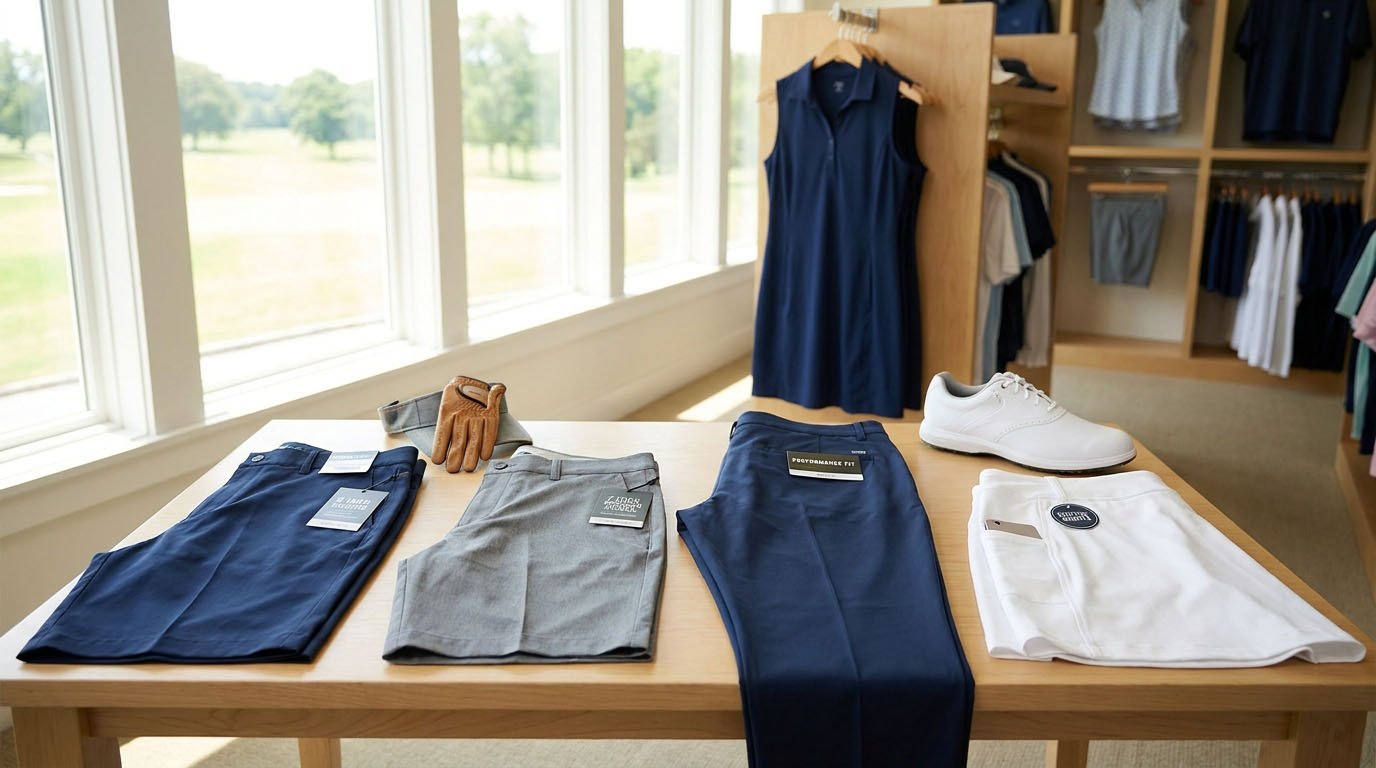
Structure spring/summer bottom inventory at 60-70% shorts and 30-40% pants to serve peak summer (shorts-dominant) and transitional months (pants-necessary), avoiding the common mistake of shorts-only commitment that misses 25-35% of spring/shoulder-season revenue.
Bottoms create the most inventory complexity in spring/summer collections due to sizing, but they are essential for complete outfit offerings and dress code compliance.
Shorts vs Pants Proportion Logic
Monthly demand patterns across spring/summer:
| Month | Temperature Range | Shorts % | Pants % | Why |
|---|---|---|---|---|
| April | 12-22°C | 40% | 60% | Early season, cooler mornings |
| May | 16-26°C | 55% | 45% | Warming, but variable |
| June | 20-30°C | 75% | 25% | Peak summer begins |
| July | 22-32°C | 85% | 15% | Hottest month |
| August | 22-32°C | 85% | 15% | Continued heat |
| September | 18-28°C | 60% | 40% | Cooling, transitional |
Seasonal totals:
- Shorts: 65-70% of bottom sales April-September
- Pants: 30-35% of bottom sales
Why pants matter despite lower summer volume:
- April-May demand: Pants outsell shorts in early spring
- Air-conditioned clubhouses: Some players prefer pants regardless of heat
- Dress code requirements: Small percentage of clubs require pants
- Regional variation: Northern/mountain courses remain cooler
Common mistake:
Brands commit to shorts-only for spring/summer, then face pants requests throughout April-May and miss 20-30% of early-season bottom revenue.
Golf Shorts Specifications
Inseam Length Strategy:
Offer 2 inseam options for market coverage:
9-inch inseam:
- Target demographic: Ages 35-55+, traditional golfers
- Fit preference: Classic, conservative length
- Volume: 60-65% of shorts sales
7-inch inseam:
- Target demographic: Ages 25-40, modern preference
- Fit preference: Above-knee, athletic appearance
- Volume: 35-40% of shorts sales
Cost impact:
Shorter inseams use less fabric but do not reduce production cost meaningfully (saves $0.20-0.40 per piece). Price both equally—length is preference, not value difference.
Inventory allocation:
If ordering 500 shorts total:
- 300-325 pieces: 9-inch inseam
- 175-200 pieces: 7-inch inseam
Fabric and Construction:
Fabric specifications:
- Weight: 220-260 GSM (structured but not heavy)
- Stretch: 2-way or 4-way stretch for comfort and mobility
- Blend: 92-96% polyester or poly-cotton, 4-8% spandex
Construction features:
- Waistband: Stretch or adjustable (comfort for 4-5 hours)
- Pockets: Deep front pockets (6-7 inches) for balls/tees
- Back pockets: At least one button/zip closure (wallet security)
- Hem: Clean finished hem, no raw edges
Cost structure:
- Production cost: $15-20 per piece at 1,000 units
- Retail positioning: $65-85
Golf Pants for Spring/Summer
Fabric Weight Adjustment:
Spring/summer pants need lighter weight than fall/winter:
Spring/Summer pants:
- Weight: 240-280 GSM (lighter than fall 280-320 GSM)
- Breathability: More critical than insulation
- Stretch: Essential for comfort in warmer weather
Fall/Winter pants:
- Weight: 280-320 GSM
- Warmth: Light insulation or thermal properties
- Stretch: Important but secondary to structure
Cost difference:
Spring pants cost $1.50-2.50 less per piece due to lighter fabric, but retail pricing remains similar ($85-110).
Inventory allocation:
If ordering 350 pants total for spring/summer:
- Colors: 2-3 colors (navy, khaki, gray)
- Sizing: 4-5 waist sizes (32, 34, 36, 38, 40)
- Length: Regular only initially (add Short/Long after validation)
- SKU structure: 2 colors × 5 sizes = 10 SKUs at 35 pieces per SKU
Why this works:
- Adequate depth in core sizes to prevent stockouts
- Limited color/length variants prevent fragmentation
- Can expand to full matrix after validating demand
Skorts and Dresses: Women's Category Essentials
Market reality:
Women's golf apparel is growing faster than men's (15-20% annual growth vs 8-12% for men's in recent years), but requires different inventory approach.
Skorts (Shorts + Skirt Hybrid):
Why skorts dominate women's bottoms:
- Dress code compliant: Accepted at all courses
- Coverage + comfort: Skirt appearance with shorts functionality
- Universal appeal: 70-75% of women's bottom sales
Skort specifications:
- Length: 14-16 inches (most common)
- Built-in shorts: 4-6 inch inseam underneath skirt layer
- Waistband: Comfortable stretch for movement
- Pockets: Essential—women need ball/tee storage
Cost structure:
- Production cost: $16-21 per piece (more complex than shorts)
- Retail positioning: $70-90
Inventory allocation:
Women's bottoms at 300 pieces total:
- Skorts: 210-225 pieces (70-75%)
- Shorts: 75-90 pieces (25-30%)
Golf Dresses:
Dress positioning:
- Lifestyle appeal: Works on-course and off-course
- Differentiation: Not all brands offer dresses
- Higher price point: $90-120 retail (premium positioning)
Dress specifications:
- Length: Above-knee (golf-appropriate, not casual)
- Built-in shorts: Essential (modesty during bending, swinging)
- Fabric: Stretch performance blend (comfort, movement)
- Sleeves: Sleeveless or short sleeve (warm weather)
Cost structure:
- Production cost: $20-26 per piece (complex pattern, more fabric)
- Retail positioning: $95-125
Inventory allocation:
If adding dresses to women's collection:
- Allocation: 5-10% of women's inventory initially
- Colors: 1-2 colors maximum for testing
- Sizing: XS-XL (women's sizes require broader range)
When to add dresses:
- Second or third season after validating women's skorts/tops
- Women's line generating $15,000+ revenue consistently
- Customer requests for dress options
When to skip:
- First women's collection (focus on essentials)
- Limited capital (under $20,000 total budget)
Bottom SKU Structure for Spring/Summer
Complete bottom allocation for 800-piece bottom order:
| Product Type | Piece Count | % of Total | Why This Proportion |
|---|---|---|---|
| Men's shorts (9" inseam) | 240-280 | 30-35% | Primary summer bottom, traditional length |
| Men's shorts (7" inseam) | 140-160 | 18-20% | Modern length preference |
| Men's pants | 200-240 | 25-30% | Spring/fall essential, niche summer |
| Women's skorts | 120-160 | 15-20% | Women's workhorse bottom |
| Women's shorts/dresses | 40-60 | 5-8% | Supplementary options |
This structure:
- Prioritizes men's shorts (peak summer demand)
- Maintains pants inventory for transitional months
- Provides women's essentials without overcommitment
Weather Insurance: Windbreakers and Packable Rain Shells?
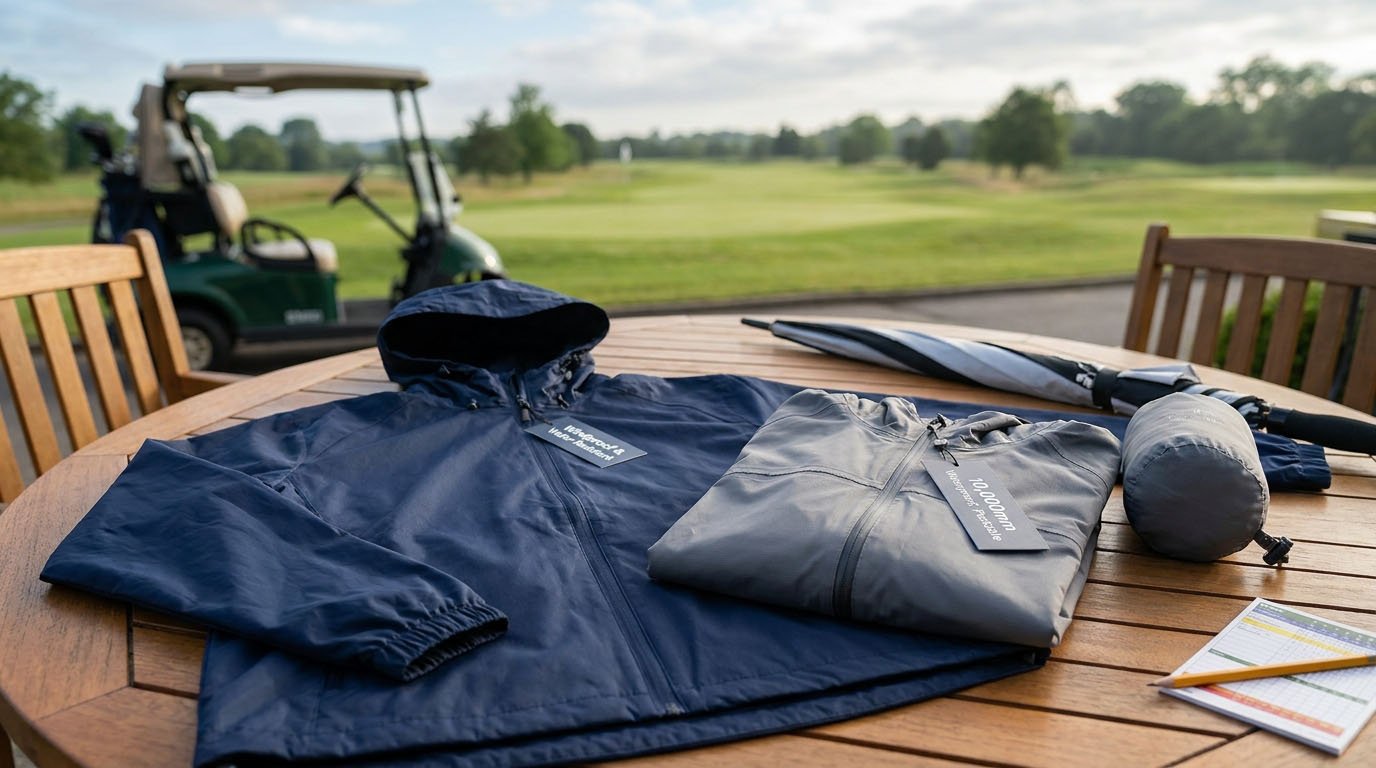
Allocate 5-8% of spring/summer inventory to weather-protective outerwear despite low daily usage frequency—customers buy rain shells preemptively before tournaments and trips, not reactively during rain, creating predictable sales that generate 8-12% of revenue at 65-75% margins.
Brands resist adding rain gear to spring/summer lineups thinking "it's not rain season." This misunderstands purchase behavior: golfers buy weather protection in advance of need, not during storms.
Windbreakers: Daily-Use Outerwear
Windbreaker use cases in spring/summer:
Morning/evening temperature protection:
- Worn over polos when temperature is 14-20°C
- Removed when warming to 22-25°C
- Returns to bag for late-round cooling
Wind exposure management:
- Coastal courses (persistent wind regardless of temperature)
- Elevated courses (wind increases at altitude)
- Open/links-style layouts (no tree protection)
Why windbreakers outperform expectations:
Sales data from 15+ client brands:
- Volume: 6-9% of spring/summer pieces
- Revenue: 10-14% of spring/summer dollars
- Usage: Players wear windbreakers 40-60% of spring/fall rounds
Windbreaker Specifications for Spring/Summer:
Fabric:
- Weight: 120-160 GSM (lightweight shell, not insulated)
- Water resistance: DWR coating (light rain/morning dew protection)
- Windproofing: Tight weave or laminate (blocks wind without heavy coating)
- Breathability: Critical—players wear during active play
Construction:
- Packable: Folds into own pocket or small stuff sack
- Hood: Optional but adds value (rain/wind protection)
- Venting: Underarm mesh or back vents (heat management)
- Pockets: Zippered (secure valuables during movement)
Cost structure:
- Production cost: $28-36 per piece at 800-1,000 units
- Retail positioning: $95-130
Margin advantage:
- Production cost similar to quarter-zips/hoodies
- Retail price is $20-35 higher due to technical functionality
- Gross margin: 65-72% vs 60-65% for layering
Inventory allocation:
For 1,500-piece total spring/summer collection:
- Windbreakers: 90-120 pieces (6-8%)
- Colors: 2 colors (navy, black)
- Sizing: S-XXL
- Per-SKU depth: 18-24 pieces (adequate for niche product)
Packable Rain Shells: Premium Protection
Rain shell purchase behavior:
Key insight: Rain shells sell before rain, not during:
Purchase triggers:
- Upcoming golf trips (Florida, Scotland, resort courses)
- Tournament preparation (amateur events, club championships)
- Rainy season approach (spring in many regions)
- Gift purchases (practical, high-value gift option)
Not triggered by:
- Current weather (customers do not buy rain gear mid-storm)
This means spring/summer rain shell sales are predictable based on:
- Tournament calendar (March-May amateur events)
- Spring break travel (March-April)
- Father's Day gifting (June)
Rain Shell Specifications:
Waterproofing requirements:
| Tier | Waterproof Rating | Breathability | Use Case | Cost Impact |
|---|---|---|---|---|
| Basic | 5,000-8,000mm | Limited | Light rain, value positioning | +$0 baseline |
| Standard | 10,000-15,000mm | Moderate | Steady rain, most customers | +$4-7 per piece |
| Premium | 15,000-20,000mm+ | High (membrane) | Heavy rain, serious players | +$10-15 per piece |
My recommendation:
Target 10,000-15,000mm waterproofing for $110-140 retail positioning. This serves 80-85% of customer needs without premium membrane costs.
Construction features:
Essential:
- ✓ Sealed seams: Critical areas (shoulders, hood) minimum
- ✓ Water-resistant zippers: Front zip and pockets
- ✓ Adjustable hood: Secure fit during windy rain
- ✓ Packable design: Stores in bag easily
Optional (premium tier only):
- Fully taped seams: All seams sealed (adds $3-5 per piece)
- Pit zips: Underarm ventilation (adds $1.50-2.50)
- Premium membrane: Gore-Tex or equivalent (adds $8-12 per piece)
Cost structure:
- Production cost: $38-52 per piece at 800-1,000 units (depending on waterproof specs)
- Retail positioning: $110-160
Commercial logic:
Rain shells generate highest margins in spring/summer collection:
- Gross margin: 65-75% (premium pricing with manageable cost)
- Low promotional pressure: Functional necessity, not fashion item
- Gift-purchase appeal: Higher average transaction value
Inventory allocation:
For 1,500-piece total spring/summer collection:
- Rain shells: 75-100 pieces (5-7%)
- Colors: 2 colors maximum (navy, black or gray)
- Sizing: S-XXL
- Per-SKU depth: 15-20 pieces
Why conservative allocation:
- Lower volume than daily-wear items (polos, shorts)
- Higher price point creates natural demand ceiling
- Multi-season lifespan: Customers buy once, use 2-3 years
Weather Gear Investment Decision
When to include windbreakers:
- All spring/summer collections (daily use justifies inclusion)
- Budget: $2,500-3,500 allocated to windbreakers
- ROI: 10-14% of revenue from 6-8% of inventory
When to include rain shells:
- Second season or later (after establishing base collection)
- Rainy-climate markets: Pacific Northwest, UK, Northeastern US
- Budget: $3,000-5,000 allocated to rain shells
- ROI: 8-12% of revenue from 5-7% of inventory
When to skip rain shells:
- First spring/summer collection with limited capital (under $18,000)
- Arid markets: Arizona, Southern California summer
- Value positioning: Rain shells require premium pricing to work
Weather gear budget allocation:
For $25,000 total spring/summer production budget:
- Windbreakers: $2,800-3,600 (11-14%)
- Rain shells: $3,200-4,500 (13-18%) if included
- Combined: $6,000-8,000 (24-32%) for weather protection
This leaves $17,000-19,000 for tops/bottoms (core volume drivers).
Fabric & Feature Checklist: UPF, Ventilation, Quick-Dry and Odor Control?
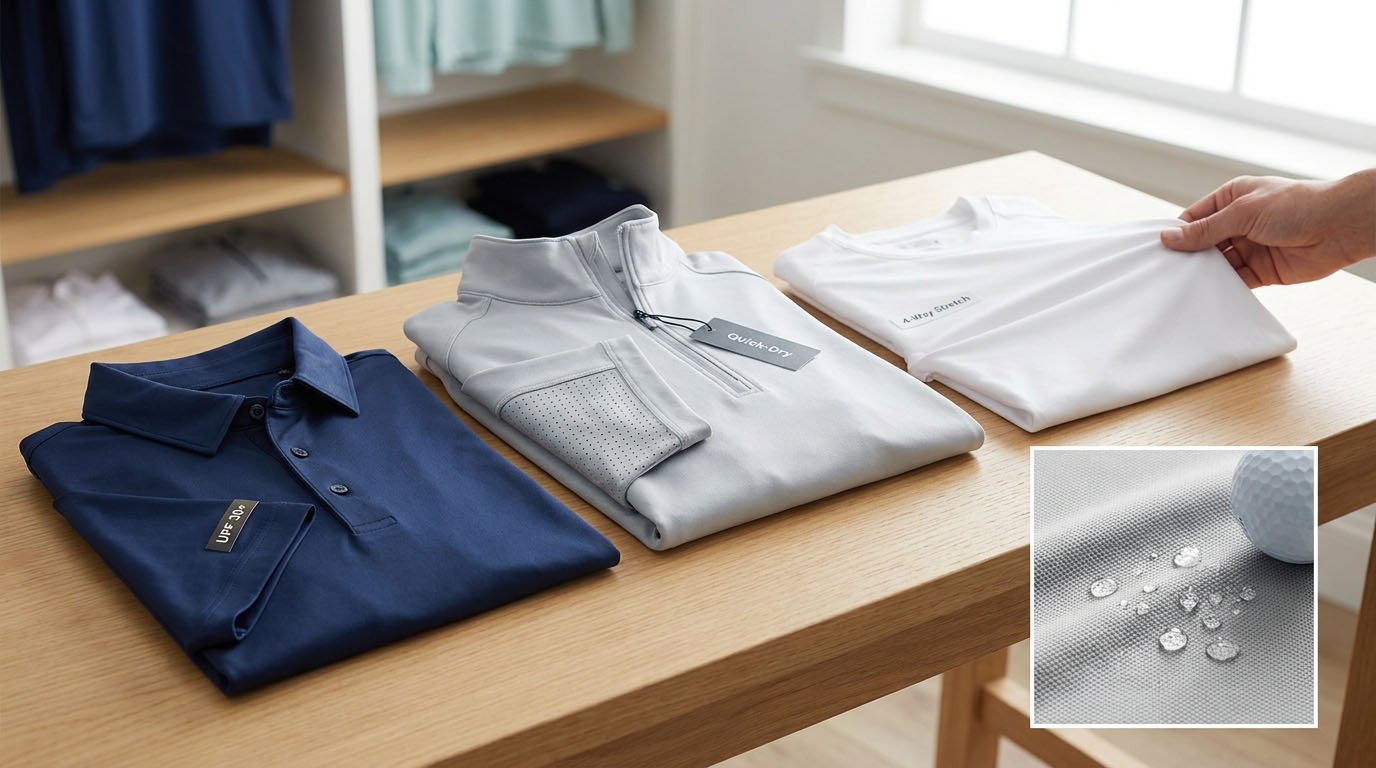
Invest in fabric features customers can verify through wearing—stretch behavior, moisture feel, durability through washing—not invisible lab specifications that only appear on hang tags, prioritizing features that justify your retail price positioning rather than matching competitor feature lists.
Fabric technology conversations with first-time brands follow a pattern: they see competitor hang tags listing UPF 50+, antimicrobial treatment, advanced cooling, then ask if they need "all those features." My question back: "What price are you targeting and what problems does your customer actually face?"
Feature-to-Price-Tier Mapping
Value Tier ($50-65 Retail):
Essential features only:
- ✓ Basic stretch: 10-15% stretch for movement comfort
- ✓ Moisture-wicking treatment: Prevents cotton-like saturation
- ✓ Anti-pilling finish: Garment looks presentable through 20-30 wears
Skip these:
- ✗ Specific UPF ratings (natural polyester protection adequate)
- ✗ Antimicrobial treatments (regular washing sufficient)
- ✗ Advanced cooling claims (basic breathability works)
Total fabric premium: +$1.20-2.00 per meter vs non-performance fabric
Mid Tier ($65-85 Retail):
Enhanced performance:
- ✓ Enhanced stretch: 15-20% stretch or 4-way stretch
- ✓ Moisture-wicking: Enhanced treatment for faster drying
- ✓ UPF 30-40: Documented sun protection
- ✓ Quality anti-pilling: Durable through 40-50 washes
Optional:
- ⚠ Odor-control treatment: If positioning emphasizes multi-day wear
- ⚠ Cooling treatment: If target market is hot climate
Total fabric premium: +$2.20-3.80 per meter vs basic athletic fabric
Premium Tier ($85-110+ Retail):
Maximum performance:
- ✓ 4-way stretch: Unrestricted movement all directions
- ✓ Advanced moisture management: Rapid-dry properties
- ✓ UPF 50+: Maximum sun protection specification
- ✓ Long-lasting anti-pilling: Documented 60+ wash durability
- ✓ Anti-odor technology: Multi-day tournament use
- ✓ Thermal regulation: Hot climate or technical positioning
Total fabric premium: +$3.80-6.50 per meter vs basic fabric
Verifiable vs Unverifiable Features
Customers Can Verify (Worth Investment):
Stretch and Recovery:
- Test method: Pull fabric, observe snap-back
- Customer experience: Immediate feel during movement
- Cost-to-value: High (+$0.80-1.40 per meter creates noticeable difference)
Moisture-Wicking Behavior:
- Test method: Wear during humid/warm activity, observe dryness
- Customer experience: Noticeable within 30-60 minutes of wear
- Cost-to-value: High (+$0.40-0.70 per meter prevents discomfort)
Anti-Pilling Durability:
- Test method: Multiple wash cycles, inspect surface
- Customer experience: Evident after 10-15 washes
- Cost-to-value: Medium (+$0.30-0.60 per meter, but long-term perception)
Fabric Hand Feel (Weight/Softness):
- Test method: Handle garment, compare to competitors
- Customer experience: Immediate in-store or unboxing
- Cost-to-value: High (proper fabric weight costs no more, just specification choice)
Customers Cannot Verify (Question Investment):
UPF Ratings Above 30:
- Reality: Cannot distinguish UPF 30 vs UPF 50 during wear
- Cost: +$0.50-1.00 per meter for higher rating
- Recommendation: UPF 30-40 adequate unless premium positioning requires UPF 50
Antimicrobial Treatment:
- Reality: Cannot distinguish from regular odor control
- Duration: Many treatments degrade after 15-20 washes
- Cost: +$0.40-0.90 per meter
- Recommendation: Skip unless specific positioning (multi-day wear focus)
Moisture Transport Rate Numbers:
- Reality: Lab measurement (3.5 vs 4.2 rating) imperceptible to customers
- Cost: Minimal—mostly marketing language
- Recommendation: Generic "moisture-wicking" sufficient
Cooling/Thermal Regulation Technology:
- Reality: Hard to isolate from basic breathability
- Cost: +$0.80-1.50 per meter
- Recommendation: Only if hot-climate market and premium positioning justify cost
Ventilation Engineering
Garment-level ventilation often delivers more noticeable cooling than fabric treatments:
Ventilation Options:
Mesh Panels:
- Location: Underarms, side panels, back yoke
- Size: 2-4 inch panels typical
- Cost impact: +$0.80-1.40 per piece (additional pattern, fabric)
- Customer perception: Visible feature signals performance
Laser Perforations:
- Location: Back shoulders, under arms
- Pattern: Micro-holes in strategic zones
- Cost impact: +$0.60-1.20 per piece
- Customer perception: Subtle performance detail
Vented Construction:
- Location: Back center or sides
- Design: Overlapping layers allow airflow
- Cost impact: +$1.00-1.80 per piece (complex construction)
- Customer perception: Premium performance engineering
Recommendation:
For $75+ retail positioning, add ventilation features. For $55-70 retail, focus budget on fabric breathability rather than construction ventilation.
Quick-Dry Performance
Quick-dry reality check:
Marketing claim: "Dries 3X faster than cotton"
Real-world meaning: Polyester-based fabric dries in 45-90 minutes vs cotton 3-4 hours
Customer benefit:
- Garment comfortable throughout round (no wet, heavy feel)
- Can wash and wear next day if needed
- Multi-day golf trips (pack fewer garments)
Cost to deliver:
- Polyester-dominant blend: 85-95% polyester (baseline requirement)
- Open knit structure: Allows air circulation (no cost premium, specification choice)
- Moisture-wicking treatment: +$0.40-0.70 per meter
Total investment: +$0.40-0.70 per meter vs cotton-poly blends
Worth it? Yes, for all golf positioning $55+ retail. Quick-dry is table-stakes for spring/summer golf apparel.
Odor Control Strategy
When odor control matters:
Skip odor treatment if:
- Target customer washes after each wear
- Value positioning (under $60 retail)
- Single-day tournament/recreational play focus
Add odor treatment if:
- Multi-day tournament positioning
- Travel/resort golf emphasis
- Hot/humid climate markets
- Premium tier ($85+ retail) where customers expect it
Odor control options:
| Treatment Type | Durability | Cost Impact | Best For |
|---|---|---|---|
| Silver ion treatment | 20-30 washes | +$0.50-0.80/meter | Mid-tier, proven technology |
| Zinc-based treatment | 30-50 washes | +$0.60-1.00/meter | Premium, longer lasting |
| Fabric-embedded antimicrobial | Permanent (fabric lifespan) | +$1.20-2.00/meter | Luxury positioning only |
My recommendation:
Add odor control only at $80+ retail positioning where premium fabric investment is expected. For most spring/summer collections, regular washing frequency makes odor control unnecessary expense.
Fabric Feature Budget Allocation
For $25,000 spring/summer production budget:
Fabric upgrades total investment:
- Basic performance fabric: $1.50-2.50 per meter above non-performance
- Enhanced performance: $2.50-4.00 per meter above basic
- Premium performance: $4.00-6.50 per meter above basic
Budget impact on 1,500-piece collection:
- Basic tier: +$2,200-3,800 total fabric premium
- Enhanced tier: +$3,800-6,000 fabric premium
- Premium tier: +$6,000-9,800 fabric premium
Decision framework:
Match fabric investment to retail positioning:
- $55-70 retail: Basic performance adequate
- $70-90 retail: Enhanced performance justifies pricing
- $90+ retail: Premium performance expected by customers
Do not over-invest in fabric features your price point cannot support or under-invest relative to your positioning.
FAQ: Spring/Summer Golf Apparel Essentials
How much inventory should be polos versus layering pieces in spring/summer?
Allocate 50-60% polos and 30-40% layering (quarter-zips, hoodies, vests) for spring/summer, not the 70-80% polos most first-time brands commit to. Morning tee times (7-9am) face 14-20°C temperatures requiring layering even in summer months. Evening rounds cool 5-8°C from peak, bringing layering back into play. In tracking 25+ client collections, brands that allocated 30-40% to layering sold through this inventory within 60-90 days and reordered, generating 35-45% of spring/summer revenue despite lower piece count. Brands that allocated 10-15% to layering faced stockouts by May and missed $8,000-15,000 in potential revenue per season. Structure your 800-1,000 piece spring/summer order as: 500-600 polos (multiple weights and styles), 250-350 layering pieces (quarter-zips primary, hoodies/vests supplementary), 150-200 bottoms.
Should spring/summer golf fabrics be lighter than fall/winter versions?
Yes, reduce fabric weight 20-40 GSM for spring/summer versions of same product categories: polos drop from 190-210 GSM fall/winter to 160-200 GSM spring/summer, quarter-zips from 280-320 GSM to 220-260 GSM, pants from 280-320 GSM to 240-280 GSM. But do not go too light—under 160 GSM polos look cheap and transparent, under 220 GSM quarter-zips feel flimsy. The weight reduction improves breathability for 18-30°C temperatures without sacrificing structure. Cost impact: lighter fabrics cost $0.30-0.70 less per meter but retail pricing stays equivalent (customers expect same price as fall/winter versions). Failed approach: Brands using same fabric weights year-round get summer complaints about "too heavy/hot" from customers, then emergency-source lighter fabrics mid-season at 20-30% premium due to rush timing.
Do I need separate lightweight and standard-weight polo offerings?
Yes if targeting broad geographic markets or $20,000+ production budgets. Structure as 60-70% standard weight (180-200 GSM, serves 18-28°C) and 30-40% lightweight (160-180 GSM, serves 26-35°C). Standard weight works for most spring/summer conditions and looks/feels substantial. Lightweight targets peak summer heat in hot climates (Southern US, desert courses) where standard weight becomes uncomfortable. Skip lightweight polos if: budget under $15,000 (focus on standard weight only), cold-climate market (Montana, Pacific Northwest, Northeastern US—less extreme heat), or first collection (validate standard weight demand first). Cost difference is minimal ($0.40-0.80 per meter less for lightweight fabric), but SKU proliferation risk is real—spreading 800 pieces across both weights in multiple colors creates thin inventory (30-50 pieces per SKU) versus adequate depth.
What UPF rating is actually necessary for spring/summer golf apparel?
Target UPF 30-40 for $65-85 retail positioning, UPF 50 only for $85+ premium positioning. Reality: polyester fabric naturally provides UPF 15-25 without treatment. UPF 30-40 treatment adds $0.50-0.70 per meter, UPF 50 adds $0.80-1.20 per meter. Customer perception impact: UPF specification signals "sun protection thought about" but customers cannot distinguish UPF 30 vs 50 during wear (both block 96-98% UV). Commercial logic: UPF 30-40 treatment costs $0.60-0.90 per piece, enables $8-12 higher retail pricing through "sun protection" positioning—worthwhile investment. UPF 50 costs $1.00-1.50 per piece but does not command proportionally higher pricing unless premium brand positioning. Skip UPF certification entirely only if value-tier positioning under $55 retail where customers prioritize price over specifications.
How do I balance shorts and pants inventory for spring/summer?
Allocate 60-70% shorts, 30-40% pants in total bottom inventory to cover full April-September season. Monthly breakdown: April-May (transitional) requires 50-50 split, June-August (peak summer) shifts to 80-20 shorts-dominant, September returns to 60-40. Brands that commit to shorts-only miss 25-35% of spring/shoulder-season pant demand from: cooler early-season temperatures, air-conditioned clubhouse preferences, traditional dress codes requiring pants, and regional climate variation (northern/mountain courses stay cooler). For 600-piece bottom order structure as: 380-420 shorts across two inseam lengths (9" and 7"), 180-220 pants in lightweight spring/summer fabric. Add women's skorts if offering women's line: 210-250 skorts + 75-90 shorts for 300-piece women's bottom total.
Should I include rain shells in spring/summer collections or just windbreakers?
Include both if budget exceeds $20,000 and you are past first season; include windbreakers only if budget is $15,000-20,000 or first collection. Logic: windbreakers serve daily use (morning/evening coverage, wind protection) and generate 10-14% of revenue from 6-8% of inventory—strong ROI. Rain shells serve preemptive purchases (upcoming trips, tournaments) and generate 8-12% of revenue from 5-7% of inventory at superior margins (68-75% gross)—good ROI but lower volume. For 1,500-piece spring/summer collection allocate: 90-120 windbreakers (daily-use essential) + 75-100 rain shells (if budget allows). Skip rain shells only if: budget under $18,000 (prioritize higher-volume categories), arid climate market (Arizona, SoCal summer—limited rain), or first collection (validate core products first). Rain shell ROI improves over time as customers return for replacements every 2-3 years.
What ventilation features justify their cost in spring/summer golf apparel?
Add mesh underarm panels or vented back yokes for $75+ retail positioning—these cost $0.80-1.60 per piece but create visible performance features customers notice and competitors may lack. Skip ventilation engineering for $55-70 retail value positioning where cost must be controlled—focus budget on breathable fabric instead. Ventilation cost-benefit: mesh panels add $0.80-1.40 per piece, allow $8-12 higher retail pricing, and reduce return rates from "too hot" complaints by 40-50% (from 12-15% returns to 6-9%). Most effective ventilation zones: underarm mesh (maximum cooling impact), back yoke venting (visible performance signal), side panel mesh (style differentiation). Avoid: excessive ventilation (multiple zones) that makes garments look overly technical—golf still requires refined aesthetic. Perforation details cost $0.60-1.20 per piece and provide subtle performance without aggressive athletic appearance.
How much should spring/summer fabric upgrades cost per piece total?
Budget $1.50-3.00 per piece fabric premium for $65-85 retail mid-tier positioning, $3.00-5.00 per piece for $85+ premium positioning, versus basic athletic fabric baseline. This includes: stretch engineering (+$0.80-1.40), moisture-wicking treatment (+$0.40-0.70), UPF protection (+$0.50-1.00), anti-pilling finish (+$0.30-0.60), and optional odor control (+$0.50-0.90) or cooling treatment (+$0.80-1.50). For 1,000-piece spring/summer collection, fabric upgrades total $1,500-3,000 mid-tier or $3,000-5,000 premium tier. Failed approach: Brands either under-invest in fabric (saving $1-2 per piece) creating products that feel cheap relative to retail price, or over-invest in unverifiable features (antimicrobial, advanced cooling) that do not create customer-perceived value. Match fabric investment to retail positioning: $55-65 retail needs basic performance only, $65-85 needs enhanced performance, $85+ needs premium features.
Conclusion
Structure spring/summer golf collections around temperature variance across 12-30°C, not peak summer heat assumptions: allocate 50-60% polos across fabric weights (160-180 GSM lightweight, 180-200 GSM standard), 30-40% layering (quarter-zips primary, hoodies/vests supplementary), and 60-70% shorts plus 30-40% pants for bottoms. Add ventilation engineering (mesh panels, vented yokes) at $75+ retail positioning, target UPF 30-40 for sun protection credibility, and include weather insurance (windbreakers essential, rain shells if budget allows) for 5-8% of inventory generating 8-12% of revenue.