
Fabric selection plays a major role in golf polo performance, especially in hot and humid climates. In these conditions, golfers need shirts that can manage sweat, dry quickly, stay light during movement, and provide reliable UV protection. For brands developing golf polos, the right fabric affects not only comfort, but also product positioning, customer satisfaction, and repeat sales.
For most hot-weather golf polo programs, the most practical fabric choice is a polyester-spandex performance blend, usually in the 140–180 GSM range, with moisture-management capability, good stretch recovery, and UPF protection. Nylon-spandex blends are often used for more premium collections, while bamboo-based blends may suit brands that want a softer hand feel or a stronger sustainability story.
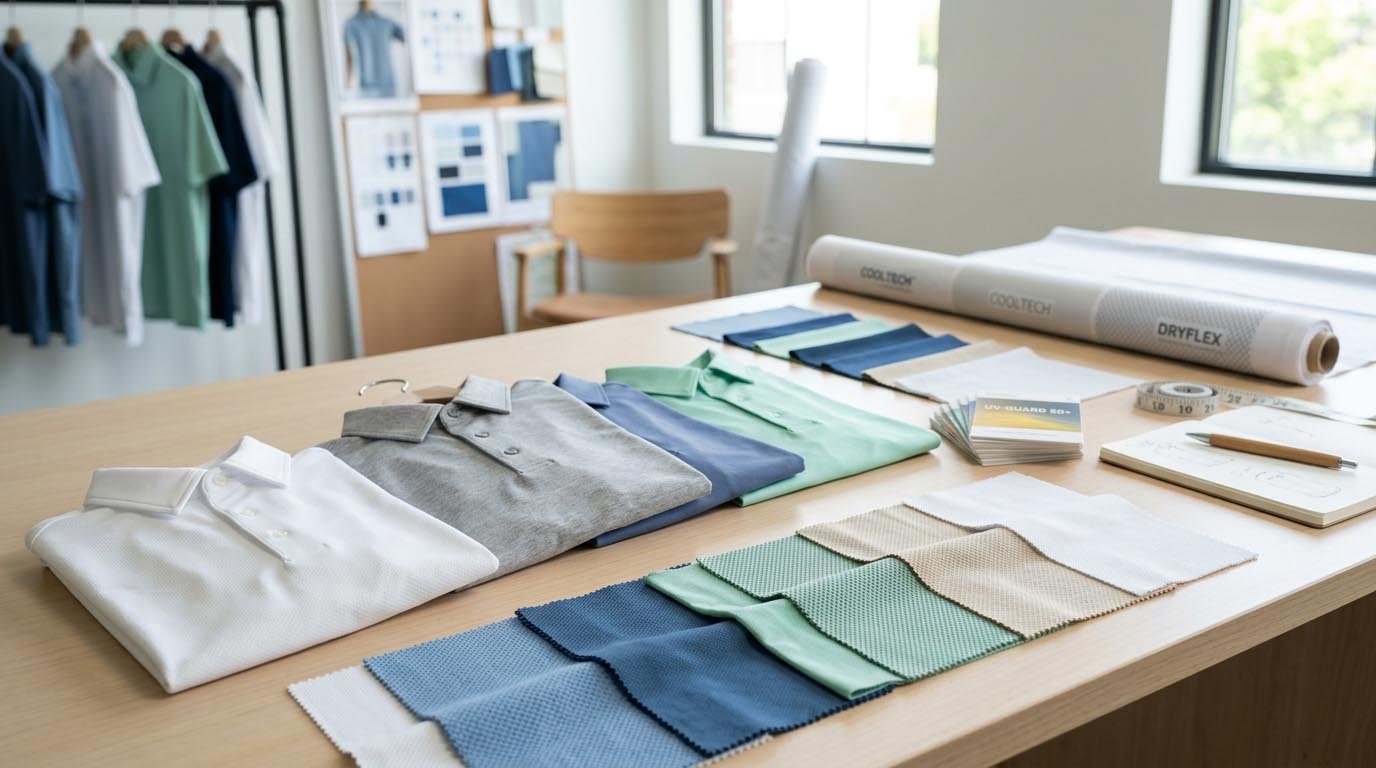
At FUWAY, golf polo development usually starts with fabric evaluation before sampling. This is especially important for brands selling into hot, humid, or high-UV markets, where fabric performance directly affects how the garment feels on the course.
Quick Answer: Best Golf Polo Fabrics at a Glance
For readers comparing options quickly, the table below summarizes the main fabric directions for hot and humid golf conditions.
| Fabric Type | Typical Composition | Main Strengths | Main Limitations | Best For |
|---|---|---|---|---|
| Polyester-Spandex Performance Blend | 85–92% polyester, 8–15% spandex | Fast drying, strong moisture management, good value, stable production | Hand feel may be less premium than nylon-rich fabrics | Most golf polo programs |
| Nylon-Spandex Blend | 80–88% nylon, 12–20% spandex | Softer hand feel, strong stretch, premium appearance | Higher material cost | Premium golf collections |
| Bamboo-Polyester Blend | 50–65% bamboo viscose, 30–45% polyester, 5–10% spandex | Soft feel, natural appeal, lifestyle positioning | Usually slower drying than polyester-rich fabrics | Eco-focused or lifestyle golf lines |
| Multi-Fiber Performance Blend | Polyester + nylon + spandex | Balanced performance, softness, stretch, and appearance | More complex sourcing and higher cost | Higher-end or differentiated programs |
30-Second Fabric Recommendation
| Priority | Recommended Fabric Direction |
|---|---|
| Best overall for hot and humid golf | Polyester-spandex performance blend |
| Best premium hand feel | Nylon-spandex blend |
| Best sustainability story | Bamboo-polyester blend |
| Best balance of stretch and technical feel | Multi-fiber performance blend |
Key Terms to Know
- GSM means grams per square meter, a standard way to describe fabric weight.
- UPF means Ultraviolet Protection Factor, which indicates how well fabric blocks UV radiation.
- MOQ means Minimum Order Quantity, or the minimum production quantity required by a supplier or manufacturer.
- AATCC 195 is a common test method used to evaluate liquid moisture management in fabric.
- AQL means Acceptable Quality Limit, a common inspection standard used in quality control.
Why Fabric Choice Matters for Golf Polos in Hot and Humid Weather
Golf polos are worn for long periods under direct sun, with repeated body movement and continuous sweat exposure. In hot and humid environments, poor fabric choice can quickly lead to discomfort, visible sweat retention, cling, odor buildup, and reduced customer satisfaction.
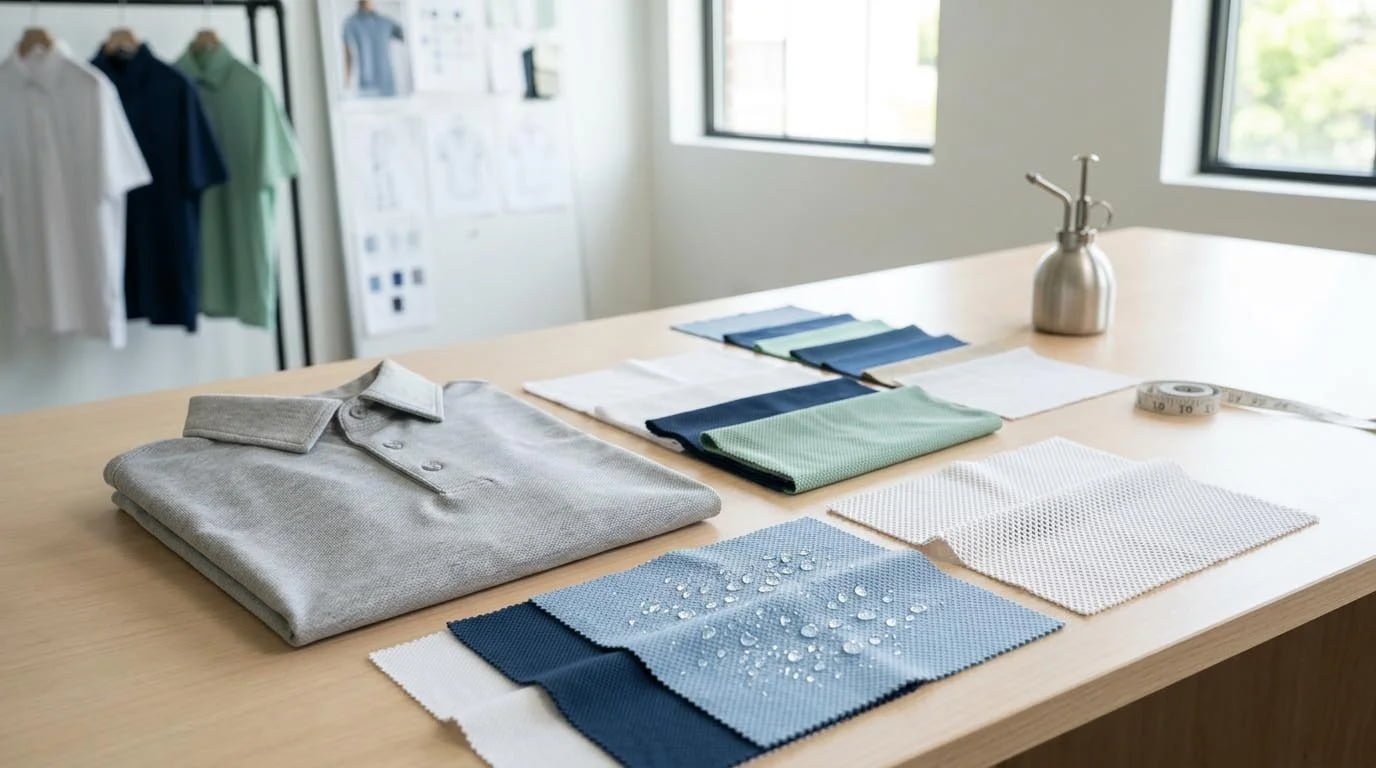
For golf apparel brands, fabric is not only a comfort decision. It also affects:
- perceived product quality
- target retail price
- return rate
- durability after washing
- brand positioning
- repeat purchase potential
A fabric that looks acceptable in a showroom may still perform poorly during actual on-course wear. This is why hot-weather golf polos should be evaluated for both appearance and function.
What good hot-weather fabric should do
A golf polo fabric for hot and humid conditions should ideally provide:
- moisture movement away from the skin
- quick drying after sweat exposure
- lightweight feel during wear
- enough stretch for swing motion
- stable recovery after repeated use
- breathability for airflow
- UV protection for sun exposure
- acceptable resistance to odor and pilling
Cotton vs performance fabric
Pure cotton can feel soft at first, but it usually absorbs and holds moisture longer than performance synthetics. For that reason, cotton is generally less suitable for high-performance golf polos in hot and humid weather.
| Performance Factor | Cotton | Performance Polyester Blend |
|---|---|---|
| Moisture retention | Higher | Lower |
| Drying speed | Slower | Faster |
| Weight increase when wet | More noticeable | Usually lower |
| Stretch for golf movement | Limited unless blended | Better with spandex |
| Suitability for hot-weather golf | Lower | Higher |
Cotton-rich fabrics may still work for lifestyle-inspired golf collections, but they are usually not the first choice for performance-focused programs.
Best Fabric Options for Golf Polos in Hot and Humid Weather
Different golf brands need different fabric solutions. The best option depends on target market, retail price, performance expectations, and desired brand image.
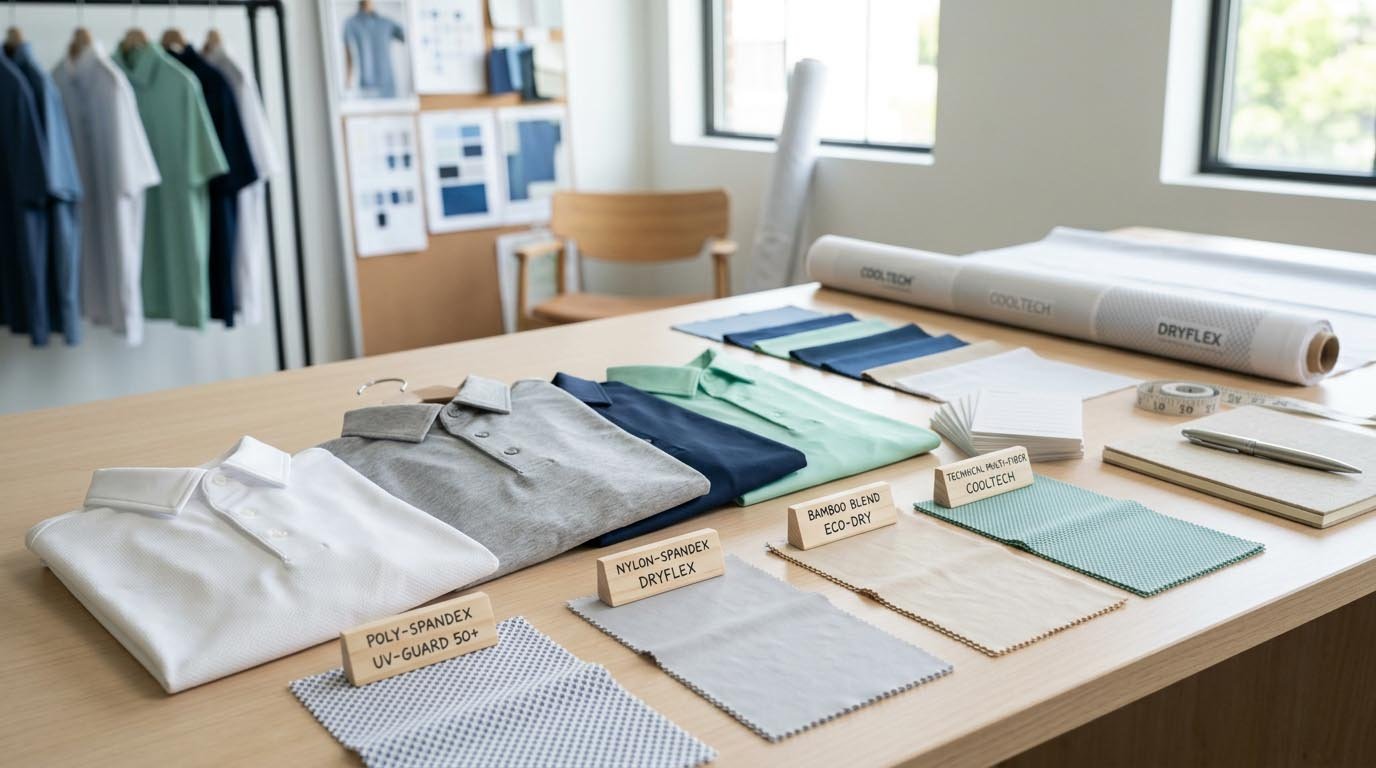
1. Polyester-Spandex Performance Blends
For most brands, polyester-spandex remains the most practical starting point for hot-weather golf polos.
Typical features include:
- strong moisture management
- relatively fast drying
- good stretch when combined with spandex
- stable shape retention
- consistent availability
- cost-efficient production compared with more premium blends
A common range is:
- polyester: 85–92%
- spandex: 8–15%
- weight: 140–180 GSM
This fabric direction is widely used because it performs well across both entry-level and mid-range golf programs. It is especially suitable when a brand needs a balance of function, appearance, and production practicality.
Best for:
- core golf polo programs
- private label golf collections
- mid-range retail positioning
- hot-weather performance styles
2. Nylon-Spandex Blends
Nylon-spandex blends are often used when a softer hand feel and a more premium impression are required.
Compared with polyester-rich fabrics, nylon blends may offer:
- smoother surface feel
- more premium drape
- strong stretch performance
- elevated perceived quality
However, nylon-rich fabric is often more expensive and may not be necessary for every program. For brands targeting a higher retail price point, it can be a strong option.
Typical range:
- nylon: 80–88%
- spandex: 12–20%
- weight: 150–180 GSM
Best for:
- premium golf polo lines
- higher retail positioning
- buyers seeking luxury hand feel
- technical polos with strong stretch emphasis
3. Bamboo-Polyester Blends
Bamboo-based blends appeal to brands looking for a softer, more natural story. In golf polo development, bamboo viscose is usually blended with polyester and spandex rather than used alone.
This is because bamboo on its own may feel soft, but polyester helps improve moisture movement and drying speed.
Typical range:
- bamboo viscose: 50–65%
- polyester: 30–45%
- spandex: 5–10%
- weight: 150–180 GSM
Bamboo-based fabrics may support:
- softer hand feel
- lifestyle positioning
- comfort-focused branding
- sustainability-oriented storytelling
However, they are generally less performance-driven than polyester-rich fabrics in very humid conditions.
Best for:
- resort golf apparel
- golf lifestyle collections
- eco-positioned brands
- softer-hand-feel polo programs
4. Multi-Fiber Performance Blends
Some premium golf polo developments use a mix of polyester, nylon, and spandex to balance multiple advantages in one fabric.
A multi-fiber blend may provide:
- better softness than polyester alone
- stronger technical appearance
- improved stretch and recovery
- more differentiated product feel
These fabrics can work well for higher-end collections, but sourcing and consistency need careful evaluation during development.
Best for:
- premium capsule collections
- differentiated golf polo programs
- advanced private label developments
Comparing Polyester, Nylon, Bamboo, and Multi-Fiber Golf Polo Fabrics
The table below gives a practical comparison for sourcing and product planning.
| Fabric Direction | Moisture Management | Drying Speed | Hand Feel | Stretch Performance | Cost Position | Suitable Retail Position |
|---|---|---|---|---|---|---|
| Polyester-Spandex | Strong | Fast | Moderate to good | Good | More cost-efficient | Entry to mid-range |
| Nylon-Spandex | Strong | Fast | Very good | Very good | Higher | Mid to premium |
| Bamboo-Polyester | Moderate to good | Moderate | Soft | Good | Mid to higher | Lifestyle to premium |
| Multi-Fiber Blend | Strong | Fast | Good to very good | Very good | Higher | Premium |
Practical sourcing takeaway
If a brand needs the safest and most scalable option, polyester-spandex is often the first recommendation. If a brand wants a more premium feel and can support a higher cost structure, nylon-rich or multi-fiber options may be more appropriate.
What Fabric Properties Matter Most in Hot-Weather Golf Polos?
When evaluating golf polo fabrics, the decision should go beyond fiber composition alone. The fabric must perform in real wearing conditions.
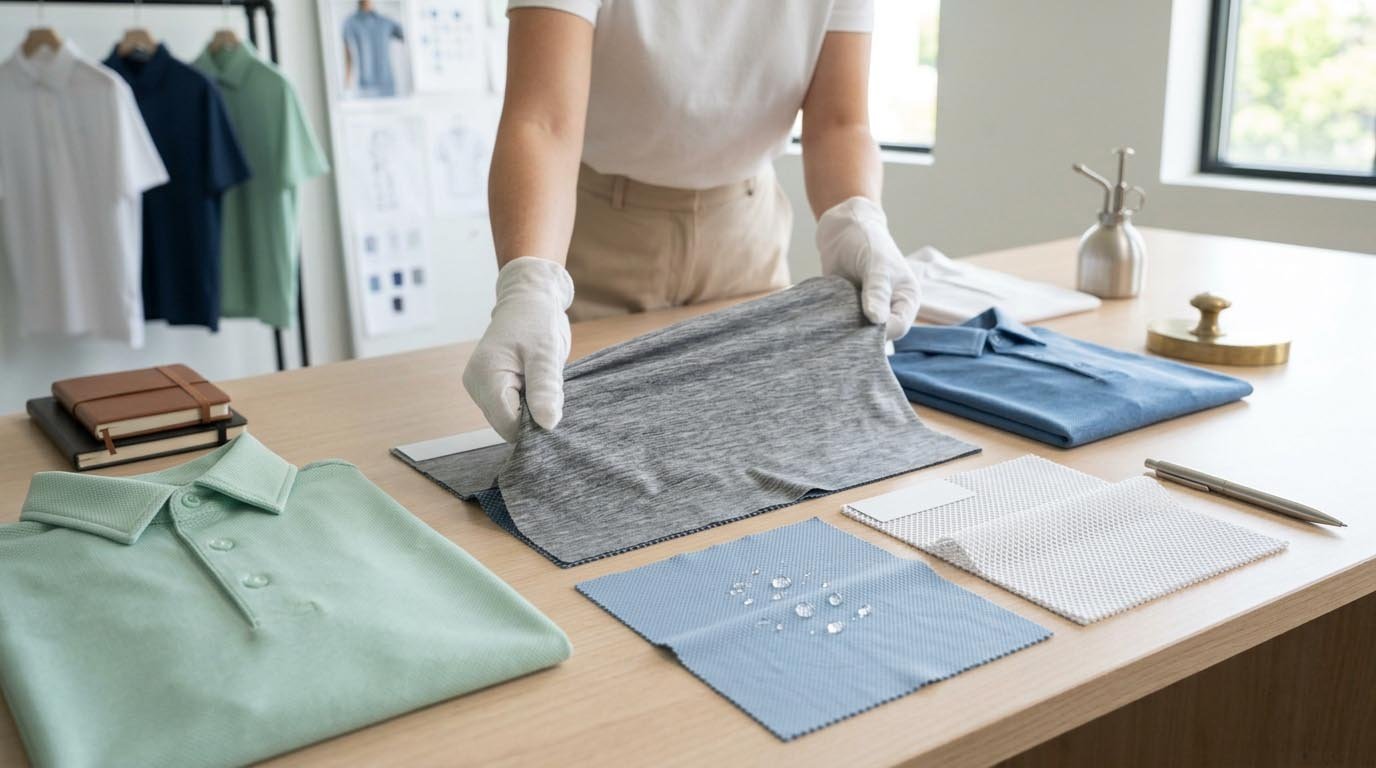
1. Moisture Management
Moisture management refers to how well a fabric moves perspiration away from the skin and spreads it across the fabric surface for evaporation.
Buyers often review moisture-management performance through lab methods such as AATCC 195, especially when comparing performance fabrics.
A good golf polo fabric should:
- move moisture quickly
- avoid heavy cling during wear
- recover comfort after active movement
2. Drying Speed
In humid conditions, a golf polo that dries slowly may feel heavy and uncomfortable for a long period. Fast-drying fabric is usually preferred for on-course use, travel, and repeat wear.
Polyester-rich performance fabrics are generally among the fastest-drying options.
3. Breathability
Breathability affects how easily heat and air can move through the fabric. This is important for player comfort in high temperatures.
Breathability is influenced by:
- knit structure
- yarn fineness
- fabric density
- finishing method
- panel design
A highly breathable polo is not always the lightest one. Construction and structure matter as much as fabric weight.
4. Stretch and Recovery
Golf movement involves shoulder rotation, arm extension, torso twist, and repeated bending. Fabric should stretch comfortably and recover well after movement.
Spandex is usually added for this reason. Without enough stretch and recovery, the polo may restrict motion or lose shape after repeated wear.
5. UV Protection
Golfers often stay outdoors for several hours, so UV protection is increasingly important.
UPF, or Ultraviolet Protection Factor, measures how much UV radiation is blocked by fabric. Many performance polos target UPF 30+ to UPF 50+, depending on fabric construction and finishing.
6. Hand Feel and Appearance
Even a technically strong fabric may not fit a brand if the surface feel or drape does not match the target customer. Some brands prioritize a crisp technical appearance, while others want a softer or more elevated premium feel.
7. Pilling, Colorfastness, and Wash Stability
Performance should remain stable after repeated washing. Buyers should review:
- pilling resistance
- colorfastness
- shrinkage control
- shape stability
- print or logo durability
A golf polo may look strong at launch but still cause complaints if appearance changes too quickly after washing.
Recommended GSM Range for Hot and Humid Weather Golf Polos
GSM means grams per square meter, and it is one of the most common ways to describe fabric weight.
For hot-weather golf polos, the practical range is usually:
| GSM Range | General Effect | Suitability |
|---|---|---|
| Below 140 GSM | Very light feel, but may risk being too thin or less premium in appearance | Limited use |
| 140–160 GSM | Lightweight, breathable, performance-oriented | Strong option for hot climates |
| 160–180 GSM | Balanced feel, better structure, still suitable for warm weather | Very common range |
| Above 180 GSM | Heavier, more substantial hand feel, but may feel warmer | Better for premium or mixed-climate use |
A lower GSM is not always better. If the fabric becomes too thin, it may lose opacity, structure, or premium perception. The right GSM depends on the yarn, knit construction, and target market.
How UPF and Fabric Technology Improve On-Course Comfort
Modern golf polo fabrics often include additional treatments or construction features beyond basic moisture management.
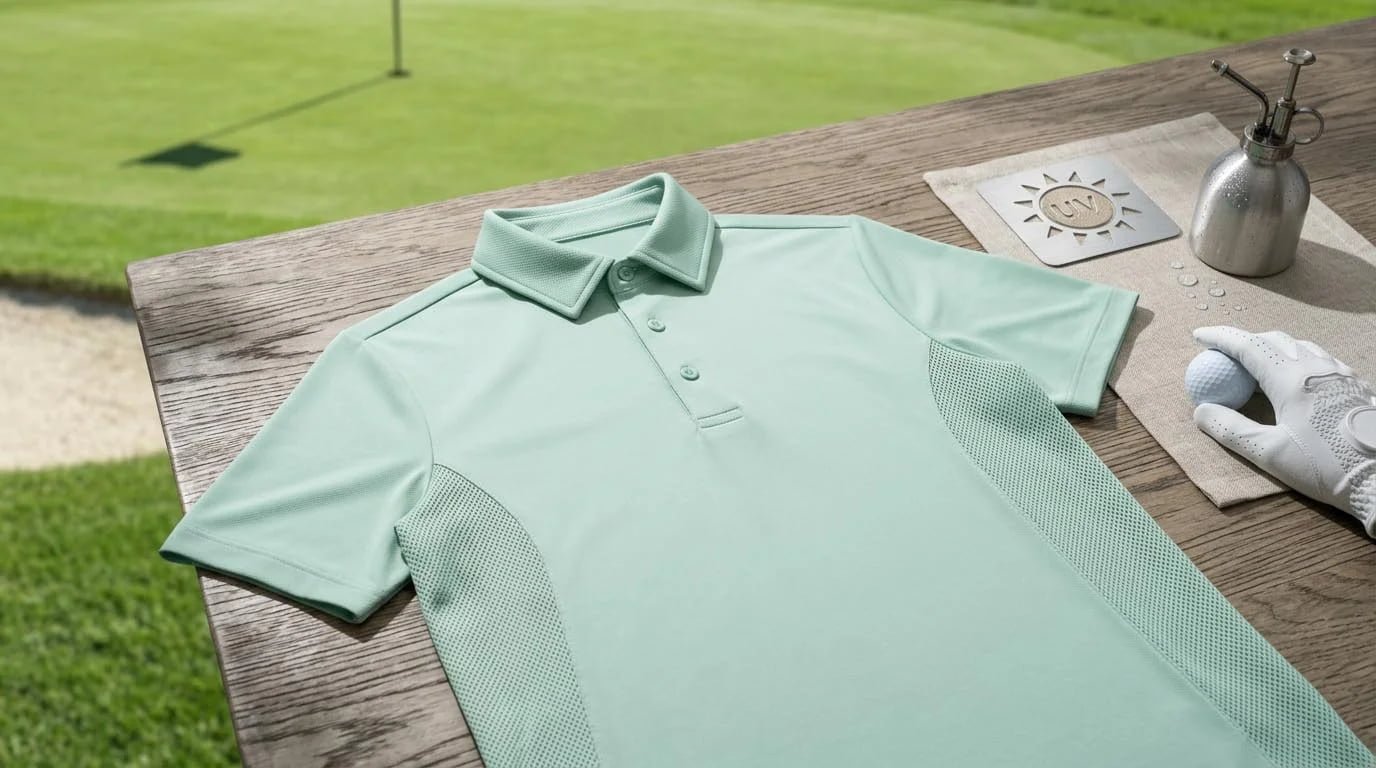
UPF protection
UPF can be achieved through:
- tighter knit construction
- fiber type
- special UV-protective finishes
- darker or denser fabric structures
For golf polos intended for strong sun exposure, UPF 30+ to 50+ is commonly preferred.
Antimicrobial and odor-control finishes
Some fabrics include antimicrobial or odor-management treatments to reduce odor buildup during repeated wear. These finishes may be useful for golfers, travel programs, and premium active collections.
Cooling-related finishes
Some mills offer cooling finishes or mineral-based yarn technologies designed to improve perceived coolness. These may support product differentiation, but performance can vary depending on the technology and wash durability.
Mechanical ventilation design
Comfort is not only about fiber content. Physical garment design also matters. A hot-weather golf polo may benefit from:
- mesh zones
- ventilation panels
- breathable placket construction
- suitable collar structure
- ergonomic sleeve shape
These details can improve airflow and wear comfort without changing the overall style direction.
What Buyers Should Confirm Before Sampling Golf Polo Fabric
Before sampling begins, buyers should confirm not only composition, but also the technical and commercial details that affect production.
Fabric development checklist
| Item to Confirm | Why It Matters |
|---|---|
| Fiber composition | Affects performance, hand feel, and product positioning |
| GSM / weight | Influences breathability, structure, and seasonal suitability |
| Stretch direction and recovery | Important for comfort and movement during golf |
| Moisture-management performance | Helps evaluate suitability for hot-weather wear |
| UPF target | Important for sun-protection claims and performance positioning |
| Pilling resistance | Affects long-term appearance |
| Colorfastness | Important for wash durability and brand reputation |
| Shrinkage tolerance | Helps maintain sizing consistency |
| Hand feel and surface texture | Must align with target retail positioning |
| MOQ | Affects launch planning and inventory strategy |
| Lead time | Important for launch schedule and reorder planning |
| Finish durability | Determines whether treatments stay effective after washing |
This stage is important because a fabric may look similar on paper but behave very differently after washing, printing, wearing, or bulk production.
How to Choose the Right Golf Polo Fabric for Your Brand
There is no single “best” fabric for every golf brand. The right choice depends on how the product will be positioned and sold.
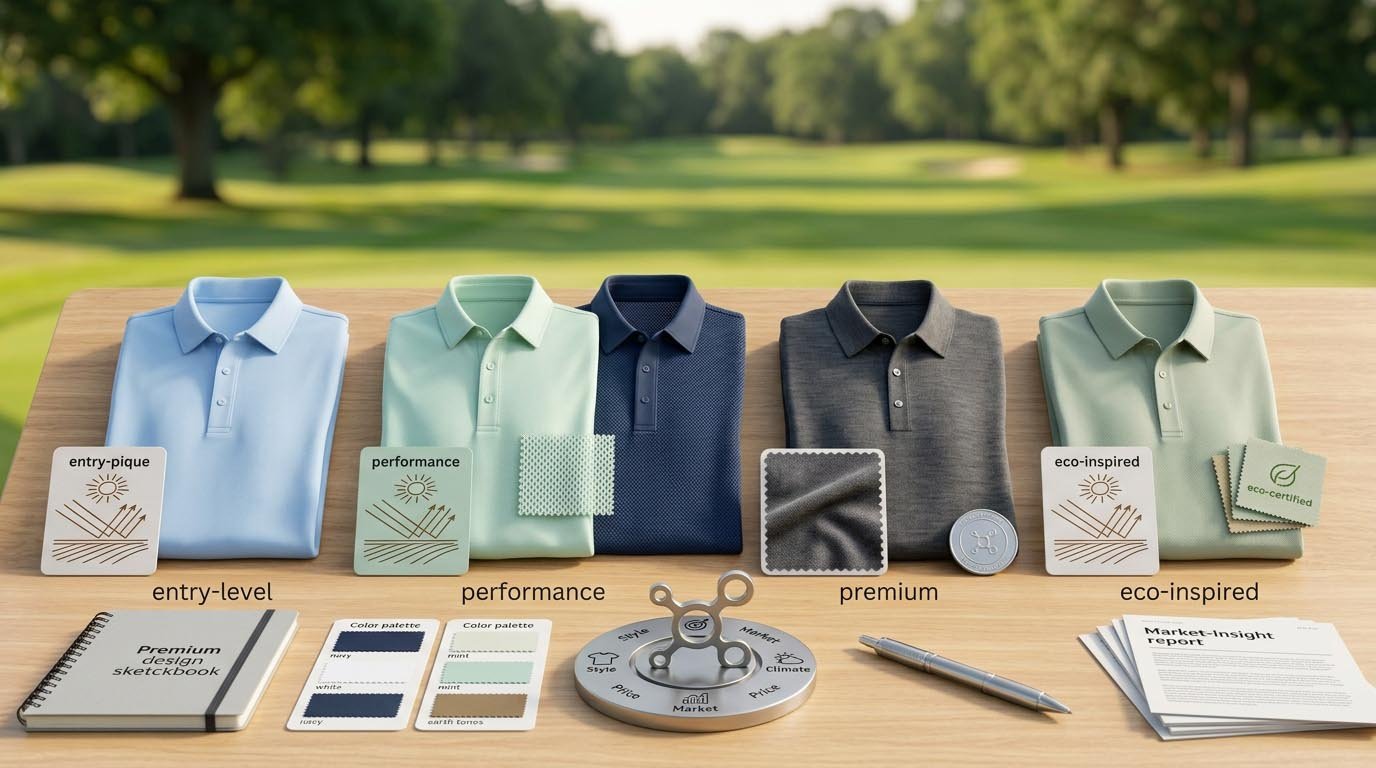
Choose based on target retail position
| Brand Position | Fabric Direction |
|---|---|
| Entry-level performance | Polyester-spandex |
| Mid-range golf performance | Higher-quality polyester-spandex or selected multi-fiber blends |
| Premium technical golf | Nylon-spandex or premium multi-fiber blends |
| Lifestyle / eco-positioned golf | Bamboo-polyester blends or recycled performance fabrics |
Choose based on target climate
| Main Market Climate | Recommended Direction |
|---|---|
| Hot and humid | Lightweight to midweight polyester-spandex with strong moisture management |
| Hot and dry | UPF-focused performance fabric with good airflow |
| Mixed or seasonal climates | Midweight performance fabric with balanced comfort and structure |
Choose based on launch scale
If a brand is starting with a smaller launch, it is often safer to use proven stock or readily available fabrics rather than highly customized developments. This can reduce MOQ pressure, shorten development time, and improve cost control.
Common Mistakes When Choosing Golf Polo Fabric
Many early-stage golf apparel brands focus on color or appearance first, while underestimating how much fabric performance affects customer satisfaction.
1. Choosing fabric only by hand feel
A fabric may feel soft in a showroom but still perform poorly in sweat, heat, or repeated washing.
2. Focusing only on low price
Low fabric cost may create bigger problems later through returns, weak product reviews, or inconsistent wear performance.
3. Ignoring GSM and knit structure
Composition alone does not define fabric performance. Weight, knit structure, and finish are equally important.
4. Skipping real wear testing
A sample should be reviewed not only on a mannequin, but also during real movement and practical use.
5. Over-customizing too early
Custom fabric development can be useful, but many new brands benefit more from starting with proven performance fabric before investing in highly specialized programs.
FAQ: Best Golf Polo Fabrics for Hot and Humid Weather
What is the best fabric for golf polos in hot weather?
For most golf brands, polyester-spandex performance fabric is the most practical choice. It usually offers a strong balance of moisture management, drying speed, stretch, and production efficiency.
Is nylon better than polyester for golf polos?
Not always. Nylon may offer a softer and more premium hand feel, but polyester is often more cost-efficient and widely used for strong all-around performance. The better option depends on target price and product positioning.
Is bamboo fabric good for golf polos?
Bamboo-based blends can work well for softer, lifestyle-oriented golf polos, especially when blended with polyester and spandex. However, for very hot and humid performance use, polyester-rich fabrics are often more reliable.
What GSM is best for hot-weather golf polos?
A common and practical range is 140–180 GSM. Lighter options may feel cooler, while slightly heavier ones may provide better structure and a more premium appearance.
What does UPF mean in golf polo fabric?
UPF means Ultraviolet Protection Factor. It measures how much UV radiation a fabric can block. In golf apparel, UPF 30+ and UPF 50+ are commonly used performance targets.
What does MOQ mean when developing golf polos?
MOQ means Minimum Order Quantity. It is the minimum quantity required to produce a style, color, or fabric program. MOQ depends on the manufacturer, the fabric source, and the level of customization.
What should be tested before bulk production?
Before bulk production, brands should review moisture management, hand feel, stretch recovery, pilling resistance, colorfastness, shrinkage, logo application compatibility, and overall fit performance.
Final Thoughts
The best golf polo fabric for hot and humid weather is usually one that balances moisture management, breathability, drying speed, stretch, and UV protection in a commercially practical way.
For most golf brands, a polyester-spandex performance blend remains the most reliable option for hot-weather programs. Nylon-rich fabrics may be better suited to premium collections, while bamboo-based blends can support softer and more lifestyle-driven positioning. The most suitable fabric depends on your customer, your target price, your climate focus, and your launch strategy.
A strong golf polo program starts with choosing fabric that performs not only in theory, but also in real wearing conditions.
Need Help Developing Golf Polo Fabrics for Hot-Weather Markets?
FUWAY supports golf apparel brands with golf polo development, fabric sourcing, and production planning for performance-focused collections.
We can help with:
- golf polo fabric comparison and selection
- GSM and composition recommendations
- moisture-management and hot-weather performance evaluation
- sampling and fit development
- private label golf polo production
- MOQ and production planning
- bulk manufacturing and quality control support
If you are developing a golf polo collection, send FUWAY your product concept, target price range, expected quantity, preferred fabric direction, and target market. We can help you evaluate suitable fabric options, review production feasibility, and build a practical sampling plan for your project.