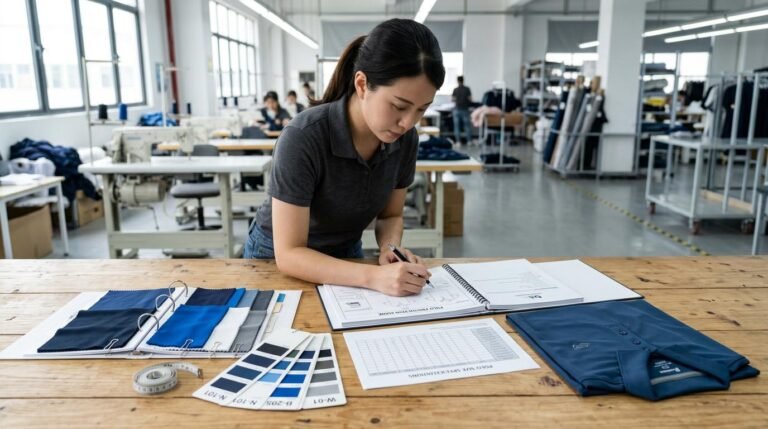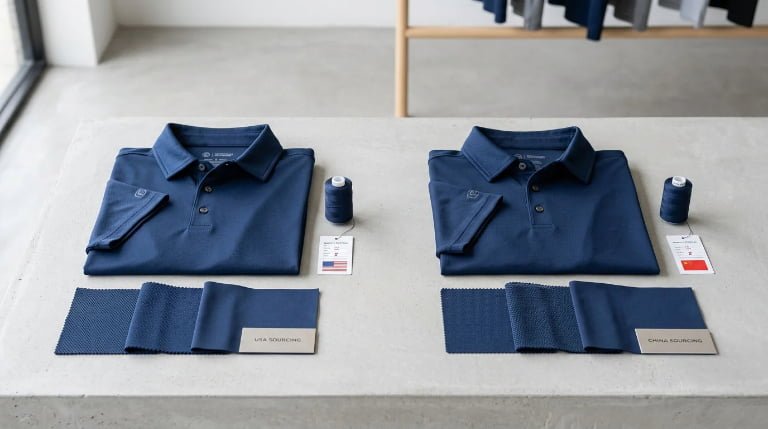
You have a golf apparel idea, a logo, and maybe even your first tech pack.
Then you start looking for a production partner.
Within a few hours, you see dozens of companies calling themselves:
- golf apparel manufacturers
- golf clothing suppliers
- private label suppliers
- wholesalers
- sourcing companies
- trading companies
They often seem to offer the same products.
But they do not operate in the same way.
A golf apparel manufacturer controls or directly manages production. A wholesaler mainly resells ready-made products. A supplier is a broad term that can describe a manufacturer, wholesaler, trading company, or sourcing company.
For a growing golf brand, this difference matters because it affects your customization, MOQ, sampling, quality control, communication, lead time, and total cost.
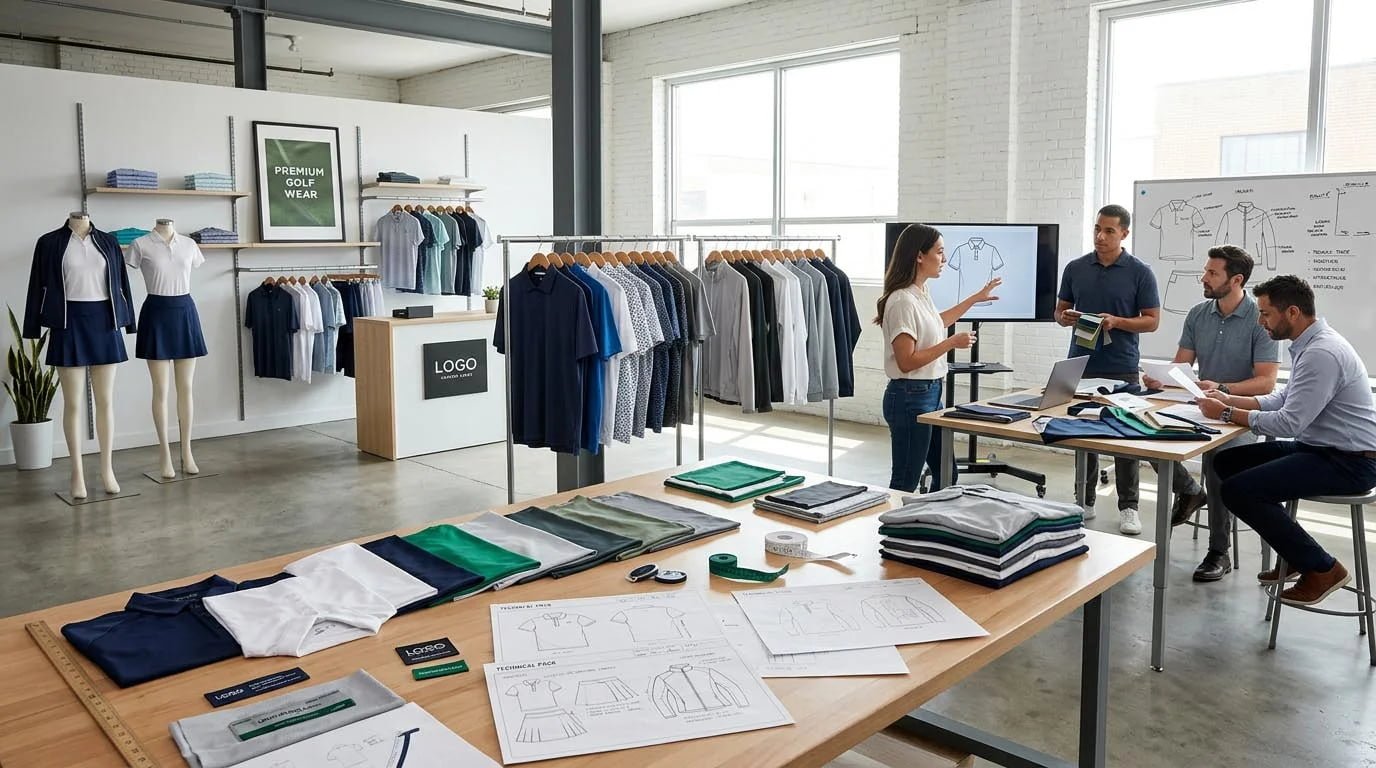
I work with golf apparel brands every day at FUWAY. Many startup founders come to us after working with suppliers who looked like manufacturers online but could not control the actual production.
This guide explains how the different sourcing models work, how to identify them, and which type of partner fits your brand.
Manufacturer vs Supplier vs Wholesaler: Quick Comparison
If you only want the short answer, the biggest difference is who controls the product and production.
A manufacturer makes or directly manages the production of your golf apparel. A wholesaler sells products that have already been made. A supplier is a broader term—it could be a manufacturer, wholesaler, trading company, or sourcing company.
| Factor | Manufacturer | Supplier | Wholesaler |
|---|---|---|---|
| Main role | Makes the apparel | Supplies or sources the apparel | Resells finished apparel |
| Production control | High | Depends on business model | Low |
| Custom design | Full or extensive | Depends | Limited |
| Custom fabric | Yes | Depends | Usually no |
| Sampling | Yes | Depends | Usually not required |
| Private labeling | Yes | Often available | Usually limited |
| MOQ | Depends on production and materials | Varies widely | Often lower for stock items |
| Lead time | Longer because products are developed and made | Varies | Usually fastest |
| Best for | Brands building unique products | Brands needing flexible sourcing | Buyers needing ready-made stock |
Which One Should You Choose?
Choose a manufacturer if:
You want your own fit, fabric, colors, prints, labels, trims, packaging, or other product details.
Choose a supplier if:
You want someone to help source products but first need to understand whether they manufacture directly or work through other factories.
Choose a wholesaler if:
You mainly need existing golf apparel quickly and do not require much product customization.
For most brands trying to build a distinctive golf apparel collection, working directly with a manufacturer gives you greater control over the product.
However, that does not mean manufacturers are always better. A wholesaler may be more practical for a small market test, while a sourcing supplier can be useful when you need many different product categories.
The key is to choose based on what the company actually controls—not the title it uses on its website.
What Is a Golf Apparel Manufacturer?
A golf apparel manufacturer produces clothing directly or directly manages the people, equipment, and production processes required to make it.
For a custom golf brand, the manufacturer normally handles or coordinates:
- fabric sourcing
- patternmaking
- size grading
- prototype development
- sample revisions
- cutting
- printing
- embroidery
- sewing
- finishing
- quality control
- packaging
That means the manufacturer can change the actual product.
For example, if you are developing custom golf shirts with a specific collar, longer body length, four-way stretch fabric, custom sleeve opening, silicone logo, or branded neck tape, those decisions need to be implemented during production.
A wholesaler normally cannot make those changes.
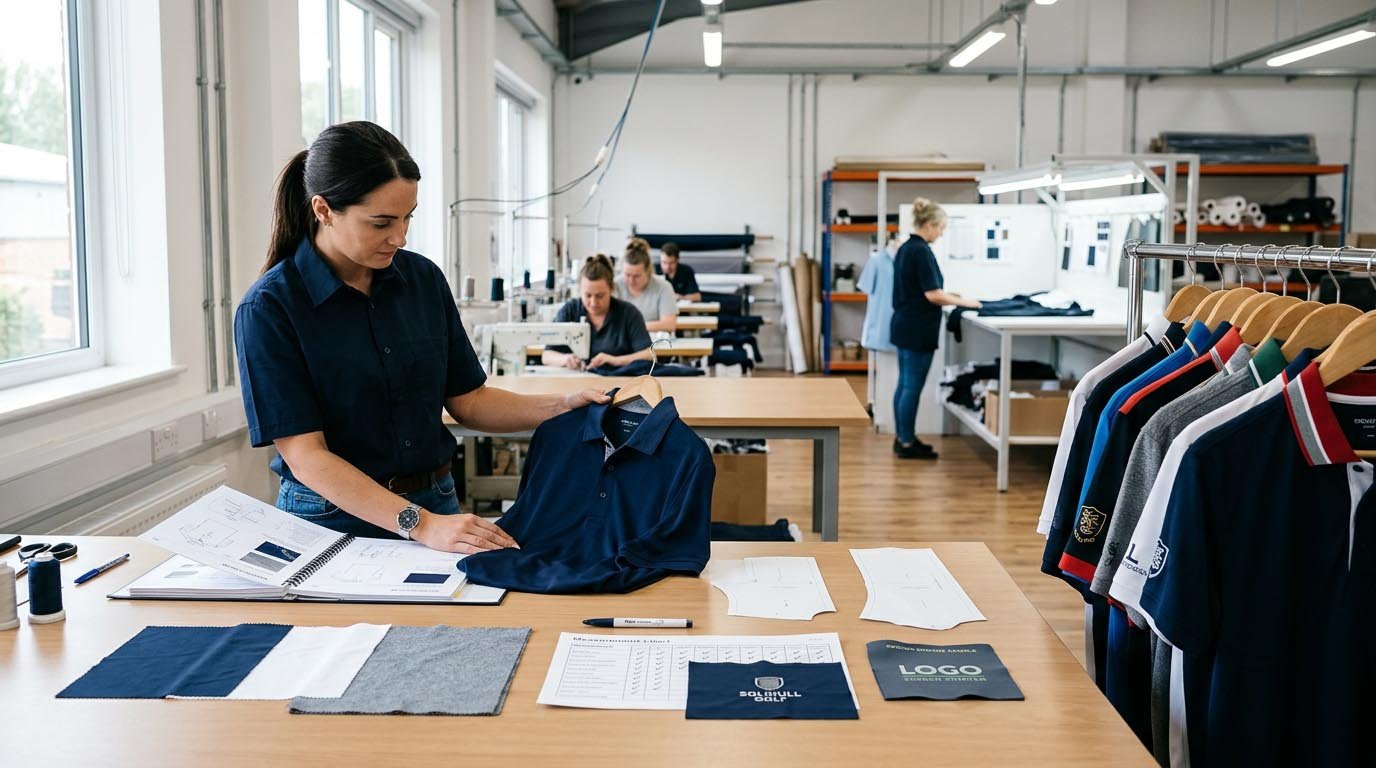
What Does a Real Manufacturer Control?
A strong manufacturer should be able to explain how your design becomes a real garment.
That includes questions such as:
Which fabric should be used?
A manufacturer should understand whether your product needs lightweight stretch fabric, brushed material, moisture management, UV-related performance, or simply a more premium hand feel.
For custom projects, the fabric sourcing process can be just as important as sewing because fabric weight, stretch, recovery, texture, and color all affect the final garment.
How will the garment fit?
Your manufacturer should be able to work from your own measurement chart or help develop one.
How will the logo be applied?
Different branding techniques behave differently on performance golf fabrics.
For example, a brand may use embroidery for a classic premium polo logo, screen printing for certain graphic applications, or sublimation printing when the design requires full-color patterns across polyester-based fabric.
The correct method depends on the fabric, artwork, stretch requirements, order size, and desired finish.
How will the product be inspected?
A manufacturer should be able to explain what happens between the approved sample and bulk production.
This production knowledge is one of the biggest differences between a real manufacturer and a company that simply resells garments.
What Is the Difference Between OEM and ODM Golf Apparel Manufacturing?
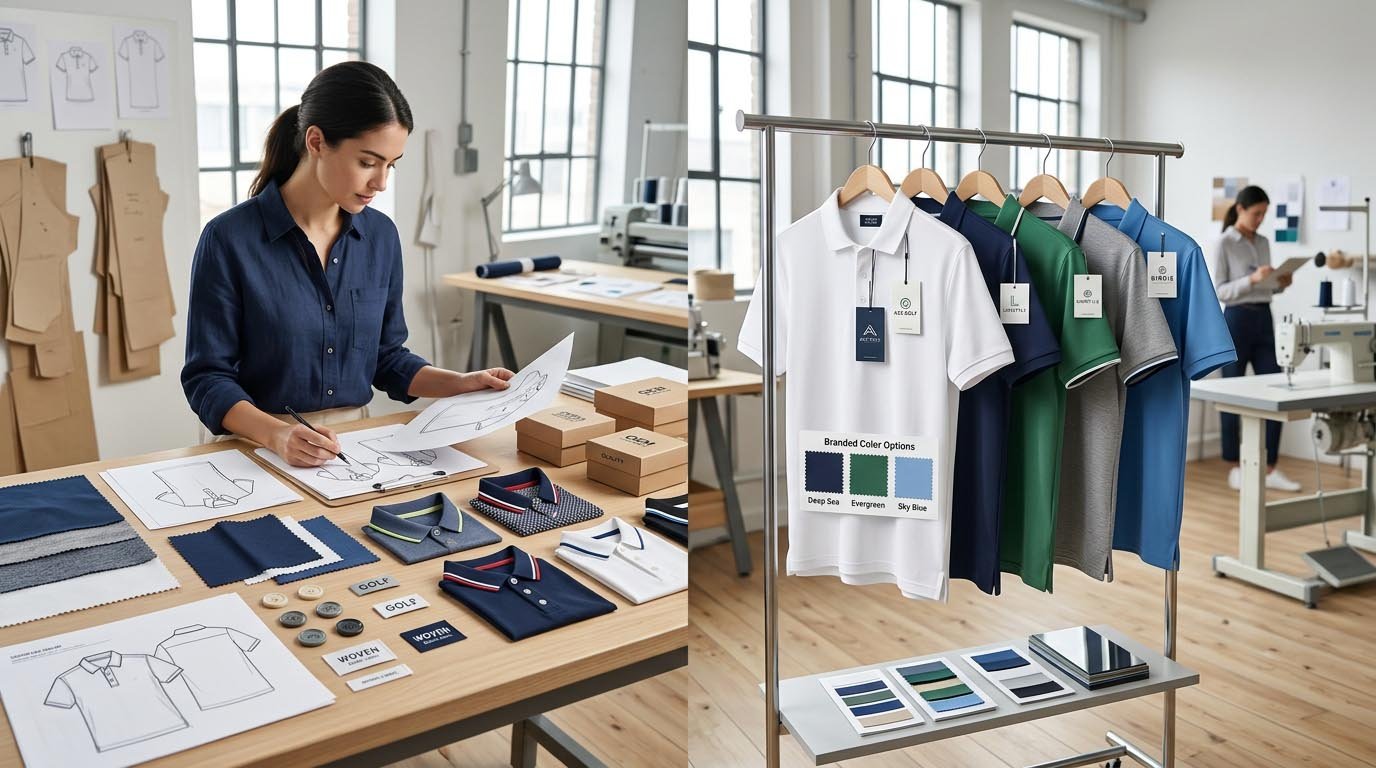
When speaking with manufacturers, you will often see the terms OEM and ODM.
| Model | Meaning | Best For |
|---|---|---|
| OEM | You provide your design or product requirements and the factory manufactures it | Brands with original designs |
| ODM | The manufacturer already has product concepts or base styles that you can modify and brand | Brands wanting faster development |
OEM gives you more product control.
ODM can reduce development time.
Many startup golf brands use something between the two.
For example, you may choose an existing polo silhouette but change:
- fabric
- color
- collar
- logo
- buttons
- size chart
- labels
- packaging
For brands that do not need to build every style completely from zero, a private label golf apparel approach can be a practical way to shorten development while still creating a branded product.
How Can You Verify a Real Golf Apparel Manufacturer?
Do not rely only on a website.
A polished website does not prove that a company controls production.
You need operational evidence.
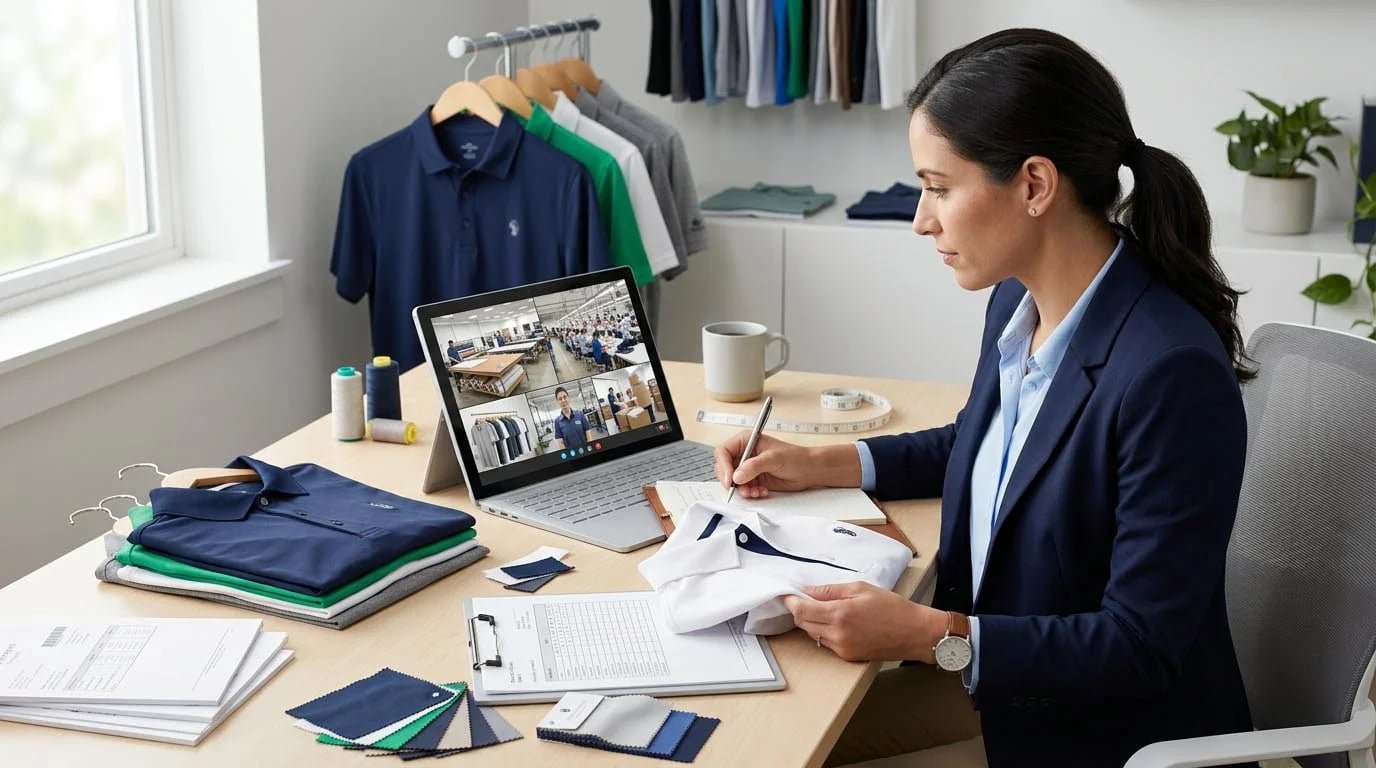
Ask to See the Factory
Request:
- production floor photos
- cutting tables
- sewing lines
- sampling area
- quality control area
- packing area
A live video call can be even more useful.
You do not need a cinematic factory tour.
You simply want to understand where the work happens.
Ask Technical Questions About Your Product
Instead of asking:
Can you make golf polos?
Ask:
What fabric would you recommend for a lightweight summer golf polo?
Or:
How would you stop this collar from curling after washing?
Or:
Which logo technique would work best on this stretch fabric?
The quality of the answer tells you more than a company introduction.
Ask Who Makes the Sample
This is an important question.
If your contact cannot explain:
- who develops the pattern
- where the sample is sewn
- where the fabric comes from
- who approves revisions
you may be several steps away from production.
Ask About Quality Control
Do not accept:
We have strict QC.
Ask:
- When is fabric checked?
- When are measurements checked?
- What happens before packing?
- How are defects handled?
- What happens if bulk production does not match the approved sample?
A real process is more useful than a promise.
You can also review the manufacturer's available test reports and other supporting documents rather than relying only on marketing claims.
Compare Total Cost, Not Just Unit Price
Startup brands often compare factories using one number:
How much per polo?
That number matters.
But it does not tell you the full cost.

A realistic sourcing comparison should include:
- sample fees
- fabric costs
- custom color costs
- logo setup
- molds
- labels
- hang tags
- packaging
- bulk production
- freight
- duties
- inspection
- rework
- rejected products
- delays
Imagine Supplier A gives you the lowest price.
But:
- communication is slow
- the sample needs four revisions
- bulk measurements are inconsistent
- production is late
- some garments need rework
Supplier B may look more expensive on the quotation but cost less across the entire project.
That is why experienced buyers compare total operating cost, not only the factory price.
What Type of Supplier Does a Growing Golf Brand Usually Need?
As a golf brand grows, your sourcing priorities often change.
At the beginning, you may care most about:
- low risk
- small orders
- fast testing
Later, you care more about:
- consistent fit
- repeatable fabric
- stable colors
- predictable lead time
- branding details
- quality control
- scalable production
That is when the manufacturer becomes more than a vendor.
They become part of your product development system.
For a serious apparel brand, that relationship is difficult to replace with simple stock buying.
Conclusion
The difference between a golf apparel manufacturer, supplier, trading company, and wholesaler is not just terminology.
It affects how your product is developed.
A wholesaler gives you speed and existing products.
A sourcing supplier or trading company can simplify multi-category purchasing.
A manufacturer gives you greater control over:
- fabric
- fit
- construction
- customization
- sampling
- quality
- branding
None of these sourcing models is automatically the right choice for every business.
The best partner is the one that matches your current goal.
For a golf brand building unique products, the most important thing is not what a company calls itself.
It is what the company can actually control.
Before placing an order, verify the factory, test the team during sampling, understand your bulk MOQ, calculate the total cost, and clarify quality responsibility.
That will tell you far more than the word manufacturer or supplier on a website ever will.
Work With FUWAY
FUWAY is a custom golf apparel OEM/ODM manufacturer working with golf brands, importers, wholesalers, and growing e-commerce businesses.
We support custom development for products including:
- golf polo shirts
- golf pants and shorts
- golf skorts
- pullovers
- quarter-zips
- golf jackets
- other custom golf apparel
Our typical custom project starts around 100 pieces per style, with sampling commonly taking around 7–10 business days and bulk production around 3–4 weeks after approval, depending on product complexity.
If you already have a tech pack, reference sample, design sketch, or even just an early product idea, contact the FUWAY team to discuss your project.