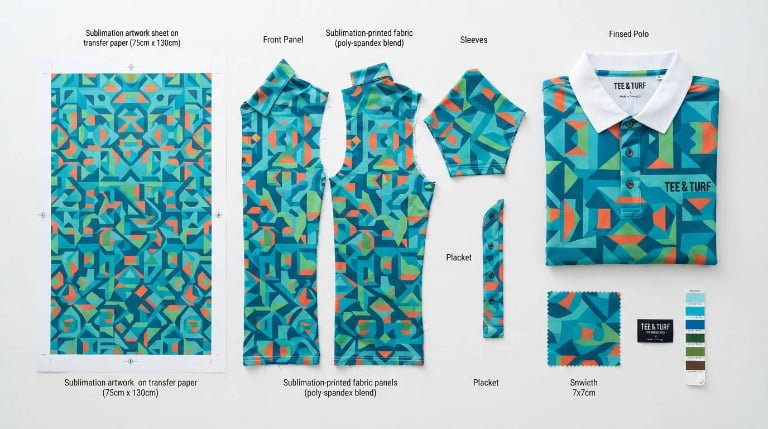
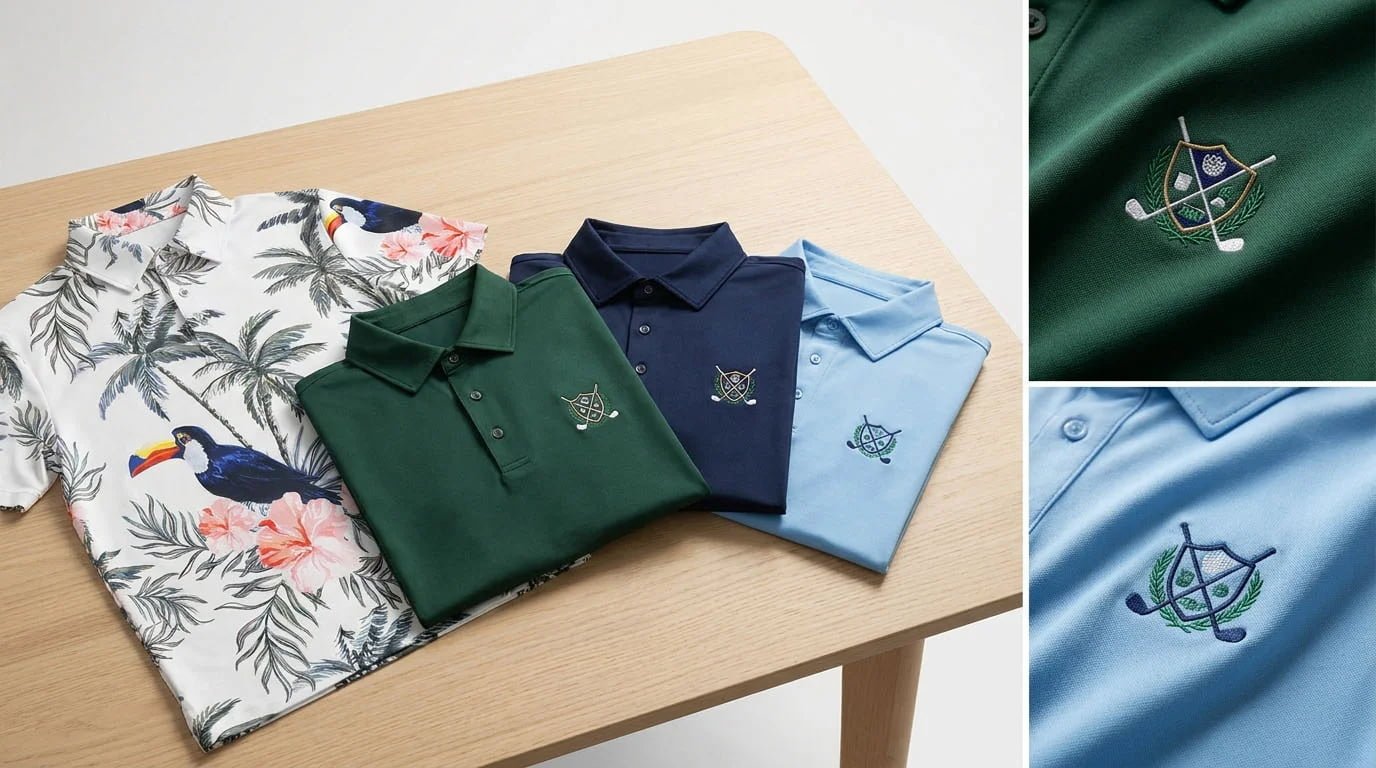
Your golf club's first batch of custom polos looks exactly as expected. The embroidery is sharp, the colors match your club identity, and members are happy with the fit.
Six months later, you reorder. This time, the crest sits slightly higher, the navy fabric looks lighter, or the collar feels different.
These problems can occur even when you use the same manufacturer.
Consistent custom golf club polo reorders depend on preserving an approved production reference before the first bulk order. That reference should include embroidery files, physical color standards, fabric specifications, garment measurements, trims, and documented approvals.
This guide explains how golf clubs, pro shops, and apparel buyers can protect product consistency across multiple production runs without unnecessarily repeating the entire development process.
Quick Answer: What Must Be Approved Before the First Golf Polo Order?
A repeatable golf polo program needs more than a logo file and color code.
Before bulk production, confirm these six requirements:
| Production Element | What to Lock Down | Why It Matters |
|---|---|---|
| Fabric | Composition, knit, GSM, finish, and source | Reduces material substitution risks |
| Embroidery | Stitch file, thread, backing, size, and placement | Helps reproduce the approved crest |
| Color | Physical fabric and thread standards | Provides a reference for future batches |
| Fit | Graded measurements and approved sample | Controls sizing consistency |
| Construction | Collar, placket, buttons, seams, and trims | Prevents unintended design changes |
| Reorder Plan | Quantities, timing, and material availability | Reduces replenishment problems |
Keep both the approved specification and physical reference samples. Previous invoices, digital mockups, and product photographs may not provide enough information to reproduce the original garment.
Step 1. Choose a Fabric Strategy That Supports Future Reorders
Fabric continuity is one of the first issues to address when planning recurring golf polo orders.
A fabric selected today may be discontinued or temporarily unavailable six months later. Even a similar replacement can differ in stretch recovery, color appearance, embroidery performance, or fit.
Before approving the first order, ask:
Can this exact fabric—or an approved equivalent—be sourced when we need additional polos?
Three Material Supply Strategies
| Strategy | Best Suited For | Main Consideration |
|---|---|---|
| Running-stock fabric | Clubs with recurring small or medium orders | Easier sourcing, but future stock and dye-lot consistency are not guaranteed |
| Reserved fabric inventory | Programs with predictable repeat demand | Requires an agreed purchase, storage, and inventory arrangement |
| Consolidated seasonal production | Clubs and retailers with planned purchasing cycles | Combines demand into larger production runs |
For example, a club expecting regular member replenishment may benefit from a continuously stocked performance piqué rather than a highly customized seasonal fabric.
However, stock availability should be confirmed, not assumed.
Record the Complete Fabric Identity
A specification reading "92% polyester, 8% spandex" is not enough to reproduce the same garment.
Your material record should include:
- Fabric supplier and article number, where available
- Fiber composition, knit construction, and GSM
- Stretch, recovery, finish, and relevant performance requirements
- Approved physical color swatch
- Material source and availability conditions
- Any agreed substitution restrictions
If new material development is required, review the options before approving your first order. FUWAY's Fabric Sourcing service covers the broader sourcing process.
Step 2. Lock Embroidery Files, Placement, and Physical Samples
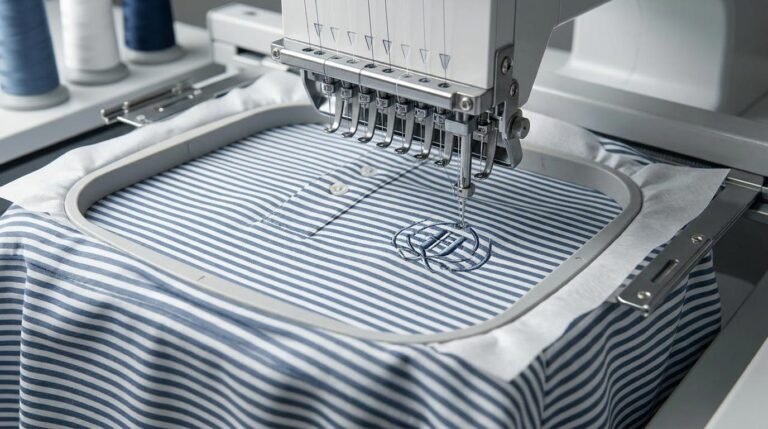
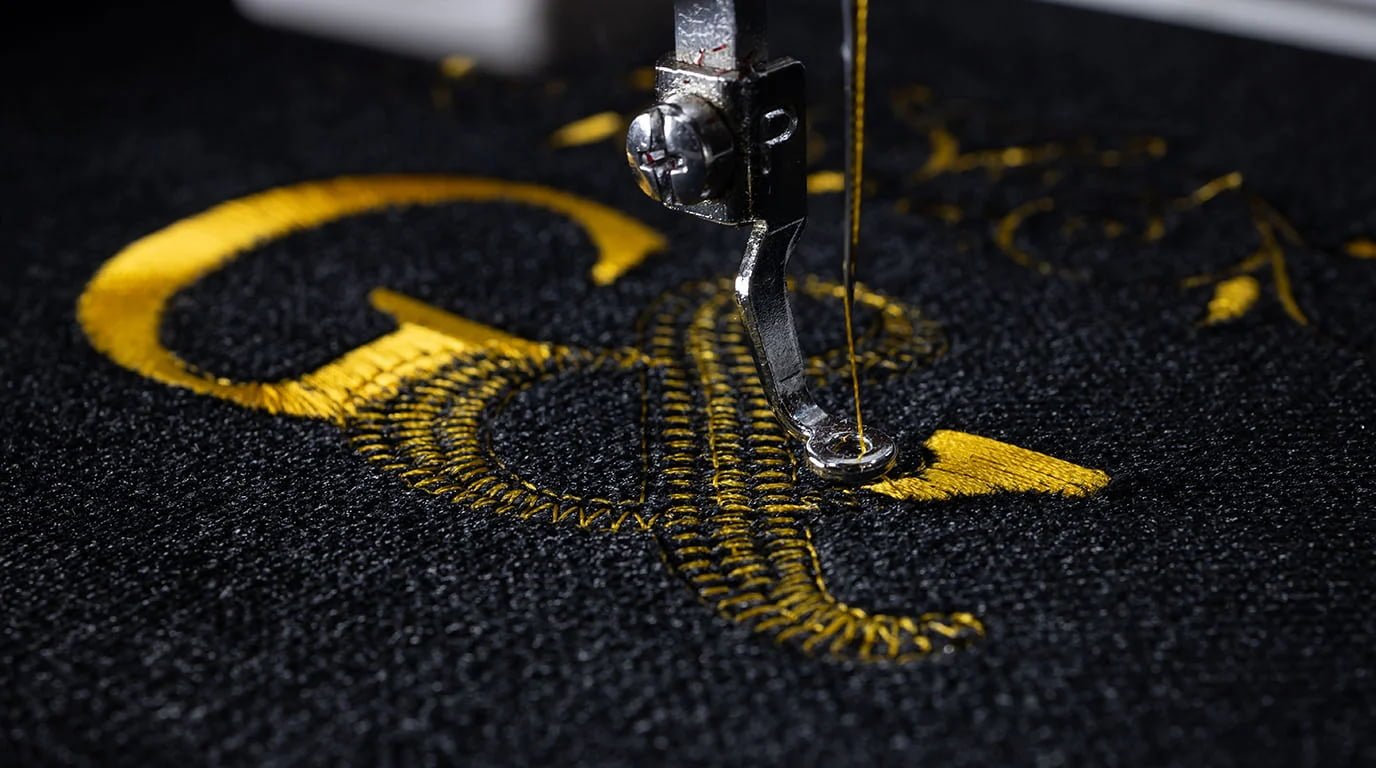
A club crest may look different between production runs even when the original artwork remains unchanged.
The finished result depends on the digitized stitch file, fabric structure, thread, stabilizer, and machine setup.
Keep the Approved Embroidery Production Record
| Embroidery Detail | Required Reference |
|---|---|
| Artwork | Approved vector file and revision |
| Stitch file | Approved machine-compatible file, such as DST |
| Thread | Brand, color codes, and specifications |
| Stitch construction | Stitch types, density, and underlay |
| Backing | Approved stabilizer type |
| Finished size | Width and height |
| Placement | Coordinates and garment reference points |
| Approval | Physical stitch-out or garment sample |
The digitized file matters because embroidery is not simply a printed image converted into thread.
Stitch direction, underlay, density, and pull compensation influence how the design behaves on the garment.
A crest approved on stable cotton piqué may pucker or distort when stitched onto lightweight polyester-spandex jersey.
An archived stitch file is a production reference, not a guarantee that the file will work unchanged on every fabric.
Record Placement Using Fixed Points
"Left chest, standard position" is not a sufficient production instruction.
Define placement from agreed measurement points, such as the center-front placket and high point shoulder (HPS).
Also specify whether dimensions or coordinates change across men's, women's, and junior sizes.
For detailed placement measurements, see FUWAY's Golf Polo Logo Placement Guide.
When Should Embroidery Be Reapproved?
Reapproval or another production trial should be considered when:
- Fabric weight, knit structure, or stretch changes.
- Artwork, embroidery dimensions, or placement changes.
- Thread, backing, or digitizing specifications change.
- Production equipment or setup changes materially.
- The original approved sample is unavailable.
If the materials and production conditions remain unchanged, a factory may be able to verify a reorder against the retained reference without repeating every development stage.
That decision should be documented.
Step 3. Approve Physical Fabric and Thread Color Standards
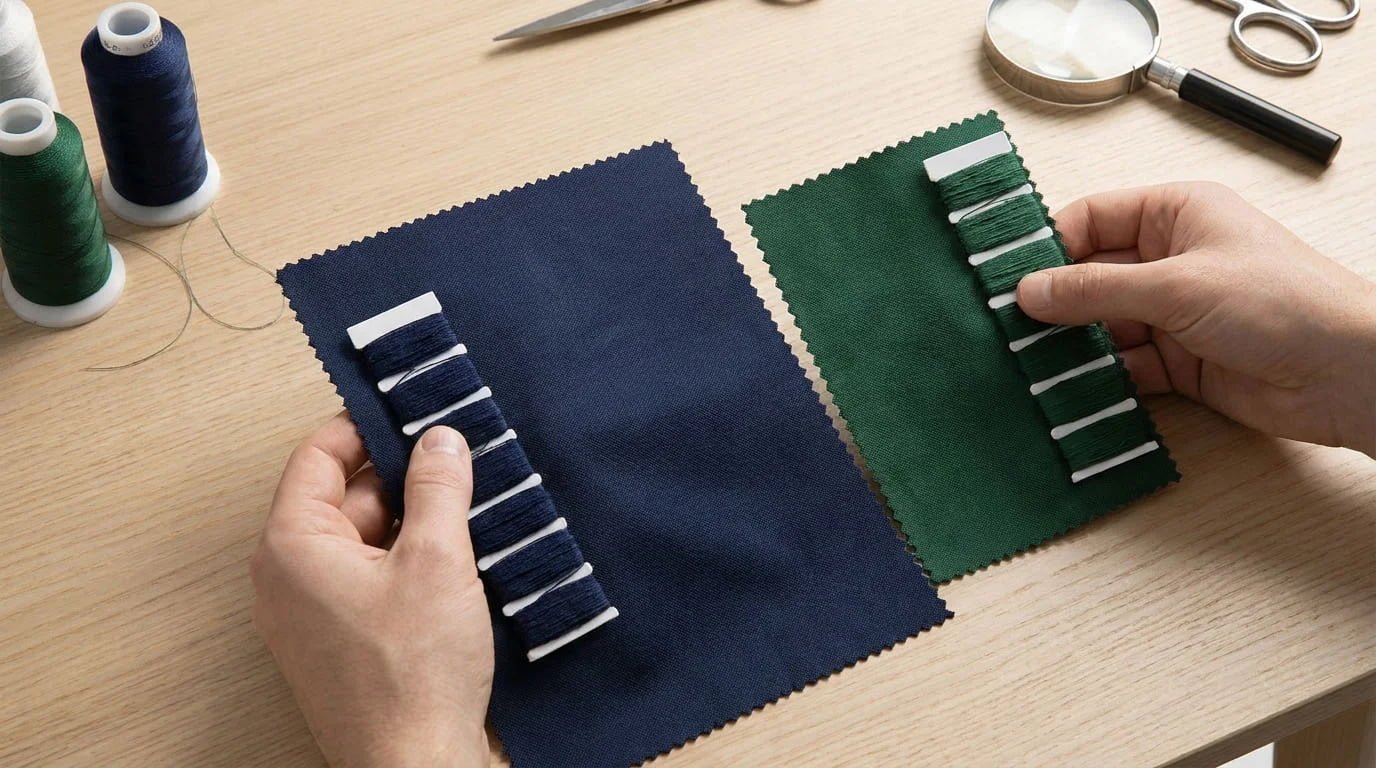
A slightly different navy or green can become noticeable when new golf polos are worn alongside an earlier shipment.
Color consistency should be judged against approved physical standards, not screen images alone.
Establish a Repeatable Color Approval Process
- Define the target color. Record an agreed physical or standardized textile color reference.
- Approve the actual material. Use a physical fabric swatch or lab dip for custom-dyed fabric.
- Confirm viewing conditions. Compare colors under agreed lighting, such as D65 daylight illumination where appropriate.
- Approve embroidery thread colors. Retain the manufacturer's thread codes and reference samples.
- Archive the approval. Record the approving person, date, and applicable production or dye-lot information.
A Pantone reference helps communicate the intended shade, but it does not replace approval on the actual production fabric.
Shade Matching Is Not the Same as Color Fastness
These two requirements are related but distinct.
- Shade matching: Does the proposed fabric color acceptably match the approved reference?
- Color fastness: Does the fabric resist color change or transfer under specified conditions, such as washing, rubbing, or perspiration?
A fabric can meet its color-fastness requirements while still appearing different from the original order.
Both requirements should be checked when relevant.
Can Every Reorder Match the Original Color Exactly?
Not necessarily.
Different dye lots may show variations caused by materials and processing conditions.
The realistic objective is to maintain color within agreed acceptance criteria.
These criteria should specify the comparison method and acceptable limits where applicable. A Pantone code alone does not automatically establish a numerical production tolerance.
If a new batch cannot meet the approved standard, the buyer should approve a revised color reference or production plan before bulk cutting.
Step 4. Freeze the Polo Specification and Approval Records
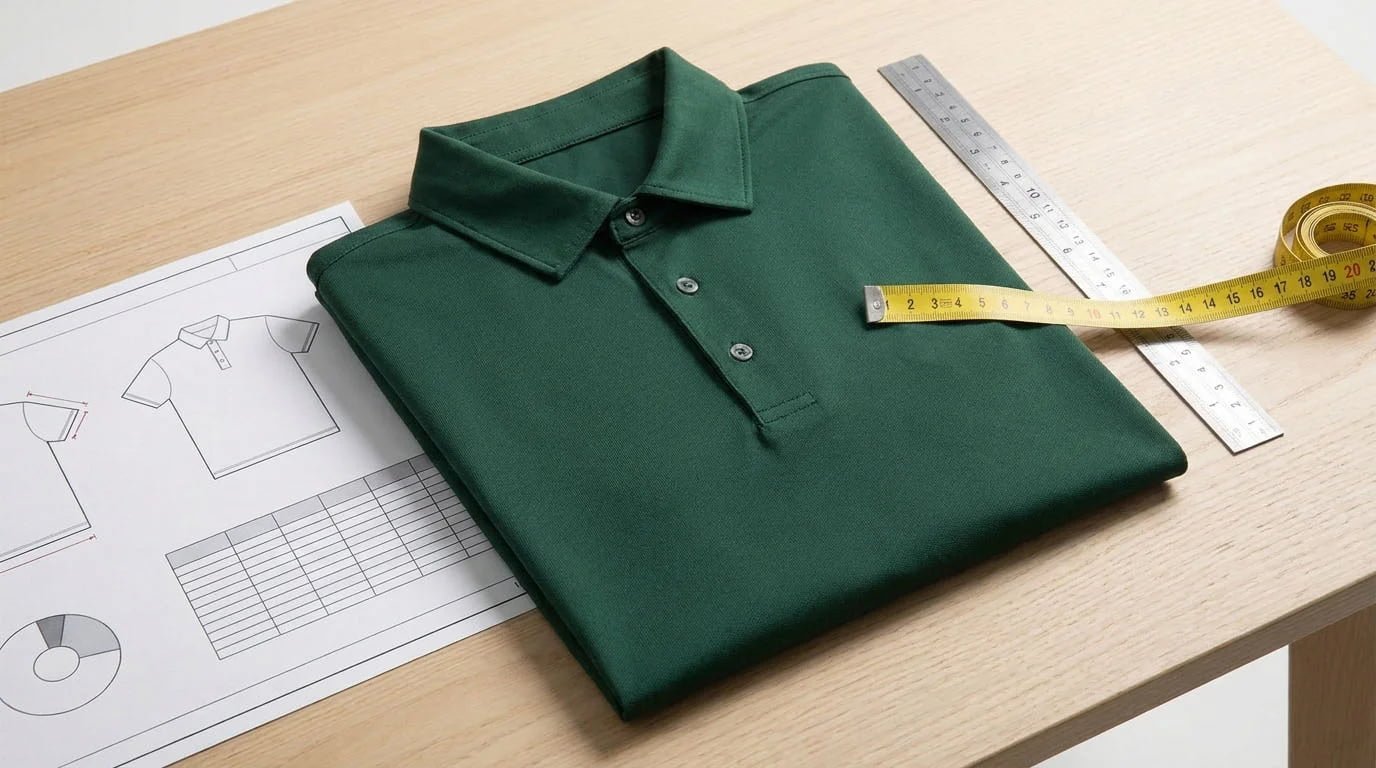
A polo may retain the same logo and color while changing in other ways.
Different buttons, collar materials, placket construction, or garment measurements can make a reorder feel like a different product.
Every approved polo should therefore have a clearly identified production version.
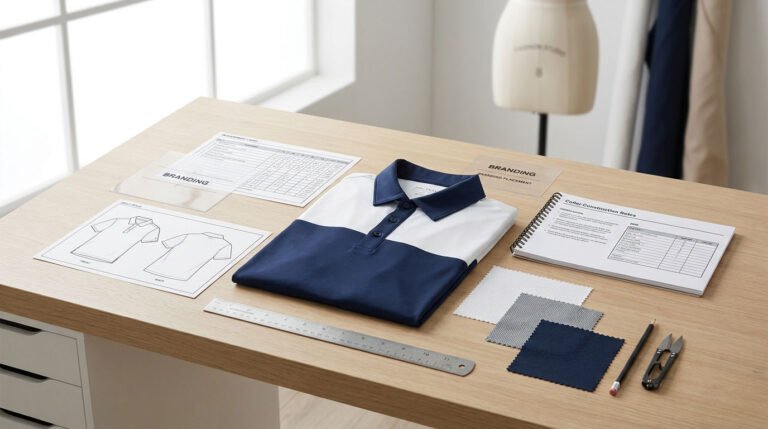
Master Product Reference Checklist
| Record | Details to Preserve |
|---|---|
| Style | Style code, revision, and approval date |
| Fabric | Specifications, supplier, and approved material |
| Color | Physical swatches and approval standards |
| Embroidery | Files, thread, backing, dimensions, and placement |
| Fit | Graded POM chart and measurement methods |
| Construction | Collar, placket, seams, and finishing |
| Trims | Buttons, labels, neck tape, and other components |
| Packaging | Labels, folding, and packing instructions |
| Approval | Responsible parties, change history, and retained samples |
A production-ready tech pack should already document these requirements.
The objective here is not to create another tech pack from scratch, but to preserve and reuse its approved version. For the full document requirements, see FUWAY's Golf Apparel Tech Pack Checklist.
Keep Fit Measurements Consistent
Use the same defined points of measure (POMs) and measurement methods for every production run.
Important golf polo POMs include:
- Chest width measured flat
- Body length from the specified starting point
- Shoulder width
- Sleeve length and opening
- Bottom hem width
Each measurement must have a clear definition.
At FUWAY, the finished-garment measurement tolerance standard is ±1.0 cm for specified POMs, unless the approved project tech pack establishes stricter requirements.
This standard does not automatically apply to embroidery placement, fabric shade, or other quality characteristics, which require their own specifications.
Use Version Control to Prevent Specification Drift
| Version | Status | Example |
|---|---|---|
| V1.0 | Approved | Original bulk production reference |
| V1.1 | Pending | Proposed button or trim substitution |
| V1.1 | Approved | Revised component accepted |
| V2.0 | Pending | New fabric requiring technical review |
The critical distinction is between proposed and approved changes.
No material substitution should be treated as approved simply because it appears similar.
Step 5. Confirm MOQ, Material Availability, and Reorder Timing
A successful first order does not guarantee that every future reorder can be produced at the same quantity, price, or lead time.
Confirm the commercial requirements before promising replacement polos to members or retail customers.
How MOQ Affects Golf Polo Reorders
At FUWAY, suitable custom golf apparel projects generally start from approximately 100 pieces per style.
Eligible orders can be divided into two colors at 50 pieces per color, subject to material and customization requirements.
However, a standalone 30- or 50-piece reorder is not automatically available on the same terms.
Small reorders may be affected by:
- Custom fabric dyeing minimums
- Material or trim availability
- Embroidery and production setup requirements
- Minimum cutting and sewing quantities
- Scheduling and additional sourcing costs
For a more detailed breakdown, see Understanding MOQ for Custom Golf Polo Shirts.
Example: Planning a Seasonal Club Polo Program
Consider a hypothetical club ordering 100 polos: 50 navy and 50 white.
The club expects to replenish selected sizes next season.
Before the first order, the buyer should confirm whether the original colors and fabrics can be sourced again, whether sizes can be combined within a reorder, and whether additional fabric can be reserved.
If the club later needs only 30 navy polos, the supplier must verify whether that quantity is feasible.
Potential solutions include reserved material, combining demand with another order, or adjusting the purchase quantity or schedule.
The right solution depends on confirmed production conditions.
Plan Reorders Around Actual Production Requirements
For suitable FUWAY projects, general planning references are:
| Production Stage | Typical Reference |
|---|---|
| Sampling | Approximately 7–10 working days |
| Bulk production | Approximately 3–4 weeks after required approvals |
| Shipping | Depends on destination and transport method |
These are indicative timelines, not guaranteed reorder commitments.
An unchanged design using available materials may need less development work. However, new materials, additional testing, or revised approvals can extend the schedule.
Confirm lead time and availability for every reorder.
Step 6. Verify Every Reorder Before Bulk Production
An approved master sample is valuable only when the new order is checked against it.
Before authorizing bulk production, complete a structured review.
Custom Golf Polo Reorder Verification Matrix
| Checkpoint | Original Reference | Reorder Check | Decision |
|---|---|---|---|
| Style | Approved style and version | Is the same version being used? | Match / Review |
| Fabric | Material specifications and source | Is the original material available? | Match / Review |
| Color | Physical fabric and thread standards | Does the new batch meet acceptance criteria? | Match / Review |
| Embroidery | File, thread, backing, and placement | Does the result match the reference? | Match / Review |
| Fit | Graded POM chart | Are measurements and methods unchanged? | Match / Review |
| Construction | Collar, placket, seams, trims | Have any components changed? | Match / Review |
| Packaging | Approved packing specification | Are requirements unchanged? | Match / Review |
| Supply | Quantity, materials, timing | Can the proposed order be fulfilled? | Confirm / Review |
| Approval | Master sample and approval records | Are all required approvals current? | Release / Hold |
This matrix can be copied into an internal purchasing or quality-control worksheet.
Record the reviewer, date, unresolved issues, and final production authorization.
When Can a Reorder Proceed Without Full Resampling?
A simplified verification may be appropriate when the approved fabric, pattern, construction, decoration specifications, and production conditions remain unchanged.
The factory should still confirm material conformity, applicable inspection requirements, and the current production reference.
Skipping full resampling does not mean skipping production verification.
When Is New Sample Approval Necessary?
| Proposed Change | Recommended Action |
|---|---|
| Same approved materials and construction | Verify against the master reference |
| New fabric source or knit construction | Assess equivalence, fit, and decoration; re-sample as needed |
| New color or dye process | Approve a physical color standard |
| Changed embroidery or placement | Approve revised decoration |
| Modified pattern, collar, or placket | Review measurements and approve affected construction |
| Original sample unavailable | Re-establish an approved reference before production |
What If the Original Fabric Is Discontinued?
Suppose the manufacturer offers a replacement polyester-spandex piqué with similar composition and GSM.
That does not prove the two fabrics are interchangeable.
Before approving the substitution, review:
- Appearance, hand feel, and stretch recovery
- Color and relevant performance requirements
- Fit, shrinkage, and garment measurements
- Embroidery compatibility
- MOQ, pricing, and delivery changes
If the replacement changes the approved product, update the version and obtain the necessary approvals.
Do not release bulk production when a material change affects the product and the revised result has not been accepted.
Frequently Asked Questions About Custom Golf Club Polo Reorders
1. Can I reorder custom golf polos using only the original logo file?
Not reliably. The artwork does not include fabric specifications, embroidery setup, garment measurements, color standards, or construction details.
A dependable reorder requires the approved product record and applicable physical references.
2. Can a manufacturer guarantee exactly the same fabric color across every reorder?
Absolute color identity between separate dye lots should not be assumed.
Approved physical standards, agreed viewing conditions, and defined acceptance criteria provide a practical way to evaluate production consistency.
3. What if I need only 30–50 replacement golf polos?
Ask the manufacturer to verify the applicable MOQ, available materials, and production conditions.
Smaller reorders may be possible through specific arrangements, but should not be assumed to qualify automatically.
4. Do I need a new embroidery file when changing polo fabric?
Not always. However, changes in fabric structure, stretch, or weight may require adjustments to stitch density, backing, or digitizing.
Test the proposed combination before approving bulk production.
5. How can a pro shop maintain popular polo styles year after year?
Track demand by style, color, and size. Forecast replenishment needs, confirm material availability, and preserve approved production references.
Discuss reserved fabric or scheduled purchasing when recurring demand makes those arrangements practical.
6. Can reorders be produced faster than first orders?
Possibly. An unchanged style with available materials may avoid some development stages.
However, production capacity, material availability, quantity, and inspection requirements still determine the actual schedule.
Conclusion: Build a Repeatable Golf Polo Program, Not Just a Successful First Order
Consistent custom golf club polo reorders begin with a well-documented first production run.
An approved reference for fabric, embroidery, color, fit, construction, and packaging gives both the buyer and manufacturer a clear standard for future orders.
Each reorder should be checked against that reference, with material or design changes reviewed before bulk production.
For golf clubs and pro shops, this process helps reduce unexpected differences between seasonal shipments and supports more predictable replenishment.
For growing apparel brands, it provides a controlled foundation for expanding successful polo styles without unintentionally changing the original product.
At FUWAY, we support OEM and ODM custom golf polo development, from sampling and specification confirmation through bulk production.
Planning your first club polo order or preparing a repeat production program?
Share your existing sample or tech pack, preferred fabric and colors, embroidery artwork, estimated quantities, and expected reorder schedule.
Our team can review material availability, production requirements, and the approval steps relevant to your project.