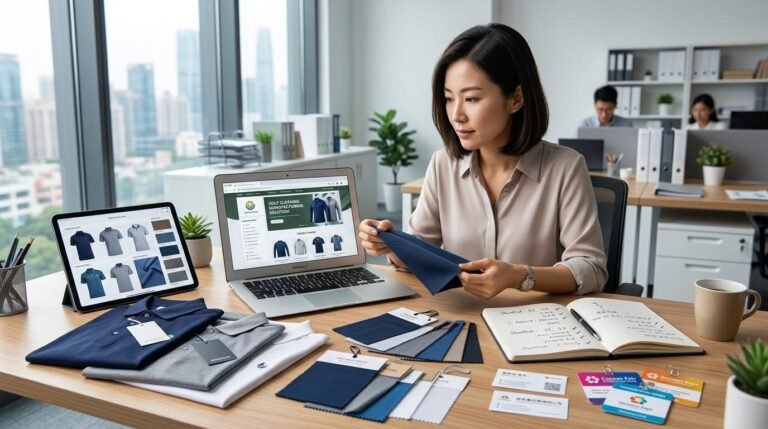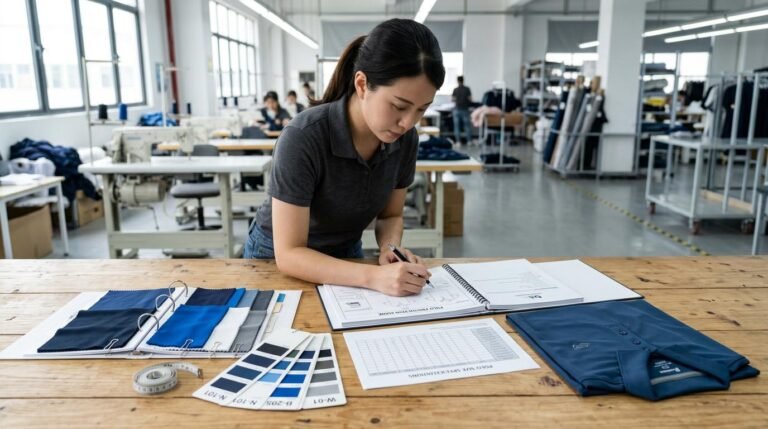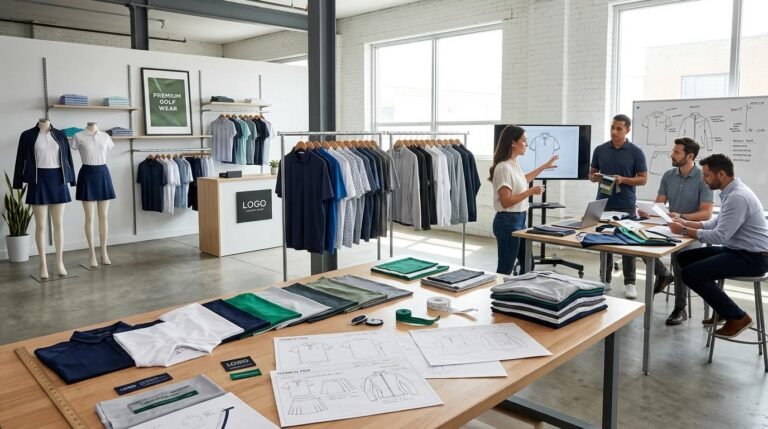
You found three suppliers. All offer "custom golf polos." One quotes $12 per unit, another $22, and a third $28. You pick the cheapest. Then the fabric feels wrong, sizes run small, and your tournament is in three weeks with no backup plan.
Custom golf clothing for teams, clubs, and events isn't about finding the lowest price or fastest turnaround—it's about balancing fabric performance, realistic lead times, and total cost (including hidden reorder risks). Most buyers fail because they treat it as a linear checklist instead of a three-way trade-off between budget, timeline, and quality.
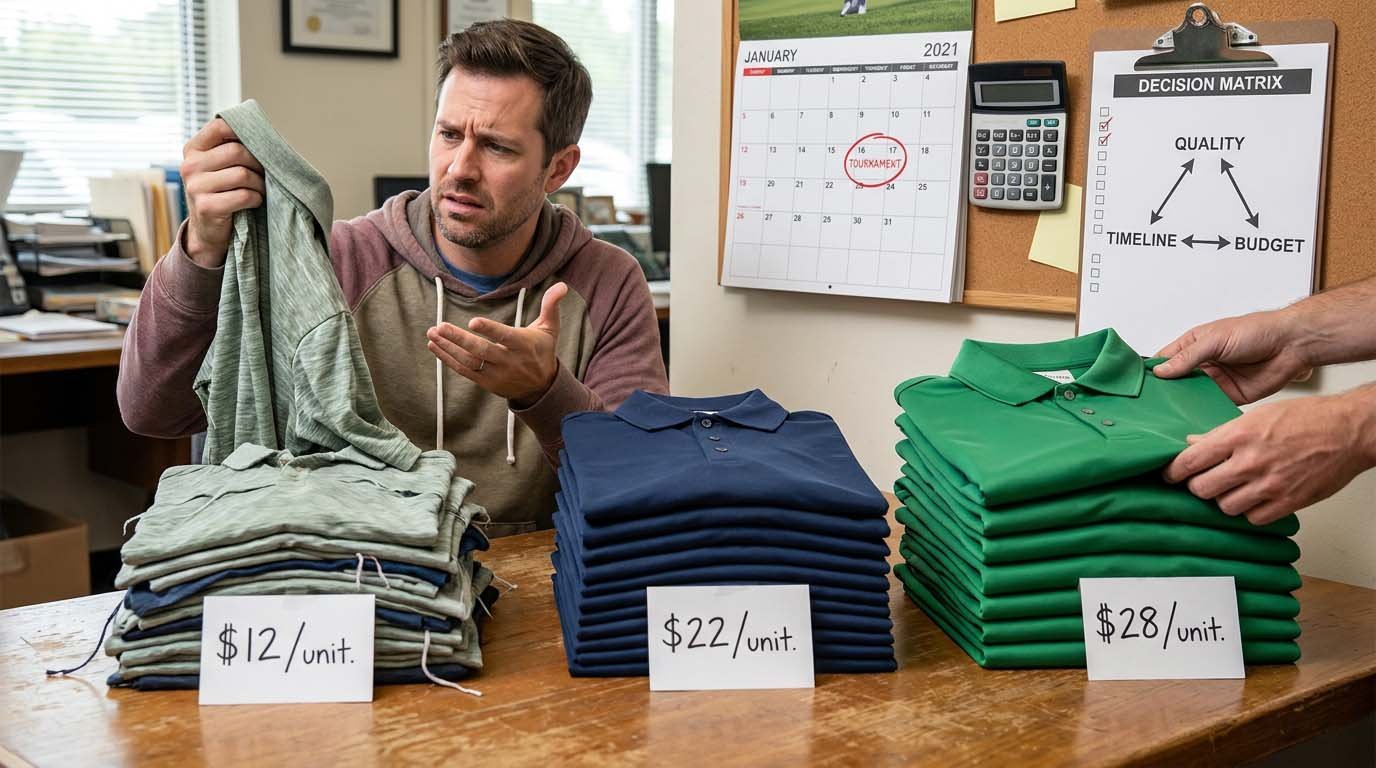
I've worked with corporate golf teams, club organizers, and tournament directors through dozens of custom apparel projects. The ones that went smoothly looked very different from the ones that didn't. Let me show you what actually separates success from crisis.
Quick Answers: Custom Golf Clothing in 60 Seconds
What's the real lead time for custom golf apparel?
Not the "7–10 days" some suppliers claim. Realistic timeline is 25–40 days after design approval: 2–3 design rounds (5–10 days), fabric sourcing (7–14 days), production (10–15 days), shipping (3–7 days).
What's a safe MOQ for quality and price?
50–100 pieces per style/color. Below that, unit costs spike and quality control weakens. Some suppliers go lower, but expect higher prices or longer waits.
Which fabric matters most for teams?
Moisture-wicking polyester or poly-blends (160–200 gsm) with 4-way stretch and UPF 30+. Cheap cotton-heavy fabrics pill, cling when humid, and get complaints.
Should we use embroidery or printing?
Embroidery for small logos (≤ 4 inches), premium feel, 5+ year durability. Sublimation for large, full-color designs. Heat transfer for testing before committing.
What's the hidden cost buyers miss?
Reorder minimums and supplier switching costs. If year-two colors don't match or fits change, you've lost visual continuity and member satisfaction.
Why Does Custom Golf Clothing Matter for Teams, Clubs and Events?
Custom golf clothing creates visibility, consistency, and perceived professionalism. But it only delivers ROI when members actually wear it—and that depends on fabric comfort, design input, and supply chain reliability, not just logos.
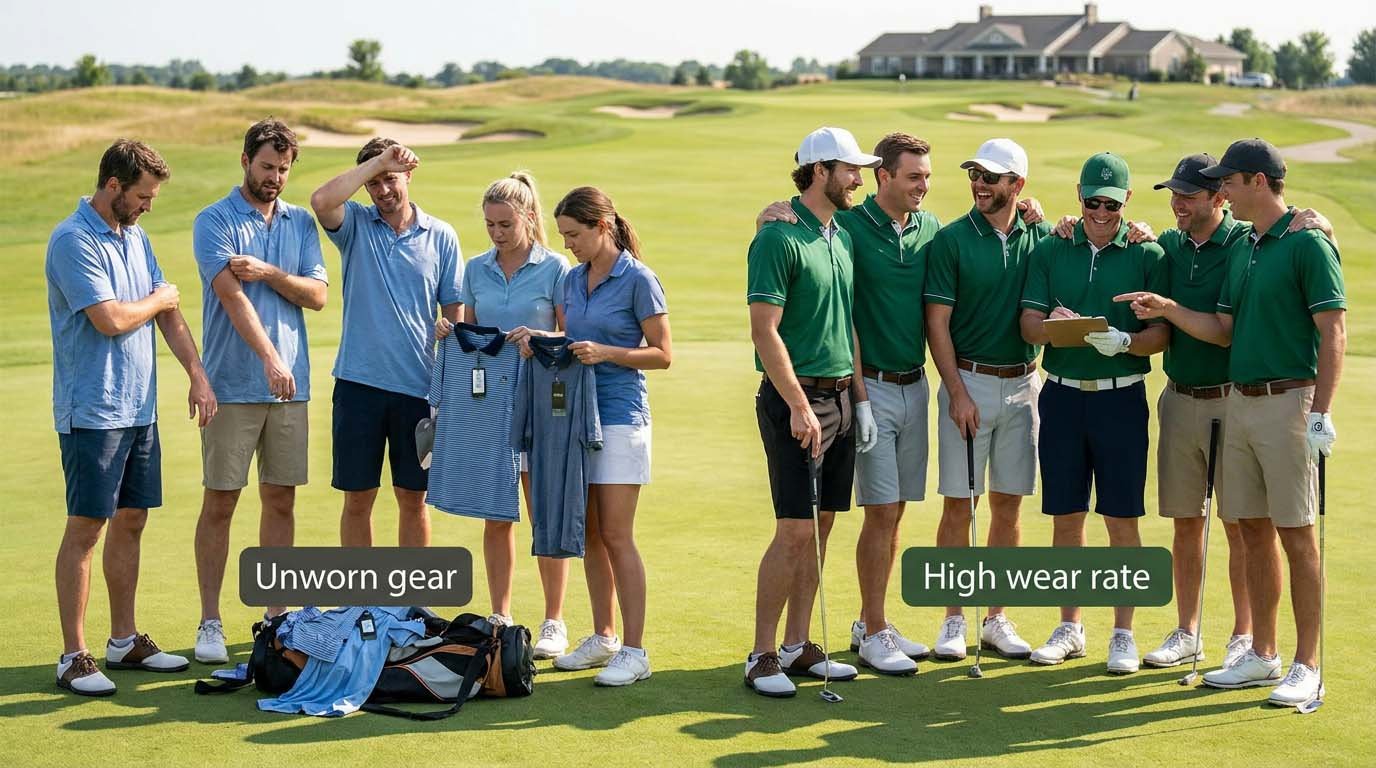
Here's the honest truth from my client work: half of first-time buyers focus on the wrong variables. They ask:
- "What's your cheapest polo?"
- "Can you do 20 pieces?"
- "Can we get it in 10 days?"
Those questions feel practical. But they skip the real risks: uncomfortable fabric that members won't wear, small MOQs that spike costs or compromise quality, and rushed timelines that force you into low-quality "rush production."
What Actually Predicts Success
| Buyer Focus | Typical Result |
|---|---|
| Price alone | Cheap fabric → member complaints → gear sits unused |
| Fastest delivery | Rush fees, quality shortcuts, no time for design fixes |
| Lowest MOQ | High per-unit cost, inconsistent sizing, reorder friction |
| Balanced approach | Right fabric + realistic timeline + cost transparency = high wear rate |
I've seen teams spend $1,500 on custom polos that members wore once. I've also seen clubs spend $3,200 on apparel that members requested extras of and wore for two seasons. The difference wasn't budget—it was decision framework.
Fabric and Performance: What Do Wicking, Stretch, UPF and Weather Protection Mean?
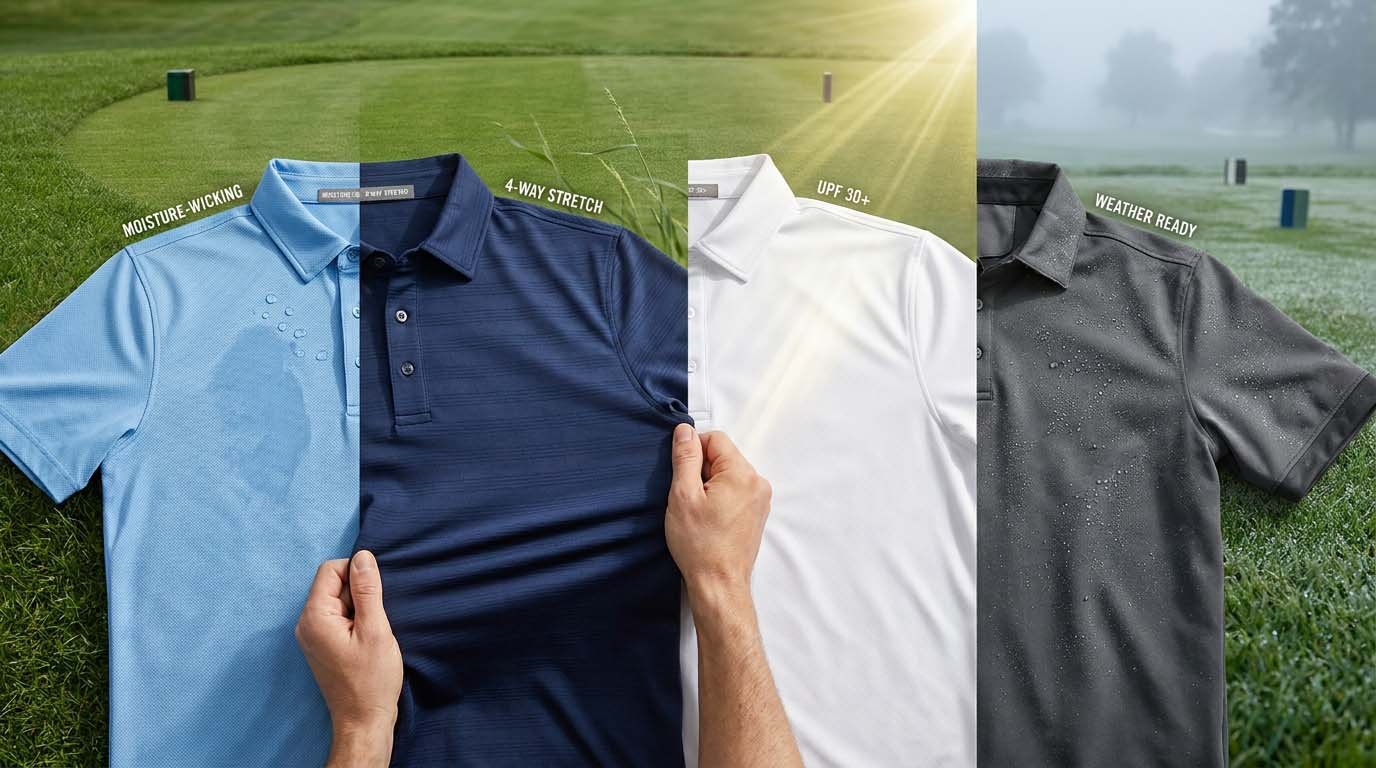
Fabric performance decides whether your custom gear gets worn or shelved. The four specs that matter most are moisture-wicking, stretch, UPF protection, and weather adaptability. Skip these, and you've bought expensive closet inventory.
The Four Performance Specs That Matter
1. Moisture-Wicking
Polyester or poly-blends pull sweat away from skin. Cotton absorbs and clings. On a 90°F humid day, the difference is obvious—and it shows up in member feedback.
2. Stretch (4-Way vs 2-Way)
4-way stretch (both directions) moves with the golf swing and doesn't restrict shoulders or torso. 2-way stretch (one direction) is cheaper but less comfortable.
3. UPF Protection
UPF 30+ blocks 96%+ of UV rays. For teams playing multi-day tournaments or weekly rounds, this isn't optional—it's skin health.
4. Weather Readiness
One fabric can't do everything. You need different weights for different conditions.
Fabric Guide by Use Case
| Climate / Event Type | Fabric Type | Weight | Why It Works |
|---|---|---|---|
| Hot / humid tournaments | Polyester mesh, moisture-wicking | 140–160 gsm | Breathes, dries fast, lightweight |
| Spring / fall club play | Poly-cotton blend | 180–200 gsm | Soft hand feel, structured look |
| Cool mornings / wind | Poly-fleece or softshell | 240–280 gsm | Warmth without bulk, wind-resistant |
| Multi-day events | Poly-spandex performance knit | 160–180 gsm | Packs light, resists wrinkles, wicks well |
One client asked for the cheapest polo fabric we offered. I warned them: 160 gsm plain weave cotton-poly feels fine in the fitting room but clings and wrinkles during play. They went with it anyway. Three weeks later, half the team complained. We redid the order in 180 gsm moisture-wicking poly-spandex. Problem solved—but they paid twice.
My Rule for Fabric Selection
- Budget tight? Don't drop fabric quality—reduce decoration complexity or adjust MOQ instead.
- Timeline tight? Choose in-stock fabrics, not custom-dyed or specialty weaves.
- Event matters? Multi-day tournaments need quick-dry, wrinkle-resistant fabrics; single-day club events can use structured blends.
Design and Branding: How Do Colors, Logo Placements and Sponsors Work Together?
Good design isn't about making it "look cool." It's about creating a system—Pantone color codes, fixed logo positions, and sponsor hierarchy rules—that survives reorders and keeps your team visually consistent year after year.
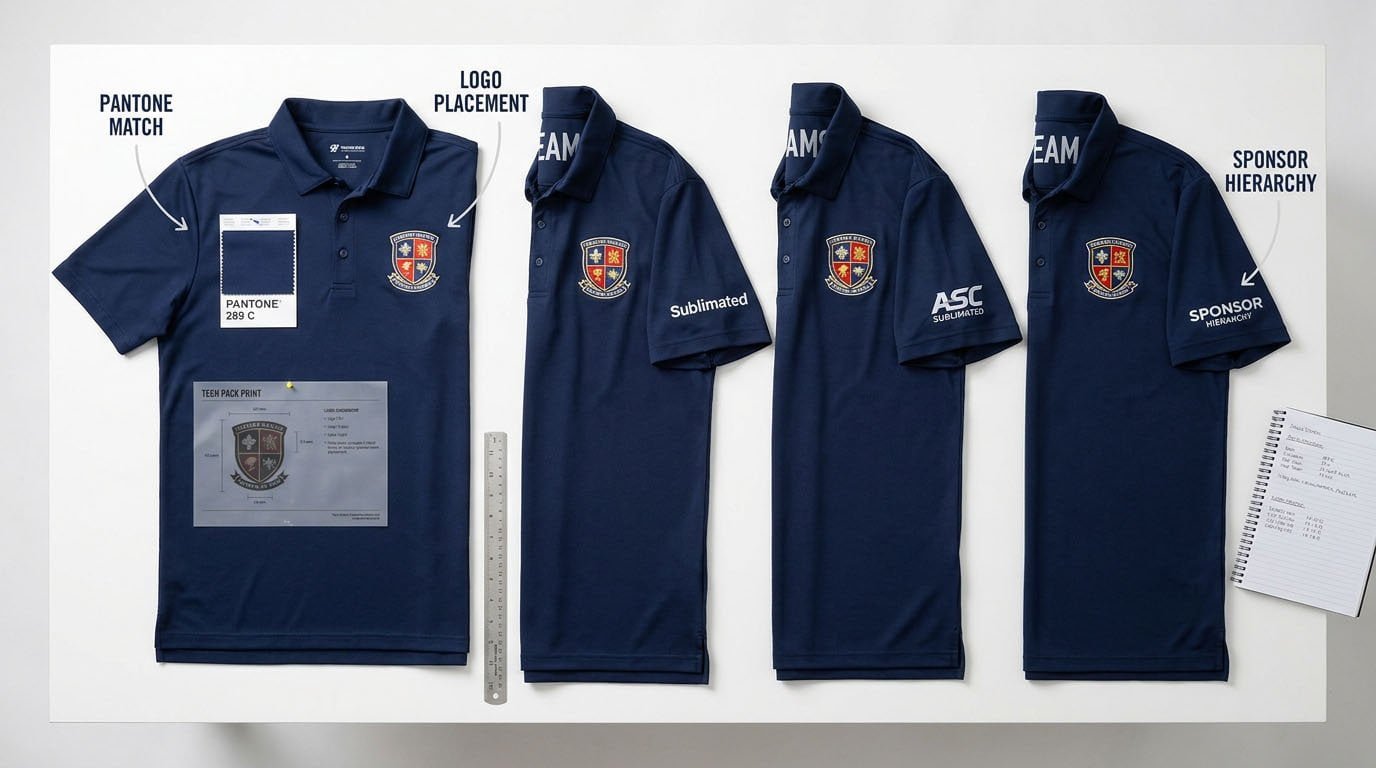
I've worked with clients who came back for year-two orders and got polos in a "close enough" color. Next to last year's gear, the mismatch was obvious. Members noticed. That inconsistency chips away at the visual identity you paid to build.
What to Lock Down Before Your First Order
- Pantone codes (not "royal blue" or "forest green"—exact PMS numbers)
- Logo size and placement (left chest, right sleeve, back yoke—document with measurements)
- Sponsor logo tiers (primary, secondary, tertiary positions with size hierarchy)
- File formats (vector: AI, EPS, PDF with fonts outlined)
Common Logo Placement Standards
| Position | Best Use | Embroidery Size Limit | Visibility |
|---|---|---|---|
| Left chest | Team crest, small logo | 3–4 inches | High (always visible) |
| Right chest | Sponsor or player name | 2–3 inches | Medium |
| Back yoke | Large team name or secondary sponsor | 8–12 inches | High (from behind) |
| Sleeves | Small sponsor logos | 2–3 inches | Medium (side view) |
One client wanted a 6-inch embroidered logo on the back. I pushed back—that much thread weight stiffens the fabric and shows through when you sweat. We split it: sublimation for the large back graphic, embroidery for the chest crest. Both looked sharp. Both held up after 30+ washes.
The Tech Pack Rule
Ask your supplier to create a tech pack: a document that records every spec (fabric, Pantone codes, logo sizes, placement coordinates, thread colors). When you reorder in year two, nothing changes unless you want it to. This single step prevents 80% of reorder headaches.
Customization Methods: Which Works Best—Embroidery, Heat Transfer, Screen Print or Sublimation?
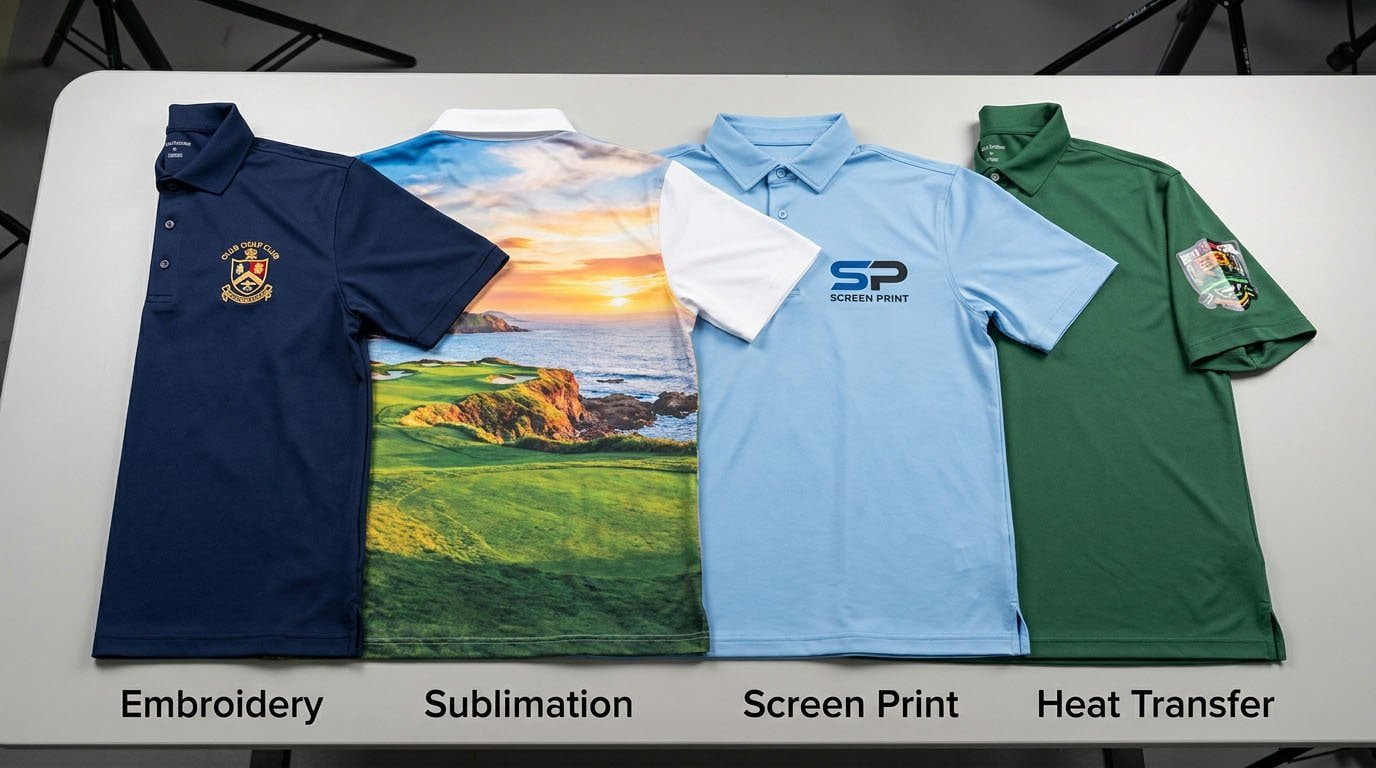
Each decoration method has trade-offs. Embroidery offers premium feel and durability. Heat transfer suits small runs and complex art. Screen print scales well for simple designs. Sublimation delivers full-color, all-over prints that won't crack.
Method Comparison
| Method | Best For | Durability | Feel | Cost Structure |
|---|---|---|---|---|
| Embroidery | Logos ≤ 4 inches, premium look | 5+ years | Raised, textured | Per-stitch cost; setup fee |
| Heat Transfer | Complex art, small runs (<50 pcs) | 2–3 years | Slight patch feel | Low setup, mid per-unit |
| Screen Print | Simple 1–3 color logos, large runs | 3–5 years | Smooth, lightweight | Setup per color, low per-unit at scale |
| Sublimation | Full-color, all-over prints, photo-realistic | Garment lifetime | No hand feel (dye-based) | Setup cost, then very low per-unit |
When Clients Choose Wrong
A club organizer once asked for embroidery on a large back logo (8 inches wide). I explained: heavy embroidery there stiffens the shirt and creates a sweat shadow. We switched to sublimation for the back and kept embroidery for the 3-inch chest crest. The final product looked better and performed better.
Another client wanted heat transfer for a 500-piece order. I recommended screen print instead—at that volume, setup costs per color drop dramatically, and screen print outlasts heat transfer by 2+ years.
My Method Selection Rules
- Embroidery: Logos ≤ 4 inches, premium branding, durability matters
- Sublimation: Large graphics, full-color designs, all-over patterns
- Screen print: Simple logos, high volume (200+ pieces), cost-sensitive
- Heat transfer: Testing designs, small runs, complex multi-color art
Ask your supplier what they recommend for your design. A reliable manufacturer will tell you when a method won't hold up.
Ordering Workflow: What About Sizing, MOQs, Lead Times, Budget and Quality Control?
Most first-time buyers underestimate lead times, misunderstand MOQs, and don't budget for hidden costs. A realistic ordering workflow accounts for design iterations, fabric lead times, size distribution complexity, and quality checkpoints.
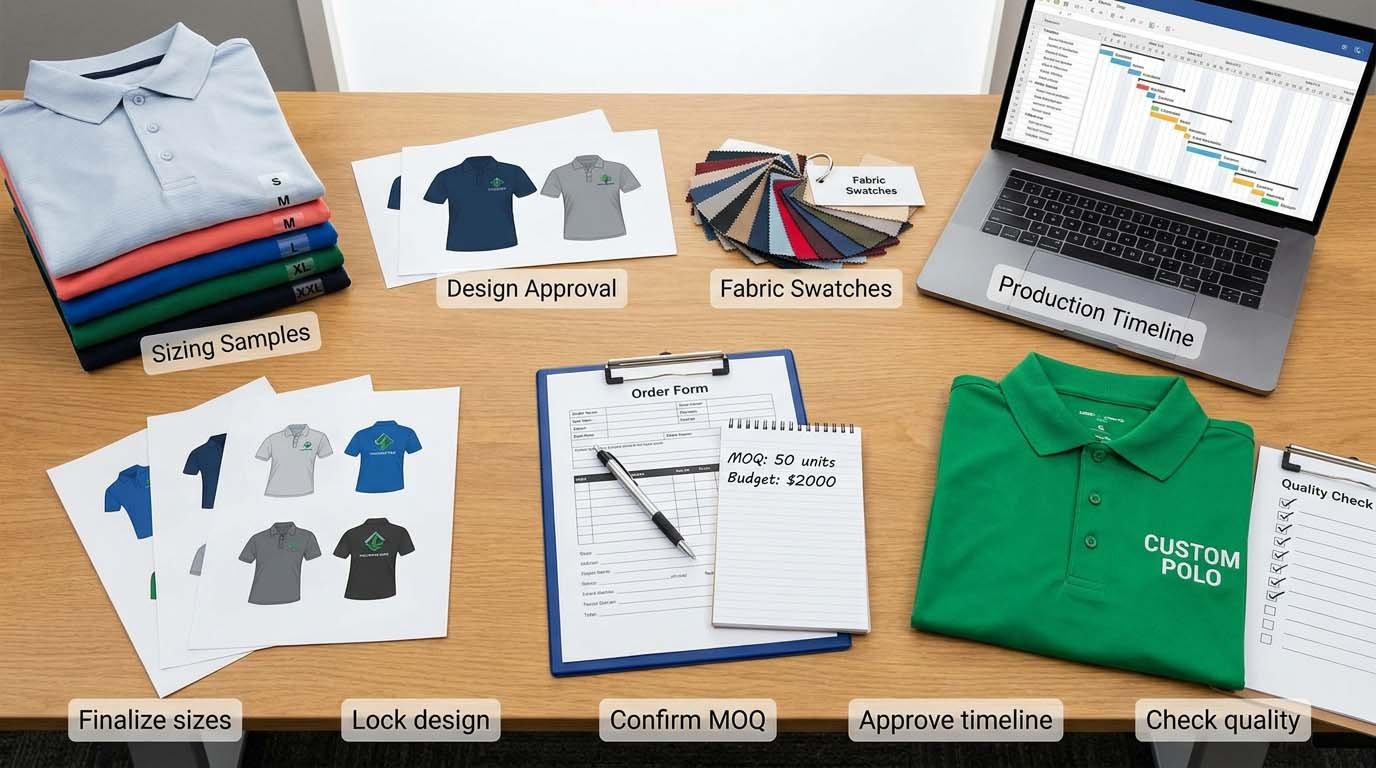
The Real Timeline Breakdown
| Phase | What Happens | Typical Duration |
|---|---|---|
| Design & Approval | Client submits art → 2–3 mockup rounds → final approval | 5–10 days |
| Fabric Sourcing | In-stock vs custom-dyed; supplier orders, receives, inspects | 7–14 days |
| Production | Cutting, sewing, decoration, QC | 10–15 days |
| Shipping | Domestic: 3–5 days; international: 5–10 days | 3–10 days |
| Total | From design start to delivery | 25–40+ days |
When a client asks "Can you deliver in 7 days?", I ask: "Have you already approved the design? Is your fabric in stock? Are all sizes confirmed?" If the answer to any is no, 7 days isn't realistic—it's a recipe for quality shortcuts or missed deadlines.
MOQ Reality Check
Most quality suppliers work from 50–100 pieces per style/color combination. Why?
- Fabric minimums: Mills often require 50+ yards per dye lot
- Setup costs: Embroidery machines, screen print setups, cutting tables—all have fixed costs that spread over quantity
- Quality control: Small runs (10–20 pieces) often skip QC steps or use lower-tier production lines
I've seen clients try to save money with 30-piece orders at low prices. The result: inconsistent sizing, loose threads, colors that don't match mockups. They came back for a 100-piece reorder with us—spent more per unit, but zero complaints.
Budget Framework (Per-Unit)
| Item Type | Price Range | What Affects Cost |
|---|---|---|
| Basic polo (1-color logo) | $14–$22 | Fabric weight, decoration method, order size |
| Performance polo (multi-color) | $22–$35 | Moisture-wicking fabric, 4-way stretch, UPF, complex decoration |
| Outerwear (vest, jacket) | $35–$75 | Fabric tech (softshell, fleece), decoration area, MOQ |
The 7-Step Workflow I Walk Clients Through
- Send sizing samples — Physical samples in S–XXL for team members to try. Size charts alone cause 20–30% return rates.
- Finalize design — 2–3 mockup rounds. Rush this, and you'll want changes mid-production (costly or impossible).
- Confirm MOQ and fabric — Balance order size with per-unit cost and fabric availability.
- Approve timeline — Build in buffer for design changes, fabric delays, shipping.
- Submit PO with 50% deposit — Locks in production slot and fabric allocation.
- QC checkpoint — Request photos of first finished pieces before full production continues.
- Delivery + care instructions — Include printed care card: wash cold, no fabric softener, hang dry.
Hidden Costs Buyers Miss
- Rush fees: $200–$500+ for expedited production
- Design revision fees: Most suppliers include 2–3 free rounds; after that, expect charges
- Reorder minimums: Need 10 more shirts mid-season? Some suppliers require another 50-piece order
- Supplier switching costs: New supplier = new mockups, new fit standards, no color continuity
FAQ: Custom Golf Clothing for Teams, Clubs and Events
What's the minimum order quantity for custom golf apparel?
Most reputable suppliers start at 50–100 pieces per style/color. Some offer lower MOQs (20–30 pieces) but expect 20–40% higher per-unit costs and potential quality trade-offs.
How long does it really take to get custom golf clothing?
25–40 days from design approval to delivery. This includes design rounds (5–10 days), fabric sourcing (7–14 days), production (10–15 days), and shipping (3–7 days). "Rush" timelines exist but cost more and risk quality.
What's the best fabric for a multi-day golf tournament?
Moisture-wicking polyester or poly-spandex blend (160–180 gsm) with 4-way stretch and UPF 30+. It dries fast, resists wrinkles, and packs light—critical for travel events.
Should we use embroidery or sublimation for team logos?
Embroidery for small logos (≤ 4 inches) on chests and sleeves—premium look, 5+ year durability. Sublimation for large or full-color graphics—no hand feel, won't crack or peel, lasts the life of the garment.
How do we make sure year-two orders match year-one?
Request a tech pack from your supplier: documented Pantone codes, logo placement specs, fabric details. Store vector artwork (AI, EPS) and tech pack in your files. Use the same supplier for consistency.
What if we need to add sizes or members mid-season?
Work with a supplier who keeps your specs on file and offers flexible reorder minimums. Some require full MOQs for reorders; others allow smaller top-ups if the original order was substantial.
What's the real cost difference between cheap and quality custom golf apparel?
A $12 polo often uses 160 gsm cotton-poly plain weave with basic embroidery—pills, clings, wrinkles. A $22–$28 polo uses 180–200 gsm moisture-wicking poly-spandex with quality decoration—lasts 3x longer, members actually wear it. The hidden cost of cheap: reorders, complaints, unused inventory.
How should we handle sizing for a team we've never ordered for?
Order physical sample packs (S, M, L, XL, XXL) before committing to full production. Have members try them on. Size charts vary by supplier and fabric—samples prevent costly returns.
Conclusion
Custom golf clothing for teams, clubs, and events works when you balance fabric performance, realistic timelines, and total cost—not just unit price. Choose suppliers who document specs, communicate trade-offs, and support long-term reorders.