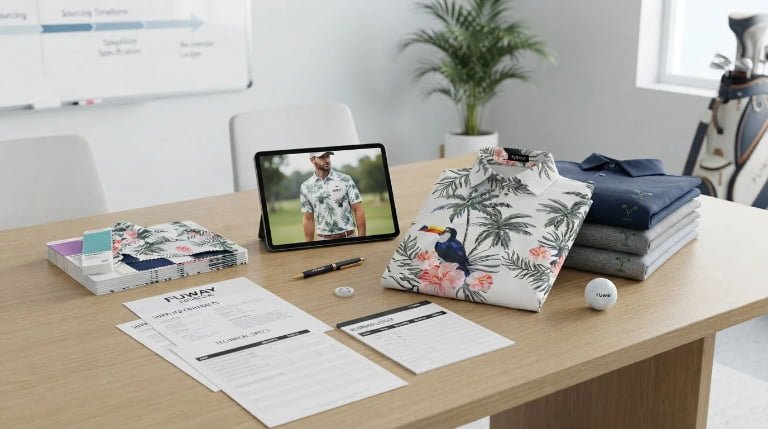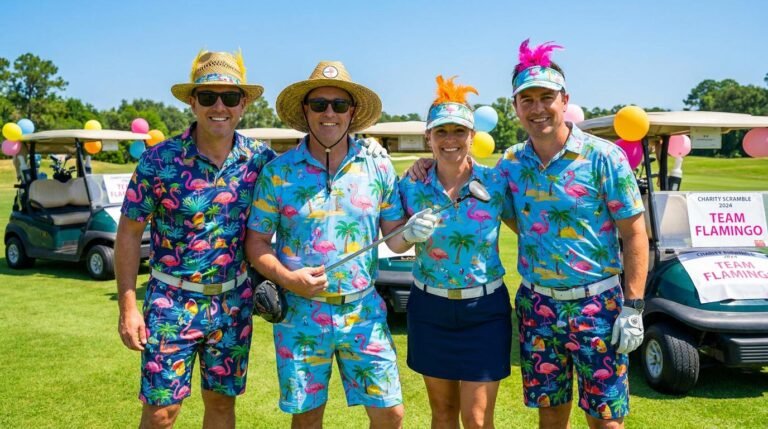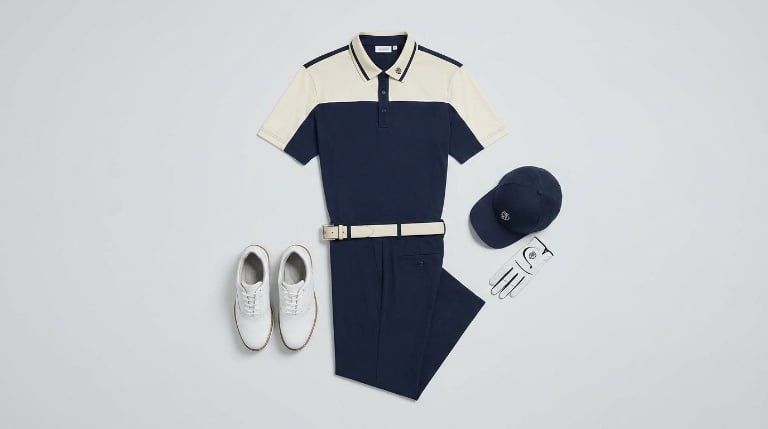
Every year, more than 30,000 charity golf tournaments take place across the United States alone. For many organizers, selecting the right apparel ranks among the most time-consuming and stressful parts of event planning.
Choosing golf tournament apparel is not simply about finding a good-looking polo shirt at the lowest price. A successful choice must suit the players, weather, event format, sponsor requirements, and available budget.
The best way to buy golf tournament apparel is to evaluate seven factors before ordering: event requirements, garment styles, fabric performance, group sizing, sponsor branding, sample quality, and sourcing options.
A shirt that works for a corporate reception may not be comfortable for an 18-hole summer tournament. Similarly, an embroidered golf polo that looks excellent in a product photo may behave differently when worn, stretched, and washed.
This guide helps tournament directors, charity event organizers, corporate buyers, and golf club managers compare their options and select apparel that fits their events.
Planning your event now? Send your tournament date and expected headcount to the FUWAY team for a custom proposal and complimentary fabric swatches.
Quick Answer: What Should You Look for When Buying Golf Tournament Apparel?
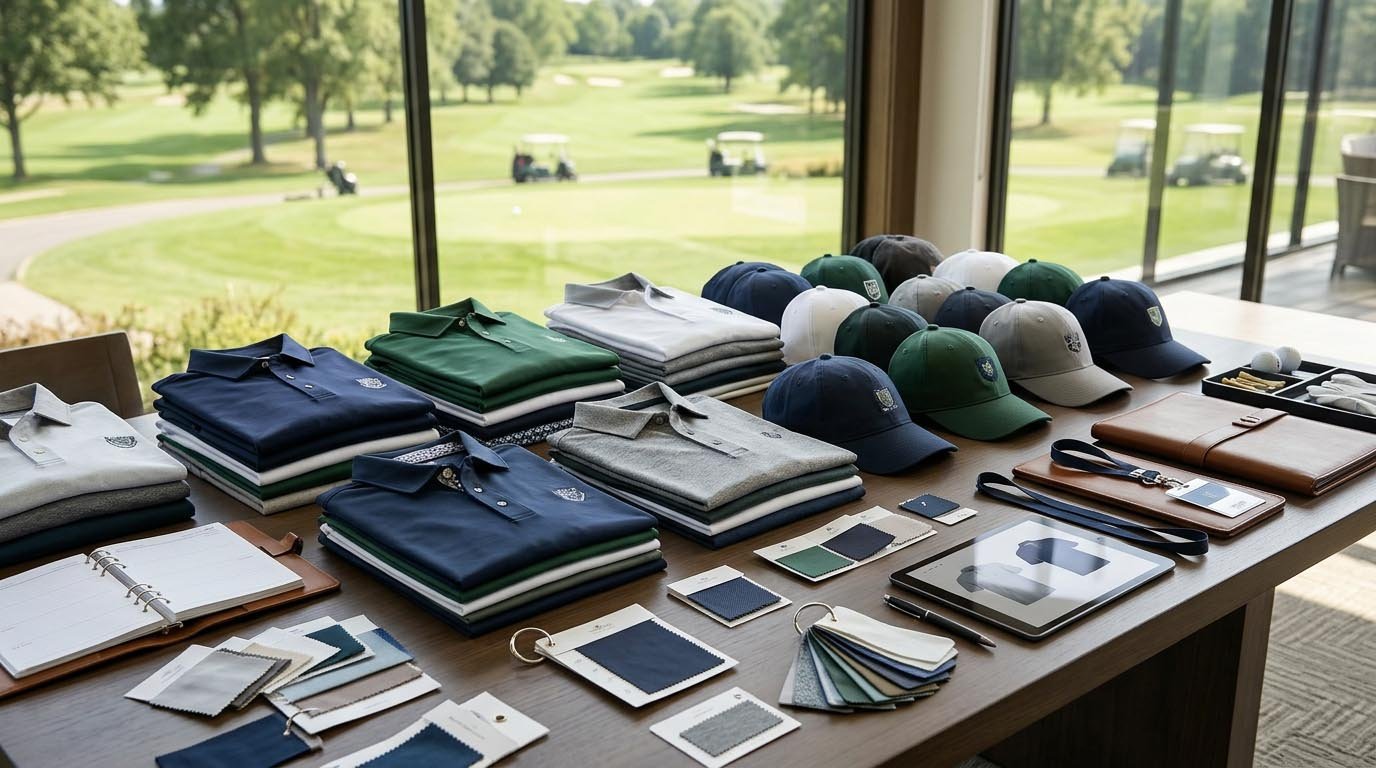
Before choosing a supplier or approving a purchase, evaluate the garment itself and how it will be used.
| Buying Factor | What to Check | Why It Matters |
|---|---|---|
| Event requirements | Weather, duration, event format | Determines comfort and product suitability |
| Apparel styles | Polos, quarter-zips, jackets, shorts, skorts | Matches clothing to different participants |
| Fabric performance | Breathability, weight, stretch, opacity | Affects comfort and movement |
| Sizing | Garment measurements and fit | Reduces sizing mistakes |
| Sponsor branding | Logo placement, decoration, appearance | Protects sponsor visibility and presentation |
| Sample quality | Fit, workmanship, wash performance | Helps identify problems before bulk ordering |
| Sourcing options | Stock decoration versus custom manufacturing | Balances flexibility, budget, and availability |
A useful buying principle: Choose the garment specifications first, then compare suppliers offering products that meet those requirements.
Otherwise, a lower-priced quotation may represent a different product rather than a better purchasing decision.
Step 1. Match Your Apparel to the Tournament Format
Different golf events create different clothing requirements.
The first decision is not necessarily which shirt to buy. It is what participants will actually need to wear.
Choose Clothing by Participant Role
A charity scramble, corporate golf outing, and private club championship may require different apparel combinations.
| Participant Group | Suitable Apparel Options | Key Buying Priority |
|---|---|---|
| Tournament players | Performance polos, golf shorts, skorts | Comfort and unrestricted swing mobility |
| Corporate hosts | Branded polos, lightweight quarter-zips | Professional appearance during client interactions |
| Sponsors and VIPs | Premium-finish polos, selected layering pieces | Presentation quality and perceived garment value |
| Volunteers | Easily identifiable polos or lightweight layers | High visibility and all-day comfort |
| Event officials | Coordinated polos or jackets | Clear role identification at distance |
You do not necessarily need a separate custom garment for every group.
For example, one polo design in two approved colors may distinguish players from volunteers without requiring completely different patterns. One corporate client used navy polos with white embroidery for players and the same polo in bright green for volunteers—achieving clear visual separation without doubling their design costs.
However, different colors, garments, or decoration specifications can affect pricing and production minimums. Confirm these differences with your supplier before finalizing your group plan.
Consider the Event Experience
Ask three questions:
- Will participants wear the apparel during active play or only at registration and presentations?
- Will clothing be worn for a few hours or across multiple event days?
- Is the garment intended as a one-day uniform, a participant gift, or something people will continue wearing afterward?
For a summer charity event, comfort during play may be the primary consideration.
For a sponsor-focused corporate outing, fabric appearance, logo presentation, and packaging may carry greater importance.
Buying tip: If the apparel is intended to be worn beyond the tournament, evaluate it as an everyday golf garment rather than disposable promotional merchandise. Participants are far more likely to wear a shirt again if the fabric feels good and the fit is right.
Step 2. Choose Fabrics Based on Real Playing Conditions
Fabric selection should begin with the expected weather and how the clothing will be worn.
Terms such as breathable, moisture-wicking, and four-way stretch are useful starting points, but they do not describe every aspect of performance.
Two golf polos with the same fiber composition can feel completely different because of their knit construction, fabric weight, finishing, and garment design. A 92% polyester / 8% spandex polo from one factory may drape and breathe differently than the same fiber blend from another source.
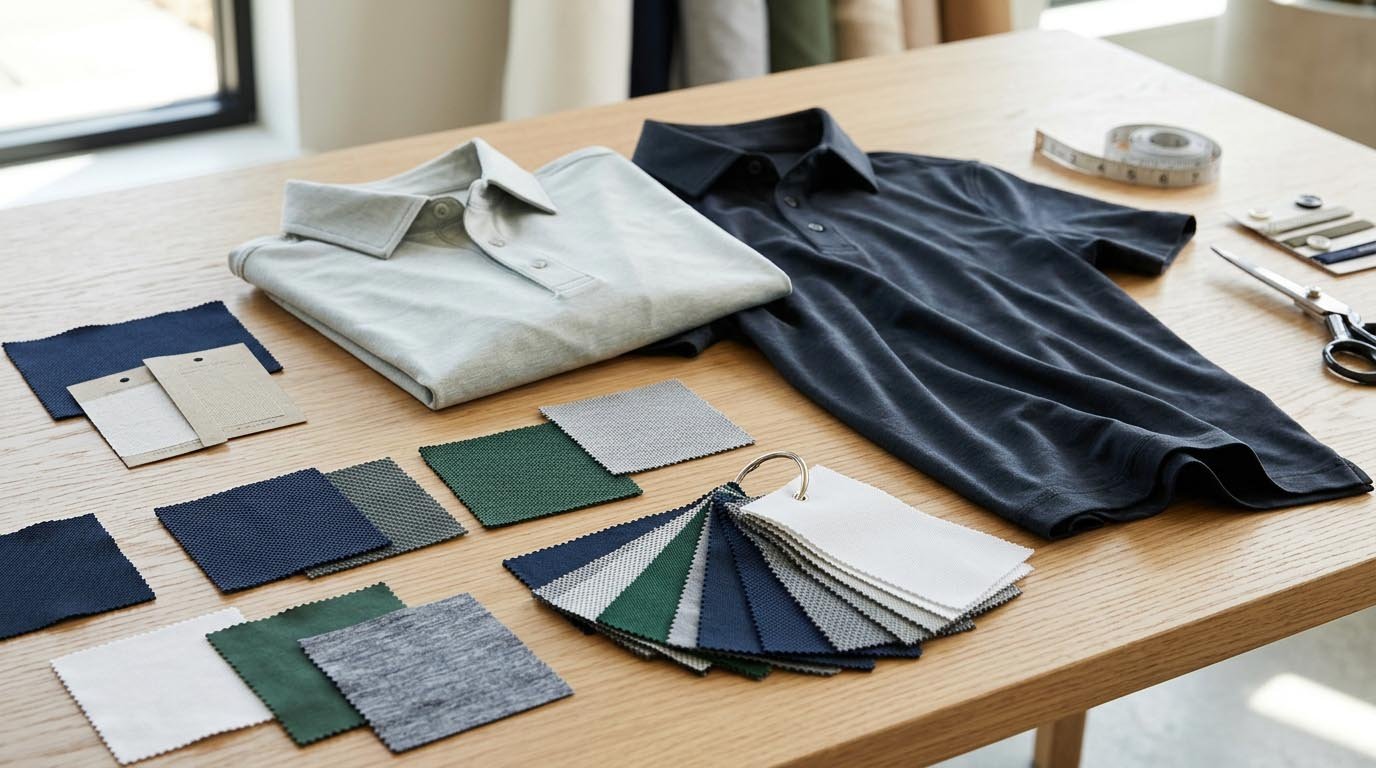
Compare Fabric Requirements by Event Conditions
| Event Conditions | Fabric Features to Evaluate | What to Verify |
|---|---|---|
| Hot and humid | Breathability, moisture management, low cling | Fabric structure, weight, wear comfort |
| Strong sun exposure | Coverage, comfort, UV protection if specified | Product-specific UPF evidence |
| Mild weather | Balanced weight, hand feel, shape retention | Sample drape and fit |
| Cool mornings | Layering comfort, warmth, stretch | Movement while wearing multiple layers |
| Multi-day events | Easy care, wash durability, recovery | Washing instructions and relevant testing |
Does Fabric GSM Tell You Which Golf Polo Is Best?
GSM means grams per square meter. It describes fabric mass per unit area, not overall quality.
A lighter fabric may be suitable for warm-weather golf, but low GSM alone does not guarantee better airflow or moisture management. A poorly constructed 140 GSM fabric can feel clammy, while a well-engineered 200 GSM fabric with an open knit structure may breathe beautifully.
Likewise, a heavier fabric is not automatically more durable.
When comparing fabrics, ask for:
- Fiber composition and GSM.
- Knit construction type (jersey, piqué, interlock, or other).
- Stretch and recovery characteristics.
- Opacity, particularly in white or light colors.
- Required performance testing where applicable.
For example, a lightweight white jersey golf polo should be evaluated for transparency under realistic wearing conditions, not selected solely because it feels cool in the hand. Hold the fabric swatch against skin tone under natural light to assess real-world opacity.
For a more detailed explanation of materials and knit structures, refer to the FUWAY custom golf shirts fabric guide, which covers everything from fiber selection to finishing techniques.
Avoid Unsupported Performance Claims
If a supplier advertises UPF 50+, antibacterial properties, or a specific performance rating, request evidence applicable to the fabric or garment being purchased.
A test report for one material does not automatically establish the performance of every fabric, color, or production batch. For instance, a UPF test on a dark-colored polyester fabric has little relevance to a white version of the same garment.
Step 3. Evaluate Fit and Sizing for a Mixed Group
Group sizing is one of the most important practical considerations in tournament apparel selection. A single sizing mistake can leave a key participant without a wearable shirt on event day.
A size label does not define a universal garment measurement. A Large polo from one supplier may fit differently from a Large polo from another—and neither may match what your participants expect based on their usual retail purchases.
The safest approach is to select a fit suitable for your participant group and evaluate the manufacturer's actual garment measurements before collecting final size preferences.
Which Fit Works Best for Tournament Participants?
| Fit Type | General Characteristics | Buying Consideration |
|---|---|---|
| Slim fit | Closer to the torso, narrower through chest and waist | May suit buyers seeking a tailored silhouette; less forgiving for diverse body types |
| Regular fit | Balanced shape with moderate ease throughout | Practical starting point for diverse groups |
| Relaxed fit | More room through the body, wider chest and waist | May suit participants who prefer additional ease; consider for senior or mixed-age events |
None is universally best.
A corporate tournament with participants of different ages and body shapes may benefit from offering a regular or relaxed fit, but the correct choice depends on the actual garment pattern. One tournament organizer switched from slim-fit to regular-fit polos after participant feedback and saw complaints about sizing drop to nearly zero.
Check Measurements, Not Just Size Labels
Before approving a size chart, review:
- Half-chest width (measured from armpit to armpit).
- Body length (from shoulder point to hem).
- Shoulder width (across the back).
- Sleeve length (from shoulder seam to sleeve opening).
- Sleeve opening circumference.
- Relevant waist and hip measurements for bottoms.
Ask the supplier to explain exactly where each measurement is taken—measurement methodology varies between factories and can create confusion if left unclarified.
For FUWAY custom manufacturing projects, the standard finished-garment measurement tolerance is ±1.0 cm, unless a stricter approved specification applies.
A tolerance is a manufacturing acceptance range. It does not mean buyers should select garment sizes without checking their intended fit.
How Many Extra Shirts Should You Buy?
There is no universal buffer percentage suitable for every tournament.
Consider additional quantities based on confirmed registrations, expected late additions, unconfirmed sizes, and the cost of leftover inventory.
For example, if an organizer with 100 registered participants chooses a 5% contingency allowance, the planned quantity becomes 105 shirts. A 5% buffer is an illustrative planning decision, not a recommended industry standard—some events plan for 3%, others for 10%, depending on their participant profile and last-minute registration patterns.
Allocate additional sizes according to your actual participant information rather than assuming that Large or XL will always be the most common. Review last year's size distribution if available.
Step 4. Choose Sponsor Branding That Works with the Garment
Sponsor logos can be central to the presentation of a golf tournament. They represent significant financial relationships and deserve careful treatment on the apparel.
However, a logo that looks sharp on a computer mock-up may not look or feel the same once applied to a stretchy knit fabric. Dense embroidery that sits beautifully on a woven dress shirt can pucker and distort a lightweight performance polo.
Decoration should be evaluated together with the garment, not treated as a separate design task.
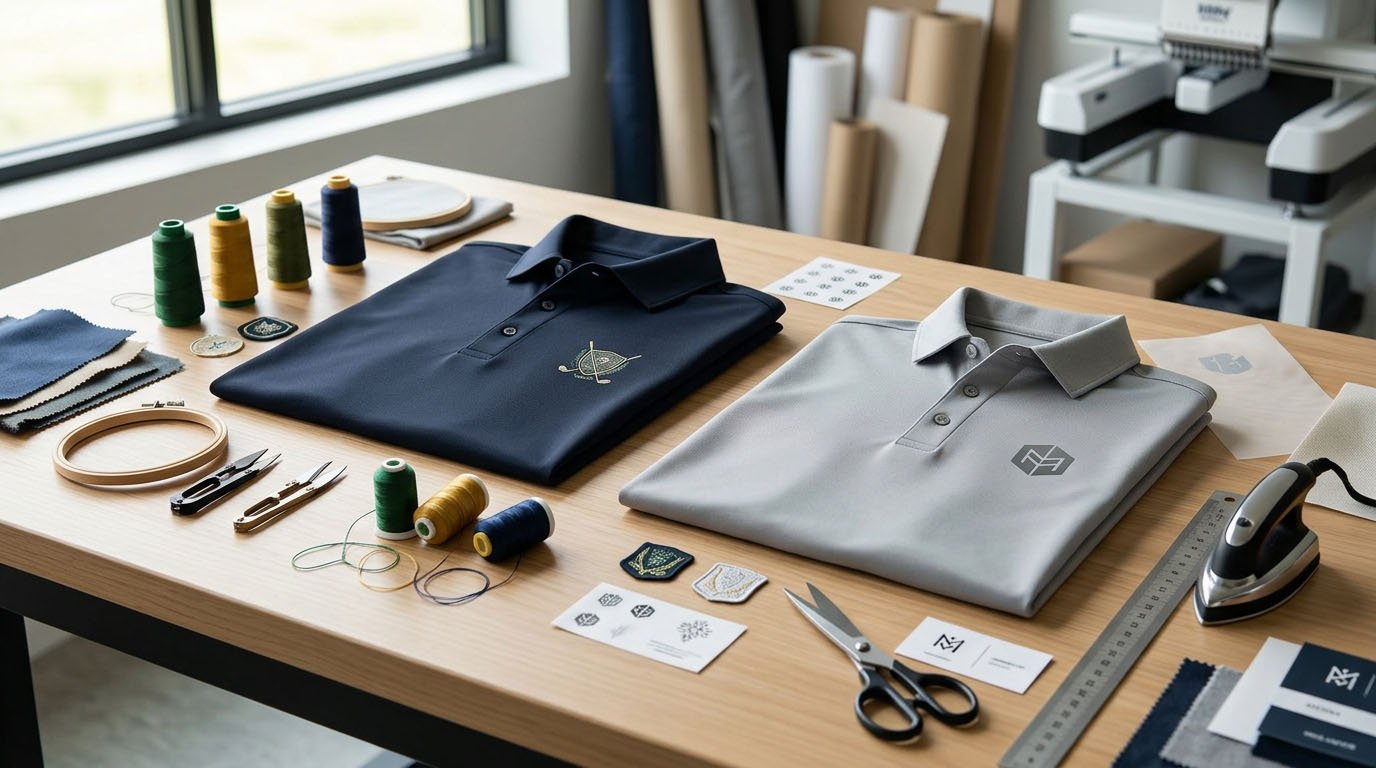
Compare Common Logo Decoration Methods
| Decoration Method | Suitable Applications | What to Check |
|---|---|---|
| Embroidery | Club crests, traditional polo branding | Fabric stability, backing type, stitch density, interior comfort |
| Heat transfer | Detailed graphics, sponsor logos | Adhesion quality, flexibility after application, wash durability |
| Screen printing | Selected flat graphics and repeat designs | Print feel against skin, coverage on textured fabrics, durability |
| Sublimation | Full-color patterns on compatible polyester fabrics | Fabric compatibility requirements, color accuracy on final material |
Should You Choose Embroidery or Heat Transfer?
Choose based on the fabric, artwork, logo size, and required finish—not GSM alone.
Embroidery can create a traditional, premium-looking crest. However, dense stitching may distort lightweight or highly elastic fabrics if the backing and embroidery settings are unsuitable. A large chest logo with heavy stitch density on a 140 GSM stretch polo is likely to cause puckering.
Heat transfers can produce clean, detailed graphics without embroidery stitching, but the transfer material and application conditions must be compatible with the garment. A transfer designed for cotton may fail on polyester.
For example:
- A small club crest on a stable 210 GSM piqué performance polo may be suitable for embroidery.
- A detailed multicolor sponsor logo with gradients may be better evaluated as a transfer.
- A full-surface tournament pattern may be suitable for sublimation on compatible 100% polyester fabric.
These are starting points, not fixed manufacturing rules.
FUWAY supports different golf apparel embroidery options, but the final method should be approved using the selected fabric and actual artwork.
Evaluate Logo Placement Before Approval
Ask your supplier to prepare a branded sample or representative decoration sample showing the correct logo dimensions and positioning.
Check the artwork while the garment is worn, not only while it lies flat on a table. A chest logo that looks centered on a flat shirt may sit too high or too low once the garment is on a body.
Pay particular attention to chest and sleeve placement, logo proportions, fabric distortion around the decoration, color matching under natural light, and interior comfort—especially if the back of embroidery will contact the wearer's skin.
If several sponsors are involved, identify who has final approval authority before samples are finalized. Delays in sponsor approval are one of the most common causes of rushed production timelines.
Step 5. Inspect a Physical Sample Before Comparing Final Offers
A physical sample provides information that product descriptions and digital mock-ups cannot fully communicate.
It allows buyers to evaluate whether the garment is comfortable, well constructed, visually appropriate, and consistent with the agreed specifications. A photograph of last year's shirt tells you nothing about how this year's fabric choice performs.
For custom tournament apparel, the approved sample should become the reference for bulk production. Any deviation between the sample and bulk production should require prior written approval.
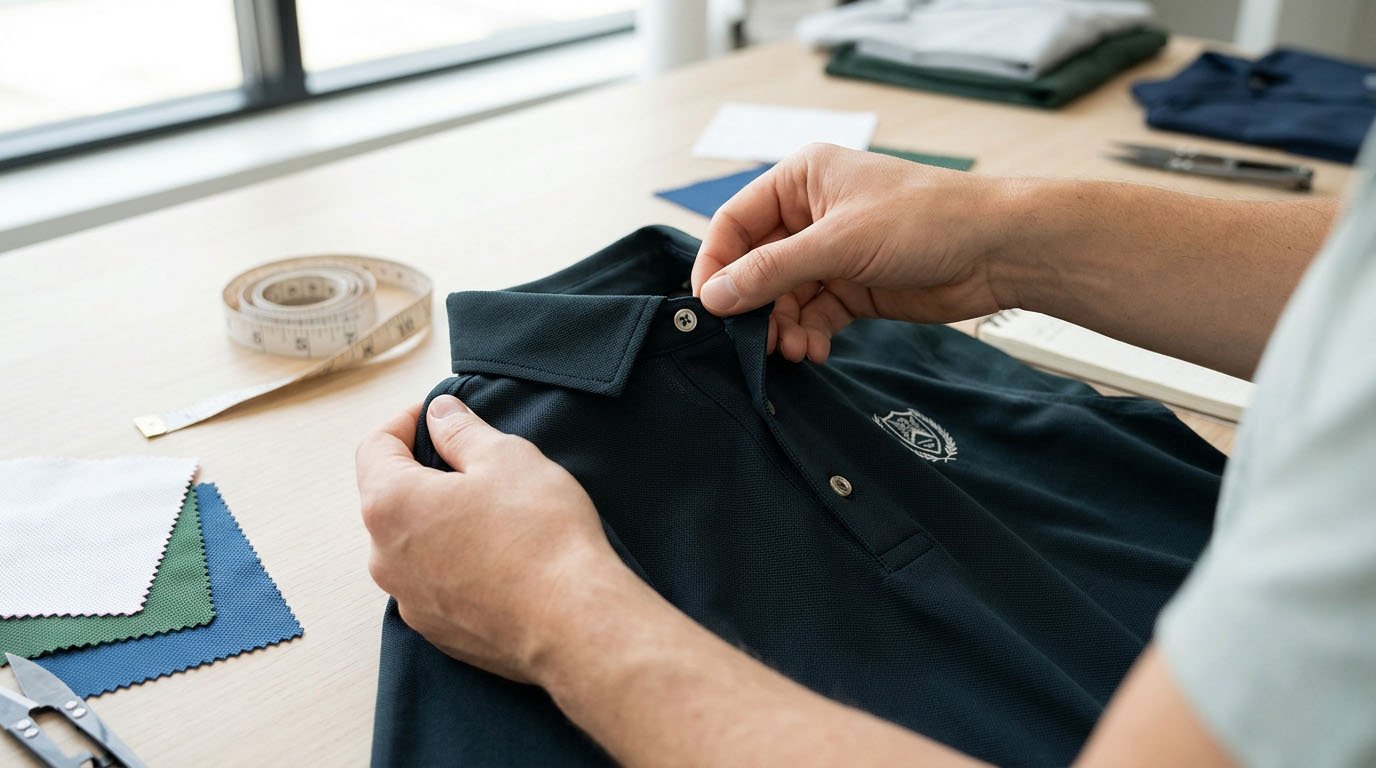
Use a Practical Sample Evaluation Scorecard
Score each area from 0 to 2:
- 0: Unacceptable or insufficient evidence.
- 1: Acceptable but needs clarification or improvement.
- 2: Meets the approved requirement.
| Evaluation Area | What to Examine | Score |
|---|---|---|
| Fit | Chest, length, comfort, mobility during swing motion | 0–2 |
| Fabric | Hand feel, coverage, stretch, opacity under light | 0–2 |
| Construction | Seams, collar, placket, button attachment, hem finishing | 0–2 |
| Branding | Logo accuracy, placement, application, interior feel | 0–2 |
| Appearance after care | Shape retention, shrinkage, decoration condition post-wash | 0–2 |
| Specification consistency | Match against approved measurements and material specs | 0–2 |
| Total | Maximum possible score | 12 |
This is a suggested buyer-created comparison tool, not an industry certification or validated quality standard. Use it to structure your evaluation and document your decisions.
Do not approve a sample simply because it achieves a high total score. A critical failure, such as incorrect sizing or unacceptable branding, should be corrected regardless of the total number. A shirt that scores 10 out of 12 but has a logo 2 cm off-center is not production-ready.
What Should You Request from the Supplier?
For relevant projects, request supporting information about fabric composition, measurement specifications, wash performance, colorfastness, and any specifically required functional claims.
FUWAY publishes selected golf apparel test reports. These provide examples of available testing documentation, but each report must be reviewed for its actual sample, method, date, and scope.
Do not assume that a published report covers the fabric selected for your tournament. Request test data specific to your production materials when performance claims matter for your event.
Step 6. Compare Stock Customization and Fully Custom Manufacturing
One of the most important purchasing decisions is whether you need an existing garment with added branding or a new garment developed to your specifications.
These approaches offer different levels of control and may have different availability, costs, and minimum quantities.
Stock Apparel vs. Custom OEM: Which Should You Choose?
| Decision Factor | Stock Garment + Decoration | Custom OEM Manufacturing |
|---|---|---|
| Base garment | Existing design and size range | Developed or selected to agreed specifications |
| Fabric selection | Limited to available products | More options, subject to sourcing and MOQ |
| Fit modifications | Usually limited or unavailable | Possible during development phase |
| Branding | Decoration options depend on garment | Can be integrated into approved design |
| Minimum quantity | Depends on stock availability and decorator | Depends on factory, materials, and trims |
| Lead time | May be shorter if items are in stock | Requires development and production time |
| Best suited to | Smaller or urgent standardized orders | Planned custom or repeat programs |
Important: These are two general sourcing approaches. Stock decoration availability should be confirmed with the specific provider; it should not be assumed that every OEM factory supplies ready-made stock apparel.
When Does Custom Manufacturing Make Sense?
Custom OEM may be appropriate when your tournament requires:
- A particular garment fit or size range not available off the shelf.
- Specific fabric properties or custom color requirements.
- Unique collar, trim, or garment construction details.
- Coordinated designs across different apparel categories.
- Repeat orders using approved specifications year after year.
FUWAY's typical golf polo manufacturing MOQ begins around 100 pieces per style, with eligible orders allowing two colors at 50 pieces each. Special fabrics or trims may affect the minimum.
For a small, urgent tournament requiring only a standard shirt with a simple logo, locally decorated stock apparel may be the more practical path.
For buyers developing a recurring golf tournament collection—such as an annual charity event that orders 300+ polos each spring—custom golf polo manufacturing provides more control over the product specification and consistent quality year over year.
Not sure which route fits your event? Contact FUWAY with your tournament details, and the team will help you assess whether custom manufacturing or stock decoration makes more sense for your timeline and requirements.
Step 7. Compare the Total Value, Not Just the Unit Price
A lower unit price does not necessarily represent a better tournament apparel purchase.
Two quotations may differ because the suppliers are pricing different fabrics, garment constructions, logo applications, inspection requirements, or shipping arrangements. A $9 shirt quote and a $14 shirt quote may not be comparable offers—they may simply be different shirts.
To compare offers fairly, request quotations based on the same approved specification.
What Should Be Included in Your Cost Comparison?
| Cost Element | Questions to Ask |
|---|---|
| Garment | Is the fabric, construction, and size specification identical across quotes? |
| Customization | Which logos, application methods, and placements are included? |
| Sampling | What is the sample cost and approval process? |
| Packaging | How will garments be packed and individually identified? |
| Shipping | Which freight terms, destination, and delivery services apply? |
| Import costs | Who is responsible for applicable duties, taxes, and clearance charges? |
A Real-World Pricing Comparison
Consider this real example from a 150-player corporate invitational tournament:
| Specification | Quote A | Quote B |
|---|---|---|
| Fabric | 88% Polyester / 12% Spandex | 90% Polyester / 10% Spandex |
| Weight | 180 GSM | 210 GSM |
| Quantity | 200 pieces | 200 pieces |
| Decoration | Chest embroidery only | Chest embroidery + sleeve sponsor transfer |
| Unit price | $12.00 | $14.00 |
| Total garment cost | $2,400 | $2,800 |
The organizer chose Quote B despite the higher upfront cost. Why? The 210 GSM fabric provided better opacity for the white tournament shirts, and the sleeve transfer allowed an additional sponsor logo placement that generated incremental sponsorship revenue. The $400 difference in garment cost was offset by the added sponsor value.
Both quotations were based on FOB Shenzhen Yantian terms, with the original options also differing in labeling and packaging specifications.
This example shows why fabric specifications, decoration details, and overall event value must be compared together—not just the unit price. It is not a current universal quotation or a claim that one fabric is objectively better than the other.
Freight and applicable import charges must be evaluated separately.
Consider the Event Deadline
Before accepting a quotation, verify that the proposed sourcing method can meet your required arrival date. A perfect shirt that arrives one day after the tournament is a liability, not an asset.
FUWAY's typical reference times are:
| Production or Transport Stage | Indicative Time |
|---|---|
| Custom sampling | 7–10 days |
| Bulk manufacturing after sample approval | 3–4 weeks |
| International express transit | Approximately 4–7 days |
| Air freight | Approximately 15 days |
| Sea freight | Approximately 30–35 days |
These are planning references, not guaranteed event delivery times. Sample revisions, material procurement, freight arrangements, customs clearance, and destination conditions may add time. Always build a buffer into your timeline.
For a complete guide to order quantities, artwork approvals, production planning, and delivery coordination, read the full guide to custom golf clothing for teams, clubs, and events.
Final Buying Decision: How to Choose Between Two Apparel Options
Suppose you are comparing two branded polos for a 150-player corporate tournament.
One option is less expensive but has limited sizing information and no physical branded sample.
The other provides a detailed measurement chart, an approved decoration sample, clearer fabric specifications, and a confirmed production proposal.
The second option should not automatically win because it offers more documentation. Instead, use the evidence to determine which product meets your event's actual requirements.
Before making a final selection, confirm:
- The garment is appropriate for the expected weather and activity level.
- The sample has acceptable fit, workmanship, and branding quality.
- The size range adequately covers your participant group.
- The quotation matches the agreed specifications without hidden exclusions.
- The supplier can provide a credible delivery plan with buffer time.
- Any required performance claims have verifiable evidence.
If an important requirement remains unresolved, request clarification or a corrected sample before committing to the order. Pressure to meet a deadline should not override unresolved quality concerns.
Looking Ahead: Golf Tournament Apparel Trends
As the golfing population becomes younger and more diverse, tournament apparel expectations are shifting. A 2025 tournament polo is expected to do more than perform on the course—participants want garments they can wear to dinner, on casual Fridays, and while traveling.
This means tournament buyers are increasingly evaluating:
- Fabrics that resist wrinkles and pack well.
- Styles that transition from course to casual settings.
- Sustainable material options that appeal to environmentally conscious participants.
- Inclusive sizing that accommodates a wider range of body types.
At FUWAY, these trends inform ongoing product development, ensuring that tournament apparel meets both immediate event needs and the broader expectations of today's golfers.
Frequently Asked Questions About Buying Golf Tournament Apparel
What is the best type of shirt for a golf tournament?
A performance golf polo is the most versatile choice for most tournaments because it combines a traditional golf appearance with options for breathable fabrics and flexible fits. The right shirt still depends on weather, participant preferences, and event dress requirements. For summer events, prioritize moisture management and lightweight fabrics; for cooler conditions, consider midweight piqué knits.
How much should custom golf tournament polos cost?
Pricing depends on garment specifications, order quantity, decoration complexity, and sourcing arrangements. As a manufacturer-specific reference, FUWAY typically quotes custom golf polos at approximately USD $11–$20 per piece for bulk orders. Request a project-specific quotation before using this range for budgeting, as fabric choice and decoration requirements can shift pricing significantly.
Is embroidery better than printing for golf tournament sponsor logos?
Neither is universally better. Embroidery may suit club crests and traditional branding, while transfers and selected printing methods may suit detailed artwork or certain performance fabrics. Testing the actual decoration on the selected garment is more reliable than choosing from photographs. When in doubt, request a decoration sample on your chosen fabric.
Can I order different apparel styles for players and volunteers?
Yes, but confirm the minimum quantity and specifications for each style. A polo for players and a different color or garment for volunteers may simplify role identification. Separate styles may affect MOQ and pricing, so discuss your requirements with the supplier early in the planning process.
Do I need a physical sample before placing a bulk order?
A physical sample is strongly recommended for fully custom apparel. It helps buyers evaluate fit, material, construction, and logo application in ways that photographs cannot replicate. For stock garments, request a physical reference and decoration proof where practical. The cost of a sample is almost always less than the cost of an unusable bulk order.
How far in advance should I buy golf tournament apparel?
Start early enough to allow for specification approval, sampling, any revisions, manufacturing, shipping, and an event preparation buffer. For custom manufacturing, plan at least 8–10 weeks before your event date. For stock decoration, 4–6 weeks may be sufficient, but availability varies. Confirm a project-specific schedule rather than relying on a universal minimum timeline.
What if I need to place a last-minute order for additional shirts?
Contact your supplier immediately to check current stock levels and express production options. Some manufacturers can accommodate small rush orders for existing designs, but availability, decoration options, and shipping methods will be limited. Expect to pay premium freight costs for expedited delivery.
Conclusion
Choosing the right golf tournament apparel involves more than comparing shirt prices and selecting colors.
Begin with the actual needs of your participants. Evaluate garment fit and fabric performance, test sponsor branding on real samples, inspect construction quality, and compare supplier offers using consistent specifications. A disciplined evaluation process reduces surprises and protects the investment your organization and sponsors have made in the event.
For time-sensitive events, stock customization may be the most practical option. For planned events requiring particular fabrics, fits, or coordinated branding across multiple garment types, custom manufacturing can offer greater product control and long-term consistency.
As golfers increasingly expect their tournament apparel to serve double duty—performing on the course and looking sharp off it—the value of well-chosen garments continues to grow. A shirt participants actually want to wear becomes ongoing brand exposure, not just a one-day uniform.
FUWAY is a China-based OEM/ODM golf apparel manufacturer supporting custom polos, golf bottoms, skorts, and selected outerwear for brands and group apparel programs.
If you are planning a tournament with custom apparel requirements, share your event date, expected quantity, garment types, preferred fabrics, and branding specifications.
Contact FUWAY to discuss whether a custom manufacturing solution fits your event requirements and request a project-specific quotation. The team can also provide fabric swatches and sample evaluations to help you make a confident decision before committing to production.