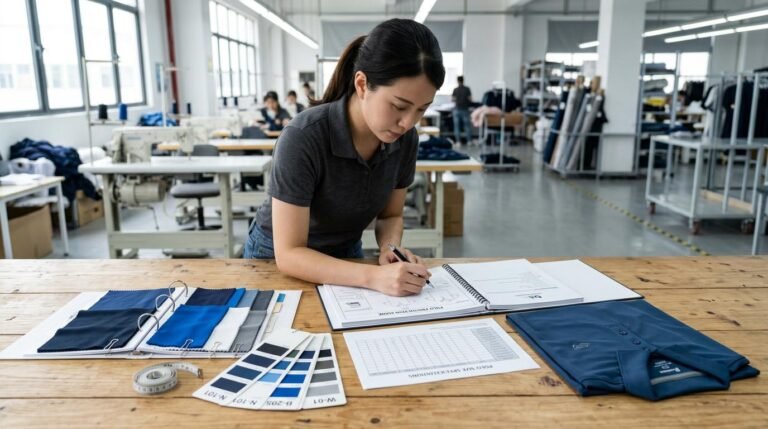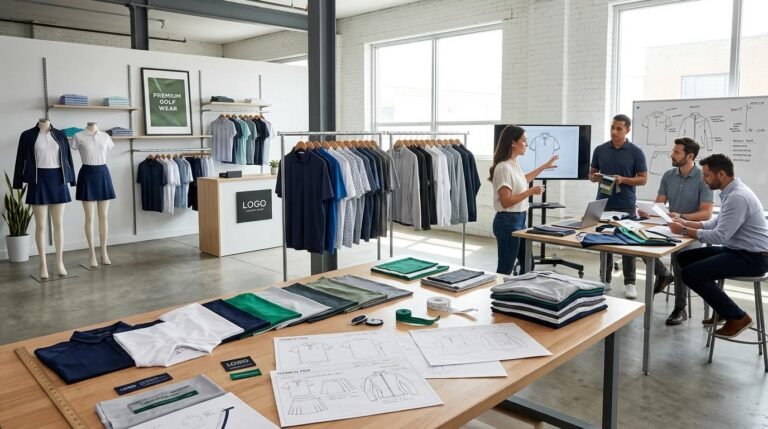
Custom golf apparel helps build a strong team identity when members help shape the design, wear the apparel beyond tournament day, and reorder consistent styles over time. Matching logos and colors matter, but long-term identity depends more on comfort, repeated use, and visual consistency.
For golf teams, corporate groups, clubs, and event organizers, custom apparel is more than a uniform. It can support team recognition, sponsor visibility, member belonging, and a more professional appearance. But that only happens when the apparel is designed for real use, not just for one event photo.
This guide explains how custom golf apparel builds team identity, what design and sourcing decisions matter most, and how to create team golf apparel that members actually want to wear.
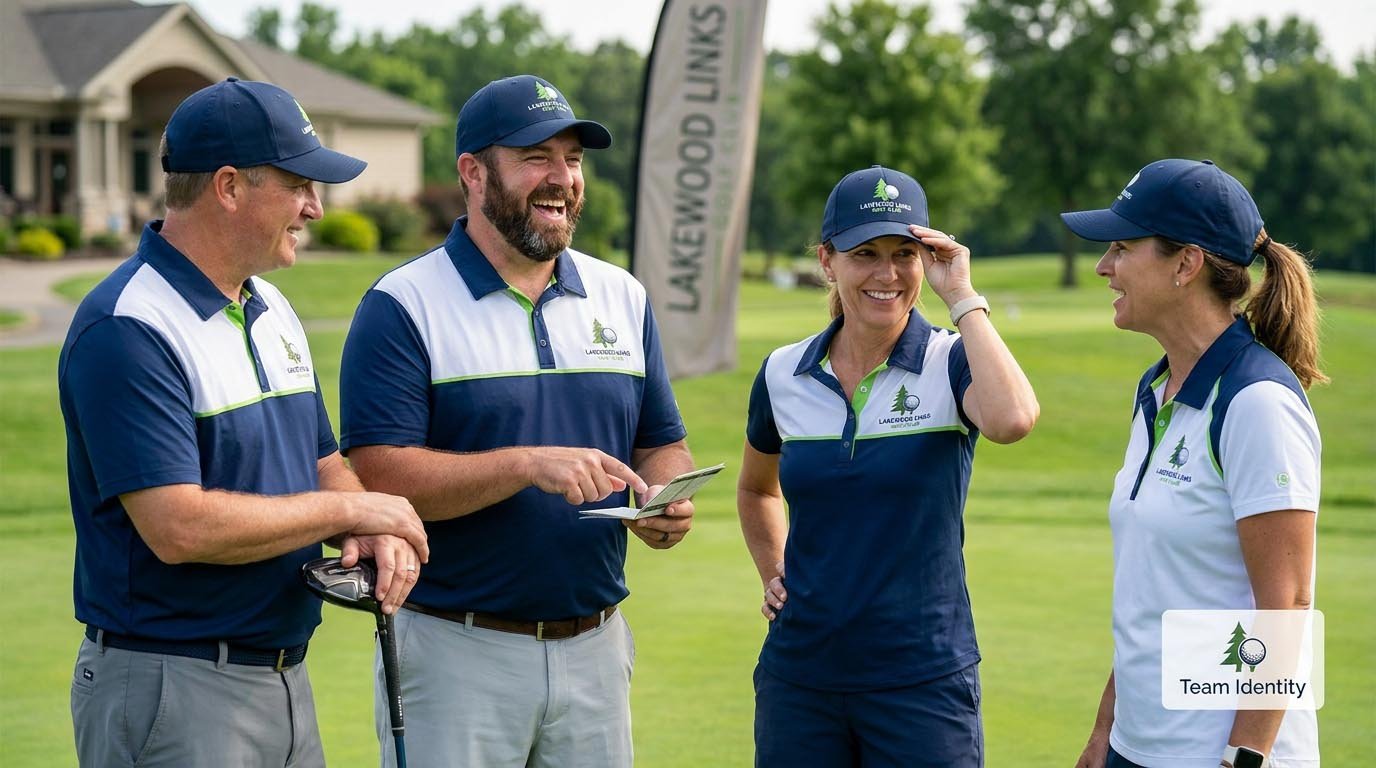
Quick Answers: Custom Golf Apparel and Team Identity
Does custom golf apparel create team identity by itself?
No. Custom golf apparel supports team identity, but identity becomes stronger when members help choose the design, feel comfortable wearing it, and use it across practice, travel, social events, and competitions.
Why do some custom golf team apparel orders fail?
The most common reasons are poor fabric comfort, limited member input, inconsistent reorders, and treating the order as a one-time event instead of a long-term team branding project.
What is the best type of custom golf apparel for teams?
The best option depends on climate, team culture, and how often members will wear it. For most teams, a strong starting point is a custom golf polo made with breathable performance fabric and a consistent embroidered or printed logo.
How do you keep custom golf apparel consistent year after year?
Use the same supplier when possible, save Pantone color codes, logo files, placement rules, and a complete tech pack for future reorders.
Should team members vote on custom golf apparel designs?
Yes. Team input usually improves satisfaction, wear frequency, and overall acceptance of the final design.
Custom Golf Apparel at a Glance
The table below shows what usually makes custom golf apparel more effective for team identity.
| Factor | Why It Matters | Best Practice |
|---|---|---|
| Team input | Improves acceptance and repeat wear | Let members review or vote on 2–3 mockups |
| Fabric comfort | Increases actual usage beyond events | Choose breathable, climate-appropriate fabric |
| Consistent branding | Builds recognition over time | Lock logo size, placement, and Pantone colors |
| Decoration method | Affects look, feel, and durability | Match embroidery, heat transfer, or sublimation to the design |
| Reorder planning | Keeps the team identity stable | Save tech pack and artwork for future production |
| Fit options | Reduces complaints and unused apparel | Offer samples and balanced sizing options |
| Multi-context use | Strengthens belonging | Design apparel for tournaments, travel, dinners, and practice |
Why Custom Golf Apparel Matters for Team Identity
A team becomes more recognizable when members dress in a consistent way. That visibility helps create a shared identity, especially in golf settings where appearance, etiquette, and presentation matter.
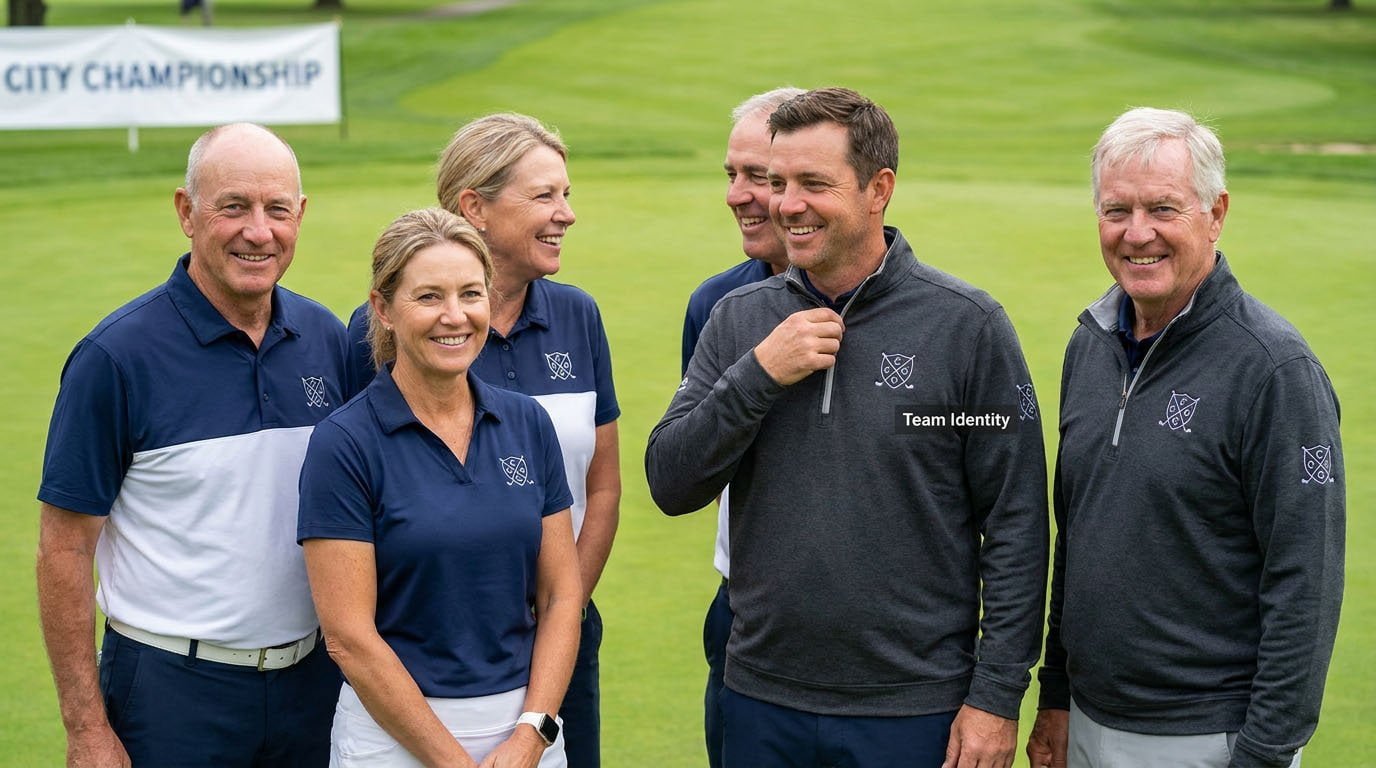
Team apparel turns individuals into a visible group
When golfers wear matching polos, pullovers, or outerwear, the team appears more organized and more established. This can help with:
- Team recognition at tournaments
- Sponsor presentation
- Club or company branding
- Member belonging
- Recruitment of new members
- More polished event photos and public visibility
Identity grows through repeated wear, not just logos
A logo on a shirt does not automatically create team culture. Custom golf apparel works best when team members wear it in multiple situations, such as:
- Practice rounds
- Tournament days
- Sponsor events
- Travel days
- Team dinners
- Club gatherings
The more often members wear the apparel naturally, the stronger the team identity becomes.
Why one-time apparel orders often fail
Some teams order custom golf shirts only for a single event. This usually limits the long-term value of the project.
Common problems include:
- Members did not help choose the design
- The fit was too narrow or too generic
- The fabric was uncomfortable in local weather
- The design felt too promotional and not wearable outside the event
- There was no plan for reorder consistency
For team identity, custom golf apparel should be treated as a long-term visual asset rather than a one-time purchase.
How to Design Custom Golf Apparel That Members Actually Wear
The most effective custom golf apparel balances team branding with everyday wearability.
Let the team participate in the design process
Member input improves adoption. This does not mean every person needs full design control. A simple process often works best:
- Create 2–3 design directions
- Let members review colors, logo placement, and style
- Choose the final version based on team feedback
- Confirm samples before bulk production
This approach helps members feel ownership over the final apparel.
Keep the design wearable beyond tournament day
If the design is too loud, too formal, or too sponsor-heavy, members may only wear it when required.
For better repeat use, aim for:
- Clean color combinations
- Balanced logo size
- Professional but wearable styling
- Designs that work at the course and off the course
Build a simple apparel system, not just one shirt
Many teams get better results by planning a small custom golf apparel collection instead of a single polo.
A practical team set may include:
- Custom golf polo for warm weather
- Mid-layer pullover for cooler conditions
- Lightweight jacket or outer layer for wind and travel
- Optional cap or visor for event consistency
This makes it easier for members to wear the brand across different occasions.
Brand Consistency: Logos, Colors and Sponsor Placement
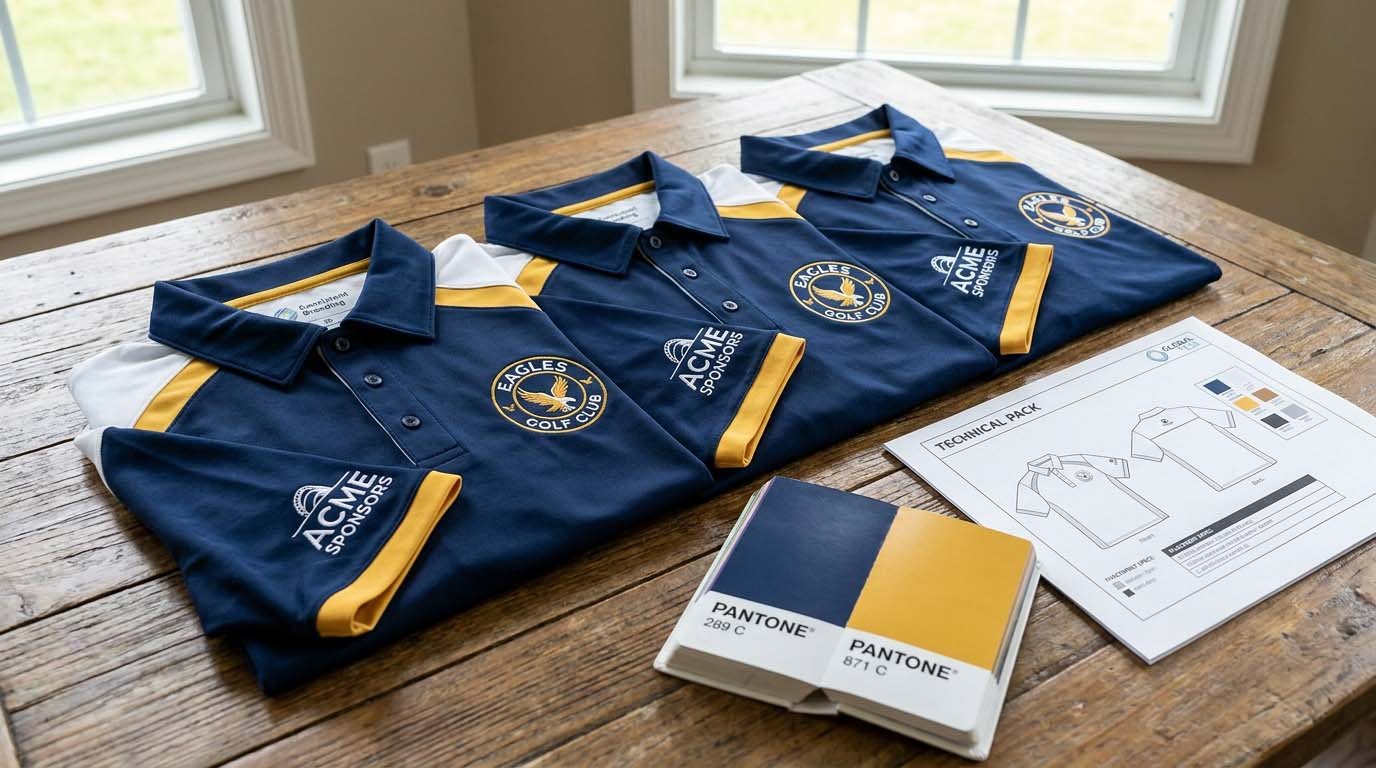
One of the most important parts of custom golf team apparel is consistency across reorders.
What should stay consistent?
To maintain a strong team identity, teams should define and document:
- Logo artwork in vector format
- Exact Pantone color codes
- Logo size rules
- Placement rules for chest, sleeve, back, or collar logos
- Sponsor logo hierarchy
- Garment style references
- Decoration method for each logo
Without these details, year-two or year-three reorders can look different enough to weaken visual recognition.
Why sponsor control matters
In many golf teams, sponsor visibility is part of the apparel plan. The challenge is keeping sponsor branding visible without making the garment look cluttered.
A good structure is to separate sponsors into levels:
- Primary sponsor
- Secondary sponsor
- Optional event sponsor
That helps maintain visual balance while protecting the team’s core identity.
Save a tech pack for future orders
A tech pack is one of the most useful tools for long-term consistency. It should include:
- Fabric details
- Color specifications
- Logo files and placements
- Decoration method
- Sizing standards
- Trim and label details
For any team planning annual or seasonal reorders, a tech pack reduces confusion and improves repeat consistency.
Best Fabrics for Custom Golf Apparel
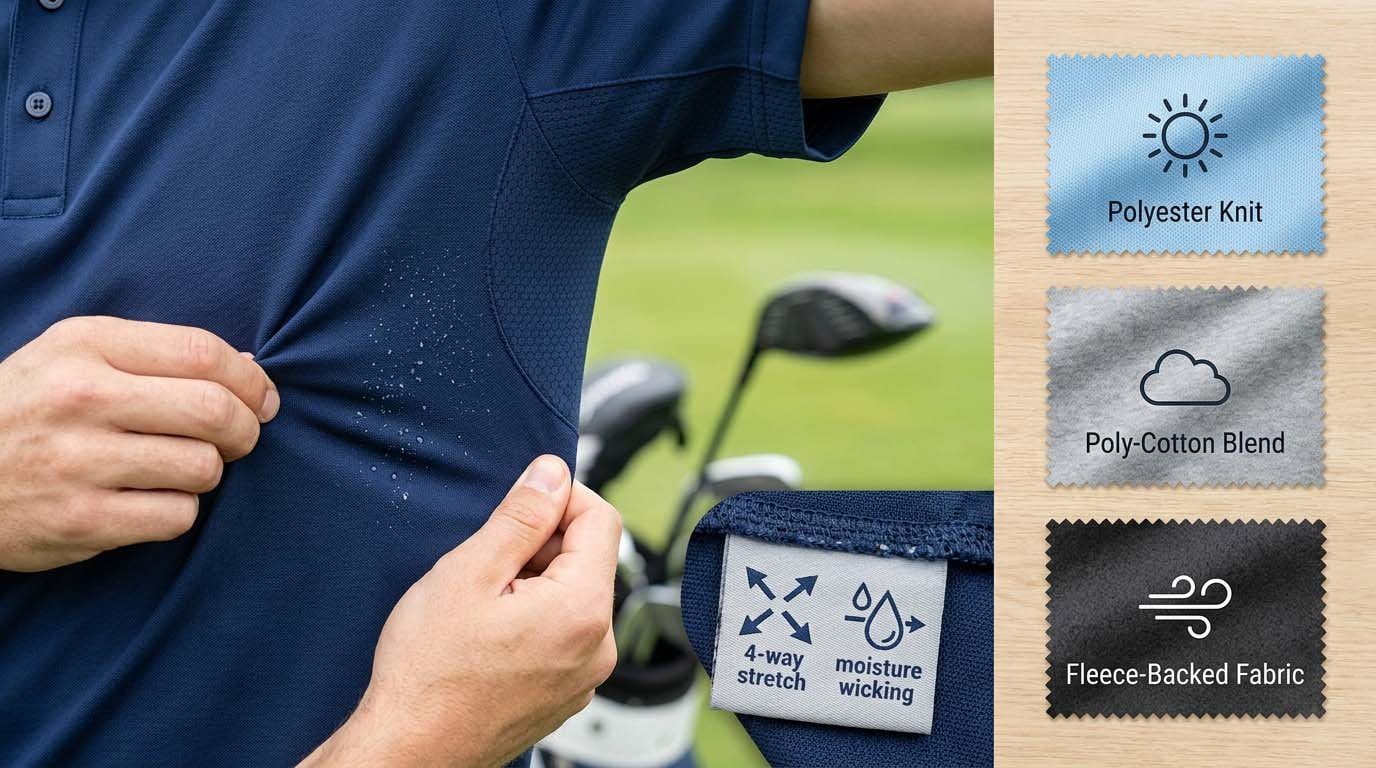
Fabric is one of the strongest predictors of whether members will actually wear team apparel repeatedly.
What makes a good golf apparel fabric?
Most teams need fabric that offers:
- Breathability
- Moisture management
- Freedom of movement
- Easy care
- Shape retention
- Comfort in the local climate
For golf apparel, a shirt that looks good but feels uncomfortable in heat or humidity usually gets worn less often.
Fabric suggestions by climate
| Climate | Recommended Fabric | Typical Use |
|---|---|---|
| Hot and humid | Lightweight polyester or polyester-spandex performance knit | Summer polos, tournament wear |
| Mild weather | Midweight performance blend or poly-cotton blend | Everyday polos, club events |
| Cool or windy | Fleece-backed performance fabric, softshell, or lightweight outerwear fabric | Pullovers, jackets, travel layers |
Stretch matters for golf movement
Because golf requires repeated shoulder and torso rotation, custom golf apparel usually performs better when the fabric allows movement.
Useful features include:
- 4-way or mechanical stretch
- Lightweight construction
- Smooth hand feel
- Longer back hem for better tucking
Why sample testing matters
Before placing a bulk order, teams should request physical samples. This helps confirm:
- Fabric hand feel
- True color appearance
- Size fit
- Print or embroidery quality
- Performance in the expected weather
A good sample process reduces fit complaints and improves final satisfaction.
Embroidery vs Heat Transfer vs Sublimation for Custom Golf Apparel
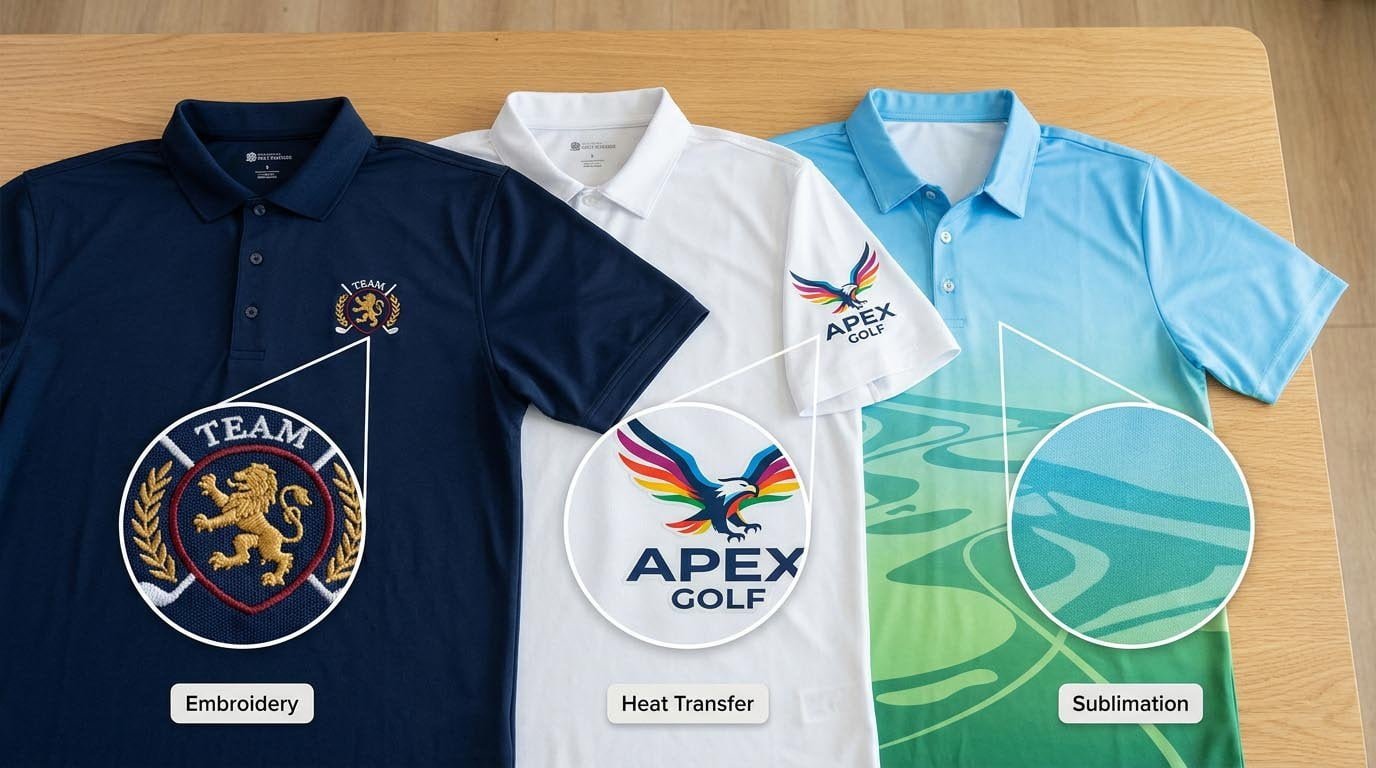
Decoration method affects how custom golf apparel looks, feels, and lasts.
Custom golf apparel decoration comparison
| Method | Best For | Main Advantage | Main Limitation |
|---|---|---|---|
| Embroidery | Small logos, chest crests, sleeve marks | Premium appearance, strong brand feel | Heavier feel on large graphics |
| Heat transfer | Detailed artwork, names, small-run tests | Good for complex logos and flexible production | May feel less premium on some garments |
| Sublimation | All-over prints, gradients, large graphics, sponsor-heavy designs | Long-lasting color with no heavy logo feel | Best on suitable polyester-based garments |
When to choose embroidery
- Corporate golf team polos
- Club crests
- Premium brand presentation
- Small chest logos
- Traditional styling
When sublimation is better
Sublimation is often better for:
- Large back graphics
- Multi-color designs
- Gradient effects
- Full team collections with strong visual themes
- Apparel where logo feel should stay light
How to choose the right method
The best decoration method depends on:
- Logo size
- Number of colors
- Garment fabric
- Budget
- Desired appearance
- Wear frequency
A strong supplier should recommend the decoration method based on function, not just production convenience.
Sizing, MOQ, Budget and Rollout Planning
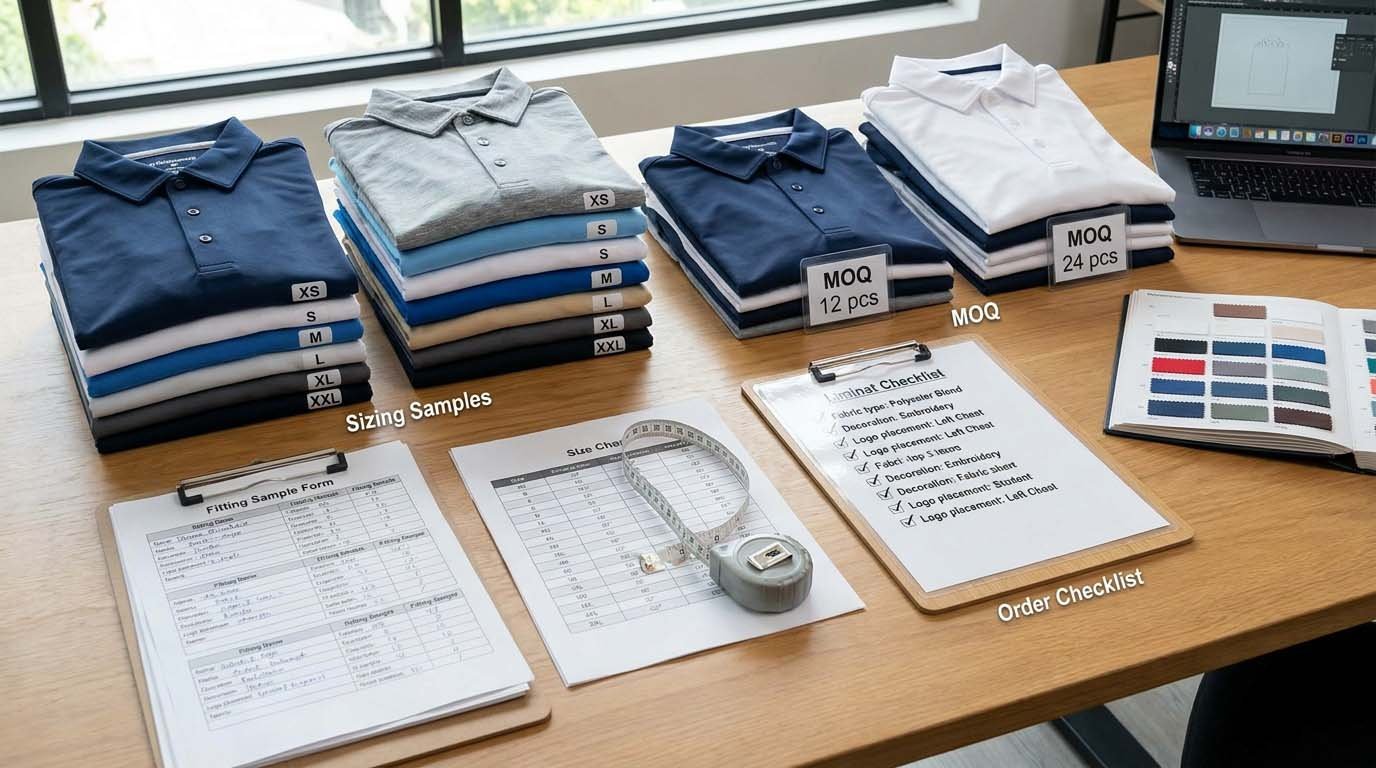
A well-designed custom golf apparel project can still fail if the rollout process is weak.
Use a sizing process, not just a size chart
Sizing is one of the biggest causes of dissatisfaction in team apparel orders.
Best practices include:
- Offer fitting samples when possible
- Use a balanced size range
- Confirm whether the style is athletic fit or regular fit
- Collect size information through a simple form
- Leave room for exchange planning if the order is large
What is the MOQ for custom golf apparel?
MOQ varies by supplier, garment type, and decoration method. In many cases:
- Lower MOQs may be available for premium orders or simple styles
- Higher MOQs are common for custom colors, custom fabrics, or complex decoration
- Multi-style collections may require separate MOQs by item
Teams should confirm MOQ early before finalizing design decisions.
What affects the budget most?
The main cost drivers are usually:
- Fabric quality
- Decoration method
- Number of logos
- Quantity ordered
- Garment style
- Packaging requirements
- Shipping timeline
The cheapest unit price is not always the best value if members do not wear the apparel or if future reorders become difficult.
Plan the reorder process from the start
For long-term identity, reorder strategy matters from the first order.
Teams should save:
- Approved artwork
- Pantone colors
- Logo placement rules
- Sample photos
- Supplier contact history
- Final tech pack
- Decoration approvals
This makes it easier to add new members, replace sizes, or launch a second-year order without losing consistency.
Common Mistakes in Custom Golf Team Apparel Projects
1. Treating the apparel as a one-time event order
This limits repeat wear and reduces the long-term identity value.
2. Choosing design without team input
Low participation often leads to low enthusiasm.
3. Prioritizing appearance over comfort
If the fabric performs poorly, the apparel will not be worn often.
4. Ignoring reorder consistency
Changes in color, fit, or logo placement can weaken team recognition.
5. Using the wrong decoration method
A method that looks good in artwork may feel heavy, crack, or underperform on the final garment.
6. Skipping sample approval
This increases the risk of fit issues, color mismatch, or decoration problems.
Final Thoughts
Custom golf apparel becomes a real team identity tool when it does more than make a group look matched for one event. The strongest results usually come from:
- Team participation in design
- Comfortable, climate-appropriate fabric
- Consistent logo and color standards
- Decoration methods that fit the artwork
- A reorder system that preserves continuity
For golf teams, clubs, and corporate groups, the goal is not just to create a custom shirt. It is to create apparel that members will wear repeatedly and feel proud to be associated with.
When that happens, custom golf apparel stops being just merchandise and starts becoming part of the team culture.
Need a Better Custom Golf Apparel Sourcing Checklist?
Before choosing a supplier, ask for:
- Fabric options by climate
- Sample process and fit support
- Embroidery, heat transfer, and sublimation recommendations
- MOQ by style and color
- Reorder support and tech pack retention
- Pantone color matching ability
- Lead time for sampling and production
A reliable custom golf apparel supplier should be able to support not only the first order, but also the long-term consistency that turns apparel into team identity.