
Designing winter golf apparel is more complicated than simply choosing warmer fabrics.
Golfers do not move the same way skiers, runners, or hikers do. A winter golf garment has to keep the body comfortable during long periods of light activity, but it also has to allow a full shoulder turn, clean arm extension, and repeated torso rotation. If the fabric is too stiff, too bulky, or too heat-trapping, the product may look good on the hanger and still fail on the course.
That is why winter golf fabric selection should be approached as a layering system, not a single-material decision.
A practical winter golf program usually combines:
- a moisture-managing base layer
- an insulating but breathable mid-layer
- and a weather-protective outer layer that still allows swing mobility
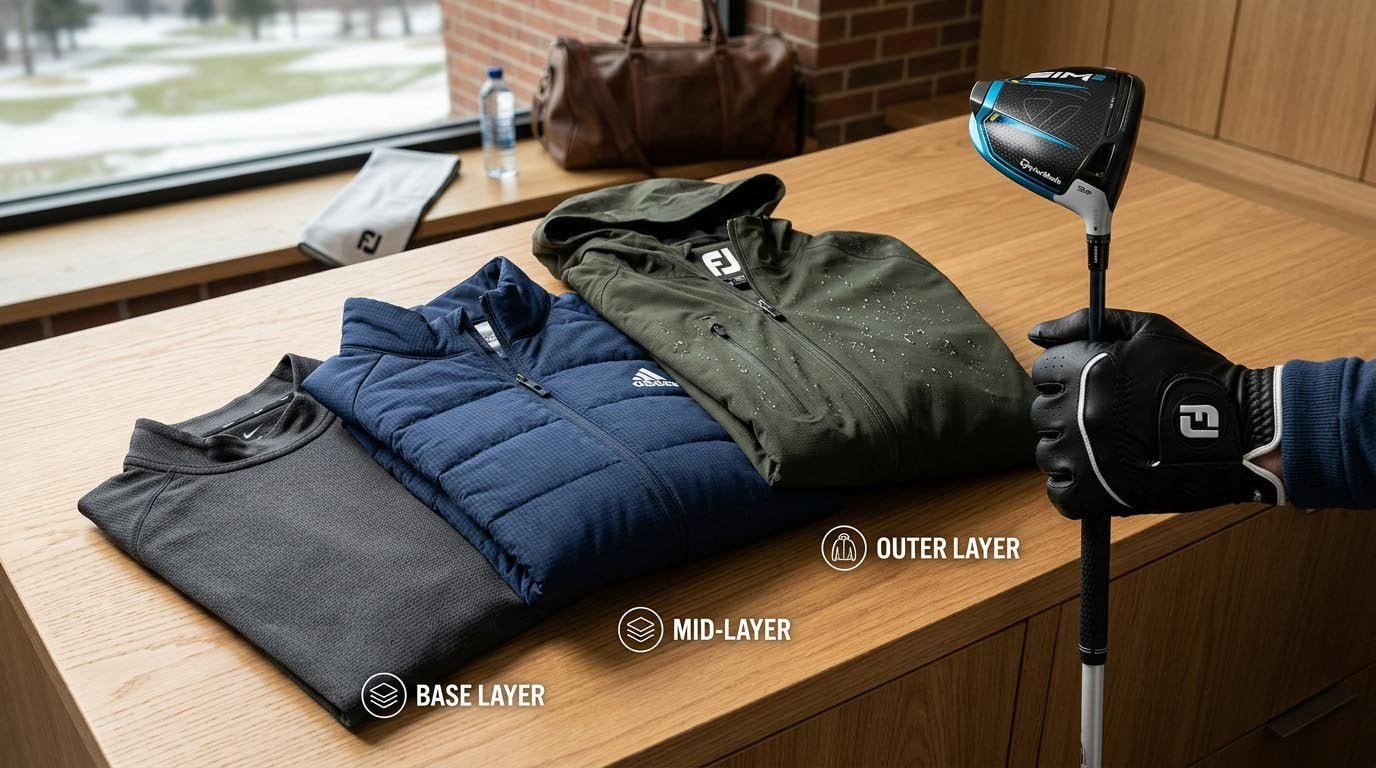
At FUWAY, we work with brands developing golf and performance apparel, and winter products usually require more fabric and construction planning than standard polos or lightweight outerwear. The challenge is not only warmth. It is warmth without restriction, weather protection without stiffness, and layering compatibility without excessive bulk.
In this guide, we will break down the most common winter golf fabric options, where each one works best, and what brands should consider before moving into sampling and production.
Quick Answer: What Fabrics Work Best for Winter Golf Apparel?
If you need a short answer first, here is the general rule:
- Base layers work best in merino blends or performance synthetic knits
- Mid-layers usually perform well in fleece, brushed thermal knits, or lightweight wool blends
- Outer layers are often strongest in stretch softshell or weather-resistant woven fabrics
- For most winter golf programs, mobility and moisture control matter as much as insulation
A practical winter golf layering system often looks like this:
- Base layer: 200-260 GSM, stretch knit, moisture-managing
- Mid-layer: 250-320 GSM, breathable insulation
- Outer layer: stretch woven or softshell with wind and light rain protection
The exact combination depends on your target market, climate, fit direction, and price tier. A mild-climate golf brand does not need the same fabric package as a brand selling into cold, wet regions.
What Makes a Fabric Suitable for Winter Golf?
A winter golf fabric must do more than keep the wearer warm.
On the course, golfers alternate between movement and stillness. They walk, swing, bend, wait, and layer on or off depending on wind and temperature. That means a winter golf garment should support four main performance needs:
- temperature regulation
- freedom of movement
- moisture management
- weather resistance
These are related, but they are not the same thing.
For example, a heavily insulated fabric may feel warm at first but become uncomfortable once the player starts moving. A weatherproof outer shell may look impressive on paper but still feel too rigid across the shoulders. A fleece may feel soft and cozy in the sample room but become bulky once layered over a base top and under a shell.
For winter golf, the best fabric is usually not the warmest or the most technical-looking. It is the one that performs well in a layered system and still feels natural during a swing.
Why Winter Golf Apparel Needs a Different Fabric Strategy Than General Outerwear
This is one of the most common mistakes brands make during development: they treat winter golf like general outdoor apparel.
But golf places different demands on fabric and garment construction.
Golf requires unrestricted upper-body rotation
A winter golf top needs to allow:
- shoulder turn through the backswing
- arm lift and extension
- repeated torso rotation
- comfortable movement in layered wear
Even small amounts of fabric resistance become noticeable during play. If the outer layer pulls across the upper back or the underarm area feels tight in swing position, golfers will notice immediately.
Golf is active, but not continuously active
Unlike running or skiing, golf involves bursts of motion followed by slower movement or waiting. That makes temperature regulation more complicated.
A garment may need to:
- hold warmth during low activity
- release excess heat during walking or repeated play
- move moisture outward to reduce post-activity chill
This is why winter golf clothing generally performs better when the fabric system is breathable and adaptive, rather than simply heavy or highly insulated.
Bulk is a bigger problem than many brands expect
Winter garments can fail simply because the layering becomes too thick.
Too much fabric bulk can affect:
- swing feel
- shoulder mobility
- collar comfort
- sleeve stacking under outerwear
- overall silhouette
This is especially important in golf, where customers often want a clean and athletic appearance rather than a bulky winter look.
Best Base Layer Fabrics for Winter Golf
The base layer sits closest to the skin, so its job is different from the outer layers. It should help move moisture, provide light warmth, and stay comfortable under a second or third layer.
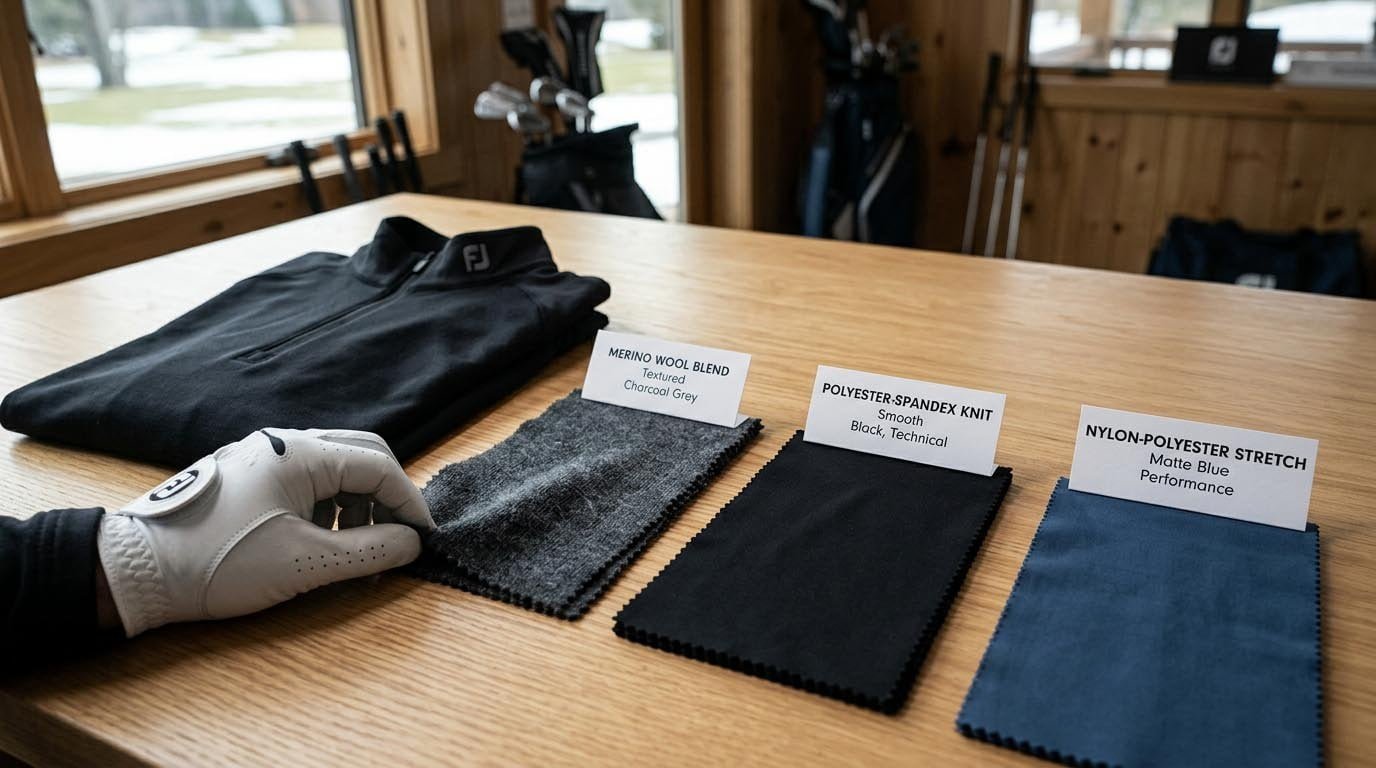
For most winter golf programs, the strongest base layer options are:
- merino wool blends
- polyester-spandex performance knits
- nylon-polyester stretch blends
- brushed synthetic jerseys
1. Merino wool blends
Merino is popular in premium base layers because it offers a useful balance of warmth, breathability, and comfort.
Why brands choose merino blends
- natural temperature regulation
- soft hand-feel when using finer grades
- good odor control
- strong premium positioning
Where it works best
- premium winter golf collections
- markets where layering versatility matters
- products intended for repeated wear between washes
Watch-outs
- higher cost than synthetic alternatives
- requires careful quality sourcing
- may need blend support for better durability and shape stability
For many golf brands, pure merino is not necessary. A merino-synthetic blend often gives a better balance of performance, price, and durability.
2. Polyester-spandex performance knits
This is a common choice for brands that need a more accessible cost structure.
Why brands choose it
- strong moisture management
- good stretch and recovery
- easier care
- more consistent large-scale sourcing
Where it works best
- mid-range winter golf programs
- fitted base layers
- technical collections that prioritize movement
Watch-outs
- lower-grade versions may hold odor more easily
- hand-feel can vary a lot depending on yarn and finish
- brushed surfaces need to be checked for pilling and recovery
Synthetic base layers can work very well in golf, especially when the garment is intended to fit close to the body and layer smoothly under mid-layers and shells.
3. Practical GSM range for winter golf base layers
A useful base layer range is usually:
- 180-200 GSM for mild winter conditions
- 200-240 GSM for standard winter golf use
- 240-260 GSM for colder climates or slower-play conditions
Heavier than that can work, but brands should check whether the base layer starts competing with the mid-layer role and creating too much layering bulk.
Mid-Layer Fabrics: Where Warmth and Breathability Need to Meet
The mid-layer usually carries the main insulation role in winter golf apparel. It should retain warmth, pass moisture outward, and still move comfortably under an outer shell.
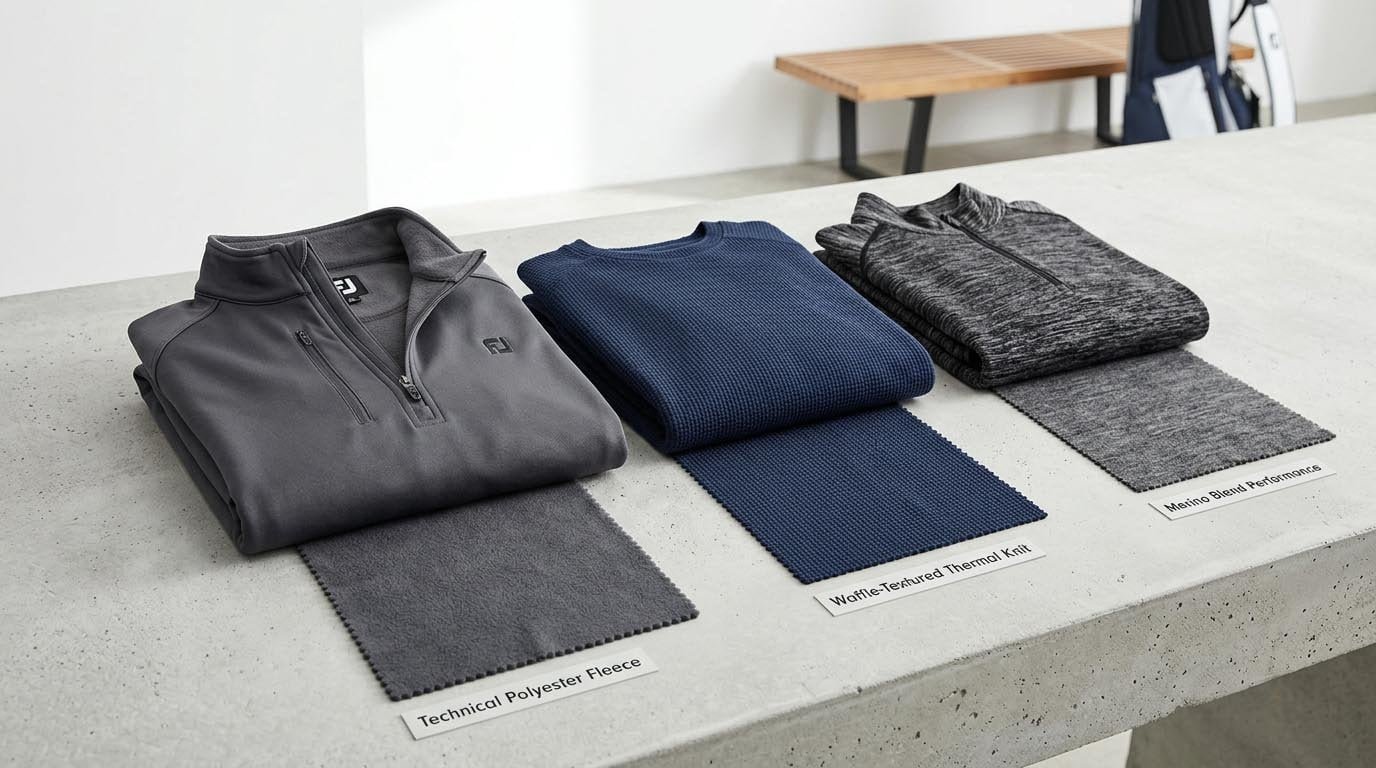
The most common mid-layer fabric directions are:
- polyester fleece
- brushed thermal knits
- lightweight wool or merino blends
- engineered knit structures such as waffle or honeycomb textures
1. Polyester fleece
Fleece remains one of the most practical choices for winter golf mid-layers.
Why brands choose it
- good warmth-to-weight balance
- easy care
- lower cost than wool-based options
- broad availability across price tiers
Watch-outs
- lower-grade fleece may pill quickly
- some fleece constructions feel too casual for premium golf positioning
- thicker fleece can become bulky under fitted shells
For golf, fleece usually works best when it is not overly heavy. A cleaner-faced fleece or a lower-bulk brushed knit often layers better than a thick, lofty construction.
2. Thermal knits
Thermal knits are especially useful for golf because they combine insulation with better stretch and a cleaner athletic appearance.
Common structures include:
- waffle knits
- honeycomb knits
- brushed double knits
- performance jacquards
Why brands choose them
- more technical and athletic look
- better stretch than some fleece constructions
- easier layering under outerwear
- good balance between heat retention and breathability
Watch-outs
- quality varies depending on knitting stability
- textured structures need to be checked for snagging or long-term surface durability
- some thermal knits feel great in sampling but lose shape if recovery is poor
For brands that want a refined golf mid-layer rather than a casual fleece feel, thermal knits are often a strong solution.
3. Merino or wool-blend mid-layers
These are usually more premium in both feel and cost.
Why brands choose them
- natural warmth
- odor management
- elevated hand-feel
- premium merchandising story
Watch-outs
- more expensive
- often needs more careful construction support
- dimensional stability matters more after washing
For premium winter golf collections, wool-blend mid-layers can create clear differentiation, especially when the brand wants a less synthetic feel.
4. Practical GSM range for mid-layers
For most winter golf applications:
- 250-280 GSM works well for lighter insulated layering
- 280-320 GSM suits core winter mid-layers
- above 320 GSM, brands should check carefully for bulk and reduced swing comfort
The best mid-layer is usually the one that feels warm enough without forcing the outer layer to be cut too loose.
Outer Layer Fabrics for Winter Golf: Softshell, Stretch Wovens, and Weather Protection
The outer layer protects against wind, light rain, and cold air exposure. But in golf, that protection has to come without excessive noise, stiffness, or swing restriction.
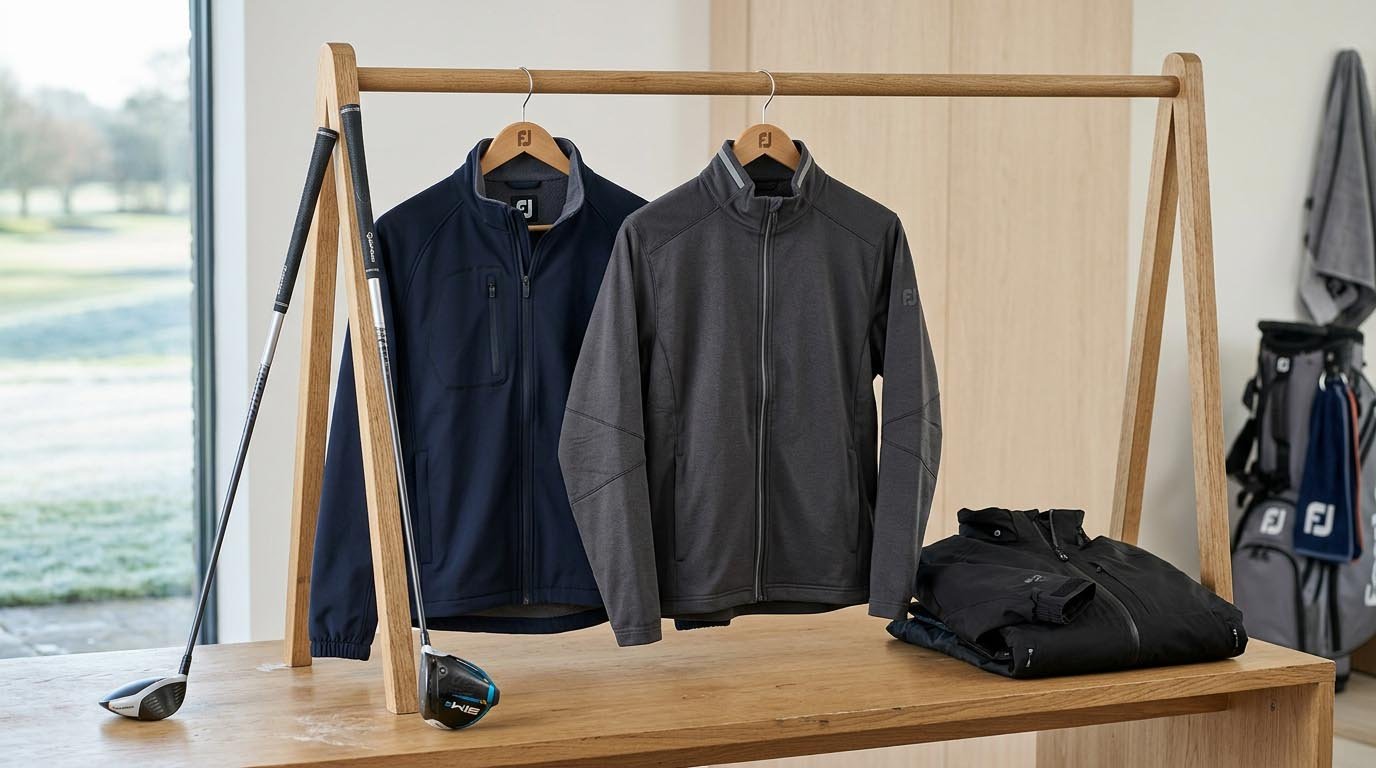
The most common outer-layer options include:
- softshell fabrics
- stretch woven weather-resistant fabrics
- bonded performance fabrics
- lightweight technical shells for wet conditions
1. Softshell fabrics
Softshell is often the most practical outer-layer direction for winter golf.
Why brands choose it
- combines weather resistance with stretch
- usually more comfortable than rigid waterproof shells
- good for cool, windy, and lightly wet conditions
- supports a more premium technical look
Where it works best
- golf jackets
- winter quarter-zips
- hybrid outerwear
- vest and jacket programs
Watch-outs
- some bonded softshells feel too stiff in the shoulder and upper arm area
- thick membrane-backed versions may create too much structure for swing-heavy use
- lower-stretch versions can feel restrictive even when the fit looks correct
This is an area where fabric hand-feel alone is not enough. A softshell may seem flexible when stretched by hand, but still feel restrictive once it is cut into a jacket with seams, zippers, lining, and collar structure.
2. Stretch woven outer fabrics
These are a good option when brands want lighter protection and more athletic mobility.
Why brands choose them
- lighter than many bonded softshells
- cleaner drape
- often quieter in movement
- good for mild winter and transitional conditions
Where they work best
- lightweight golf jackets
- wind tops
- layering shells
- mild-climate winter programs
Watch-outs
- lower weather protection than full softshell
- may need added treatment or lining for colder conditions
- not all stretch woven fabrics give enough wind resistance on exposed courses
For many brands, stretch woven outerwear is a very strong option when the target customer plays in cool conditions but does not need heavy weather shielding.
3. Waterproof and highly weatherproof shells
These can be useful, but they should be used carefully in golf.
Why some brands consider them
- stronger rain protection
- more technical outdoor positioning
- useful in wet and windy markets
Watch-outs
- often too rigid or noisy for golf
- may create poor drape
- can reduce natural swing comfort if membrane structure is too strong
- often add cost beyond what the end customer really needs
For many winter golf products, a highly rigid rain-shell approach is unnecessary. A more flexible weather-resistant fabric often performs better in actual play.
Why Stretch and Recovery Matter So Much in Winter Golf Fabrics
Stretch helps a garment move. Recovery helps it keep its shape.
You need both.
A winter golf fabric may feel comfortably stretchy at first, but if the recovery is poor, the garment can start to bag at the elbows, lose shape through the body, or become unstable after washing.
This matters most in:
- fitted base layers
- stretch thermal mid-layers
- softshell jackets
- hybrid sleeves and side panels
Brands should not only ask whether the fabric stretches. They should also ask:
- does it return cleanly after extension?
- how stable is it after washing?
- does the brushed surface distort under tension?
- does the bonded construction limit real movement once sewn?
This is especially important in shoulder panels, underarm areas, and sleeve articulation zones.
A lot of winter golf discomfort comes not from the fabric spec sheet, but from what happens after the fabric is cut, stitched, layered, and worn in motion.
Fabric Weight vs. Layering Bulk: What Brands Need to Watch
One of the easiest mistakes in winter golf development is choosing each layer in isolation.
A base fabric may be fine.
A mid-layer may also be fine.
An outer shell may also look fine.
But once all three are worn together, the total system may become too heavy, too bulky, or too restrictive.
Areas where layering bulk becomes a problem
- under the arm
- around the shoulder seam
- at the cuff
- around the collar and zipper
- across the upper back
For example, a brushed base layer under a dense fleece under a bonded softshell can create a garment package that feels much heavier than expected, especially in swing position.
That is why winter golf development should always evaluate the garment as a layering combination, not just as separate product categories.
Construction Details That Matter Alongside Fabric Choice
Good winter golf apparel is never only about the fabric. Construction choices also have a major effect on comfort and mobility.
Some details worth checking during development:
- raglan sleeves or articulated sleeve shaping for better shoulder movement
- gusseted underarms to reduce pull during swing
- reduced seam bulk in high-mobility areas
- clean cuff construction so layering with gloves feels natural
- back length and hem stability so the garment does not ride up during rotation
- zipper guard and collar bulk so neck layering stays comfortable
In some winter golf products, the construction issue is more noticeable than the fabric issue. A good material can still underperform if the garment becomes too stiff or bulky at the wrong points.
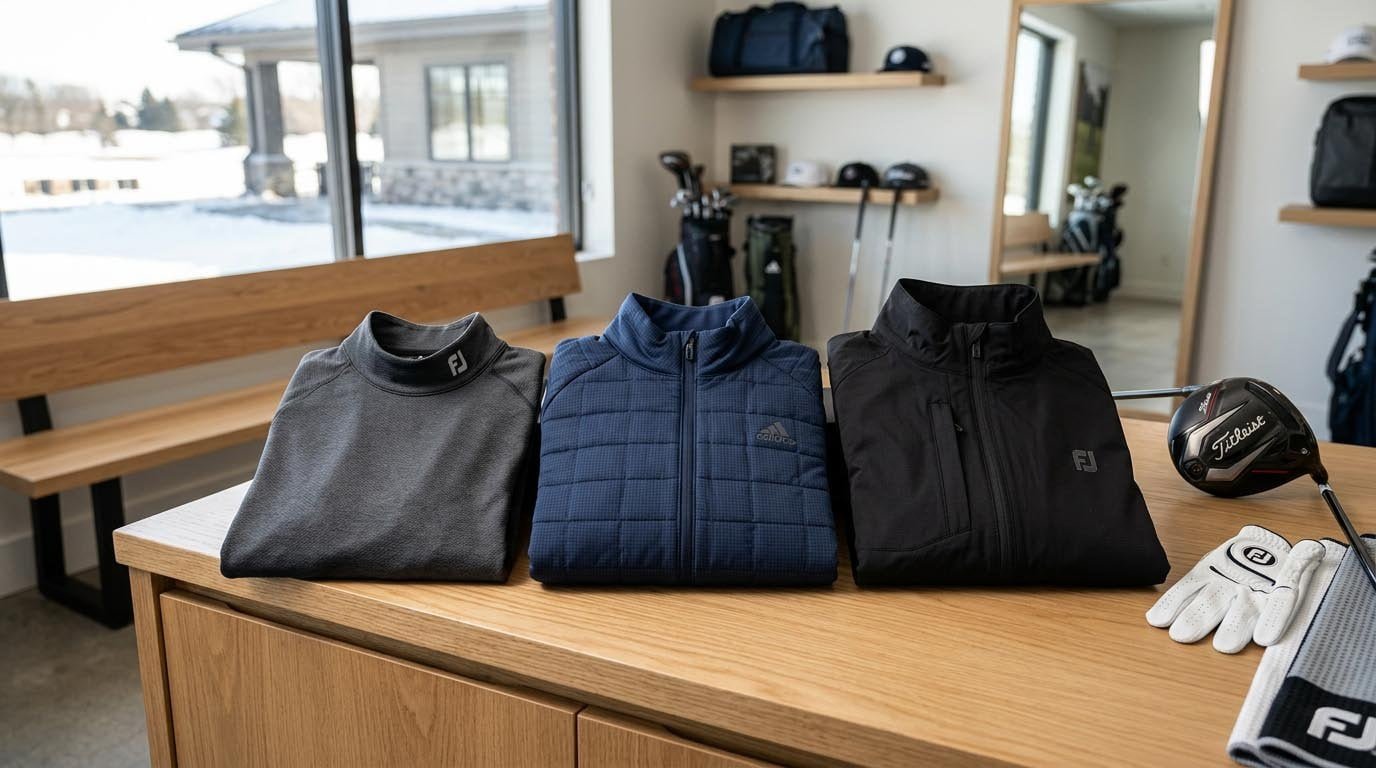
How to Build a Practical Winter Golf Layering System
A useful way to approach winter golf fabrics is by asking what each layer must do, instead of trying to make every layer handle every job.
Layer 1: Base layer
Main role:
- move moisture
- give light warmth
- fit close to the body
- stay smooth under additional layers
Good fabric directions:
- merino blend jersey
- polyester-spandex brushed knit
- nylon-poly stretch base fabric
Layer 2: Mid-layer
Main role:
- retain warmth
- keep bulk under control
- allow comfortable movement
- pass moisture toward the outer layer
Good fabric directions:
- brushed thermal knit
- lightweight fleece
- waffle knit performance fabric
- wool-blend jersey or knit
Layer 3: Outer layer
Main role:
- block wind
- resist light rain
- protect from exposure
- still allow a golf swing without stiffness
Good fabric directions:
- stretch softshell
- flexible bonded outerwear fabric
- stretch woven weather-resistant shell
The right combination depends on climate and customer use.
A brand selling into mild winter regions may only need a base-plus-outer system or a lightweight quarter-zip plus vest approach. A brand targeting colder and wetter regions may need a true three-layer setup with more serious wind and rain protection.
How to Choose Winter Golf Fabrics Based on Brand Positioning
The right fabric package depends not only on performance needs, but also on how your brand is positioned in the market.
Premium golf brands
Often benefit from:
- merino or wool-blend base layers
- refined thermal mid-layers
- premium stretch softshell or bonded outerwear fabrics
- cleaner finishing and stronger trim integration
These fabrics usually support a more elevated retail story and a more technical premium feel.
Mid-range performance golf brands
Often work well with:
- polyester-spandex base layers
- brushed performance knits or lower-bulk fleece
- stretch woven or practical softshell outerwear
This range often gives the best balance of function, sourcing flexibility, and cost control.
Value-oriented or entry-price brands
May need to focus on:
- simpler synthetic base fabrics
- standard fleece mid-layers
- lighter weather-resistant shell fabrics
- limited fabric variation across the collection
In this segment, consistency, fit, and merchandising clarity are often more important than chasing high-level technical claims.
What to Ask Your Fabric Supplier Before Sampling
Before moving into winter golf development, brands should ask more than whether the fabric is warm or water-resistant.
Useful questions include:
- What is the exact fiber composition?
- What is the knit or weave structure?
- What is the actual finished GSM?
- How much stretch and recovery does the fabric have?
- Is the surface brushed, bonded, laminated, or coated?
- How will the fabric behave in layered construction?
- Does it become stiff when combined with membrane or backing?
- Has it been used in golf or similar swing-based garments before?
- How stable is the fabric after washing?
- Is pilling a concern?
- Is the material stock-supported or made to order?
For outerwear fabrics, brands should also ask:
- how strong is the wind resistance?
- what level of water repellency or water resistance is realistic?
- does the fabric become noisy in movement?
- does the membrane reduce drape too much for golf use?
These questions often reveal more than the headline spec sheet.
Final Thoughts
The best winter golf fabric is rarely a single fabric.
Strong winter golf products come from building the right combination of:
- moisture management at the base layer
- breathable insulation at the mid-layer
- weather protection at the outer layer
- and enough stretch and construction support to preserve swing comfort
For most brands, the goal should not be maximum insulation. It should be usable warmth, clean layering, and reliable mobility on the course.
If the product feels too bulky, too stiff, or too heat-trapping, golfers will notice quickly, even if the fabric specs look impressive on paper.
That is why fabric selection for winter golf should always be tested in wear, movement, and layered construction, not only in swatches.
Need Help Developing Winter Golf Apparel?
At FUWAY, we support brands with golf and performance apparel development, including fabric selection, sampling, and bulk production planning for cold-weather products.
If you are developing a winter golf collection, we can help you evaluate:
- base, mid, and outer-layer fabric combinations
- suitable GSM ranges for your target market
- mobility and layering considerations
- softshell and outerwear material options
- sampling direction before bulk production
If you would like to discuss a winter golf apparel project, feel free to contact us for development support.