Anti-odor fabric helps manage unwanted smells by limiting odor-producing bacterial activity, capturing odor molecules, or combining different mechanisms. However, anti-odor is not the same as antibacterial, moisture-wicking, or quick-dry performance.
For golf apparel brands, the challenge is not simply finding a fabric labeled "odor-resistant." It is choosing a technology that works with the intended garment, retains its performance after washing, and supports the claims made to customers.
This guide explains how to compare anti-odor technologies, choose sourcing routes, review laboratory evidence, and approve materials for golf polos, base layers, and skorts before bulk production.
How Does Anti-Odor Fabric Work?
Fabric odor is influenced by perspiration, skin oils, microorganisms, and odor molecules that interact with the textile.
Anti-odor technologies generally work through two approaches.
1. Antibacterial Odor Control
Some fabric treatments reduce the activity or growth of bacteria on textiles, helping limit certain sources of odor formation.
Silver-based, zinc-based, and other antimicrobial systems may use this approach, depending on their formulation.
However, the technology name alone does not establish performance.
For example, a supplier's claim of 99% bacterial reduction does not mean the garment produces 99% less noticeable odor during golf.
Antibacterial performance must also not be confused with protection against disease-causing microorganisms.
2. Odor Capture and Neutralization
Other technologies act directly on odor molecules rather than bacteria.
These systems may adsorb, bind, or chemically interact with selected odor compounds to reduce their release.
They do not necessarily provide antibacterial activity.
Buyer takeaway: Ask the supplier to identify the odor-control mechanism and provide test results for the actual finished fabric.
A branded ingredient or treatment name is not sufficient evidence.
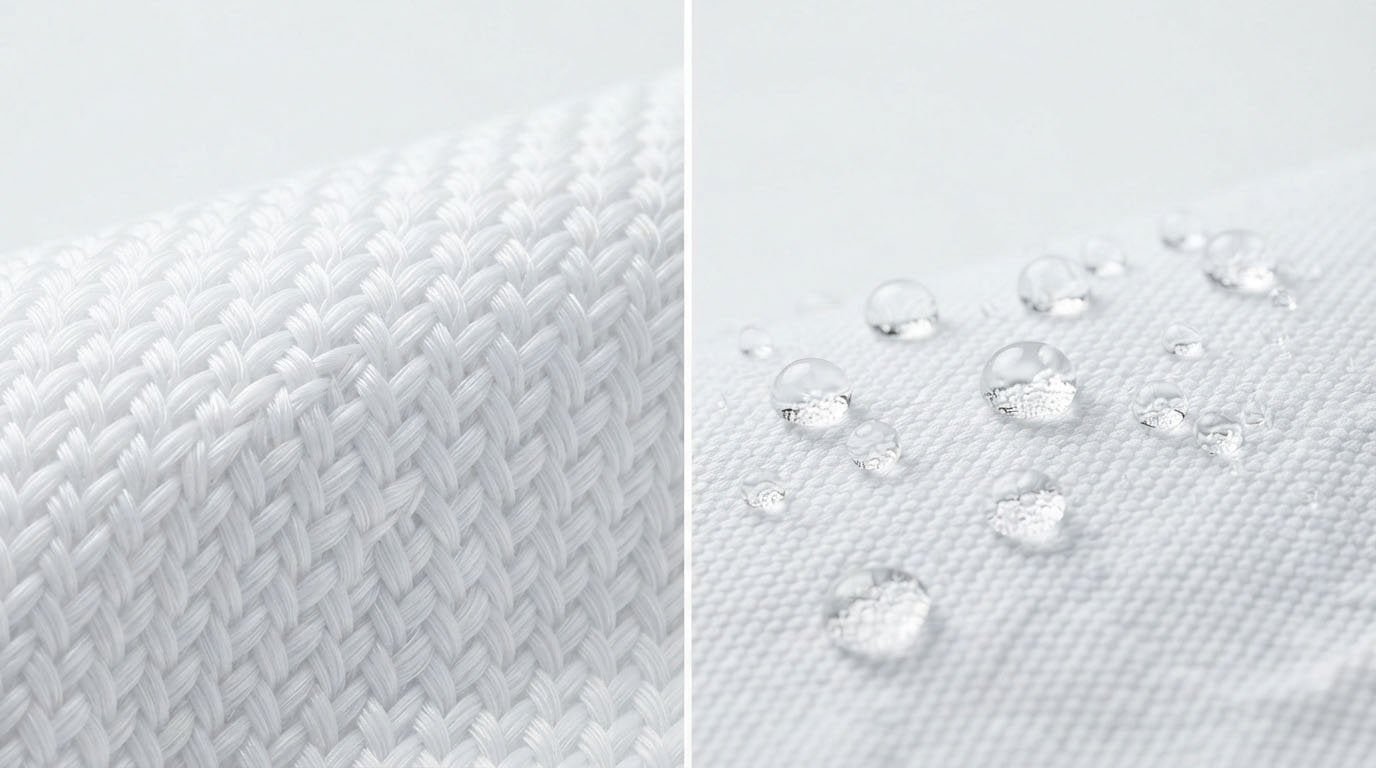
Anti-Odor vs Antibacterial vs Moisture-Wicking: What's the Difference?
These performance characteristics are related but cannot replace one another.
| Fabric function | What it measures or describes | What it does not prove |
|---|---|---|
| Anti-odor | Reduction or management of unwanted odor | Antibacterial activity or permanent freshness |
| Antibacterial | Activity against specified bacteria | Less perceived odor during golf |
| Moisture-wicking | Movement of liquid moisture | Odor resistance or faster drying |
| Quick-dry | Drying performance under defined conditions | Odor removal |
| Breathability | Commonly describes airflow or moisture-vapor comfort, depending on the measurement | Anti-odor performance |
A performance golf polo may require several of these properties, particularly in hot and humid conditions.
However, each should be evaluated independently.
For detailed fabric moisture-management methods, see FUWAY's Moisture-Wicking Fabric Testing Guide.
Which Anti-Odor Technology Should Golf Apparel Brands Choose?
The best option depends on the actual fabric, performance objective, testing evidence, and production requirements.
Fabric Finishing vs Fiber-Integrated Technology
| Technology route | Potential advantage | What brands must verify |
|---|---|---|
| Finish-applied treatment | Can be evaluated on existing fabric constructions | Application consistency and wash durability |
| Fiber- or yarn-integrated technology | May offer a different route to incorporating functionality | Finished-fabric performance and supply availability |
| Existing fabric with verified anti-odor properties | May reduce initial development complexity | Whether the report applies to the proposed material and order |
A yarn-integrated technology is not automatically more durable than a finishing treatment.
Similarly, a finish-applied system is not necessarily short-lived.
Wash durability depends on the exact technology, substrate, application process, and care conditions.
Silver-free also should not be confused with biocide-free. A material without silver may contain other antimicrobial active substances.
For the wider decision about fiber composition, knit structure, hand feel, and weight, see FUWAY's Best Fabric for Golf Polo Shirts Guide.
How Can Brands Source Anti-Odor Golf Apparel?
Brands generally have three sourcing routes. The right choice depends on how much customization is necessary and whether suitable tested fabrics are already available.
| Sourcing route | Suitable situation | Key verification |
|---|---|---|
| Existing performance fabric | Smaller initial collections or straightforward development | Fabric identity, test scope, available colors |
| Private label development using available functional fabric | Custom fit, logos, labels, or garment construction | Fabric availability, decoration compatibility, test documentation |
| Custom odor-control fabric development | Specific technology, composition, or after-wash performance targets | Mill minimums, development costs, testing and lead time |
Understand Fabric MOQ vs Garment MOQ
The minimum order quantity for garment production is not necessarily the minimum for custom anti-odor fabric processing.
For example, a brand may be able to order a relatively small quantity of golf polos using an existing fabric, while custom dyeing or applying a specialized treatment may require a larger fabric commitment.
Before requesting a quotation, establish:
- Garment type and target quantity.
- Fabric composition and preferred construction.
- Required odor-control mechanism or outcome.
- Available fabric colors versus custom colors.
- Testing and laundering requirements.
- Destination markets and intended marketing claims.
Practical recommendation: For an initial collection, first compare available fabrics with applicable test documentation. Consider custom technology development only when the existing options cannot meet the product brief.
Which Laboratory Tests Support Anti-Odor Claims?
A laboratory test is useful only when its measurement matches the claim the brand intends to make.
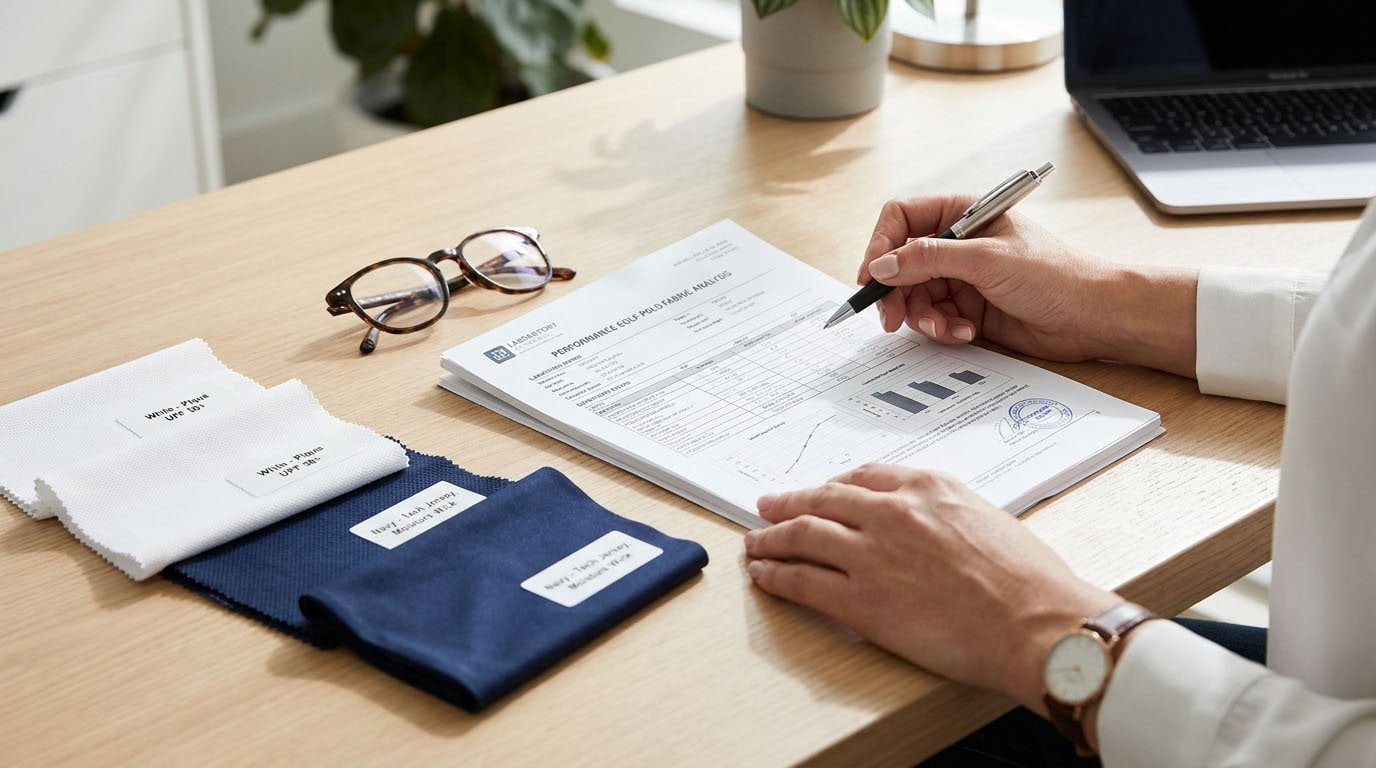
Different methods evaluate different aspects of textile performance.
| Buyer's question | Relevant test method | Important limitation |
|---|---|---|
| Does the fabric have antibacterial activity? | AATCC TM100 or ISO 20743 | Does not directly measure perceived odor |
| Does an antibacterial textile reduce bacteria-generated odor? | AATCC TM211 | Intended for the relevant treated textile layer |
| Does the fabric reduce selected odor compounds? | Applicable part of ISO 17299 | Results depend on the odor compound and test conditions |
| Can the material adsorb a representative human malodor? | AATCC TM216 | Uses isovaleric acid; not a universal odor evaluation |
| Does the polo remain acceptable during golf? | Controlled comparative wear trial | Results are specific to the trial conditions |
For example, AATCC TM216 measures odor adsorbency using a representative malodor compound, while AATCC TM211 evaluates reduction of bacteria-generated odor on antibacterial-treated textiles.
They should not be treated as interchangeable tests.
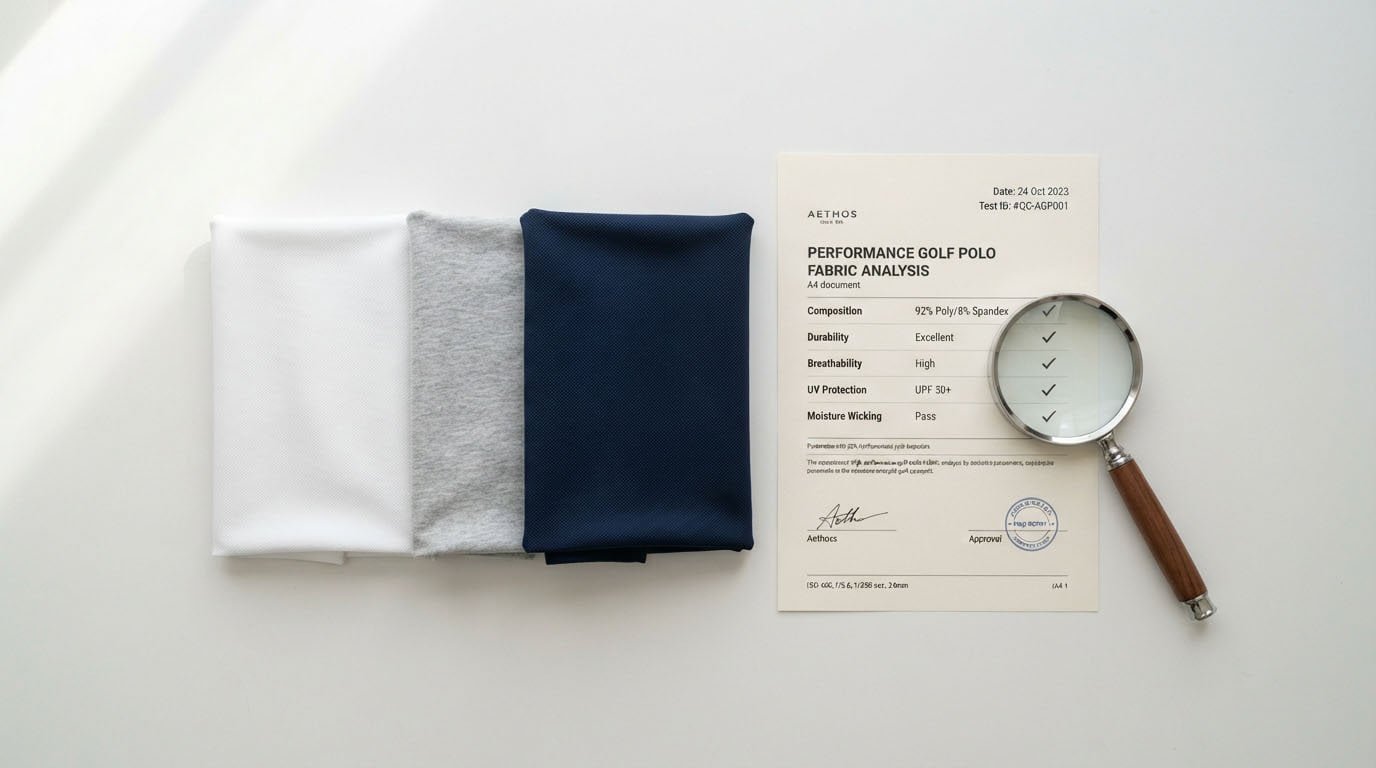
How to Review a Supplier's Test Report
Before accepting a report, verify the following.
- Fabric identity: Does the report identify the actual material, composition, construction, and relevant treatment?
- Test method: Is the method appropriate for the claimed benefit?
- Test conditions: Which organisms or odor compounds were evaluated?
- Laundering status: Was the fabric tested before washing, after washing, or both?
- Acceptance criteria: Does the result meet the requirement agreed for the project?
- Report applicability: Does the tested material correspond to the proposed production fabric?
Do not assume that testing on one fabric, color, or finishing recipe automatically covers every variation.
How Can Brands Verify Anti-Odor Wash Durability?
An initial test result does not establish how well odor-control performance survives repeated washing.
Brands should define the laundering conditions and required retained performance before testing.
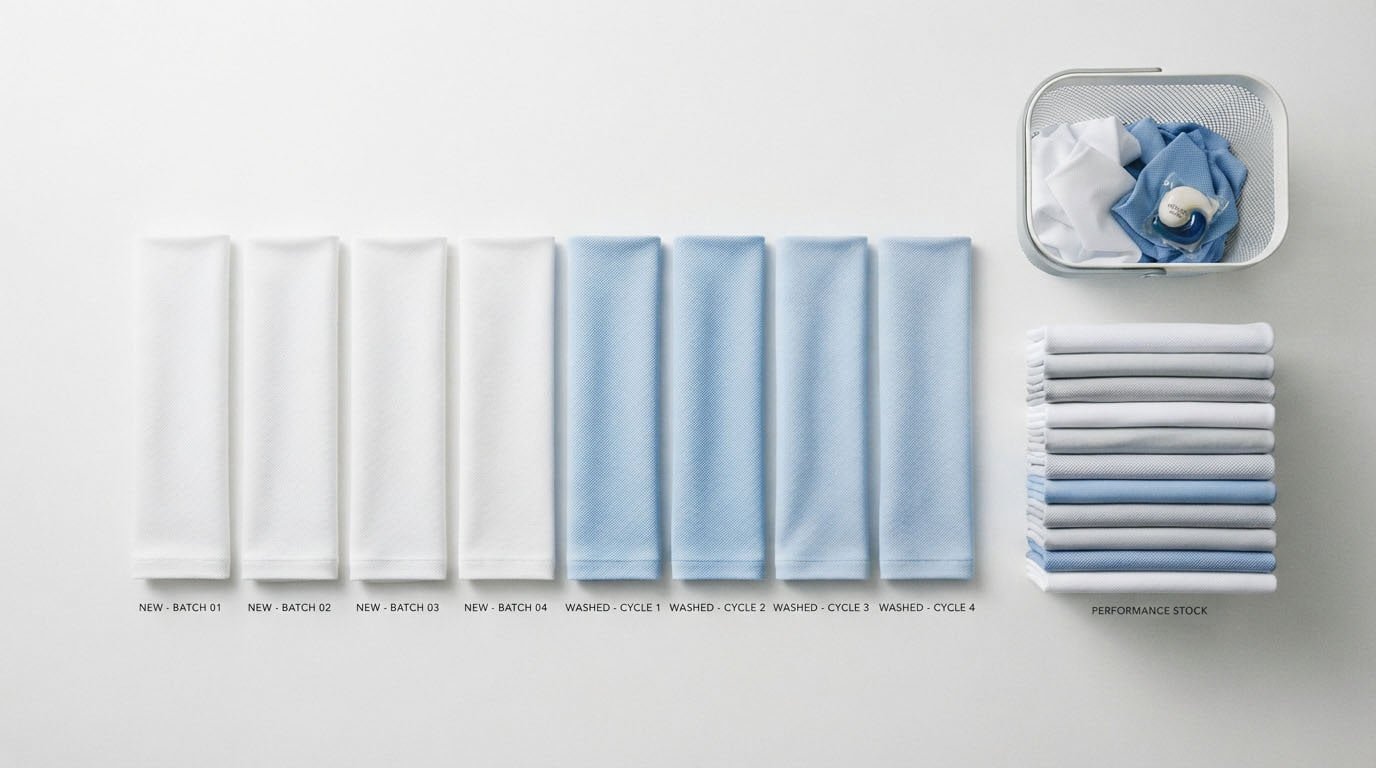
A Practical Wash-Durability Testing Specification
The following template can be adapted to a fabric development brief.
| Specification item | What to define |
|---|---|
| Fabric identification | Approved fabric code, composition, construction, finish |
| Performance target | Antibacterial activity, odor reduction, or odor adsorption |
| Test method | Appropriate AATCC or ISO method and edition |
| Initial assessment | Baseline result and suitable reference |
| Laundering method | Agreed ISO 6330 or other appropriate procedure |
| Wash cycles | Brand-specific requirement, such as 10 or 20 cycles |
| Acceptance requirement | Pre-agreed minimum retained performance |
| Additional checks | Color, appearance, hand feel, fit, and other functional properties |
The wash-cycle counts above are illustrative planning options, not universal industry requirements or FUWAY performance guarantees.
Example Testing Requirement for a Tech Pack
Odor-control performance shall be evaluated using the agreed test method on the approved fabric. The same performance assessment shall be repeated after the specified laundering procedure and cycle count. Results must meet the agreed project acceptance criteria. Any material or finishing change affecting performance requires review before bulk approval.
The full specification must identify the method, laundering conditions, acceptance criteria, and applicable material.
ISO 6330 provides procedures for domestic washing and drying during textile testing. It does not establish a universal anti-odor durability threshold.
Add a Controlled Golf Wear Trial
Laboratory evidence can be supplemented by comparative wear testing when the brand intends to communicate on-course freshness.
Where practical, evaluate treated and untreated reference garments with comparable fabric constructions.
Record the wearing duration, weather conditions, laundering history, and odor-assessment procedure.
A positive wear trial supports product development, but does not guarantee identical performance for every golfer.
What Should Brands Check for White and Decorated Golf Polos?
White and light-colored golf polos may introduce additional development requirements.
These issues are not unique to anti-odor treatments, but should be evaluated when odor-control technology is added to the finishing process.
Color Stability and Appearance
For white and light-colored materials, evaluate relevant risks such as:
- Yellowing or discoloration after finishing and laundering.
- Changes in fabric appearance following heat exposure.
- Uneven treatment or visible shade differences.
- Compatibility with other functional finishes.
Not every anti-odor technology causes yellowing. The actual formulation and fabric must be assessed.
Embroidery and Heat-Transfer Compatibility
Decoration processes may expose fabric to pressure, localized heat, adhesives, or mechanical stress.
When developing decorated golf polos, verify that the approved finishing combination remains compatible with the planned logo application.
Check appearance and functional performance where processing conditions could materially affect the treatment.
For logo-development options, review FUWAY's Embroidery Service and Screen Printing Service.
These checks should be completed on representative decorated samples before approving production.
How Much Does Anti-Odor Technology Add to Manufacturing Cost?
There is no universal price premium for an anti-odor golf polo.
The total development cost depends on the material, treatment, order quantity, and verification requirements.
| Cost factor | What affects the quotation |
|---|---|
| Base fabric | Fiber composition, construction, and sourcing |
| Odor-control technology | Treatment chemistry, integration method, and supplier |
| Production minimums | Available fabric versus custom development |
| Sampling | Development and revision requirements |
| Laboratory testing | Number of methods, specimens, and wash conditions |
| Quality control | Verification frequency and repeat-order consistency |
Brands should request a quotation separating the garment cost from specialized fabric development and laboratory verification.
For sourcing support, see FUWAY's Fabric Sourcing Service.
What Must Be Approved Before Bulk Production?
A successful development sample does not automatically establish that a future bulk production batch will achieve the same result.
Brands should document the approved fabric and verification requirements.
| Approval requirement | Information to record |
|---|---|
| Material specification | Composition, construction, color, fabric code |
| Odor-control specification | Technology identity and intended performance |
| Reference evidence | Applicable test reports and approved samples |
| Wash durability | Laundering procedure and acceptance criteria |
| Production consistency | Traceability and agreed verification sampling |
| Change control | Conditions requiring renewed review |
| Marketing claims | Approved wording and supporting evidence |
Changes to the fabric mill, treatment, construction, or processing conditions may require renewed assessment.
Key principle: Approve a documented material specification and supporting evidence—not simply a supplier's claim that the fabric is anti-odor.
What Anti-Odor Claims Can Golf Apparel Brands Make?
Anti-odor claims should describe only benefits supported by the relevant evidence.
For example, an antibacterial test alone should not be used to claim that a golfer will experience a specific percentage reduction in perceived odor.
United States: EPA Treated-Article Requirements
For pesticide-treated textiles sold in the United States, the EPA treated-article guidance explains conditions for the exemption covering qualifying treatments intended to protect the article itself.
This does not authorize claims that a golf shirt protects the wearer against disease-causing microorganisms.
European Union: Biocidal Products Regulation
In the EU, applicable biocidal active-substance requirements and treated-article labeling obligations must be checked.
See the European Chemicals Agency's Treated Articles Guidance.
Do not assume that a general chemical-safety report establishes compliance with every biocidal-treatment requirement.
Avoid Unsupported Marketing Promises
Brands should avoid statements such as:
- "Never smells."
- "Permanent odor protection."
- "Protects the wearer from harmful germs."
- "Guaranteed freshness throughout every round."
- "Anti-odor performance never decreases after washing."
Even a qualified statement such as "helps control odor" needs evidence relevant to the actual product and intended use.
How Should Brands Choose Anti-Odor Fabric for Different Golf Products?
The appropriate verification plan also depends on the garment.
| Golf apparel category | Recommended development focus |
|---|---|
| Performance golf polos | Odor performance, moisture management, laundering, decoration |
| Base layers | Fabric performance under the intended layered construction |
| Golf skorts with inner shorts | Which component is treated and how it performs |
| Travel golf apparel | Odor performance after repeated wear-and-care conditions |
| Premium collections | Evidence supporting the claimed benefit and additional cost |
An anti-odor result for the outer skirt fabric should not automatically be applied to a separate inner-short material.
The best option is the one that meets the intended product requirements and has relevant, documented performance.
Frequently Asked Questions
Is Anti-Odor Fabric the Same as Antibacterial Fabric?
No. Some anti-odor systems rely on antibacterial activity, while others reduce odor by interacting with odor molecules. The testing method must match the mechanism and claimed benefit.
Does Anti-Odor Golf Polo Fabric Lose Performance After Washing?
It can, depending on the technology, material, and laundering conditions. Brands should compare initial and post-wash results rather than assume a fixed service life.
Is Silver-Based Anti-Odor Fabric Better Than Zinc-Based Fabric?
Not necessarily. Neither ingredient name establishes superior performance or durability. Compare the actual finished-fabric test results, treatment formulation, laundering conditions, and applicable compliance requirements.
Can OEKO-TEX STANDARD 100 Prove Odor Resistance?
No. OEKO-TEX STANDARD 100 focuses on harmful-substance testing. It does not replace anti-odor performance or laundering-durability evidence.
What Should a Brand Request Before Ordering Anti-Odor Golf Polos?
Request the material specification, odor-control mechanism, applicable test report, wash-durability conditions, MOQ details, and evidence supporting the intended claims.
Can Anti-Odor Golf Apparel Be Worn Repeatedly Without Washing?
Anti-odor functionality does not establish garment cleanliness or hygiene. Brands should provide appropriate care instructions and avoid unsupported repeated-wear promises.
Develop Anti-Odor Golf Apparel with FUWAY
Successful anti-odor golf apparel development starts with a clearly defined product requirement—not simply adding an antibacterial or odor-resistant label.
Before sampling, establish the target fabric, odor-control objective, laundering expectations, destination market, and evidence needed for approval.
FUWAY supports custom golf polo development and fabric sourcing for golf apparel brands.
Contact FUWAY to discuss suitable material options, customization requirements, sampling, and the verification needed before bulk production.
Technology availability, project-specific MOQ, testing requirements, and production timing should be confirmed before making performance commitments.