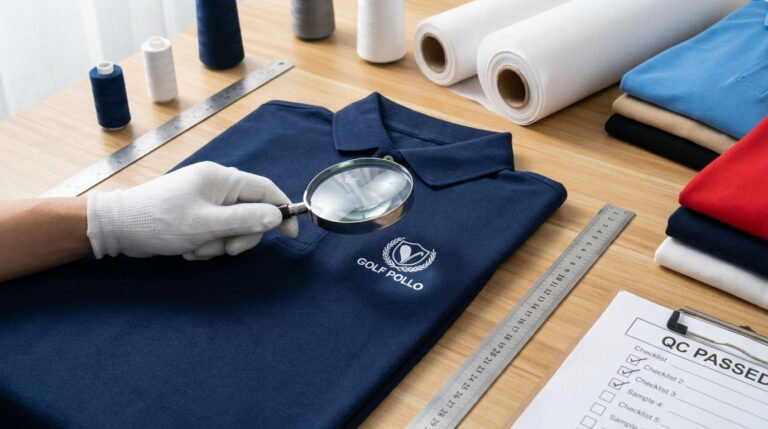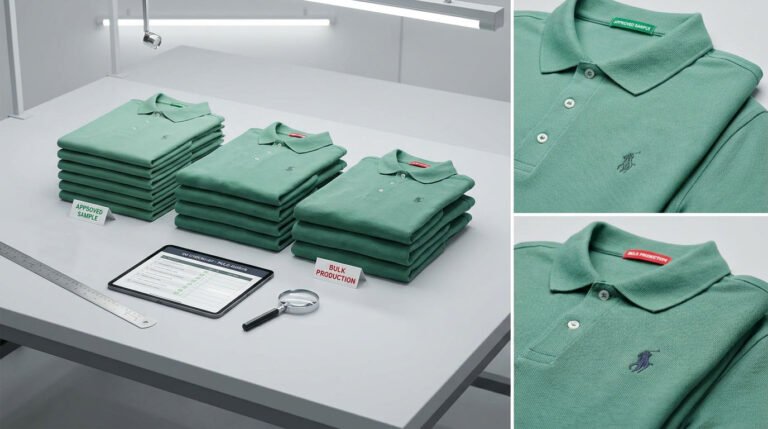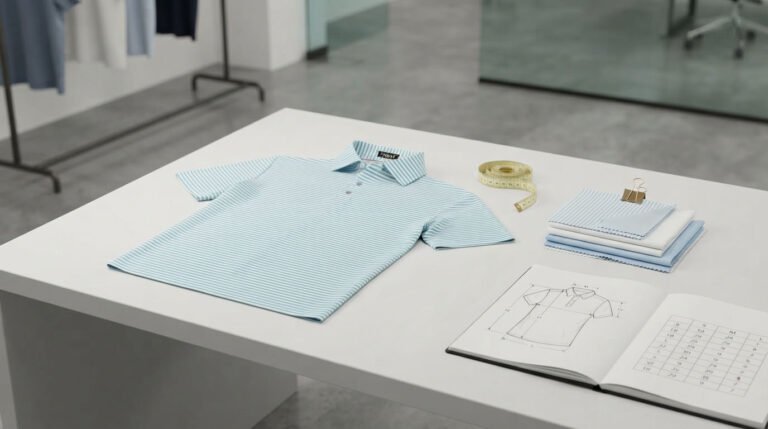
Your golf polo sample looks perfect. The navy matches your brand, and the collar and body appear consistent. But when bulk production arrives, some shirts look lighter, others have mismatched sleeves, and the next reorder does not match your original inventory.
These problems often begin before sewing, when fabric dye lots, color approvals, or cutting controls are not properly managed.
To prevent color differences in bulk golf apparel, approve a physical color standard on the actual production fabric, inspect bulk fabric before cutting, keep compatible shade lots together, and verify finished garments against approved references. Repeat orders also require retained samples and batch records.
This guide explains seven practical steps to maintain color consistency from fabric approval to bulk delivery.
Quick Answer: How Do You Prevent Color Differences in Bulk Golf Apparel?
Color consistency requires checkpoints throughout manufacturing, not just final inspection.
| Control Stage | What Brands Should Confirm |
|---|---|
| Fabric Selection | Exact composition, construction, and finish |
| Lab Dip Approval | Approved color on production fabric |
| Color Standard | Physical master swatch and acceptance limits |
| Fabric Inspection | Roll-to-roll and within-roll shade consistency |
| Cutting | Compatible shade lots kept together |
| Assembly | Collar, body, sleeves, and trims match |
| Repeat Orders | Original master and batch records reviewed |
Key rule: Do not cut bulk fabric until its color has been checked against the approved standard.
Problems found before cutting may be corrected through sorting, replacement, or other approved actions. Once mismatched panels are sewn together, correction becomes more expensive.
Step 1: Understand Why Color Differences Occur in Golf Apparel
Bulk fabric may look different from an approved sample even when the same color reference is used.
Fabric Composition and Construction
Golf apparel commonly uses polyester, nylon, elastane blends, and different knit structures.
Their surfaces can make the same intended color appear different.
- Polyester-spandex jersey: A smooth surface may appear brighter.
- Micro-piqué: Textured knitting affects how light reflects.
- Interlock: Its dense, smooth surface changes visual appearance.
- Rib-knit collars: Different yarns and constructions may not visually match the polo body.
A color approved on one material should not automatically be accepted on another.
For brands developing technical materials, FUWAY's golf apparel fabric sourcing service supports fabric selection around product requirements.
Dye Lots and Finishing
Color differences may result from:
- Changes in dye concentration, temperature, or processing time
- Fiber and yarn variations
- Different dyeing batches
- Fabric finishing processes
Even when two batches use the same dye recipe, their final appearance may differ.
Lighting Differences
Two fabrics may match in daylight but look different under indoor retail lighting.
Manufacturing takeaway: Approve colors under defined lighting conditions rather than relying on digital images or paper color references.
Step 2: Establish an Approved Physical Color Standard
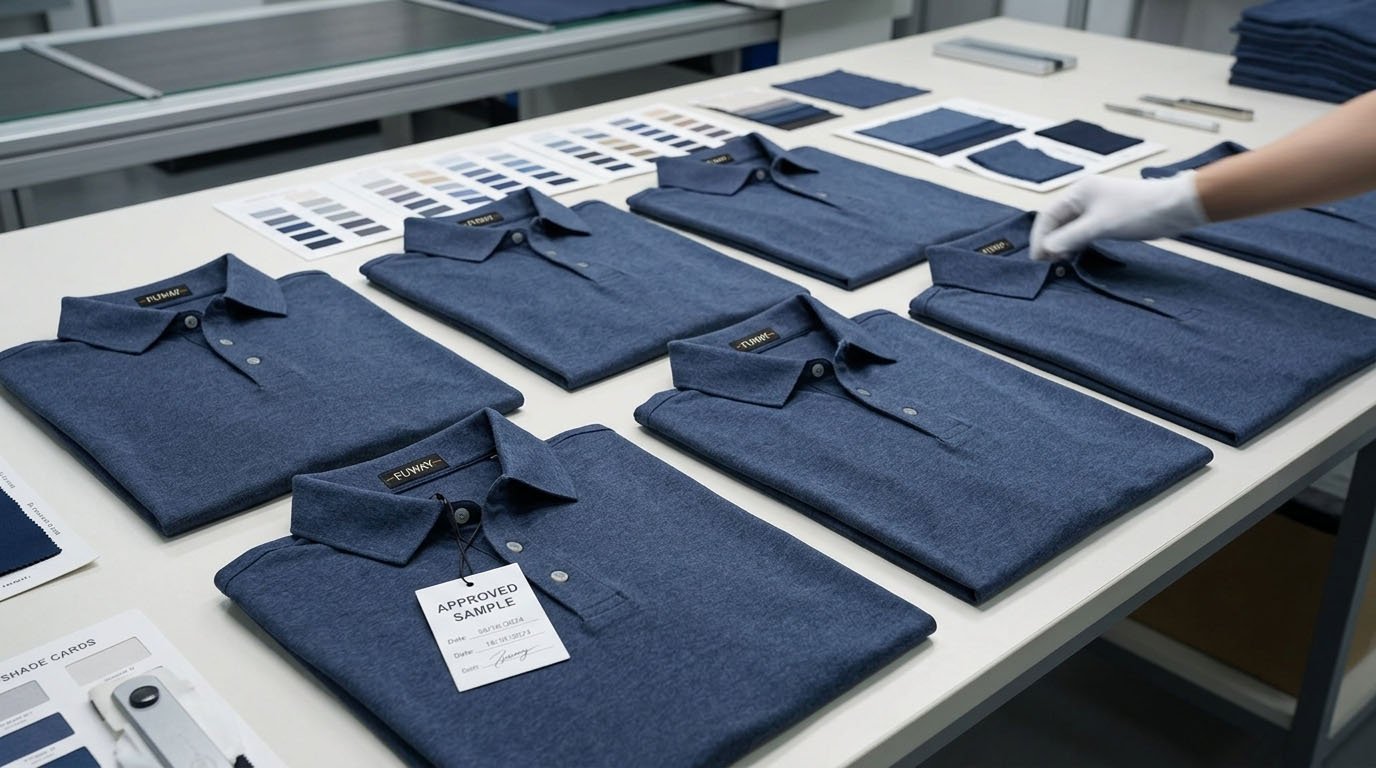
A physical reference gives the brand, fabric supplier, and manufacturer a consistent color target.
Why Pantone Alone Is Not Enough
Pantone codes communicate color intentions but cannot guarantee identical results across different fabrics.
A navy shade may appear different on polyester piqué, stretch jersey, and rib-knit collars.
The final color should therefore be approved on the intended production material.
For broader brand color selection, see our golf apparel color matching guide. This article focuses on maintaining approved colors during manufacturing.
Approve Lab Dips Before Bulk Dyeing
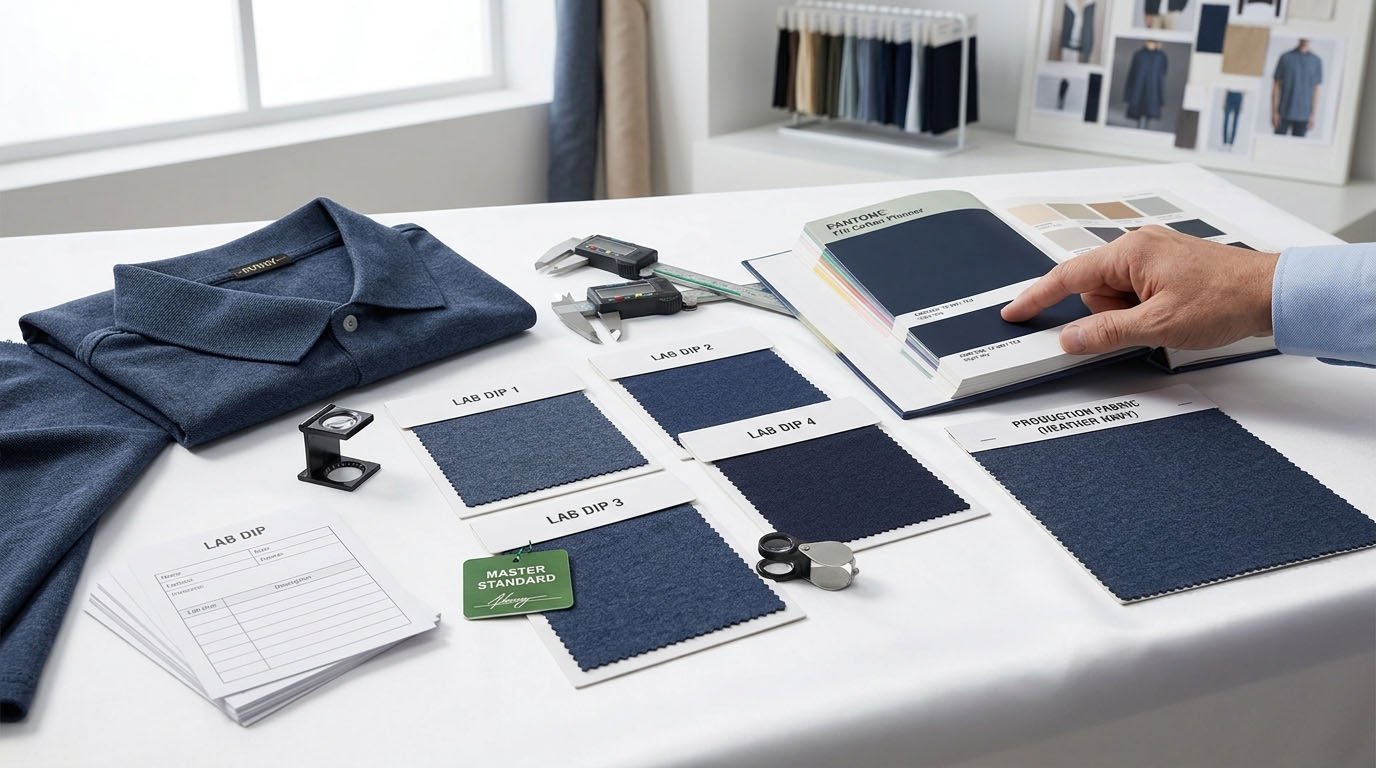
A lab dip is a small dyed fabric sample used to confirm the intended production color.
A practical approval process includes:
- Confirm the production fabric.
- Provide the target color reference.
- Request lab dips on the actual fabric.
- Evaluate them under agreed lighting conditions.
- Approve one option or request adjustments.
- Retain labeled physical samples.
Different materials, such as polyester jersey bodies and separate rib collars, may need individual color approvals.
Keep a Master Color Standard
After approval, preserve a physical reference for bulk production and repeat orders.
| Information | Purpose |
|---|---|
| Style / Color Code | Identifies the colorway |
| Fabric Reference | Confirms the substrate |
| Lab Dip Reference | Connects approval to the sample |
| Approval Date | Records the approved version |
| Buyer Approval | Confirms acceptance |
| Dye Lot / Batch | Supports production traceability |
Both buyer and manufacturer should retain matching approved references, protected from sunlight, moisture, and unnecessary handling.
A documented physical approval is more reliable than an on-screen image or informal verbal confirmation.
Step 3: Define Lighting Conditions and Color Tolerances
Absolute zero color variation is unrealistic across large production batches. The objective is to keep differences within agreed, commercially acceptable limits.
Use Consistent Lighting
Color assessments should use specified lighting conditions.
Common examples include:
- D65: Simulated daylight for color evaluation.
- Agreed retail lighting: Such as TL84 or a specified LED source.
Checking multiple relevant light sources helps identify metamerism, where two materials match under one light but differ under another.
This is particularly important when comparing golf polo collars with body fabric.
Establish an Approved Shade Band
A shade band defines acceptable color variation around the approved target.
| Reference | Meaning |
|---|---|
| Approved Target | Intended production shade |
| Light Limit | Lightest acceptable appearance |
| Dark Limit | Darkest acceptable appearance |
Fabric outside approved limits should be held for review before production.
Should Brands Use Delta E?
Delta E (ΔE) measures color difference instrumentally. However, results depend on the calculation method, measurement conditions, and material characteristics.
For example, CIEDE2000 (ΔE00) is one defined color-difference calculation method.
There is no universal Delta E limit suitable for every golf apparel fabric.
Buyers and manufacturers should agree on the method and acceptance criteria before production. Visual assessment remains important when comparing fabrics with different textures.
Step 4: Inspect Bulk Fabric Rolls Before Cutting
Bulk fabric inspection helps prevent shade differences from becoming visible defects in finished garments.
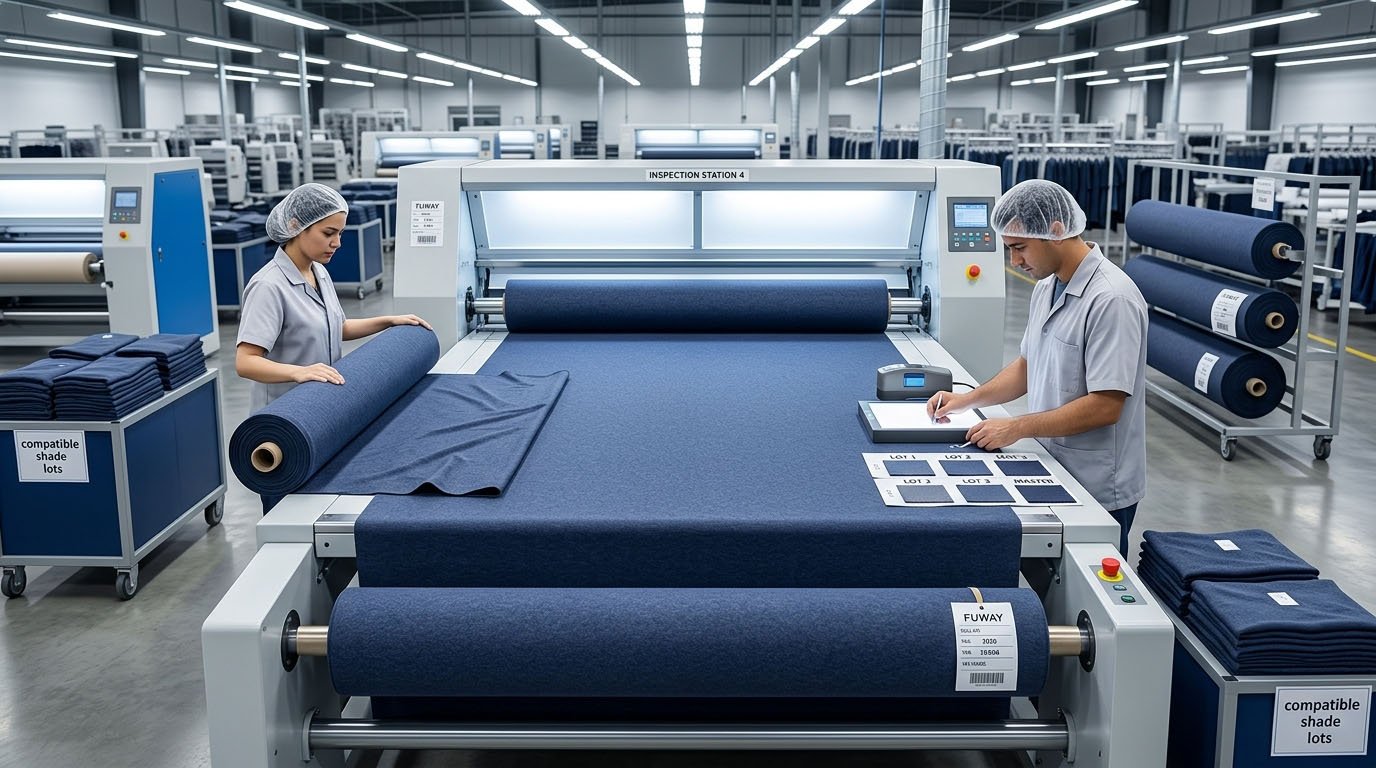
Check Roll-to-Roll Variation
Individual fabric rolls may differ slightly in shade, particularly when produced in different dyeing batches.
Inspectors should record:
- Fabric roll number
- Dye lot or batch number
- Comparison with the approved master
- Differences between representative rolls
- Rolls requiring segregation or further review
Check Edge-to-Center Shading
Some fabric rolls show color variation across their width.
A roll may appear uniform when folded but reveal differences when opened.
Representative areas across the width should be compared, especially when uneven dyeing is suspected.
Separate Incompatible Shade Groups
Fabric rolls should be grouped according to their approved color compatibility.
Compatible rolls may be used together. Incompatible rolls must remain separated during cutting and assembly.
Shade segregation does not make out-of-tolerance fabric acceptable. Such material still requires an approved corrective or disposition decision.
Step 5: Prevent Color Mismatches During Cutting and Assembly
Fabric may pass incoming inspection but still produce mismatched garments when incompatible panels or trims are mixed.
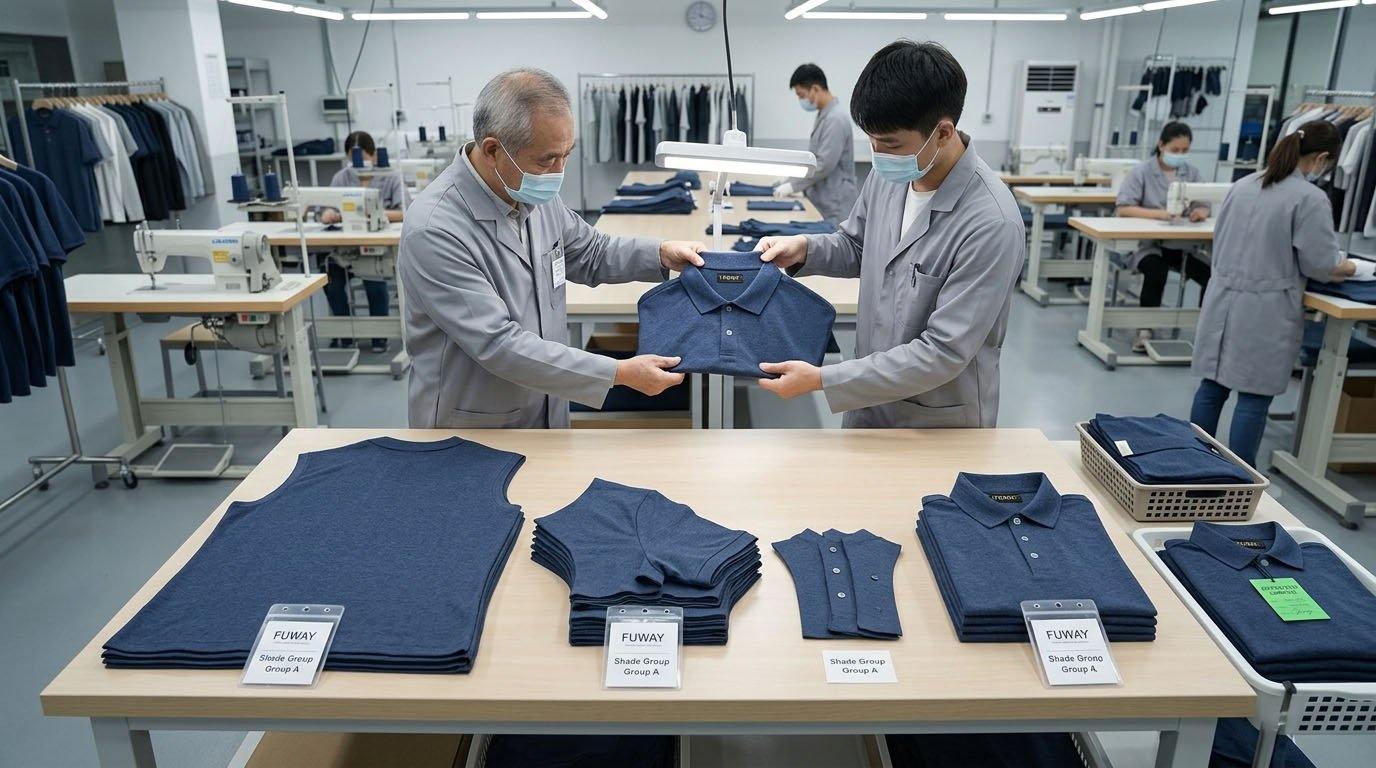
Keep Garment Panels Within Compatible Shade Groups
Cutting teams should maintain approved shade groups for:
- Front and back body panels
- Sleeves
- Placket components
- Other matching fabric panels
Where practical, matching components should come from the same roll or from rolls confirmed to have compatible shades.
Bundle labels should identify the style, color, fabric lot, roll or shade group, and cutting batch.
Match Golf Polo Collars and Body Fabric
Golf polo collars are a common source of visible shade differences.
Rib-knit collars and jersey bodies may use different yarns, structures, or dyeing processes.
Before assembly, compare the actual components side by side under agreed lighting conditions.
The same principle applies to sleeve cuffs, sewing threads, zipper tapes, and dyed-to-match trims.
Apply Shade Control to Golf Bottoms
Other golf apparel products also require panel compatibility checks.
| Product | Areas to Inspect |
|---|---|
| Golf Polo | Collar, body, sleeves, placket |
| Golf Shorts | Front and back panels, waistband |
| Golf Trousers | Leg panels, pockets, waistband |
| Golf Skort | Outer skirt, waistband, visible liner |
| Golf Jacket | Main panels, contrast sections, zipper tape |
Intentional contrast designs should follow the approved design reference rather than dyed-to-match expectations.
For sublimation-printed golf apparel, approve a physical print strike-off on the intended fabric because the printed result may differ from digital artwork.
Step 6: Verify Color Consistency Through Production QC Records
Color management must continue after fabric approval.
A structured inspection process helps identify problems before they affect an entire order.
Color Control Checkpoint Matrix
| Production Gate | Inspection Focus | Action if Failed |
|---|---|---|
| Lab Dip | Target shade on actual fabric | Revise and resubmit |
| Bulk Dye Lot | Match to approved master | Hold and investigate |
| Fabric Inspection | Roll and within-roll shading | Segregate or reject |
| Cutting | Correct shade grouping | Correct affected bundles |
| Assembly | Panel and trim matching | Isolate affected garments |
| Final Inspection | Finished-garment appearance | Hold failed goods |
Results should be recorded rather than confirmed verbally.
What Color Control Records Should Buyers Request?
For overseas buyers, records provide evidence that production follows approved standards.
| Record | What It Confirms |
|---|---|
| Approved Lab Dip | Color approved on production fabric |
| Master Swatch Record | Agreed physical reference |
| Bulk Shade Band | Accepted color boundaries |
| Fabric Roll / Dye Lot Record | Material traceability |
| Cutting Bundle Record | Shade groups maintained |
| Final Color QC Record | Finished garments checked |
Each record should be traceable to the actual production order.
What Happens When Color Differences Are Found?
Before cutting: Hold affected fabric and determine whether sorting, replacement, or another approved corrective action is appropriate.
During sewing: Separate incompatible components, correct affected bundles, and inspect related production.
At final inspection: Isolate failed garments and agree on rework, replacement, or another disposition before shipment.
Re-dyeing is not always suitable because additional processing may affect fabric appearance or performance.
For broader shipment inspection requirements, see our Golf Apparel Factory QC Checklist.
Step 7: Maintain Color Consistency Across Repeat Orders
Repeat orders may use new fabric or dye batches, even when the style and color codes remain unchanged.
Prevent Color Standard Drift
If every reorder is matched only against the previous batch, small differences can accumulate.
For example:
- Batch 1 matches the original master.
- Batch 2 is slightly lighter but approved.
- Batch 3 matches only Batch 2.
- Batch 4 becomes visibly different from Batch 1.
Every reorder should be checked against the original approved master, not only the latest batch.
If previous inventory will be sold alongside new stock, compare both production lots for commercial compatibility.
Maintain Batch Traceability
Useful reorder records include:
- Original approved master swatch
- Fabric specifications and supplier
- Previous dye lot references
- Retained production samples
- Agreed color acceptance criteria
- Approved material or process changes
Material changes may require new lab dip approvals.
Manage Mixed Inventory
If two approved batches have slight visible differences, warehouse lot identification may help avoid mixing incompatible garments within customer orders.
However, inventory segregation cannot replace proper production color control.
The reorder rule: Match against the original standard, check compatibility with existing inventory, and document approved changes.
Buyer Checklist: Before Approving Bulk Golf Apparel Colors
Before bulk manufacturing, confirm:
- [ ] Production fabric is confirmed.
- [ ] Physical lab dips are approved.
- [ ] Master color samples are retained.
- [ ] Lighting conditions are specified.
- [ ] Shade acceptance limits are agreed.
- [ ] Collars and trims are approved where applicable.
- [ ] Fabric roll inspection is planned.
- [ ] Cutting shade groups are controlled.
- [ ] Color QC records are maintained.
- [ ] Repeat-order references are available.
These requirements should be confirmed before production release.
FAQ: Bulk Golf Apparel Color Differences
Can a Golf Apparel Manufacturer Guarantee Zero Color Difference?
No. Minor variation can occur between fabric rolls and dye lots. The objective is to remain within agreed acceptance limits and avoid commercially unacceptable garment mismatches.
Why Does My Golf Polo Collar Look Different From the Body?
Collars and bodies may use different yarns, knit structures, and dyeing processes. Approve both components together under consistent lighting before assembly.
Is a Pantone Number Enough for Bulk Color Approval?
No. Pantone communicates the intended color, but a physical sample on the production fabric should be approved before bulk dyeing.
Should Every Fabric Roll Be Checked for Shade Differences?
Each roll should be covered by the agreed inspection and traceability plan. The inspection method should consider material characteristics, color sensitivity, and order requirements.
How Can Brands Keep Repeat Orders the Same Color?
Retain the original master swatch, previous production samples, and batch records. Check new fabric against the original standard and existing inventory before approving production.
Conclusion
Preventing color differences in bulk golf apparel requires a controlled manufacturing process rather than relying on a Pantone number or a single approved sample.
Brands should establish physical color standards, inspect fabric before cutting, control panel and trim compatibility, and retain traceable production records.
These practices are especially valuable for golf polos, shorts, skorts, uniforms, and repeat collections where consistent color is essential.
At FUWAY, we support custom golf apparel development through fabric sourcing, sample coordination, and manufacturing quality requirements.
If your brand is preparing a custom golf apparel order, contact FUWAY to discuss fabric, color approval, and bulk production requirements.