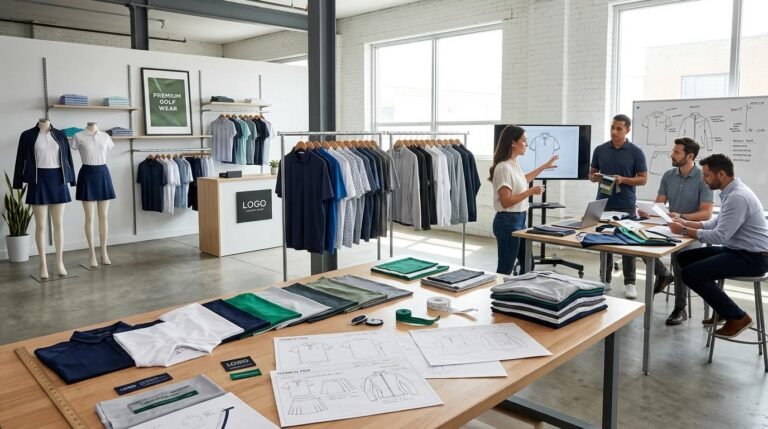
I watched Bobby struggle with this exact problem last year. He launched with one polo style at one price. Sales were okay, but he left money on the table. Premium customers wanted more, budget buyers couldn't afford his offering.
Build effective golf polo tiers by creating three distinct levels: entry-level ($18-25 wholesale), mid-tier ($25-35 wholesale), and premium ($35-50+ wholesale). Each tier should target specific market segments with differentiated fabrics, features, and branding that justify the price gap.
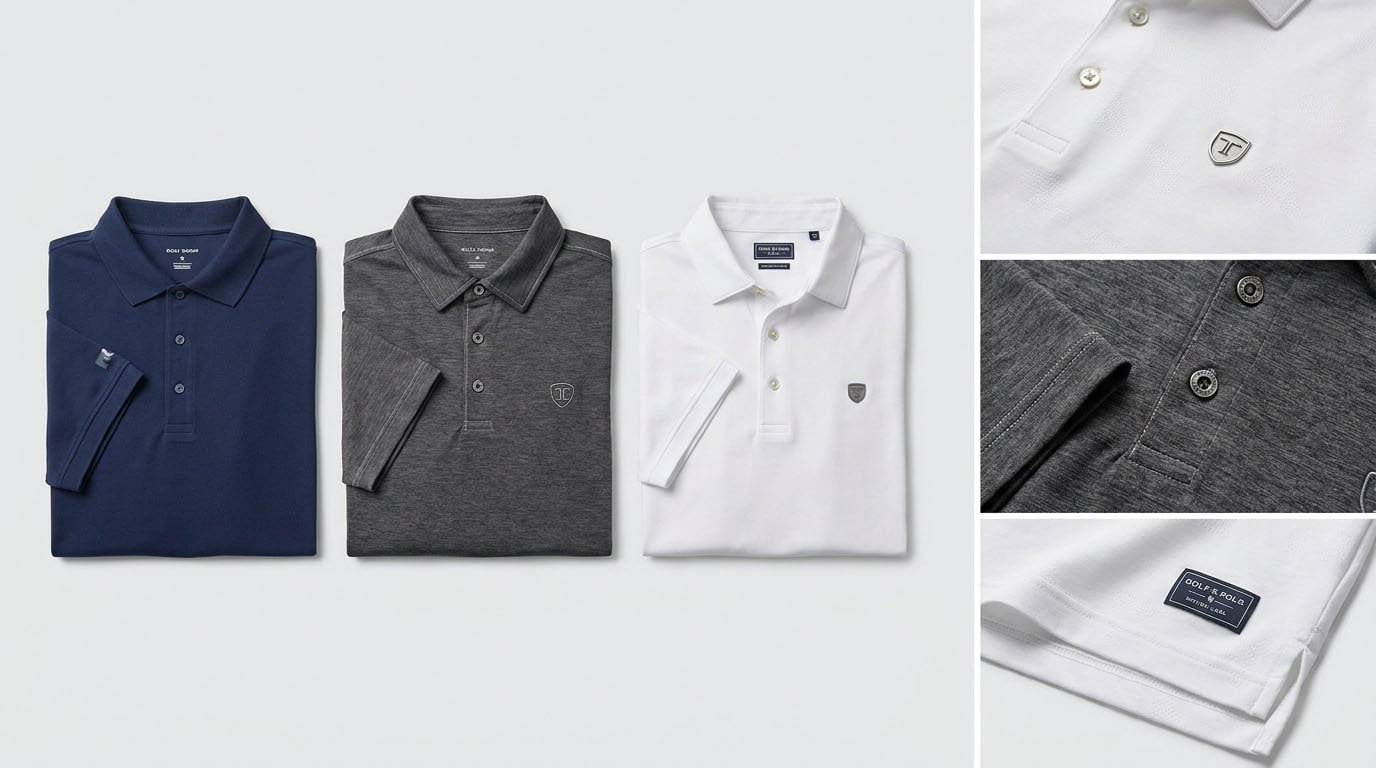
After years of helping brands at FUWAY develop their product lines, I've learned that tiering isn't about making cheap and expensive versions. It's about serving different customer needs at different moments.
Quick Answers: Golf Polo Product Tier Strategy
1. How many tiers should I create?
Start with three tiers: good, better, best. This gives customers choice without overwhelming them. Most successful brands settle on 2-4 distinct tiers within their first two years.
2. What's the ideal price gap between tiers?
Maintain 30-50% difference between tiers at wholesale. This creates clear value separation. For example: $20, $30, and $45 wholesale prices show distinct positioning.
3. Which tier drives the most volume?
The mid-tier typically accounts for 50-60% of total sales. Entry drives traffic, premium drives margin, but mid-tier drives volume and profit.
3. Can I launch with just one tier?
Yes, but plan expansion early. I recommend launching with one mid-tier product and adding entry or premium within 6-12 months based on customer feedback.
4. How do I prevent cannibalization?
Make differences visible and functional. If customers can't see or feel the upgrade, they'll buy the cheaper option every time. Feature differentiation must be obvious.
Map Market Segments & Use Cases: Members, Teams, Pro Shops and Corporate
Before building tiers, identify who buys golf polos and why. Your architecture should serve four primary segments: club members seeking premium performance, team buyers needing affordable uniforms, pro shops requiring retail-ready inventory, and corporate clients ordering branded merchandise.
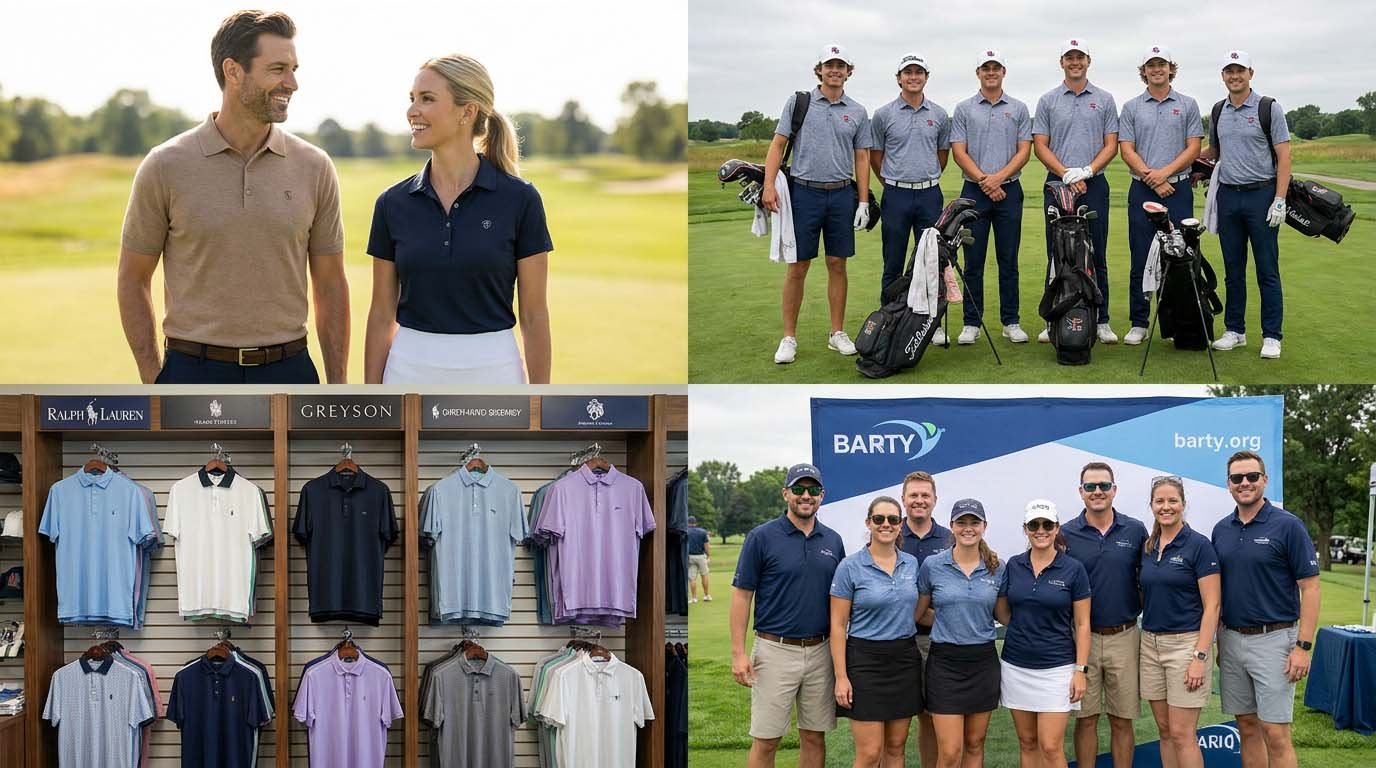
Bobby initially thought all golfers were the same. Then he analyzed his early customers and discovered four completely different buying patterns.
The Four Core Segments
I've manufactured for thousands of golf brands. These segments repeat across every market:
Club Members (Premium Focus):
- Buy 2-4 polos per season
- Price sensitive above $80-120 retail
- Value performance and brand status
- Expect UPF 50+, moisture wicking, premium fabrics
Team Buyers (Volume Focus):
- Order 20-100+ pieces at once
- Budget: $25-40 per unit all-in
- Need customization and fast turnaround
- Prioritize durability over luxury features
Pro Shop Retailers (Margin Focus):
- Stock 3-5 brands in multiple tiers
- Need 50-60% markup to be profitable
- Want recognizable quality at first touch
- Require consistent inventory availability
Corporate Clients (Brand Focus):
- Order 100-1,000+ pieces annually
- Budget varies: $30-100+ per unit
- Value brand consistency and professional appearance
- Need reliable reorder capability
Match Tiers to Use Cases
Here's how I map tiers to segments:
| Tier | Primary Segment | Secondary Segment | Price Point (Wholesale) |
|---|---|---|---|
| Entry | Teams, Corporate | Pro shops (opening price) | $18-25 |
| Mid | Pro shops, Members | Teams (upgrade option) | $25-35 |
| Premium | Members, Pro shops | Corporate (executive gifts) | $35-50+ |
Your mid-tier should serve at least two segments. This drives volume and manufacturing efficiency.
Buying Motivations by Segment
Understanding why each segment buys helps you position features:
Members buy for:
- Performance during 4+ hour rounds
- Social status and brand recognition
- Comfort in 30°C+ temperatures
- Versatility (on-course and off-course wear)
Teams buy for:
- Unified appearance at tournaments
- Bulk pricing and customization
- Durability through weekly play
- Easy reordering for new members
Pro shops buy for:
- Margin preservation (need 2.5x markup minimum)
- Perceived value at retail price
- Inventory turn rate
- Brand mix differentiation
Corporate buyers prioritize:
- Professional brand representation
- Consistent sizing across orders
- Simplified ordering process
- Volume discounts and payment terms
Build the Tier Architecture: Price Ladders, Margins and SKU Planning
Structure your tiers with clear price separation, sustainable margins, and manageable SKU counts. Plan for 40-50% gross margin at entry tier, 50-60% at mid-tier, and 60-70%+ at premium. Start with 3-5 colors per tier and expand based on sales data.
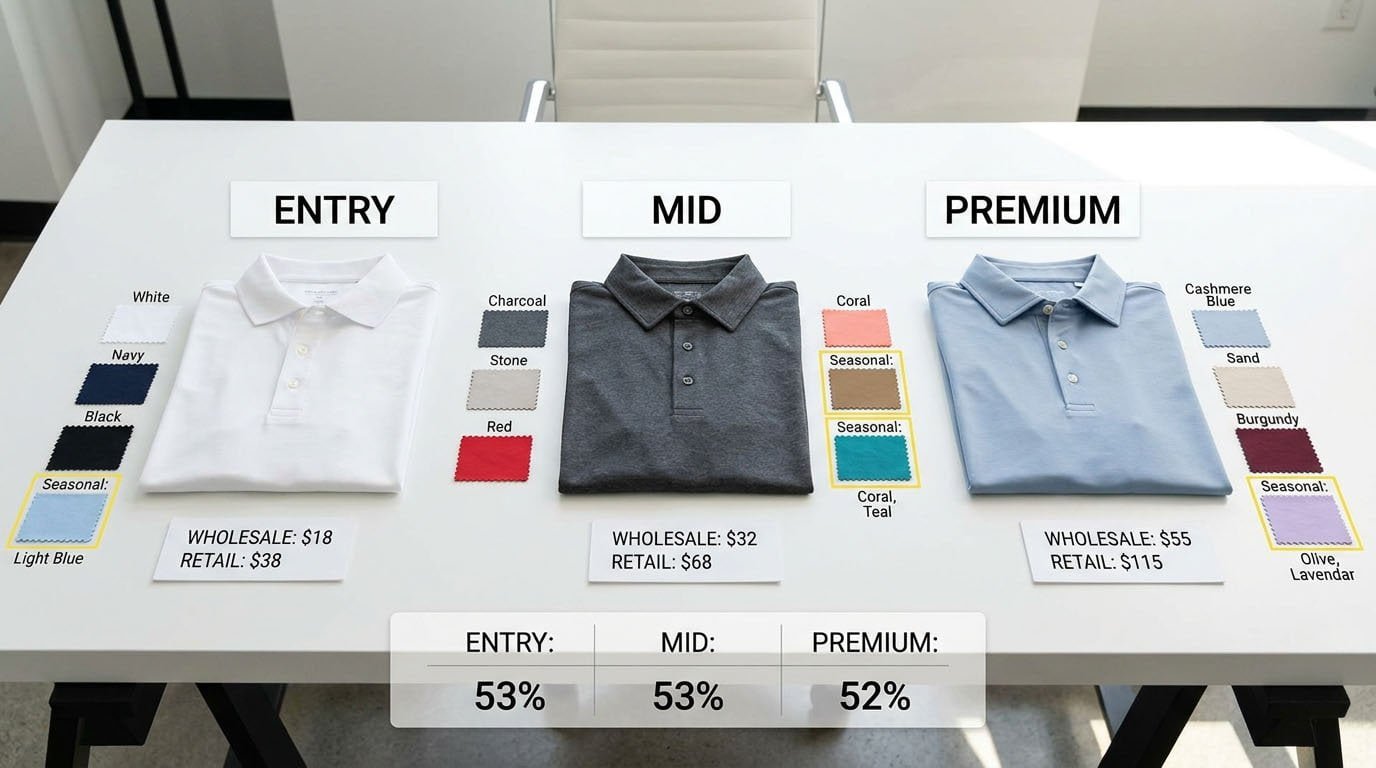
I helped Bobby rebuild his entire pricing structure. We started with his costs and worked backward to ensure every tier made business sense.
The Three-Tier Framework
Here's the architecture I recommend:
Entry Tier: "The Gateway"
- Wholesale: $18-25 per unit
- Retail: $45-65
- Cost target: $10-14 (FOB)
- Margin: 40-45%
- MOQ: 500-1,000 pieces per style
Mid-Tier: "The Workhorse"
- Wholesale: $25-35 per unit
- Retail: $65-90
- Cost target: $14-20 (FOB)
- Margin: 50-55%
- MOQ: 300-500 pieces per style
Premium Tier: "The Flagship"
- Wholesale: $35-50+ per unit
- Retail: $90-150+
- Cost target: $18-28 (FOB)
- Margin: 60-70%
- MOQ: 200-300 pieces per style
Margin Math That Works
Your margins need to cover more than production costs. I budget for:
- Product cost: 30-40% of wholesale
- Freight and duties: 5-8% of wholesale
- Marketing and samples: 5-10% of wholesale
- Operating expenses: 15-20% of wholesale
- Net profit target: 10-20% of wholesale
Example breakdown for a $30 wholesale polo:
- Manufacturing: $16 (53%)
- Logistics: $2 (7%)
- Marketing: $2 (7%)
- Operations: $5 (17%)
- Profit: $5 (17%)
SKU Planning Strategy
Too many SKUs kill cash flow. I keep it tight at launch:
Year One:
- Entry tier: 3 colors, 5 sizes = 15 SKUs
- Mid-tier: 4 colors, 5 sizes = 20 SKUs
- Premium tier: 3 colors, 5 sizes = 15 SKUs
- Total: 50 SKUs
Year Two Expansion:
- Add 1-2 colors per tier based on sell-through
- Introduce seasonal colorways (2-3 per year)
- Test extended sizes (S-3XL if XS-2XL performs)
Colors I recommend for each tier:
| Tier | Core Colors | Seasonal Additions |
|---|---|---|
| Entry | White, Navy, Black | Grey, Royal Blue |
| Mid | White, Navy, Black, Grey | Sky Blue, Burgundy |
| Premium | White, Navy, Charcoal | Sage, Coral, Limited Editions |
Pro tip: White and navy should represent 60-70% of your total inventory in every tier.
Differentiate Features by Tier: Fabrics, Performance and Trims
Make tier differences tangible through fabric selection, performance features, and construction quality. Entry tier uses basic polyester pique (180-190 GSM), mid-tier features moisture-wicking blends (190-200 GSM) with UPF 30+, and premium includes advanced fabrics (200-220 GSM) with UPF 50+ and anti-microbial treatments.
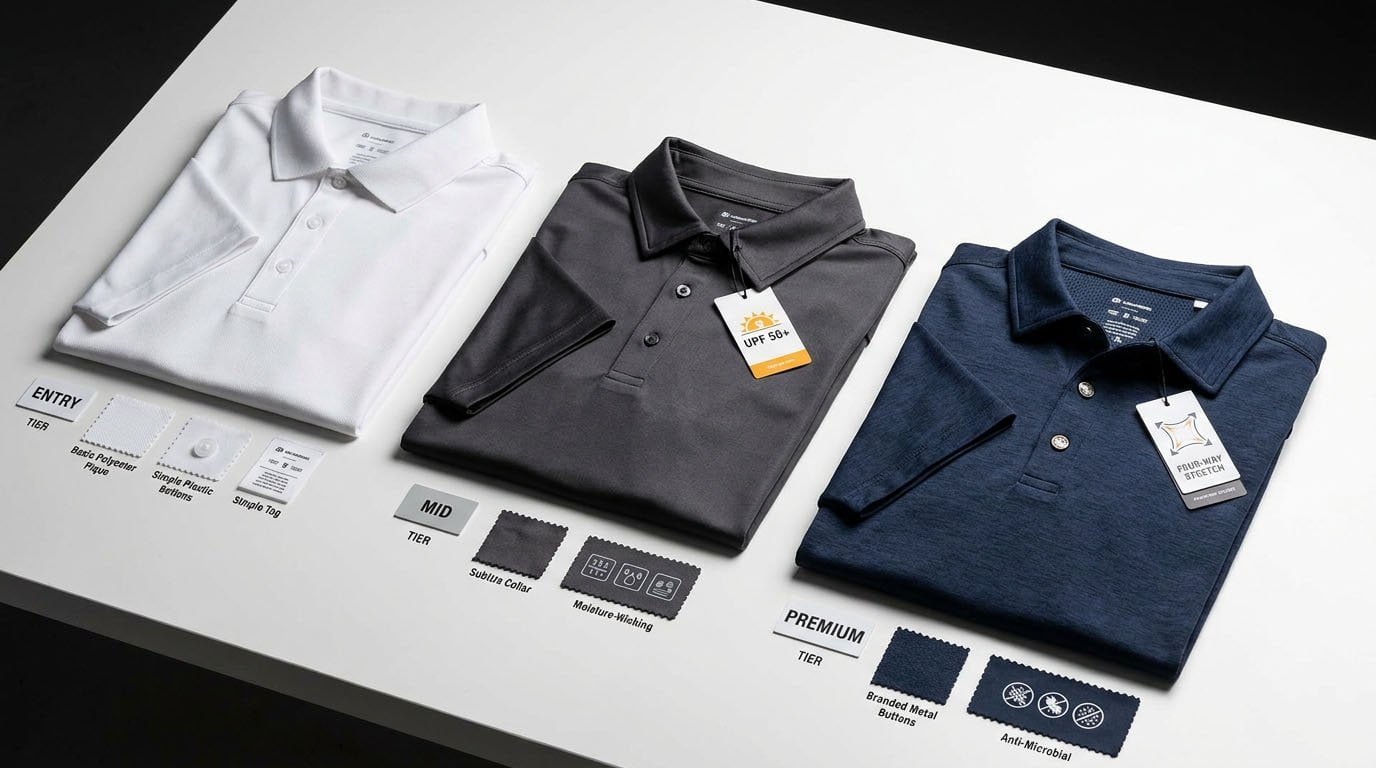
Bobby's biggest mistake was making his tiers too similar. Customers couldn't justify paying more because the differences weren't obvious. We fixed that.
Fabric Specifications by Tier
This is where differentiation starts:
Entry Tier Fabrics:
- 100% polyester pique or 65/35 poly-cotton
- Weight: 180-190 GSM
- Basic moisture management (no special treatment)
- Standard dyeing (12-16 colors available)
- Cost: $2.50-3.50 per meter
Mid-Tier Fabrics:
- 100% polyester interlock with wicking treatment
- Or 88/12 poly-spandex for stretch
- Weight: 190-200 GSM
- Certified moisture-wicking finish
- UPF 30+ protection
- Cost: $3.50-5.00 per meter
Premium Tier Fabrics:
- Advanced poly blends with cooling technology
- Or performance pique with mesh ventilation
- Weight: 200-220 GSM
- Multi-functional finish (wicking + anti-microbial)
- UPF 50+ protection
- Premium hand feel and drape
- Cost: $5.00-8.00 per meter
Performance Features Ladder
Stack features as you move up tiers:
Entry Tier:
- Basic breathability
- Standard hem and cuffs
- Simple collar construction
- No special treatments
- Washing durability: 30+ cycles
Mid-Tier Adds:
- Moisture-wicking certification
- UPF 30+ sun protection
- Reinforced collar with stays
- Anti-odor treatment option
- Washing durability: 50+ cycles
Premium Tier Adds:
- Advanced cooling technology
- UPF 50+ maximum protection
- Strategic mesh ventilation zones
- Anti-microbial + anti-odor treatment
- Four-way stretch capability
- Washing durability: 75+ cycles
Trim and Construction Quality
Details signal quality:
| Feature | Entry | Mid | Premium |
|---|---|---|---|
| Collar interlining | Basic fusible | Premium fusible | Sewn-in stays |
| Button quality | 2-hole resin | 4-hole resin | Natural shell or branded |
| Stitching | 12 SPI | 14 SPI | 14-16 SPI |
| Hem finish | Single-needle | Cover-stitch | Cover-stitch + top-stitch |
| Side slits | Standard | With bar-tack | With bar-tack + grosgrain tape |
The premium tier should feel noticeably different within 5 seconds of picking it up. Weight, drape, and softness all contribute.
Design, Branding & Customization: Aesthetic Cues and Logo Treatments
Visual design must reinforce tier positioning. Use subtle branding for entry tier, prominent logo placement for mid-tier, and sophisticated design details for premium. Color palettes, logo size, and trim details all signal value.
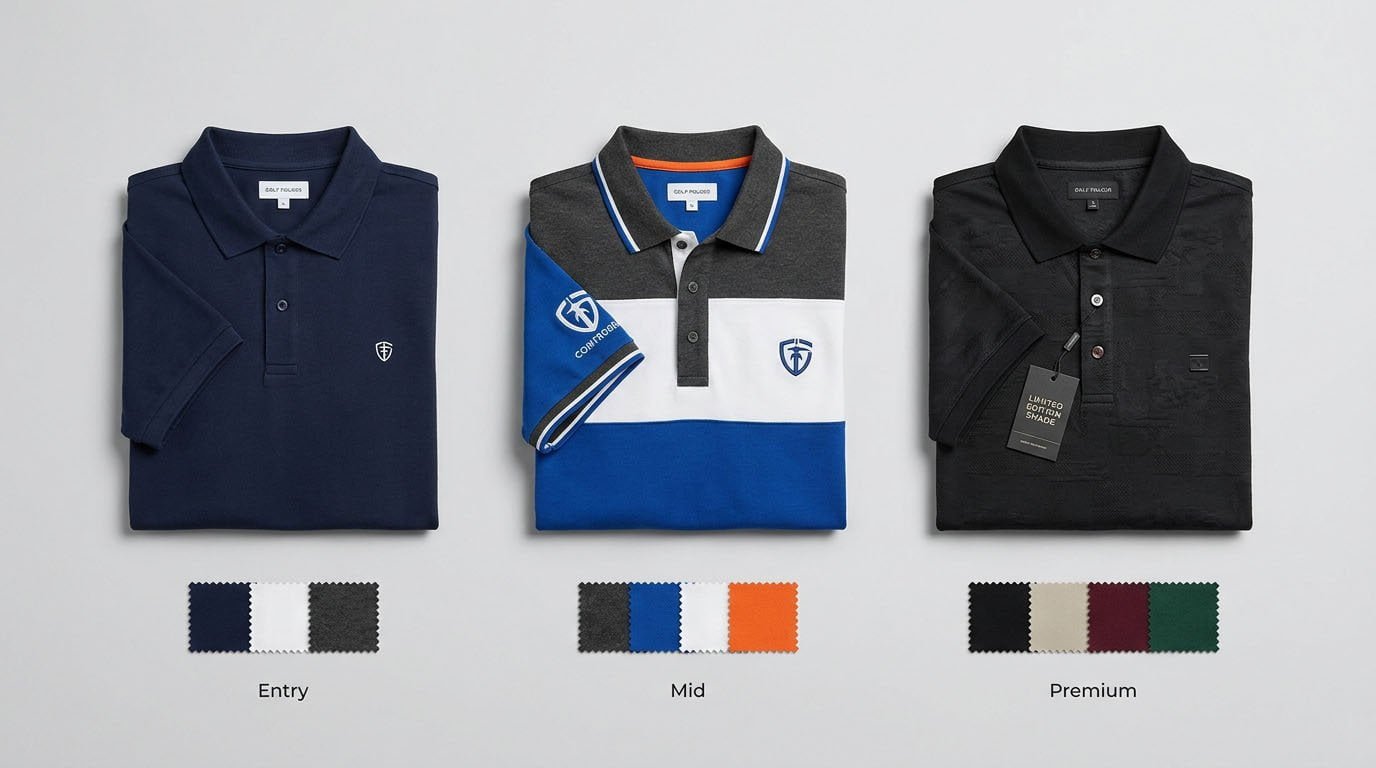
I've learned that customers decide quality within seconds. Your design language needs to communicate tier instantly.
Visual Design Strategy
Each tier needs distinct visual codes:
Entry Tier Design:
- Clean, simple aesthetic
- Single logo placement (left chest)
- Logo size: 6-8cm width
- Basic color blocking or solid colors
- Minimal trim details
- Focus on function over fashion
Mid-Tier Design:
- Sport-inspired details
- Logo placement: chest + sleeve or back yoke
- Logo size: 7-9cm width
- Contrast tipping on collar and cuffs
- Side panels or color blocking
- Modern fit silhouette
Premium Tier Design:
- Refined, sophisticated aesthetic
- Multiple branding touchpoints (subtle)
- Logo size: smaller but premium placement (6-8cm)
- Tonal or jacquard details
- Engineered patterns or textures
- Contemporary or tailored fit
- Unique trim details (contrast inner collar, branded buttons)
Logo and Embellishment Specifications
How you apply your brand matters:
Entry Tier Branding:
- Screen print or basic heat transfer
- Single-color embroidery: 5,000-6,000 stitches
- Standard thread (rayon)
- Cost per logo: $0.40-0.80
Mid-Tier Branding:
- Embroidery with underlay: 6,000-8,000 stitches
- Multi-color option (up to 3 colors)
- Premium thread (polyester)
- Woven label addition
- Cost per logo: $0.80-1.50
Premium Tier Branding:
- High-density embroidery: 8,000-10,000 stitches
- Tonal or tone-on-tone option
- Specialty techniques (3D puff, appliqué)
- Woven labels + hang tags
- Custom buttons or zippers with branding
- Cost per logo: $1.50-3.00+
Color Strategy by Tier
Colors communicate positioning:
Entry colors should be:
- Practical and versatile
- Core neutrals + primary brights
- Consistent year-round
- Example: White, Navy, Black, Royal Blue, Red
Mid-tier colors can be:
- Fashion-forward but wearable
- Expanded neutrals + trend colors
- Seasonal refreshes twice per year
- Example: White, Navy, Grey, Heather, Sky Blue, Forest Green
Premium colors feature:
- Sophisticated and distinctive
- Curated palette + limited editions
- Quarterly or seasonal exclusives
- Example: Crisp White, Deep Navy, Charcoal, Sage, Terracotta, Limited Edition prints
Bobby launched a limited-edition premium colorway and sold out 200 pieces in 3 weeks at $120 retail. Scarcity drives premium positioning.
Channels, Merchandising & Bundles: Seasonal Drops and Promotions
Match tier distribution to channel strategy. Sell entry tier through direct-to-consumer and team channels, mid-tier through pro shops and retail partners, and premium through flagship channels and limited distribution. Use bundles and seasonal drops to maintain freshness.
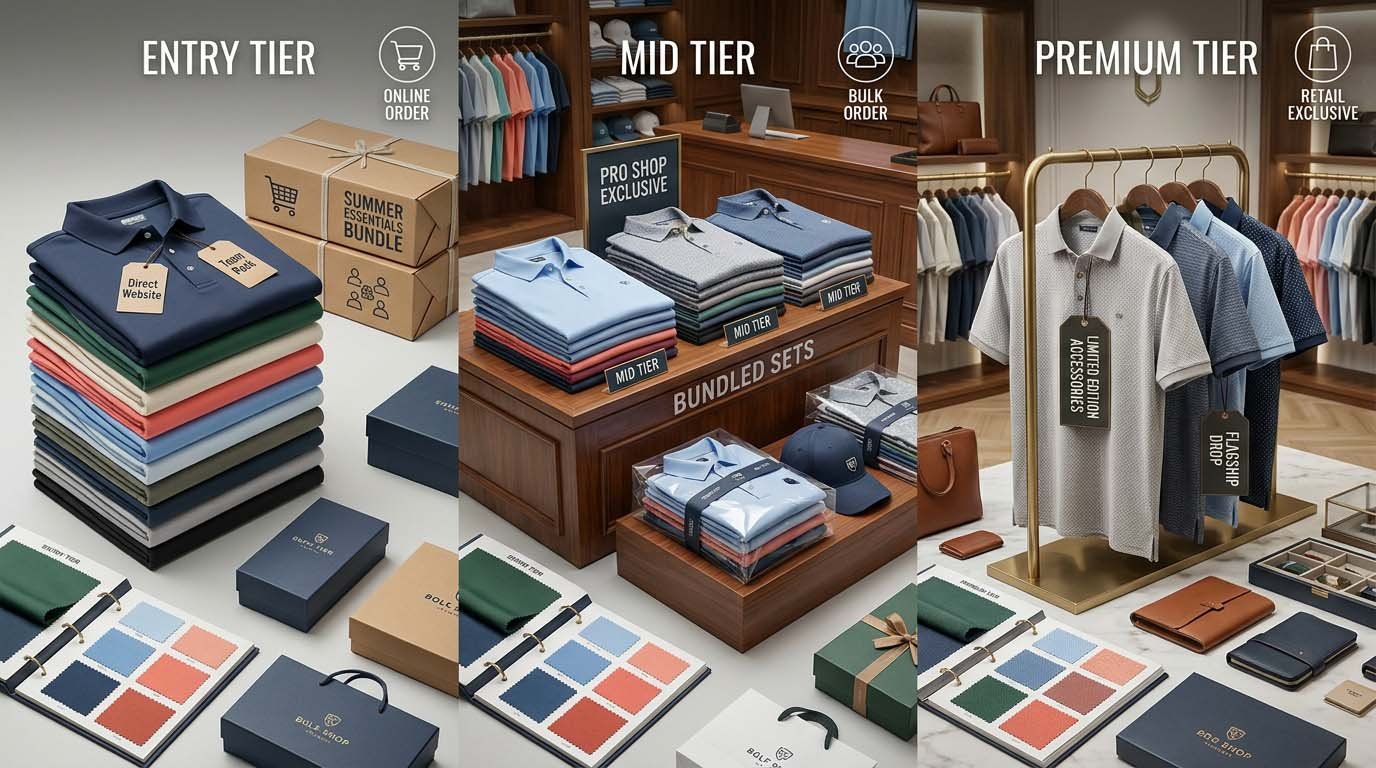
Channel strategy determines profitability. I've seen brands succeed and fail based purely on where they sell.
Channel Strategy by Tier
Different channels demand different tiers:
Entry Tier Channels:
- Direct website (own your margin)
- Team dealers and distributors
- Corporate gift catalogs
- Amazon and marketplaces (if brand allows)
- Volume: 50-60% of total units sold
Mid-Tier Channels:
- Pro shops (30-50 doors recommended)
- Golf retailers (online and brick-mortar)
- Country club merchandising
- Corporate clients (premium segment)
- Volume: 30-40% of total units sold
Premium Tier Channels:
- Flagship stores or premium retail partners
- Exclusive pro shops (top 10-20 doors)
- Limited website drops
- Private club partnerships
- Volume: 10-20% of total units sold
Seasonal Planning and Drops
I recommend 4 strategic moments per year:
| Season | Focus | Tier Emphasis | New Colors |
|---|---|---|---|
| Spring (Feb-Apr) | Main season launch | All tiers | 2-3 new across tiers |
| Summer (May-Jul) | Performance focus | Mid + Premium | 1 premium exclusive |
| Fall (Aug-Oct) | Team and corporate | Entry + Mid | 1-2 seasonal |
| Holiday (Nov-Jan) | Gift and bundles | Premium focus | Limited edition |
Spring drives 40-45% of annual revenue. Get inventory right here.
Bundle and Promotion Strategy
Bundles drive average order value without cheapening your brand:
Entry Tier Bundles:
- "Team Pack": 5 polos for $100 (20% discount)
- "Starter Set": 3 polos + hat for $110 (15% discount)
- Target: First-time buyers and teams
Mid-Tier Bundles:
- "Weekend Collection": 2 polos + shorts for $180 (10% discount)
- "Season Pass": 4 polos for $200 (seasonal colors, 8% discount)
- Target: Active players and members
Premium Tier Bundles:
- Limited bundles only (maintain premium positioning)
- "Signature Set": 2 premium polos + accessories (no discount, added value)
- Focus on exclusivity over price
Inventory Management by Tier
Different tiers need different stock strategies:
Entry Tier:
- Reorder point: 200 units remaining
- Safety stock: 4-6 weeks of sales
- Production runs: 500-1,000 units per color
Mid-Tier:
- Reorder point: 150 units remaining
- Safety stock: 6-8 weeks of sales
- Production runs: 300-500 units per color
Premium Tier:
- Reorder point: 100 units remaining
- Safety stock: 8-12 weeks of sales
- Production runs: 200-300 units per color (or made-to-order)
Stockouts hurt premium positioning more than other tiers. I maintain higher safety stock for premium SKUs.
FAQ: Golf Polo Product Tiers, Pricing and Feature Strategy
1. Should I launch with all three tiers simultaneously?
No. Start with your strongest tier (usually mid) and validate the market first. Add entry tier within 3-6 months to capture price-sensitive customers, then premium 6-12 months later once brand credibility is established. Sequential launch reduces risk and capital requirements.
2. How do I explain price differences to customers?
Use feature comparison charts on your website. Highlight specific benefits: "Mid-tier adds UPF 30+ and moisture-wicking vs. entry" or "Premium includes anti-microbial treatment and 4-way stretch." Make differences tangible and testable. Bobby created a simple "Good, Better, Best" selector that increased conversion by 23%.
3. Can I offer customization across all tiers?
Yes, but with different minimums. I recommend 300-500 pieces MOQ for entry tier, 200-300 for mid-tier, and 100-200 for premium custom orders. Lower minimums for premium reflect the higher unit value and margin. Some customers will pay premium just for lower MOQ access.
4. What if my premium tier doesn't sell?
Don't panic early. Premium takes 2-3x longer to establish than entry or mid-tier. It requires marketing investment, influencer seeding, and patience. If sales don't pick up after 12-18 months, consider repositioning or limiting to made-to-order only. Not every brand needs a premium tier immediately.
5. How often should I introduce new tier items?
Once or twice per year maximum for core styles. Too much change confuses customers. However, you can introduce seasonal colorways every quarter without changing the base product. I call this "fresh without friction."
6. Should tier names be explicit or subtle?
I prefer subtle tier naming. Instead of "Basic, Standard, Premium," use your brand language. Bobby named his tiers "Club," "Tour," and "Masters"—immediately understood by golfers without feeling limiting. Avoid words like "budget" or "cheap."
7. What's the biggest mistake in tiering strategy?
Making tiers too similar. If customers can't see or feel the difference, they'll buy the cheapest option. Feature differentiation must be obvious within 30 seconds of comparison. This is why fabric weight, collar construction, and logo treatment matter so much.
Conclusion
Build your tiers around customer segments and use cases, not just price points. Create clear feature separation, maintain healthy margins, and match distribution to tier positioning.