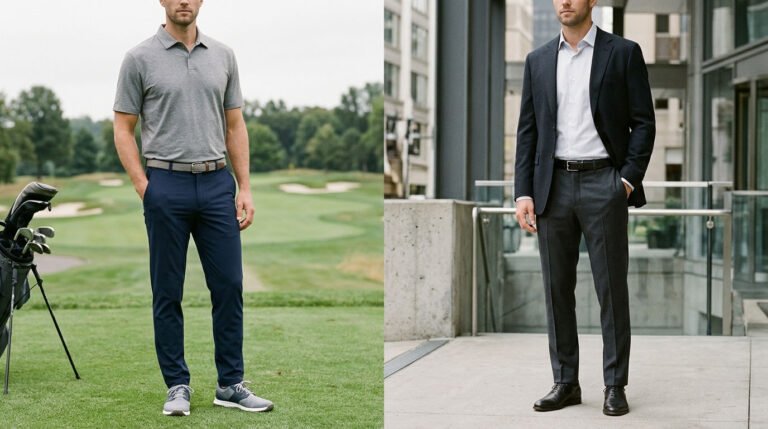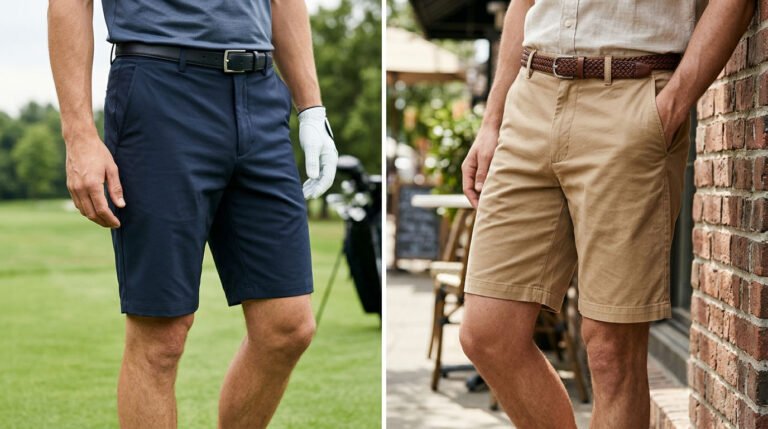
Golf pants and chinos may look almost identical on a clothing rack, but they are designed for different primary uses. For golf apparel brands, choosing between them affects fabric selection, pattern development, product positioning, and customer satisfaction.
The main difference between golf pants and chinos is their intended function. Golf pants are developed to support movement, comfort, and performance during play, while traditional chinos prioritize casual styling and everyday wear. However, a well-designed stretch chino can also work as a crossover golf product when its fabric and construction meet the required performance needs.
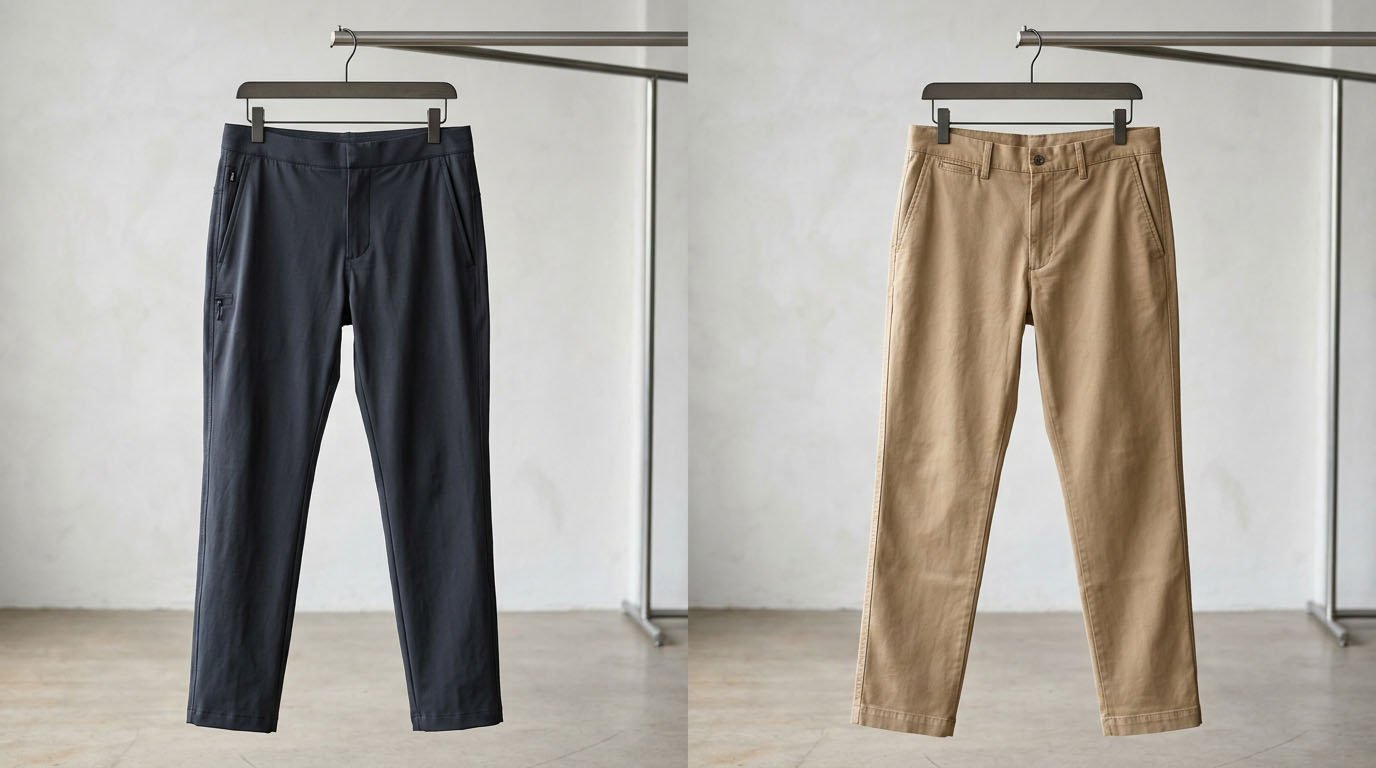
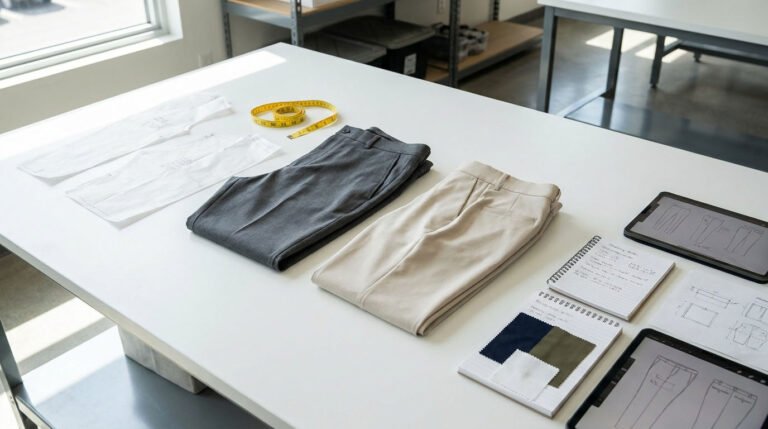
For startup golf brands and apparel buyers, understanding these differences before sampling helps prevent unsuitable fabric choices, incorrect product positioning, and unnecessary development costs. We've seen too many brands order samples that look right on the hanger but fail during actual wear—and that's exactly what this guide aims to prevent.
At FUWAY, we work with golf brands on custom golf pants and bottoms. In this guide, we explain the practical differences between these product categories, share real development pitfalls to avoid, and help you choose the right direction for your collection.
Quick Answer: Golf Pants vs Chinos at a Glance
Golf pants and chinos share similar silhouettes, but their fabric requirements, construction priorities, and intended wearing conditions can differ significantly.
Golf Pants
- Primary purpose: Golf and active movement
- Common fabrics: Polyester, nylon, and stretch blends
- Stretch: Often engineered for active movement
- Moisture management: Often a performance priority
- Fit priorities: Movement and comfort during play
- Waistband: May include stretch or grip features
- Styling: Sporty or refined athletic
Traditional Chinos
- Primary purpose: Casual and everyday wear
- Common fabrics: Cotton and cotton-blend twill
- Stretch: Optional comfort stretch
- Moisture management: Not inherent to the fabric
- Fit priorities: Everyday fit and appearance
- Waistband: Usually traditional or semi-stretch
- Styling: Casual and smart casual
These are typical product characteristics, not universal rules. Modern apparel collections often combine elements from both categories—and knowing where to draw the line is what separates a successful product from a costly misfire.
Golf Pants vs Chinos vs Slacks vs Dress Pants: What's the Difference?
Before developing a pant collection, brands should understand how these product categories differ.
The terms can overlap in everyday retail language, but they generally communicate different product expectations to your customers.
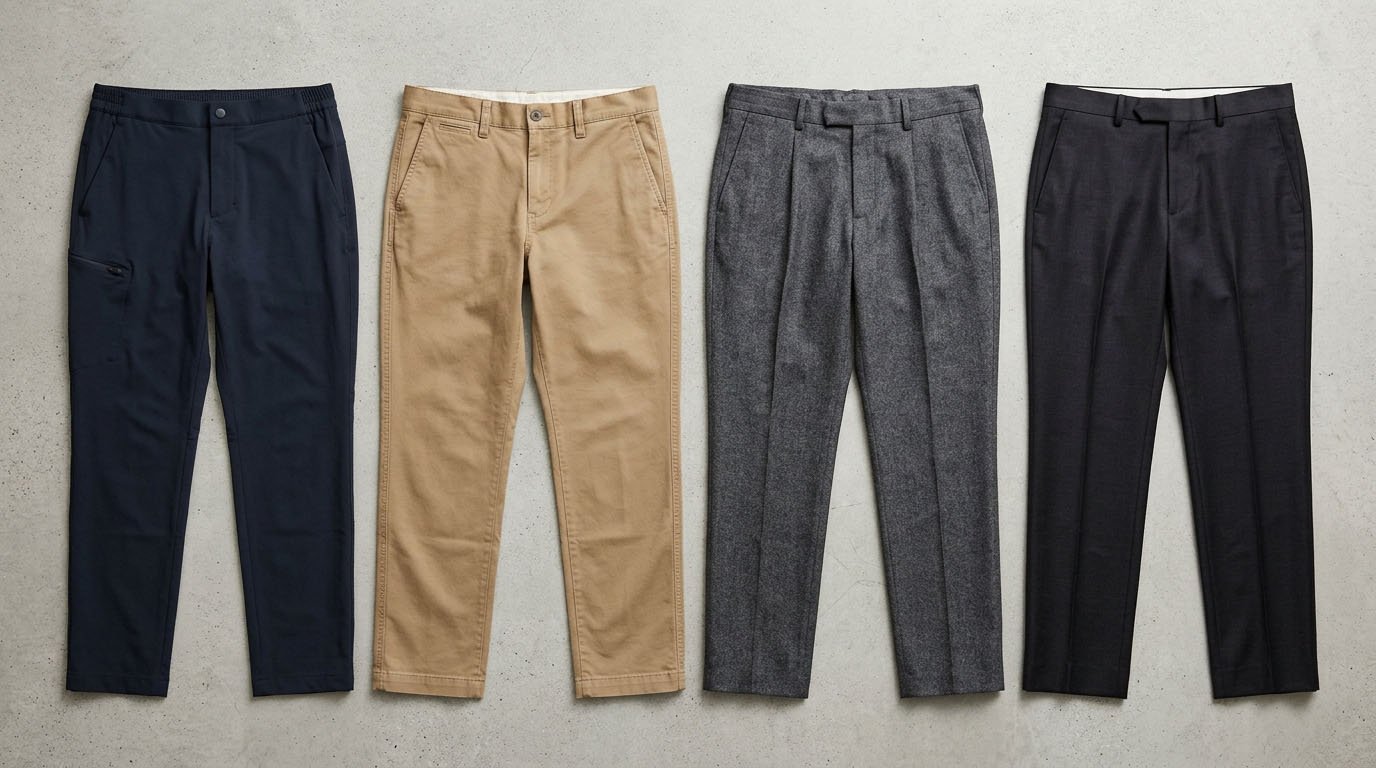
Golf Pants
- Main purpose: Golf and active wear
- Typical fabric: Technical woven or stretch fabric
- Main design priority: Mobility and comfort
Chinos
- Main purpose: Casual and smart casual wear
- Typical fabric: Cotton or cotton-blend twill
- Main design priority: Appearance and everyday comfort
Slacks
- Main purpose: Smart casual or formal wear
- Typical fabric: Wool, polyester, or blended fabrics
- Main design priority: Tailored appearance
Dress Pants
- Main purpose: Business and formal occasions
- Typical fabric: Wool, polyester, or other suiting fabrics
- Main design priority: Structure and formal styling
The distinctions are not absolute. For example, some slacks use stretch fabric, while some chinos incorporate technical yarns and performance finishes.
For golf brands, the most important question is not what a pant is called, but whether its fabric, fit, and construction support the intended wearing conditions. We always advise our OEM/ODM clients to define the wearing scenario first, then work backward to the product specification—not the other way around.
Are Chinos Suitable for Golf?
Yes. Chinos can be worn for golf when their design provides sufficient comfort and movement, and when they meet the golf course's dress code.
However, traditional cotton chinos are not automatically equivalent to performance golf pants—and assuming they are can lead to customer complaints and returns.
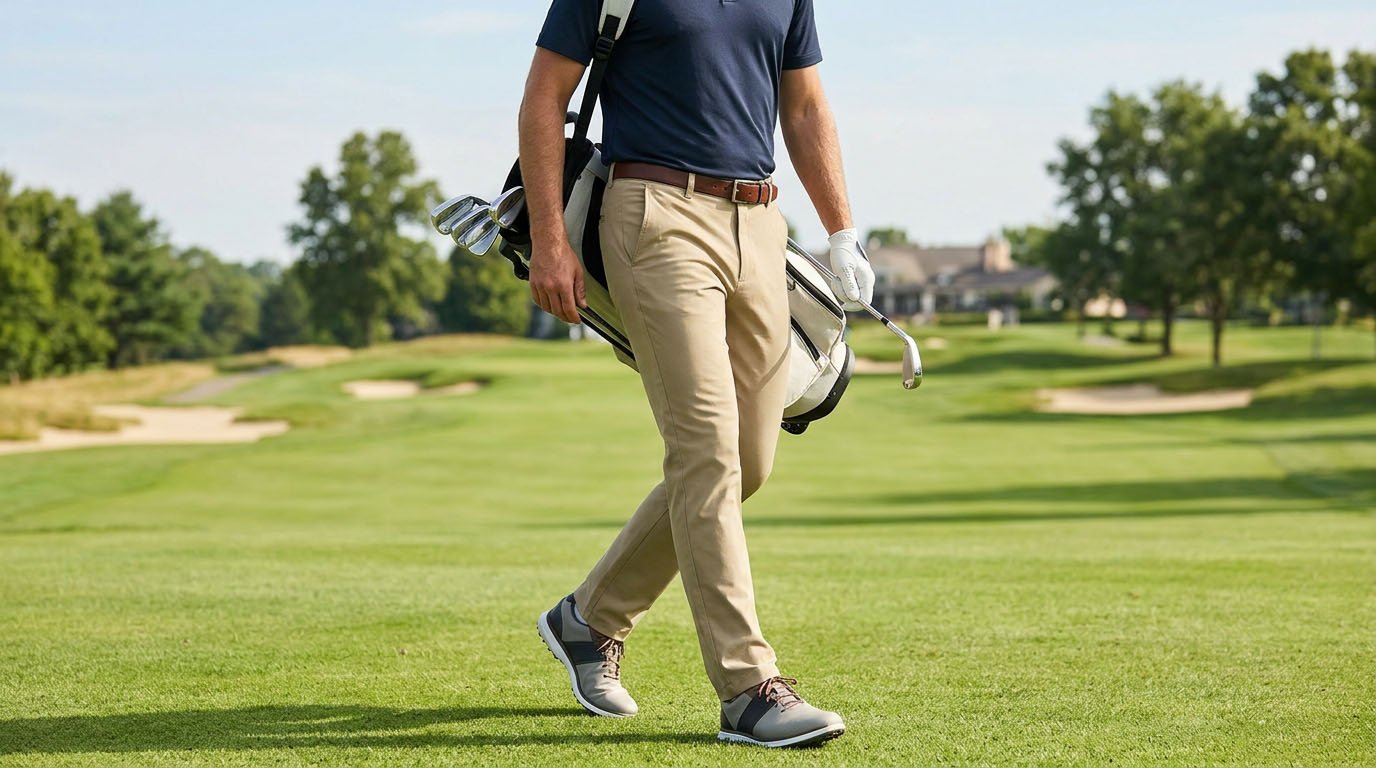
A conventional chino may work well for casual clubhouse activities or occasional recreational play. However, during a full round of golf, the wearer may need greater mobility, better moisture management, and improved stretch recovery.
Real development pitfall:
We once worked with a startup brand that developed their first golf collection using 260gsm cotton twill—a fabric that looked premium and felt substantial. The static fit was excellent, and the samples photographed beautifully.
But when their testers played a full 18 holes, the feedback was clear: the knees bagged out, the waistband became uncomfortable after sweating, and the fabric clung unpleasantly.
The brand had to restart development with a nylon-spandex performance fabric that maintained a matte cotton-like finish. The lesson? Static appearance and dynamic performance are two completely different standards.
Brands should consider three factors:
1. Fabric Performance
Traditional cotton chinos provide a natural hand feel and structured appearance. However, cotton-rich fabrics can absorb perspiration and may take longer to dry than suitable technical alternatives.
For warmer climates or more active use, brands may consider polyester, nylon, or blended stretch fabrics. We help our clients screen fabrics against specific performance parameters—stretch percentage, recovery rate, wicking capability, and air permeability—before sampling begins. This early-stage filtering saves weeks of back-and-forth and reduces the risk of choosing the wrong material.
2. Movement and Comfort
Golf involves repeated walking, bending, squatting, and rotational movement.
A chino with limited stretch or insufficient pattern allowance may restrict movement around the seat, hips, and thighs. The wearer might not notice it in the first five minutes, but by the back nine, discomfort becomes impossible to ignore.
3. Course Dress Codes
Golf course dress codes vary by club and location. Some permit tailored chinos, while others specify particular pant requirements.
Brands targeting golf consumers should consider the expectations of their target markets rather than assuming every style is accepted everywhere. If your primary market includes private clubs with stricter dress codes, your product specification—and marketing claims—should reflect that.
How Do Golf Pants and Chinos Differ in Fabric and Performance?
Fabric selection is one of the most important decisions when developing golf pants.
Golf pants often use technical woven fabrics or stretch blends designed to support mobility and comfort. Chinos traditionally use cotton-rich twill fabrics that emphasize texture, structure, and casual styling.
However, fiber content alone cannot determine whether a fabric is suitable for golf. We've seen polyester fabrics that performed poorly and cotton blends that worked surprisingly well—it all comes down to how the fabric is engineered.
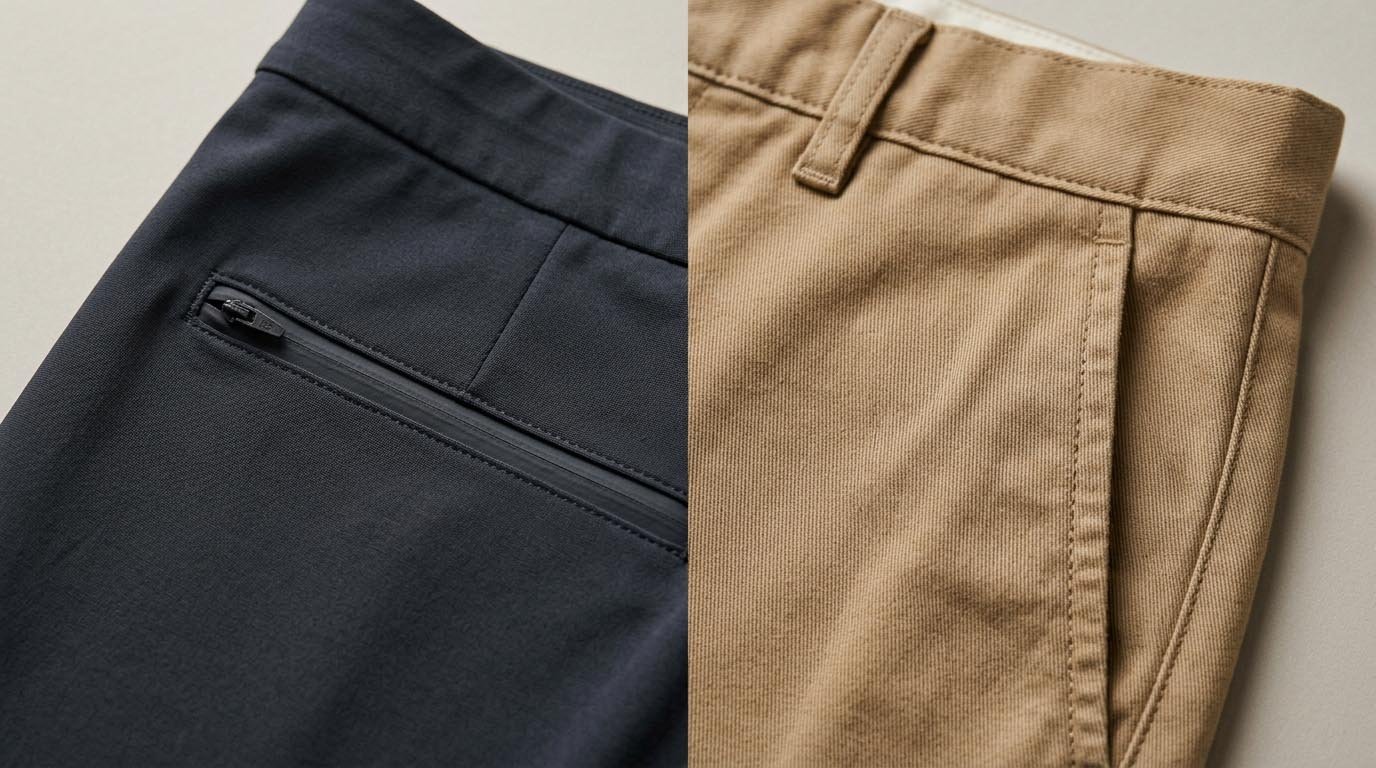
Key Fabric Attributes by Category
Performance Golf Pants
- Fiber composition: Polyester, nylon, elastane blends
- Fabric construction: Technical woven, twill, or dobby
- Stretch: 2-way or 4-way, depending on design
- Recovery: Important for repeated movement
- Moisture management: May include wicking properties
- Surface appearance: Smooth, matte, or technical
Traditional Chinos
- Fiber composition: Cotton or cotton blends
- Fabric construction: Commonly cotton twill
- Stretch: Optional comfort stretch
- Recovery: Depends on fabric construction
- Moisture management: Usually not a primary requirement
- Surface appearance: Textured and natural-looking
Stretch and Recovery: Why Both Matter
Stretch and recovery are two different fabric properties—and confusing one for the other is a common development mistake.
Stretch describes how far a material can extend under tension. Recovery describes how well it returns toward its original dimensions after the tension is released.
For golf pants, both properties matter.
Another real-world example:
A brand approached us after their first production run ran into problems. They had selected a fabric marketed as "high-stretch" and approved samples that felt great out of the box.
But after customers wore the pants for a few rounds, complaints started coming in: the knees and seat were bagging out, and the pants looked visibly deformed by the end of a round. The issue? The fabric had good initial stretch but poor recovery. It stretched during movement but didn't snap back.
We helped them re-source a fabric with verified recovery performance and added a repeated-stretch aging test to their quality control checklist. The next production run had zero returns for shape loss.
A fabric may offer good initial stretch but still develop unwanted bagging around the knees or seat if its recovery is insufficient.
Brands should evaluate:
- Stretch direction and percentage
- Fabric growth after repeated stretching
- Recovery after relaxation
- Performance after multiple wash cycles
- Comfort during actual movement—not just a quick fitting room test
Four-way stretch is common in performance golf pants, but it is not a universal requirement. The correct construction depends on the product's intended use, fit, and price positioning.
Fabric Weight and Climate Considerations
Fabric weight, usually measured in GSM, affects the garment's feel, drape, and potential seasonal suitability.
Lightweight fabrics may be appropriate for warm-weather golf collections, while heavier constructions may suit cooler conditions or products requiring more structure.
However, GSM alone does not determine breathability or comfort. A tightly-woven 140gsm fabric can feel hotter than a more open 180gsm construction.
Brands should evaluate fabric weight together with weave density, yarn construction, air permeability, moisture management, and finishing. During our development process, we help clients review these interconnected factors rather than relying on a single number.
For more detailed fabric selection guidance, see our guide to golf pants fabric selection.
How Do Fit and Construction Affect Golf Pants vs Chinos?
Two pants can use similar fabrics but perform differently because of their patterns and construction.
Golf pants need to accommodate the movements associated with walking, swinging, and bending. Traditional chinos generally prioritize a clean everyday silhouette. When a brand tries to use a standard chino block for a golf product without adjustments, the result is almost always disappointing.
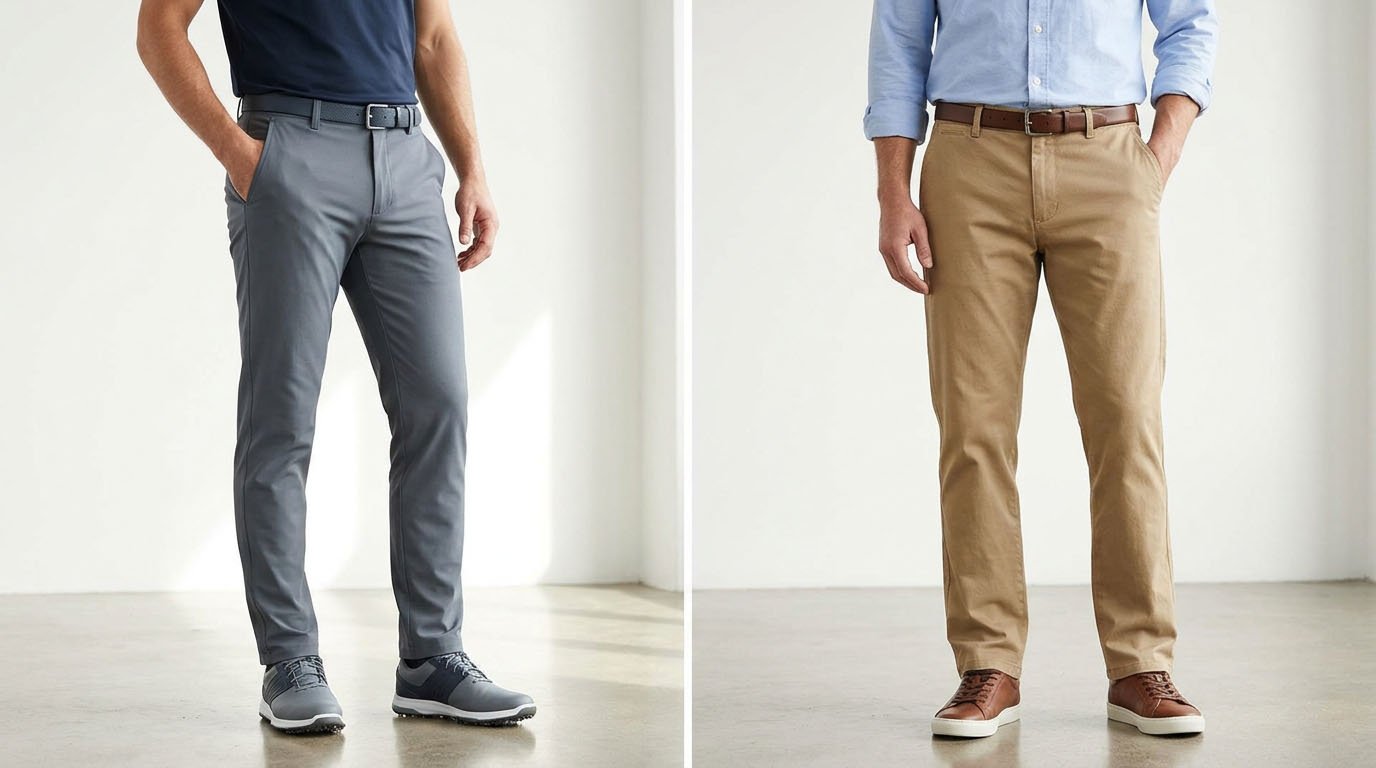
Key Fit and Construction Differences
Performance Golf Pants
- Seat and hip: Allows comfortable movement
- Thigh: Balances movement and silhouette
- Rise: Designed around intended activity and fit
- Waistband: May incorporate stretch or grip details
- Gusset: Optional ergonomic construction
- Pocketing: May use lightweight performance materials
Traditional Chinos
- Seat and hip: Often shaped around everyday wear
- Thigh: Depends on fashion fit
- Rise: Traditional proportions
- Waistband: Traditional or semi-stretch construction
- Gusset: Usually standard construction
- Pocketing: Often cotton or polyester-blend pocketing
These are common design directions rather than fixed industry specifications.
For example, slim-fit golf pants can still provide good mobility when the fabric and pattern are properly developed together. Likewise, some modern chinos include stretch waistbands and ergonomic construction—but they weren't necessarily tested through the full range of golf-specific movements.
Why Pattern Development Matters
Fabric stretch cannot compensate for every pattern problem. This is one of the most important principles we communicate to brands during development.
If the seat, rise, or thigh area is incorrectly balanced, the wearer may experience pulling, discomfort, or restricted movement during a golf swing. Stretch fabric can mask some fit issues in a static fitting, but the problems reveal themselves during actual play.
During sample development, brands should check:
- Waistband comfort when standing and bending forward
- Seat and hip movement during a full squat
- Thigh comfort during walking and rotational movement
- Knee movement during repeated bending
- Garment recovery after wearing and washing
In our sampling process, we always suggest brands perform a dynamic wear test rather than just a static measurement check. That's the stage where many crossover chinos fall short—and we can adjust the pattern accordingly before bulk production begins. Catching these issues at the sample stage costs a few days; catching them after bulk delivery costs an entire season.
For more information about garment measurements and silhouette selection, read our guide to golf pants fit requirements.
Can Brands Develop Crossover Golf Chinos?
Yes. A crossover product can combine the clean appearance of traditional chinos with selected performance features associated with golf pants.
This approach is suitable for brands targeting consumers who want pants for both casual settings and recreational golf—the growing "office-to-course" segment.
However, crossover products should be developed intentionally. Adding elastane to a standard chino does not automatically create a performance golf pant. We've seen brands make this assumption—and pay for it in returns and reviews.
1. Choose a Suitable Fabric
Brands can consider:
- Cotton-polyester blends with added stretch for a natural look with improved performance
- Polyester-elastane woven fabrics with a matte finish that mimics cotton visually
- Nylon-elastane fabrics with a softer hand feel and excellent recovery
- Cotton-touch technical fabrics engineered specifically for crossover applications
The final choice should reflect the desired appearance, climate, comfort, and price point. There's no single "right" fabric—only the right fabric for your specific product positioning.
2. Balance Styling and Functional Construction
A crossover chino should maintain a clean casual appearance while allowing sufficient movement. The goal is performance that doesn't advertise itself.
Potential construction details include:
- A comfortable stretch waistband that doesn't look athletic
- Subtle internal shirt-grip features (invisible from the outside)
- A suitable seat and thigh allowance for golf movement
- Functional pocket depth that works for both office and course
- A clean outer appearance without unnecessary athletic detailing
Not every crossover product needs all these features. The final specification should follow the intended customer experience—and your brand's design language.
3. Validate the Finished Garment
Before approving bulk production, brands should conduct practical wear trials. This step is non-negotiable for crossover products.
Test the sample during walking, squatting, and simulated golf swings. Check whether the waistband moves comfortably, whether the knees become baggy after repeated bending, and whether the garment maintains its intended appearance after multiple wash cycles.
If the product is marketed as moisture-wicking, quick-drying, or UV-protective, the relevant claims should also be supported by appropriate testing. Marketing claims without verified performance are a liability, not an asset.
How Should Golf Brands Choose the Right Pant Style?
The correct product direction depends on the target customer, collection positioning, and intended use.
Rather than selecting a fabric first and deciding the product category afterward, brands should begin with the customer's primary wearing scenario. This sounds obvious, but in practice, many brands start development by finding a fabric they like and then trying to fit it into their collection—which often leads to products that don't quite work for anyone.
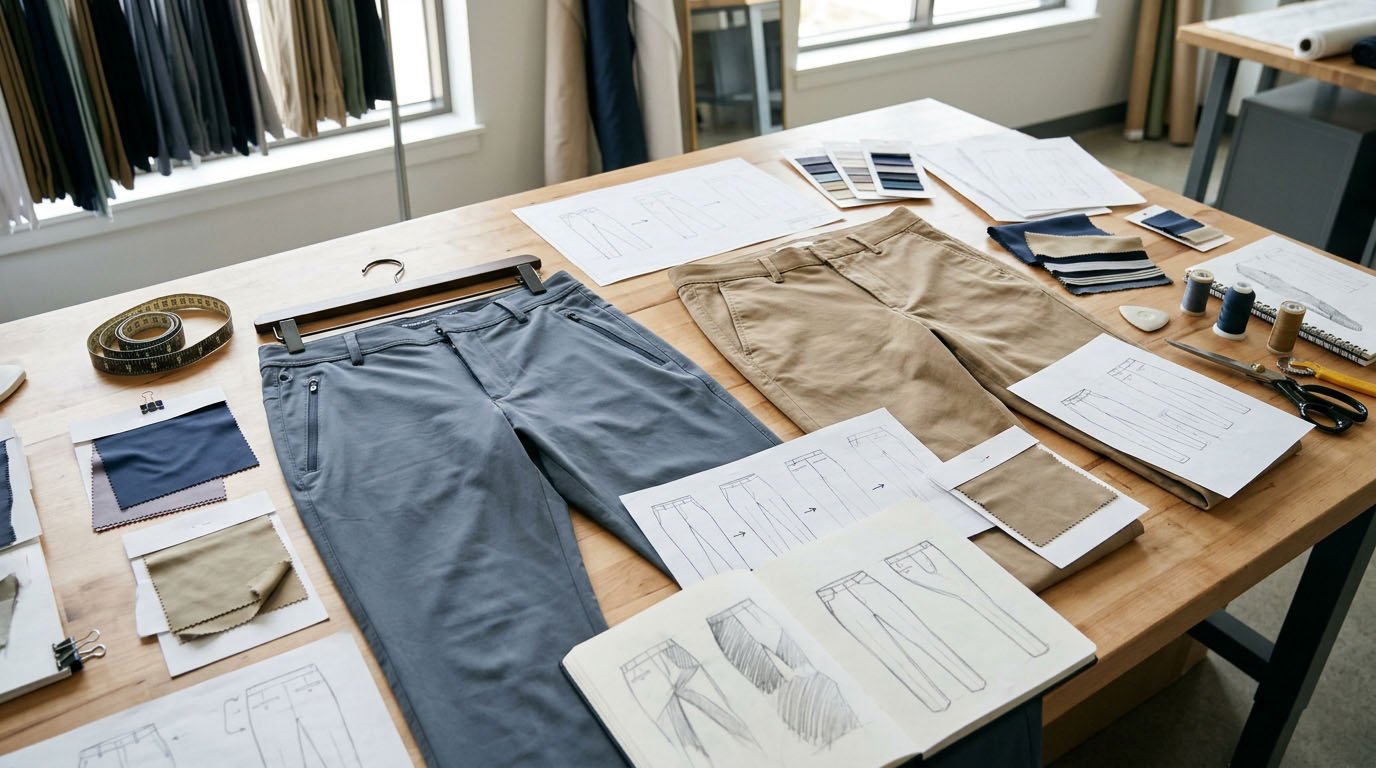
Product Development Decision Framework
Performance Golf Collection
- Recommended direction: Dedicated golf pants
- Main development priority: Mobility, recovery, and moisture management
Lifestyle Golf Collection
- Recommended direction: Chino-inspired golf pants
- Main development priority: Appearance, comfort, and versatility
Crossover Collection
- Recommended direction: Hybrid golf chinos
- Main development priority: Balance between casual styling and golf functionality
What Should Brands Include in a Golf Pants Tech Pack?
Once the product direction is confirmed, the tech pack should communicate the requirements clearly to the manufacturer. A vague tech pack leads to inaccurate samples, which leads to timeline delays and added costs.
Important information includes:
- Product design and reference images (front, back, side, details)
- Fabric composition and target GSM
- Stretch direction and recovery requirements
- Color and finishing specifications
- Waistband and pocket construction
- Measurement chart and grading rules
- Logo placement and branding details
- Labels and packaging requirements
A clear tech pack reduces misunderstandings during sampling and helps the factory evaluate the project more accurately. If you're unsure what level of detail to include, an experienced OEM/ODM partner can guide you through the requirements.
Brands developing a complete pants collection can also explore our custom golf bottoms manufacturing service.
Sample Approval Before Bulk Production
A product should not move into bulk production simply because its appearance matches the reference image. This is one of the most common mistakes we see from first-time brand owners.
Before approval, brands should review:
- Fabric appearance, weight, and hand feel
- Garment measurements against the approved spec
- Stretch and movement performance during dynamic testing
- Sewing quality and construction details
- Color consistency and branding placement
- Wear performance after multiple wash cycles
For measurement control, FUWAY uses a standard finished-garment tolerance of ±1.0 cm for specified points of measurement. Stricter tolerances can be agreed upon in the tech pack when required.
A properly reviewed sample provides a clearer production reference and helps reduce avoidable bulk quality issues. The few extra days spent on thorough sample review can save weeks of rework—or worse, an entire season of customer returns.
Common Development Pitfalls to Avoid
After working with dozens of golf apparel brands, we've seen certain mistakes repeat across companies of all sizes. Here are three worth highlighting:
1. Assuming all stretch fabrics are golf-ready
Stretch percentage matters, but recovery rate matters more. Always test fabric recovery before committing to bulk.
2. Skipping dynamic wear tests
A pant that looks perfect on a mannequin or in a quick try-on can fail during actual golf movement. Walk, squat, and swing in the sample before approval.
3. Prioritizing hand feel over function
A fabric can feel luxurious to the touch but perform poorly on the course. For performance golf products, balance hand feel with functional requirements—don't let initial tactile impression override the spec sheet.
Frequently Asked Questions
Are golf pants and chinos the same?
No. Golf pants are developed primarily for golf-related movement and comfort, while traditional chinos are designed for casual and everyday wear. However, modern crossover styles can combine characteristics of both when developed intentionally.
Can you wear regular chinos for golf?
Yes, provided the golf course dress code allows them. Their comfort during play depends on fabric stretch, fit, and construction. Traditional cotton chinos may be less suitable for extended play in hot or humid conditions. If your brand is marketing chinos specifically for golf use, consider real-world performance testing before making claims.
Are stretch chinos considered golf pants?
Not automatically. Stretch chinos may provide additional comfort, but performance golf pants also need suitable recovery, pattern allowances, and construction for the intended activity. "Stretch" alone doesn't make a golf pant.
What is the difference between golf pants and slacks?
Golf pants prioritize movement and comfort during play. Slacks generally refer to tailored pants for smart casual or formal settings. However, some modern slacks incorporate stretch and can also be suitable for recreational golf, depending on their construction.
What fabric is best for golf pants?
There is no single best fabric for every golf pant. Polyester, nylon, and elastane blends are common choices for performance styles. The appropriate fabric depends on climate, weight, stretch, recovery, hand feel, and product positioning. We help brands evaluate these factors during the fabric selection stage to narrow down suitable options quickly.
Can a manufacturer develop custom golf chinos?
Yes. An experienced golf apparel OEM/ODM manufacturer can develop chino-inspired golf pants with customized fabrics, colors, fit blocks, waistbands, pockets, labels, and branding. The key is working with a partner who understands both the aesthetic and functional requirements.
What is FUWAY's MOQ for custom golf pants?
FUWAY's standard MOQ is 100 pieces per style. For qualifying orders, brands can arrange 50 pieces per color, provided the total style quantity meets the 100-piece MOQ.
How much does sampling cost at FUWAY?
The sample fee is USD $50 per garment. Standard sampling takes approximately 7–10 business days, depending on the product and development requirements.
Bulk production typically takes 3–4 weeks after sample approval. The actual schedule depends on the order specifications and production arrangement.
Get Your Free Golf Pants Development Checklist
Golf pants and chinos may share a similar appearance, but their intended functions and development requirements are different.
For golf apparel brands, the right choice depends on the target customer and product positioning. Dedicated golf pants should prioritize movement, comfort, and suitable performance characteristics. Traditional chinos focus more on everyday styling, while crossover golf chinos combine selected features from both categories.
The most important step is to define the product's primary use before finalizing its fabric, fit, and construction. Everything else follows from that decision.
Planning your next golf pants collection?
We've put together a practical Golf Pants Development Checklist covering fabric performance parameters, pattern key points, pre-production sample review criteria, and common pitfalls to avoid. It's designed to help brands move from concept to sample with fewer iterations and clearer communication.
Contact FUWAY to request your copy and discuss your product specifications. Our team will review your requirements and provide tailored fabric and construction recommendations for your specific collection.
Quick reference:
- Standard MOQ: 100 pieces per style
- Sampling: USD $50 per garment, 7–10 business days
- Bulk production: 3–4 weeks after sample approval
- Services: OEM/ODM, custom fabric sourcing, private labeling, fit development