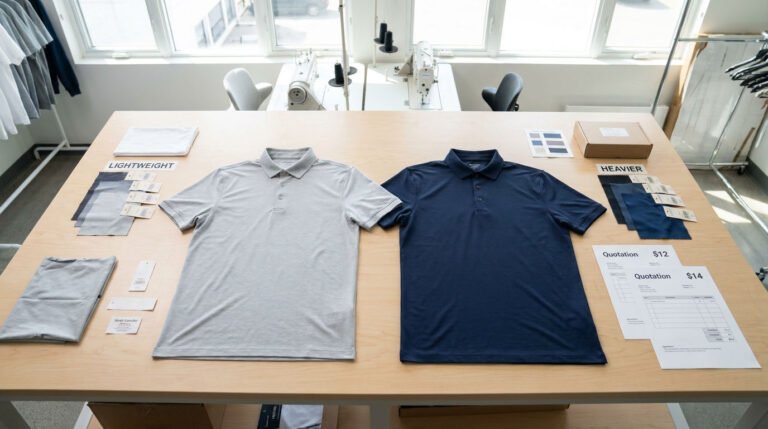
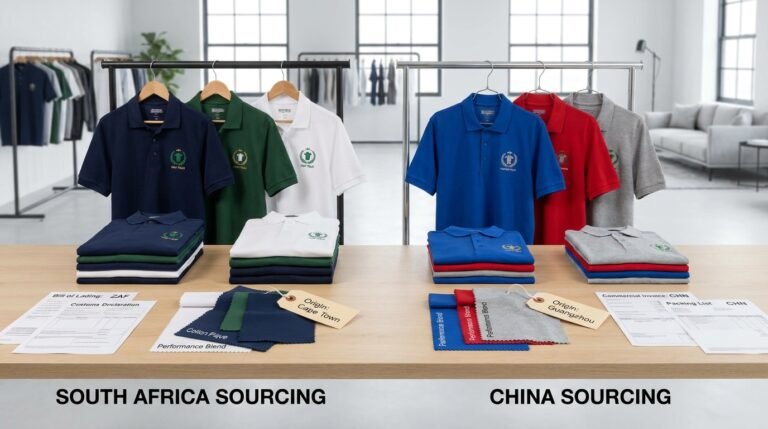
Australian golf brands can work with an Australian cut-and-sew manufacturer, decorate existing garments locally, buy through an Australian supplier using overseas production, or contract directly with an overseas factory.
The right choice depends on what you need to develop, how much inventory you can fund, and who will control production. Compare equivalent products, warehouse delivery dates and total purchasing commitments before choosing a supplier.
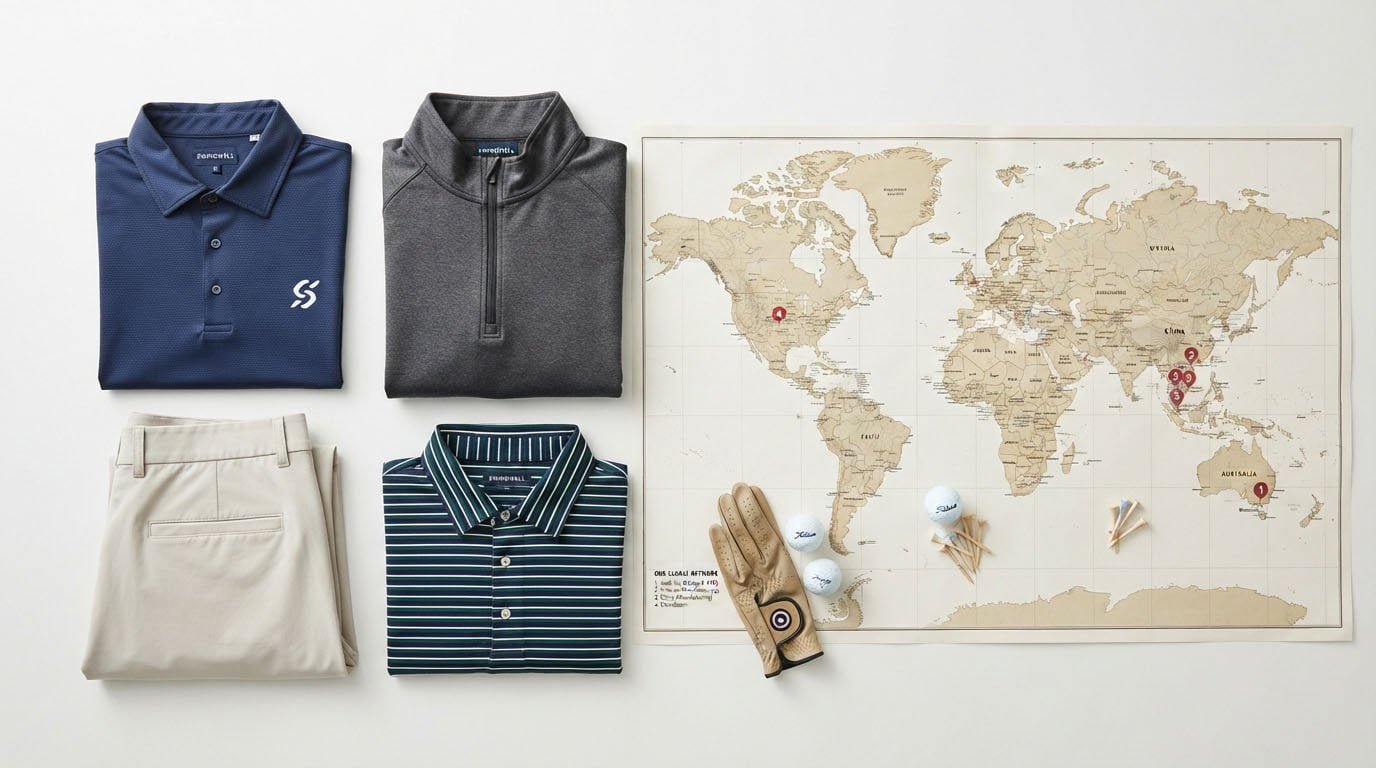
An Australian office does not establish Australian manufacture. Equally, an overseas address does not establish lower prices, higher minimums or better technical capability. Those details need to be verified for your specific collection.
This guide focuses on sourcing for Australian golf brands. FUWAY is a China-based golf apparel OEM/ODM manufacturer.
What Does an Australian Golf Clothing Supplier Actually Provide?
Before comparing quotations, identify the service behind each offer.
| Sourcing model | What you are buying | What to verify |
|---|---|---|
| Australian cut-and-sew production | Garments made from fabric through an Australian production operation | Cutting and sewing location, material availability, subcontracting and capacity |
| Local decoration of existing garments | Stock polos or other garments with added printing or embroidery | Original garment source, stock availability and limits on fit or construction changes |
| Australian-managed overseas production | Local project coordination with garments manufactured offshore | Factory location, approval process and responsibility for quality, imports and delivery |
| Direct overseas OEM/ODM | Development and production coordinated directly with an offshore manufacturer | Product capability, MOQ structure, inspection arrangements and shipping responsibilities |
Local decoration can be useful when an existing garment already meets your requirements. Custom cut-and-sew production is more relevant when you need to change the fit, fabric, collar, waistband, pockets or other structural details.
Both Australian and overseas suppliers may offer substantial customization. Ask what each supplier can demonstrate rather than assuming capability from its location.
Questions to Ask Before Shortlisting
- Where will the garments be cut and sewn?
- Which company will issue the quotation, contract and invoice?
- Which operations are subcontracted?
- Who approves materials and releases goods for shipment?
- Who handles defects, replacement costs and delivery problems?
For the broader advantages and trade-offs, see our local vs overseas golf apparel manufacturing guide.
Compare the Same Product Before Comparing Prices
A decorated stock polo and an original golf polo are different purchasing options. Their prices and minimums cannot be evaluated fairly without identifying those differences.
Prepare one product brief and ask every supplier to state any deviations.
Include:
- Product type and intended customer.
- Fabric requirements or an approved reference.
- Fit, size range and key measurements.
- Colors and quantities by style.
- Logo method, size and placement.
- Labels, packaging and required testing.
- Australian delivery postcode and required warehouse arrival date.
If a supplier proposes a substitute fabric or an existing pattern, request that option separately. It may be commercially useful, but it should not silently replace your original specification.
Clarify What the MOQ Covers
Ask whether the minimum applies per style, color, fabric, print or custom component. Also confirm the permitted size breakdown and reorder minimum.
For example, 100 pieces per style does not automatically mean you can divide that order across any number of colors. Custom fabric, trims and packaging may introduce separate minimums.
For suitable FUWAY projects, the typical starting MOQ is approximately 100 pieces per style, subject to the confirmed product and customization requirements.
Use our golf apparel RFQ template to prepare a consistent inquiry.
How Should Australian Brands Compare Landed Cost?
Use a common destination, currency and product specification. Then separate three questions:
- What will it cost to bring the garments to your warehouse?
- How much cash must you pay, and when?
- How much inventory could remain unsold?
These are related, but they measure different risks.
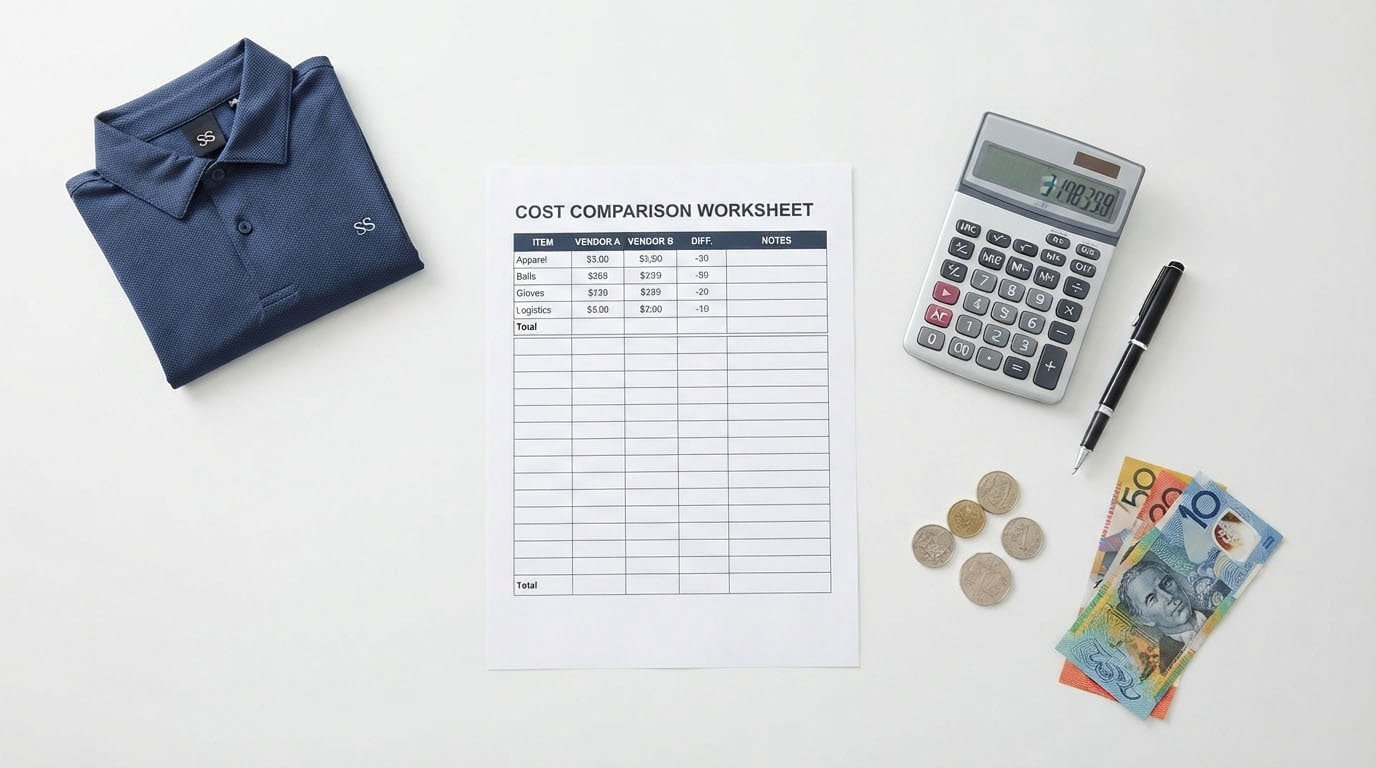
Build a Comparable Cost Sheet
| Cost item | What to record |
|---|---|
| Garments and customization | Quantity, unit price, logos, labels, trims and packaging included |
| Development | Patterns, samples, revisions and sample courier charges |
| Verification | Agreed laboratory testing and independent inspection |
| Transport | Collection, international freight, insurance and Australian delivery |
| Import charges | Applicable duty, clearance, brokerage and other shipment charges |
| GST | Amount payable and potential credit treatment, recorded separately |
| Currency conversion | Exchange rate used, quote date and payment fees |
Convert foreign quotations to AUD using a stated planning rate. Recheck the calculation before payment if the exchange rate or freight quotation changes.
Confirm the Incoterm and named place for overseas offers. A factory-price quotation and a delivered quotation include different services. Avoid adding charges twice or assuming an excluded charge is covered.
For Australian-supplier quotations, check whether the amount includes GST, decoration and delivery.
Keep GST and Inventory Risk Visible
Import GST may affect the cash needed before the goods become available for sale. Eligible businesses may be able to claim GST credits, subject to their circumstances and documentation. Record the payment and potential credit separately rather than automatically treating recoverable GST as a permanent product cost. The ATO’s guidance on GST and imported goods explains the conditions.
Inventory exposure also deserves its own calculation. A lower price can still require a larger cash commitment if it comes with more garments than you expect to sell.
Compare the deposit, balance payment, freight payment and import charges against your expected sales timeline.
For imports from China, do not assume shipment from China alone qualifies goods for preferential duty treatment. Check the applicable origin requirements and supporting documents using Australian Border Force guidance on ChAFTA.
Which Option Will Reach Your Australian Warehouse Sooner?
Compare arrival dates, with the assumptions behind them.
A domestic shipment may have a shorter freight route, but the supplier may still need to source fabric or reserve production capacity. An overseas supplier may have suitable materials available, while sampling, freight and clearance still require time.
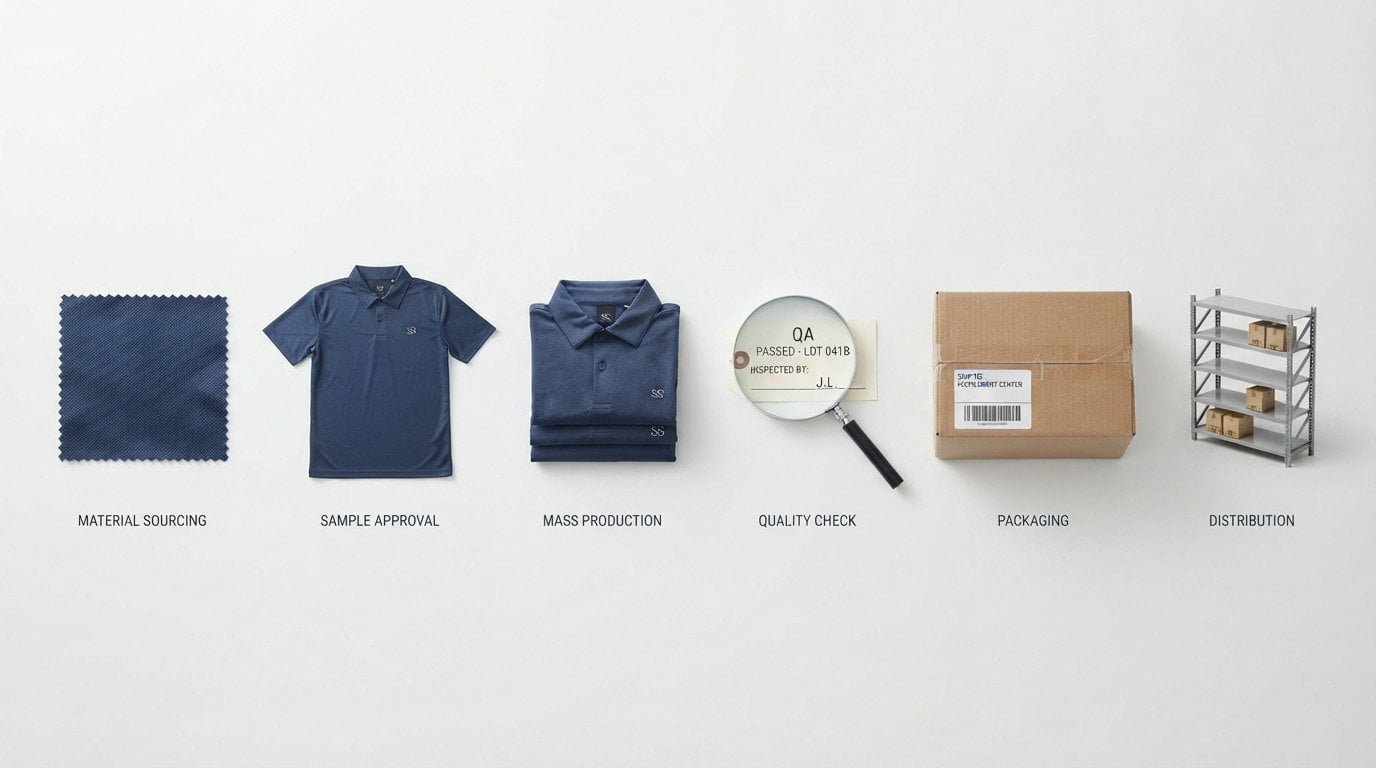
Ask every supplier to map:
Material readiness → sample approval → production → final inspection → dispatch → warehouse arrival
Check the following before accepting a delivery estimate:
- What event starts the quoted lead time?
- Are fabric and trims already available?
- How many sample rounds are included?
- Does the schedule include final inspection and packing?
- Is freight booked, estimated or excluded?
- What happens if a sample needs revision?
At FUWAY, typical sampling takes 7–10 working days, and bulk production is approximately 3–4 weeks, depending on materials, complexity, approvals and order requirements. These are planning references rather than a complete Australian delivery promise.
For an Australian summer collection, work backward from your intended selling date. Include time for incoming checks and stock preparation, and ask about factory closures and freight constraints affecting your chosen production window.
For replenishment, also confirm whether the original fabric and trims will remain available. A fast first order does not establish a fast reorder.
What Australian Label and Product Claims Need Checking?
Production location affects more than freight. It can also affect how you describe the product and prepare it for sale.
Country-of-Origin Claims
Keep Australian ownership, Australian design, local decoration and Australian manufacture distinct.
The ACCC states that origin claims must be accurate and supported. Its guidance explains that a “made in” claim generally relates to the last substantial transformation of the product. An Australian supplier address alone does not establish that a garment was made in Australia. Review the ACCC country-of-origin guidance before approving labels or marketing.
Care Labels
Australia has a mandatory care-labelling standard covering prescribed clothing and textile products. The official guidance permits care instructions in English, recognized international care symbols, or both, subject to the standard.
Agree on suitable instructions for the garment and decoration before printing labels. Check the Australian care-labelling requirements.
Performance Claims
If your collection will carry a claim such as UPF 50+, make the evidence requirement part of product development.
Ask what was tested, which method was used, and whether the report represents the material and conditions relevant to your product. A report for a different fabric should not automatically be treated as evidence for the garment you intend to sell.
How Can You Compare Quality Across Different Suppliers?
Use the same approval requirements for each candidate.
Clear specifications help, but the supplier must also demonstrate the equipment, skills, material control and inspection processes needed to reproduce the approved product.
| Checkpoint | Evidence to request |
|---|---|
| Materials | Approved fabric reference, composition, weight and color |
| Fit | Measurements, size grading and agreed tolerances |
| Construction | Relevant sample showing seams, collar, placket, waistband or pockets |
| Branding | Approved logo size, placement, appearance and application |
| Bulk consistency | Written inspection points and substitution controls |
| Corrective action | Agreed process for defects, rework and shipment release |
A site visit may make verification easier. For offshore production, a live factory review, production records and independent inspection can provide additional evidence. Neither proximity nor a certificate replaces product-specific checks.
For detailed offshore verification, use our factory checks before paying a deposit.
When Does Local, Overseas or Hybrid Sourcing Make Sense?
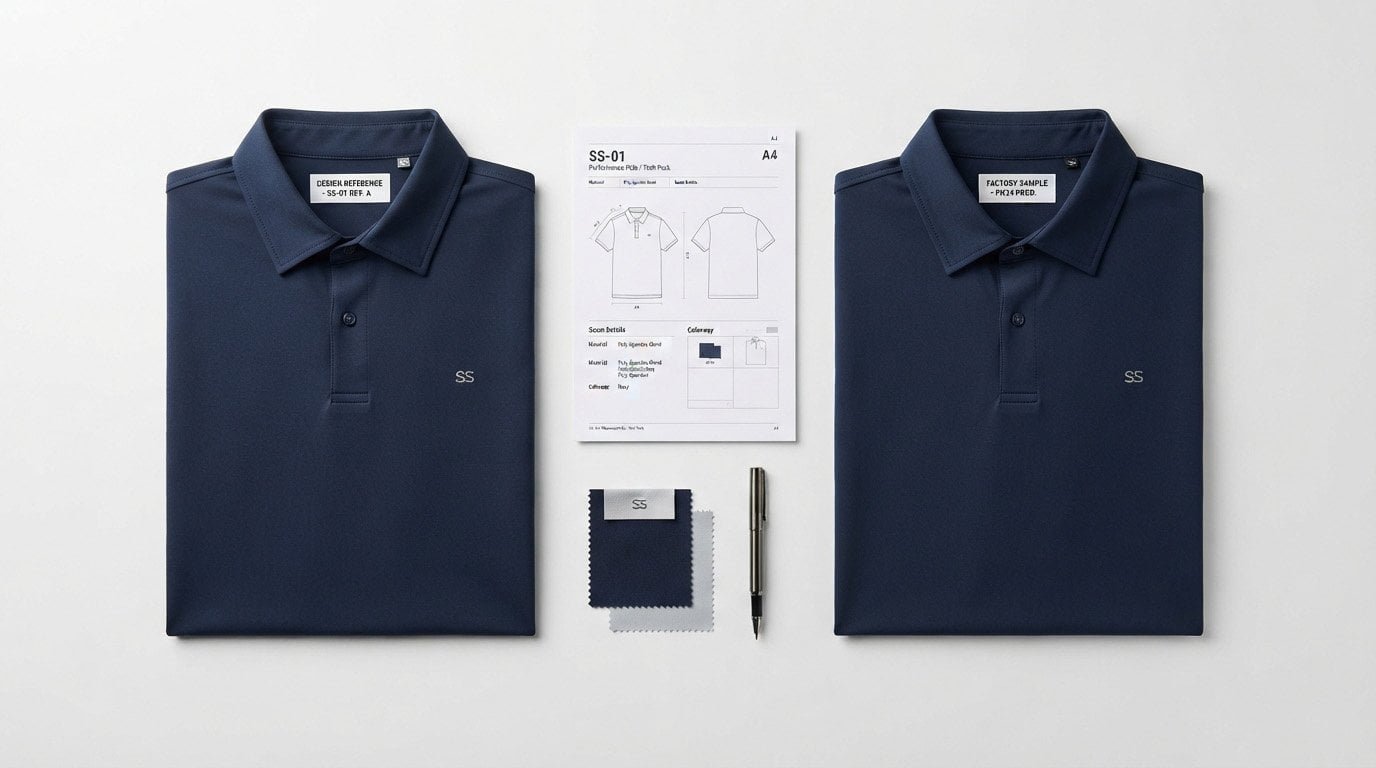
Choose according to the work your collection requires.
| Your priority | Route worth evaluating | Main condition |
|---|---|---|
| Test branding on an existing garment | Australian stock garment and decoration supplier | Available fit, fabric and stock meet your needs |
| Develop garments through frequent physical reviews | Australian development or cut-and-sew partner | Relevant capability, capacity and price are confirmed |
| Build a proprietary collection directly with a factory | Overseas OEM/ODM | Samples, quantities, total costs and delivery responsibilities are acceptable |
| Keep local coordination with offshore production | Australian-managed overseas supplier | Factory identity and accountability are clear |
| Combine local design support with overseas manufacture | Hybrid workflow | Files, approvals and responsibilities transfer accurately |
Hybrid Sourcing Requires a Second Product Approval
A hybrid model can combine Australian design support with overseas production. It can also create extra sampling, coordination and transfer costs.
The main risk is assuming that local validation automatically transfers to another manufacturer.
A stock polo can help test customer interest in a logo. It does not validate a different factory’s custom fabric, pattern or collar construction.
When transferring development, confirm ownership and permitted use of patterns and files. Supply the latest specifications and approved references, then approve the receiving factory’s own sample before bulk production.
Frequently Asked Questions
Do I need an Australian supplier to sell golf clothing in Australia?
An Australian supplier is one option; an overseas manufacturer is another. Confirm who is responsible for import arrangements, product requirements, labels and delivery. Supplier location alone does not complete those tasks.
Can I start contacting manufacturers without a finished tech pack?
Yes. Send reference images or garments, intended quantities, your target customer and the required delivery date. Ask the supplier to identify assumptions and development work still needed. Final production should follow approved specifications and samples.
Is there a fixed order quantity where overseas sourcing becomes cheaper?
No universal crossover quantity applies. It depends on product specifications, setup charges, freight, import costs and inventory requirements. Request comparable quotations at quantities you can realistically fund and sell.
What should I ask about a delivered overseas quotation?
Ask for the Incoterm and named destination, included charges, customs-clearance arrangements, importer responsibilities and relevant documentation. “Delivered” should be explained in writing.
Can an Australian-based supplier offer fully custom golf clothing?
Yes, where its development and production model supports it. Confirm whether the service includes original patterns, material sourcing and garment construction, and where those operations take place.
Conclusion
The best sourcing route for an Australian golf brand starts with a clear product brief and a verified production model. Compare equivalent specifications, AUD purchasing commitments, realistic warehouse arrival dates and responsibility for quality.
Local production, local decoration, Australian-managed offshore supply and direct overseas OEM can each serve different needs. Choose the arrangement your product, budget and approval process can support.
If you are evaluating overseas development, explore FUWAY’s custom golf polo manufacturing or contact our team with your product references, quantities and Australian delivery postcode. We can review suitable materials, sampling requirements and a project-specific quotation.