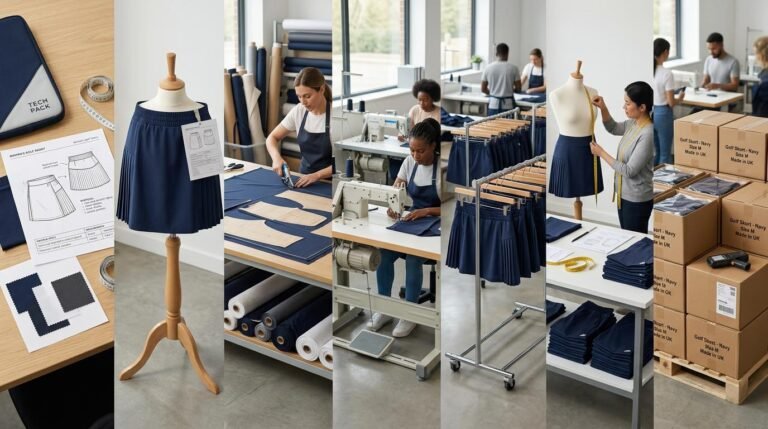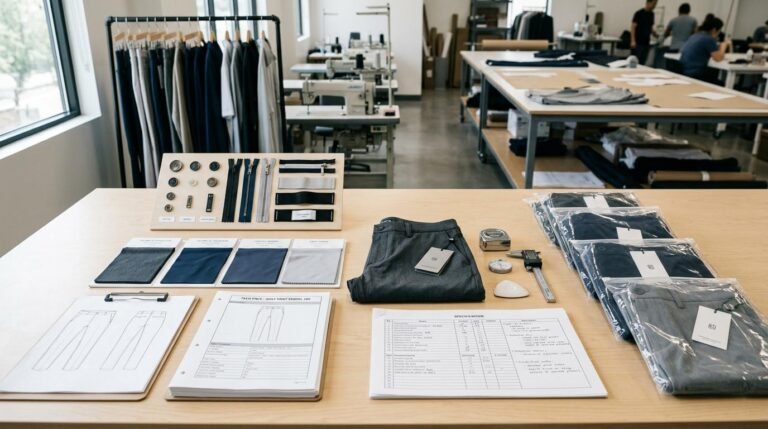
I just got back from three major textile and apparel trade shows, and one topic kept coming up in almost every conversation with suppliers, buyers, and brand teams: what happens next in golf?
After 15 years in apparel sourcing and production, I can say this much with confidence: the golf market is changing faster now than it did for much of the previous decade. The shift is not only about performance anymore. It is about how golf apparel fits into lifestyle, retail strategy, sustainability expectations, and a broader customer base than the industry used to serve.
At FUWAY, we see this from two angles. On one side, we are watching fabric innovation, sampling requests, and sourcing priorities change. On the other, we are hearing from brands that know their current line still sells, but also know that staying too static can make them look dated very quickly.
This article breaks down the golf apparel trends we believe will matter most in 2027, based on what we are seeing in development conversations, supplier presentations, and production-side demand.
Quick Answers: Golf Apparel Trends for 2027
1. What colors are likely to stand out in golf apparel for 2027?
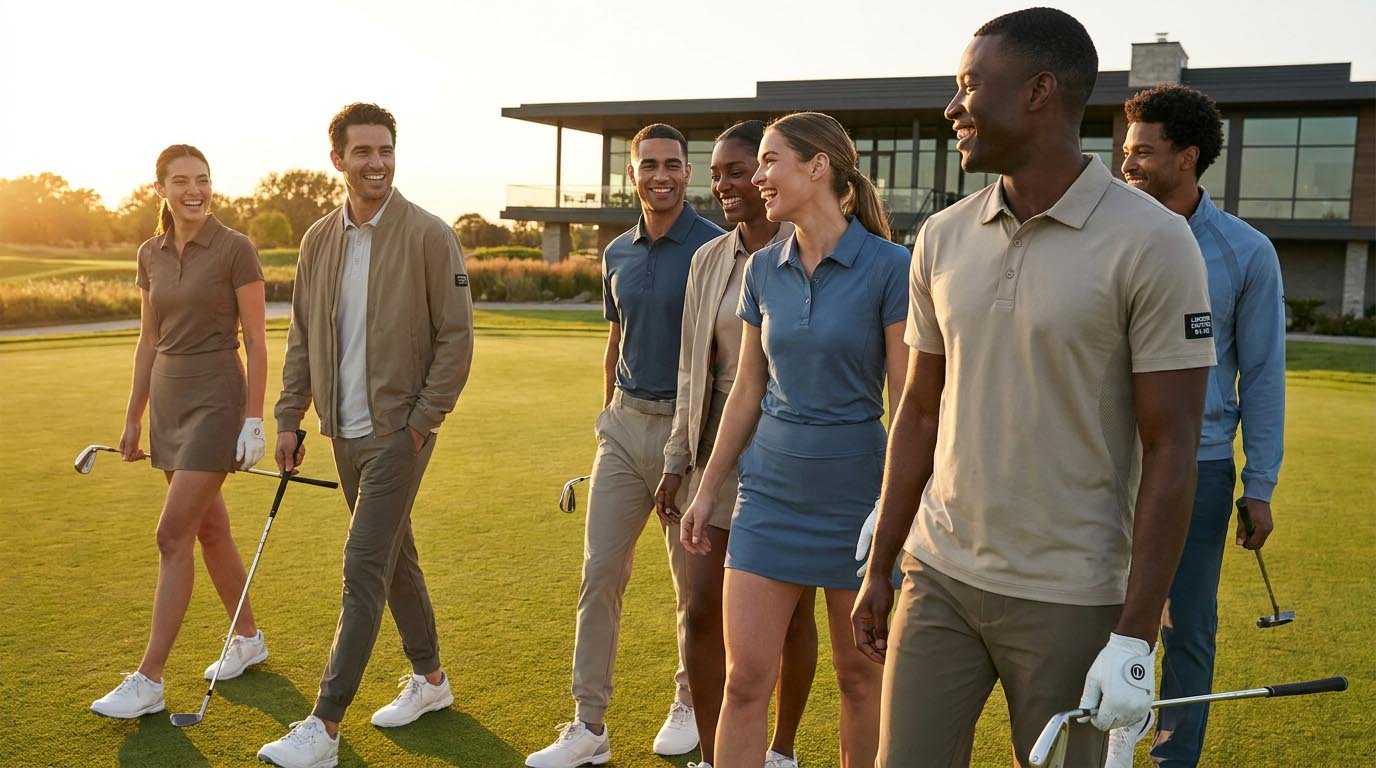
Expect more earth-led tones such as sage, sand, clay, terracotta, olive, and muted stone, often paired with stronger accents like deep burgundy, electric blue, or coral. Navy, white, black, and grey will still anchor most collections, but brands are becoming more willing to push color outside the traditional golf palette.
2. Which performance features matter most?
The strongest demand is still around cooling comfort, stretch, moisture management, and UV protection. The difference is that these are becoming expected rather than premium. Buyers are less interested in gimmicks and more interested in fabrics that feel cooler, dry faster, and stay comfortable through a long round.
3. Are sustainable materials mainstream in golf apparel now?
For many mid-tier and premium brands, yes. Recycled polyester is already common, and interest in verified recycled content, cleaner dyeing, and lower-impact production continues to grow. What matters more now is not just saying a product is sustainable, but proving it with clear documentation and credible certifications.
4. How is women’s golf apparel changing?
The women’s category continues to grow, and brands are taking fit and product development more seriously than before. The market is moving away from adapting men’s styles and toward purpose-built women’s cuts with better proportions, more thoughtful fabric choices, and a wider range of styling options.
5. Should brands be using limited drops?
In many cases, yes. Limited capsule releases can create urgency and help brands test color, styling, or storytelling without overcommitting inventory. The strongest merchandising strategies often combine a dependable core line with a smaller number of seasonal or exclusive drops.
The Big Direction: Golf Apparel Is Becoming More Lifestyle-Led
Golf apparel in 2027 will still need to perform, but performance alone is no longer enough.
The strongest collections are moving toward a blend of technical function, casual versatility, and elevated everyday styling. In other words, brands are not just designing for the course anymore. They are designing for golf, travel, work, weekends, and the wider lifestyle space around the sport.
This is one of the clearest themes we saw at recent shows. Many collections felt closer to premium athleisure or refined sportswear than old-school golf basics.
Why This Shift Matters
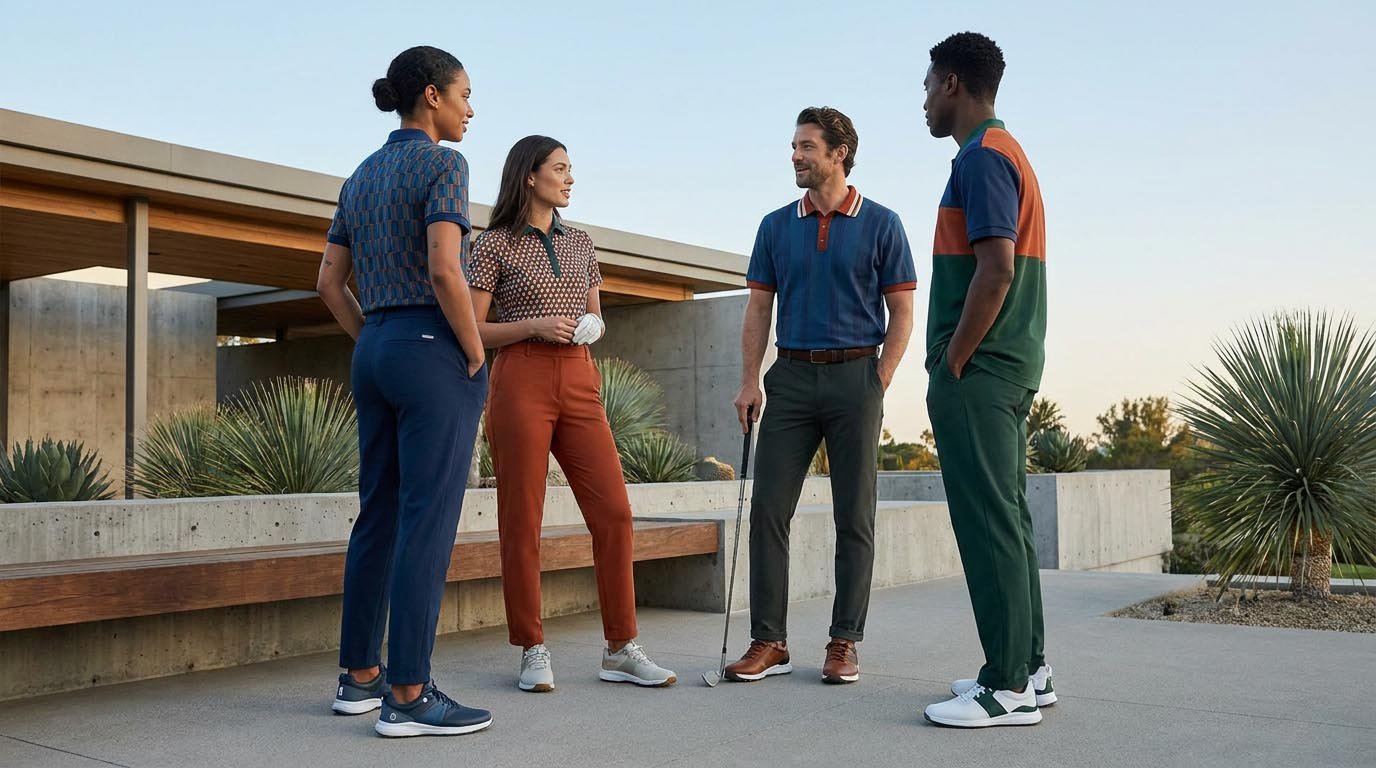
A golfer who buys one polo for both the course and everyday wear is often more valuable than a customer buying only for the fairway. That is part of the reason many brands are paying closer attention to silhouette, hand feel, drape, and styling restraint.
It also explains why cleaner branding, more wearable colors, and less obviously “technical-looking” fabrics are gaining traction.
Fashion Trend 1: Elevated Athleisure Shapes
One of the biggest style movements going into 2027 is a more relaxed and refined silhouette.
This does not mean oversized in a sloppy sense. It means product that feels easier, more current, and more comfortable without losing shape.
What We Are Seeing More Often
In recent development conversations and sample requests, the following details are showing up more often:
- slightly longer body lengths
- a more relaxed chest and waist fit
- cleaner shoulder lines with a softer feel
- collars with a little more presence
- sleeves that look less tight and more balanced
- fabrics with a matte finish and better drape
Compared with older performance golf product, these garments feel less rigid and less shiny. They look more premium when worn casually, which is exactly the point.
Fabric Is Supporting the Silhouette Shift
This shape change is also influencing fabric choice.
We are seeing stronger interest in:
- slightly heavier performance knits
- smoother surface textures
- fabrics with natural hand feel
- performance materials that do not look overly synthetic
For some brands, this means moving away from very slick, lightweight, high-sheen polo fabrics and toward fabrics that still wick and stretch well but feel more substantial and wearable.
Fashion Trend 2: Retro Golf References, But Cleaner Than Before
Another trend that is clearly returning is retro golf influence, especially references to 1990s styling.
That said, the most commercially promising versions are not costume-like or overly nostalgic. They are edited.
Retro Elements Showing Up Again
Some of the details appearing more often include:
- bold color-blocking
- contrast piping
- larger collar shapes
- vintage-style typography
- geometric pattern references
- cleaner reinterpretations of classic golf striping
This trend works best when brands use it with control. A small amount of retro detailing can make a product feel distinctive. Too much can make it feel novelty-driven.
That distinction matters in golf, because the customer still wants the product to feel wearable beyond one season.
What I Would Be Careful About
Not every retro reference will sell.
If the styling becomes too loud, too ironic, or too trend-chasing, many golf buyers will step back. The strongest versions of this trend usually pair a familiar retro cue with a modern fit and a more refined fabric.
Fashion Trend 3: More Color Confidence, Especially in Earth Tones
Golf apparel has always depended heavily on core colors, and that will not change. White, navy, black, and grey are still foundational.
What is changing is the role of color around that core.
The Color Story Moving Forward
For 2027, the most interesting palettes are likely to include:
- earth tones such as sage, olive, sand, stone, clay, and terracotta
- richer accent shades like deep burgundy, electric blue, or muted coral
- occasional softened brights used as limited seasonal statements
- modern neutrals that feel less sterile than classic white-and-navy assortments
This matters because golf customers increasingly want pieces that can live outside the course. Earth-led colors tend to support that crossover better than loud traditional sport combinations.
Core Colors Still Matter
I would not advise brands to abandon classic color entirely.
In most collections, the safest structure is still:
- a core base of proven neutral sellers
- a smaller set of directional colors that add freshness
- one or two more distinct shades reserved for storytelling, capsules, or seasonal drops
The brands that manage this balance well tend to look current without making their inventory too risky.
Performance Trend 1: Cooling Becomes a Baseline Expectation
Performance remains essential in golf, but the conversation is changing.
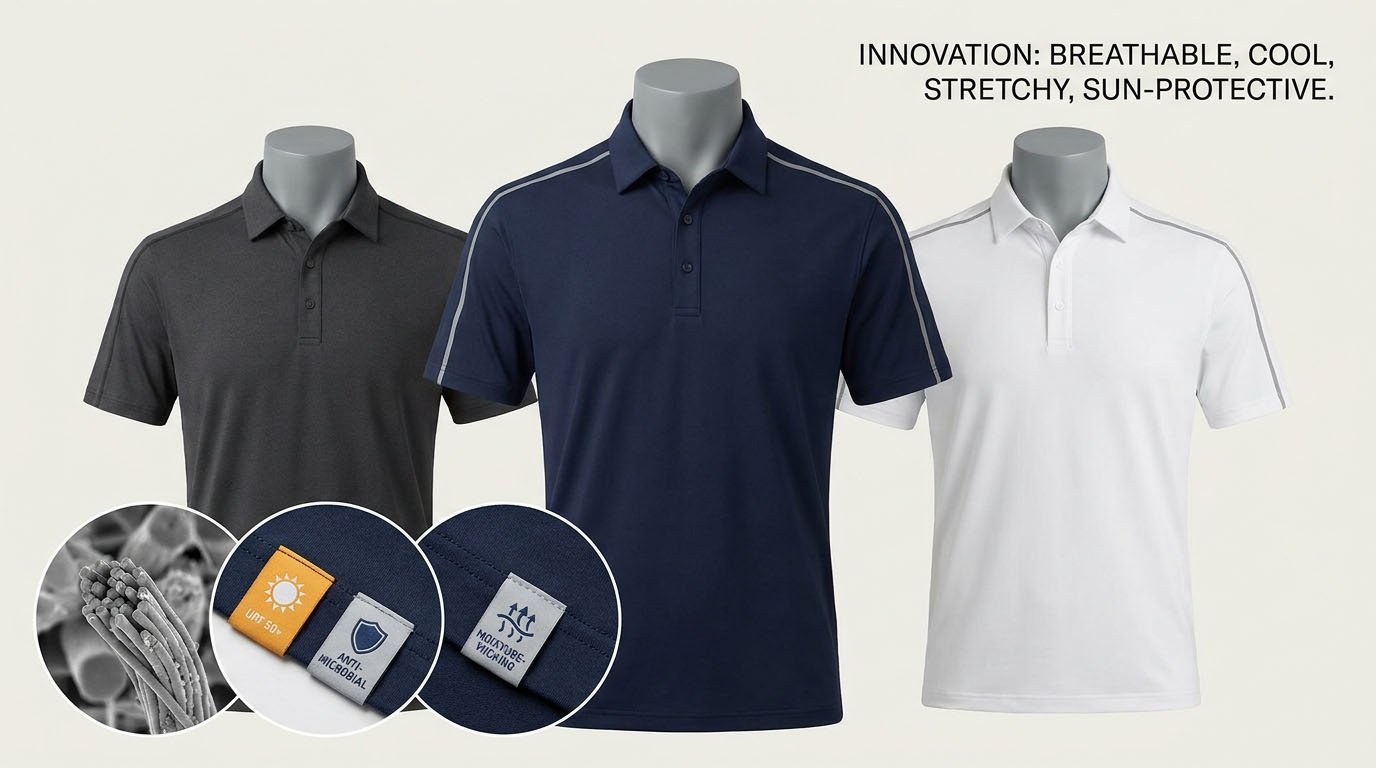
A few years ago, brands could market basic moisture-wicking as a technical advantage. That is much harder now. Better players and even casual consumers increasingly expect golf apparel to handle heat, sweat, and long wear comfortably.
What Buyers Actually Want
In practical terms, most brands are looking for fabrics that:
- feel cooler against the skin
- dry faster after sweat exposure
- breathe well in hot conditions
- stay light during wear
- do not cling or feel plastic-like
The most promising cooling developments are not necessarily the flashiest ones. We are seeing more interest in incremental, fabric-based improvements such as:
- mineral or jade-infused yarns
- engineered ventilation zones
- lighter but more stable knit structures
- improved moisture spread and evaporation
What I am not seeing much enthusiasm for is performance storytelling that sounds futuristic but is hard to feel in actual wear. Buyers still respond best to comfort they can notice quickly.
Why This Matters for Product Development
If a brand wants to make cooling claims in 2027, the product needs to back that up in real use.
That usually means asking harder questions about:
- air permeability
- evaporation speed
- wash durability of finishes
- whether the cooling effect is structural or just topical
- how the fabric performs after repeated laundering
The technical story matters, but the sensory experience matters more.
Performance Trend 2: Better Moisture Management and Multi-Directional Stretch
Stretch and wicking are no longer premium extras. For a large part of the market, they are expected.
What Good Performance Now Looks Like
For most mid-tier and premium golf apparel, the baseline is moving toward:
- reliable moisture movement
- fast dry-down
- good stretch in both directions
- strong recovery after wear
- comfort through repeated wash cycles
We are seeing fewer brands willing to accept fabrics that technically stretch but do not recover well, or fabrics that wick on paper but still feel heavy after sweating.
Fit and Comfort Are Connected
One reason stretch matters so much is that it affects more than motion. It also affects customer satisfaction.
A garment that moves more naturally tends to:
- feel better during the swing
- fit a wider range of body shapes
- reduce pulling across the chest or shoulders
- create fewer complaints around restriction
That is especially important in polos and layering pieces, where customers compare comfort very quickly.
Performance Trend 3: UPF and Sun Protection Continue to Matter
Sun protection has become a more visible part of golf apparel buying, especially for warm-weather markets.
In many product categories, UPF is no longer treated as a bonus feature. It is increasingly part of the minimum expectation, particularly for long-sleeve styles, layering pieces, and summer polos.
What Brands Should Keep in Mind
If you are promoting sun protection, make sure:
- the fabric actually supports the claim
- the construction and color do not undermine performance
- claims are backed by documentation or testing where required
- the message stays clear and credible
Customers are more familiar with UPF language than they were several years ago. That means unsupported claims are more noticeable too.
Performance Trend 4: Odor Control Has a Place, But It Is Usually a Secondary Sell
Anti-odor and anti-microbial finishes still matter, especially for long rounds, travel use, and off-course wear.
That said, for most golf buyers, odor control is not usually the first reason they purchase. It tends to support the product rather than define it.
Where It Works Best
Odor-control features tend to add the most value when they are paired with:
- strong moisture management
- all-day wear positioning
- travel-friendly product stories
- lightweight layering
- premium or technical basics
In other words, anti-odor is useful, but on its own it rarely carries a collection.
Sustainability Trend 1: Recycled Polyester Is Now Normal, Not Niche
Sustainability in golf apparel has moved past the stage where recycled content alone feels novel.
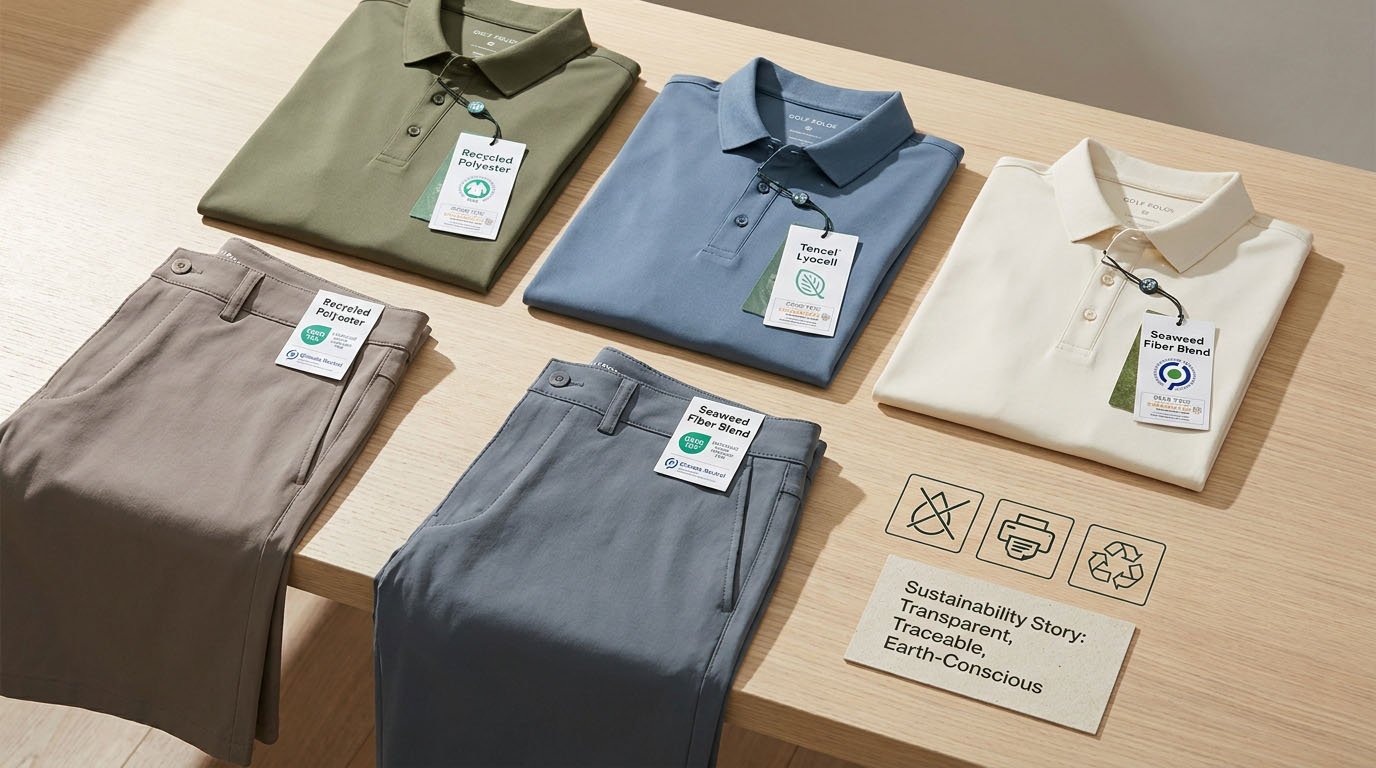
For many brands, especially in mid-tier and premium positioning, recycled polyester is already a normal part of the material conversation.
What Has Changed
A few years ago, many brands asked whether they should offer a recycled option. Now the question is often how much of the line should move in that direction, and how to communicate it properly.
At the sourcing level, we are seeing continued interest in:
- recycled polyester blends
- recycled nylon in stretch-driven categories
- lower-impact dyeing processes
- verified traceability
- certification-backed material claims
The customer expectation is also changing. It is no longer enough to say a product is “eco-friendly” without explaining what that means.
What Buyers Want to Know
More brands and retail partners now ask for:
- recycled content percentage
- certification status
- source of the recycled input
- chemical safety standards
- environmental process information where available
That shift is important. Sustainability messaging is becoming more document-driven and less vague.
Sustainability Trend 2: Bio-Based and Alternative Fibers Are Getting More Attention
Recycled polyester is still the main story, but it is not the only one.
We are also seeing growing interest in materials such as:
- recycled nylon
- lyocell or Tencel blends
- plant-based performance fibers
- specialty blends with natural-origin additives
These options are not yet universal in golf apparel, but they are moving from experimental to commercially relevant in selected programs.
The Opportunity and the Caution
Alternative fibers can improve hand feel, sustainability positioning, or even odor and moisture performance in some cases.
But they also require more discipline.
Not every alternative fiber works well in a golf product. Some feel excellent but create complications in:
- shrinkage control
- pilling performance
- color consistency
- cost
- long-term durability
So while material innovation is real, it still has to survive actual product testing.
Sustainability Trend 3: Certifications and Proof Matter More Than Broad Claims
This is one of the biggest shifts in sustainable apparel communication.
General claims such as “green,” “eco,” or “responsibly made” are no longer enough for many buyers. The industry is moving toward language that can be checked.
Commonly Requested Standards
Depending on the product and supply chain, brands may now be asked about certifications such as:
- GRS
- Oeko-Tex Standard 100
- bluesign
- GOTS, where relevant
- factory environmental management systems
Not every brand needs every certification. But if sustainability is part of your positioning, you need a clearer proof structure than many brands used even a few years ago.
One Important Warning
Sustainability storytelling can help a strong product, but it will not rescue a weak one.
If the fit is poor or the fabric does not perform, recycled content alone will not create long-term customer loyalty.
Fit Trend 1: Women’s Golf Apparel Keeps Gaining Importance
The women’s golf category continues to grow, and the most serious brands are treating it as a real design and fit opportunity rather than a side extension.
What Is Improving
There is a more visible move away from the old “make it smaller and change the color” approach.
The stronger women’s programs now focus on:
- dedicated fit development
- more flattering but still functional proportions
- improved movement through the shoulders and torso
- better body-length balance
- broader styling options beyond pastel basics
This matters because women’s customers are often very quick to notice when a product feels like an afterthought.
Why the Category Is Attractive
For brands willing to do the development work properly, women’s golf apparel can be one of the more promising growth areas in the market.
But it only works when the fit block, grading, and styling are developed with real intention.
Fit Trend 2: Extended Sizing and More Inclusive Range Planning
Inclusive sizing is becoming more relevant across the apparel industry, and golf is no exception.
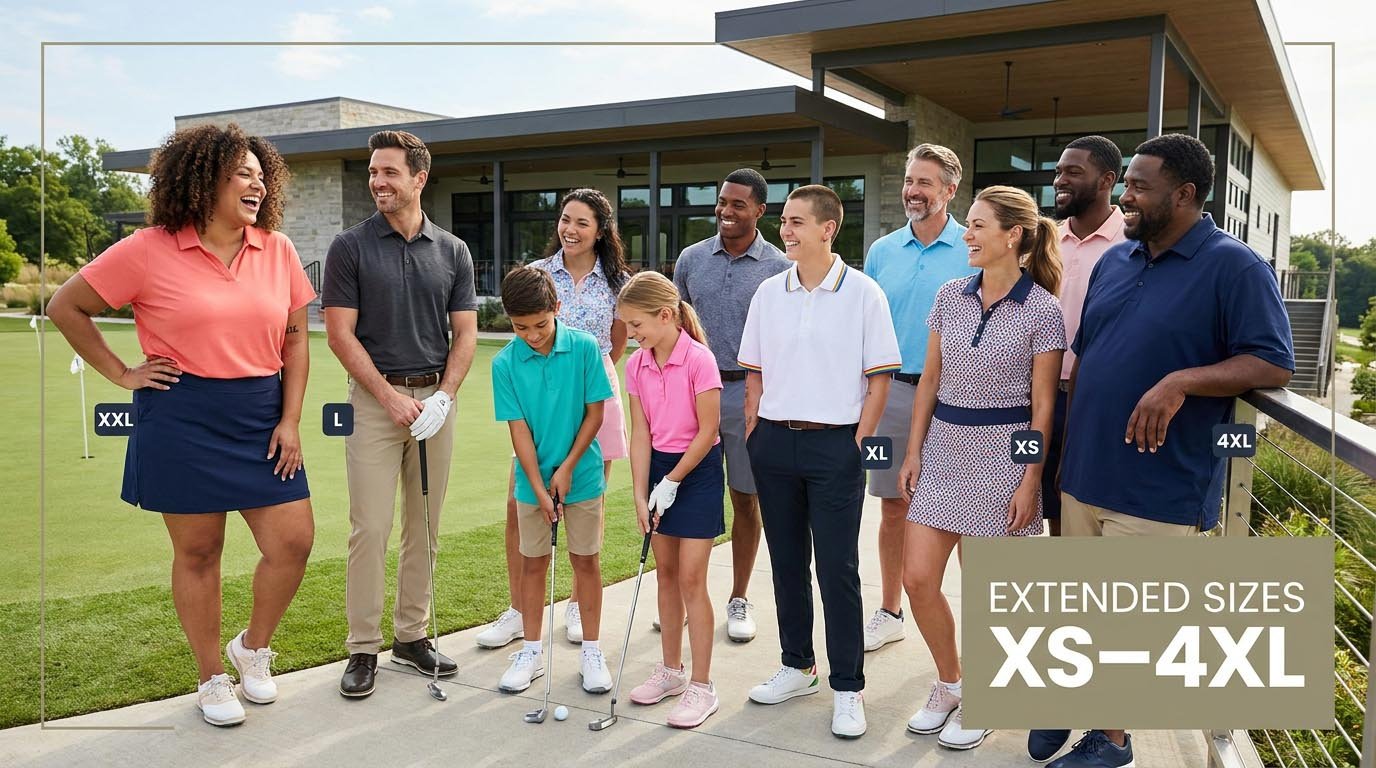
More brands are rethinking limited size runs and asking whether their assortment reflects the customer base they actually want to reach.
What This Means in Practice
For many brands, a more thoughtful size strategy now includes:
- extending the size range
- rebalancing size curves based on sales reality
- improving fit consistency across sizes
- avoiding the assumption that one fit works for every body type
This is not only a brand image question. It is also a commercial one.
A line that cuts off too early in sizing may be leaving meaningful revenue behind.
The Operational Side
Of course, extended sizing creates planning challenges:
- size ratios need more attention
- inventory becomes more complex
- grading quality matters more
- MOQ strategy may need adjustment
Still, this is an area where careful brands can differentiate.
Fit Trend 3: Gender-Inclusive Design Is Emerging, Especially in Younger Segments
Gender-inclusive golf apparel is still a smaller part of the market than men’s or women’s core product, but it is becoming more visible, especially in younger, more style-forward, and more community-driven brands.
What That Usually Looks Like
In apparel terms, gender-inclusive design often means:
- easier, less aggressively fitted shapes
- cleaner styling
- more neutral color direction
- flexible size range communication
- less overtly gendered trim or branding
This is not the right strategy for every brand, but it is increasingly part of the conversation, particularly where golf intersects with lifestyle and younger consumer culture.
Merchandising Trend 1: Limited Capsules Are Becoming More Useful
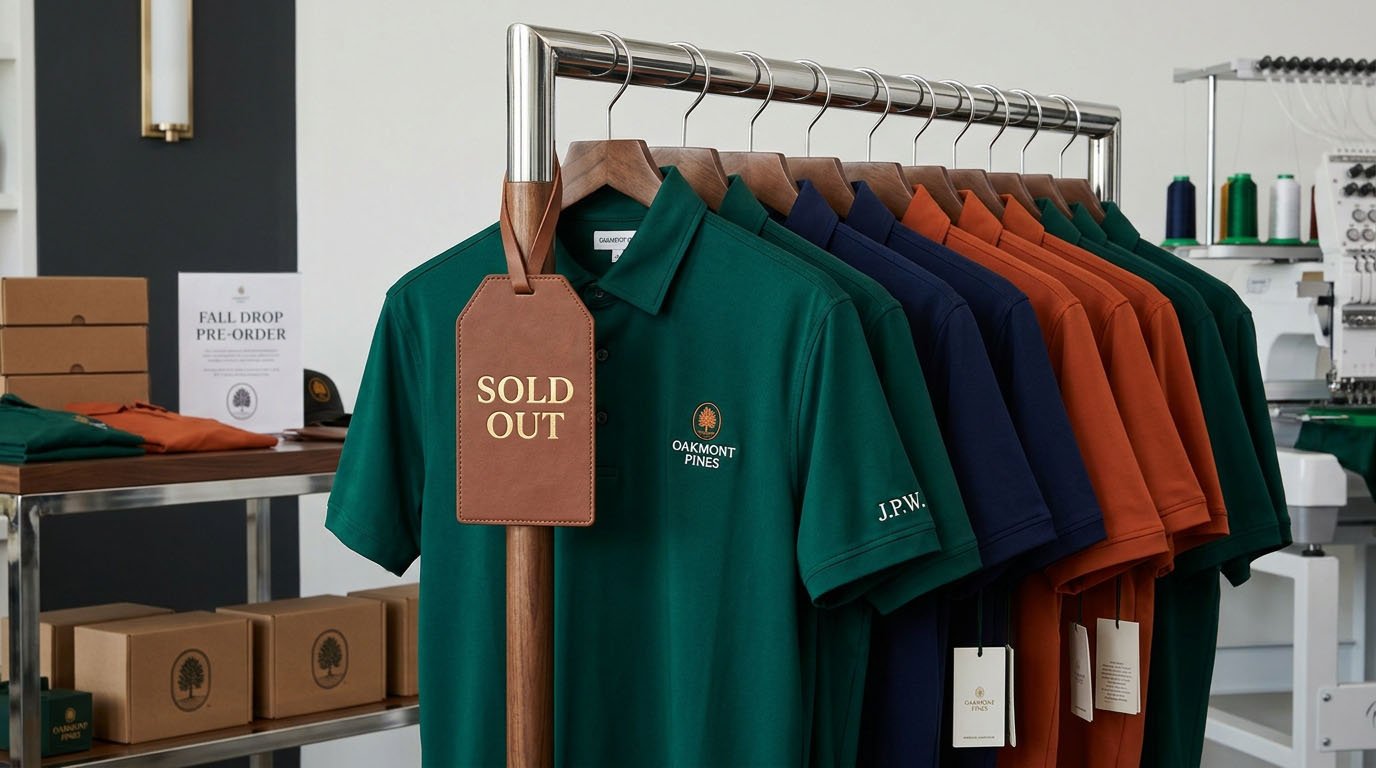
One of the more practical shifts in golf apparel merchandising is the rise of smaller, more intentional capsule drops.
This approach is appealing because it helps brands stay fresh without forcing them to rebuild the whole line every season.
Why Brands Like It
Capsules can help with:
- testing new colors
- introducing trend-driven styles with lower risk
- creating urgency
- driving social content
- giving loyal customers something new between major launches
For smaller brands, this can be especially effective because the inventory commitment is more manageable than a full seasonal expansion.
One Caution
Limited drops work best when the core line is already stable.
If the basics are weak, a capsule will not fix the business. But if the brand already has dependable winners, a smaller drop strategy can add energy and improve storytelling.
Merchandising Trend 2: Club and Pro Shop Programs Still Matter
Even with the growth of DTC and social-led selling, club and pro shop business remains important.
For some brands, it is one of the most stable channels in the business.
What Is Changing in This Channel
The expectation is shifting from generic embroidered basics toward more thoughtful club-specific product.
That can include:
- exclusive colorways
- cleaner co-branding
- better quality blanks
- small-batch event capsules
- faster reorder structures
Courses and clubs still want reliability, but they also want product that feels current enough to sell through.
Merchandising Trend 3: Customization and Small-Batch Programs Are Expanding
As sourcing and production become more flexible, more brands are exploring lower-risk customization models.
This does not always mean full made-to-order production. Often it means a middle ground:
- smaller custom runs
- faster reorder capability
- event-specific product
- personalized embroidery
- selective semi-custom programs
Why This Matters
Small-batch customization helps brands and clubs reduce inventory risk while still offering something that feels exclusive.
It also creates a useful bridge between standard wholesale and full private-label development.
What Brands Should Prioritize for 2027
If I had to narrow the 2027 golf apparel direction down to a few practical priorities, they would be these:
-
Design products that work beyond the course
Lifestyle crossover is no longer a side benefit. It is part of the buying logic. -
Upgrade comfort in ways the customer can actually feel
Better cooling, stretch, and fabric hand matter more than overcomplicated technical language. -
Use sustainability with proof, not just messaging
Recycled content and lower-impact production are important, but vague claims are not enough. -
Take fit more seriously, especially in women’s and extended sizing
This remains one of the clearest ways to stand out. -
Balance core continuity with smaller, more agile drops
Brands do not need constant reinvention, but they do need controlled freshness.
Final Thoughts
Golf apparel in 2027 is heading toward a more mature blend of performance, lifestyle, and merchandising discipline.
The brands most likely to grow are not necessarily the loudest or the trendiest. They are the ones that make smart product decisions early: choosing the right fabric, refining fit, building a more wearable aesthetic, and staying flexible enough to respond to how the market is moving.
The next wave of golf apparel will still need technical credibility. But it will also need better design judgment, better positioning, and a clearer understanding of how golfers actually live and shop now.
If you are building a collection for 2027, this is a good moment to ask a simple question:
Are you only making golf clothes, or are you making products golfers want to keep wearing after the round ends?
Need Help Developing Your 2027 Golf Collection?
If you are planning a golf apparel line for 2027 and need support with fabric sourcing, sampling, fit development, or bulk production, FUWAY works with brands on practical, production-ready manufacturing solutions.
We can help with:
- performance golf polo development
- recycled and technical fabric sourcing
- women’s and men’s golf apparel sampling
- MOQ and costing planning
- private label and OEM manufacturing
Contact us to discuss your next collection.