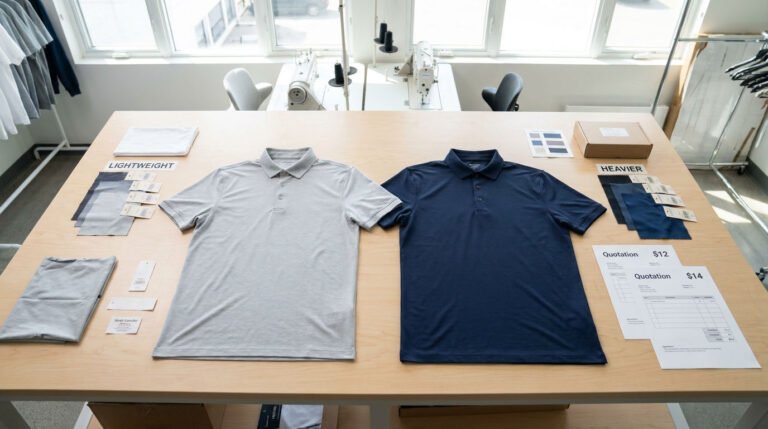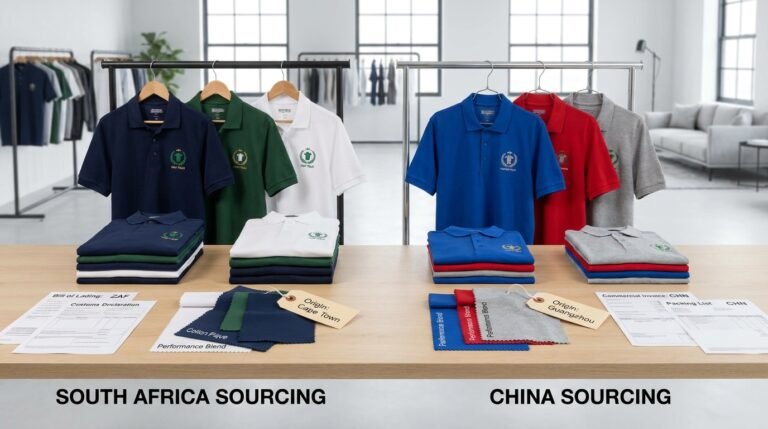
Before releasing a golf apparel bulk order, confirm the exact products, quantities, prices, payment terms, approved specifications, delivery milestones, and inspection requirements. The supplier should acknowledge the same order version and identify any unresolved exceptions.
A golf apparel purchase order checklist helps you reconcile these details before production. It connects the commercial order to the approved tech pack, samples, artwork, and packing instructions without creating a second, conflicting product specification.
Use the checklist below when ordering custom golf polos, shorts, pants, skorts, or outerwear.
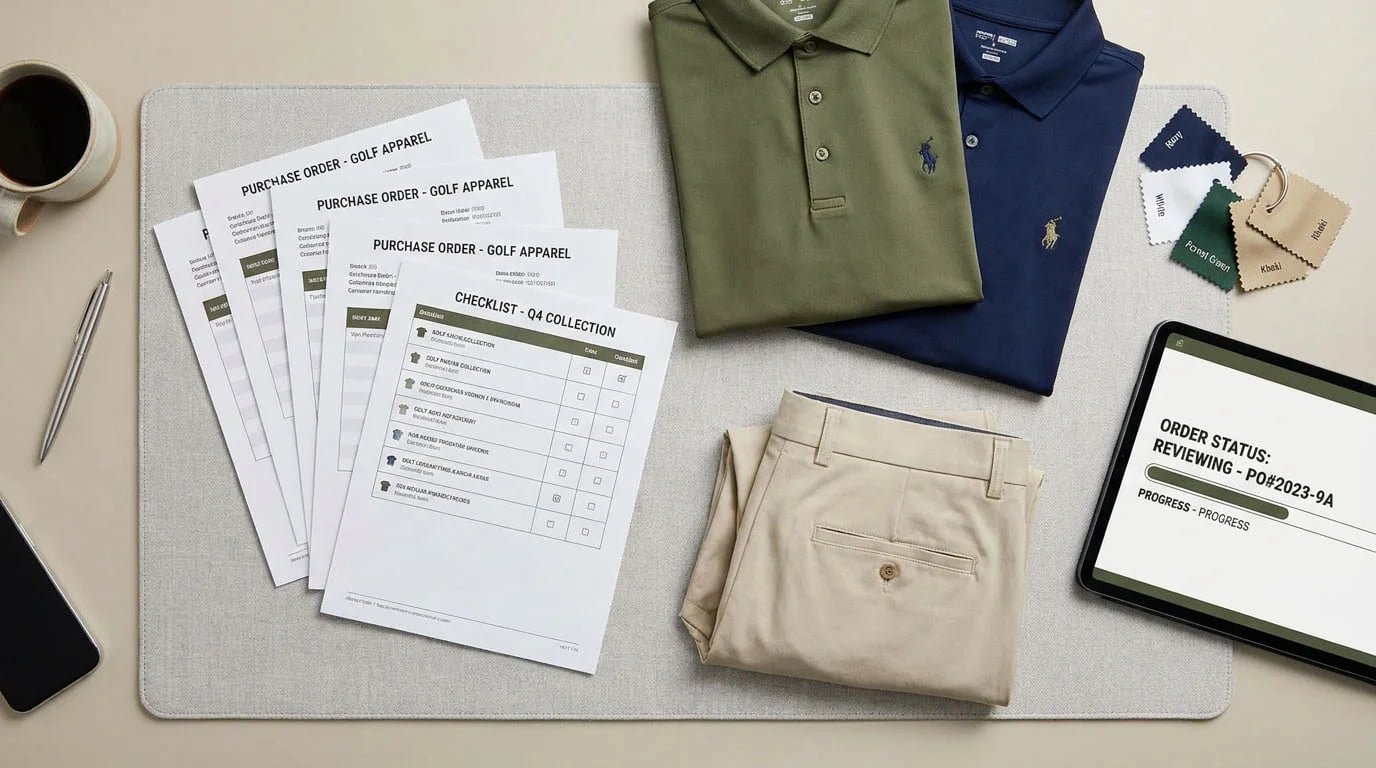
Quick Checklist: Is Your Golf Apparel PO Complete?
Use this table as a review sheet alongside your purchase order. For each row, enter the agreed value or exact document reference and mark it Confirmed, Open, or Not Applicable.
| Check | Agreed Value or Reference to Record | Status |
|---|---|---|
| Order identity | PO number, issue date, revision | ___ |
| Buyer and supplier | Legal names, addresses, responsible contacts | ___ |
| Product lines | Style codes, descriptions, colors, sizes | ___ |
| Quantity breakdown | Pieces per style, color and size; checked total | ___ |
| Pricing | Currency, unit prices, line totals | ___ |
| Additional charges | Setup, development, testing, packing or other agreed fees | ___ |
| Payment | Deposit, balance and payment triggers | ___ |
| Technical references | Approved tech pack, BOM and artwork revisions | ___ |
| Sample approval | Sample ID, approval date, scope and closed comments | ___ |
| Materials and colors | Approved fabric, trims and color references | ___ |
| Labels and packaging | Approved files, barcodes, assortment and carton instructions | ___ |
| Quality requirements | Test plan, inspection procedure and acceptance rules | ___ |
| Delivery | Named destination, trade term and clearly defined dates | ___ |
| Exceptions | Quantity variance, split shipments and remedy process | ___ |
| Supplier acknowledgement | Accepted revision, exceptions, name and date | ___ |
| Production release | Authorized scope, approver and release date | ___ |
An open item needs an owner, a deadline, and a decision about which work it prevents. “To be confirmed” should not become permission for the factory to choose.
Step 1. Match the PO to the Accepted Quotation
Start with the commercial agreement. A technically complete order can still contain a wrong quantity, missing charge, or payment condition that the supplier has not accepted.
Confirm:
- Buyer and supplier legal entities.
- Accepted quotation number and revision.
- Currency and unit of sale, such as price per garment.
- Unit prices for the applicable styles and quantities.
- Included materials, decoration, labels, and packaging.
- Separately charged services and agreed credits.
- Deposit and balance amounts or percentages.
- The event that makes each payment due.
Do not assume a polo price includes embroidery digitizing, custom hangtags, testing, or freight. Record the agreed scope and exclusions.
If the PO differs from the quotation, resolve the difference explicitly. A matching order total does not prove that all individual lines agree.
For the earlier pricing stage, use our Golf Apparel RFQ Template.
Step 2. Reconcile Every Style, Color and Size Quantity
Each ordered variant needs an identifiable quantity. “300 polos in assorted sizes” leaves the factory without a production-ready size breakdown.

Example: A Golf Polo Order Quantity Matrix
The following is a fictional planning example, not a FUWAY quotation, recommended size ratio, or customer order.
Style: GP-101
Product: Custom short-sleeve golf polo
Specification reference: GP-101 Tech Pack, Revision 4
| Color | S | M | L | XL | Total |
|---|---|---|---|---|---|
| Navy | 15 | 45 | 60 | 30 | 150 |
| White | 20 | 40 | 50 | 40 | 150 |
| Total | 35 | 85 | 110 | 70 | 300 |
For a single agreed unit price:
Garment subtotal = 300 × agreed unit price
If prices differ by color, size, or decoration, calculate those lines separately before adding agreed charges and deducting credits.
Check that:
- Size totals equal each color total.
- Color totals equal the style total.
- Style totals equal the full PO quantity.
- Prices reflect the confirmed quantity and customization.
- Barcode and packing records identify the same variants.
Also confirm whether any overage or shortage is permitted, how it is calculated, and how it affects invoicing. Do not assume an automatic quantity allowance.
For a custom golf polo project, keep the quantity matrix linked to the exact style specification.
Step 3. Identify the Approved Product and Document Versions
The PO should identify the specifications that control the order. Avoid copying selected measurements or materials into the PO if doing so creates a conflicting version.
A practical reference register includes:
| Reference | What to Record |
|---|---|
| Tech pack | Exact filename, revision and date |
| Bill of Materials | Approved BOM revision |
| Pre-production sample | Sample ID, approval date and approval scope |
| Fabric and color | Fabric code and approved swatch or lab-dip reference |
| Artwork | Production file revision and decoration approval |
| Measurement chart | Approved graded chart and POM guide |
| Packaging | Label, packing and carton-mark revisions |
| Quality plan | Applicable testing and inspection document |
A fit approval is not automatically approval of color, fabric, decoration, or packaging. Record which elements were approved and which remain open.
If a sample is approved with comments, identify whether the comments change the product. Update the controlling documents and obtain any necessary confirmation before releasing the affected operation.
Where the sample and written specification disagree, resolve the conflict in writing. A factory should not decide which reference takes priority.
For the detailed technical review, use our Golf Apparel Tech Pack Checklist. For organizing the attachments, see what files to send a golf apparel manufacturer.
Golf-Specific Approval Checks
Use the product type to identify the approvals that matter:
| Product | Examples of Details to Close |
|---|---|
| Golf polo | Collar shape, placket construction, fabric shade and chest-logo placement |
| Golf shorts or pants | Waistband construction, stretch direction, pockets and finished inseam |
| Golf skort | Inner-short fit, pocket position and outer-skirt coverage |
| Quarter-zip | Zipper specification, collar shape and decoration compatibility |
The full requirements belong in the approved technical package. The PO records which version applies.
Step 4. Confirm Measurable Quality and Acceptance Requirements
“Good quality” does not explain how an order will be accepted.
Your quality plan should identify:
- Required material and garment tests.
- Test methods, specimen conditions and pass criteria.
- Inspection timing and the party conducting it.
- Lot definition and applicable sampling procedure.
- Defect categories and acceptance/rejection rules.
- Measurement methods and tolerances.
- Who reviews reports and authorizes shipment.
- What happens after a failed inspection.
ISO 9001 addresses quality management systems. It does not specify the sampling and acceptance rules for your particular garment order. Where attribute sampling is agreed, reference the applicable standard and edition, such as ISO 2859-1, together with the remaining inspection-plan details.Quality management systems — Requirements
Writing only “AQL 2.5” leaves important decisions undefined. AQL is part of a sampling system; it is not permission to ship a fixed percentage of defective garments.
For sizing, identify each Point of Measure, its measuring method, and the agreed tolerance. State whether measurements are taken before or after any specified laundering procedure.
Performance claims also need separate requirements. Breathability and moisture management describe different properties; a wicking finish does not, by itself, verify air permeability. List the property you need, how it will be assessed, and the required result.
Step 5. Approve Labels, Packaging and Warehouse Requirements
The packing specification should match the destination and sales channel.
Confirm the approved versions of:
- Brand, size, fiber-content, origin and care-label artwork.
- Hangtags and attachment positions.
- SKU and barcode data.
- Folding and individual packing instructions.
- Carton assortments and quantities.
- Carton marks, dimensions and weight limits where required.
- Any applicable warehouse receiving instructions.
For the United States, FTC guidance generally requires most textile products to identify fiber content, country of origin, and the responsible business. A company name or an eligible Registered Identification Number can identify that business; an RN is not mandatory in every case. Care-label obligations should also be reviewed for the product.Federal Trade Commission
Identify who supplies and approves the final label content. “Use the usual export label” is not a destination-specific instruction.
Before printing barcode stickers, check a proof against the variant matrix. The garment, hangtag, bag sticker, and warehouse record should identify the same product.
Step 6. Define Delivery Dates and Trade Terms Clearly
A “delivery date” can mean factory readiness, carrier collection, vessel departure, or arrival at your warehouse. Label each required event.
| Milestone | What to Confirm |
|---|---|
| Production release | Conditions that must be completed before work starts |
| Materials ready | Required materials available and approved |
| Inspection | Planned inspection date and report review |
| Ex-factory | Goods ready for the agreed collection or dispatch process |
| Shipment | Relevant carrier handover or departure milestone |
| Arrival target | Destination and planned receipt window |
If the schedule depends on sample approval, materials, or payment, state those dependencies and their deadlines.
When using Incoterms®, record the chosen rule, precise named place or port, and agreed edition. Payment timing and product specifications still require separate agreement; Incoterms® do not supply those terms.library.iccwbo.org
Also confirm freight-booking responsibility, required shipping documents, split-shipment permission, and the process for reporting delays.
Step 7. Separate PO Confirmation from Bulk Production Release
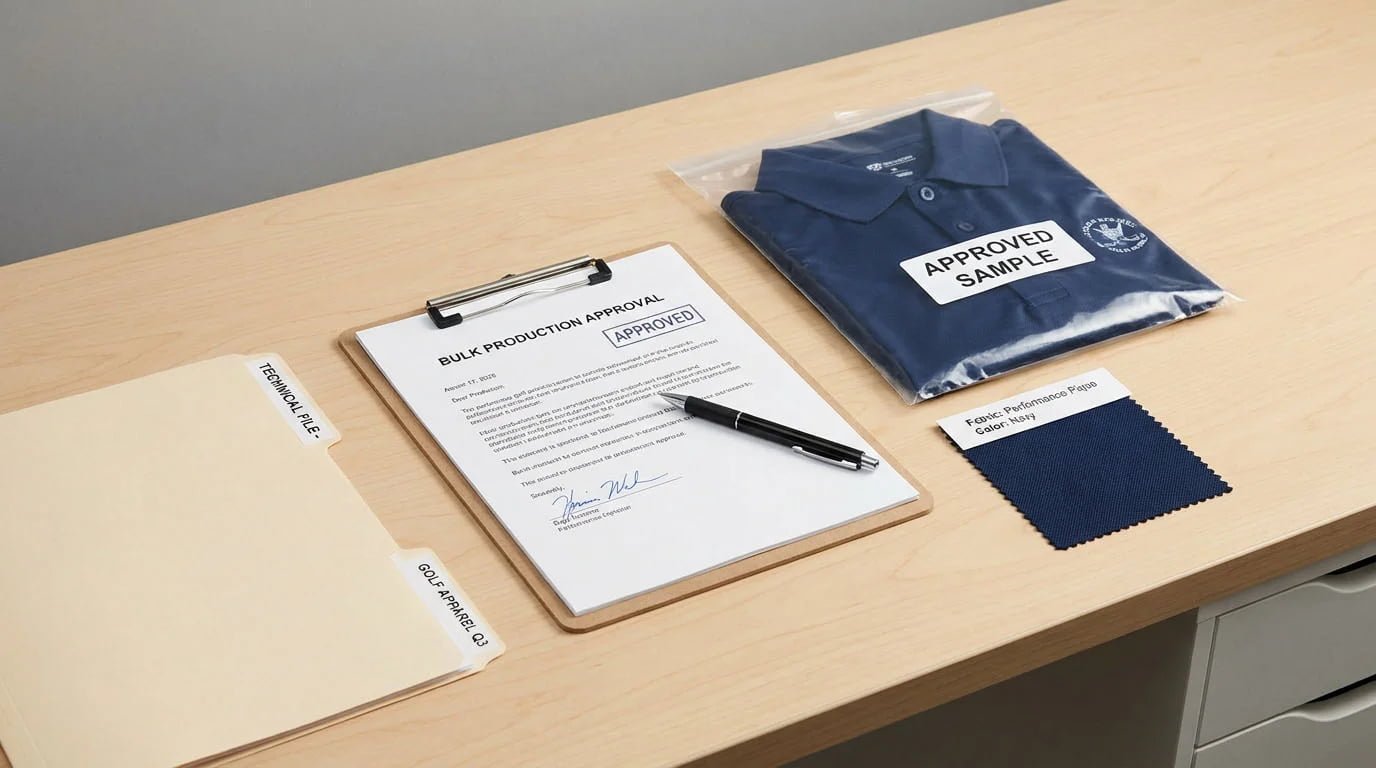
An order may be recorded before every production condition is complete. Make its release status explicit.
| Condition | Recommended Action |
|---|---|
| Commercial terms, required approvals and production documents agree | Release the authorized scope in writing |
| Fit approved, but bulk fabric or color unresolved | Hold work dependent on those decisions |
| Artwork or placement remains open | Hold the affected decoration; assess any earlier operations separately |
| PO quantity differs from the accepted quote | Reconcile price, material and schedule implications |
| Required pre-production test has failed | Hold affected work until disposition is approved |
| A later-stage detail remains open | Record any limited release, its boundary and closure deadline |
If you authorize fabric purchasing before final garment approval, describe that permission separately. Specify the material, quantity, cost responsibility, and work allowed.
Supplier Confirmation Record
Ask the supplier to return a structured response:
- PO number and revision: ___
- Quantities, prices and payment terms accepted: ___
- Controlling documents received: ___
- Dates and delivery arrangements confirmed: ___
- Exceptions or proposed changes: ___
- Open items, owners and deadlines: ___
- Work authorized to start: ___
- Buyer approver and date: ___
- Supplier representative and date: ___
“Received” confirms that the file arrived. It does not establish that every order detail has been accepted.
Step 8. Control Changes After PO Confirmation
Record changes before they reach production.
Each change should identify:
- The affected PO revision, styles and lines.
- The previous requirement and replacement requirement.
- Updated technical or commercial references.
- Any effect on price, committed materials, rework and timing.
- Buyer approval and supplier acknowledgement.
- The operation or date from which the change applies.
Keep the earlier version as a superseded record.
For example, moving quantities from white polos to navy polos may leave the total at 300 pieces while changing fabric requirements. The unchanged total does not establish that cost and timing remain unchanged.
Frequently Asked Questions
Can I issue a PO before the pre-production sample is approved?
Yes, provided its status and permitted activities are explicit. Issuing a PO should not automatically authorize bulk cutting. Record the approvals still required and any separately authorized material purchasing.
What should a repeat-order PO reference?
Reference the previous order and the exact specifications being repeated. Reconfirm quantities, prices, materials, artwork, packaging, and dates. “Same as last time” may point to files that have since changed.
Does an approved sample cover UPF or anti-odor claims?
A physical sample can support appearance and fit approval. Performance claims need the agreed supporting evidence. Identify the relevant testing requirements and ensure the evidence applies to the ordered product.
What if the finished order fails inspection?
Follow the agreed disposition process. Record the findings, affected goods, corrective action, reinspection requirements, and cost responsibility. Do not authorize shipment merely because a report has been issued.
Prepare Your Golf Apparel Order with FUWAY
For your next order review, bring together the PO, color-size quantities, accepted quotation, approved technical files, sample records, and delivery requirements.
Contact FUWAY to discuss your custom golf apparel project and confirm which specifications and approvals are needed before production.