
*Colorfastness testing for golf apparel evaluates resistance to color change and color transfer under specified conditions, including laundering, perspiration, rubbing and light exposure. A useful result identifies the tested material, method, conditions and acceptance criteria. It does not automatically cover every garment component or every production lot.
For golf brands, the practical task is to connect laboratory results to the product being purchased: its fabric, colors, trims, decoration and production batches.
A navy polo with a white collar needs staining assessment that considers both materials. A white heat-transfer logo on dark polyester introduces another material interaction. An approved development sample also needs a clear connection to the materials used in bulk production.
This guide explains how to select relevant tests, read the results and turn them into purchasing requirements.
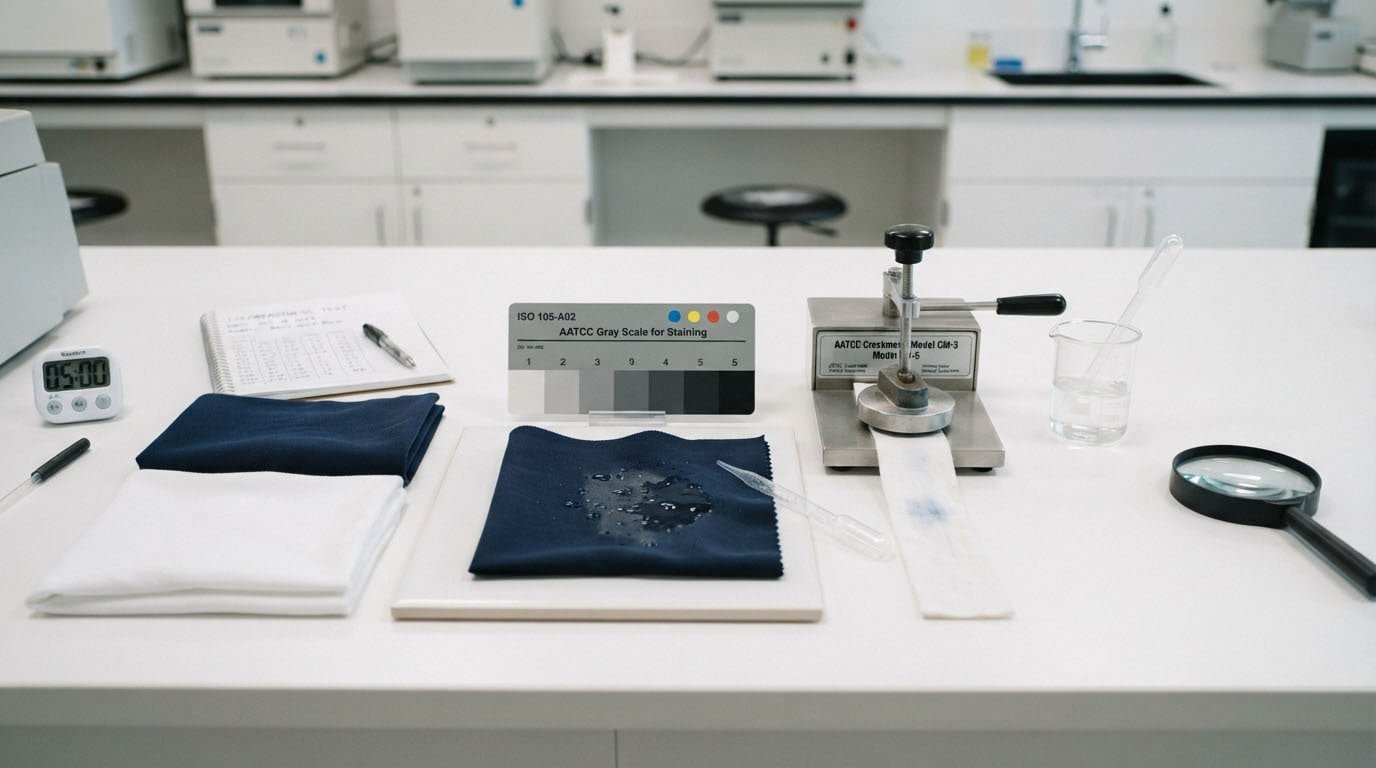
Which Colorfastness Tests Does Golf Apparel Need?
Start by reviewing laundering, perspiration, dry and wet rubbing, and light exposure. Then add checks for risks created by the garment’s design and intended use.
The methods below address similar exposure categories, but ISO and AATCC procedures should not be treated as interchangeable.
| Exposure | ISO Method | AATCC Method | What the Buyer Should Specify |
|---|---|---|---|
| Laundering | ISO 105-C06 | AATCC TM61 | Selected procedure, conditions, color-change assessment and staining assessment |
| Rubbing or crocking | ISO 105-X12 | AATCC TM8 | Separate dry and wet results, with the tested surface identified |
| Perspiration | ISO 105-E04 | AATCC TM15 | Required sweat conditions and separate color-change and staining results |
| Artificial light | ISO 105-B02 | AATCC TM16.3 | Exposure procedure, endpoint or dose, and evaluation system |
For laundering, ISO 105-C06 describes methods for evaluating colorfastness to domestic and commercial laundering. Specify the selected procedure and acceptance limits; the standard number alone does not define the complete testing requirement.
Perspiration methods require particular care. ISO 105-E04 includes acid and alkaline conditions, while AATCC TM15 specifically evaluates acid perspiration. State the required method and conditions in the testing brief.
Match Additional Tests to the Design
A practical risk review might identify:
- Dark body with a white collar: assess staining between the actual materials.
- Light logo on dark polyester: verify the decorated fabric and potential dye migration.
- Dark shorts contacting light seating: prioritize dry and wet rubbing assessment.
- Contrasting panels folded together in packaging: consider storage-related dye transfer.
- Garments intended for pool use: consider chlorinated-water exposure.
Chlorine testing is not a default requirement simply because the product is golf apparel.
Storage-related transfer also deserves separate consideration. Color can move between materials during prolonged contact, particularly under unfavorable moisture and storage conditions. This is a different testing question from dye migration associated with heat-transfer application.
How to Read Colorfastness Grades
A report can contain several results for the same specimen. Read them separately rather than relying only on an overall “PASS.”
Color Change and Staining Answer Different Questions
Color change describes how the tested material differs from its original appearance.
Staining describes color transferred to an adjacent material. A fabric may retain its own appearance reasonably well while still staining another fabric.
Gray-scale evaluations commonly run from 1 to 5, with 5 representing no visible color change or no staining under the assessment conditions. Intermediate grades provide finer distinctions.
Where a multifiber adjacent fabric is used, examine the results for each reported fiber band. A favorable result on one band does not cancel a failure on another.
Illustrative example—not a FUWAY test result: a navy fabric receives color-change grade 4 but staining grade 2–3 on one adjacent fiber. If that staining result falls below the agreed requirement, the favorable color-change grade does not make the specimen acceptable.
Lightfastness Requires Its Own Evaluation Basis
A “lightfastness grade 4” is incomplete without the evaluation system.
ISO 105-B02 commonly uses blue wool references numbered 1–8. Testing can also involve a specified exposure followed by a gray-scale assessment.
For AATCC TM16.3, the report must likewise identify the exposure and evaluation basis. An AATCC Fading Unit, or AFU, describes exposure; it is not a passing grade.
Ask for the method, exposure and assessment basis together. Do not compare a blue wool rating directly with a washing gray-scale grade.
Is Grade 4 Always the Requirement?
No single grade defines acceptance for every golf garment.
Agree separate requirements for:
- Color change after laundering and perspiration.
- Staining of the specified adjacent materials.
- Dry rubbing and wet rubbing.
- Light exposure under the selected evaluation system.
- Actual contrast components and decorations where relevant.
If a retailer provides a testing protocol, follow its specified methods and limits. Otherwise, establish written requirements with the supplier and laboratory before testing begins.
Any color-specific exceptions should be agreed before bulk production, rather than negotiated after a failed result.
Does a Fabric Report Cover Logos, Trims and Finished Garments?
A fabric report supports conclusions about the submitted fabric under the reported conditions. It does not automatically establish the performance of materials added later.
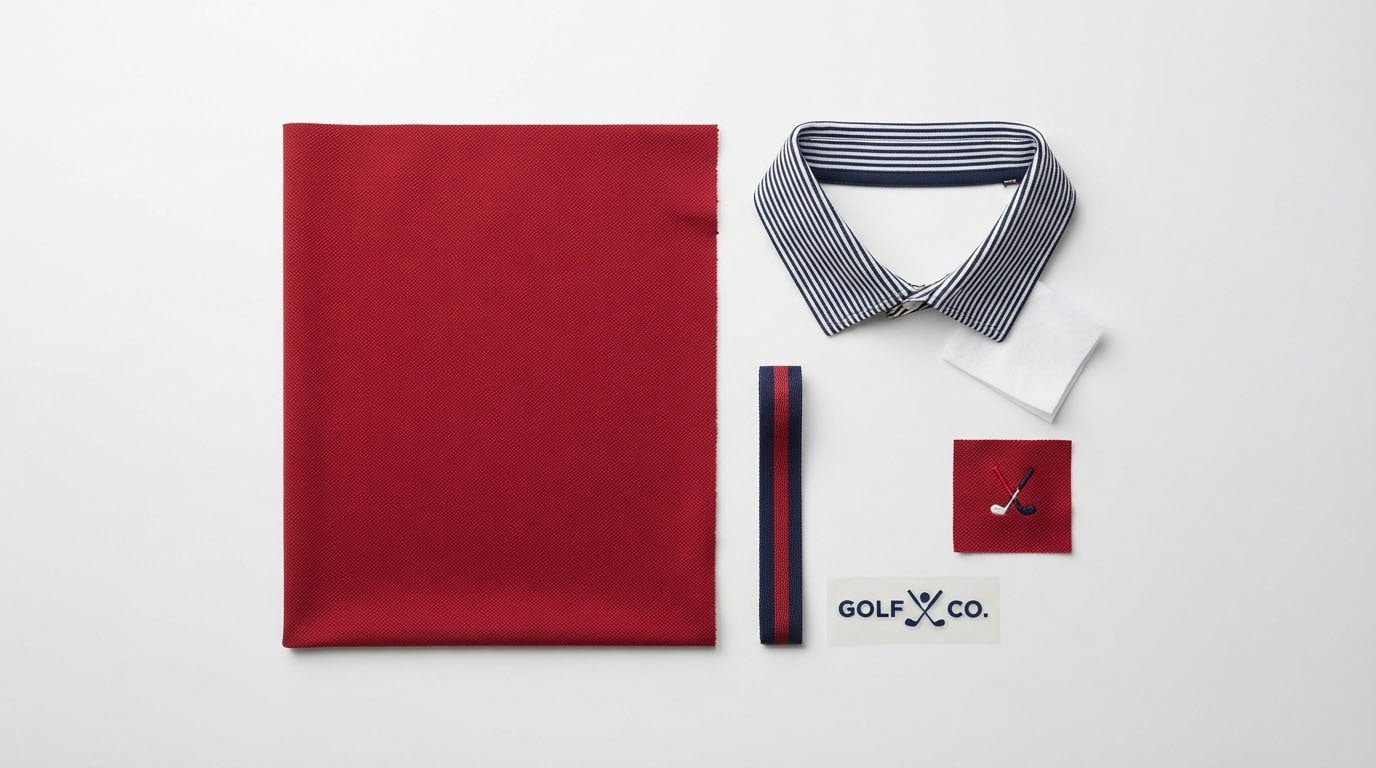
For custom golf polo shirts, the testing scope may need to include collars, plackets, embroidery, printed panels and applied logos.
| Component or Combination | Potential Issue | Useful Verification |
|---|---|---|
| Main body fabric | Fading or transfer during care and wear | Appropriate tests on production-representative finished fabric |
| Dark body with a light collar or panel | Staining between garment components | Assessment using the actual material combination |
| Embroidery thread on a light body | Thread color transferring to surrounding fabric | Testing of the selected thread and representative embroidery |
| Heat-transfer logo on dark polyester | Garment dye affecting the transfer color | Application testing on the actual fabric and transfer system |
| Pocket lining, binding or neck tape | An untested trim introducing color transfer | Include relevant contact materials in the testing plan |
Check Actual Material Combinations
Consider a hypothetical red polo with a white chest logo and a striped collar. A passing report on the plain red fabric leaves questions about the applied logo and collar materials unanswered.
Ask the laboratory how to assess those combinations. If specimen preparation modifies a standard method, the report should identify the modification. A supplementary garment check should not be presented as an unmodified standard test.
For heat-transfer applications, evaluate the fabric, transfer material and application conditions together. A transfer that performs well on one fabric may behave differently on another.
Colorfastness also does not establish every aspect of decoration durability. Peeling, cracking, adhesion and embroidery appearance may require separate checks.
For production controls specific to all-over printing, see our sublimation quality control checklist.
What Should a Buyer Put in the Testing Specification?
Replace “good colorfastness” with a requirement that another person can execute and audit.
| Specification Field | What to Record |
|---|---|
| Product identity | Style, colorway and order reference |
| Material identity | Fabric reference, composition and finishing state |
| Traceability | Dye-lot, trim-batch and decoration references |
| Test method | Method number, agreed edition and selected procedure |
| Conditions | Relevant temperature, detergent, exposure and other method settings |
| Specimen coverage | Base fabric, decorated area, trim or assembled combination |
| Acceptance limits | Separate limits for the reported outcomes |
| Sampling coverage | Which colors, lots and components are represented |
| Approval gate | When results must be accepted before production proceeds |
| Failure action | Hold, investigation, correction, retesting and release authority |
Example Wording for a Supplier Brief
For this style, submit the proposed colorfastness testing plan before bulk approval. Identify the methods, procedures, specimen coverage and acceptance limits for laundering, perspiration, dry and wet rubbing, and light exposure. Include the agreed assessment of contrast materials and decorations. Reports must identify the submitted samples and relevant production lots. Hold affected material or garments when a required result fails or evidence is incomplete, pending documented disposition.
This wording defines the scope of the discussion. The final agreement still needs completed test conditions, numerical limits and sampling coverage.
During fabric sourcing, confirm whether the proposed evidence represents the intended finished material. A later change in fabric treatment, dyeing or decoration may require renewed verification.
Align Testing with Intended Care
The selected laundering procedure should be appropriate to the product’s intended care and the buyer’s protocol. Laboratory accelerated tests and ordinary home washing are different procedures.
For example, AATCC TM61 approximates certain color effects of repeated laundering under controlled conditions. It does not establish a universal garment lifetime or justify an unspecified “50 washes” claim.
If the product carries a repeated-wash durability claim, define the procedure, number of cycles, evaluated properties and acceptance limits separately.
How Should Brands Verify Bulk Production?
Development approval establishes a reference. Bulk verification checks whether the production materials and processes remain covered by the agreed evidence.
Define coverage by color, material lot, trim batch and decoration system. Testing frequency should reflect the order’s risk and written requirements; there is no universal rule that every garment needs destructive laboratory testing.
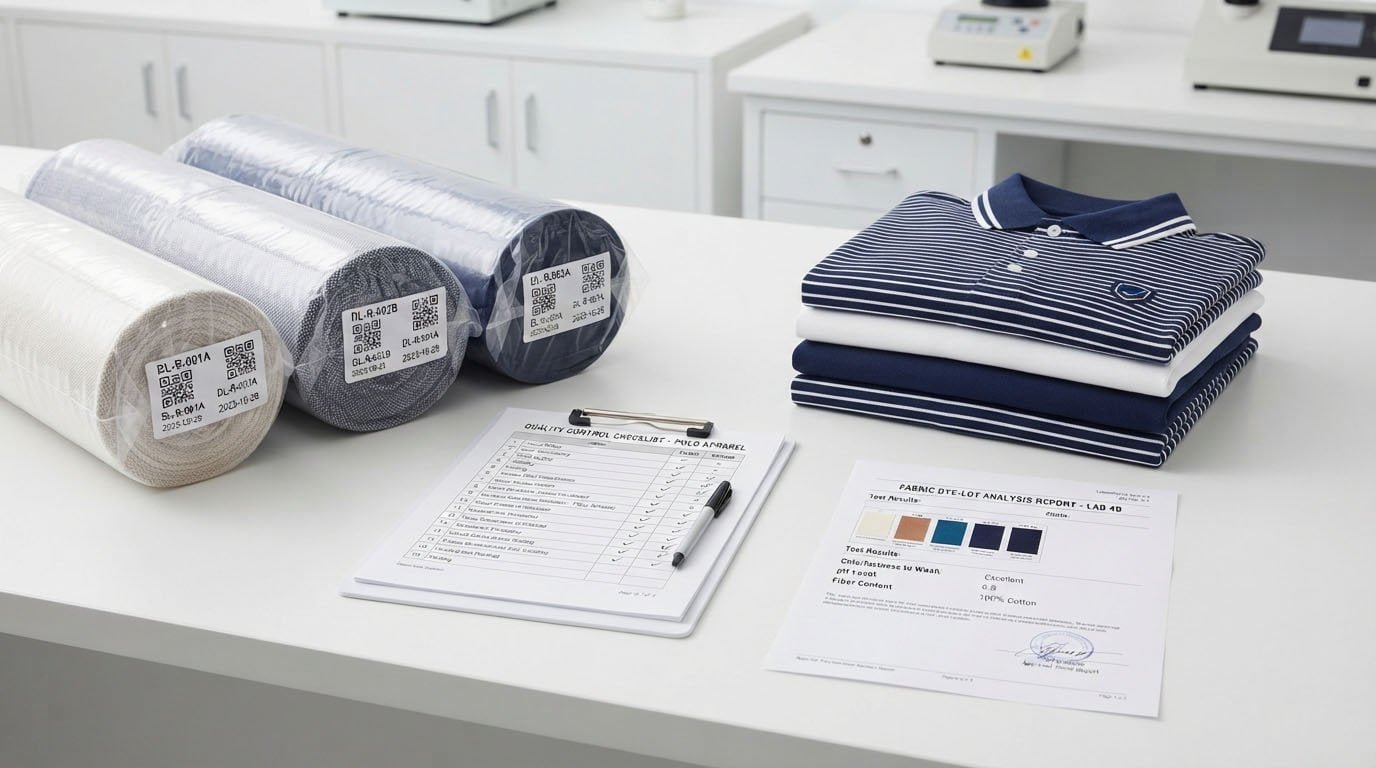
Use Three Approval Gates
- Before cutting: verify the relevant bulk fabric and trim identities, report coverage and required approvals.
- After decoration setup: assess representative production pieces made with the intended fabric, decoration materials and application conditions.
- Before shipment: confirm required finished-product results, lot coverage and closure of outstanding failures.
Reassess coverage when a relevant fabric lot, trim, supplier, finish or decoration process changes.
Keep laboratory testing connected to the broader golf apparel factory QC checklist, where construction, measurements, labels and packaging have their own inspection requirements.
Use a Clear Release Decision
| Decision | Evidence Condition | Action |
|---|---|---|
| Approve | Required results meet agreed limits and cover the relevant production scope | Record approval for the identified scope |
| Hold | Results are missing, traceability is unclear or required testing is incomplete | Obtain evidence before releasing affected goods |
| Reject or correct | A required result fails | Isolate affected goods, investigate and document disposition |
If corrective work is proposed, verify the corrected result. Do not assume rewashing, additional finishing or changing transfer settings has solved the problem.
Record what changed, which goods were affected and what evidence supports the final release decision.
Buyer Checklist: What to Check on a Test Report
Before accepting a report, confirm:
- The report number, issuing laboratory and testing dates are identifiable.
- The sample description matches the material or component being approved.
- The color and production-lot connection are documented.
- The method, edition and selected conditions are stated.
- Color-change and staining results are separated where applicable.
- Dry and wet rubbing results are individually reported.
- Light results identify the exposure and evaluation basis.
- Required decorations and contrast combinations are covered.
- Any deviations or subcontracted tests are disclosed.
- Acceptance is assessed against the agreed specification.
A report logo or an overall “PASS” is insufficient if the underlying scope is unclear.
Also distinguish colorfastness evidence from other documentation. A chemical screening report, material certificate or quality-management certificate should not be assumed to establish the colorfastness performance of a specific order.
Frequently Asked Questions
Can a Damp White Cloth Replace Laboratory Testing?
It can reveal obvious transfer during an informal screening check. It cannot establish compliance with a laboratory method because moisture, pressure, rubbing action and assessment conditions are uncontrolled.
Use it to identify concerns and request further investigation.
Does a Passing Wash Test Prove That a Polo Will Resist Sunlight?
No. Laundering and light exposure assess different challenges. Select a lightfastness method and exposure appropriate to the outdoor product.
Can One Colorway Represent the Whole Collection?
Do not assume so. Colorways may use different dyes, prints, trims or material combinations. Any representative testing approach should document why the selected specimens cover the remaining products.
Does Testing Every Size Add Value?
When sizes share the same materials and processes, size alone may add little to a colorfastness plan. A different print layout, trim or decoration can change coverage needs, however. Confirm specimen selection with the laboratory.
Is Shade Matching the Same as Colorfastness?
No. Shade matching assesses appearance against an approved color reference. Colorfastness assesses resistance to change or transfer after a defined exposure. Both may matter, but one does not establish the other.
Conclusion
Effective colorfastness control connects the garment design to the test method, the report to the production lot, and the result to a written acceptance decision.
Before approving bulk, confirm four things: what was tested, under which conditions, against which limits, and which production materials the evidence covers. That makes testing useful for purchasing and production decisions.
For a FUWAY project, send your fabric references, colorways, decoration details and buyer testing requirements. These provide the starting point for agreeing on testing scope and approval checkpoints.