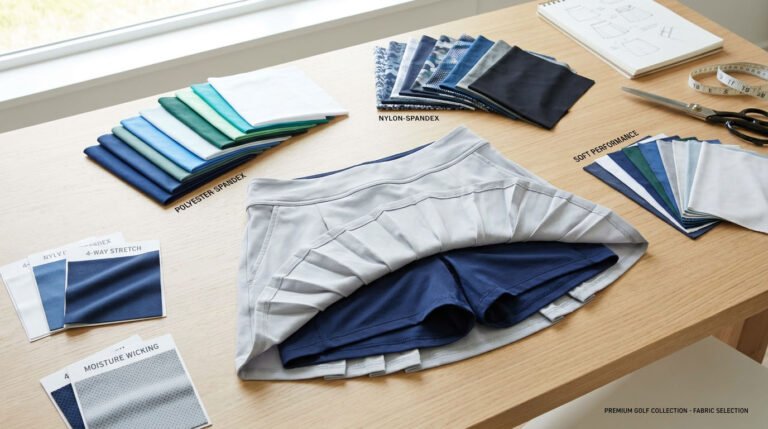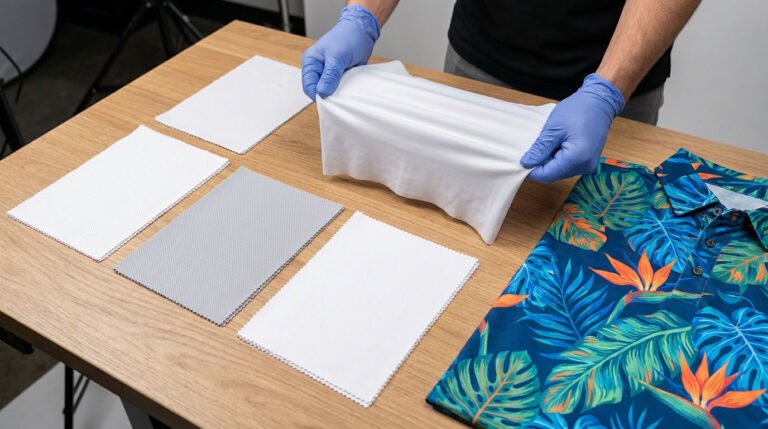
Choosing the best golf shorts fabric for hot weather involves more than finding a lightweight polyester or nylon blend. A fabric that feels comfortable in dry heat may cling to the skin during a humid summer round. Even a breathable material can feel warm when combined with heavy pockets or a restrictive waistband.
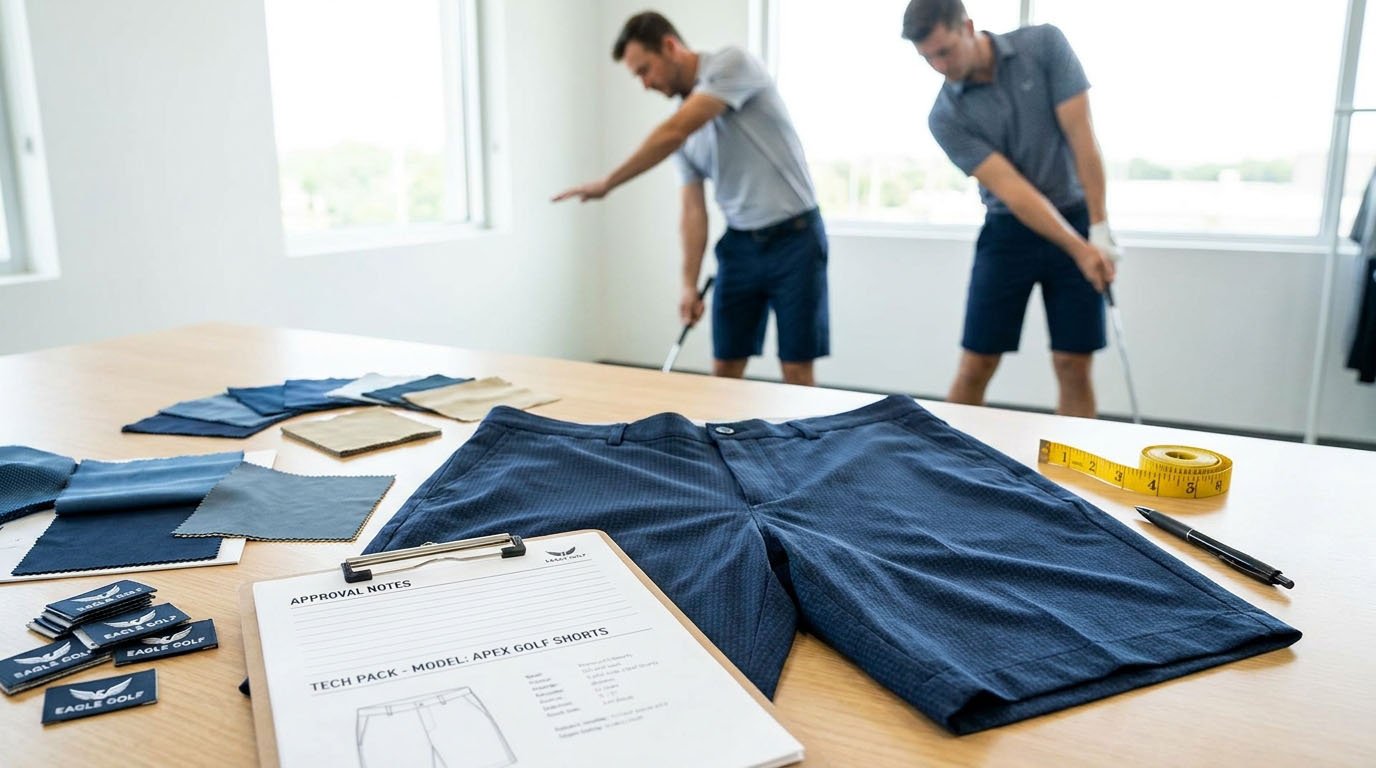
For most performance golf brands, lightweight woven polyester-elastane and nylon-elastane fabrics are strong starting points. However, the best choice depends on climate, airflow, moisture management, stretch recovery, and finished-garment construction.
This guide explains how to evaluate hot-weather golf shorts fabrics, compare sourcing requirements, and approve materials before bulk production.
Quick Answer: Which Golf Shorts Fabric Works Best in Hot Weather?
There is no single fabric that performs best in every hot climate.
Use this quick sourcing guide to narrow down suitable options.
| Brand Requirement | Fabric to Consider | Main Priority |
|---|---|---|
| Hot, dry conditions | Lightweight woven polyester or polyester-elastane | Airflow and comfort |
| Hot, humid conditions | Quick-drying polyester or nylon performance weave | Moisture management and low skin cling |
| Premium summer collection | Lightweight nylon-elastane or soft-touch polyester blend | Hand feel and performance |
| Athletic golf shorts | Performance woven fabric with suitable multidirectional stretch | Mobility and recovery |
| Classic relaxed golf shorts | Breathable woven fabric with moderate stretch | Airflow and structured fit |
Our recommendation: Shortlist two or three fabrics based on your target market, then evaluate them through finished-garment samples.
A fabric composition alone cannot confirm how cool or comfortable the final golf shorts will feel.
Key 1: Match Golf Shorts Fabric to Your Target Climate
Hot-weather golf shorts must handle both external heat and moisture generated during play.
However, dry heat and humid heat create different comfort challenges. This makes climate one of the first factors brands should communicate to their fabric suppliers.
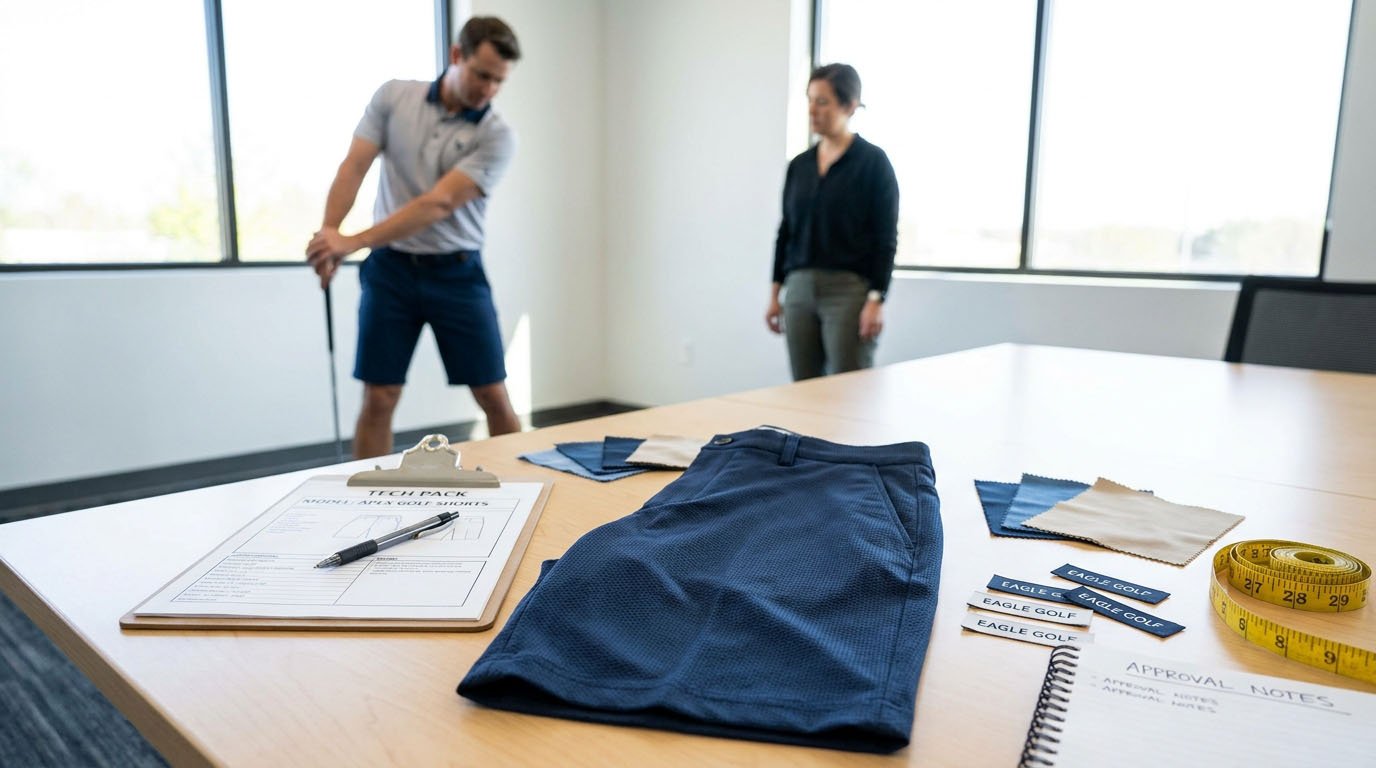
Dry Heat: Prioritize Airflow and Sun Exposure
In dry conditions, such as summer golf in Arizona, moisture can evaporate relatively quickly when air circulation is sufficient.
Brands should prioritize:
- Good air permeability
- Lightweight but sufficiently opaque construction
- Comfortable drape without excessive skin contact
- Appropriate UV protection where required
Open or engineered woven structures may improve ventilation, but fabric openness must be balanced against opacity and durability.
A lightweight fabric is not automatically more breathable. A dense, tightly woven material may restrict airflow despite having a low GSM.
Humid Heat: Prioritize Moisture Management and Low Cling
Humidity slows sweat evaporation, making it more difficult for golfers to remain comfortable.
For markets such as Florida or Southeast Asia, evaluate:
- Moisture spreading and drying behavior
- Fabric cling when damp
- Air circulation around the legs
- Inner-surface texture
- Comfort during prolonged walking
A textured inner surface may help reduce continuous skin contact, but its effectiveness should be checked during wear testing.
Do not assume nylon is always better for humidity or polyester is always better for dry heat. Both fibers can be engineered for different performance requirements.
Climate-Based Fabric Sourcing Matrix
| Evaluation Factor | Dry Heat | Humid Heat |
|---|---|---|
| Air permeability | High priority | High priority |
| Moisture management | Important | High priority |
| Drying performance | Important | High priority |
| Wet cling resistance | Important | High priority |
| Fabric weight | Lightweight options | Lightweight options |
| UV protection | Evaluate for exposed use | Evaluate based on market |
| Finished-garment testing | Required | Required |
These are sourcing priorities, not universal pass/fail standards. The final specification should reflect the intended garment and performance claims.
Key 2: Evaluate the Four Properties That Matter Most
Brands often receive fabric catalogs describing materials as breathable, moisture-wicking, quick-drying, or cooling.
These terms are related, but they describe different properties.
1. Air Permeability
Air permeability measures how readily air passes through a fabric under specified test conditions.
It depends on yarn structure, fabric density, weave, and finishing.
For hot-weather shorts, suitable airflow can improve comfort, particularly when combined with a fit that allows air movement around the legs.
2. Moisture-Wicking Performance
Moisture wicking describes how liquid moisture moves through or across a textile.
A well-designed moisture-management fabric can help distribute sweat away from concentrated wet areas.
However, wicking does not automatically mean a fabric dries quickly or feels cool.
3. Drying Speed
Quick-drying performance matters when shorts become damp from sweat, humidity, or light rain.
Actual drying behavior depends on the fabric's construction, moisture retention, finishing, and surrounding conditions.
Brands should assess drying performance under a defined test method rather than relying only on supplier descriptions.
4. Stretch and Recovery
Golfers rotate, bend, walk, and sit repeatedly during a round.
Fabric needs sufficient flexibility without losing its shape.
Stretch determines how far a fabric extends. Recovery determines how well it returns to its original dimensions.
Poor recovery may cause bagging around the seat or distortion after repeated movement.
For a detailed comparison of fiber characteristics and blends, see our Best Fabric for Golf Shorts: Polyester vs Nylon vs Spandex Blends guide.
For hot-weather sourcing, the more important question is whether the selected fabric performs as required under the intended conditions.
Key 3: Balance GSM, Stretch, and Opacity
Many brands begin fabric sourcing by requesting the lightest available material.
This approach can create problems when the finished shorts lack opacity, structure, or recovery.
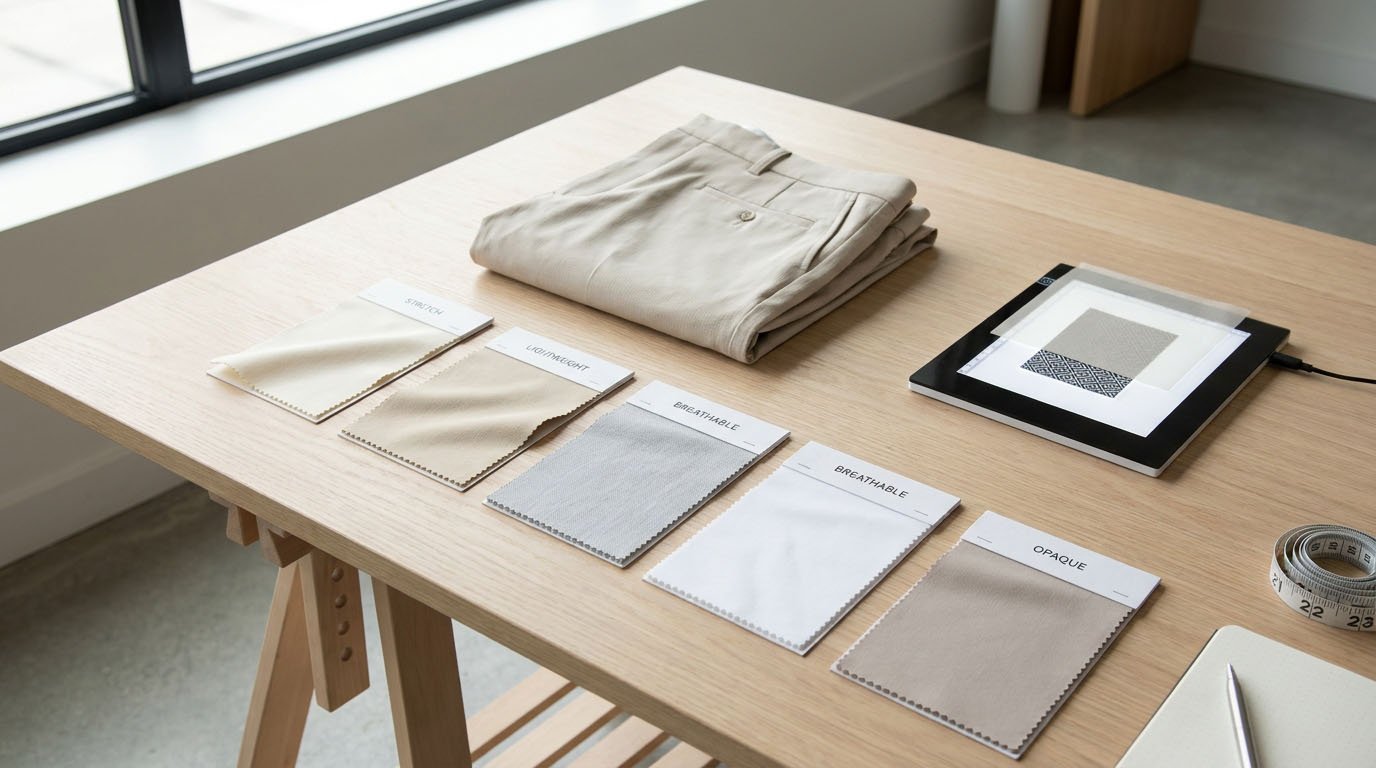
Does Lower GSM Mean Cooler Golf Shorts?
Not necessarily.
GSM measures fabric mass per square meter. It does not directly measure breathability or cooling performance.
For example, brands developing lightweight woven golf shorts might compare fabric options around 130–150 GSM with slightly more structured options around 150–170 GSM.
These are illustrative sampling ranges, not universal recommendations.
The same GSM can produce different results depending on:
- Fabric density and weave
- Yarn size and construction
- Surface finishing
- Stretch properties
- Color and opacity
The right GSM is the lightest suitable construction that still meets the garment's opacity, durability, appearance, and comfort requirements.
How Much Stretch Do Summer Golf Shorts Need?
Four-way stretch is useful for athletic and slimmer-fitting shorts that require greater freedom of movement.
However, relaxed or classic golf shorts may perform well with two-way or mechanical stretch.
More elastane does not automatically improve cooling, comfort, or recovery.
Instead, check whether the finished shorts allow unrestricted movement during a golf swing, walking, and crouching.
Do Not Ignore Light-Color Opacity
White, beige, and other light-colored golf shorts require additional evaluation.
Very lightweight fabrics may reveal pocket bags, underwear outlines, or seam allowances.
Before approval, check opacity under natural daylight and evaluate how the fabric appears when damp.
For brands developing summer collections, opacity should be evaluated alongside weight and breathability—not after the fabric has already been ordered.
When comparing available constructions, FUWAY's fabric sourcing service can help brands shortlist suitable woven options for their product requirements.
Key 4: Design the Entire Golf Short for Hot-Weather Comfort
Selecting a breathable outer fabric is only part of developing comfortable summer golf shorts.
The finished garment also contains pockets, waistbands, seams, and overlapping fabric layers. These elements affect airflow, moisture accumulation, and comfort.
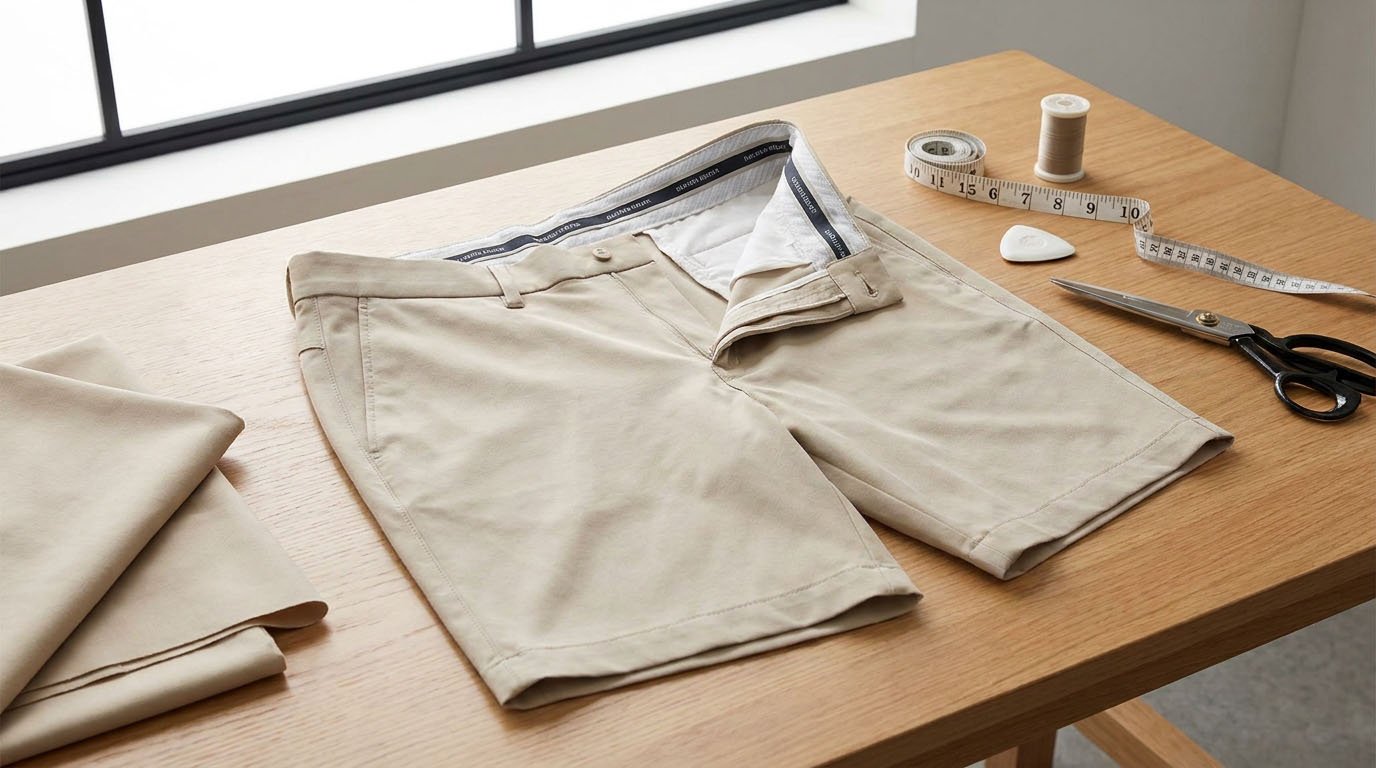
Pocket Construction and Fabric Layering
A lightweight shell fabric may feel comfortable as a swatch but warmer when additional layers are sewn into the garment.
Common problem areas include:
- Front pocket bags
- Waistband facings and interlinings
- Overlapping pocket and side-seam layers
- Reinforced areas around openings
Consider lightweight pocketing or breathable mesh where the design allows.
However, pocket materials must still provide adequate durability, softness, and opacity.
Waistband Design
The waistband remains in close contact with the body throughout a round.
A thick or poorly ventilated construction may increase discomfort, particularly in humid conditions.
Brands should evaluate waistband thickness, inner fabric texture, elastic recovery, and contact pressure during wear trials.
A more elaborate ventilation construction is not always necessary. Sometimes reducing unnecessary material layers achieves a better balance.
Fit and Movement
A very close fit can increase fabric-to-skin contact, while a more relaxed cut may allow greater air circulation.
Neither is automatically superior.
Fit should match the intended golfer, fabric stretch, and product positioning.
Practical development tip: Test the finished shorts while walking, swinging, sitting in a golf cart, and bending. Pay attention to the waistband, seat, inner thighs, and pocket areas.
These observations often reveal comfort issues that fabric swatches cannot show.
Key 5: Validate Hot-Weather Fabric Before Bulk Production
A supplier's fabric specification is a useful starting point, but it is not sufficient evidence that finished shorts will meet your brand's expectations.
Brands should establish a practical approval process covering material performance, garment comfort, and production consistency.
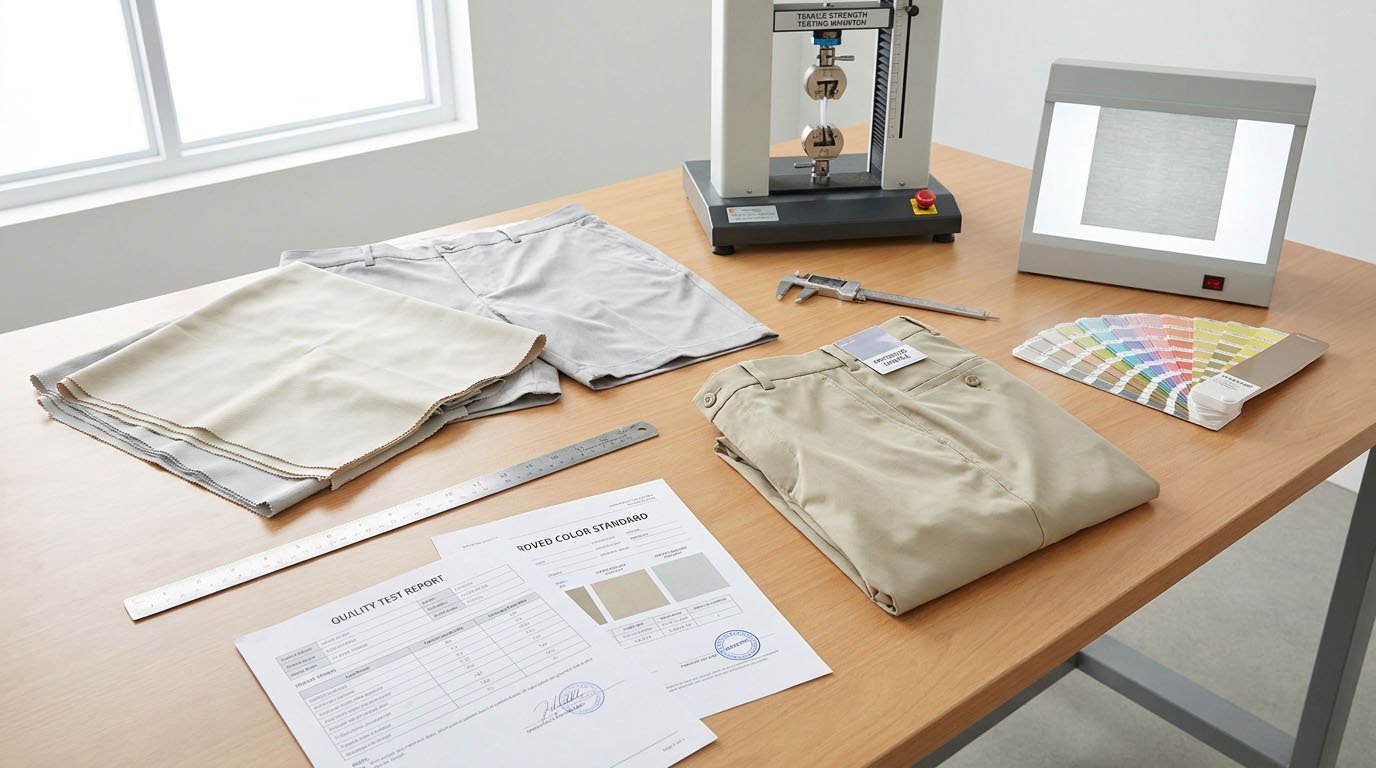
Stage 1: Verify Fabric Properties
Ask the supplier for relevant test results based on the performance claims and intended market.
| Test or Evaluation | What Brands Should Confirm |
|---|---|
| Air permeability | Whether airflow meets the agreed fabric requirement |
| Moisture management | Whether the fabric transports moisture as intended |
| Drying behavior | Whether drying performance supports the product claim |
| Stretch and recovery | Whether the fabric retains suitable shape after movement |
| Dimensional stability | Whether washing causes unacceptable changes |
| Color fastness | Whether perspiration and laundering affect appearance |
| Opacity | Whether light colors provide sufficient coverage |
Not every fabric requires every test.
Agree on relevant methods, conditioning, sample preparation, and acceptance criteria before testing.
For material-specific documentation, brands can also review FUWAY's test reports.
Stage 2: Evaluate Finished-Garment Samples
Develop complete shorts using the proposed shell fabric and actual garment construction.
During sampling, check:
- Comfort in warm and humid conditions.
- Fabric cling after perspiration.
- Mobility during swings and crouching.
- Waistband comfort and pocket performance.
- Appearance, recovery, and fit after laundering.
A short on-course wear trial can provide useful feedback, although it does not replace controlled laboratory testing where measurable claims are required.
Shrinkage and dimensional changes should be assessed against the agreed garment requirements. For detailed procedures, see our Golf Apparel Fabric Shrinkage Testing Guide.
Stage 3: Confirm Bulk Fabric Consistency
Before bulk cutting, compare production fabric against the approved sample.
Key checkpoints include fabric construction, GSM, color, hand feel, stretch, finishing, and relevant performance results.
Record the approved fabric specification and reference sample so that later deliveries can be evaluated consistently.
Finished-garment measurements should also follow the approved tech pack. At FUWAY, specified measurement points are controlled within ±1.0 cm of the target dimensions, or tighter where the project requires.
Bulk approval should be based on agreed evidence—not simply confirmation that the fiber composition matches the sample.
Key 6: What Should Brands Include in a Hot-Weather Fabric RFQ?
A clear request for quotation (RFQ) helps suppliers recommend materials that match your product instead of sending generic swatch catalogs.
Before requesting fabrics, prepare a concise specification covering the following information.
| RFQ Item | Information to Provide |
|---|---|
| Target market | Country, region, and expected summer conditions |
| Product type | Men's or women's golf shorts and intended use |
| Fit and construction | Athletic or classic fit, inseam, pockets, waistband |
| Fabric priorities | Airflow, moisture management, drying, low cling |
| Weight and stretch | Preferred starting range and movement requirements |
| Color requirements | Including opacity expectations for light colors |
| Testing | Required performance claims and acceptance criteria |
| Commercial details | Estimated quantity, colors, price target, delivery requirements |
Example: Hot-Weather Golf Shorts Fabric Request
A brand developing summer golf shorts could send the following brief:
We are developing lightweight woven golf shorts for warm and humid markets. Please recommend two or three polyester-based or nylon-based fabric options with suitable airflow, moisture management, and stretch recovery. We need good opacity in light colors and comfortable performance during walking and golf swings. Please provide available GSM, construction details, relevant test information, fabric MOQ, and sample options.
This gives the manufacturer enough information to suggest materials and identify requirements that need further testing.
Also clarify whether fabric minimums apply per material, color, or finish. Fabric sourcing requirements may differ from the finished-garment MOQ.
Frequently Asked Questions
What is the best golf shorts fabric for hot and humid weather?
A lightweight performance woven fabric with suitable airflow, moisture management, quick-drying behavior, and low skin cling is a strong choice.
Polyester-elastane and nylon-elastane blends can both work well. Test the actual fabric rather than selecting by fiber name alone.
Is nylon cooler than polyester for summer golf shorts?
Not necessarily.
Some nylon fabrics offer a smoother, softer hand feel, while many engineered polyester fabrics provide excellent summer performance.
Cooling comfort depends on construction, moisture behavior, fit, and environmental conditions rather than the base fiber alone.
What is the ideal GSM for summer golf shorts?
There is no universal ideal GSM.
Lighter woven options may be suitable for summer performance shorts, but the selected weight must also provide adequate opacity, structure, and durability.
Compare swatches and finished samples before specifying a target range.
Are four-way stretch golf shorts better for hot weather?
Four-way stretch can improve mobility, especially in athletic fits.
However, stretch direction alone does not determine how cool a garment feels. Breathability, drying performance, recovery, and fit also matter.
How can brands prevent golf shorts from clinging when sweaty?
Evaluate moisture management, drying behavior, inner-surface texture, and garment fit.
Avoid unnecessary fabric layering in areas that retain moisture. Test the finished shorts during realistic wear conditions to identify cling.
Should hot-weather golf shorts have a water-repellent finish?
Only when water repellency is relevant to the product.
A DWR finish may be useful for dew or light rain, but it should not be treated as a substitute for moisture management or quick-drying performance.
If water repellency is required, check its durability and any effect on the finished fabric's comfort.
Conclusion: Choose Fabric Based on Climate and Finished-Garment Performance
The best golf shorts fabric for hot weather is not determined by fiber composition or GSM alone.
For brands developing summer golf shorts, the strongest approach is to:
- Define the target climate and golfer.
- Shortlist fabrics based on airflow, moisture management, and mobility.
- Balance weight with opacity and garment appearance.
- Evaluate pockets, waistbands, and fit as part of the complete design.
- Validate finished samples and confirm bulk fabric consistency.
Both polyester-elastane and nylon-elastane can support high-quality hot-weather golf shorts when properly selected and tested.
At FUWAY, we support golf apparel brands with fabric sourcing, custom garment development, sampling, and bulk production.
If you are developing a summer golf shorts collection, contact FUWAY to discuss your target market, fabric requirements, fit, and manufacturing needs.