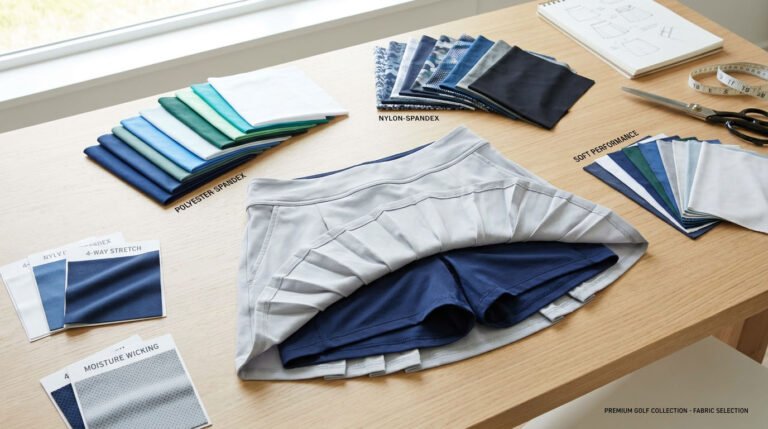
Choosing the best golf shirt fabric for sublimation involves more than selecting polyester. The wrong fabric can produce dull colors, distorted patterns, poor stretch recovery, or uncomfortable golf polos—even when the artwork looks excellent.
For the brightest and most consistent sublimation results, white or light-colored 100% polyester is generally the best starting point. High-polyester blends, such as polyester-spandex, are also worth testing when your brand needs additional stretch and a softer athletic feel.
The best choice depends on three factors: polyester content, knit construction, and artwork requirements.
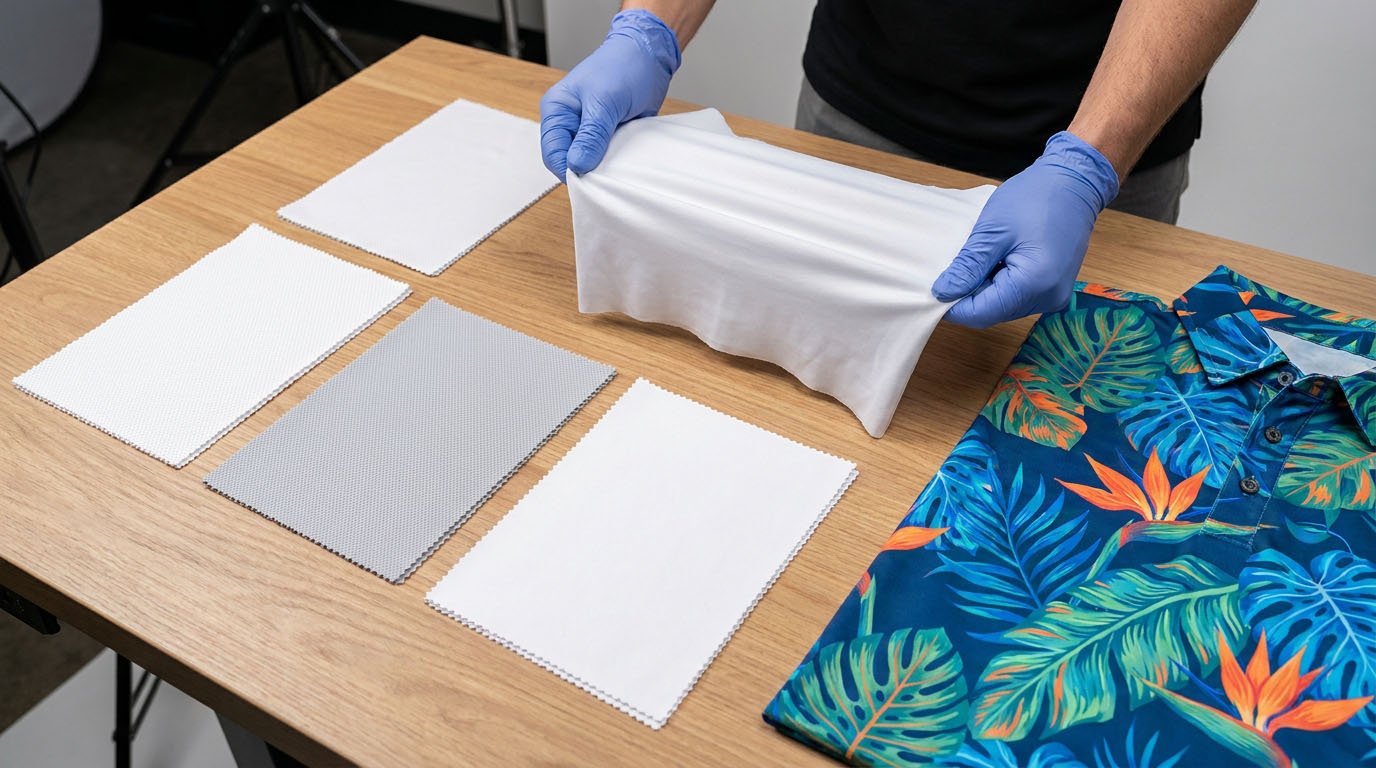
Quick Answer: Which Fabric Is Best for Sublimated Golf Shirts?
For custom golf polo development, these are the most practical starting options:
| Fabric Option | Sublimation Performance | Main Advantage | Best Application |
|---|---|---|---|
| 100% Polyester Jersey | Excellent potential | Smooth, lightweight surface | All-over printed golf shirts |
| 100% Polyester Interlock | Excellent potential | Smooth surface with greater stability | Detailed graphics and premium polos |
| Polyester-Spandex Interlock | Very good when validated | Stretch and recovery | Athletic performance golf polos |
| Polyester Mini-Piqué | Good, depending on texture | Traditional polo appearance | Club and corporate golf shirts |
| Polyester Micro-Mesh | Varies with mesh structure | Lightweight, ventilated feel | Summer performance collections |
| High-Polyester Recycled Fabric | Good when validated | Recycled fiber option | Sustainability-focused collections |
Our recommendation: Start with smooth polyester jersey or interlock for detailed sublimation artwork. Consider polyester-spandex when stretch is essential, and mini-piqué when your collection needs a traditional golf polo appearance.
These are selection guidelines, not guaranteed performance ratings. Final approval should be based on printed samples using the intended production fabric.
Step 1. Which Polyester Content Works Best for Sublimation?
Polyester is the preferred fiber for conventional dye sublimation because sublimation dyes can penetrate and bond within polyester fibers under controlled heat.
However, polyester percentage affects color reproduction, while fabric construction and finishing influence comfort and printing consistency.
100% Polyester: Best Starting Point for Vibrant Prints
White 100% polyester is usually the safest starting choice for brands prioritizing:
- Bright, saturated colors
- Detailed logos and intricate patterns
- Full-coverage sublimation designs
- Consistent color reproduction
- A smooth print without a raised ink layer
But not all 100% polyester fabrics feel or perform the same.
A lightweight jersey and a dense interlock may contain identical fibers yet differ significantly in softness, stretch, breathability, and garment structure.
Polyester-Spandex: Better Stretch, With Additional Testing
Polyester-spandex blends can provide additional stretch and recovery for fitted performance golf polos.
For example, 90/10 or 95/5 polyester-spandex may be suitable starting compositions, depending on the desired fabric construction.
However, spandex does not absorb conventional polyester sublimation dye in the same way as polyester.
Higher non-polyester content may affect color appearance, and the fabric's elastic recovery must remain acceptable after heat transfer.
Brands should verify:
- Color saturation after printing
- Stretch and recovery after heat exposure
- Dimensional stability
- Hand feel and surface appearance
Important: A higher polyester percentage generally supports stronger dye uptake, but it does not automatically make the finished golf shirt more comfortable or higher quality.
Can You Sublimate Polyester-Cotton Blends?
Yes, conventional sublimation can color the polyester portion of a polyester-cotton blend.
However, cotton fibers do not retain conventional sublimation dyes in the same way.
As a result, the design may look softer, faded, or heathered compared with a high-polyester fabric.
For brands seeking vivid, full-color golf polo designs, high-polyester fabrics are generally the better choice.
If you are still comparing materials for different golf apparel collections, see our Best Fabric for Golf Polo Shirts guide.
Step 2. Interlock vs Jersey vs Mini-Piqué: Which Prints Best?
Even when two fabrics have the same polyester content, their knit structures can produce different sublimation results.
The main difference is surface smoothness, texture, and dimensional stability during printing.
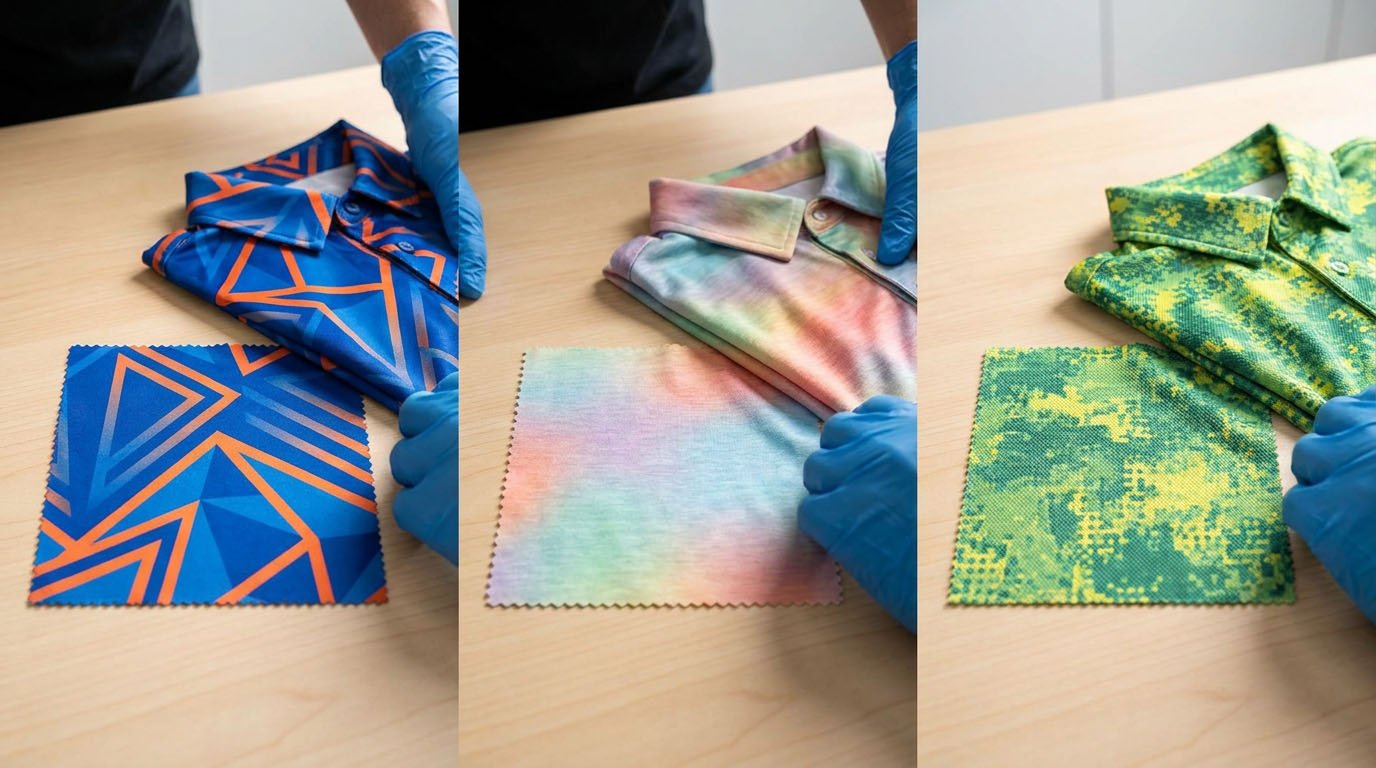
Polyester Interlock: Best for Detailed Artwork
Interlock is a double-knit construction with relatively smooth surfaces on both sides.
Its stable structure makes it a strong candidate for:
- Fine geometric patterns
- Gradients and photographic graphics
- Premium all-over printed golf polos
- Designs requiring clean visual detail
Interlock can also provide a more structured appearance than lightweight single jersey.
Best for: Brands developing premium golf shirts with complex sublimation artwork.
Polyester Jersey: Best for Lightweight Printed Polos
Single jersey generally offers a smooth face and a lighter, more flexible drape.
It works well for modern performance golf shirts featuring repeating patterns, colorful graphics, or seasonal collections.
However, lightweight jersey may require additional attention to fabric distortion, opacity, and edge curling during garment development.
Best for: Lightweight, athletic golf polos with full-color prints.
Polyester Mini-Piqué: Best for Traditional Golf Style
Mini-piqué offers the recognizable textured appearance associated with classic golf polo shirts.
Its surface texture can influence how fine artwork transfers and appears.
Small typography, thin lines, and photographic graphics may look less defined on some piqué constructions than on smooth interlock.
For simple repeating patterns, geometric designs, and traditional golf styling, mini-piqué remains a useful option.
Best for: Golf clubs, corporate collections, and brands seeking a classic polo texture.
For a broader comparison of their construction and garment characteristics, read our Piqué vs Jersey vs Interlock Golf Polo Fabric Guide.
What About Polyester Micro-Mesh?
Micro-mesh may provide useful ventilation for warm-weather golf apparel.
However, an open or uneven surface can make fine graphic reproduction more challenging.
Brands should evaluate how the mesh texture affects printed details, coverage, and appearance during stretching.
For complex artwork, smoother fabrics are usually the better starting point.
Step 3. How Do Fabric Color and Artwork Affect Sublimation Results?
Fabric color is one of the most overlooked factors when developing sublimated golf shirts.
Unlike printing methods that use an opaque white ink layer, conventional dye sublimation relies on the fabric's existing color as the background.
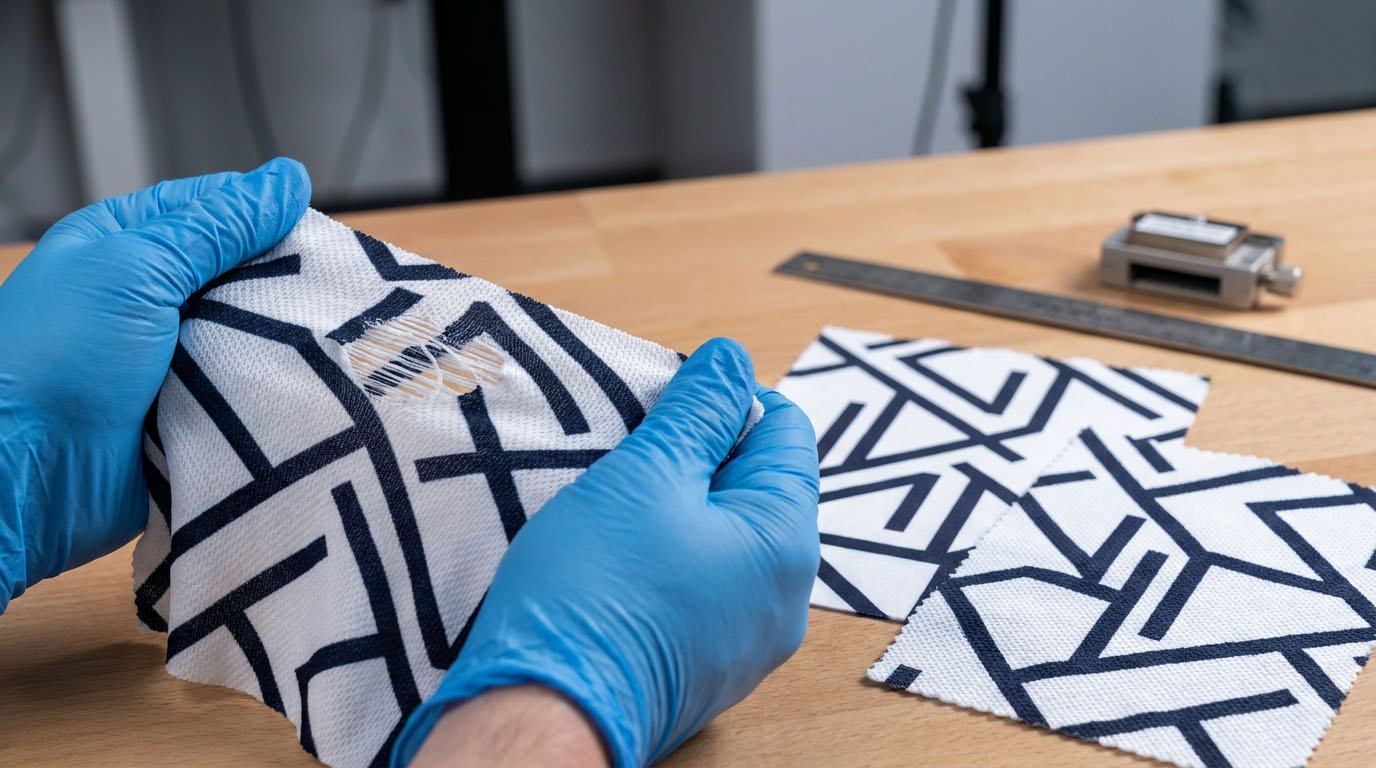
Why White Polyester Usually Works Best
White polyester provides a neutral base for reproducing bright colors, gradients, and detailed artwork.
Light-colored polyester can also work, but the existing base shade may influence the final print.
For example:
| Fabric Base Color | Expected Result | Recommendation |
|---|---|---|
| White | Strongest potential color accuracy | Preferred for full-color designs |
| Off-white / Cream | Warmer printed appearance | Test color-sensitive artwork |
| Light Gray | Colors may appear muted or shifted | Approve printed strike-off |
| Light Blue | Can alter printed color balance | Suitable only after testing |
| Navy / Black | Conventional sublimation colors have poor visibility | Avoid for designs requiring bright colors |
For a finished golf shirt featuring a dark navy or black sublimation pattern, the manufacturer can print the dark artwork onto suitable white or light-colored polyester rather than starting with dark-dyed fabric.
Match Artwork Complexity to Fabric Texture
A smooth fabric generally gives detailed artwork a more uniform printing surface.
Textured fabrics may work well with larger motifs but can reduce the apparent definition of fine elements.
| Artwork Type | Recommended Starting Fabric |
|---|---|
| Photographic or detailed graphics | Smooth polyester interlock |
| Fine geometric patterns | Interlock or smooth jersey |
| Repeating tropical prints | Jersey or interlock |
| Traditional club patterns | Mini-piqué or interlock |
| Lightweight summer graphics | Jersey or suitable micro-mesh |
Watch for White Grinning in Dark Prints
White grinning occurs when a dark printed fabric stretches and lighter areas of the yarn or knit structure become visible.
This can be especially noticeable in highly saturated, full-coverage designs.
To reduce the risk:
- Evaluate fabric density and construction.
- Test dark artwork on the actual material.
- Inspect the print while the fabric is stretched.
- Check the appearance at seams and high-movement areas.
A print that looks uniformly dark when laid flat may appear different during a golf swing.
Step 4. What GSM and Stretch Should Golf Brands Choose?
The best sublimation fabric must also function as a golf shirt.
Golfers expect enough flexibility for a full swing, comfortable moisture management, and an appropriate balance between lightness and coverage.
Choosing Fabric Weight
GSM measures fabric weight in grams per square meter.
The following ranges can serve as initial sourcing references rather than fixed performance standards.
| Fabric Weight | Typical Consideration | Potential Application |
|---|---|---|
| 140–160 GSM | Lightweight; check opacity and stability | Hot-weather athletic polos |
| 160–180 GSM | Balance of weight and coverage | General performance golf shirts |
| 180–200 GSM | More substantial feel; check breathability | Structured or traditional polos |
The same GSM can behave differently across jersey, interlock, and piqué constructions.
A 170 GSM jersey may feel lighter and drape differently from a 170 GSM interlock.
Brands should therefore compare actual fabric swatches and finished samples instead of approving material based on GSM alone.
Does Sublimation Affect Stretch?
The heat used during sublimation can influence fabric dimensions, surface appearance, and elastic recovery.
This is particularly important for polyester-spandex blends.
Before approval, verify that the printed fabric:
- Recovers adequately after stretching
- Maintains its intended dimensions
- Shows no unacceptable yellowing or surface changes
- Remains comfortable during movement
A fabric that stretches well before printing may behave differently afterward.
Moisture-Wicking and Breathability Still Matter
Sublimation compatibility does not guarantee moisture-wicking performance.
Fiber selection, knit structure, and finishing all influence how a golf shirt handles perspiration.
For warm-weather collections, prioritize suitable airflow and moisture management alongside print quality.
Brands requiring specific performance properties can discuss available options through FUWAY's Fabric Sourcing service.
Step 5. How Should Brands Test Fabric Before Bulk Sublimation?
A printed swatch may look excellent but still fail to represent the finished production garment.
The safest approach is to approve the intended fabric, artwork, and heat-transfer conditions together.
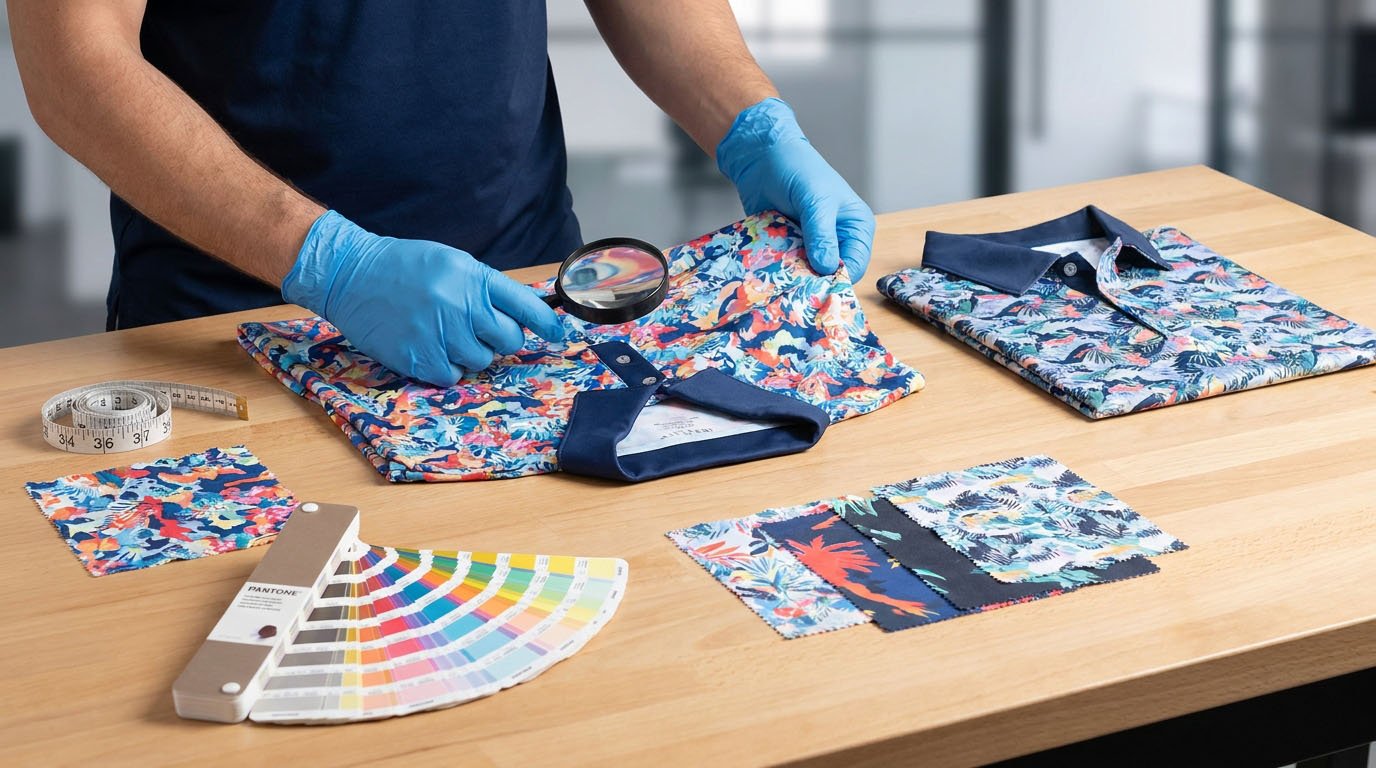
A Practical Fabric Approval Checklist
| Checkpoint | What to Verify | Main Risk |
|---|---|---|
| Fabric identity | Fiber content, construction, GSM | Incorrect material |
| Print strike-off | Colors, gradients, fine details | Poor color reproduction |
| Heat stability | Dimensions and surface after printing | Shrinkage or distortion |
| Stretch recovery | Fabric behavior after heat transfer | Loss of elasticity |
| Appearance under stretch | Dark colors and knit coverage | White grinning |
| Wash evaluation | Color appearance and dimensions after washing | Changes after laundering |
| Bulk consistency | Production material matches approved specification | Sample-to-bulk variation |
Approve the Actual Production Fabric
A supplier should not substitute an apparently similar material without approval.
Even when the fiber percentages and GSM are identical, changes in yarn, construction, finishing, or fabric lot may affect printing results.
For accurate production planning, confirm the final fabric specification and keep an approved printed reference.
If significant changes occur, repeat the relevant checks before mass production.
For details about the decoration workflow, visit FUWAY's Sublimation Printing service.
Step 6. Which Sublimation Fabric Should Your Brand Select?
For most custom golf apparel programs, the selection can be narrowed down by artwork, target customer, and wearing conditions.
Option A: Detailed All-Over Printed Golf Polos
Start with: White 100% polyester interlock or smooth jersey.
These are strong candidates when the main priority is sharp graphics, vibrant patterns, and reliable print reproduction.
Option B: Stretch Performance Golf Polos
Start with: High-polyester interlock or jersey blended with suitable elastane.
Test the final fabric after sublimation to confirm stretch recovery, dimensions, and color appearance.
This option is worth considering for athletic-fit collections.
Option C: Traditional Club-Style Golf Polos
Start with: High-polyester mini-piqué.
Choose this direction when classic texture and a more structured polo appearance matter more than photographic print detail.
Use actual strike-offs to confirm that the artwork remains sufficiently clear.
Option D: Lightweight Summer Golf Shirts
Start with: Lightweight polyester jersey or an appropriate micro-mesh.
Check opacity, airflow, moisture management, and printed appearance before deciding.
The best fabric is not necessarily the one with the brightest print. It is the one that meets your artwork, comfort, and production requirements together.
Frequently Asked Questions
Is 100% Polyester Always Best for Sublimated Golf Shirts?
For maximum color vibrancy, white 100% polyester is generally the preferred starting point. However, polyester-spandex blends may offer better stretch for athletic golf polos. The final choice depends on the design and performance requirements.
Can You Sublimate on 90% Polyester and 10% Spandex?
Yes, many polyester-spandex fabrics are suitable candidates for sublimation. However, compatibility depends on the specific material and heat-transfer conditions. Print quality, dimensional stability, and stretch recovery should be tested.
Is Piqué Fabric Good for Sublimation?
Polyester piqué can be suitable for sublimation. However, its textured surface may affect fine graphic definition. Smooth interlock or jersey is generally a better starting point for intricate artwork.
What Is the Best Fabric Weight for a Sublimated Golf Polo?
Many performance golf polo developments begin by comparing fabrics around 150–190 GSM. The appropriate weight depends on construction, opacity, climate, and desired hand feel. GSM alone does not determine quality.
Can Recycled Polyester Be Used for Sublimation Golf Shirts?
Yes. Suitable recycled polyester fabrics can be used for sublimation, provided their composition, printing compatibility, and required performance characteristics are verified. Recycled content claims should be supported by appropriate documentation.
Conclusion: Choose Fabric and Artwork Together
The best golf shirt fabric for sublimation is typically a white or light-colored, high-polyester fabric that delivers the required print clarity, stretch, comfort, and production consistency.
For detailed all-over graphics, smooth polyester interlock or jersey is a strong starting point. For stretch-focused performance polos, consider tested polyester-spandex blends. For traditional golf styling, polyester mini-piqué may be more appropriate.
At FUWAY, we support brands developing custom golf shirts with fabric selection, artwork review, sampling, and OEM/ODM production.
Planning a sublimated golf polo collection?
Share your artwork, target fabric weight, preferred fit, performance requirements, and estimated order quantity with our team.
Contact FUWAY to discuss suitable sublimation fabrics and sample development for your next golf apparel collection.