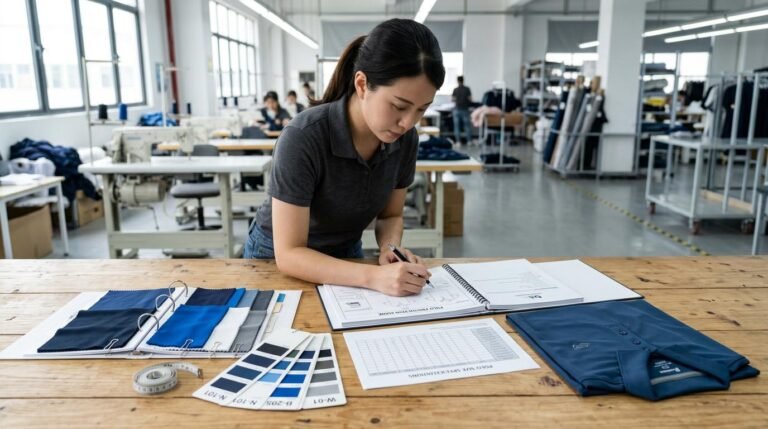
Choosing the right fabric for your golf polo is a critical decision. Pick the wrong one, and you could end up with a shirt that looks cheap, prints poorly, or fails on the course.
The best fabric depends on your brand's identity. Choose piqué for a classic, breathable feel. Select jersey for its smooth surface, perfect for modern prints. Opt for interlock when you need a premium, highly stable fabric for a luxury retail look.
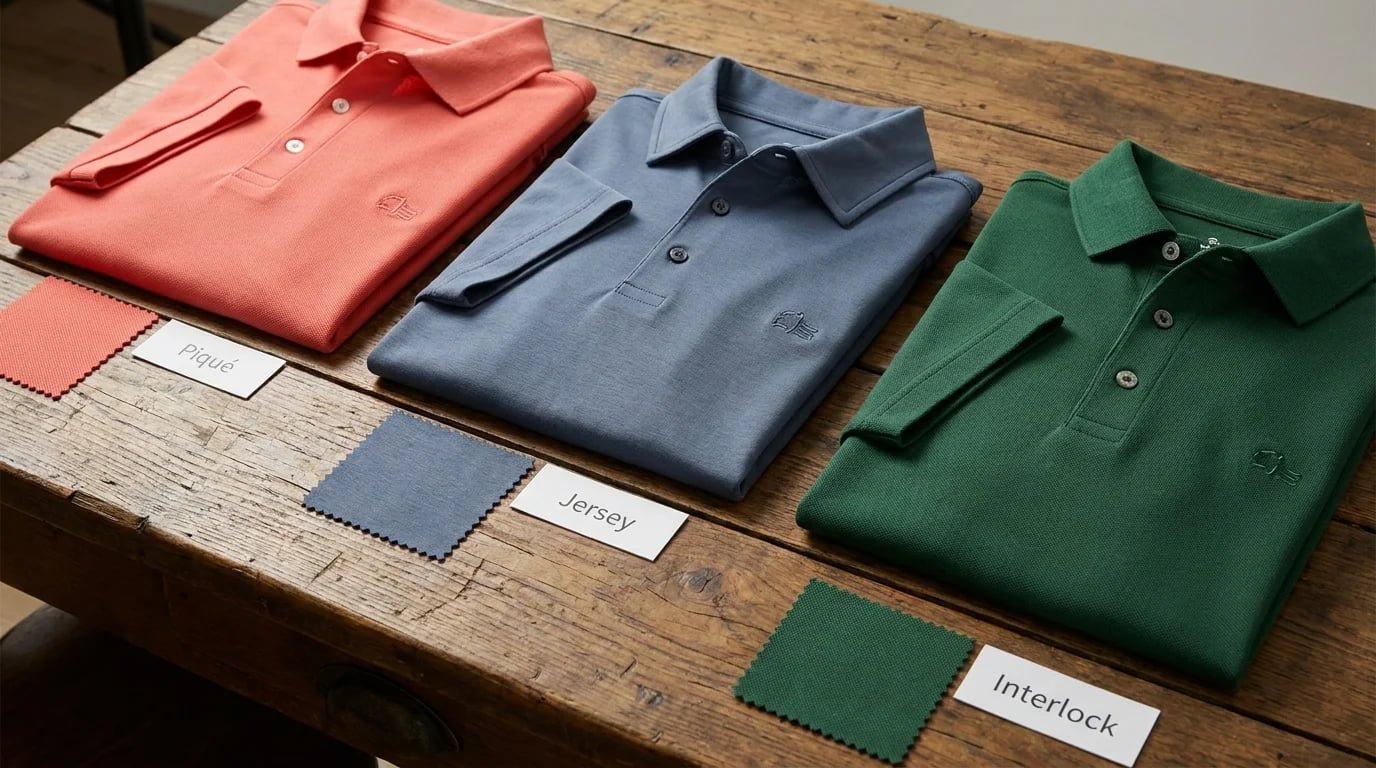
After so many years on the factory floor, I can tell a fabric's entire life story just by touching it. I’ve seen brands build their reputation on the perfect polo, and I’ve seen others fail because they made the wrong choice at this fundamental stage. It’s not just about looks; it’s about performance, durability, and how the shirt represents your brand. Let's break down the big three knit fabrics so you can make the right decision.
What Really Separates Piqué, Jersey, and Interlock?
At first glance, these fabrics might seem similar. But their underlying structure creates huge differences in how they look, feel, and perform, which can make or break your design.
The key difference is the knit structure. Piqué has a textured, 3D waffle or honeycomb weave. Jersey is a single-knit with a smooth face and a looped back, like a t-shirt. Interlock is a double-knit, making it smooth on both sides and more stable.
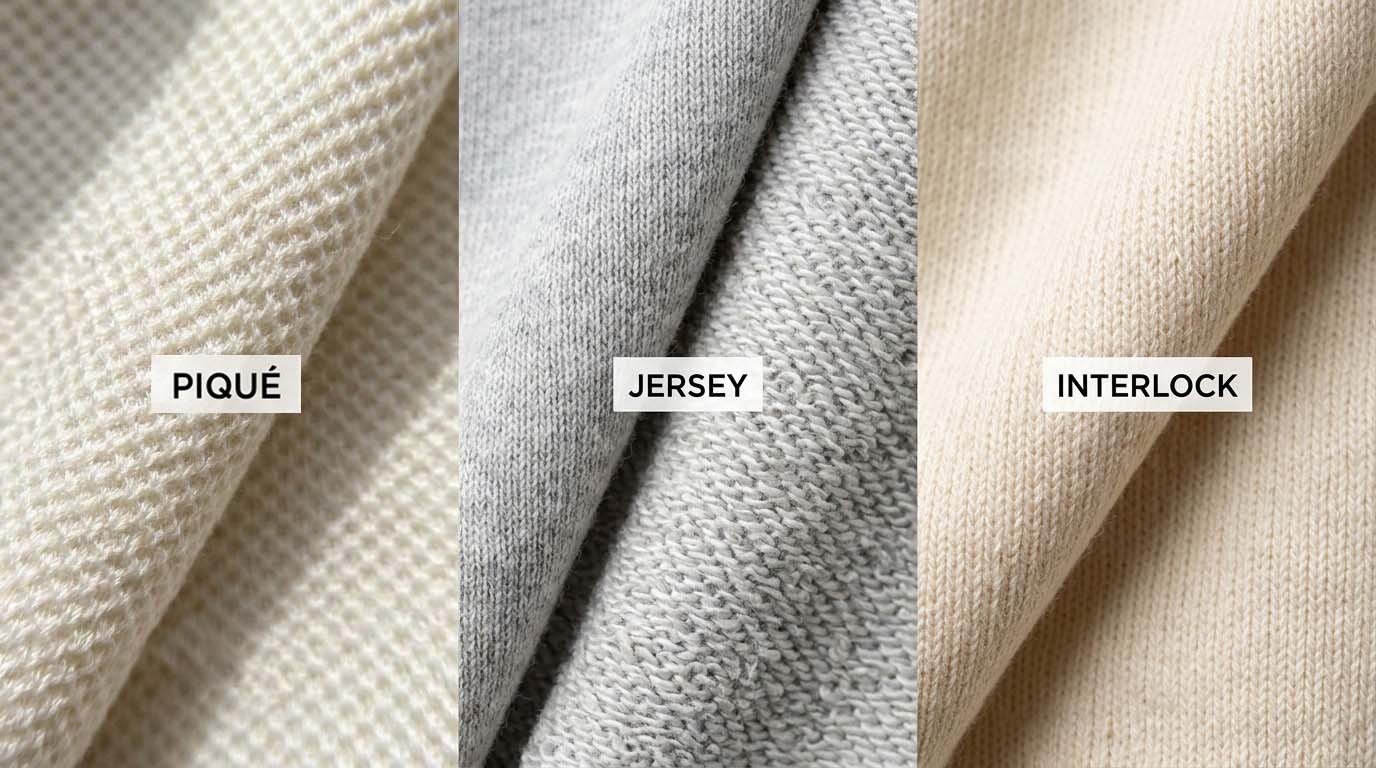
I always tell new brand owners to think of knit fabric like a tiny, looping chain. The way those loops are formed determines everything. It's the DNA of the garment. Understanding this basic difference is the first step to becoming an expert in your own product line.
What Makes Each Knit Unique
-
Piqué Knit: This knit uses a special technique to create a raised, textured pattern. Think of tiny squares or diamonds. This texture lifts the fabric slightly off the skin, which is great for airflow. It's naturally more structured and has a traditional, sporty look.
-
Jersey Knit: This is the simplest knit structure, the same one used for most t-shirts. It's created with a single set of needles. The result is a fabric with a smooth, flat face that’s ideal for printing, and a back with a more textured, looped appearance. It offers great stretch and a soft feel.
-
Interlock Knit: Think of interlock as two layers of jersey knit together back-to-back. It’s made with two sets of needles. This creates a fabric that is smooth and identical on both sides. It's thicker, heavier, and more stable than single jersey, and the edges won't curl when cut.
How Can You Quickly Decide Which Fabric Fits Your Golf Polo?
Feeling stuck trying to weigh the pros and cons of each fabric? It's easy to get lost in the technical details when you just need to make a smart decision for your brand.
Use a decision table to compare fabrics across key attributes. Piqué excels in classic structure and breathability. Jersey is the champion for smooth prints and a modern feel. Interlock offers a premium, stable option that sits between the two.
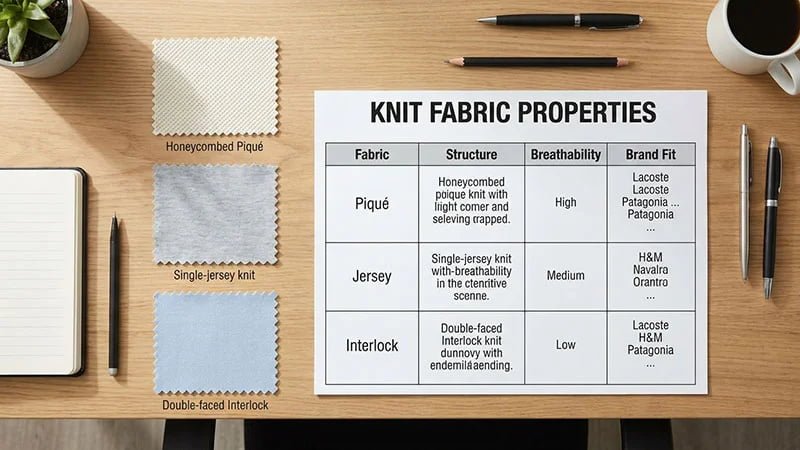
When I work with a new brand owner like Bobby, the first thing we do is map out their goals against the fabric options. There is no single "best" fabric, only the best fabric for a specific application. This table is a simplified version of the process we go through. It helps you quickly align your product goals with the right material foundation.
| Attribute | Piqué | Jersey | Interlock |
|---|---|---|---|
| Surface | Textured, waffle/honeycomb | Smooth, flat face | Smooth on both sides, fine rib |
| Breathability | Excellent, due to 3D texture | Good, depends on weight | Moderate, denser knit |
| Structure | Good, holds shape well | Less structured, drapes softly | Excellent, very stable, resists curling |
| Branding | Best for embroidery, simple logos | Excellent for screen print, heat transfer | Very good for all branding methods |
| Best For | Classic club polos, staff uniforms | Lifestyle, fashion, all-over prints | Premium retail, corporate gifting |
Why is Piqué the Classic Choice for Golf Polos?
You see piqué everywhere on the course, but is it just tradition? Sticking with the classic choice might feel safe, but you worry it could make your brand seem dated.
Piqué is the classic choice for a reason. Its unique texture creates small pockets that promote airflow, making it exceptionally breathable. This structure also hides perspiration well and gives the polo a substantial, traditional identity that golfers trust.
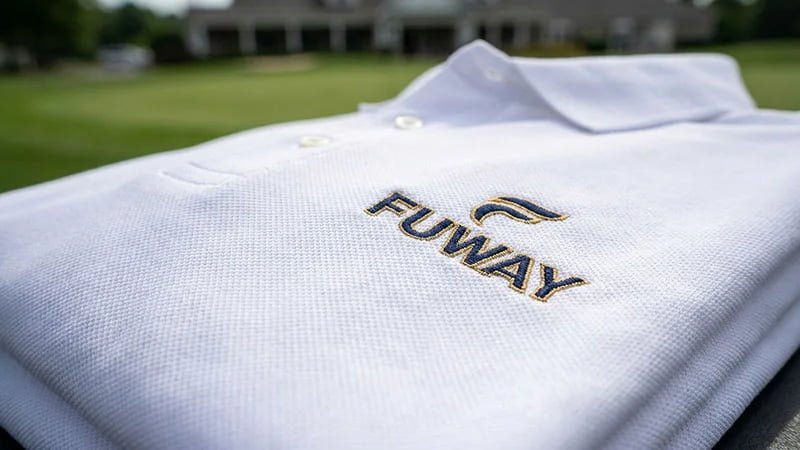
The piqué polo is an icon. It has history. But its lasting power comes from pure function. That three-dimensional texture isn't just for show. It's an engineering feature that keeps a player cooler and more comfortable during a long round. For any brand wanting to establish a traditional, authentic golf identity, piqué is the gold standard.
OEM Stability Tips
As a manufacturer, I can tell you that piqué needs to be handled correctly. Its textured knit is prone to shrinkage if not processed properly. We always pre-wash and heat-set our piqué fabric to lock in the dimensions. This ensures that the polo you approve in sampling is the same size as the one your customer buys after ten washes. For brands wanting a more modern take, we often suggest micro-piqué. It has a much finer, less pronounced texture. This gives you the performance benefits of piqué with a smoother, more refined appearance that works well for slimmer, more athletic fits.
When Should You Choose Jersey for Your Golf Polos?
Your brand has bold, detailed graphics or a modern, lifestyle vibe. You're concerned that a textured fabric like piqué will compromise your designs and feel too traditional.
Choose jersey when your design features detailed prints or you're aiming for a soft, modern, athletic feel. Its smooth, flat surface acts as a perfect canvas for high-fidelity screen prints and heat transfers, something piqué's texture cannot accommodate well.
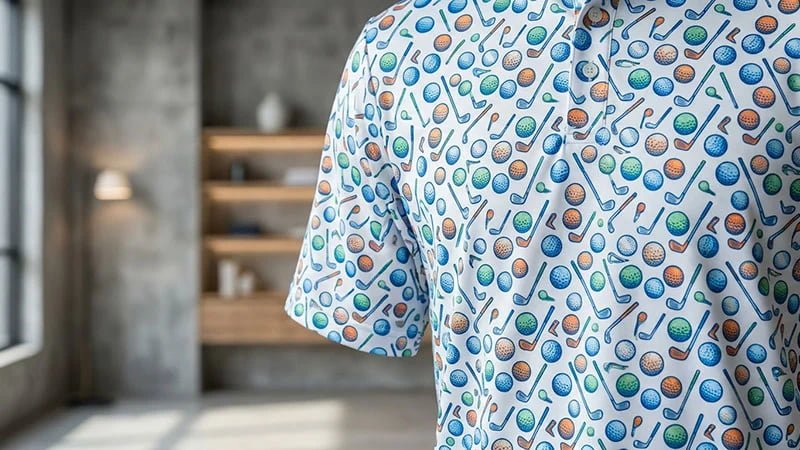
Jersey fabric has completely changed the look of modern golf apparel. It allows brands to be much more creative and expressive. If your brand identity is built around eye-catching graphics, all-over prints, or just a super-soft, t-shirt-like comfort, then jersey is your only real choice. It drapes on the body differently than piqué, offering a more fluid, less structured silhouette.
Collar, Placket & Branding Engineering
The main drawback of jersey is its lack of natural structure. This is where manufacturing expertise is critical. A cheap jersey polo will have a collar that curls up and a placket that looks floppy after a few washes. To prevent this, we engineer our jersey polos with high-quality, stabilized collars and plackets. We use a two-piece collar construction and premium interlining that holds its shape. This ensures the polo maintains that sharp look, combining the comfort of jersey with the crispness expected of a true golf polo.
Is Interlock the Best Fabric for a Premium Golf Polo?
You want to create a high-end polo that justifies a premium price. Jersey feels too much like a t-shirt, and piqué feels too common for your luxury brand.
Interlock is the ideal fabric for a premium golf polo. Its stable, double-knit construction provides a substantial, luxurious feel and a smooth surface on both sides. It drapes beautifully, resists wrinkling, and offers a more structured look than jersey, signaling high quality.
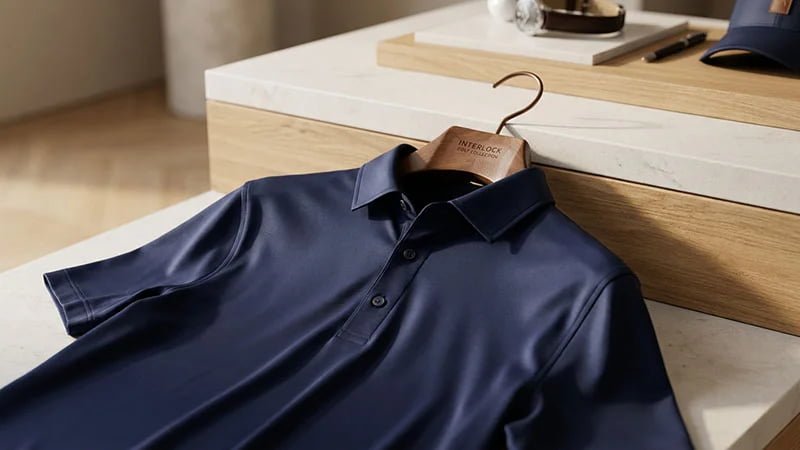
When a brand owner comes to me and says, "I want to create the best polo possible," I often steer them toward interlock. It truly is a step up. It has the smoothness of jersey but with much more body and stability. When you hold an interlock polo, it just feels more expensive. The fabric is incredibly durable, holds color exceptionally well, and provides a clean, sharp silhouette that looks fantastic both on and off the course.
When to Upgrade from Jersey or Piqué
Upgrading to interlock makes sense when your brand is targeting the premium or luxury market. It's for the customer who appreciates fine details and is willing to pay more for superior quality and feel. It’s also a great choice for high-end corporate apparel because it holds embroidery beautifully and has a very professional appearance. While it's generally less breathable than a lightweight piqué due to its denser knit, modern interlock fabrics blended with spandex still offer excellent performance and comfort.
What Should You Look for in a Custom Golf Polo Sample?
You've received your first polo sample and it looks great out of the package. But how can you be sure it will stand up to real-world use and washing?
Don't just look at your sample—abuse it. Perform a home wash-and-dry test to check for shrinkage and collar stability. Stretch the fabric to test its recovery. Wear it to see how it feels and performs. A good sample should pass all these real-world tests.
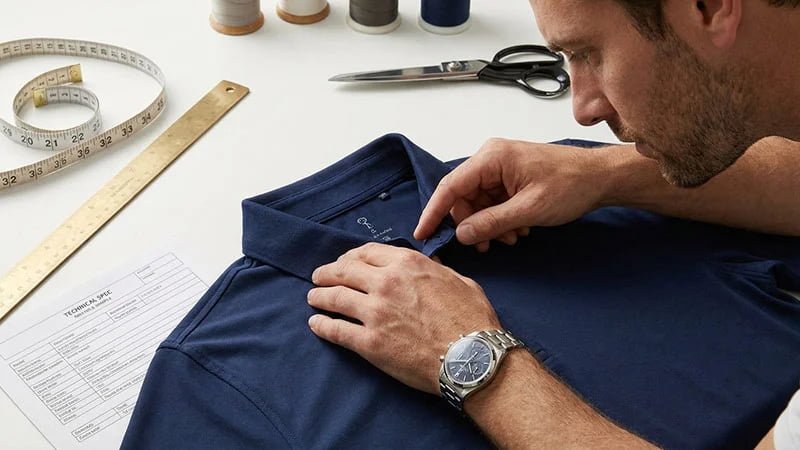
I always tell my clients that the most important thing they can do with a sample is to treat it like a customer would. A polo that looks perfect on day one is useless if it shrinks, twists, or the collar curls after a single wash. Your reputation is built on the long-term quality of your product, and that quality is proven in the wash cycle, not just on the hanger.
Your Quality Checklist
When your sample arrives, here’s a simple checklist to follow:
- Wash Test: Measure the polo before and after a standard wash and dry cycle. Has it shrunk more than 3-5%? Did the seams twist or pucker? Did the collar lose its shape?
- Stretch & Recovery: Pull on the fabric at the side seams and hem. Does it snap back into shape immediately, or does it stay stretched out?
- Wear Test: Put it on. Swing a club. Does it restrict your movement? How does the fabric feel against your skin?
- Logo Inspection: Look closely at your logo. For embroidery, check for clean stitches with no puckering. For heat transfers, try to peel a corner and stretch it. It should remain flat and intact.
Conclusion
Choosing the right fabric is the first step to building a successful golf polo program. Piqué, jersey, and interlock each offer unique benefits to match your specific brand identity.