Your first sample arrived late, the fit is wrong, and the color is off. Now you're facing a painful choice: approve a flawed product or start a delay-ridden process all over again.
A perfect golf apparel sample comes from a disciplined, multi-stage workflow lasting 4-8 weeks. It involves clear documentation (Tech Pack), parallel material approvals (Lab Dips), and iterative prototypes (Proto, Fit, PP) to lock in every detail before mass production begins.
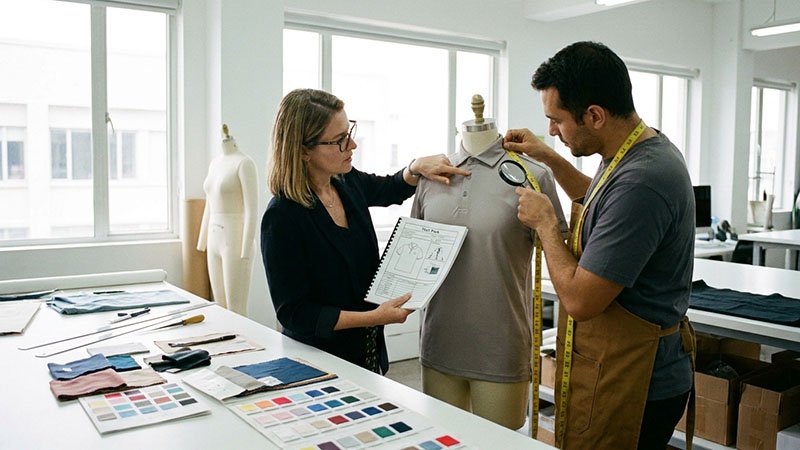
I've seen so many new brand owners get burned during the sampling phase. They think it's just about getting one piece made. But in reality, sampling is where you win or lose. It's the process where you translate your vision into a manufacturable reality, solving problems with fit, function, and color before they become costly, large-scale mistakes. Getting this workflow right is the single most important step in building a successful apparel line. I'll walk you through the professional process, step by step.
What Does the Entire Sampling Process Look Like?
You hear factories use terms like "Proto," "PP," and "TOP," but you're not sure what they mean. This confusion makes it hard to manage your development calendar and hold your supplier accountable.
The sampling process is a sequence of specific sample types, each with a clear purpose, moving from initial concept to final production approval. Understanding this sequence is key to managing your timeline.

Think of it as a funnel. We start with a broad idea and refine it with each step until only the perfect, production-ready "golden sample" comes out at the end. Each stage requires collaboration between your team and the factory's experts.
Sample Types and Their Purpose
Here are the samples you'll encounter. Not every project requires every single one, but you need to know what they are.
| Sample Type | Purpose |
|---|---|
| Prototype (Proto) | The very first sample to check the basic pattern, construction, and concept. |
| Fit Sample | Used to dial in the fit and sizing. Often requires 1-2 iterations. |
| Size Set Sample | A set of samples in key sizes (e.g., S, M, L) to check the grading rules. |
| Salesman (SMS) | Used by your sales team for pre-orders. Must look visually perfect. |
| Pre-Production (PP) | The "golden sample." Made with all final bulk materials and methods. This is what you sign off on for production. |
| Top of Production (TOP) | The first few pieces off the actual production line, pulled for a final consistency check. |
Timeline Overview & Key Roles
A standard sampling process takes 4–8 weeks, but this can be shortened to 2–4 weeks if you use in-stock materials and have a streamlined approval process. The key players are the Buyer (you), the Pattern Maker, the Merchandiser (your factory contact), and the QC team.
How Do You Prepare for a Successful Sampling Launch?
You sent a simple drawing, but the factory has endless questions. These back-and-forth emails waste days before a single stitch is even sewn.
A successful launch requires a complete Tech Pack. This document is the blueprint for your product, leaving no room for guesswork and ensuring everyone is working towards the same goal.
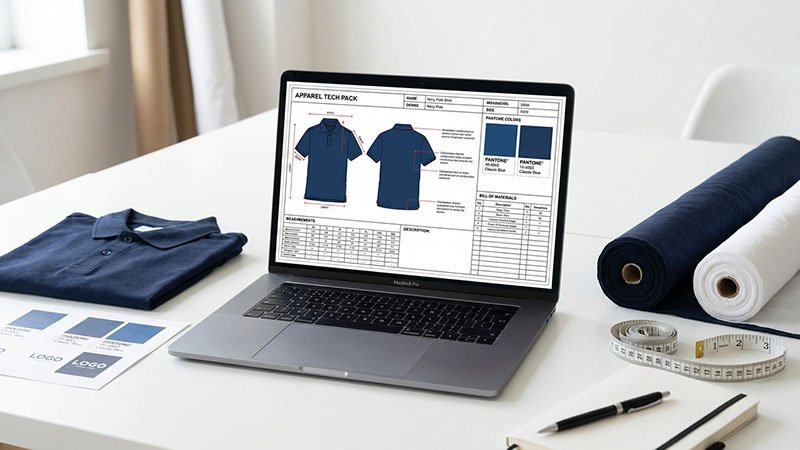
The quality of your input directly determines the quality of your first sample. The more detail you provide upfront, the faster and more accurate the process will be.
The Tech Pack Checklist
Your Tech Pack is non-negotiable. It must include:
- Bill of Materials (BOM): A list of every single component, from main fabric to thread and labels.
- Construction Details: Instructions on how the garment should be sewn (e.g., stitch type, seams).
- Size & Measurement Chart: Detailed points of measure and tolerances for your base size.
- Artwork Placement: Exact locations, dimensions, and color codes (e.g., Pantone TCX) for all logos and prints.
Reference Samples and Acceptance Criteria
If you have a physical garment you like for its fit or feel, send it as a reference. Always sign an NDA to protect your designs. More importantly, define your success criteria upfront. I insist on these for my clients: shrinkage ≤3%, colorfastness ≥4, pilling resistance ≥4, and for logos, no cracking or peeling after 10 home washes.
Why Must Fabric and Lab Dips Come First?
The fit of your sample is perfect, but the fabric color is wrong. Now you have to wait another two weeks for a new lab dip, completely stalling your progress.
Fabric and color development must start immediately and run in parallel with pattern making. These components have the longest lead times and are critical to the final product's look, feel, and performance.
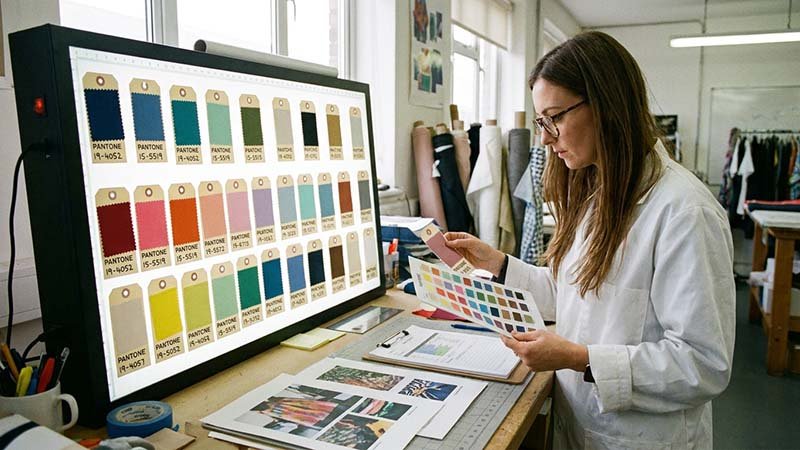
I always tell my clients to treat material development as its own project. A beautiful design is worthless if the fabric isn't right.
Fabric Sourcing & Lead Time
Decide your fabric path early. Using a factory's in-stock fabric is the fastest. Custom-weaving or dyeing adds 3-5 weeks. Get hand-feel samples and basic test reports (shrinkage, pilling) as soon as possible.
Lab Dips and Color Control
To get your custom color, the factory will create "lab dips"—small swatches of fabric dyed to match your Pantone color code. You'll review these under a light box to approve the final shade. Your approval standard should be a Delta E (ΔE) of 1.0 or less, which is a very close match.
Artwork Strike-Offs
At the same time, get "strike-offs" for any prints, embroidery, or heat transfers. Check them for color accuracy, sharpness, and placement. I always require a 10-cycle wash test on heat transfers to ensure they don't peel or crack.
What Happens During the First Prototype (Proto) Stage?
You're excited to get your first sample, but you don't know what to look for. You risk approving a sample with hidden flaws that will cause problems later.
The goal of the Proto Sample is to validate the core concept, construction, and overall silhouette. It's not about perfect fit yet; it's about making sure the design is manufacturable and looks right.
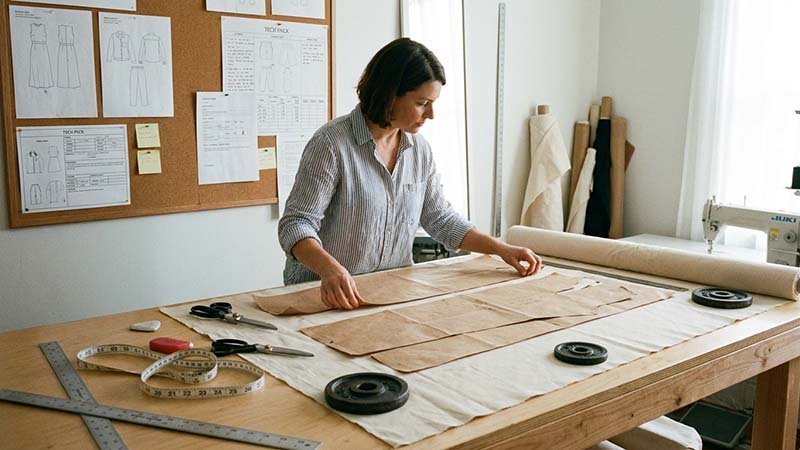
This is the stage where the factory's pattern maker turns your 2D tech pack into a 3D garment. It's a crucial first step.
Pattern Creation and Key Controls
The pattern maker will create the initial pattern and grading rules. For golf apparel, special attention must be paid to areas that affect the swing, like the shoulder, armhole, and back. We focus on critical construction points from day one: ensuring the collar and placket are engineered with the right interlining to prevent curling, and using the correct stitch density for performance knits.
Proto Sample Review
When you receive the Proto, don't get hung up on a sleeve being half an inch too long. Instead, ask these questions:
- Does the overall shape match my vision?
- Is the construction clean and correct?
- Are there any obvious problems with how the fabric drapes?
You'll provide your feedback in a single, consolidated list of comments for the factory to create the next version.
How Do You Perfect the Fit for a Golfer's Swing?
The polo looks great on a hanger, but feels tight in the shoulders during a practice swing. A garment that doesn't account for the athlete's movement is a failed product.
Fit samples are for dialing in the measurements and evaluating the garment in motion. You must assess it for a golfer's specific range of motion, not just on a static model.
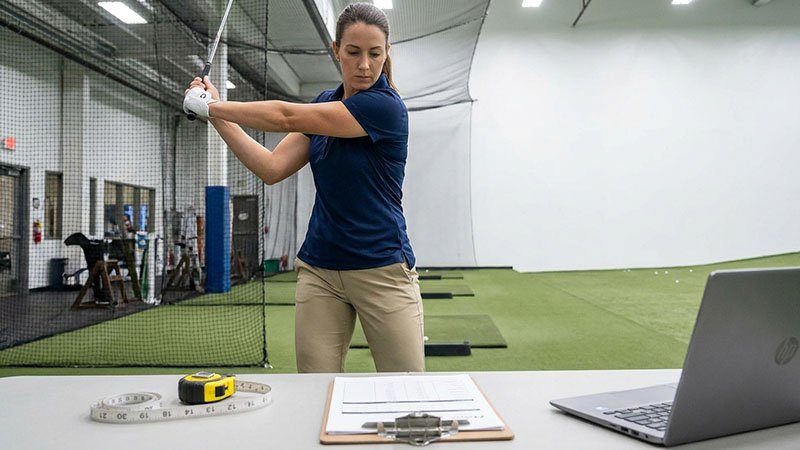
This is often an iterative process, sometimes requiring two or three rounds of samples (Fit 1, Fit 2, Fit 3).
Measurement and Tolerance
You will measure the fit sample against your tech pack's spec sheet. Every measurement should be within the specified tolerance (e.g., +/- 0.5 inches). Any points outside of tolerance must be corrected.
Dynamic Movement Assessment
This is the most important part for golf apparel. The wearer needs to be able to perform a full swing without restriction. We check for:
- Shoulder Rotation: Can you raise your arms without the whole garment riding up?
- Back Stretch: Is there enough room across the back at the peak of the backswing?
- Torso Twist: Does the polo twist or bunch up during the follow-through?
Remote Fitting and Efficiency
You don't always need to be in the same room. Have your fit model try on the sample during a video call. Ask them to perform swings and other movements. Record the session and provide clear, time-stamped feedback to the factory within 48 hours to keep the process moving.
What Makes the Pre-Production (PP) Sample So Critical?
You've approved the fit, but you're not sure if the bulk fabric will behave the same way. Approving production based on a sample made with different materials is a huge gamble.
The Pre-Production (PP) sample is the final gate before mass production. It must be made with the actual bulk fabric, trims, and labels, on the actual production line. This is your "golden sample."
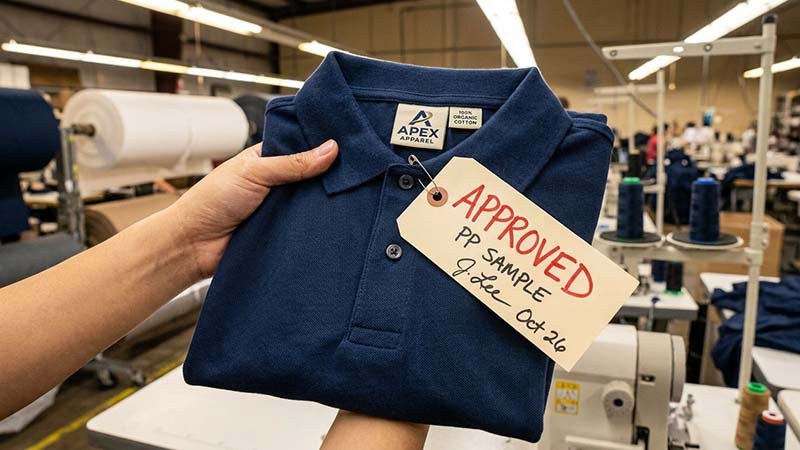
This is the most important sample in the entire process. It represents your final agreement with the factory on exactly what they will produce.
Conditions for a True PP Sample
A PP Sample is only valid if it meets these conditions:
- Bulk Materials: Uses the exact fabric, thread, buttons, and labels from the bulk order.
- Final Construction: Made using the finalized pattern and sewing techniques.
- Production Equipment: Sewn on the same machines that will be used for the full run.
Freezing the Design and Sealing the Sample
Once you approve the PP sample, the design is "frozen." No more changes are allowed. You will physically sign and date the sample's tag, and the factory will keep it as the gold standard against which they will inspect the bulk production. This signed sample is your ultimate quality control tool.
How Do You Validate Sizing and Prepare for Sales?
You've approved your medium size, but how do you know the XXL will fit correctly? And how can you take sales orders before the full production run is finished?
Size Set Samples validate your grading across different sizes, while Salesman Samples (SMS) provide a finished product for your marketing and pre-season sales efforts.
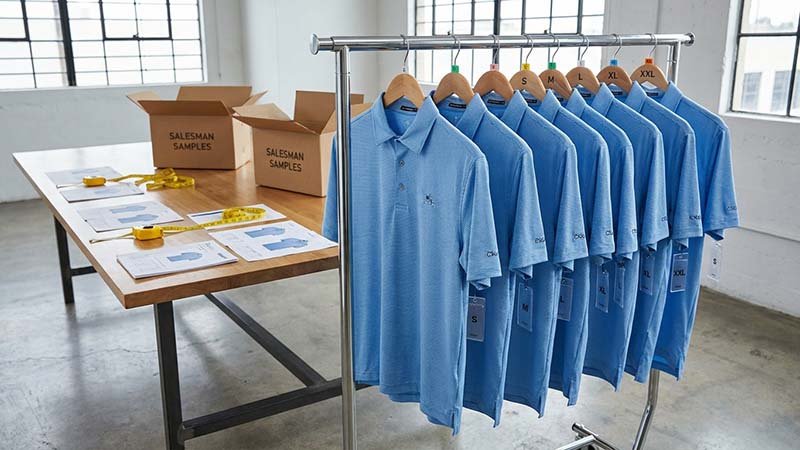
These two sample types run late in the process, often in parallel with the final PP sample approval, and serve distinct but vital business functions.
Size Set Strategy
You don't necessarily need a sample in every single size. A common strategy is to request a "jump" size set, for example, Small, Large, and XXL. By measuring these, you can confidently verify that your pattern grading rules are working correctly across the entire range.
Salesman Samples (SMS)
These are your marketing tools. They need to be visually perfect and made with all correct materials and colors, just like the PP sample. They are essential for photoshoots, trade shows, and showing to retail buyers to secure orders ahead of the main delivery. Make sure you confirm the final packaging, hangtags, and labels with this sample.
What is the Final Check Before Mass Production?
You've approved the PP sample, and the factory has started production. How do you ensure the 1,000th piece is as good as the first?
The Top of Production (TOP) sample is your first look at the actual bulk run. It's your chance to catch any inconsistencies before the entire order is completed.
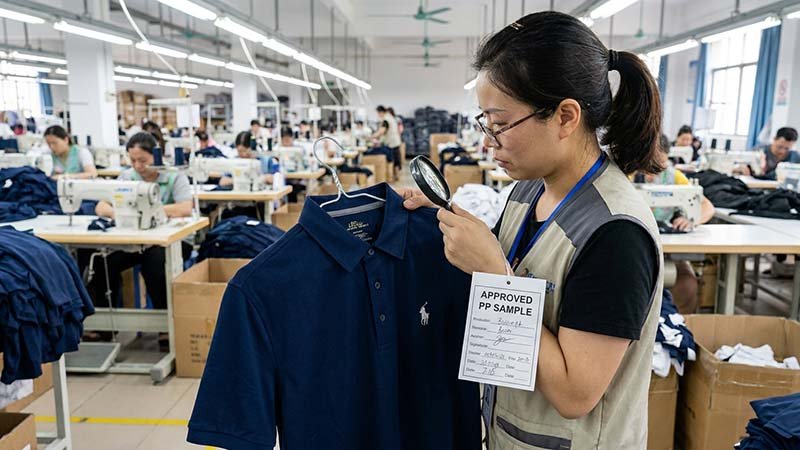
This is a critical checkpoint. It’s the factory’s proof that they have successfully transferred all the details from the PP sample to the main production line.
First Piece Approval and TOP Standards
Before the sewing lines run at full speed, the factory should have their QC team approve the "first piece" off the line against the sealed PP sample. The TOP samples are then pulled from the first 5-10% of the production run and sent to you. You should review the TOP sample against the PP sample, checking every detail: measurements, stitching, color, and feel. There should be no deviations. If there are, production must be paused until the issue is resolved.
What Are Realistic Timelines for Different Garments?
You need to plan your product launch, but you're not sure how long sampling will really take. Guessing the timeline can lead to missed deadlines and lost sales.
A simple knit polo using stock fabric can be sampled in 4-5 weeks. A more complex waterproof jacket with custom fabric and sealed seams will take 7-9 weeks. Understanding the critical path is key.
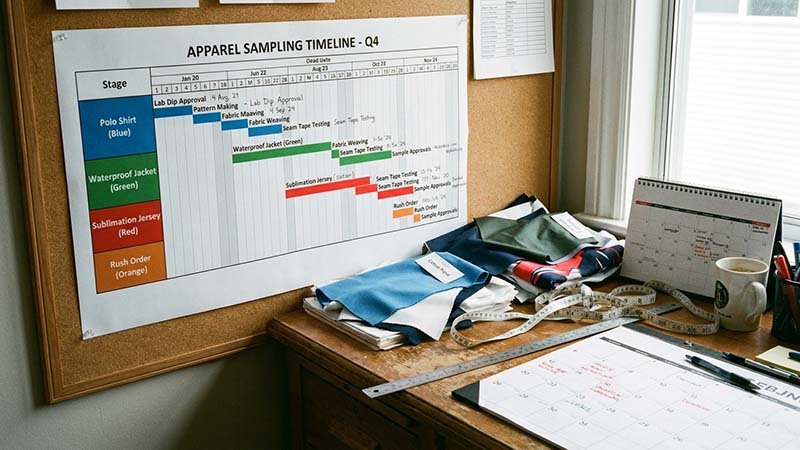
I always provide my clients with a clear timeline based on the product's complexity. Here are some common examples:
| Garment Type / Scenario | Estimated Time to PP Sample Approval | Key Timeline Drivers |
|---|---|---|
| Knit Polo (Stock Fabric) | 4–5 Weeks | Lab dips and fit approvals are the critical path. |
| Waterproof Jacket (Custom Fabric) | 7–9 Weeks | Custom fabric weaving and seam tape testing add time. |
| Full Sublimation Print Jersey | 5–6 Weeks | Print strike-offs and color calibration take time. |
| Rush Order (All Materials Ready) | 10–15 Days | This is possible but requires perfect preparation. |
The key is to identify the longest lead-time items (usually custom fabric and trims) and start them on Day 1. You can run pattern making and fit sample creation in parallel to save time.
How Can You Speed Up Sampling and Avoid Common Delays?
Every day wasted in sampling is a day you're not selling. You need to know the shortcuts and how to avoid the common pitfalls that derail development calendars.
To accelerate sampling, use stock materials, provide rapid feedback, and run tasks in parallel. The most common delays—color rejects, shrinkage issues, and poor fit—can be avoided with a thorough preparation phase.
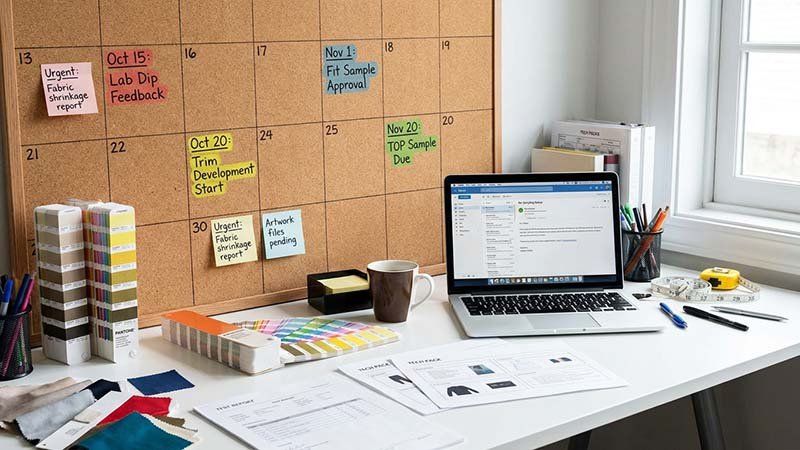
Speed is a weapon in the fashion industry, but it can't come at the expense of quality. Here's how to be both fast and good.
Acceleration Tactics
- Use Stock Fabric: This is the single biggest time-saver, cutting 3-4 weeks from your timeline.
- Provide Fast, Consolidated Feedback: Set a rule for yourself: all feedback on a sample is returned in one document within 48 hours.
- Run Tasks in Parallel: Start lab dips, trim development, and pattern making all at the same time.
Avoiding Common Delays
The biggest delays I see come from a lack of preparation.
- Color Rejects: Provide a clear Pantone TCX code from the start.
- Shrinkage/Fit Issues: Get a fabric shrinkage test report before you even make the first pattern.
- Artwork Errors: Always provide vector files (.ai or .eps) for all logos and graphics.
Set clear Service Level Agreements (SLAs) with your factory for things like sample turnaround time and email responses.
FAQ: Your Top Sampling Questions Answered
You've got the workflow down, but a few practical questions might still be on your mind. Here are the answers to the questions I hear most often from brand owners.
Why are samples so much more expensive than the bulk unit price?
Samples typically cost 2-3 times the bulk production price because they are made by hand in a dedicated sample room, not on an efficient assembly line. You're paying for the focused time of the most skilled pattern makers and sewers, plus the cost of sourcing tiny quantities of fabric and shipping samples by air. It's a custom, one-off creation, not a mass-produced item.
How many rounds of fit samples are considered normal?
For a well-prepared project with a good tech pack, expect 1-2 rounds of fit samples to get it right. If you're on the third round of corrections for the same issue, it's a red flag. It might mean there's a problem with your initial specs or the factory's technical skill.
Who owns the pattern after the sampling process is complete?
This is a critical point you must clarify in writing upfront. Typically, if you pay a separate fee for pattern development, you own the pattern. If the cost is bundled into the overall price, the factory may consider it their property. To have the freedom to move your production to another factory later, you must ensure your agreement states that you own the final, approved pattern.
Can a factory use a substitute fabric for the first prototype?
Yes, this is a common practice to save time, especially for the very first Proto sample. A factory might use a similar, in-stock fabric to check the pattern and construction quickly. However, you cannot approve the final fit from a sample made with substitute fabric. The drape, stretch, and shrinkage will be different. The Fit and PP samples must be made from the actual bulk fabric.
What is 'tolerance' in a measurement chart, and what's a typical standard?
Tolerance is the acceptable range of variation for any given measurement. No two handmade garments are identical, so tolerance allows for minor differences. For example, if a chest measurement is 22 inches with a tolerance of +/- 0.5 inches, any garment measuring between 21.5 and 22.5 inches is considered acceptable. For knit golf polos, a half-inch tolerance on major body measurements is a common industry standard.
Conclusion
The sampling workflow is your product's ultimate quality control process. By following these disciplined steps, you transform your creative vision into a tangible, profitable product with minimal risk and delay.