You chose a factory based on a slick website and a low price. Now you're facing production delays, inconsistent quality, and your retail partners are getting frustrated.
To choose a reliable golf apparel manufacturer, you must evaluate them against 10 key criteria: production capacity, quality control, fabric expertise, R&D, cost structure, compliance, sustainability, logistics, communication, and their track record. This structured approach minimizes risk and builds a profitable partnership.
The biggest mistake I see new brands make is focusing almost entirely on the unit price. They think they're saving money, but they end up paying for it tenfold in returns, missed deadlines, and brand damage. A cheap polo that doesn't fit or perform is not a bargain; it's a liability. The right manufacturing partner is a strategic asset who helps you control the critical variables—fit, performance, and delivery—that determine your success. This 10-point framework is the same one I use to help my clients vet factories and build stable, long-term supply chains.
How Should You Start Your Evaluation Process?
You're overwhelmed with potential suppliers and don't know where to begin. Without a clear plan, you risk wasting weeks talking to the wrong factories.
Start with your core objectives—price, lead time, quality, and category focus. Use a 72-hour framework to quickly screen potential partners and protect your intellectual property with an NDA from the start.

Before you send a single email, you need to know what you're solving for. A factory that's great for cheap, high-volume t-shirts is likely the wrong partner for technical golf polos.
Define Your Sourcing Goals and Constraints
First, be honest about your priorities. Are you competing on price, quality, or innovation? What are your target lead times and MOQs? Knowing your brand's position helps you filter out factories that aren't a good fit. For golf apparel, quality and performance usually outweigh rock-bottom pricing.
Use a 72-Hour Rapid Screening Framework
Your goal is to quickly identify a shortlist without getting bogged down. I recommend this structured approach:
| Day | Action | Goal |
|---|---|---|
| 1 | Initial Screening | Identify 10-15 potential suppliers and send a standardized inquiry. |
| 2 | Communication Audit | Evaluate response quality and speed. Discard unprofessional ones. |
| 3 | Evidence Request | Ask for certifications, factory photos, and similar product examples. |
Prepare Your Document Checklist and Secure an NDA
Before you share sensitive design files, have them sign a Non-Disclosure Agreement (NDA). Be ready with your own documents: your company registration, brand overview, and detailed tech packs for the styles you want to sample. This professionalism shows you're a serious partner.
Can They Meet Your Production Capacity and Lead Times?
A factory promises a 45-day lead time, but your order is now on day 70. Their excuses about "bottlenecks" won't help you meet your delivery deadlines with retailers.
You must verify their true production capacity. Analyze their line configuration, daily output data, and bottleneck resources. A reliable factory will provide a transparent breakdown of sample and bulk production timelines.
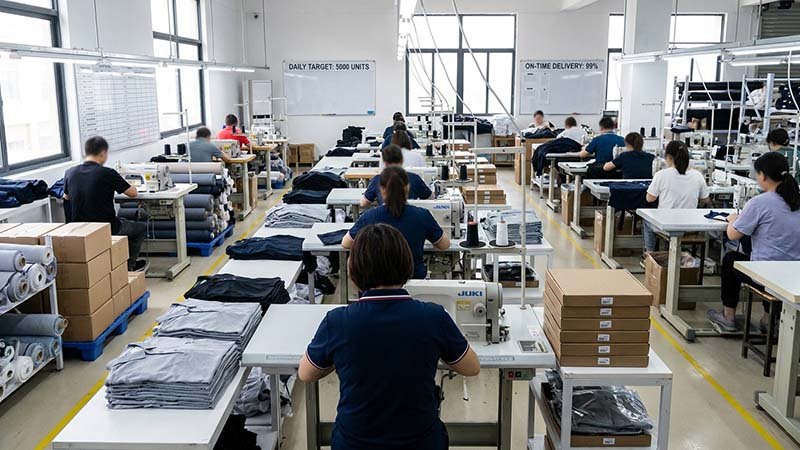
A promised lead time is meaningless without the capacity to back it up. I always dig into the specifics of a factory's operations to understand their real-world capabilities.
Production Line Configuration and Daily Output
Don't accept vague answers. Ask for specifics: How many sewing lines do you have? What is your average daily output for knit polos? A factory specializing in golf apparel should be able to produce hundreds, if not thousands, of units per day.
Sample and Bulk Lead Time Breakdown
A professional factory can break down their lead time for you. For example: Fabric Sourcing (15-20 days), Cutting (2 days), Printing/Embroidery (5 days), Sewing (10 days), Finishing/Packing (3 days). A typical sample lead time for a new golf polo should be around 7-10 days.
Seasonal Flexibility and Backup Planning
The golf season has peaks. Ask them how they manage capacity during busy months. Do they have approved sub-contractors or a network of backup factories? A factory without a plan for surges is a factory that will deliver late.
Identify Key Bottleneck Resources
The total capacity is often limited by a few key areas. Ask about their capacity for cutting, specialized sewing (e.g., flatlock seams), heat transfer or bonding applications, and final pressing/ironing. An imbalance here can bring the whole line to a halt.
Do They Have a Robust Quality Control System?
The samples were perfect, but the bulk order is full of defects. Without a strong QC system in place, you are gambling with every shipment.
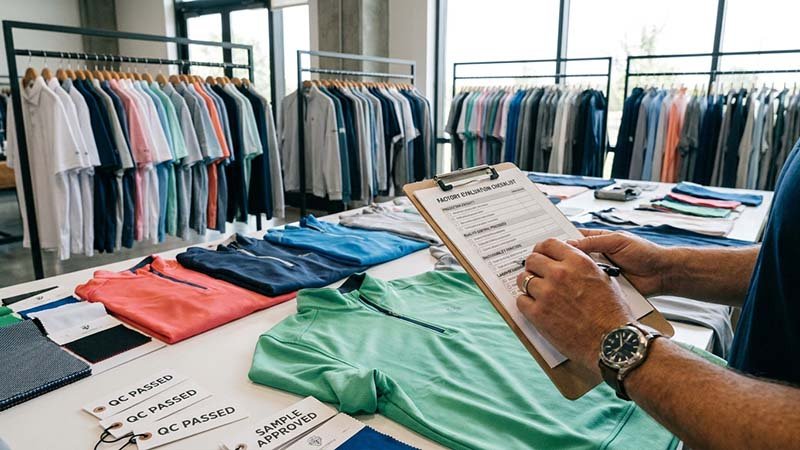
A great manufacturer has a multi-layered QC system built on AQL standards, rigorous pre-production meetings, full traceability, and a formal process for correcting errors (CAPA).
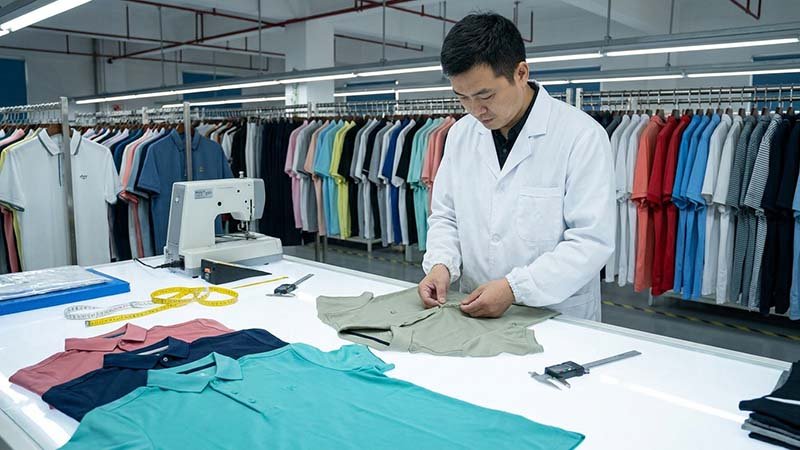
Quality isn't accidental; it's engineered. I refuse to work with factories that don't have a documented QC process. It's the only way to ensure consistency from the first piece to the last.
AQL Standards and Inspection Processes
Ask what AQL (Acceptable Quality Limit) standard they use. For golf apparel, AQL 2.5 for major and minor defects is a common standard. They should perform both in-line inspections (during production) and a final inspection before packing.
Pre-Production (PP) Meeting and Sample Control
Before bulk production starts, the factory should hold a PP meeting with all department heads to review your approved pre-production sample and tech pack. This sample is the "gold standard" that everything else is measured against.
Traceability and Defect Rate Targets
Can they trace a defect found in a finished garment back to the specific sewing line or operator who made it? Good factories have this traceability. They should also be able to tell you their target defect rate and their First Time Pass Rate (the percentage of garments that pass inspection without needing rework).
CAPA (Corrective and Preventive Action) and Review
When defects are found, what happens next? A good factory has a formal CAPA process. They identify the root cause of the problem, implement a corrective action, and take steps to prevent it from happening again. This shows a commitment to continuous improvement.
What Are Their Fabric Sourcing and Performance Capabilities?
Your "performance" polo feels heavy and doesn't wick sweat. Choosing a factory without true fabric expertise is a recipe for a failed product.
A top golf apparel factory must have a deep network of fabric suppliers and in-house or third-party testing capabilities to verify key performance metrics like moisture wicking, UPF, and stretch.
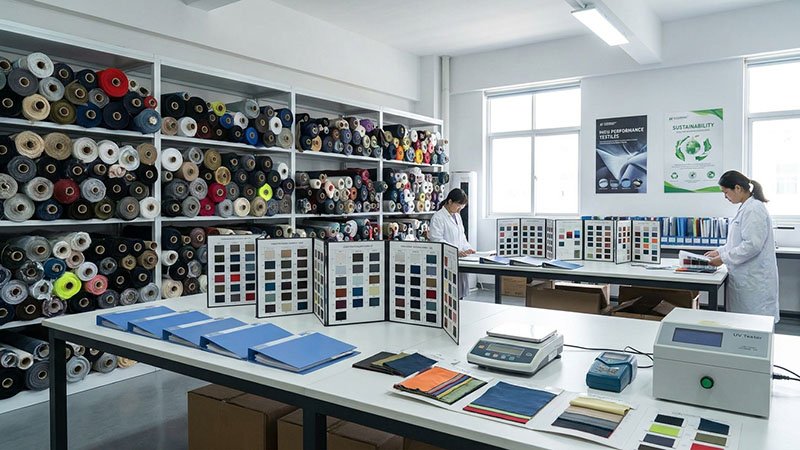
The fabric is the heart of any golf garment. The factory you choose must be an expert in sourcing and handling modern performance knits.
Key Performance: Wicking, UPF, and 4-Way Stretch
Your factory must be able to prove performance claims with data. They should be familiar with these common industry tests:
| Performance Metric | Common Test Standard | What It Measures |
|---|---|---|
| Moisture Management | AATCC 195 | How quickly fabric wicks sweat and spreads it to dry. |
| UV Protection | AATCC 183 | The level of protection from solar radiation (UPF rating). |
| Pilling Resistance | ASTM D4970 | The fabric's resistance to forming small balls of fiber. |
| Shrinkage | AATCC 61 (2A) | How much the fabric shrinks after a standard home wash. |
In-House Lab vs. Third-Party Test Reports
Ask if they have their own basic testing lab. Even if they do, they must be able to provide recent third-party test reports from labs like SGS or Intertek to verify key performance claims.
Fabric Library and Mill Network
A great partner has an extensive fabric library you can browse for inspiration. They also have strong, long-term relationships with a network of textile mills. This gives you more options and allows them to troubleshoot fabric issues quickly.
How Strong Are Their R&D and Sampling Skills?
Your sample has been rejected three times for the same fit issue. A factory with weak R&D and sampling capabilities will burn through your time and money.
Evaluate their technical expertise in pattern-making for athletic movements, their sampling efficiency, and their ability to work with modern construction techniques like bonding and laser cutting.
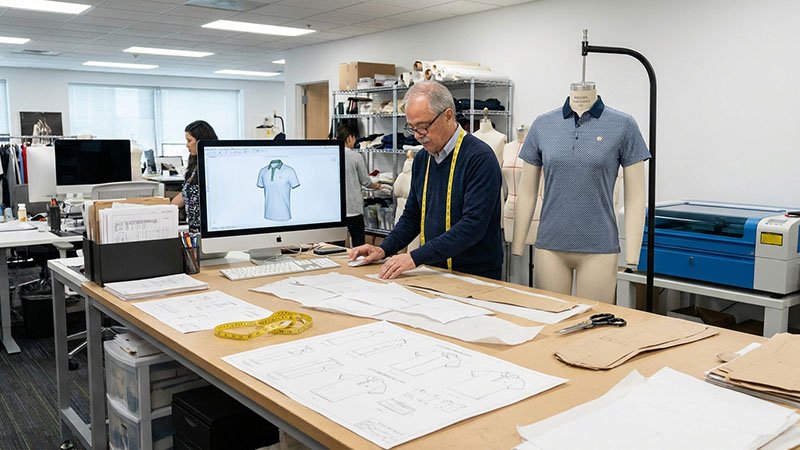
The sample room is where your vision becomes a physical product. A fast, accurate, and innovative sampling team is a massive competitive advantage.
Pattern, Grading, and Technical Expertise
Do they have experienced pattern makers who understand how to build a garment for a golf swing? They need a deep library of existing blocks and construction techniques. For example, they should have proven solutions for creating collars and plackets that won't curl after washing—a common failure point.
Sampling Cycle Time and Efficiency
How quickly can they turn a tech pack into a sample? As I mentioned, 7-10 days is a good benchmark. More importantly, what is their First Pass Yield Rate? How many samples get approved on the first try? A high rate indicates they understand technical requirements and communicate well.
New Construction and Technology Development
The best factories are always experimenting. Ask about their experience with advanced techniques like laser cutting for ventilation, seamless bonding to reduce chafing, and other innovative construction methods that can set your brand apart.
Are Their Cost Structure and MOQ Policies a Good Fit?
You received a quote that seems too good to be true, only to be hit with hidden charges later. Vague pricing and rigid MOQs can kill your margins and flexibility.
A transparent partner provides a clear cost breakdown and offers flexible MOQ solutions. Understand their pricing model and explore pathways to reduce costs without sacrificing quality.

Price is important, but a clear and honest price is even more important. You need to understand what you're paying for to manage your budget effectively.
Costing Model (FOB/CMT) and Quote Breakdown
Understand how they price. Is it FOB (Free on Board), where they handle everything up to loading the goods onto the ship? Or CMT (Cut, Make, Trim)? For most brands, FOB is standard. Ask for a cost breakdown: fabric, trims, labor, overhead/profit. This transparency helps you see where the money is going.
MOQ and Flexible Production Strategies
What is their Minimum Order Quantity (MOQ) per style and color? Is it negotiable? Ask if they offer strategies for smaller brands, like combining your order with others that use the same fabric (piggybacking) or options for re-orders.
Cost Reduction Pathways
A true partner will work with you to lower costs. They might suggest a slightly different but more cost-effective fabric, or a small construction change that can save labor time without impacting the look or performance of the garment.
Quote Transparency and Validity
A professional quote should be detailed, clear, and state the currency and validity period. This protects you from unexpected price hikes.
Are They Compliant with Social and Chemical Regulations?
A surprise audit reveals your factory has major social compliance issues. Suddenly, your brand is associated with unethical labor, putting your reputation and retail partnerships at risk.
Only work with factories that can provide current social compliance audits (like BSCI or SMETA) and demonstrate a robust system for managing chemical safety (RSL compliance).
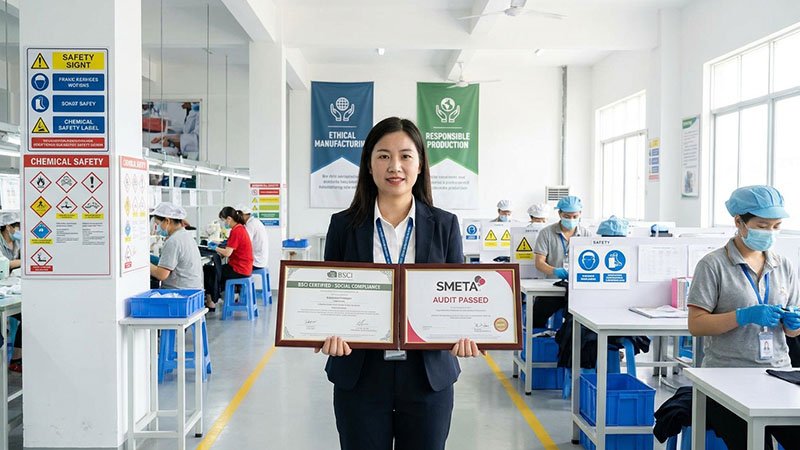
In today's market, compliance is not optional. Your customers and retail partners expect you to source responsibly, and the legal and reputational risks of failing to do so are immense.
Social Responsibility Audits (BSCI/SMETA/WRAP)
Ask for a copy of their most recent social compliance audit report. The most common standards are BSCI, SMETA, and WRAP. Check the date and the overall rating. Be wary of factories that cannot provide a current report.
Chemical Compliance (RSL/REACH/PFAS)
Your factory must have a system for managing a Restricted Substances List (RSL) to ensure your products don't contain harmful chemicals. This is especially critical with regulations like REACH in Europe and the growing phase-out of PFAS (PFC-free) chemicals in water-repellent finishes.
Security and Customs Compliance (C-TPAT)
For U.S. brands, working with a factory that is compliant with C-TPAT (Customs Trade Partnership Against Terrorism) can help expedite customs clearance and ensures a secure supply chain.
Customer Audits and Corrective Action Plans (CAP)
Be prepared to conduct your own audit or have a third party do it. A good factory will welcome this. If issues are found, they should be willing to work with you on a Corrective Action Plan (CAP) to fix them.
Do They Offer Sustainable and Traceable Options?
Your customers are demanding more sustainable products. If your manufacturer can't offer certified materials and processes, you'll be left behind.
A forward-thinking partner has a portfolio of certified sustainable materials (GRS, organic) and can demonstrate eco-friendly practices in their own operations, such as chemical and water management.
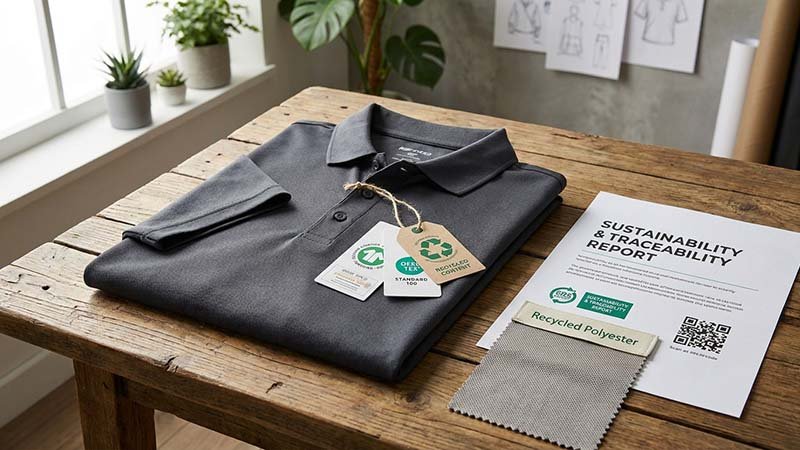
Sustainability is no longer a niche market; it's a core expectation. Your choice of manufacturer will directly impact your ability to make credible environmental claims.
Certification Systems (GRS, OEKO-TEX, RWS)
Your factory should be able to source and handle certified materials. This includes GRS (Global Recycled Standard) for recycled polyester, Organic Content Standard (OCS), and RWS (Responsible Wool Standard) if you use merino wool. The OEKO-TEX® Standard 100 certificate is a fundamental check for chemical safety.
Material and Chemical Management (PFC-free)
Ask about their specific policies on sustainable chemistry. A key topic in performance apparel is the transition to PFC-free or C0 durable water repellent (DWR) finishes. Your factory should have experience with these newer, more eco-friendly options.
Carbon Footprint and Environmental Practices
What are they doing within their own four walls? Ask about their efforts to reduce energy consumption, manage and treat wastewater from the dyeing process, and minimize waste. Factories certified by the Higg Index or bluesign® are typically leaders in this area.
Can They Manage the Supply Chain and Logistics Effectively?
Your finished goods are stuck at the port because of incorrect paperwork. Poor logistics management can create costly delays that erase all your hard work.
A reliable manufacturer must have mastery over the entire supply chain, from raw material planning to final export documentation, and measure their performance with metrics like On-Time Delivery (OTD).
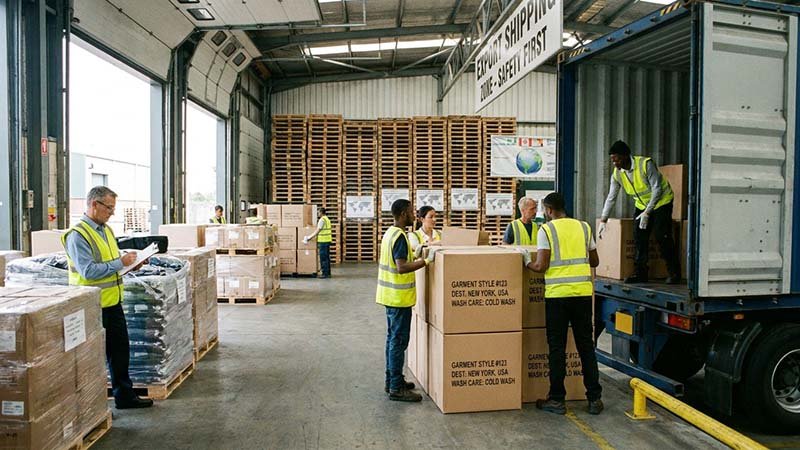
Making a great product is only half the battle. Getting it to your warehouse on time, with all the correct labels and documents, is the other half.
Raw Material Planning and Safety Stock
How do they manage fabric and trim lead times? A good factory will order key materials in advance and may hold safety stock of commonly used fabrics to shorten production timelines.
Packaging, Labeling, and Regulatory Compliance
They must be experts in compliance. This includes accurately listing fiber content and care instructions on labels according to the laws in your target market. All packaging must also meet your specifications and any retailer requirements.
Export Expertise and Incoterms
Your partner must have their own export license and be fluent in international trade terms (Incoterms). Most deals are done on FOB terms, but it's crucial to have this clearly defined in your contract.
Delivery Stability and OTD (On-Time Delivery) Rate
This is a critical Key Performance Indicator (KPI). Ask them what their OTD rate is for the last 12 months. A strong partner will measure this and should be hitting 95% or higher.
How Effective Are Their Communication and Project Management?
You're stuck in an endless loop of emails, and different people give you conflicting information. Poor communication leads to mistakes, delays, and immense frustration.
Choose a partner who provides a dedicated project management team, uses modern digital tools, has clear processes for managing changes, and communicates proactively in your language.

I can't overstate this: communication is everything. A slightly more expensive factory with excellent communication is always a better choice than a cheap factory that is a black hole of information.
Dedicated Team and Service Level Agreements (SLA)
You should have a dedicated merchandiser or project manager who is your single point of contact. Ask about their communication protocols. What is their standard response time for emails? A 24-hour response SLA is a reasonable expectation.
Digital Tools (PLM, EDI, Online QC)
Modern factories use digital tools to manage complexity. Do they use a PLM (Product Lifecycle Management) system to track development? Can they integrate via EDI for orders? Do they use apps for real-time QC reporting?
Risk and Change Management Process
Things change. A fabric might be delayed, or you might need to make a design update. A professional factory has a formal process for this, like an Engineering Change Notice (ECN), to ensure everyone is working from the latest information.
Cross-Time-Zone and English Communication
Your primary contact must be fluent in English. They need to be skilled at communicating across time zones, providing end-of-day summaries, and being available for calls at times that work for both parties.
Project Milestones and Reporting
They should provide a clear critical path timeline for your order with key milestones. A weekly progress report, even a simple one, provides transparency and helps you anticipate any potential delays.
Do Their Track Record and Client Base Align with Your Brand?
The factory says they can make anything, but they have no real experience in your specific product category. A factory's past performance is the best predictor of its future success with your brand.
Vet their experience by reviewing their portfolio of similar products, checking their client references, and assessing their understanding of your target market and IP protection policies.
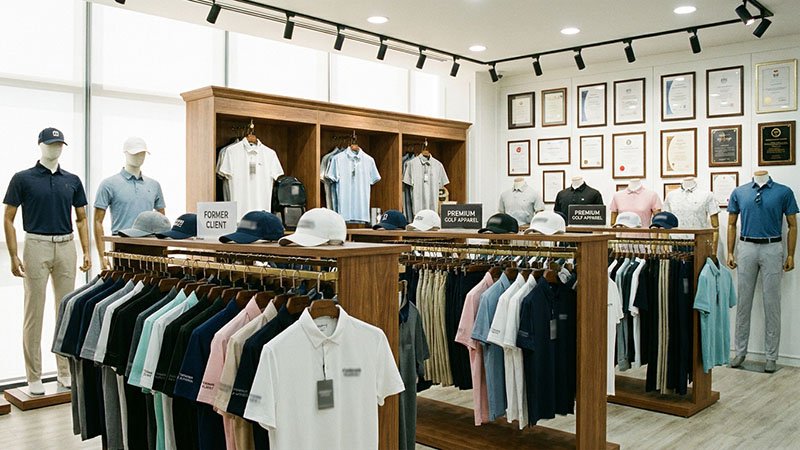
You want a partner who is already an expert in your field. You're not paying them to learn how to make golf apparel on your dime.
Success Cases and Repeat Business Rate
Ask to see examples of golf apparel they have produced for other brands (non-confidential ones, of course). More importantly, ask about their client retention or repeat business rate. A high rate is a strong signal of customer satisfaction.
Target Market and Channel Alignment
Do they have experience producing for brands that sell in your market (e.g., the US or Europe)? Do they understand the quality expectations of different channels, whether it's e-commerce, green grass pro shops, or big-box retail?
Confidentiality and IP Protection
Your designs are your most valuable asset. Ask them about their policies for protecting intellectual property. How do they ensure your patterns and designs aren't shared or copied? This goes back to the importance of a strong NDA.
How Do You Make the Final Decision Objectively?
You have two good options, and you're struggling to choose. Making a decision based on "gut feeling" is risky; you need a data-driven approach.
Use a weighted scoring card to compare your shortlisted factories against the 10 key criteria. Then, conduct a paid trial order with your top candidate using strict Go/No-Go standards before committing to a bulk order.

This final step removes emotion and ensures you make the most logical choice for your business.
Weighted Scoring Model
Create a spreadsheet with the 10 criteria. Assign a weight to each one based on your brand's priorities (e.g., Quality Control might be 20%, while Cost might be 15%). Score each factory from 1-5 for each criterion, and then calculate their total weighted score.
Trial Production and Go/No-Go Standards
Never go straight to a large bulk order. Commission a small, paid trial run (e.g., 50-100 units). Use this to test their real-world performance with hard pass/fail standards.
| Metric | Benchmark / Standard |
|---|---|
| Shrinkage | Must be ≤3% after standard home wash. |
| Collar Curling | ≤5mm lift/curl after 10 home laundry cycles. |
| Color Matching | Delta E (ΔE) value of ≤1.0 vs. approved lab dip. |
| QC Inspection | Must pass final inspection at AQL 2.5. |
Onboarding and Setting KPIs
If the factory passes the trial run, you're ready to onboard them as a core supplier. Work with them to set clear Key Performance Indicators (KPIs) for the first year, such as On-Time Delivery Rate, First Time Quality Pass Rate, and customer complaint rate.
What Are the Most Common Sourcing Questions?
You're ready to start, but a few practical questions remain. Here are quick answers to the issues that come up most often.
Buyers frequently ask about lead times, small orders, quality disputes, development costs, and the difference between OEM and ODM. The solutions lie in proactive planning and clear communication.
I've helped hundreds of brands navigate these challenges. Here are the most common questions and my direct advice.
What is the difference between an OEM and ODM manufacturer?
OEM (Original Equipment Manufacturer) is when you provide the factory with your own unique design (tech pack), and they produce it for you. ODM (Original Design Manufacturer) is when you select a pre-existing design from the factory's own catalog and simply have them add your logo. Most serious brands work with OEM partners to create unique products.
How much should I budget for samples?
Samples are not free. Expect to pay 2-3 times the bulk unit price per sample. This covers the higher cost of labor for a single piece and air freight for the fabric. A typical budget for developing a new style through 2-3 sample iterations might be $200-$500.
How can lead times be compressed without sacrificing quality?
The best way is through better planning. Use fabrics the factory already has in stock, approve your lab dips and samples quickly, and provide a clear forecast so they can book production capacity in advance. Rushing the actual sewing is almost always a mistake.
What are the best strategies for small orders or re-orders?
Look for factories that offer flexible production. Ask if they can group your order with others using the same fabric. For re-orders, establishing a "stock program" for your best-selling core colors allows the factory to hold greige fabric, which can cut lead times in half.
How should quality claims and disputes be handled?
Your purchase order should clearly define the AQL standard and the process for handling defects. If a shipment fails inspection, you should have the right to have the factory rework the defective items, receive a discount, or reject the shipment. Clear photographic evidence and a third-party inspection report are your best tools for proving a claim.
Conclusion
Choosing the right manufacturer is the most important decision you'll make. It’s not about finding the lowest price, but about finding a partner who can deliver quality, reliability, and expertise.