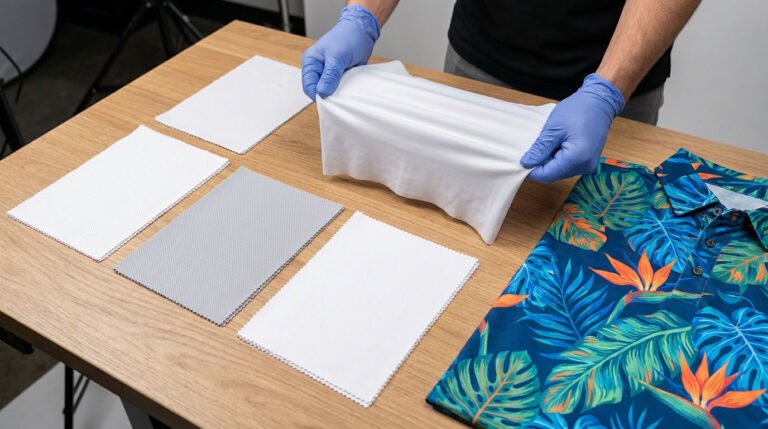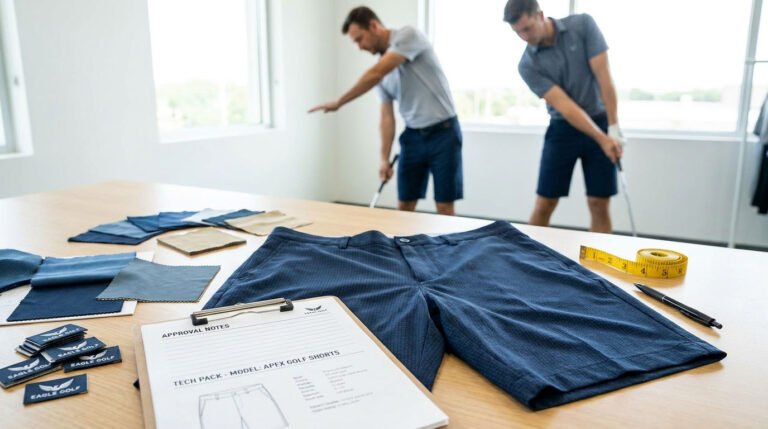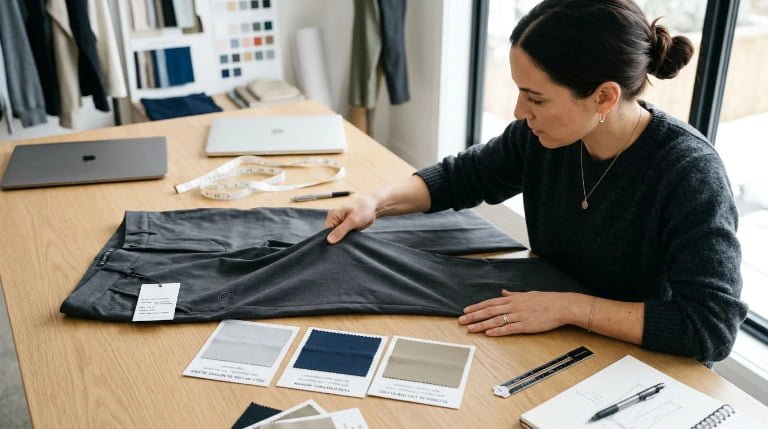
Choosing the wrong fabric for a golf skort can lead to see-through skirts, uncomfortable inner shorts, poor stretch recovery, and customer complaints. For apparel brands, these problems often begin with fabric selection rather than garment construction.
The best fabric for golf skorts is usually a polyester-spandex or nylon-spandex blend, but the ideal combination depends on the outer skirt and built-in shorts. The outer skirt needs drape, coverage, and shape retention, while the inner shorts require softness, stretch recovery, and moisture management.
At FUWAY, we help golf apparel brands evaluate these two layers separately before selecting materials for sampling.
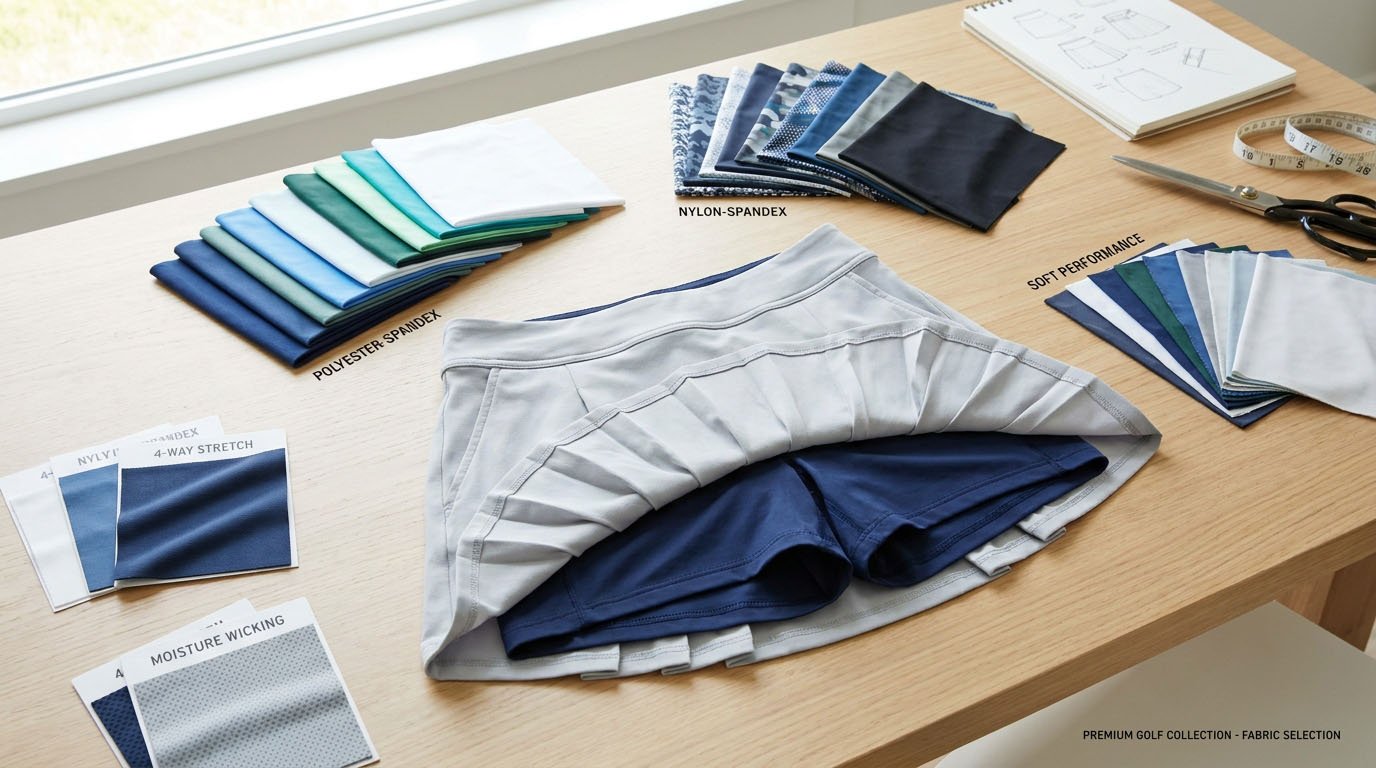
Quick Answer: What Is the Best Fabric for Golf Skorts?
For most performance golf skorts, polyester-spandex and nylon-spandex are practical starting points. However, fabric construction and finished performance matter more than fiber percentages alone.
The table below summarizes suitable fabric combinations for different product positions.
| Golf Skort Type | Recommended Outer Skirt | Recommended Inner Shorts | Main Priority |
|---|---|---|---|
| Everyday Performance | Polyester-spandex woven or knit | Polyester-spandex knit | Durability and cost control |
| Premium Comfort | Soft nylon-spandex woven or knit | Nylon-spandex interlock | Softness and recovery |
| Hot-Weather Golf | Lightweight breathable woven or knit | Lightweight moisture-managing knit | Breathability and comfort |
| Structured or Pleated | Stable stretch woven or structured knit | Soft stretch knit | Silhouette and shape retention |
| White Golf Skorts | Dense, opacity-tested woven or knit | Coverage-focused stretch knit | Opacity and comfort |
These are starting recommendations, not fixed manufacturing specifications. The final selection should reflect your target market, design, price point, and approved sample performance.
Step 1: Compare Polyester, Nylon, and Spandex Blends
Polyester and nylon are among the most common synthetic fibers used in performance golf skorts. Both can deliver suitable results when combined with appropriate fabric construction and finishing.
Polyester-Spandex: Best for Versatile Performance
Polyester-spandex is a practical choice for brands prioritizing durability, color retention, and manageable material costs.
Its main advantages include:
- Good dimensional stability when properly constructed and finished.
- Suitable moisture-wicking and quick-drying options.
- Wide availability of fabric weights, colors, and textures.
- Compatibility with both woven and knitted golf skort designs.
Polyester is particularly useful for everyday performance collections and repeat-order programs.
However, not every polyester fabric feels the same. A lightweight woven polyester blend may feel crisp, while a polyester interlock knit can feel smooth and flexible.
Nylon-Spandex: Best for a Softer, Premium Feel
Nylon-spandex is often selected for golf skorts that emphasize softness, smoothness, and next-to-skin comfort.
It works well for:
- Premium women's golf apparel.
- Soft, flowing outer skirts.
- Fitted inner shorts.
- Products requiring a smooth hand feel and reliable recovery.
Nylon blends may offer a more refined touch, but premium comfort is not guaranteed by fiber content alone.
Fabric density, yarn type, knitting structure, and finishing all influence the final result.
Recycled Polyester and Other Options
Recycled polyester-spandex can also be considered for brands developing collections with recycled-content requirements.
Its performance still needs to be evaluated against the intended application. Recycled content does not automatically indicate better or worse stretch, durability, or moisture management.
Quick Fabric Comparison
| Material | Main Strength | Main Consideration | Suitable Application |
|---|---|---|---|
| Polyester-Spandex | Versatility and cost efficiency | Hand feel varies by construction | Performance outer skirts |
| Nylon-Spandex | Softness and smooth feel | Cost and dimensional behavior require evaluation | Premium skirts and liners |
| Recycled Polyester-Spandex | Recycled-content positioning | Verify performance and material claims | Sustainability-focused collections |
FUWAY sourcing tip: Request actual finished-fabric swatches rather than selecting materials from composition percentages alone.
Two fabrics labeled 88% polyester and 12% elastane may behave differently because of their weave, GSM, yarn structure, and finishing.
For broader support with swatch selection, material matching, and fabric specifications, explore our golf apparel fabric sourcing services.
Step 2: Choose the Right Outer Skirt Fabric
The outer skirt determines much of a golf skort's appearance. It should maintain coverage, move naturally during a swing, and retain its intended silhouette.
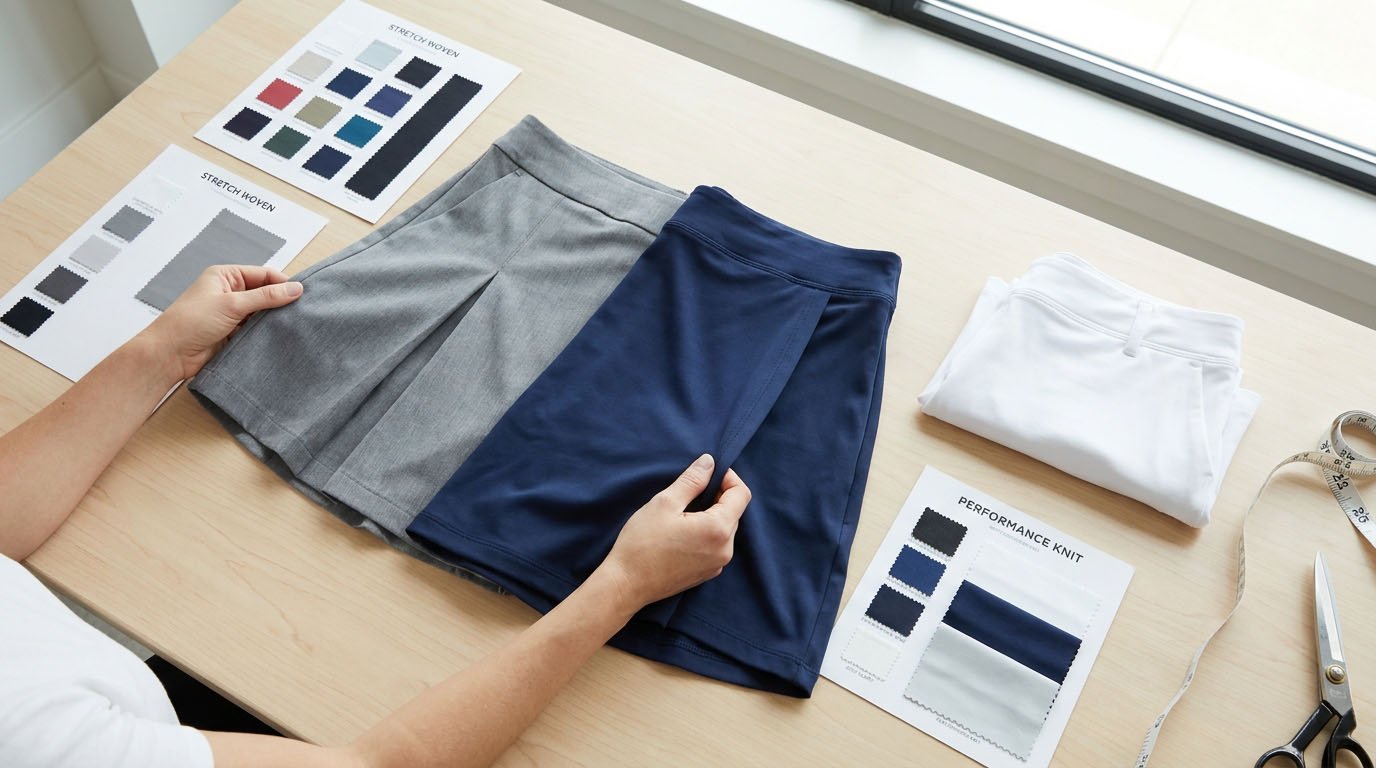
The main decision is usually between stretch woven fabrics and performance knits.
Stretch Woven Fabrics
Stretch woven fabrics are often suitable for tailored, structured, or pleated golf skorts.
Common advantages include:
- Clean, controlled silhouette.
- Good shape retention with suitable construction.
- A polished appearance for classic golf collections.
- Options for lightweight and wrinkle-resistant performance.
Plain weave and stretch twill are useful candidates for sampling.
However, a woven fabric should not be selected solely because it holds its shape. Check whether it provides enough flexibility for walking, bending, and rotating through a golf swing.
Pleat retention also depends on fabric construction and finishing, not simply whether the material is woven.
Performance Knit Fabrics
Knitted fabrics, including suitable jersey, interlock, and warp-knit constructions, can provide a softer and more flexible feel.
They are worth considering for:
- Athletic or casual golf skorts.
- Flowing or relaxed silhouettes.
- Designs emphasizing stretch and soft drape.
- Collections where everyday comfort is a priority.
The trade-off is that softer or more elastic knits may cling, lose their intended shape, or reveal body contours if their weight and construction are unsuitable.
What Should Brands Check Before Approving Outer Fabric?
Evaluate four essential properties:
- Drape: Does the skirt fall naturally without excessive stiffness or cling?
- Opacity: Does the fabric maintain adequate coverage in bright light and during movement?
- Stretch and recovery: Can the wearer bend and swing comfortably without visible distortion?
- Shape retention: Does the fabric maintain its intended appearance after washing and wear?
White and pastel outer skirts require particular attention because opacity depends on fabric density, color, stretch, and the layers underneath.
For a broader review of skirt silhouettes, waistbands, pockets, and garment development, see our Women's Golf Skort Development Checklist.
Step 3: Select the Best Inner Shorts Fabric
The inner shorts have a different role from the outer skirt.
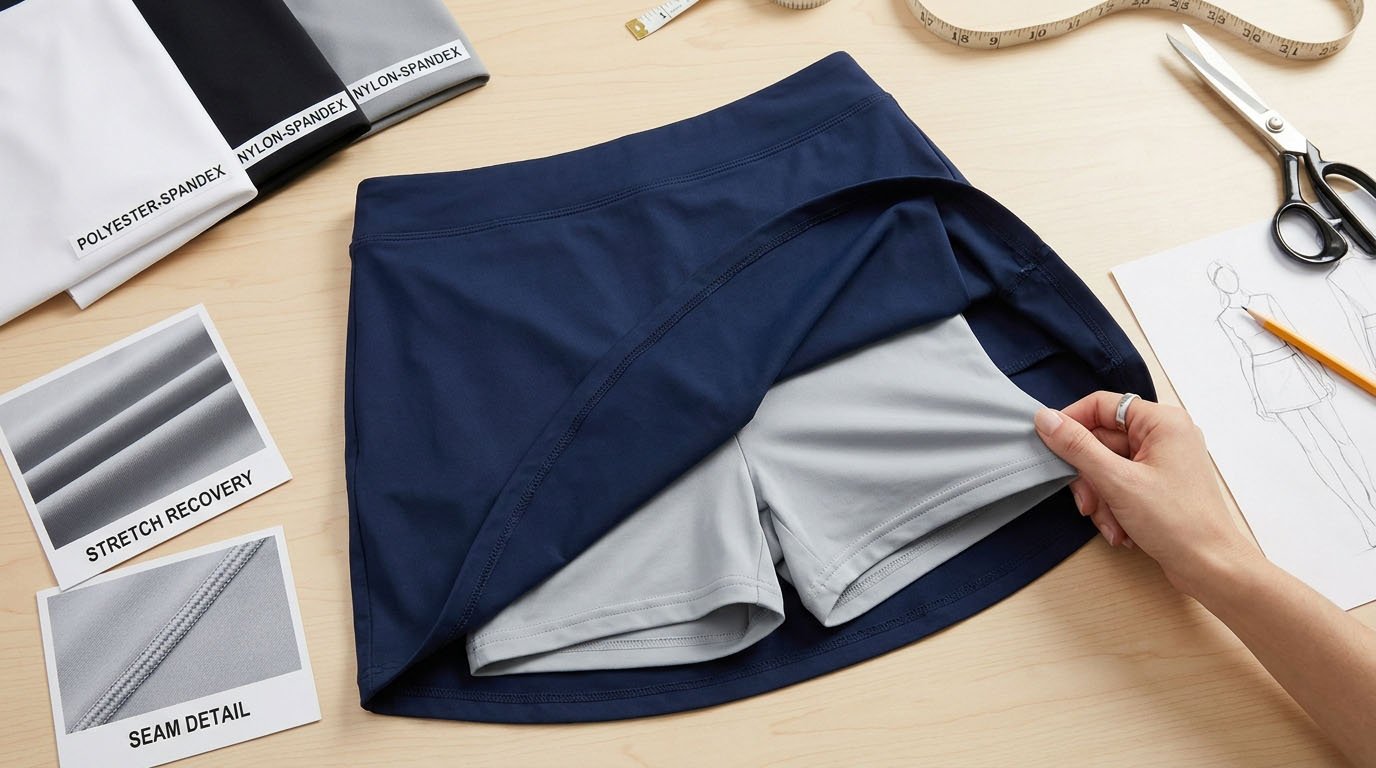
While the outer layer controls the silhouette, the liner sits against the skin and must remain comfortable during repeated movement.
For most golf skorts, a soft polyester-spandex or nylon-spandex knit with suitable stretch recovery is a strong starting option.
Why Interlock and Other Stretch Knits Work Well
Interlock and other suitable performance knits can offer a smooth surface, comfortable stretch, and stable coverage.
When evaluating liner fabrics, prioritize:
- Softness against the skin.
- Sufficient stretch in the required directions.
- Recovery after repeated extension.
- Moisture management appropriate for the climate.
- Coverage without unnecessary bulk.
A relatively dense interlock may suit a supportive liner, while a lighter knit may suit warm-weather designs.
Mesh constructions can improve ventilation in selected areas, but they require careful opacity, durability, and comfort checks.
How Can Fabric Selection Help Prevent Inner Shorts From Riding Up?
Inner shorts that move upward during walking or swinging are a common development concern.
Fabric recovery matters, but more elastane does not automatically prevent ride-up.
The final result also depends on:
- Inner short inseam length.
- Thigh and leg-opening fit.
- Fabric stretch resistance and recovery.
- Hem construction and seam comfort.
- Optional gripper materials and their placement.
A fabric with excellent stretch may still perform poorly if the liner pattern is too short or the leg opening is incorrectly sized.
Likewise, silicone grippers can improve stability in some designs but should be tested for skin comfort and suitable grip.
The best approach is to evaluate liner fabric and garment fit together, using actual walking, bending, sitting, and swing movements.
Should the Outer Skirt and Inner Shorts Use the Same Fabric?
They can, but separate fabrics often provide greater flexibility.
For example, a brand may choose a crisp polyester-spandex woven for the outer skirt and a softer nylon-spandex knit for the liner.
Using one fabric for both layers is not inherently wrong if it meets the requirements of each component.
The decision should depend on comfort, coverage, stretch recovery, cost, and finished-garment testing.
Step 4: Match Fabric Weight and Construction to Your Market
GSM means grams per square meter. It describes fabric weight, but it does not directly measure breathability, opacity, or quality.
A higher GSM fabric is not automatically better, and a lighter fabric is not always more comfortable.
What Is a Good GSM for Golf Skorts?
The following ranges are illustrative starting points for fabric sampling, not universal requirements.
| Fabric Component | Example Starting GSM | Main Selection Goal |
|---|---|---|
| Stretch Woven Outer Skirt | 130–180 GSM | Lightweight structure and drape |
| Knit Outer Skirt | 150–210 GSM | Softness, coverage, and shape |
| Stretch Knit Inner Shorts | 150–220 GSM | Comfort, recovery, and support |
Actual suitable weights can fall outside these ranges depending on yarn, construction, silhouette, and performance needs.
For example, a lightweight but tightly constructed woven fabric may provide better coverage than a heavier, loosely constructed knit.
Best Fabric Direction for Hot-Weather Golf
For hot and humid markets, prioritize:
- Lightweight fabrics with adequate coverage.
- Suitable air permeability and moisture management.
- Inner shorts that do not retain excessive heat.
- Comfortable contact surfaces during perspiration.
Avoid selecting the lightest available fabric without checking opacity and recovery.
Best Fabric Direction for Premium Golf Collections
Premium collections may benefit from softer nylon blends, refined finishes, and comfortable liner constructions.
However, premium positioning should be supported by measurable product quality rather than fiber labels alone.
A well-developed polyester-spandex skort can outperform a poorly selected nylon-spandex alternative.
How Does Fabric Choice Affect MOQ and Cost?
For startup brands, fabric availability can be as important as composition.
Standard in-stock fabrics and existing colors may reduce sourcing complexity, while custom-dyed or specially developed materials may require additional fabric minimums.
Outer skirts and liners should also be checked for color coordination, shade consistency, and material availability across repeat orders.
Before selecting a fabric, ask whether the supplier can maintain a consistent specification for future production.
Step 5: Test Both Fabrics Before Bulk Production
A promising fabric swatch does not guarantee a successful finished golf skort.
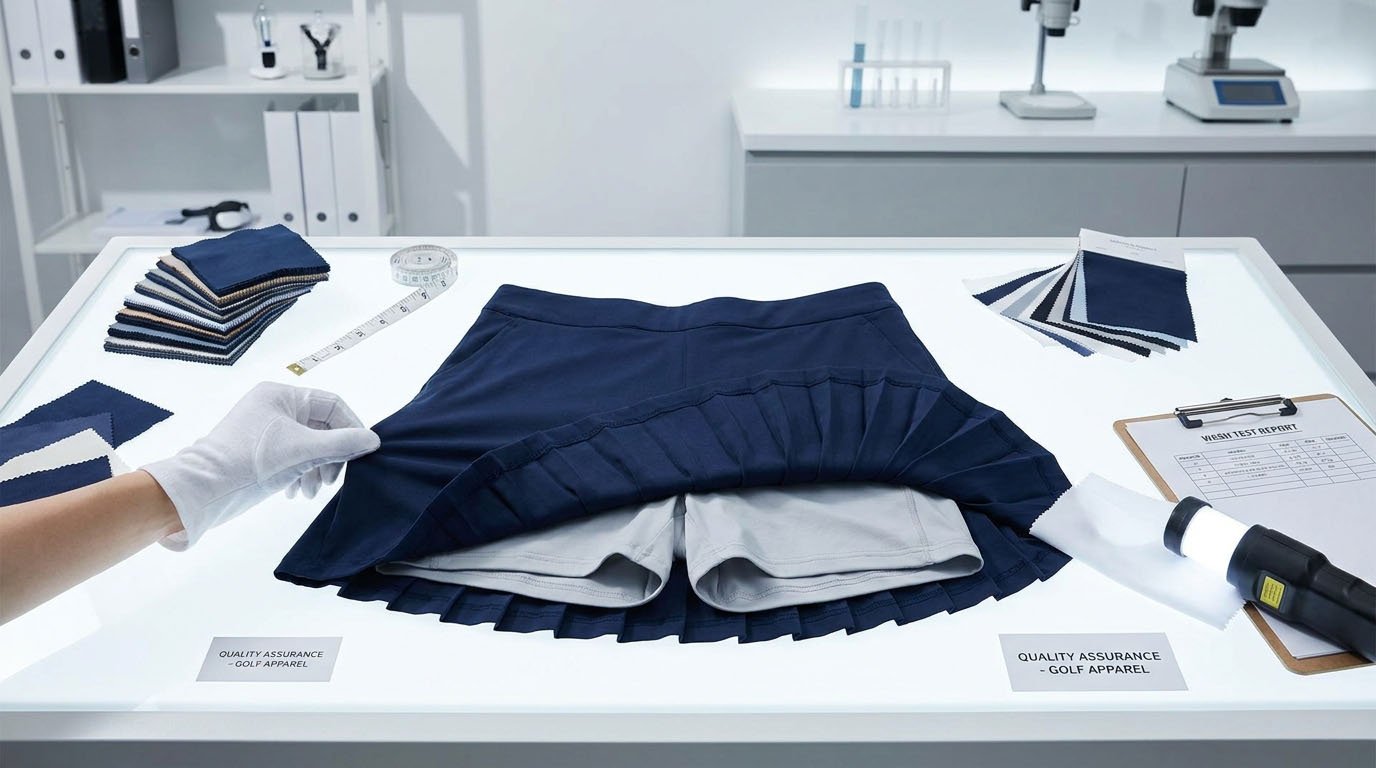
Fabric performance may change once the outer skirt and inner shorts are sewn together, stretched during wear, or washed repeatedly.
Pre-Production Fabric Approval Checklist
| Check | What to Verify |
|---|---|
| Composition and GSM | Match the approved material specification |
| Stretch and Recovery | Verify movement and shape retention |
| Opacity | Check coverage under bright light and during bending |
| Wash Stability | Check dimensional changes in both layers |
| Colorfastness | Assess washing, rubbing, and perspiration performance as required |
| Surface Durability | Check pilling, snagging, and abrasion where relevant |
| Finished-Garment Wear Test | Assess comfort, liner stability, and outer-skirt drape |
Brands should agree on relevant test methods and acceptance criteria before production rather than applying one fixed pass/fail number to every fabric.
Examples of material testing documentation are available on FUWAY's test reports page. Test evidence should always be checked for the specific material and intended performance claim.
Why Must Both Layers Be Tested Together?
The outer skirt and liner may behave differently after washing.
If the two materials shrink or recover differently, the finished garment may twist, pull at seams, or lose its intended drape.
Static cling can also occur when the outer skirt rubs against the liner. Material surfaces, garment design, environmental conditions, and finishing can all influence this behavior.
Before approval, review a finished sample after laundering and during movement—not just individual fabric pieces.
Once materials are approved, the next stage is confirming them in the finished garment and production documentation. Our Golf Skort OEM Process Guide explains the broader development-to-production workflow.
Step 6: Avoid Common Golf Skort Fabric Selection Mistakes
Most fabric problems are easier to identify during sampling than after bulk production begins.
| Common Mistake | Potential Result | Better Approach |
|---|---|---|
| Choosing by fiber percentage alone | Unexpected drape or recovery | Evaluate finished fabric construction |
| Using lightweight fabric without opacity checks | Visible liner or insufficient coverage | Test light colors under realistic conditions |
| Assuming more elastane prevents ride-up | Uncomfortable or unstable liners | Test recovery together with garment fit |
| Ignoring interaction between layers | Cling, distortion, or uneven drape | Wash and wear-test the complete skort |
| Selecting custom fabric before checking availability | Higher costs or sourcing delays | Confirm stock, color options, and fabric minimums |
The most effective sourcing decision is not necessarily the most technical or expensive fabric.
It is the material combination that consistently meets your product's design, comfort, performance, and commercial requirements.
Frequently Asked Questions About Golf Skort Fabrics
Is Polyester or Nylon Better for Golf Skorts?
Both are suitable options.
Polyester-spandex is often practical for durable, cost-conscious performance collections, while nylon-spandex may appeal to brands prioritizing a softer hand feel.
The better choice depends on fabric construction, finishing, and finished-garment performance.
What Is the Best Fabric for Golf Skort Inner Shorts?
Soft polyester-spandex and nylon-spandex knits are common starting choices.
Select a liner fabric that provides sufficient stretch, recovery, coverage, and comfort against the skin. Interlock and other suitable performance knits can work well.
How Much Spandex Should a Golf Skort Have?
There is no universal percentage.
Outer fabrics may require less elastane than fitted inner shorts, but the correct amount depends on construction and intended fit.
Test stretch and recovery instead of relying only on the elastane percentage.
Which Golf Skort Fabric Is Best for Hot Weather?
A lightweight, breathable performance fabric combined with a moisture-managing inner short is a practical starting point.
Polyester-spandex and nylon-spandex can both work, depending on their construction and finish.
Check comfort, airflow, opacity, and drying performance before making a final selection.
Can You Use Recycled Polyester for Golf Skorts?
Yes. Recycled polyester blends can be used for outer skirts and suitable liner applications.
Verify the actual fabric performance and obtain appropriate supporting documentation for any recycled-content claims.
Conclusion: Which Golf Skort Fabric Should Your Brand Choose?
There is no single best fabric for every golf skort.
For most brands, polyester-spandex and nylon-spandex are the strongest starting options, but the outer skirt and inner shorts should be evaluated separately.
The outer layer needs the right balance of drape, coverage, and shape retention. The inner shorts need comfort, suitable stretch recovery, and reliable movement performance.
Choose materials based on your target customer, climate, silhouette, and price point. Then confirm both layers through fabric testing and finished-garment sampling before bulk production.
At FUWAY, we support golf apparel brands with fabric sourcing, sample development, and OEM/ODM manufacturing. Explore our custom golf skort manufacturing options or contact FUWAY to discuss fabric choices for your next collection.