Search

Start typing to search...

Golf POLO Shirt Fabric Selection Guide: Cotton vs Polyester vs Blends

Golf POLO Shirt Fabric Selection Guide: Cotton vs Polyester vs Blends

Will Will
28 min read

A client ordered 1,000 premium golf polos in 100% combed cotton for their summer product launch. They chose cotton because they associated it with quality and wanted a premium feel. Three months after launch, they were flooded with returns. Golfers complained the shirts were soaked through by hole 9 and took hours to dry. The fabric quality was perfect—the problem was fabric choice. Cotton absorbs moisture but does not wick it away from skin or dry quickly. Their "premium" fabric became a performance liability in hot, humid climates where their target customers actually played. They had confused material prestige with functional fit.

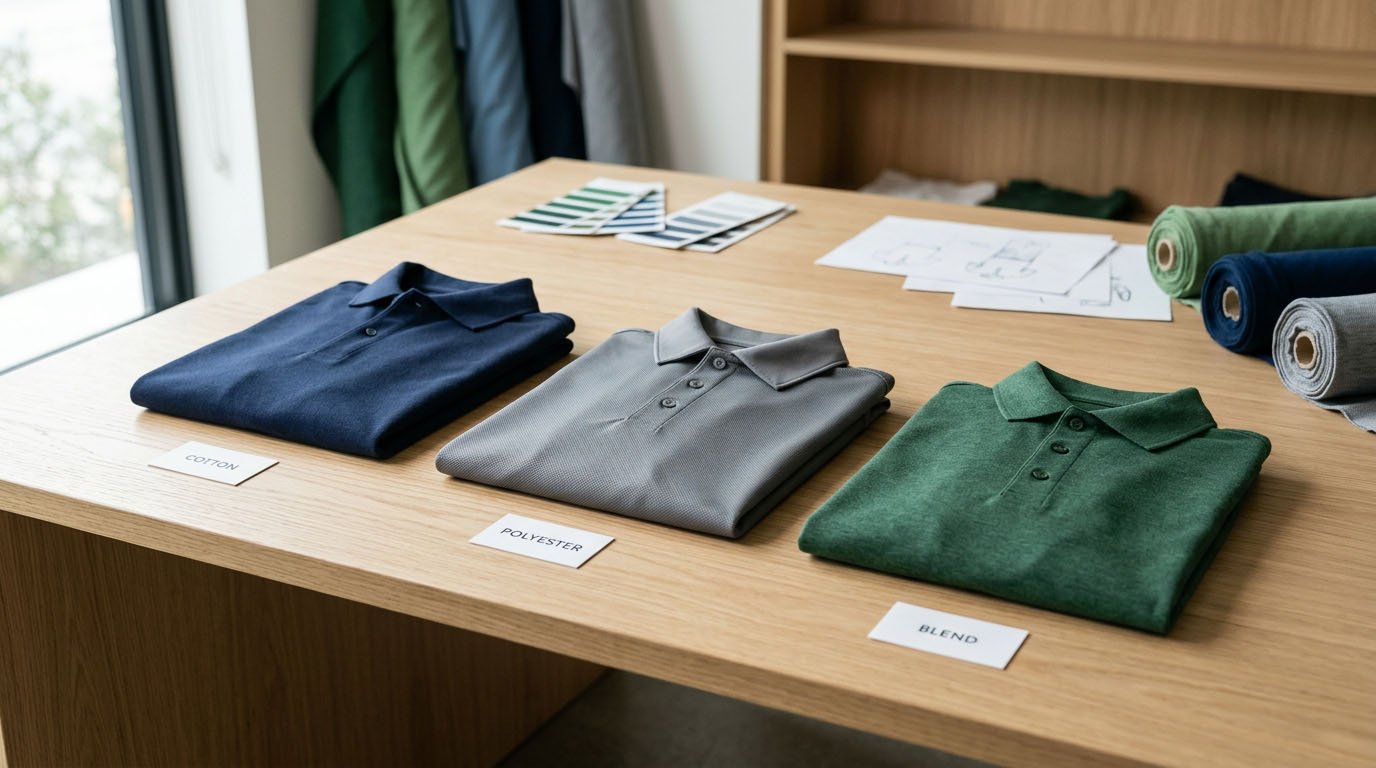
Cotton, polyester and blended fabrics for golf polos are not quality tiers but performance tradeoffs—where cotton offers natural comfort and breathability at the cost of moisture retention and slow drying, polyester delivers quick-dry and shape retention with synthetic hand feel, and engineered blends balance both properties to match specific play environments, price positioning and target golfer priorities rather than serving as universal "best" choices.

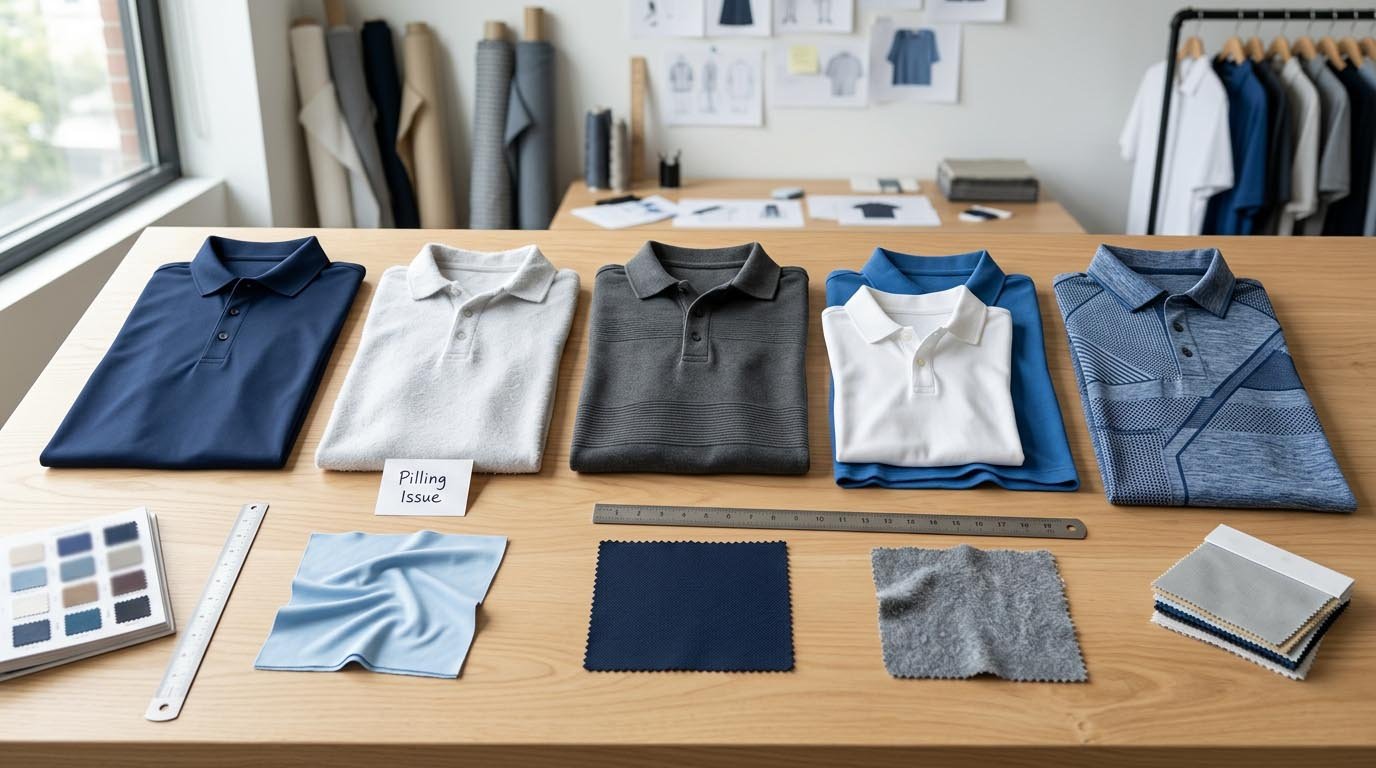
Golf polo fabric comparison cotton polyester blends

I am Will from FUWAY. Over the past 3 years, I have processed fabric selection requests and quality complaints for 120+ golf apparel clients. Most arrive with preset assumptions—cotton equals premium, polyester equals budget, blends are compromises. Then they encounter reality: cotton polos returned for sweat saturation, polyester polos rejected for feeling "plasticky," blends that somehow deliver neither fabric's advantages. This guide shows you how to match fabric properties to your actual product requirements—play environment, price positioning, performance priorities—rather than defaulting to material hierarchy assumptions that do not hold up on the golf course.

Quick Answers: Golf Polo Fabric Selection

Q: Is 100% cotton always better than polyester for golf polos?
No. Cotton offers softness and breathability, but polyester dries faster, keeps its shape, and is best for hot/play conditions. Choose based on climate and use.

Q: What’s the best fabric blend ratio for golf polos?
65/35 polyester-cotton is most balanced: quick-dry, comfort, durable, and cost-effective. More polyester = performance; more cotton = softness.

Q: How much does golf polo fabric cost per yard?
Typical range: cotton $3.50–9.00/yard; polyester $3.00–6.50/yard; blends $3.20–7.00/yard (heavier weights cost more).

Q: What GSM (weight) is right for golf polos?
Lightweight (140–180 GSM) for hot/humid; medium (180–220 GSM) for all climates; heavy (220–260 GSM) for cool/traditional. Knit structure and moisture-wicking matter more than weight alone.

Q: How do I match fabric to the golfer’s environment?
Hot/humid: polyester & blends, lightweight, mesh.
Hot/dry: balanced blends, medium weight, UPF.
Cool: cotton or blends, heavier weight.
Indoor: any, comfort wins.

Q: What causes common fabric complaints?
Wet/shrinking: cotton in hot/humid or not pre-shrunk.
Cheap feel: low-grade polyester—use blends/finish.
Pilling/fading: low yarn quality or dye—spec anti-pilling & colorfastness tests.

Why Fabric Choice Matters: Performance, Comfort and Brand Image

Fabric selection determines whether your golf polo delivers the performance characteristics your target customer expects—where material choice affects moisture management, thermal comfort, shape retention, care requirements and perceived quality in ways that either align with or contradict your brand positioning and price point.

Why fabric matters for golf performance

Performance Dimensions Affected by Fabric

Moisture management:

  • How quickly fabric moves sweat away from skin
  • How fast fabric dries after saturation
  • Whether fabric stays lightweight when wet

Thermal regulation:

Mechanical comfort:

  • Stretch and recovery (freedom of movement)
  • Shape retention through swing motion
  • Weight and drape on body

Durability and care:

  • Shrinkage control
  • Pilling resistance
  • Wrinkle retention (iron-free versus requires pressing)
  • Colorfastness through washing

Brand Image Implications

Premium positioning ($70-150 retail):

  • Customers expect natural fibers or high-tech engineered blends
  • Hand feel matters as much as performance
  • Pima cotton or modal blends signal quality
  • Care complexity acceptable (dry clean or iron ok)

Performance positioning ($45-70 retail):

  • Customers prioritize on-course function over fiber type
  • Polyester or poly-dominant blends expected
  • Quick-dry, stretch, UV protection valued
  • Easy care required (machine wash, no iron)

Value positioning ($25-45 retail):

  • Customers accept tradeoffs for price
  • Basic poly-cotton blends or standard polyester appropriate
  • Must avoid catastrophic failures (shrinkage, pilling, tearing)
  • Durability through 20-30 washes minimum expectation

Cost-Quality Perception Traps

Trap 1: Assuming cotton always reads as premium

Reality: Younger golfers and performance-focused buyers associate polyester with technical innovation and cotton with old-fashioned. Material prestige is demographic-dependent.

Trap 2: Choosing cheapest fabric within category

Reality: $3.00/yard polyester versus $4.50/yard polyester can mean difference between 30-wash durability and 15-wash durability. Cheap fabric generates returns and reputation damage exceeding cost savings.

Trap 3: Over-engineering budget lines

Reality: Adding $2/unit in fabric cost to a $25 retail polo offers little competitive advantage. Customers shopping at that price accept standard fabric. Save premium materials for lines where customers pay for them.

Cotton: Combed, Pima and Mercerized—Pros, Cons and Best Uses

Cotton varieties differ in fiber length, processing and finish treatments—with combed cotton offering clean, consistent quality at moderate cost, Pima/Supima providing extra softness through long-staple fibers, and mercerized cotton adding sheen and strength through chemical treatment, but all cotton types share moisture retention and slow-drying properties that make them better suited for traditional dress golf wear or temperate climates than hot/humid performance applications.

Cotton types for golf polos

Combed Cotton: The Standard Choice

What it is:
Cotton fibers combed to remove short fibers and impurities, leaving longer, more uniform fibers that produce smoother, stronger yarn.

Key properties:

  • Soft hand feel (comfortable against skin)
  • Good breathability (air passes through fabric)
  • Natural appearance and drape
  • Absorbs moisture but retains it (stays wet)

Cost range:

  • $3.50-5.50 per yard for 180-220 GSM pique
  • Lower cost than Pima, higher than standard polyester

Typical GSM:

  • 200-220 GSM for traditional golf polo weight
  • 180-200 GSM for lighter summer versions

Best use cases:

  • Traditional club dress codes valuing classic appearance
  • Temperate climates where quick-dry less critical
  • Brand positioning emphasizing natural materials
  • Spring/fall golf with moderate temperatures

Limitations:

  • Shrinks 3-5% without sanforizing treatment (require pre-shrunk specification)
  • Slow to dry after sweating (2-4 hours in humid conditions)
  • Wrinkles easily (may require ironing)
  • Heavier feel when saturated with moisture

Pima and Supima Cotton: Premium Softness

What it is:
Extra-long staple cotton (fiber length 1.5+ inches versus 1 inch for standard) producing exceptionally soft, strong yarn. Supima is trademarked American-grown Pima.

Key differentiators from combed cotton:

  • Softer hand feel (more luxurious initial touch)
  • Stronger yarn (resists pilling better)
  • Slightly more lustrous appearance
  • Retains moisture even longer (longer fibers = more absorption)

Cost range:

  • $6.50-9.00 per yard for pique knit
  • Premium 30-60% over standard combed cotton

When premium justifies cost:

  • Retail price $80+ where fabric quality reinforces positioning
  • Traditional country club market valuing material prestige
  • Limited-edition or signature collections
  • Cool-climate courses where moisture retention is non-issue

When premium wastes money:

  • Hot/humid playing conditions (moisture retention becomes liability)
  • Performance-focused buyers (who prioritize function over fiber type)
  • Value-conscious market ($45-65 retail) where customers do not pay premium for Pima

Mercerized Cotton: Added Sheen and Strength

What it is:
Cotton treated with caustic soda (sodium hydroxide) under tension, causing fibers to swell and straighten, creating permanent luster and increased strength.

Properties versus untreated cotton:

  • Shiny appearance (silk-like luster)
  • 30% stronger yarn
  • Better dye uptake (deeper, more vibrant colors)
  • Smoother surface (less prone to pilling)
  • Still retains cotton's moisture absorption and slow-dry characteristics

Cost range:

  • $5.00-7.50 per yard
  • Premium 20-40% over combed cotton

Best use cases:

  • Brands wanting premium cotton appearance without Pima cost
  • Polos requiring deep, saturated colors
  • Traditional styling with slightly dressier aesthetic
  • When durability through washing is priority within cotton category

Reality check:
Mercerization improves appearance and strength but does not improve performance characteristics (quick-dry, moisture-wicking). Still unsuitable for hot/humid play.

Cotton Decision Framework

Climate/Use Cotton Type Why It Works Why Others Fail
Traditional club, temperate Combed cotton Natural comfort, classic appearance Pima = unnecessary cost; Polyester = perceived as cheap
Premium positioning, cool climate Pima/Supima Material prestige matches price Combed = insufficient differentiation; Polyester = wrong market signal
Dress-casual, color-critical Mercerized Deep colors, lustrous finish Pima = cost without visual payoff; Combed = less vibrant colors
Hot/humid performance play None—use blends All cotton types retain moisture Any 100% cotton stays wet too long

Polyester: Piqué, Microfiber and Recycled—Pros, Cons and Care

Polyester fabrics for golf wear have evolved from basic synthetic materials to engineered performance textiles—where standard pique delivers reliable moisture-wicking and quick-dry at moderate cost, microfiber offers cotton-like softness through ultra-fine fibers, and recycled polyester provides sustainability positioning, all sharing core advantages of shape retention, fast drying and low care requirements that make polyester optimal for hot/humid conditions and active play styles despite synthetic hand feel that some traditional buyers still perceive negatively.

Polyester types for golf performance wear

Standard Polyester Piqué: The Workhorse Fabric

What it is:
Synthetic fiber knitted in pique structure (raised texture pattern) providing breathability through knit design and moisture-wicking through fiber properties.

Key properties:

  • Quick-dry (moisture evaporates 3-5x faster than cotton)
  • Maintains shape through washing (no shrinkage)
  • Lightweight even when wet
  • Resists wrinkles (minimal or no ironing needed)
  • Lower cost than cotton

Cost range:

  • $3.00-4.50 per yard for 160-200 GSM
  • Budget-friendly versus cotton

Performance advantages:

  • Moisture wicked away from skin to fabric surface
  • Evaporates quickly in heat and airflow
  • UPF 15-30 inherent UV protection (varies by knit density)
  • Maintains fit and size through repeated washing

Initial drawbacks (addressable through finishing):

  • Synthetic hand feel (less soft than cotton initially)
  • Can retain body odor more than cotton
  • Static cling in dry conditions
  • Some customers perceive as "lower quality"

Finishing treatments that improve polyester:

  • Peached/brushed finish: Softens hand feel, reduces synthetic perception
  • Anti-microbial treatment: Reduces odor retention
  • Anti-static treatment: Eliminates cling
  • Moisture-wicking enhancement: Improves sweat management beyond base fiber properties

Best use cases:

  • Hot, humid climates where quick-dry is critical
  • Active recreational golfers prioritizing comfort over tradition
  • Easy-care requirements (machine wash, hang dry, no iron)
  • Budget-conscious performance positioning ($35-55 retail)

Microfiber Polyester: Soft Performance

What it is:
Polyester fiber split into ultra-fine filaments (0.7 denier or less, versus 1-2 denier standard), creating cotton-like softness while retaining polyester performance.

Differentiators from standard polyester:

  • Softer hand feel approaching cotton comfort
  • Better drape (more natural movement on body)
  • Enhanced moisture-wicking (more surface area per fiber)
  • More expensive production process

Cost range:

  • $4.00-6.00 per yard for 160-200 GSM
  • Premium 30-50% over standard polyester

When premium justifies cost:

  • Performance positioning at $60-90 retail where customers pay for comfort and function
  • Brands needing polyester performance without synthetic feel
  • Athletes or serious golfers who notice hand-feel differences
  • Markets where customers compare directly to cotton and expect similar softness

Reality check:
Microfiber improves feel but costs more. For value lines ($35-50 retail), standard polyester with good finishing treatments offers better cost-performance ratio. Save microfiber for products where customers perceive and pay for the difference.

Recycled Polyester: Sustainability Positioning

What it is:
Polyester fiber produced from post-consumer plastic bottles or reclaimed textile waste, offering identical performance properties to virgin polyester with reduced environmental footprint.

Properties:

  • Same performance as virgin polyester (quick-dry, shape retention, wrinkle resistance)
  • GRS certification available (Global Recycled Standard)
  • Supports sustainability marketing claims
  • Slightly less consistent fiber quality (batch variation possible)

Cost range:

  • $4.50-6.50 per yard
  • Premium 20-40% over virgin polyester

When sustainability premium works:

  • Brands with explicit sustainability positioning
  • EU and North American markets where eco-conscious buyers pay premium
  • Millennial and Gen-Z target demographics valuing environmental impact
  • Retail $65-120 where sustainability messaging reinforces price

When sustainability premium fails:

  • Price-sensitive markets where customers prioritize cost over eco-claims
  • Buyers focused purely on performance (recycled offers no performance advantage)
  • Markets where sustainability claims are skeptically viewed

Practical consideration:
Require GRS certification documentation from mill. Many factories claim "recycled" without credible traceability. Verify before marketing.

Polyester Care and Longevity

Washing recommendations:

  • Machine wash cold or warm (no hot water needed)
  • Tumble dry low or hang dry (quick natural drying)
  • No bleach (damages fiber)
  • No fabric softener (reduces moisture-wicking effectiveness)

Expected lifespan:

  • 100-150 washes before noticeable wear
  • Longer than cotton due to fiber strength
  • Colors fade more slowly than cotton
  • Maintains shape better than cotton

Common complaints (and causes):

"Retains odor even after washing"

  • Cause: Body oils trapped in synthetic fibers
  • Solution: Pre-wash with vinegar or use anti-microbial treated fabrics

"Feels clingy or static"

  • Cause: Dry conditions and synthetic material
  • Solution: Anti-static finish or fabric softener (though softener reduces wicking)

"Not as soft after multiple washes"

  • Cause: Finish treatments wear off over time
  • Solution: Initial softness is finish-dependent; fiber softness (microfiber) lasts longer

Blends: Cotton/Poly, Spandex Stretch, Modal and More—Finding Balance

Fabric blends are not compromises but strategic combinations engineered for specific performance outcomes—where 65/35 poly-cotton balances quick-dry with soft hand feel for general golf wear, stretch blends with spandex add mobility for athletic fits, and specialty fibers like modal enhance drape and breathability, with optimal blend ratios depending on whether you prioritize feel, function, cost or differentiation over attempting to maximize all properties simultaneously.

Fabric blend strategies for golf polos

Cotton-Polyester Blends: The Balanced Standard

Common ratios and their characteristics:

65% Polyester / 35% Cotton:

  • Most popular golf polo blend
  • Polyester (dominant fiber) determines core properties: quick-dry, shape retention, wrinkle resistance
  • Cotton (secondary fiber) softens hand feel and adds natural comfort
  • Cost: $3.20-5.00 per yard (similar to pure cotton, less than pure polyester)

Performance profile:

  • Dries 2-3x faster than 100% cotton (not as fast as pure polyester)
  • Softer feel than pure polyester (less synthetic perception)
  • Minimal shrinkage (<2%) with proper finishing
  • Easy care (machine wash, minimal ironing)

Best use cases:

  • Year-round general golf wear
  • Moderate climates or mixed conditions
  • Brands wanting performance without full synthetic feel
  • Mid-tier positioning ($45-70 retail)

50% Polyester / 50% Cotton:

  • More cotton feel, less polyester performance
  • Dries moderately faster than pure cotton
  • Softer hand, more natural drape
  • Higher shrinkage risk (3-4%) than poly-dominant blends

Best use cases:

  • Customers preferring cotton feel with slight performance boost
  • Temperate climates where extreme quick-dry unnecessary
  • Traditional buyers cautious about synthetic fabrics

60% Cotton / 40% Polyester:

  • Cotton-dominant (cotton feel with polyester durability boost)
  • Dries only slightly faster than pure cotton
  • Softer, more traditional hand feel
  • Wrinkle-prone (more ironing needed than poly-dominant)

Best use cases:

  • Premium traditional positioning wanting cotton prestige with shape retention
  • Cool-climate courses
  • Customers who prioritize softness over performance

Stretch Blends: Adding Spandex/Elastane

Common formulations:

95% Polyester / 5% Spandex:

  • Maximum stretch and recovery
  • Quick-dry performance intact
  • Slight synthetic hand feel
  • Cost: $4.50-7.00 per yard

92% Polyester / 8% Spandex:

  • More stretch than 5% spandex (for extreme mobility)
  • Higher cost, potential durability concerns (spandex degrades faster)

60% Polyester / 35% Cotton / 5% Spandex:

  • Stretch with softer hand feel
  • Moderate quick-dry (slower than pure poly)
  • Balanced performance-comfort-mobility

Why add stretch:

  • Freedom of movement during golf swing
  • Form-fitting styles that maintain shape
  • Athletic fit positioning
  • Modern customer expectation (many golfers now expect some stretch)

Stretch considerations:

  • Spandex degrades with chlorine, heat, and time (limit lifespan)
  • Care instructions critical: No high heat, no bleach, no fabric softener
  • More expensive than non-stretch fabrics
  • Requires higher-quality knitting (cheaper factories struggle with stretch consistency)

When stretch justifies cost:

  • Performance-athletic positioning
  • Younger demographic expecting modern fit
  • Retail $60-100 where mobility is brand differentiator

When stretch wastes money:

  • Traditional/classic fit styles (stretch adds no value)
  • Value positioning where customers prioritize cost
  • Brands without fit refinement capability (poor patterns make stretch irrelevant)

Specialty Fiber Blends

Modal-Cotton Blends (e.g., 50% Modal / 50% Cotton):

  • Modal: Semi-synthetic from beech tree cellulose
  • Softer and more drapey than cotton
  • Better moisture absorption than cotton
  • More expensive: $5.50-8.00 per yard
  • Retains moisture like cotton (not suitable for hot/humid performance)

Best for:

  • Premium traditional positioning
  • Soft luxury feel without pure synthetics
  • Customers willing to sacrifice performance for comfort

Bamboo-Cotton Blends:

  • Marketing angle: sustainability, natural antimicrobial
  • Reality: Most "bamboo fabric" is rayon (chemically processed cellulose)
  • Performance similar to cotton (absorbs moisture, slow to dry)
  • Cost: $5.00-7.50 per yard
  • Value depends on customer belief in eco-positioning

Merino Wool Blends (for cool-weather golf):

  • Rarely used in polos (more common in base layers)
  • Excellent temperature regulation
  • Naturally odor-resistant
  • Expensive: $12-20 per yard
  • Limited market (cool-climate golf only)

Blend Selection Framework

Priority Recommended Blend Why Cost/Yard
Quick-dry + soft feel 65% poly / 35% cotton Best balance for hot weather $3.20-5.00
Maximum softness with slight performance 50% poly / 50% cotton Cotton feel with moderate function $3.50-5.50
Stretch + performance 95% poly / 5% spandex Mobility without cotton moisture retention $4.50-7.00
Stretch + soft feel 60% poly / 35% cotton / 5% spandex Balanced all-around $5.00-7.50
Premium soft drape 50% modal / 50% cotton Luxury feel for traditional wear $5.50-8.00
Budget performance 100% polyester with finish Most cost-effective quick-dry $3.00-4.50

Key Specs and Testing: GSM, Wicking, Dry Time, UPF, Pilling and Shrinkage

Fabric specifications like GSM, moisture-wicking, dry time, UPF rating, pilling resistance and shrinkage are measurement tools for matching fabric properties to functional requirements—not quality rankings—where GSM indicates weight and coverage rather than breathability, wicking describes moisture movement speed, dry time predicts on-course comfort in humid conditions, and testing for pilling and shrinkage reveals durability across washing cycles that determine total ownership cost beyond initial fabric price.

Golf polo fabric testing specifications

GSM (Grams per Square Meter): Weight and Density

What GSM measures:

  • Fabric weight per square meter
  • Higher GSM = heavier, more material
  • Lower GSM = lighter, thinner fabric

Common ranges for golf polos:

  • 140-160 GSM: Very lightweight, hot-weather performance
  • 160-180 GSM: Lightweight, breathable, modern athletic fit
  • 180-220 GSM: Medium weight, year-round versatility
  • 220-260 GSM: Heavyweight, traditional, premium hand

What GSM does NOT tell you:

  • Breathability (depends on knit structure)
  • Moisture-wicking (depends on fiber type and treatment)
  • Softness (depends on fiber quality and finish)
  • Durability (depends on yarn strength and knit density)

Critical insight:
Two fabrics at identical GSM can perform completely differently based on:

  • Knit structure (tight versus open, pique versus jersey)
  • Fiber type (cotton absorbs more water than polyester, feeling heavier when wet)
  • Finish treatments (brushing, peaching, wicking coatings)

Specification advice:
Specify GSM plus fiber type, knit structure, and finish requirements. Example: "180 GSM, 65/35 poly-cotton pique with moisture-wicking finish" versus just "180 GSM fabric."

Moisture-Wicking: Movement and Evaporation

What moisture-wicking means:

  • Fabric's ability to move liquid (sweat) away from skin
  • Transport moisture to fabric surface for evaporation
  • Keeps skin drier during activity

Two mechanisms:

  1. Fiber-based wicking:

    • Synthetic fibers (polyester, nylon) naturally transport moisture through capillary action
    • Cotton absorbs but does not wick (holds moisture in fabric)
  2. Treatment-based wicking:

Testing moisture-wicking (if factory claims it):

  • AATCC Test Method 195 (Liquid Moisture Management)
  • Measures: wetting time, absorption rate, spreading speed, drying time
  • Request test report from fabric mill

Practical assessment without lab:

  • Pour water on fabric sample
  • Does it bead up or absorb immediately? (Wicking fabrics spread water across surface)
  • How long to dry completely? (Wicking fabrics dry faster)

Realistic performance expectations:

  • Polyester: Good natural wicking, quick-dry
  • Polyester with wicking treatment: Excellent wicking and very quick-dry
  • Cotton with wicking treatment: Moderate wicking (better than untreated but slower than polyester)
  • Untreated cotton: No wicking, slow dry

Dry Time: Practical On-Course Comfort

Why dry time matters more than wicking alone:

  • Golfer plays 4-5 hours per round
  • Shirt may get wet from sweat by hole 3-5 in hot weather
  • Needs to dry during play to stay comfortable

Dry time testing (approximate):

  • 100% polyester: 30-45 minutes in warm conditions with airflow
  • 65/35 poly-cotton: 60-90 minutes
  • 50/50 poly-cotton: 90-120 minutes
  • 100% cotton: 2-4 hours (may not dry during round)

Variables affecting dry time:

  • Temperature and humidity (slower in high humidity)
  • Airflow (wind speeds drying)
  • Fabric weight (heavier GSM takes longer)
  • Knit tightness (open structures dry faster)

Customer complaint pattern:
Shirts rated "good quality" in showroom but return after first use in hot weather due to extended wetness. Dry time is critical spec for hot-climate markets.

UPF (Ultraviolet Protection Factor): Sun Protection

What UPF measures:

  • How much UV radiation passes through fabric
  • UPF 15-24: Good protection (blocks 93-96% UV)
  • UPF 25-39: Very good protection (blocks 96-97.5% UV)
  • UPF 40-50+: Excellent protection (blocks 97.5-98%+ UV)

Factors affecting UPF:

  • Fiber type: Polyester blocks more UV than cotton naturally
  • Knit density: Tighter knits block more UV (but trap more heat)
  • Color: Darker colors block more UV than light colors
  • Weight (GSM): Heavier fabrics block more UV (more material)
  • Finish treatments: UV-absorbing chemicals can enhance protection

Typical UPF by fabric:

  • Cotton, white, lightweight: UPF 5-10 (minimal protection)
  • Cotton, dark, medium weight: UPF 15-20
  • Polyester, any color, standard weight: UPF 20-40
  • Polyester with UPF treatment: UPF 50+

When UPF matters:

  • Hot, sunny climates (Southwest US, Australia, Southeast Asia)
  • Skin-cancer-conscious demographics
  • Marketing angle for performance positioning

When UPF is over-specification:

  • Indoor simulator golf
  • Cool, overcast climates
  • Customers not aware of or concerned with sun protection

Practical reality:
Most golfers wear sunscreen regardless of fabric UPF. UPF is supplemental protection and marketing benefit, not primary purchase driver.

Pilling Resistance: Long-Term Appearance

What causes pilling:

  • Short fibers work free from fabric surface
  • Abrasion (from friction, washing, wearing) creates fiber balls
  • More common in cotton and low-quality synthetic yarns

Pilling testing:

  • ASTM D3511 or ICI Pilling Test
  • Fabric subjected to controlled abrasion
  • Visual grading 1 (severe pilling) to 5 (no pilling)

Target grades:

  • Grade 4 or higher: Acceptable for retail golf wear
  • Grade 3: Noticeable pilling after 10-15 washes (complaint risk)
  • Below Grade 3: Unacceptable for quality positioning

Pilling prevention strategies:

  • Use combed or long-staple yarns (fewer short fibers to pill)
  • Higher-quality polyester (continuous filament versus staple)
  • Tighter knit structures (less fiber movement)
  • Anti-pilling chemical treatments (fiber coatings)

Cost of anti-pilling:

  • +$0.30-0.60 per yard for treatment
  • Worth cost for $60+ retail polos where appearance longevity matters

Reality check:
Low-cost fabrics (under $3/yard) often pill heavily. Budget buyers may tolerate pilling; premium buyers will not. Match anti-pilling investment to market segment.

Shrinkage: Fit Consistency

What causes shrinkage:

  • Cotton fibers relax and contract when exposed to heat and moisture
  • Can shrink 3-7% untreated (significant fit change)
  • Polyester does not shrink (synthetic fiber stable)

Shrinkage control methods:

Sanforizing (cotton/blends):

  • Mechanical pre-shrinking process
  • Reduces shrinkage to <1-2%
  • Standard specification for quality golf wear
  • Add $0.20-0.40 per yard to fabric cost

Compacting:

  • Similar to sanforizing
  • Controls shrinkage in cotton fabrics
  • Standard for premium cotton polos

Specification language:

  • "Sanforized cotton" or "Pre-shrunk, max 2% shrinkage"
  • Do not accept vague "low shrinkage" claims without percentage

Testing:
Request shrinkage test report showing wash results at various temperatures

Customer impact of poor shrinkage control:

  • Size complaints: "Medium fits like small after washing"
  • Returns and refunds
  • Reputation damage (customers assume poor quality)

Prevention cost versus failure cost:

  • Sanforizing adds $0.30-0.50 per garment
  • Returns cost $8-15 per unit (return shipping, refund, lost customer)
  • Shrinkage control is cheap insurance

Use Cases and Climate Matching: Hot/Humid, Dry Heat and Dress Codes

Climate-specific fabric selection prevents returns and complaints by matching moisture management, thermal regulation and care requirements to actual play conditions—where hot/humid environments require polyester-dominant quick-dry fabrics, dry heat tolerates cotton if UV protection is addressed, and temperate climates prioritize comfort and traditional feel over extreme performance, with dress code requirements further constraining fabric choices toward cotton or cotton-blend appearance regardless of functional disadvantages.

Climate-based fabric selection for golf

Hot and Humid (Southeast US, Gulf Coast, Tropical)

Climate characteristics:

  • High temperature (85-100°F / 29-38°C)
  • High humidity (60-90%)
  • Heavy sweating during play
  • Slow evaporation due to saturated air

Customer pain points:

  • Shirts soaked with sweat by hole 6-9
  • Fabric stays wet for hours
  • Heaviness and cling when saturated
  • Discomfort through 4-5 hour rounds

Optimal fabric solutions:

Primary choice: 65% Polyester / 35% Cotton or 100% Polyester

  • Quick-dry critical (moisture does not evaporate naturally in humidity)
  • Lightweight (140-180 GSM) maximizes breathability
  • Moisture-wicking treatment mandatory
  • Soft-hand finish reduces synthetic perception

Secondary option: Engineered mesh panels

  • Ventilation zones under arms, back yoke
  • Polyester base fabric with mesh inserts
  • Higher manufacturing cost but superior cooling

Fabrics to avoid:

  • 100% cotton (stays wet, heavy, uncomfortable)
  • Cotton-dominant blends (50/50 or 60/40 cotton) insufficient quick-dry
  • Heavy weight (220+ GSM) traps heat

Marketing language:
"Moisture-wicking quick-dry fabric keeps you cool and dry through 18 holes"

Hot and Dry (Southwest US, Desert Climates)

Climate characteristics:

  • High temperature (95-110°F / 35-43°C)
  • Low humidity (10-30%)
  • Intense sun exposure
  • Rapid evaporation but dehydration risk

Customer priorities:

  • Sun protection (UV exposure)
  • Breathability (ventilation more important than quick-dry since sweat evaporates naturally)
  • Lightweight feel

Optimal fabric solutions:

Primary choice: 50/50 Poly-Cotton or Cotton with UPF Treatment

  • Breathability critical (dry air allows natural evaporation)
  • UPF 30-50 rating for sun protection
  • Medium weight (180-200 GSM) provides coverage without heat trap
  • Cotton acceptable here (dry air handles moisture naturally)

Alternative: Lightweight Polyester with High UPF

  • UPF 40-50 engineered fabric
  • Lighter weight (140-160 GSM) compensates for extreme heat
  • Quick-dry less critical (sweat evaporates fast) but still beneficial

Fabrics to avoid:

  • Heavy cotton (220+ GSM) traps too much heat
  • Dark colors without UPF treatment (absorb excessive solar heat)

Marketing language:
"UPF 50 sun protection and breathable fabric for all-day comfort in intense heat"

Temperate/Variable Climates (Northeast, Midwest, Pacific Northwest)

Climate characteristics:

  • Moderate temperature (65-85°F / 18-29°C)
  • Variable humidity
  • Seasonal play (limited summer season)
  • Less intense conditions

Customer priorities:

  • Comfort and feel over extreme performance
  • Traditional appearance (many private clubs with dress codes)
  • Easy care acceptable but not critical
  • Quality perception and brand image

Optimal fabric solutions:

Primary choice: 100% Combed Cotton or 50/50 Poly-Cotton

  • Natural soft hand feel valued
  • Performance demands lower (moderate conditions)
  • Traditional aesthetic matches club environments
  • Medium weight (200-220 GSM) acceptable

Alternative: 65/35 Poly-Cotton

  • Modern performance with traditional appearance
  • Quick-dry beneficial even in moderate climates
  • Lower shrinkage risk than pure cotton

Fabrics to avoid:

  • 100% polyester (unless explicitly performance-positioned brand)
  • Ultra-lightweight (under 160 GSM) feels insubstantial

Marketing language:
"Premium combed cotton for classic comfort and timeless style"

Dress Code Constraints: When Performance Must Look Traditional

Strict traditional clubs (country clubs, private courses):

  • Require collared shirts (polo minimum)
  • Often prefer natural appearance (cotton look)
  • May discourage overtly "athletic" styling
  • Customers prioritize adherence over performance

Fabric strategy:

  • Cotton or cotton-dominant blends for visual conformity
  • Mercerized cotton if budget allows (refined appearance)
  • Avoid obviously synthetic fabrics (shiny polyester)
  • Accept performance tradeoffs for dress code compliance

Modern performance-friendly clubs:

  • Accept technical fabrics
  • Encourage athletic fit and styling
  • Customers prioritize function
  • No visual conformity constraints

Fabric strategy:

  • Polyester or poly-dominant blends optimize performance
  • Stretch blends for mobility
  • Engineered features (mesh panels, ventilation zones) welcomed

Resort/public courses:

  • Minimal dress codes (often just "collared shirt")
  • Wide customer base with varied preferences
  • Performance and value prioritized over tradition

Fabric strategy:

  • 65/35 poly-cotton balances aesthetics and function
  • Value pricing with reliable performance
  • No need for cotton prestige positioning

FAQ: Golf Polo Shirt Fabric Selection

Can I use the same fabric for both men's and women's golf polos?

Yes, but consider fit and style differences:

Fabric works identically for both genders:

  • Performance characteristics (wicking, quick-dry, stretch) apply equally
  • Same fabric specifications viable for men's and women's lines

Considerations:

  • Women's polos often use lighter weight (160-180 GSM) versus men's (180-220 GSM) for more feminine drape
  • Women's styles may prioritize stretch (add 5% spandex) for fitted cuts
  • Color preferences differ (women's lines often broader color palette)

Cost efficiency: Using same base fabric (65/35 poly-cotton, 180 GSM) for both lines simplifies inventory and reduces MOQs while allowing differentiation through color, fit, and styling details.

How do I verify fabric quality before placing a bulk order?

Three-stage verification process:

  1. Request fabric swatch (free or low cost):

    • Visual inspection only
    • Check color, texture, weight
    • Not sufficient for performance verification
  2. Order fabric samples (2-3 yards, ~$15-30):

    • Wash test: Wash 3-5 times, check shrinkage, color bleeding, pilling
    • Wear test: Make simple garment, wear during actual golf round
    • Dry time test: Soak fabric, time how long to dry
    • Hand feel: Assess softness, drape, comfort against skin
  3. Order sample garments (3-5 pieces, $30-80 each):

    • Full construction quality assessment
    • Fit testing on body
    • Real-world use across multiple wearers
    • Durability through washing and wearing

Critical: Do not skip sample garment stage before bulk production. Fabric can feel right but construction reveals issues.

What happens if I choose the wrong fabric and need to change mid-production?

Reality check: Changing fabric mid-production is expensive and often impossible.

Typical constraints:

  • Fabric already cut (cannot be returned or reused)
  • Pattern adjustments needed (different fabrics drape differently)
  • Production timeline reset (new fabric sourcing adds 2-4 weeks)
  • Cost penalties: Client absorbs cut fabric cost plus new fabric cost

Prevention strategies:

  • Thorough sampling before production: Test fabric in actual use conditions
  • Order small first batch (100-200 pieces): Test market response before scaling
  • Buffer 10-15% extra time in first-order timeline to accommodate adjustments

If change required: Negotiate with factory on cost-sharing if fabric defect is issue; expect full cost absorption if simply "changed mind."

How do I choose fabric for a brand launching in multiple climates?

Option 1: Single versatile fabric (inventory simplicity):

  • 65/35 poly-cotton, 180-200 GSM
  • Works acceptably in most climates
  • Not optimal for extreme hot/humid or extreme cool
  • Trade-off: Inventory efficiency versus regional performance

Option 2: Regional fabric selection (performance optimization):

  • Hot/humid regions: Poly-dominant quick-dry
  • Hot/dry regions: Cotton or balanced blend with UPF
  • Temperate regions: Cotton or cotton-dominant
  • Trade-off: Better performance versus inventory complexity

Decision factors:

  • Order volume: If total order under 500 pieces, single fabric reduces MOQ issues
  • Distribution model: Direct-to-consumer allows regional targeting; wholesale may require universal fabric
  • Price positioning: Premium brands justify regional optimization; value brands prioritize simplicity

Practical recommendation: Start with versatile 65/35 poly-cotton for initial launch, then refine based on regional sales data and customer feedback.

Does fabric choice affect the longevity of the polo shirt?

Yes, significantly. Fabric choice determines:

Wash durability:

  • Polyester: 100-150 washes before visible wear
  • Cotton: 60-100 washes before fading, shrinking, losing shape
  • Blends: 80-120 washes depending on ratio

Shape retention:

  • Polyester: Maintains size and fit indefinitely
  • Cotton: Stretches out at collar, cuffs, hem after repeated wearing and washing
  • Blends: Better than cotton, not as good as pure polyester

Color fastness:

  • Polyester: Colors stay vibrant longer (synthetic dye bonds well)
  • Cotton: Fades faster, especially dark colors
  • Blends: Moderate fade rate

Total ownership cost perspective:

  • $25 cotton polo lasting 60 washes = $0.42 per wear
  • $30 polyester polo lasting 120 washes = $0.25 per wear

Higher upfront cost for better fabric often reduces cost per use.

Can I use different fabrics for different colorways in the same product line?

Technically possible but problematic:

Issues:

  • Different drape and fit across colors (customers expect consistency)
  • Different care requirements (confusing for customers)
  • Different pricing (if fabrics cost differently)
  • Inventory management complexity

When acceptable:

  • Distinct sub-collections clearly marketed as different (e.g., "Classic Cotton Line" versus "Performance Line")
  • Seasonal variations (heavier fabric for fall, lighter for summer)

When problematic:

  • Same product line with colors appearing identical in photos but different in person
  • Customers order multiple colors expecting same feel

Recommendation: Use same fabric across all colorways within a specific product SKU to maintain consistency and customer trust.

How do fabric certifications (OEKO-TEX, GOTS, GRS) affect my fabric choice?

What certifications prove:

OEKO-TEX Standard 100:

  • Fabric tested for harmful chemicals
  • Proves textile safety for skin contact
  • Required for EU markets, recommended globally
  • Does not prove: Fabric quality, performance, or durability

GOTS (Global Organic Textile Standard):

  • Organic cotton certification
  • Environmental and social compliance throughout supply chain
  • Premium cost: $1.50-3.00 per yard over standard cotton
  • Required only if marketing "organic cotton"

GRS (Global Recycled Standard):

  • Verifies recycled content (e.g., recycled polyester)
  • Premium cost: $0.80-1.50 per yard over virgin polyester
  • Required if marketing sustainability claims

When certifications matter:

  • EU and North American markets (stricter regulations and consumer awareness)
  • Premium positioning (customers expect certified materials)
  • Sustainability-focused brands

When certifications are optional:

  • Value positioning (customers prioritize cost over certifications)
  • Markets with lower awareness (Asia, Latin America in some segments)

Cost-benefit reality: Certifications add cost but prevent regulatory issues and support marketing claims. Include if brand positioning justifies premium, skip if cost-constrained.

What should I ask my fabric supplier to ensure I get the right material?

Critical questions:

  1. Fiber composition and confirmation:

    • "What is exact fiber blend percentage?"
    • "Do you provide lab test reports confirming composition?"
  2. GSM and weight verification:

    • "What is GSM and how is it measured?"
    • "Can I receive a sample to verify weight?"
  3. Finish treatments applied:

    • "What finishing treatments are included (moisture-wicking, anti-pilling, sanforizing)?"
    • "How many washes before treatments wear off?"
  4. Shrinkage control:

    • "Is fabric pre-shrunk/sanforized?"
    • "What is maximum shrinkage percentage after washing?"
  5. Colorfastness:

    • "What is colorfastness grade to washing and light?"
    • "Do you provide test reports?"
  6. MOQ and lead time:

    • "What is minimum order quantity per color?"
    • "What is lead time from order to delivery?"
  7. Consistency across reorders:

    • "How do you ensure color consistency between dye lots?"
    • "Do you keep reserve fabric for reorders?"

Documents to request:

  • Fabric specification sheet
  • Lab test reports (composition, shrinkage, colorfastness)
  • Certification documents (OEKO-TEX, GRS if applicable)
  • Physical sample (2-3 yards for testing)

Conclusion

Choosing between cotton, polyester and blended fabrics for golf polos requires matching fiber properties to your target golfer's play environment, performance priorities and brand positioning—where 100% cotton delivers natural soft comfort with moisture retention and slow drying suited for temperate climates and traditional dress codes, 100% polyester provides quick-dry and shape retention for hot/humid conditions and active players despite synthetic hand feel, and strategic blends like 65/35 poly-cotton balance both properties for year-round versatility—with optimal selection depending on whether you prioritize feel over function (cotton-dominant), performance over softness (polyester-dominant), or balanced compromise (engineered blends), guided by climate-specific customer pain points (shirts staying wet in humidity, needing sun protection in dry heat) and durability expectations (100+ washes for polyester versus 60-80 for cotton) that determine total ownership cost and brand reputation outcomes beyond initial fabric price comparisons disconnected from real-world golf course usage and customer satisfaction metrics.

Keep Reading