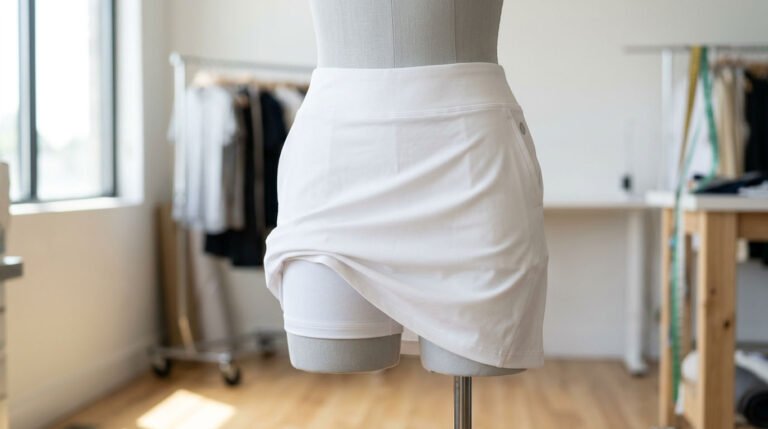
A golf dress may look perfect on a mannequin but become uncomfortable during the first swing. The shoulders pull, the hem rides up, or the built-in shorts shift while walking.
For golf apparel brands, these problems often begin during product development—not mass production.
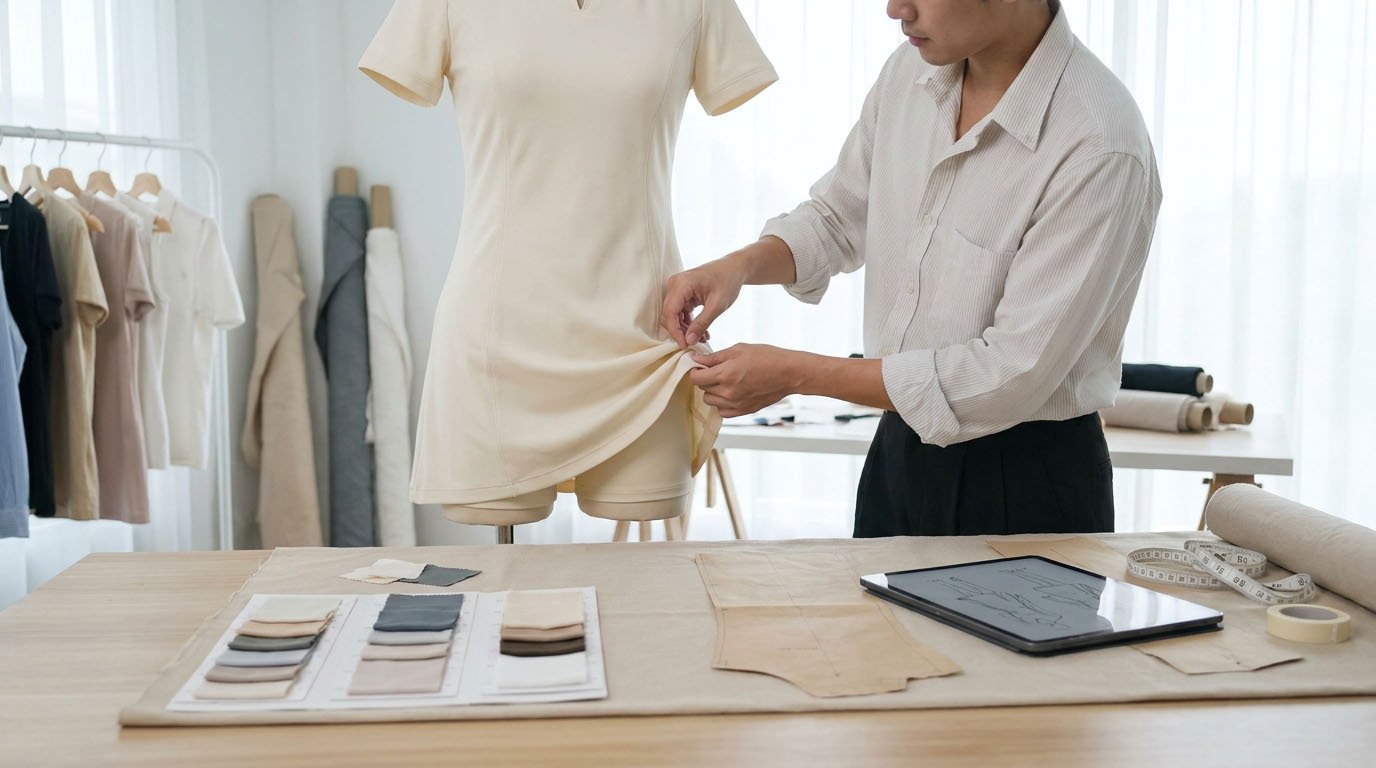
A reliable golf dress manufacturer develops fit, fabric, and built-in shorts as one connected garment system. The goal is to balance freedom of movement, coverage, comfort, and consistent production quality.
This guide explains how brands can work with an OEM/ODM manufacturer to develop golf dresses that perform reliably on the course.
Quick Answer: What Makes a High-Quality Golf Dress?
A successful golf dress combines three elements:
- Dynamic fit: Accommodates shoulder rotation, bending, and walking without excessive pulling.
- Performance fabric: Provides suitable stretch, recovery, breathability, and coverage.
- Functional built-in shorts: Stay comfortable and work with the outer dress during movement.
These components should be tested together rather than approved independently.
| Development Area | Common Problem | What to Validate |
|---|---|---|
| Shoulders and armholes | Restricted swing | Full swing and forward reach |
| Torso length | Dress pulls upward | Bending and rotation |
| Fabric | Sheerness or poor recovery | Stretch, opacity, and wash tests |
| Built-in shorts | Riding up or chafing | Walking and squatting |
| Dress-to-shorts connection | Pulling or twisting | Combined movement testing |
Key principle: A golf dress that fits while standing still is not necessarily ready for golf.
Step 1: Develop a Golf Dress Fit That Moves With the Swing
Unlike ordinary dresses, golf dresses must accommodate upper-body rotation while maintaining coverage.
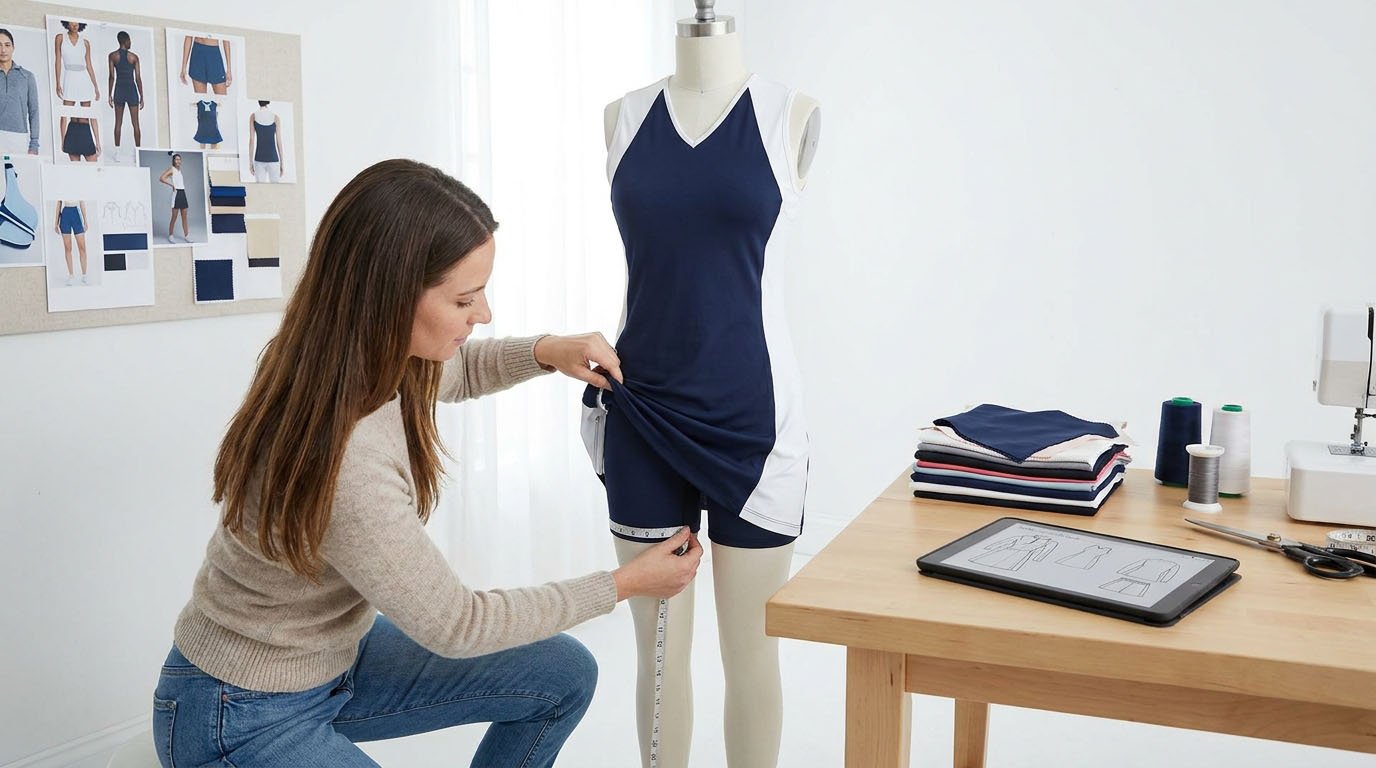
Focus on Three Connected Fit Zones
1. Shoulders, Chest, and Armholes
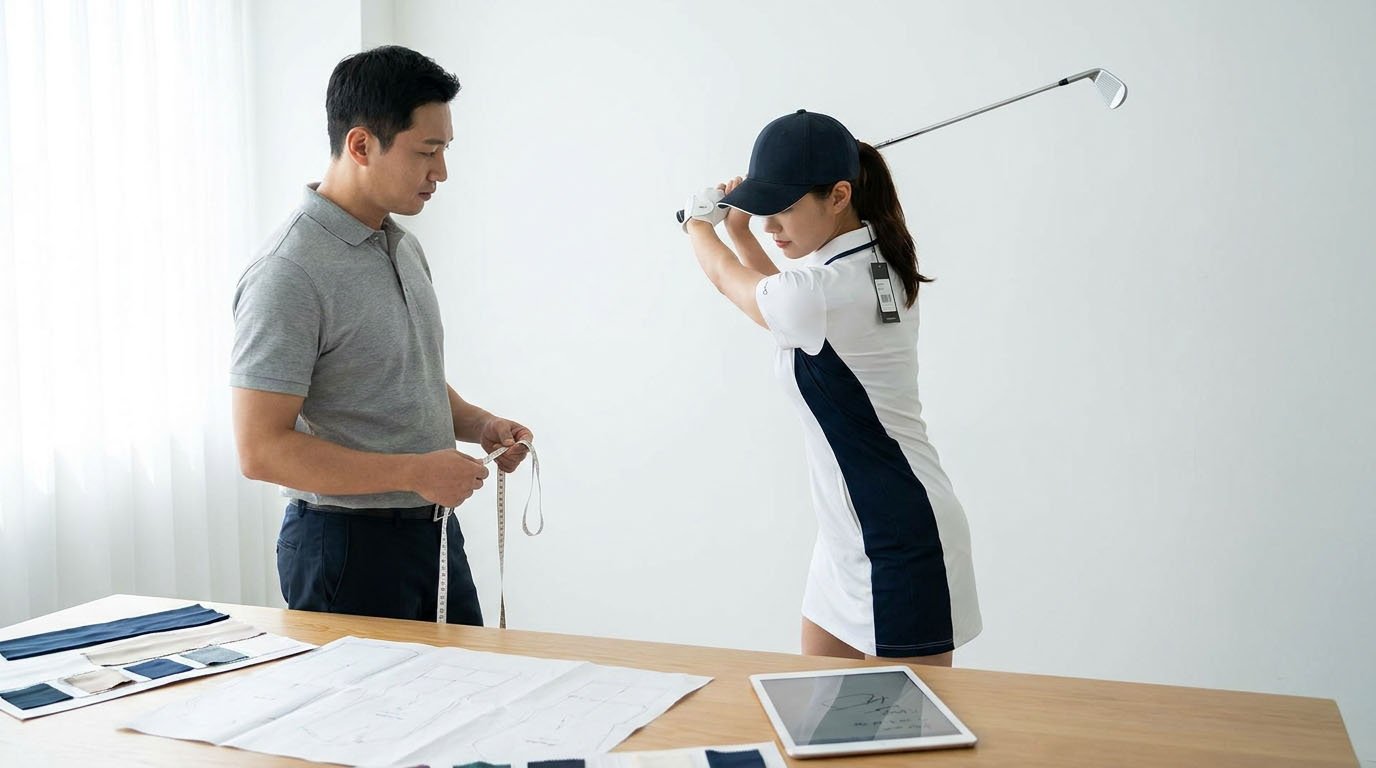
During the backswing, golfers rotate their shoulders and extend their arms. Incorrect armhole shaping or insufficient upper-back allowance can pull the entire dress upward.
Check shoulder width, armhole depth, chest fit, and upper-back mobility. The goal is freedom of movement without excessive looseness or gaping.
2. Torso and Waist
A golf dress connects the upper body and skirt into one garment.
If the torso is too short, raising the arms may lift the skirt. If it is too long, excess fabric can bunch around the waist.
Evaluate torso length in both standing and moving positions.
3. Skirt Sweep and Hemline
The skirt needs enough room for walking, bending, and squatting.
An A-line silhouette may offer additional movement allowance, while fitted styles require careful pattern and fabric evaluation.
Dress length alone does not guarantee coverage because upper-body movement can change the hem position.
Static Fit vs. Dynamic Fit
| Static Fit | Dynamic Fit |
|---|---|
| Bust, waist, and hip measurements | Shoulder movement during swings |
| Standing silhouette | Hem movement during rotation |
| Dress length | Coverage while bending |
| Armhole appearance | Pulling during reaching |
Both evaluations are necessary before approving a production sample.
Step 2: Choose Fabric for Stretch, Recovery, and Coverage
The best golf dress fabric depends on silhouette, climate, performance requirements, and price positioning.
A lightweight fabric may improve comfort in hot weather but become transparent under tension. A heavier fabric may provide coverage but create unnecessary warmth.
Compare Common Golf Dress Fabrics
| Fabric Type | Main Advantage | Potential Limitation |
|---|---|---|
| Nylon-Spandex Interlock | Soft hand feel and structured drape | Recovery depends on construction |
| Polyester-Spandex Interlock | Shape retention and practical care | Hand feel varies by finishing |
| Polyester-Spandex Jersey | Lightweight and flexible | Thin versions may become sheer |
| Textured Performance Knit | Visual texture and comfort options | Requires opacity and snag evaluation |
Fabric composition alone cannot guarantee performance.
Evaluate Fabric in the Finished Dress
Before approval, check:
- Stretch and recovery: Does the fabric return to shape?
- Opacity: Is coverage acceptable when stretched or bent?
- Moisture management: Does the fabric remain comfortable during perspiration?
- Breathability: Is it suitable for the target climate?
- Wash stability: Does the dress maintain its dimensions and appearance?
Light-colored dresses require particular attention because tension, lighting, and moisture can affect transparency.
FUWAY's Fabric Sourcing service supports material selection based on performance, appearance, and production requirements.
Should the Dress and Built-In Shorts Use the Same Fabric?
Not necessarily.
The outer dress primarily controls appearance, drape, and movement. Inner shorts require comfortable skin contact, suitable stretch recovery, and low friction.
Different but compatible fabrics may improve overall performance.
However, they must work together without causing twisting, excessive tension, or heat buildup.
Step 3: Design Built-In Shorts That Stay Comfortable
Built-in shorts provide coverage during golf movements but may cause discomfort when their fit or attachment is poorly developed.
Golf dresses introduce an additional challenge: the shorts must function with a connected upper-body garment.
Compare Built-In Shorts Construction Options
| Construction | Advantages | Potential Limitations |
|---|---|---|
| Fully Attached Shorts | Integrated coverage and positioning | Less convenient for bathroom breaks |
| Separate Inner Shorts | Independent fit and easier dressing | Additional components |
| Partially Attached Shorts | May balance stability and convenience | Requires attachment testing |
There is no universally superior construction. The right option depends on the target customer, silhouette, and wearing experience.
Prevent Riding Up and Chafing
Manufacturers should evaluate four areas:
Leg Opening
The opening must balance comfort and stability. Excessive compression can cause discomfort, while insufficient support may allow shifting.
Inseam Length
Shorter liners may reduce coverage. Longer designs can improve stability but may extend beyond the dress or create additional warmth.
Confirm the inseam through wear testing.
Gusset and Seams
An appropriately designed gusset can improve mobility and reduce concentrated seam pressure. Low-profile seams may improve comfort, depending on the fabric and construction.
Attachment Structure
The shorts should remain positioned without pulling the outer dress upward. Test attachment points during walking, bending, and rotation.
Consider Practical Golf Features
Depending on the customer, useful features may include ball pockets, small personal-item pockets, breathable liners, comfortable seams, and easier bathroom access.
These features should support the intended use rather than be added automatically.
For standalone skort construction, see our Women's Golf Skort Development Checklist.
Step 4: Test the Complete Golf Dress Before Bulk Production
Testing fabric swatches or checking flat measurements alone cannot reveal how the dress behaves during golf movements.
Evaluate the complete garment using representative wear testers.
Golf Dress Wear-Test and Risk Checklist
| Test | Potential Problem | Corrective Action |
|---|---|---|
| Full golf swing | Shoulder restriction or hem lifting | Adjust armholes, upper back, or torso length |
| Forward bend | Insufficient coverage or transparency | Review pattern, fabric, or dress length |
| Walking | Inner shorts ride up | Review inseam, leg opening, and recovery |
| Squat and sit | Excessive pressure or pulling | Adjust fit and seams |
| Combined movement | Dress and liner twist | Review attachment and fabric compatibility |
| Wash test | Shrinkage, twisting, or seam distortion | Review material stability and construction |
Testing multiple sizes is particularly important when grading a new design because problems may appear only in certain sizes.
Review the Sample After Washing
Check dimensional stability, side-seam twisting, stretch recovery, uneven hems, and inner-short attachment integrity.
Testing methods and acceptance criteria should be agreed upon before approval.
A sample should not be approved simply because it looks attractive in product photography.
The brand and manufacturer should confirm fit, movement performance, construction, and acceptable product behavior before bulk production.
Step 5: Confirm Production Specifications With Your Golf Dress Manufacturer
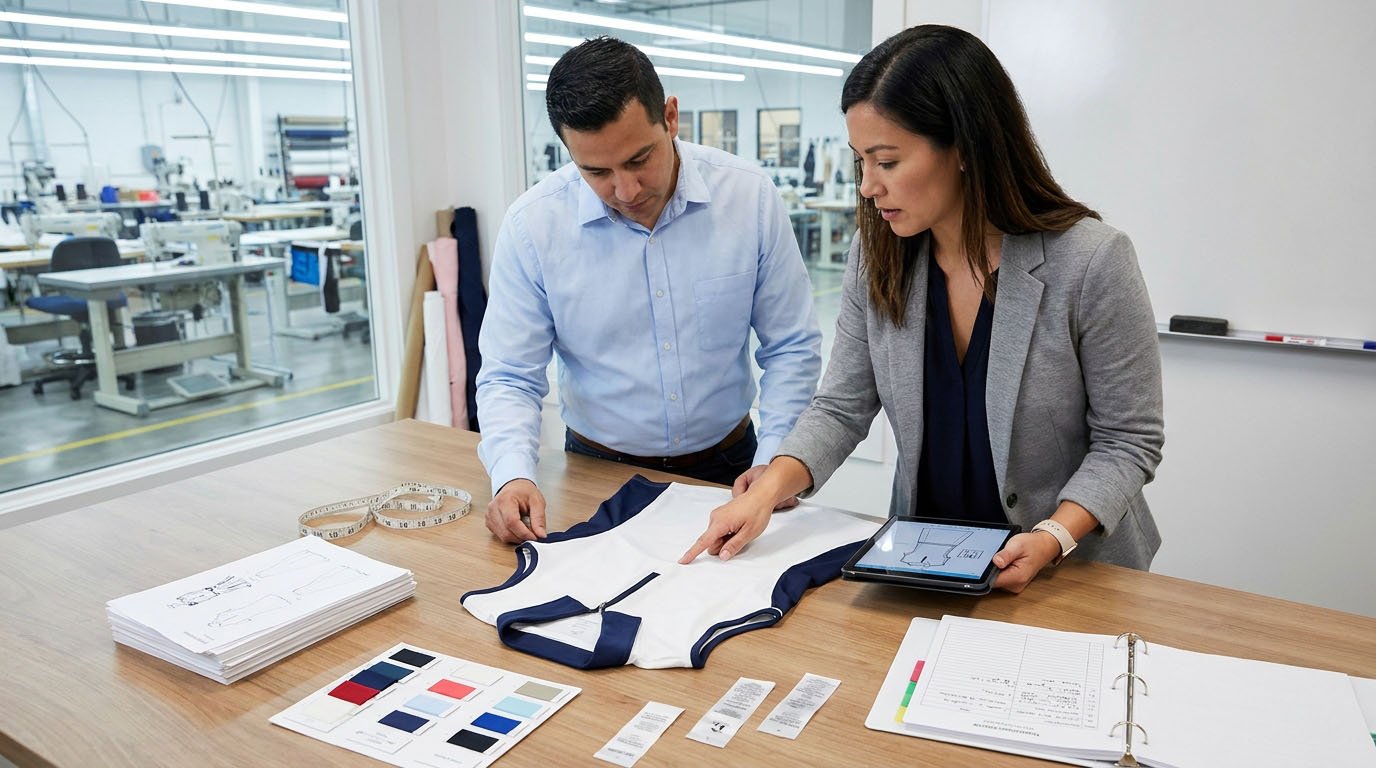
After validating the fit, fabric, and built-in shorts, convert the approved design into repeatable production specifications.
The final Tech Pack should include:
- Approved garment measurements and grading
- Fabric composition, weight, and color
- Inner-short pattern and attachment details
- Stitching, trims, and finishing requirements
- Logo and label placement
- Testing and packaging instructions
Confirm Measurement Tolerances
At FUWAY, specified finished-garment measurement points are controlled within ±1.0 cm of approved target measurements.
Tighter tolerances may apply when agreed upon in the Tech Pack.
Meeting dimensional tolerances does not replace functional fit approval.
MOQ, Sampling, and Production
| Item | Typical FUWAY Reference |
|---|---|
| MOQ | Around 100 pieces per style, subject to requirements |
| Sampling | Approximately 7–10 working days for standard samples |
| Bulk Production | Approximately 3–4 weeks after approvals, depending on the project |
| Customization | Patterns, fabrics, colors, logos, labels, and packaging |
Complex development, special fabrics, or additional revisions may affect lead times.
Brands developing their own collections can explore FUWAY's Private Label Golf Apparel services.
Frequently Asked Questions About Golf Dress Manufacturing
What Is the Best Fabric for Custom Golf Dresses?
Nylon-spandex and polyester-spandex performance knits are common choices. Select materials based on stretch, recovery, opacity, breathability, and the intended silhouette.
Are Attached or Separate Built-In Shorts Better?
Attached shorts provide integrated positioning, while separate shorts offer greater convenience and fitting flexibility. Partially attached designs are another option, subject to wear testing.
Why Does a Golf Dress Ride Up During a Swing?
Common causes include insufficient torso length, restricted shoulder movement, armhole imbalance, or incompatible dress and liner construction.
Can I Customize Golf Dress Fit, Fabric, and Shorts?
Yes. OEM/ODM development can include custom patterns, fabric selection, silhouettes, liner construction, pockets, branding, and packaging, subject to manufacturing feasibility.
How Many Samples Are Needed Before Production?
There is no fixed number. Sample requirements depend on design complexity, material availability, fit revisions, and testing results. Approve the final specifications before bulk production.
Conclusion: Develop Golf Dresses as a Complete System
A successful golf dress combines appearance, athletic movement, and practical comfort.
The most important development decisions involve how the upper-body pattern, fabric, skirt coverage, and built-in shorts work together.
Evaluating these details during sampling helps brands identify product risks before mass production.
FUWAY supports OEM/ODM golf apparel development, including custom patterns, fabric sourcing, private labeling, sampling, and bulk manufacturing.
Developing a custom golf dress collection? Contact FUWAY to discuss your design, fabric requirements, quantities, and sampling needs.