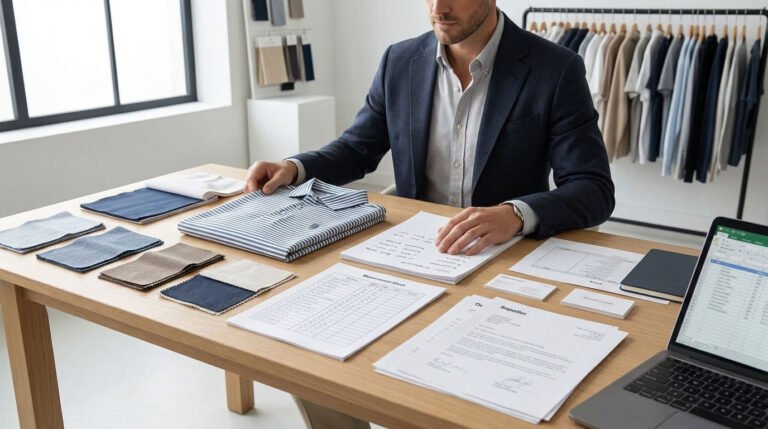
Finding reliable golf apparel manufacturers in the USA is not always straightforward. A supplier may have an American office, provide local embroidery, or offer private label golf shirts without actually manufacturing the garments domestically.
For golf brands, that distinction matters. It affects product customization, country-of-origin labeling, minimum order quantities (MOQs), delivery schedules, and manufacturing accountability.
Golf apparel manufacturers in the USA generally fall into three categories: domestic cut-and-sew factories, U.S.-based decoration and private label providers, and American companies coordinating overseas production. The right choice depends on your product requirements, order volume, manufacturing location preferences, and brand positioning.
This guide explains how these suppliers operate, introduces examples of U.S.-based businesses, and provides a practical checklist for evaluating manufacturing partners.
Quick Answer: What Should Brands Know About U.S. Golf Apparel Manufacturers?
Not every U.S.-based golf apparel supplier manufactures clothing in the United States.
Some operate domestic sewing facilities. Others customize imported garments through embroidery, labeling, and printing. Hybrid sourcing companies may manage design and customer service in the USA while manufacturing overseas.
Before choosing a supplier, confirm five things:
- Production location: Where are cutting, sewing, and finishing completed?
- Manufacturing capability: Can the supplier produce your specific golf apparel designs?
- Customization: Are you buying existing garments or developing original styles?
- MOQ and lead time: Do the supplier's requirements match your launch plan?
- Accountability: Who manages quality control and resolves production problems?
A domestic office is convenient, but documented production capability matters more than the supplier's address.
Step 1. Understand the Types of Golf Apparel Manufacturers in the USA
U.S.-based golf apparel suppliers use different production models. Understanding these differences helps brands avoid contacting companies that cannot support their projects.
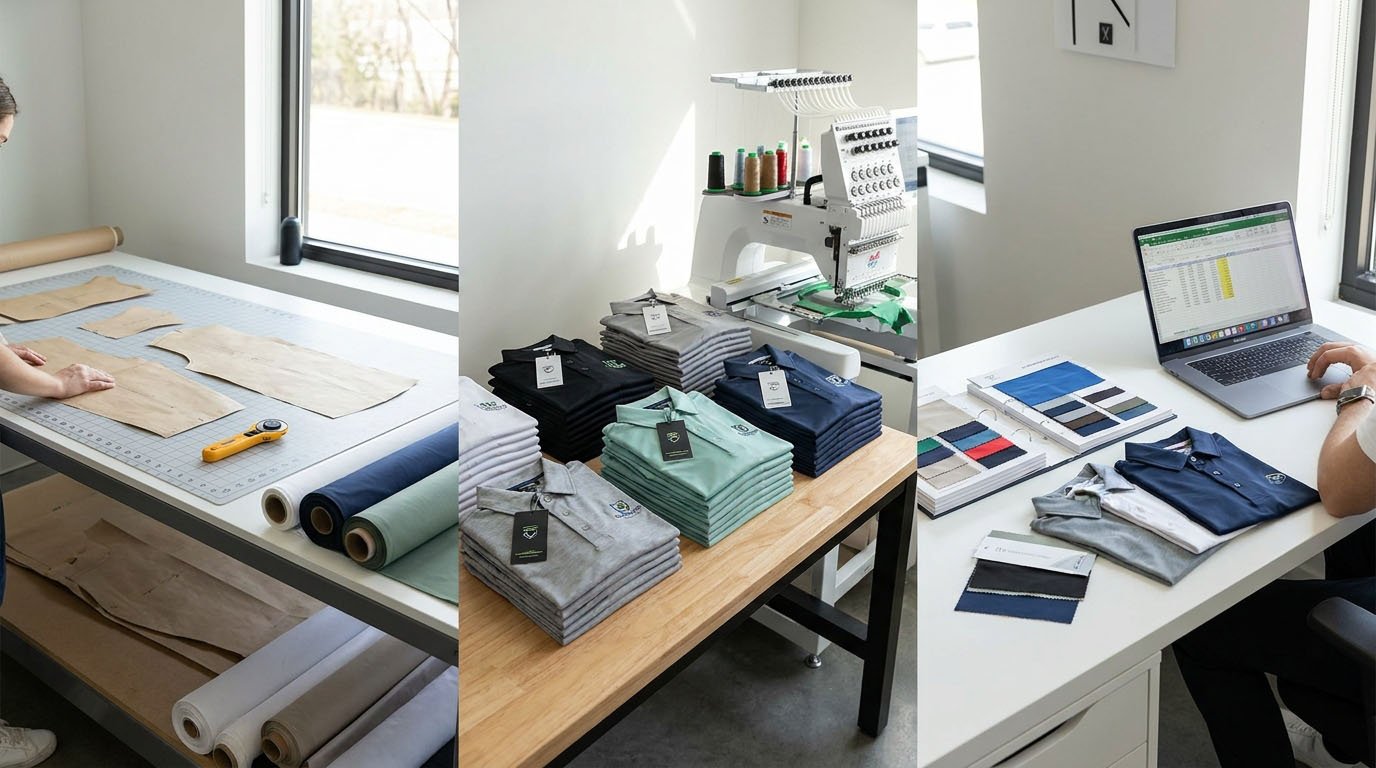
Three Common Manufacturing Models
| Supplier Type | How It Operates | Best For |
|---|---|---|
| Domestic Cut-and-Sew Factory | Develops patterns, cuts fabric, and sews garments in the USA | Original designs, domestic production, specialized development |
| U.S. Decoration & Private Label Provider | Adds embroidery, printing, labels, or branding to finished garments | Golf clubs, tournaments, corporate uniforms, smaller branded orders |
| U.S.-Based Hybrid Sourcing Partner | Manages customer service or development in the USA while coordinating production overseas | Brands seeking broader sourcing and manufacturing options |
These categories describe operating models, not guaranteed capabilities. A business may combine several services, and each production stage should be verified separately.
Domestic Cut-and-Sew Manufacturers
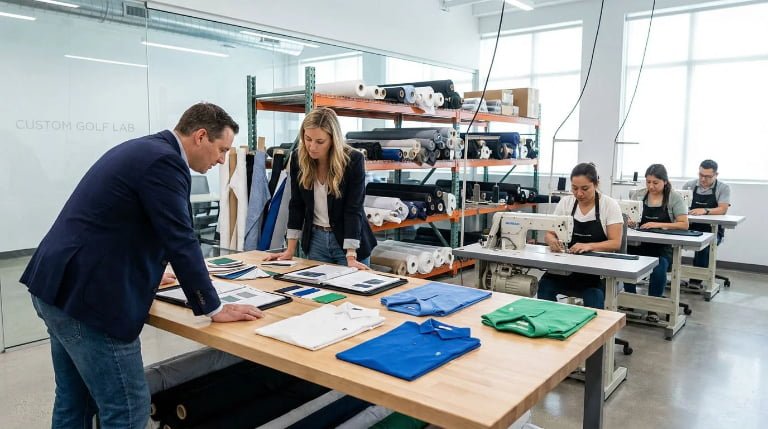
These companies can support pattern development, sample adjustments, fabric cutting, and garment assembly.
They may suit brands that value domestic production, closer factory access, or specialized development. However, domestic sewing does not necessarily mean the fabric, trims, or other components originate in the USA.
Decoration and Private Label Providers
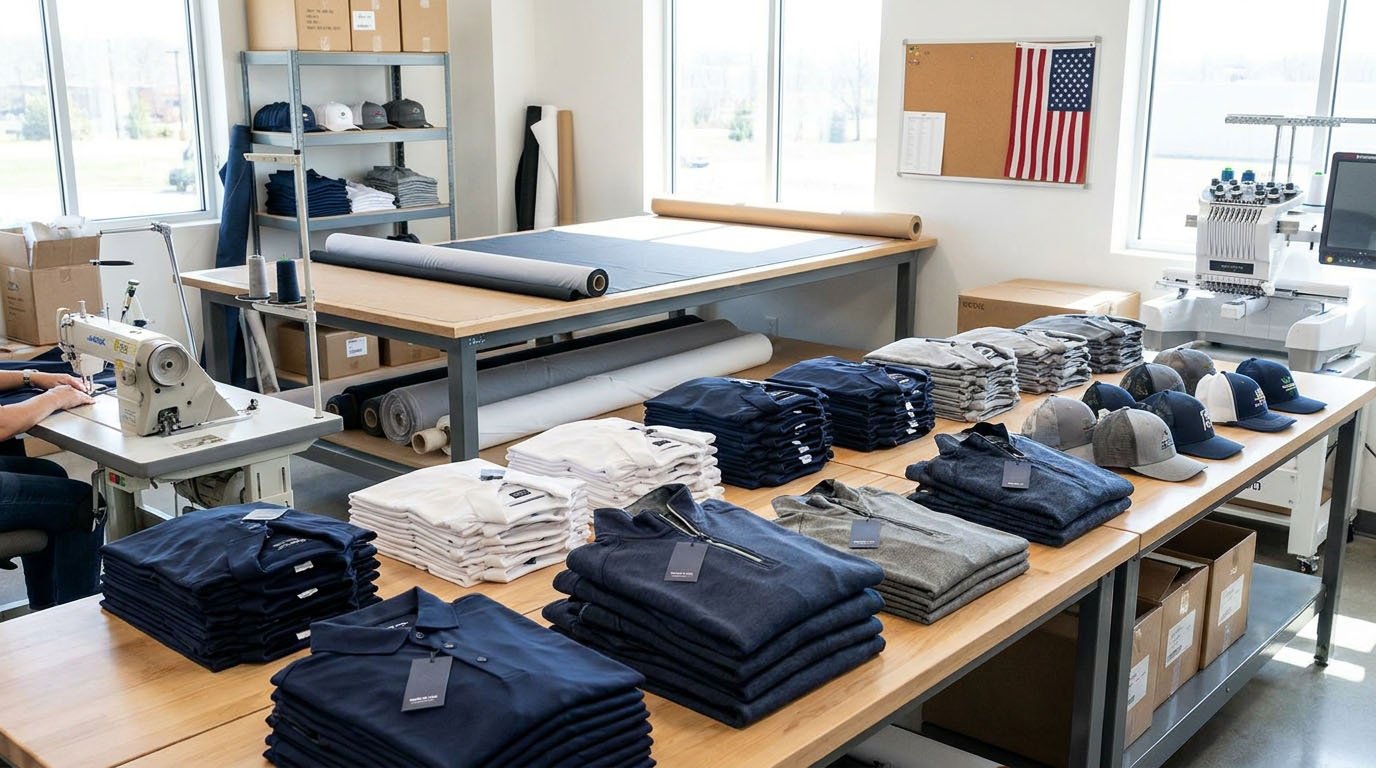
These suppliers frequently work with existing golf polos, quarter-zips, outerwear, and accessories.
They can be practical for golf tournaments, pro shops, corporate apparel, and brands that do not need original garment construction.
However, adding a logo or label to an existing shirt is different from developing a completely custom golf polo.
Hybrid Sourcing Partners
Some U.S.-based businesses manage product development, quotations, sampling communication, and deliveries while working with overseas manufacturing facilities.
This arrangement is not inherently problematic. What matters is transparency about the actual production location and responsibility for quality.
For a broader explanation of these business models, see our golf apparel manufacturer vs supplier vs wholesaler guide.
Step 2. Explore Examples of U.S.-Based Golf Apparel Suppliers
Brands searching for American golf apparel manufacturers should examine real businesses rather than relying entirely on general supplier directories.
The following examples illustrate different service models. They are not a ranking, endorsement, or independent factory audit.
Lefty Production Co. — Los Angeles, California
Lefty Production Co. is a Los Angeles-based apparel development and manufacturing company.
The company describes services including pattern development, fabric sourcing, sampling, cutting, and garment production. Its golf apparel offering includes performance polos and other private label golfwear.
Potential fit: Brands seeking U.S.-based garment development and custom production.
What to verify: Whether your specific golf apparel style can be produced domestically, the available technical fabrics, MOQ, production capacity, and current lead time.
Divots Sportswear — Peachtree Corners, Georgia
Divots Sportswear focuses on private label golf apparel for golf clubs, resorts, organizations, and businesses.
Its services include customized golf shirts, outerwear, embroidery, branding, and private label details. The company describes domestic embroidery and tagging capabilities.
Potential fit: Golf shops, club merchandise programs, corporate apparel, and buyers seeking established golfwear styles with customized branding.
What to verify: Which garments are produced domestically versus imported, the extent of design customization, and the MOQ for each product.
What These Examples Tell Buyers
Both companies serve the golf apparel market, but they illustrate different procurement needs.
A brand developing an original golf polo pattern may need a cut-and-sew manufacturer. A golf club ordering embroidered performance shirts may be better served by an established apparel customization provider.
Before requesting quotations, identify whether your project requires original product development or customization of existing garments.
Step 3. Verify Where Your Golf Apparel Is Actually Made
A U.S. business address does not establish the manufacturing origin of a garment.
The supplier may perform embroidery and packing domestically while the fabric production and garment sewing take place elsewhere.
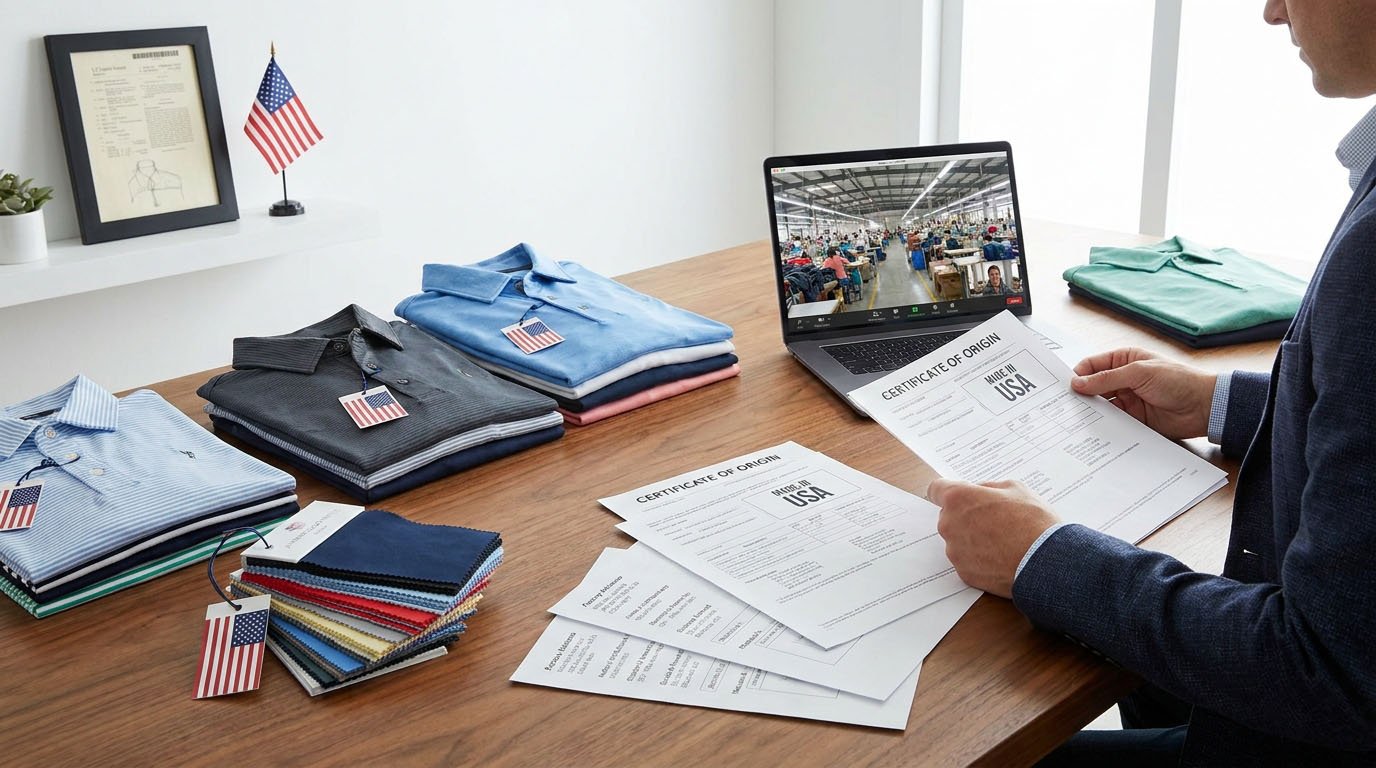
Map the Actual Production Locations
Ask the supplier to identify where each operation happens:
- Fabric knitting or weaving
- Dyeing and functional finishing
- Pattern development and sampling
- Fabric cutting and garment sewing
- Printing or embroidery
- Final inspection and packing
Not every process needs to happen in one facility. However, the supplier should explain which operations are outsourced and how they maintain control over production.
Understand Made in USA Claims
For an unqualified "Made in USA" claim, the U.S. Federal Trade Commission generally requires that a product be all or virtually all made in the United States.
This includes U.S. final assembly or processing, significant processing, and all or virtually all components being of U.S. origin.
Domestic embroidery, warehousing, or distribution alone does not establish eligibility for an unqualified Made in USA claim.
Brands should review the FTC's Made in USA guidance and verify relevant textile labeling requirements before approving origin claims.
Request Evidence, Not Just Marketing Statements
Useful verification may include:
- Production facility addresses
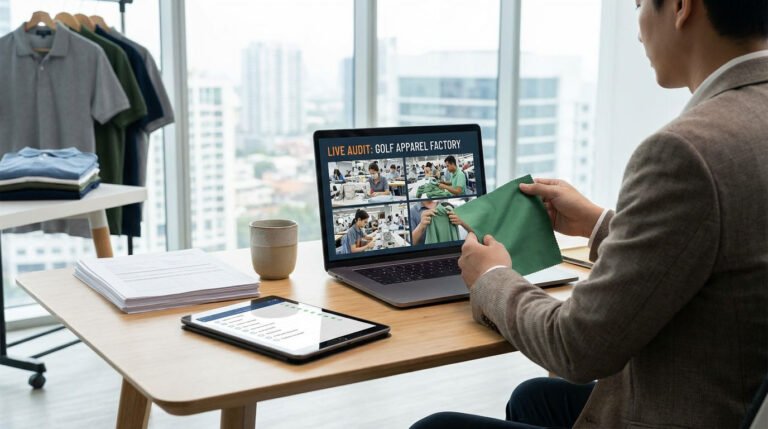
- Live factory walkthroughs
- Written disclosure of subcontracted operations
- Sample and manufacturing records
- Material origin information
- Clear identification of the contracting entity
Step 4. Compare MOQ, Sampling, and Customization Requirements
Manufacturing location is only one part of the sourcing decision. The supplier must also match your product complexity, order quantity, and delivery expectations.
MOQ Depends on the Production Model
A decorator using stocked golf shirts may accommodate relatively small orders because the garments are already manufactured.
Custom cut-and-sew programs require more preparation, including patterns, fabric purchasing, trims, and production setup.
Ask whether MOQ applies per style, color, size breakdown, or fabric configuration.
A supplier advertising a low MOQ may still require higher quantities for custom-dyed fabrics or specialized trims.
Evaluate the Complete Production Timeline
Request separate timelines for:
- Pattern development and sampling
- Sample revisions and approval
- Fabric and trim procurement
- Bulk manufacturing
- Quality inspection
- Shipping and delivery
A domestic production partner may reduce transportation time when fabric and production capacity are available locally. However, imported materials or outsourced operations can still create delays.
Compare Customization Depth
Before choosing a partner, decide whether you need:
- Logo embroidery on existing garments
- Custom labels and packaging
- Modified collars, sleeves, or pockets
- Original garment patterns
- Custom fabrics and colors
- A complete OEM/ODM collection
The more original the product, the more important development and manufacturing capabilities become.
If you are deciding between domestic and overseas production, our USA vs China golf apparel manufacturing comparison explains the broader cost, MOQ, and delivery trade-offs.
Step 5. Evaluate Golf-Specific Manufacturing Capabilities
A factory experienced in general activewear may not automatically understand the construction requirements of golf apparel.
Golf clothing combines athletic movement with a relatively structured appearance. That balance creates product-specific manufacturing challenges.
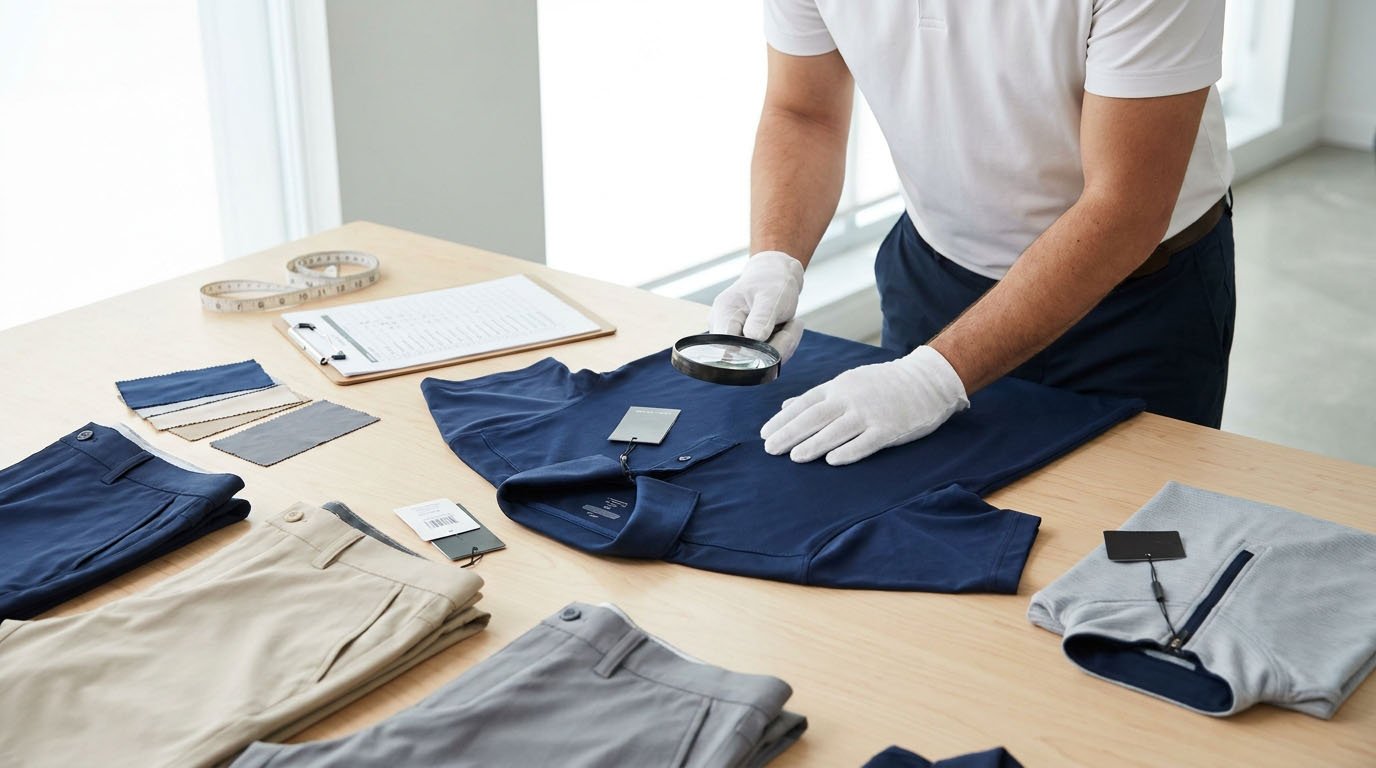
Match Factory Experience to Your Product
| Product | Important Manufacturing Capabilities |
|---|---|
| Golf Polos | Collar stability, placket alignment, stretch recovery, consistent fit |
| Golf Shorts | Waistband construction, pocket reinforcement, mobility, fabric recovery |
| Golf Pants | Pattern grading, seat and knee mobility, dimensional stability |
| Golf Skorts | Outer-skirt fit, liner comfort, opacity, consistent garment length |
| Quarter-Zips | Zipper alignment, neckline construction, layering fit |
Request Product-Specific Samples
Ask the supplier to demonstrate previous experience with your intended garment category.
For golf polos, inspect collar shape, placket alignment, stitch quality, and performance after washing.
For bottoms, review waistband comfort, movement, seam strength, and fit consistency.
At FUWAY, our custom golf shirts manufacturing services support original golf polo development, including fabric selection, fit, construction details, and branding.
Check Fabric Sourcing Capabilities
Performance requirements such as moisture management, stretch, colorfastness, and UV protection depend on the selected materials and verified testing results.
Ask whether the manufacturer can source appropriate fabrics, supply technical specifications, and document performance claims.
Our fabric sourcing services explain how FUWAY supports golf apparel material selection and customization.
Step 6. Use a Practical USA Golf Apparel Manufacturer RFQ Checklist
Once you have shortlisted potential suppliers, send each company the same project requirements.
This makes quotation comparisons more useful and reduces misunderstandings.
Information to Request From Each Supplier
| RFQ Item | What to Confirm |
|---|---|
| Manufacturing Location | Addresses for cutting, sewing, and finishing |
| Product Capability | Experience with your specific golf apparel category |
| Customization | Existing blanks, modified designs, or full OEM/ODM |
| MOQ | Minimum per style, color, and fabric |
| Sampling | Cost, development process, revisions, approval |
| Materials | Fabric specifications, sourcing, and test evidence |
| Quality Control | Approved samples, inspection records, defect handling |
| Lead Time | Sampling, bulk production, and shipping stages |
| Pricing | Unit price, development charges, packaging, freight, and applicable duties |
| Responsibility | Who handles outsourced work, rework, and delivery problems |
Watch for These Warning Signs
Be cautious when a supplier:
- Cannot clearly identify where garments are sewn
- Promises full customization without discussing development requirements
- Refuses to disclose relevant subcontracting
- Provides unclear fabric specifications
- Cannot explain how bulk production matches the approved sample
- Changes major quotation details without written confirmation
These issues do not automatically disqualify a supplier, but they justify further verification.
For a deeper review of production evidence and supplier risk, use our 10-point golf apparel factory audit checklist.
FAQ: Golf Apparel Manufacturers in the USA
Are all U.S. golf apparel manufacturers actually manufacturing in America?
No. Some companies manufacture domestically, while others provide U.S.-based design, embroidery, distribution, or sourcing services for garments produced overseas.
Always verify the production location for the specific product you intend to purchase.
Can I find low-MOQ golf apparel manufacturers in the USA?
Yes, but MOQ depends heavily on the service.
Decorating existing garments may require smaller quantities than manufacturing fully custom products. For original designs, confirm the minimum quantity for each style, color, and fabric.
Can U.S. manufacturers produce custom performance golf apparel?
Yes. Some domestic manufacturers support custom patterns, technical fabrics, and specialized garment construction.
However, capabilities vary. Confirm fabric availability, machinery, development experience, and production capacity before approving a project.
Is USA-made golf apparel always better quality?
No. Manufacturing location does not guarantee quality.
Fabric specifications, workmanship, approved samples, inspection procedures, and production consistency are more reliable evaluation factors.
Should a golf clothing startup choose a U.S. or overseas manufacturer?
Choose based on your business requirements.
Domestic production may suit brands prioritizing American origin or closer factory access. Overseas OEM/ODM production may offer different fabric sourcing options, manufacturing capacity, and cost structures.
Brands should compare actual quotations, samples, and project timelines rather than relying on general assumptions.
Can a U.S. golf brand work directly with a Chinese OEM manufacturer?
Yes. A brand based in the United States can work directly with an overseas manufacturer for product development and bulk production.
The brand should establish clear specifications, approve samples, verify quality procedures, and plan import logistics and country-of-origin labeling correctly.
Conclusion: Choose Manufacturing Capability, Not Just Location
Finding the right golf apparel manufacturer in the USA starts with understanding what the supplier actually produces and where production takes place.
Domestic cut-and-sew factories, local private label providers, and hybrid sourcing companies serve different needs.
A reliable sourcing decision should be based on manufacturing transparency, golf-specific experience, customization capability, MOQ, product quality, and delivery responsibility—not just a U.S. business address.
Considering Overseas OEM/ODM Manufacturing?
FUWAY is a China-based golf apparel manufacturer serving brands in the USA and other international markets.
We support custom golf polos, shorts, pants, skorts, quarter-zips, and other performance apparel through product development, fabric sourcing, sampling, private labeling, and bulk manufacturing.
Our standard MOQ starts at approximately 100 pieces per style, depending on the design and materials.
Explore our private label golf apparel services or contact FUWAY to discuss your project specifications and manufacturing requirements.