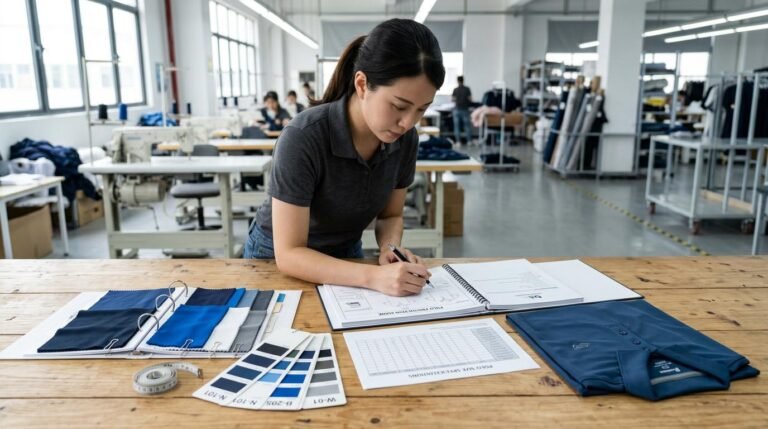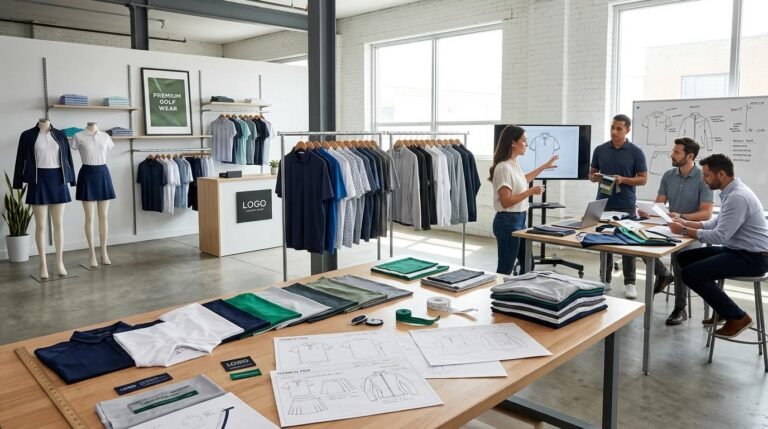
I've been working with golf apparel brands for over 15 years, and the most common question I hear is: "Which fabric should I choose?" Here's what most buyers miss—fabric choice isn't about finding the "best" material, it's about matching your target market, order volume, and production risks. A wrong fabric decision can cost you thousands in rework or customer complaints down the line.
Piqué, jersey, polyester blends, and stretch knits all work for golf shirts—but each fabric type behaves differently in production, dyeing, and after 10+ washes. The fabric that looks great in your first sample might pill after three rounds of golf, or show color variation between production batches. I'll walk you through what these differences actually mean for your brand's long-term success.
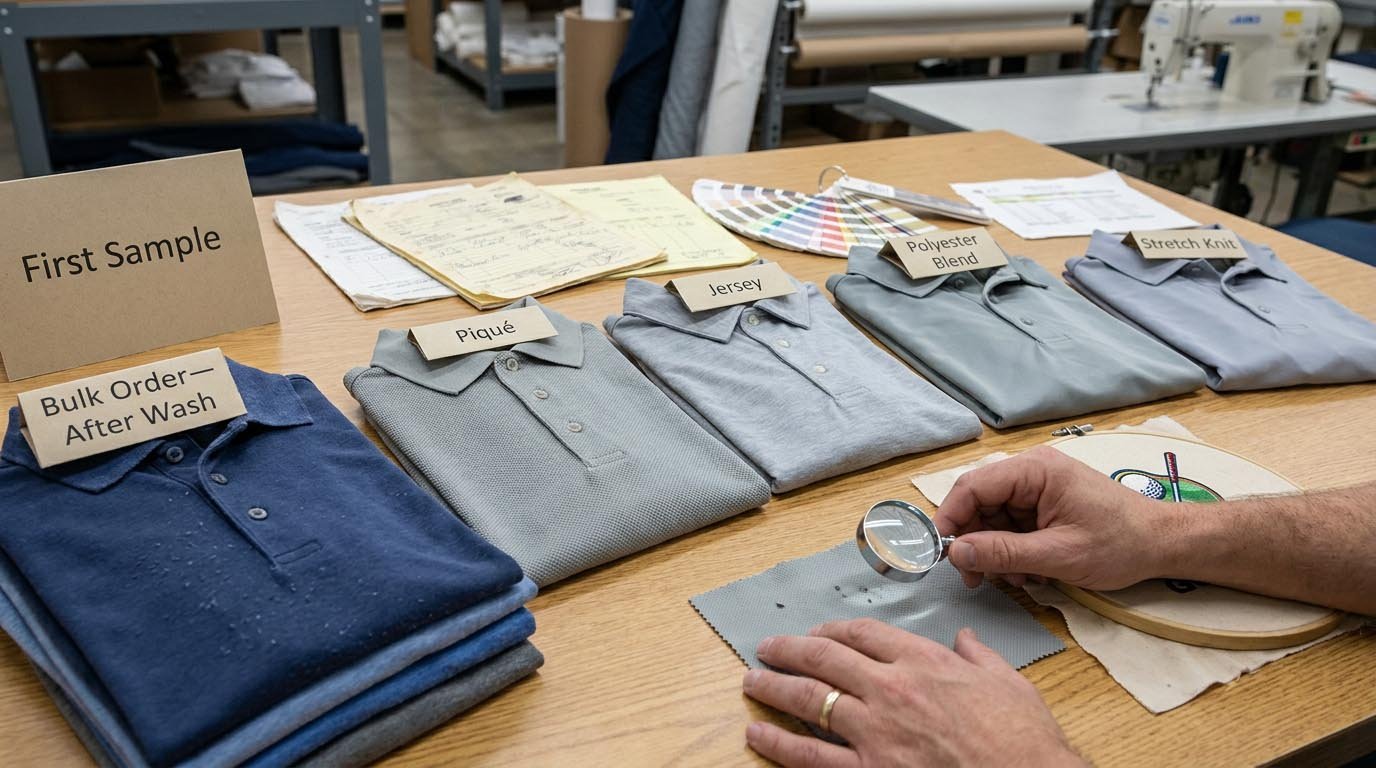
Most buyers focus on hand feel and price during sampling. That's a mistake. The real test comes after dyeing, embroidery, and 500+ units into your second reorder—when you discover your supplier's fabric doesn't match the original batch, or your customers start complaining about pilling.
If you're choosing shirt fabrics as part of a broader product launch, start with how to start a golf apparel line.
Quick Answers: Golf Shirt Fabric Selection in 60 Seconds
What's the most versatile fabric for golf shirts?
50/50 polyester-cotton blends offer the best balance between moisture management, durability, and hand feel for most mid-range golf brands. They're easier to source consistently than high-cotton blends.
Does piqué or jersey work better for hot weather?
Piqué with honeycomb weave breathes better due to raised texture, but jersey in 150-170 GSM polyester-dominant blends dries faster and feels lighter against skin.
What causes color differences between production batches?
Polyester blend ratios above 60% are more sensitive to dyeing temperature variations across different dye houses. Ask your supplier which dye factory they use and if they run batch color tests.
Why do some golf shirts lose shape after washing?
Mechanical stretch fabrics (using textured yarn) cost less but lose elasticity faster than chemical stretch (with 5-8% spandex). If your customers wear shirts weekly, pay extra for spandex.
What fabric weight should I choose?
For year-round golf wear, 180-200 GSM provides enough structure without feeling heavy. Below 160 GSM risks transparency issues, especially in light colors.
What Makes a Good Fabric for Golf Shirts?
A good golf shirt fabric isn't just about moisture-wicking specs on a tech sheet—it's about how that fabric performs across 200 pieces in three different colors, after embroidery, and when your customer washes it ten times.
I've seen brands select fabrics based on beautiful sample swatches, only to face problems during bulk production:
- Chest embroidery pulls the fabric and creates puckering (common with lightweight piqué)
- Colors look different between your first and second order (happens with high-polyester blends from inconsistent dye houses)
- Customers complain about pilling after five wears (low-quality polyester yarn issue)
Here's what actually matters when choosing golf shirt fabric:
- Moisture management: Does it dry quickly during a 4-hour round?
- Durability: Will it hold up after 20+ washes without fading or stretching?
- Print/embroidery compatibility: Can your logo be heat-pressed or stitched without distortion?
- Batch consistency: Will your reorder look the same as your first production?
- Supply chain stability: Can your manufacturer source this fabric reliably at scale?
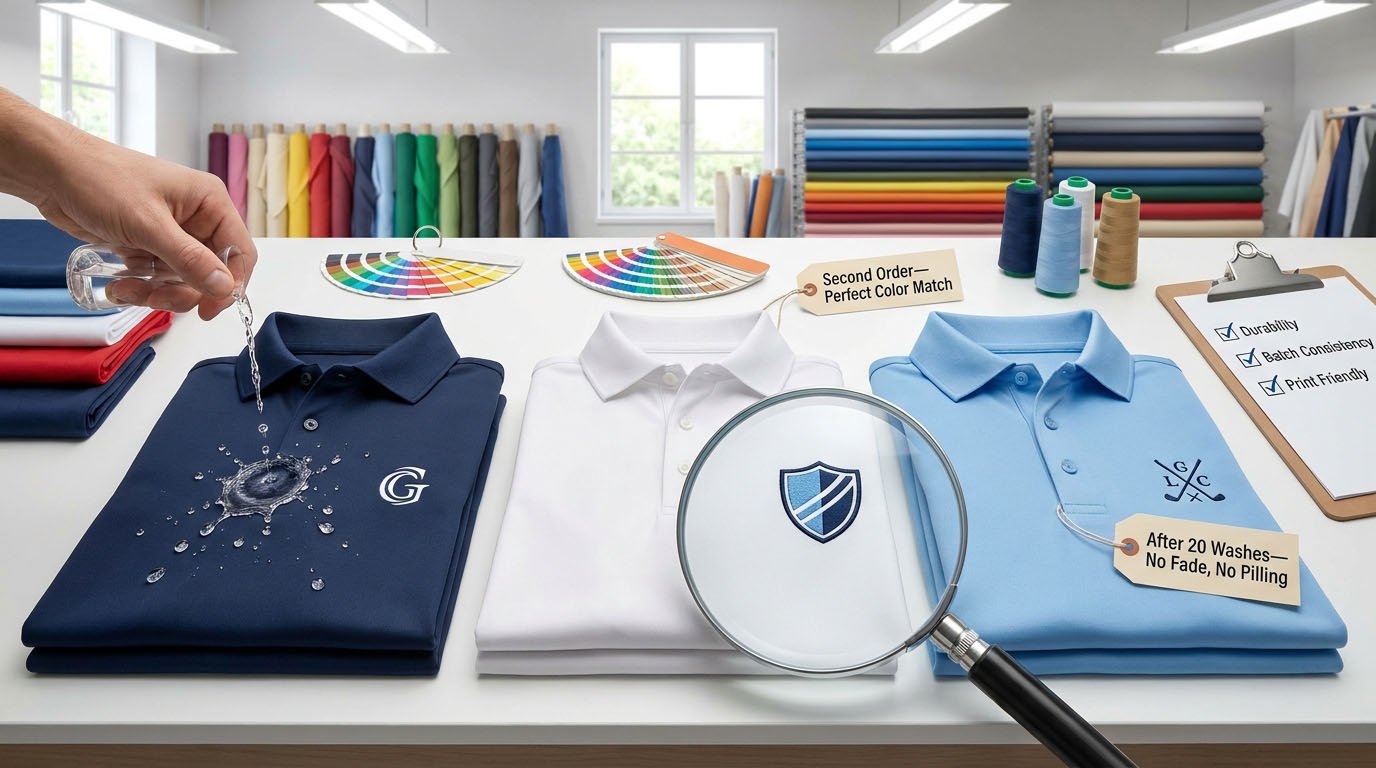
Most technical spec sheets won't tell you about the last two points. But those are often what kill reorders or damage your brand reputation.
Piqué Fabric for Golf Shirts: Classic Texture and Breathability
Piqué fabric comes in three main weave structures, and they're not interchangeable—each type affects your production process, embroidery results, and final garment stability.
When buyers tell me they want "100% cotton piqué," I always ask: which weave structure? Because the difference matters more than cotton percentage:
| Weave Type | Pros | Cons | Best For |
|---|---|---|---|
| Honeycomb | Maximum breathability, traditional look | Loses shape faster, hard to print on raised surface | Premium traditional golf brands |
| Diamond | Structured, holds embroidery well | Less airflow, higher production cost | Logo-heavy designs |
| Flat knit piqué | Lower cost, easier printing | Lacks texture depth, feels basic | Budget collections |
I've seen brands choose honeycomb piqué for its classic look, then struggle because:
- Their chest logo causes the raised texture to pucker during embroidery
- Collar tips curl after washing because the open weave doesn't hold shape
- Customers complain it looks "worn out" after 10 washes due to texture flattening
Piqué isn't just about cotton vs polyester—it's about matching weave structure to your decoration method and customer expectations. If you're planning large embroidered logos, diamond weave holds better. If you need heat transfers, flat knit piqué accepts print more evenly.
One more thing buyers miss: piqué fabric weight changes hand feel dramatically. A 200 GSM piqué feels crisp and structured—great for retail hangers. A 160 GSM version feels softer but may look cheap hanging in-store. Know where your shirts will be sold before choosing weight.
Jersey Fabric for Golf Shirts: Smooth Feel and Modern Drape
Jersey knit gives you a smooth surface that works better for sublimation printing and modern athletic fits—but not all jersey fabrics hold up the same after production.
Jersey has replaced piqué in many performance golf lines because:
- Smooth surface works perfectly for full-color heat transfers
- Lighter weight (140-170 GSM) suits warm-weather golf
- Modern drape appeals to younger golfers who want athletic style
But here's what happens during production that samples won't show you:
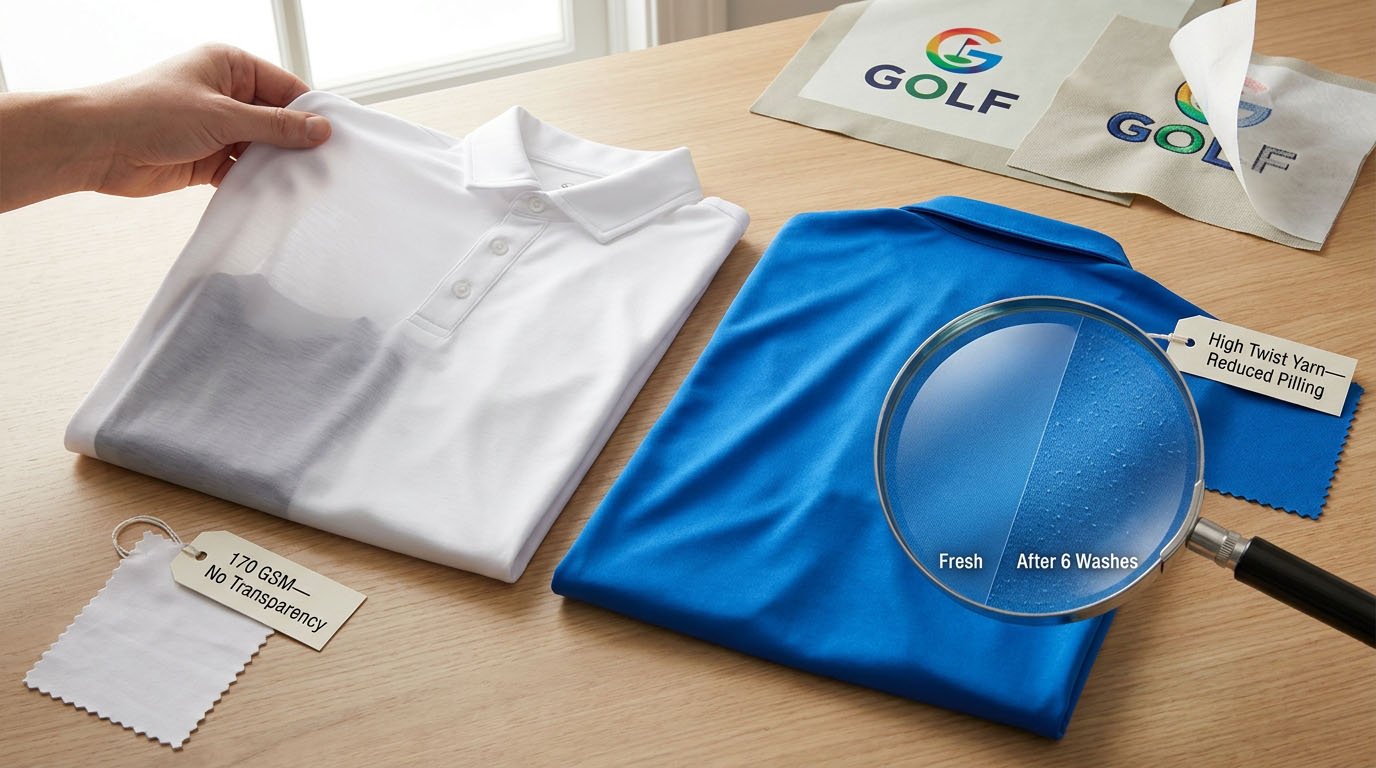
Lightweight jersey (under 160 GSM) becomes semi-transparent in white and light colors after moisture exposure. I've had clients approve beautiful 150 GSM white jerseys in the showroom, only to get customer complaints about visible undershirts during sweaty rounds.
Jersey fabric also pills faster than piqué if your supplier uses low-twist polyester yarn. The smooth surface shows pilling more visibly than textured piqué—something you won't see until customers wear the shirt 5-6 times.
Here's my rule for jersey selection:
- 160-180 GSM minimum for solid colors, especially white/light shades
- Ask your supplier about yarn twist level—higher twist = less pilling
- Request wash test samples showing the fabric after 10 wash cycles, not just new fabric
Jersey works beautifully for sublimated designs or minimalist logo placements. But if you're planning traditional embroidery on thin jersey, you'll need extra stabilizer backing—which adds cost and stiffness that might contradict your original "soft and smooth" goal.
Why Polyester Blends Work So Well for Golf Shirts
The magic number everyone talks about is "moisture-wicking polyester," but the real question is: what percentage poly, blended with what, and dyed where?
I've worked with three common polyester blend ratios, and each solves different problems:
65/35 Poly/Cotton:
- Excellent durability and fast drying
- Harder hand feel (some customers call it "synthetic")
- Higher risk of color variation between batches if your supplier switches dye houses
- Best for: performance-focused brands targeting serious golfers
50/50 Poly/Cotton:
- Best balance of comfort and performance
- More cotton-like hand feel
- Higher pilling risk if polyester quality is poor
- Best for: mainstream golf apparel brands
80/20 Poly/Spandex:
- Maximum stretch and moisture management
- Very athletic fit
- More expensive, requires careful temperature control during dyeing
- Best for: premium athletic golf lines
Here's what buyers rarely consider: high polyester content makes color consistency harder to maintain across production batches. Polyester requires disperse dyeing at specific temperatures. If your supplier uses different dye factories for different orders (common with smaller manufacturers), your navy blue from Order 1 might not match Order 2.
At FUWAY, we run color match tests between batches for exactly this reason—but not every manufacturer does this by default. You need to ask.
Stretch Performance Knits for Comfort and Swing Mobility
Stretch comes from two sources: mechanical stretch (textured yarn) or chemical stretch (spandex). They're not equal, and choosing the wrong one causes returns.
Most buyers see "4-way stretch" on a spec sheet and think all stretch fabrics perform the same. They don't.
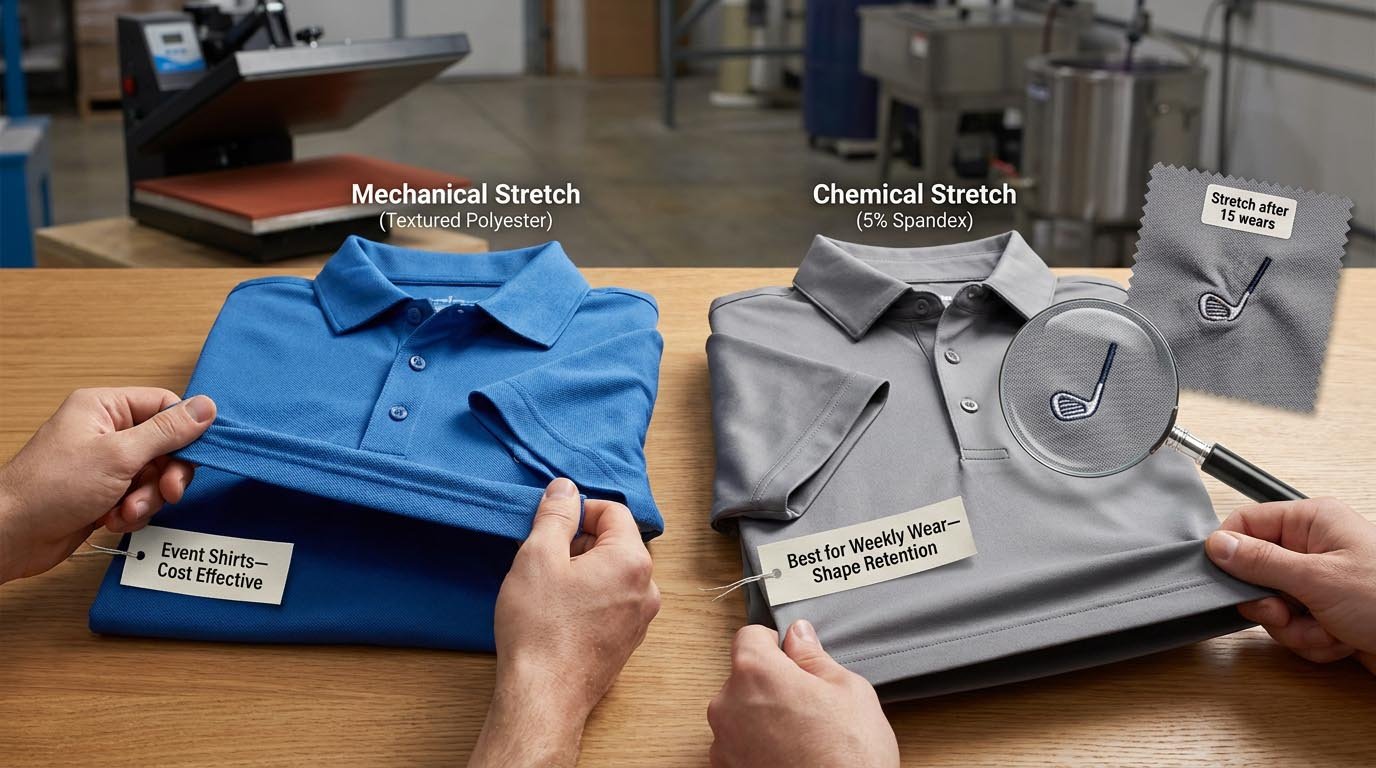
Mechanical Stretch (Textured Polyester):
- Lower cost
- Sleeve cuffs and hem lose elasticity after 10-15 wears
- Works fine for one-time event shirts, fails for regular-wear golf apparel
Chemical Stretch (5-8% Spandex/Elastane):
- Better recovery and shape retention
- More expensive
- Sensitive to heat during dyeing and pressing—can yellow or lose stretch if mishandled
I've seen this exact scenario play out: A brand orders 500 pieces of "stretch performance" polo shirts with mechanical stretch, sells them to golf club members, then gets complaints three months later that "the sleeves are baggy." That's mechanical stretch degradation.
If your customers will wear these shirts weekly (country clubs, corporate uniforms, repeat retail buyers), pay extra for spandex-based stretch. If it's one-time tournament shirts, mechanical stretch keeps costs down.
One more technical point: Spandex content above 8% makes fabric harder to embroider without puckering. If you need both high stretch and large embroidered logos, work with your manufacturer to test stitch density on actual stretch fabric—not standard samples.
Piqué vs Jersey: Which Fabric Is Better for Golf Shirts?
Neither is "better"—they serve different brand positioning and decoration methods. The question is: which matches your target customer and production requirements?
| Factor | Piqué | Jersey |
|---|---|---|
| Brand perception | Traditional, established | Modern, athletic |
| Breathability | Higher (honeycomb weave) | Lower (smooth surface) |
| Embroidery | Better for raised logos | Needs backing for stability |
| Heat transfer | Harder on textured surface | Ideal for full-color prints |
| Price range | Mid to premium | Budget to mid |
| After 20 washes | Texture may flatten | May pill if low-quality poly |
I've worked with traditional golf brands that tried switching to jersey to "modernize," only to hear from their core customers: "This doesn't feel like real golf apparel." The opposite happens too—athletic brands using piqué get feedback that it looks "too old-school."
Your choice should match your brand story and logo application method. If you're building a heritage golf brand with embroidered crests, piqué supports that narrative. If you're targeting younger golfers with bold sublimated designs, jersey is your canvas.
Here's a practical tip: Order 50-piece test runs in both fabrics with your actual logo and colors. Distribute them to target customers and ask for feedback after 5 washes. Their answers will tell you more than any fabric spec sheet.
Polyester vs Cotton Blends for Golf Shirts
The cotton-vs-polyester debate misses the point. What matters is: can your supplier maintain consistent quality across multiple orders, and does the blend ratio match your customer's wash-and-wear expectations?
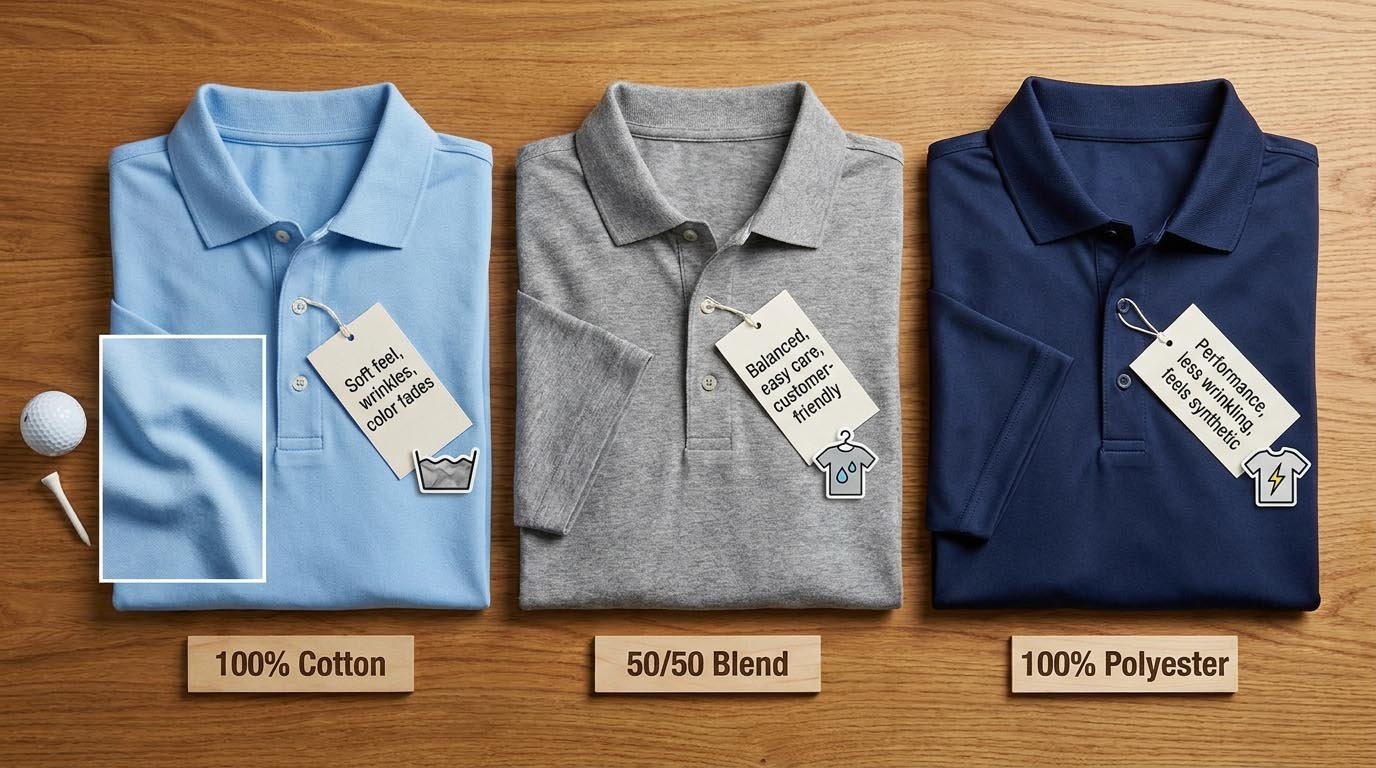
High-cotton blends (70%+ cotton) feel softer and more premium to touch. But they:
- Wrinkle more after washing
- Hold moisture longer during play
- Show color fading faster in bright sunlight
- Cost more and have longer lead times if cotton prices spike
High-polyester blends (65%+ poly) perform better technically. But they:
- Feel more synthetic (customers describe it as "plasticky")
- Build up static in dry climates
- Show batch-to-batch color variation more easily
- Can develop odor faster if low-quality polyester is used
My recommendation: 50/50 blends for first-time golf apparel brands. They give you:
- Acceptable performance for most golf conditions
- Easier sourcing and more supplier options
- Lower risk of customer complaints about "too synthetic" or "too wrinkled"
Once you have sales data showing whether your customers prioritize comfort (lean more cotton) or performance (lean more poly), adjust ratios in your next collection.
One warning about "moisture-wicking" marketing: Polyester wicks moisture, but customers feel "wet" if the fabric doesn't dry fast enough. A 70% poly jersey at 150 GSM dries faster than a 50% poly piqué at 220 GSM—even though the second has more polyester by weight. Fabric construction matters as much as fiber content.
How Fabric Weight Changes the Feel of a Golf Shirt
Fabric weight (GSM) changes everything—how shirts hang on racks, how they feel during play, whether they wrinkle in luggage, and even whether your logo prints cleanly.
Most buyers pick a weight that "feels right" during sampling. Then they discover issues at scale:
Below 160 GSM:
- Lightweight and packable
- Transparency issues in white/light colors
- More affordable
- Feels cheap on retail hangers
160-180 GSM (Sweet Spot):
- Good balance of weight and breathability
- Works for most embroidery and printing
- Acceptable for both athletic and traditional styling
Above 200 GSM:
- Premium hand feel
- Better for cold-weather golf
- Higher cost and slower drying
- Can feel heavy during summer rounds
I've seen this mistake repeatedly: Brands choose 140 GSM jersey because it feels incredibly soft and light during January sampling, then get summer complaints that white shirts are see-through when wet.
Match fabric weight to your primary selling season and climate. If you're targeting year-round temperate golf regions, 170-180 GSM works. If you're focused on hot-weather markets (Florida, Arizona, Southeast Asia), 160 GSM maximum.
Also consider: Heavier fabrics hold embroidery better but show heat transfer press marks more easily. If you're using primarily embroidered logos, you can go heavier. If you're doing heat transfers, stay lighter.
The Best Golf Shirt Fabrics for Hot Weather
For temperatures above 85°F (29°C), you need fabrics that prioritize evaporation speed over moisture absorption—which means polyester-dominant blends in lighter weights.
Hot-weather golf creates specific fabric demands:
- Moisture must move away from skin quickly
- Fabric can't cling when wet
- Must dry between holes (not just after the round)
- Needs to resist sun-related color fading
Best hot-weather combinations:
Option 1: Jersey, 150-160 GSM, 65% Polyester / 35% Cotton
- Fast drying, smooth feel
- Risk: transparency in light colors when wet
- Best for: younger demographics comfortable with athletic styling
Option 2: Piqué, 170-180 GSM, 50% Poly / 50% Cotton
- Traditional look with acceptable moisture management
- Textured surface increases air circulation
- Best for: classic golf brands, older demographics
Option 3: Polyester mesh inserts
- Use solid fabric for body, mesh panels under arms
- Maximum breathability
- Higher production complexity and cost
What doesn't work in hot weather: high-cotton blends above 60% cotton. They absorb moisture well but dry slowly, leaving players feeling wet and uncomfortable for entire back nine.
One practical test I recommend: Take sample shirts outside in 85°F+ weather, pour water on them, and time how long until they're completely dry. That tells you more than any "moisture-wicking" claim on a spec sheet.
How to Choose the Right Fabric for Your Golf Shirt Brand
Start with three questions: Who's buying? What's your minimum order? How will you apply your logo?
Here's the decision framework I walk clients through:
Step 1: Define your customer segment
- Traditional golfers at private clubs → Piqué, higher cotton blends
- Athletic golfers under 40 → Jersey, polyester-dominant
- Corporate buyers needing embroidered logos → Piqué or heavier jersey
- Resort/tourism markets → Lightweight poly blends
Step 2: Match your order volume to fabric options
- Under 300 pieces per color → Stick with standard fabric suppliers
- 500-1,000 pieces → You can request custom blends
- 2,000+ pieces → Consider exclusive fabric development
Step 3: Test decoration methods on actual fabric
- Embroidery → Piqué or jersey 170+ GSM
- Heat transfer → Jersey or flat piqué
- Sublimation → 100% polyester jersey only
- Screen print → Works on most fabrics, test for color bleeding
Step 4: Request wash-test samples
Don't accept fresh fabric samples. Ask your manufacturer for:
- Samples after 10 wash cycles
- Color fastness test results (AATCC 61 minimum)
- Pilling resistance rating (Grade 3-4 minimum)
Step 5: Source from suppliers with batch testing
The biggest hidden cost in fabric selection is color variation between orders. Make sure your supplier:
- Uses consistent dye houses
- Runs lab dips for each production batch
- Keeps fabric from previous orders for color matching
At FUWAY, we keep archived samples from every client's previous orders specifically to avoid batch color mismatches. But this isn't industry-standard—you need to verify your supplier does this.
Common Mistakes When Choosing Golf Shirt Fabrics
I've seen these errors cost brands thousands in rework, returns, or damaged reputation. All of them are preventable.
Mistake 1: Choosing fabric based only on first sample
What happens: Sample feels amazing, but production batch pills after 5 washes or shows color variation.
Prevention: Request production-run samples, not showroom swatches. Ask for wash-tested versions.
Mistake 2: Ignoring GSM differences
What happens: Reorder fabric "looks the same" but feels thinner. Supplier switched from 180 to 160 GSM to cut costs.
Prevention: Specify exact GSM in your purchase order, not just "piqué" or "jersey."
Mistake 3: Not testing logo application methods
What happens: Beautiful fabric, but embroidered logo causes puckering or heat transfer shows press marks.
Prevention: Produce 10-20 fully finished samples with your actual decoration before bulk ordering.
Mistake 4: Assuming "moisture-wicking" is standardized
What happens: Your "performance fabric" doesn't dry any faster than regular cotton.
Prevention: Request actual evaporation test data (ASTM D7209) or do your own field testing.
Mistake 5: Underestimating color consistency requirements
What happens: First order looks great. Second order arrives, and the navy blue doesn't match your existing inventory.
Prevention: Work only with suppliers who use consistent dye houses and run batch color matching. This is non-negotiable for retail brands.
Mistake 6: Selecting stretch fabric without understanding elasticity source
What happens: Sleeves and hems lose shape after 15-20 wears because mechanical stretch degrades.
Prevention: If customers will wear shirts repeatedly, pay for spandex-based stretch. Specify 5-8% spandex in your order.
Mistake 7: Optimizing only for cost
What happens: You save $1.50 per shirt on fabric, then lose 10% of inventory to pilling complaints and 20% of customers to competitors.
Prevention: Calculate total cost including returns, reputation damage, and lost repeat purchases—not just per-unit fabric cost.
The most expensive mistake? Launching a golf apparel line without field-testing your fabrics under real playing conditions. Give samples to actual golfers. Have them play 18 holes in hot weather, wash the shirts five times, then tell you honestly what works and what doesn't.
Golf shirt fabrics work best when they support your first-product strategy, fit goals, and MOQ constraints described in how to start a golf apparel line.
Conclusion
The right fabric for your golf shirts isn't about technical specs—it's about matching your brand positioning, order volume, and production capabilities to your target customer's expectations and usage patterns. Piqué works for traditional markets, jersey suits modern athletic brands, polyester blends offer durability, and stretch knits provide mobility. But within each category, supplier quality, blend ratios, and batch consistency matter more than fabric type alone. Test actual production samples, verify your supplier's dye house consistency, and calculate total cost beyond just fabric price per yard.