You see a golf polo for $120 and wonder why it costs so much. You feel it must be a massive brand markup, questioning if the quality really justifies the price.
Golf clothes are expensive due to technical fabrics, performance treatments, complex construction, and small-batch production. These factors significantly raise the base manufacturing cost, even before marketing, sponsorships, and retail markups are added.
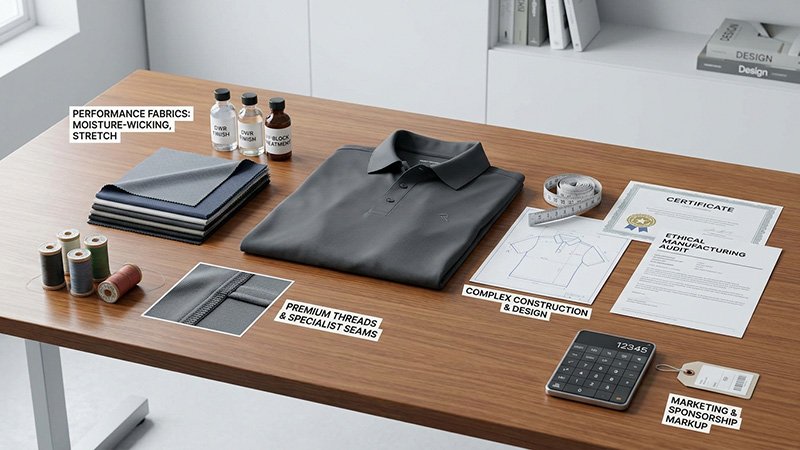
As a manufacturer who has spent my entire career in textiles and sportswear, this is a question I hear all the time. Many new brand owners I work with, like Bobby, are shocked when they see the factory cost of a true performance polo. They systematically underestimate the price drivers. The truth is, the high price isn't just about the logo; it's a reflection of the technology, materials, and ethical production that go into making a garment that performs under pressure. Let's break down where the money really goes.
What are the real cost drivers, from yarn to retail?
You feel two polo shirts, and they seem similar. Yet one costs $30, and the other is $100. You assume it's just brand hype, but the real story is in the factory.
The biggest hidden costs are a combination of advanced technical fabrics, which can be 2-5x more expensive than basic cotton, plus specialized performance treatments and the higher waste from complex, athletic patterns.
Fabrics and trims: knits, collars, zippers, and buttons
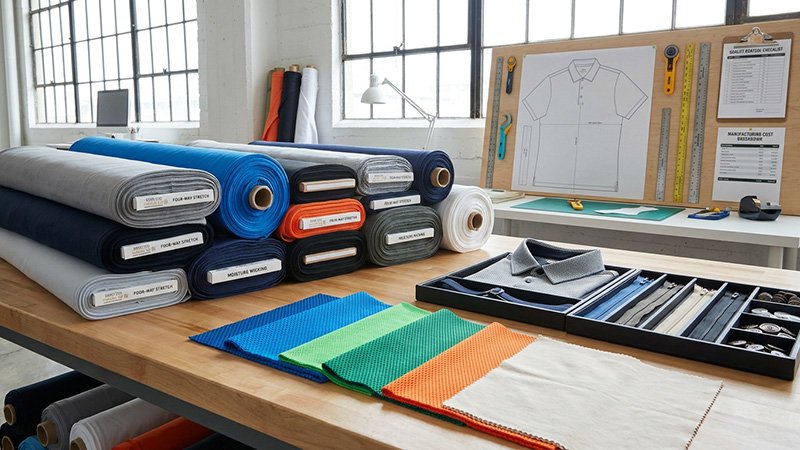
This is the single biggest factor. A standard cotton piqué fabric is relatively cheap. A high-performance, four-way stretch, moisture-wicking knit made from a blend of polyester and spandex costs significantly more. As one of my core insights, I can tell you the raw performance fabric cost is often two to five times higher than a standard cotton-poly blend. This is a buyer misconception I constantly correct. Then you have the trims. A cheap, flimsy collar will curl and lose shape. A structured, self-fabric collar holds its form but requires more material and skill to construct. Add a premium YKK zipper or custom-molded buttons, and the base cost climbs before a single stitch is sewn.
Performance treatments: wicking, anti-odor, UPF, and DWR
These are not just marketing terms; they are chemical finishes applied to the fabric that add real cost.
- Wicking: Pulls moisture away from the skin.
- Anti-Odor: An antimicrobial finish that prevents bacteria growth.
- UPF (Ultraviolet Protection Factor): A treatment that helps block harmful sun rays.
- DWR (Durable Water Repellent): A coating that makes water bead up and roll off.
Each of these treatments adds a line item to the factory invoice.
Pattern-making, cutting yields, and quality control
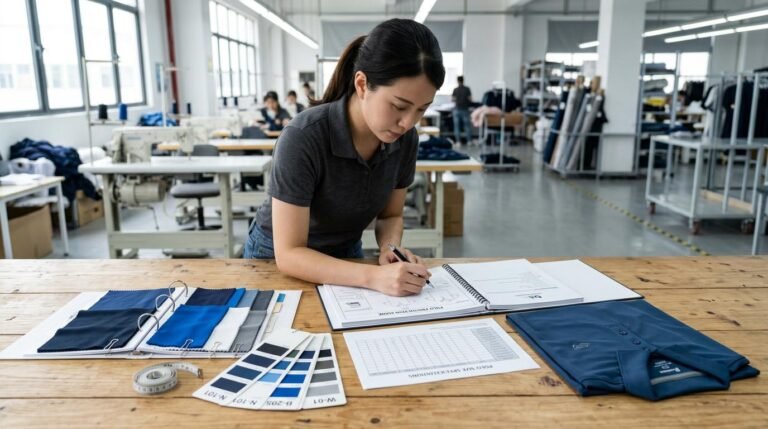
A simple t-shirt has four main pattern pieces. A performance golf shirt can have over a dozen to create articulated sleeves and shoulder gussets for a better swing. This complexity leads to more fabric waste when cutting—what we call a lower "yield." Furthermore, the quality control for performance wear is stricter. We check every seam, measure every garment, and test fabric functions. This requires skilled labor and time, adding to the cost.
MOQs and small-batch runs in niche colorways
Here’s another key insight many new brand owners miss. Factories have Minimum Order Quantities (MOQs), especially for custom-dyed fabrics. If a brand wants a unique seasonal color, they have to pay for an entire dye lot, even if they only need a fraction of it. Ordering in smaller batches of 500-2,000 units means sampling costs and testing fees can add $3 to $8 per garment. These costs shrink dramatically on huge 10,000-unit orders, but they define the price floor for new and niche brands.
Freight, warehousing, and import duties
Once the clothes are made, they have to be shipped, stored, and imported. The cost of freight, whether by sea or air, and the import duties and taxes charged by your country are all factored into the final price you see on the tag.
How much do brand marketing and licensing add to the price?
You see your favorite golfer win a tournament wearing a premium brand. You know that sponsorship costs millions, and you feel like you're footing the bill with every purchase.
Branding is a significant part of the cost. Expenses like tour sponsorships, marketing campaigns, and licensing fees are built into the final price to create brand value and justify its premium position.
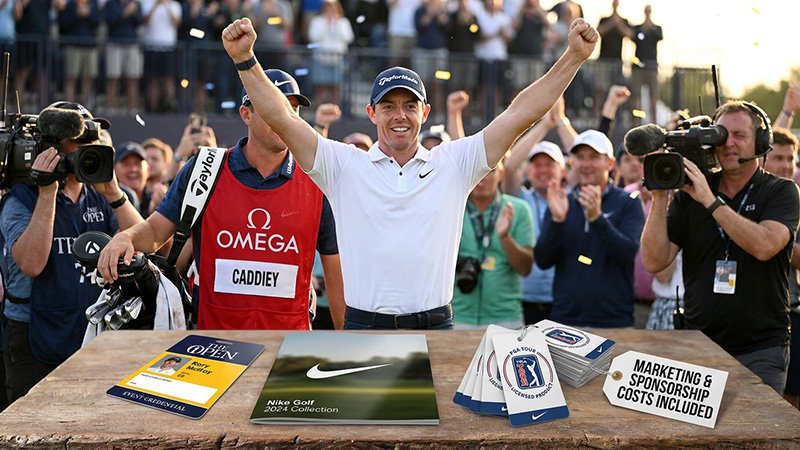
Tour sponsorships and athlete endorsements
Paying a top-ranked golfer to wear your clothes is incredibly expensive. These multi-million dollar contracts are a huge marketing expense. Brands use these endorsements to prove their product's performance and build credibility. That cost is distributed across every shirt they sell.
League/event logo licensing and royalties
Want a polo with the official logo from a major tournament like the U.S. Open or The Masters? The brand had to pay a hefty licensing fee and a royalty on every single item sold. This fee goes directly to the event organizers and adds a fixed cost to the garment.
Design teams, shoots, and campaign budgets
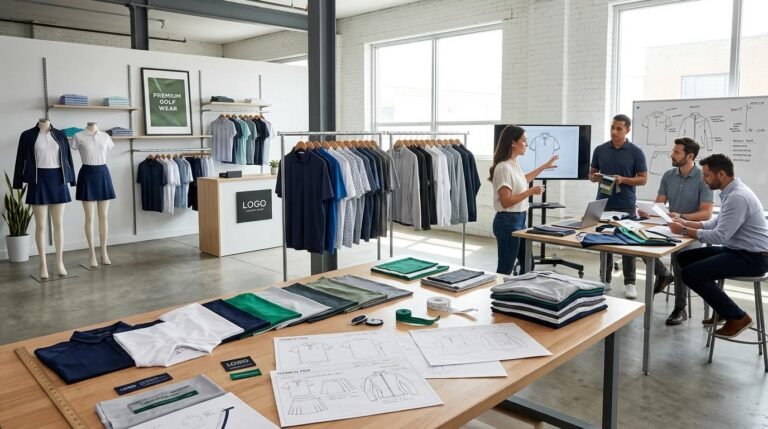
Behind every collection is a team of designers, product developers, and pattern makers. The brand also spends a fortune on professional photoshoots, video campaigns, and digital advertising to make the clothes look desirable. All of this is part of the operational cost of running a fashion brand.
Brand positioning: prestige margins vs. value lines
Some brands are intentionally positioned as luxury goods. They set a high price to create an aura of exclusivity and premium quality. Other brands focus on providing value. The margin—the difference between the cost to make and the price to sell—is a strategic choice that defines the brand's place in the market.
Limited drops and hype-driven scarcity
You've seen it with sneakers, and it's happening in golf. Brands create hype by releasing a "limited drop" of a unique design. The scarcity makes the item more desirable and allows the brand to charge a premium price, knowing it will sell out quickly.
You hear brands talk about "ethical production" and "sustainability." You wonder if it's just marketing talk or if it genuinely adds to the cost of the clothes.
Yes, responsible manufacturing has a real, measurable cost. Ethical wages, factory safety certifications, and certified eco-friendly materials are more expensive than their conventional counterparts, adding a premium to the final garment.
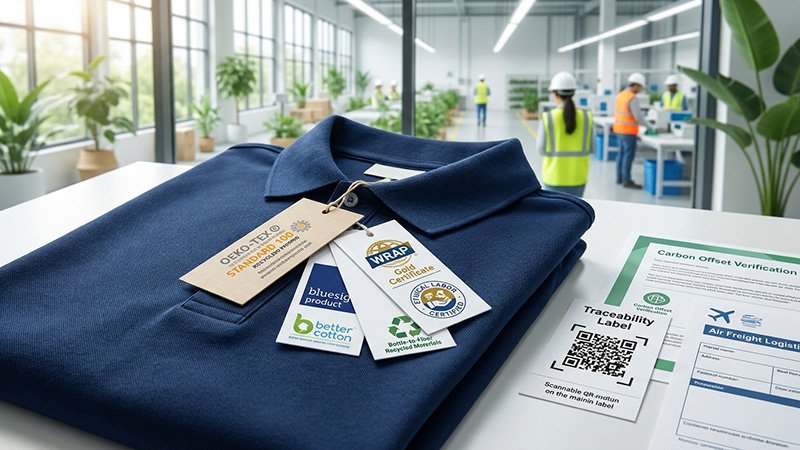
Ethical wages, audits, and factory certifications
As a factory founder, this is very important to me. Paying our workers a fair, living wage and maintaining a safe working environment costs more than cutting corners. Undergoing third-party social audits and getting certifications like WRAP (Worldwide Responsible Accredited Production) involves significant investment in facilities and processes.
Certified inputs: Better Cotton, bluesign, OEKO-TEX
Using certified materials guarantees they are safe and made with less environmental impact.
- OEKO-TEX: Certifies that every component of the fabric is free from harmful substances.
- bluesign: Ensures the fabric was manufactured with the lowest possible impact on people and the environment.
- Better Cotton: Promotes better standards in cotton farming.
These certified materials cost more to source, directly impacting the garment's price.
Recycled and bio-based fibers cost different
Using innovative materials like recycled polyester (made from plastic bottles) or new bio-based fibers is a great step for sustainability. However, the technology and supply chains for these materials are still maturing, and they often cost more than their virgin, fossil-fuel-based equivalents.
Traceability, data systems, and reporting
Modern consumers want to know where their clothes came from. Building a system to trace materials from the farm or recycling plant all the way to the final garment requires complex data systems and partnerships. This transparency has an administrative cost.
Transport choices: air vs. sea and emissions targets
Shipping goods by sea is far cheaper and has a lower carbon footprint than shipping by air. Brands that need to get products to market quickly will use air freight, which can dramatically increase the logistics cost per item. Many are now also investing in carbon offsets for their shipping to meet emissions targets, which is another added cost.
How does retail math affect the final price?
You understand the factory and brand costs, but why does the price seem to double when it hits the shop floor? The answer lies in the simple, brutal math of retail.
Retailers typically use a "keystone markup," which means doubling the wholesale price they paid for the garment. This margin covers their rent, staff, marketing, and inventory risk.
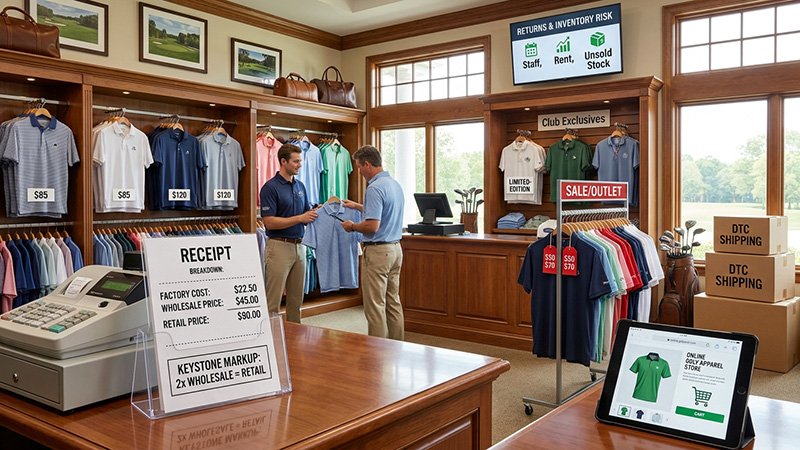
Keystone markups and channel margins explained
The most basic retail pricing model is "keystone." If a pro shop buys a polo from a brand for $50 (the wholesale price), they will sell it for $100 (the retail price). This 2x markup is the standard needed to cover all their operating costs and hopefully make a small profit. This quickly explains why a shirt with a factory cost of $25 becomes a $100+ item.
Pro shop exclusives and smaller volumes
Your local golf club's pro shop orders in very small quantities compared to a big-box store. Because they buy fewer units, they may pay a higher wholesale price. They also rely on the store's revenue to fund club operations, so their margins are often protected.
Returns, shrinkage, and inventory risk baked into price
The price tag has to cover more than just the cost of the item. It also has to cover the cost of items that are returned, stolen ("shrinkage"), or don't sell and have to be marked down. This inventory risk is a real business expense that is spread across all the items that do sell.
MSRP vs promo: outlet cycles and past-season value
The Manufacturer's Suggested Retail Price (MSRP) is the initial price tag. If a product doesn't sell, it eventually gets moved to a sale rack or an outlet store. This is a great way to get high-quality gear at a lower price, but it's also why the initial MSRP has to be high enough to absorb these end-of-season markdowns.
DTC efficiencies—and why prices may still be high
Some brands sell Direct-to-Consumer (DTC) online, cutting out the wholesale/retail markup. While this seems more efficient, they now have to pay for their own warehousing, customer service, and huge digital marketing costs to attract customers. So while they capture the full margin, their expenses are also much higher.
What do you actually get for your money?
You see the high price tag and wonder if you're just paying for a name. With a quality garment, you're paying for tangible performance, durability, and comfort that you can feel.
You're paying for superior fit and mobility from advanced pattern engineering, durable construction that won't fall apart, and lab-tested fabrics that will keep you comfortable and protected round after round.
Fit and mobility: gussets, raglan, pattern engineering
A cheap shirt is cut like a box. An expensive golf shirt is engineered for the golf swing. It uses extra panels under the arms (gussets) or special sleeve construction (raglan sleeves) to allow for a full range of motion without the shirt pulling or bunching. This is expert-level pattern-making.
Construction tells: stitches-per-inch, bonding, taping
Look closely at the seams. A high-quality garment will have a high density of stitches-per-inch, making the seams stronger. It might also use advanced techniques like ultrasonic bonding or taping on the seams to reduce chafing and create a clean, technical look. These are slow, expensive processes.
Lab-tested results: pilling, colorfastness, shrinkage
Premium brands test their fabrics rigorously. They test for pilling (how quickly the fabric forms little balls), colorfastness (to ensure colors don't fade in the sun or bleed in the wash), and shrinkage. A cheap polo might look good once, but a quality one is built to last.
Comfort factors: breathability, stretch, handfeel
You can feel the difference. A premium performance fabric feels light, airy, and soft against the skin ("handfeel"). It stretches with your body, not against it, and it keeps you dry and cool when the pressure is on. This is the performance you are paying for.
Service and warranties: repairs, defects, guarantees
Finally, reputable brands stand behind their products. If a seam fails or a zipper breaks due to a manufacturing defect, a good brand will often repair or replace the item. This warranty and customer service are part of the value proposition built into the premium price.
How can you evaluate value and buy smarter?
You're ready to invest in quality gear, but you want to make sure you're spending your money wisely. You need to become an educated consumer who can spot real value.
To buy smarter, focus on cost-per-wear instead of just the ticket price. Learn to read fabric specs, prioritize features you actually need, and know when and where to shop.
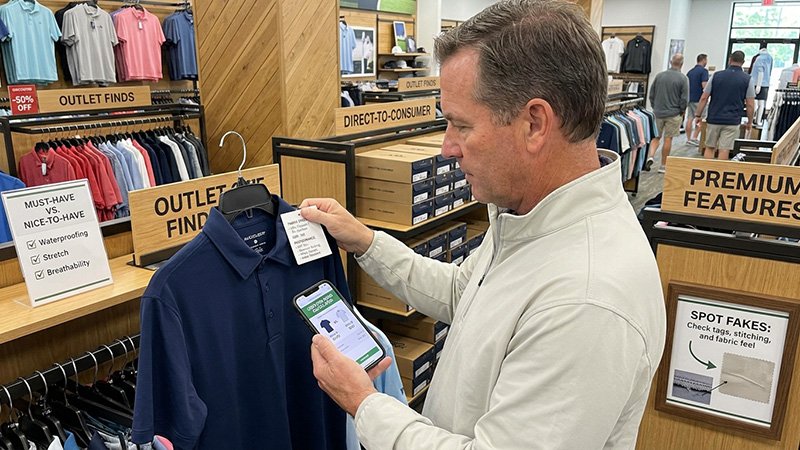
Cost-per-wear and your climate/use case
A $100 polo that you wear 50 times and that performs perfectly costs you $2 per wear. A $30 polo that you wear twice before it loses its shape costs you $15 per wear. Think about longevity. Also, buy for your needs. If you play in a hot, humid climate, prioritize breathability. If you play in the sun, prioritize UPF protection.
Read fabric specs: GSM, knit type, blend, finishes
Look at the tag. GSM stands for Grams per Square Meter; a higher GSM often means a more substantial, durable fabric. Look at the fabric blend (e.g., 92% Polyester / 8% Spandex) to understand its stretch. Research the finishes to see if it has the performance features you need. This is much more important than a logo.
Must-have vs. nice-to-have features
Be honest about what you need. Do you need a fully waterproof jacket, or just a water-resistant windbreaker? Do you need the absolute lightest polo, or will a standard performance knit do? Focus your budget on the features that will make the biggest difference to your comfort and game.
Save vs. splurge: polos, pants, outerwear priorities
My advice is to splurge on items that provide the most performance. A high-quality waterproof jacket is a game-changer and worth the investment. Great golf pants with four-way stretch are also essential. You can often save money on basic polos by buying from quality direct-to-consumer brands or waiting for sales.
When and where to buy: outlets, off-season, samples
The best deals are found off-season. Buy your winter gear in the spring and your summer gear in the fall. Outlet stores are fantastic for finding first-quality items from previous seasons at a big discount. Sometimes brands also have sample sales, which are a goldmine for bargains.
Spot fakes: tags, stitching, fabric feel, and price tells
If a deal on a premium brand seems too good to be true, it probably is. Fakes often have sloppy stitching, cheap-feeling fabric, and incorrect tags or logos. The price is the biggest giveaway. A brand-new, $150 jacket will never be selling for $25 from an unofficial website.
What's next in golf apparel tech and pricing?
The golf apparel industry is constantly evolving. You're wondering what the future holds for technology, sustainability, and—most importantly—the prices you'll be paying.
The future will bring more sustainable manufacturing and on-demand production, but also increased costs from new regulations. Expect prices to hold steady, with quality and technology tiers becoming even more distinct.
Dope-dyeing, PFAS-free DWRs, and 3D knitting
The next wave of innovation is here. Dope-dyeing (or solution-dyeing) adds color to the polymer before it's even a fiber, saving massive amounts of water. Brands are shifting to PFAS-free DWR finishes that are better for the environment. And 3D knitting machines can create an entire seamless garment, reducing waste and improving comfort, though the initial technology is expensive.
Repair, resale, rental, and take-back programs
To combat waste, we'll see more brands offering circular solutions. This includes programs to repair your damaged gear, platforms to resell used items, rental services for special events, and take-back programs that recycle old garments into new ones.
On-demand cutting and local micro-factories
Imagine ordering a polo online and having it cut and sewn that day at a small factory in your country. New technology is making on-demand production and local "micro-factories" a reality. This reduces waste from overproduction and cuts down on shipping, but may increase labor costs.
Regulatory shifts: EPR, labeling, and due diligence
Governments are getting more involved. New laws around Extended Producer Responsibility (EPR), transparent labeling, and supply chain due diligence will force brands to be more accountable. These new compliance rules will add administrative costs that will likely be passed on to the consumer.
Will prices fall—or will quality tiers spread further?
I don't expect prices for premium golf apparel to fall. The costs for labor, innovation, and sustainable materials are only going up. Instead, I believe we will see the gap widen. There will be a clear distinction between cheap, mass-market activewear and true, premium performance golf apparel, with a price tag to match the technology and quality.
Of course. Here are the 5 additional FAQs you requested, formatted as a standalone section and written in your voice.
Quick FAQ on Golf Apparel Prices
Why is recycled polyester often pricier than virgin polyester?
This is a great question I often discuss with new brand partners. It feels counterintuitive—recycled material should be cheaper, right? The reality is that the process of collecting, sorting, cleaning, and re-processing post-consumer waste like plastic bottles into high-quality yarn is currently more complex and less scaled than the massive, highly efficient industrial process of creating virgin polyester directly from petroleum. Plus, certifications like Repreve, which guarantee the material's origin, add a layer of cost for traceability. The price gap is narrowing, but for now, the more responsible choice comes with a slight premium.
Do sponsor-logo polos cost more than “blank” versions from the same brand?
Yes, and often by a significant margin for two key reasons. First is the application cost: every logo, whether it's embroidered or a heat transfer, is an additional step in production that adds labor and machine time. The second, and much larger cost, is licensing. That official tournament or sponsor logo isn't free; the apparel brand pays a royalty fee to the logo owner for every single shirt sold. You aren't just buying a polo; you're buying the right to wear that prestigious logo, and that right has a price tag attached.
Are women’s golf skirts and dresses priced differently from polos?
Absolutely. The pricing directly reflects the manufacturing complexity and material usage. A golf skort, for example, is essentially two garments in one: the outer skirt and the built-in compression short liner. This means more fabric, more pattern pieces, and significantly more sewing operations. A golf dress uses a much larger quantity of fabric than a polo and often involves more complex construction like zippers, waist seams, and pockets. The higher price is a direct result of these increased material and labor costs.
Is outdoor or tennis apparel a better-value substitute for golf gear?
While they might seem similar, they are engineered for different movements. Tennis apparel is cut for explosive, agile movements, while hiking gear prioritizes durability and layering. Golf apparel is specifically patterned for the rotational torque of a golf swing, with features like articulated sleeves and gussets that prevent pulling. Furthermore, golf has a distinct dress code—a collar is often mandatory. While a tennis polo might work for a casual round, it may not have the right fit or aesthetic for a country club. You're paying for sport-specific engineering and style.
How can I extend the lifespan of my gear to lower my cost-per-wear?
This is the smartest way to think about value. A few simple habits will double the life of your expensive gear. First, always wash in cold water and turn garments inside out to protect the surface. Second, avoid fabric softener, which can clog the pores of technical fabrics and ruin their wicking ability. Third, and most importantly, air-dry your clothes. The high heat of a dryer is the number one enemy of performance fabrics—it degrades spandex and can warp collars. Following these steps will dramatically lower your long-term cost-per-wear.
Conclusion
Ultimately, a high price tag on golf apparel reflects the hidden technology and ethical manufacturing in the garment. You are paying for performance and durability, not just the logo on the front.