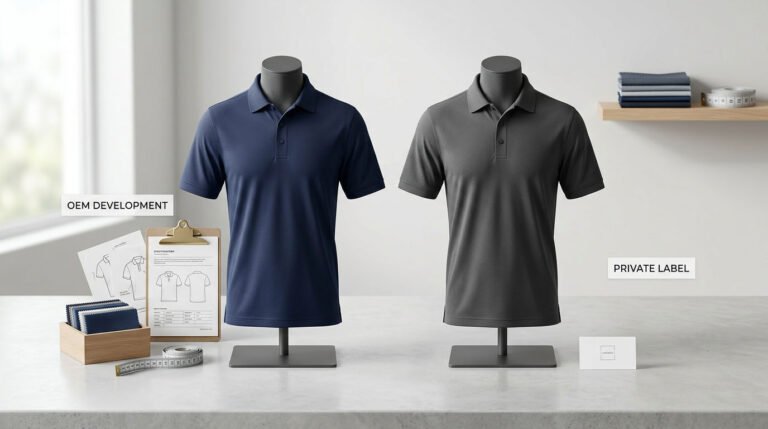
Choosing from dozens of wholesale golf apparel suppliers can feel simple at first. Compare prices, check the MOQ, request a sample, and pick the best-looking option.
But that approach misses the biggest risk.
A supplier may make one excellent sample and still struggle to reproduce the same quality across hundreds or thousands of garments.
The right wholesale golf apparel supplier is not simply the one with the lowest price, biggest catalog, or smallest MOQ. It is the partner that can turn your approved sample into consistent bulk production while maintaining fabric, fit, color, branding, and workmanship standards.
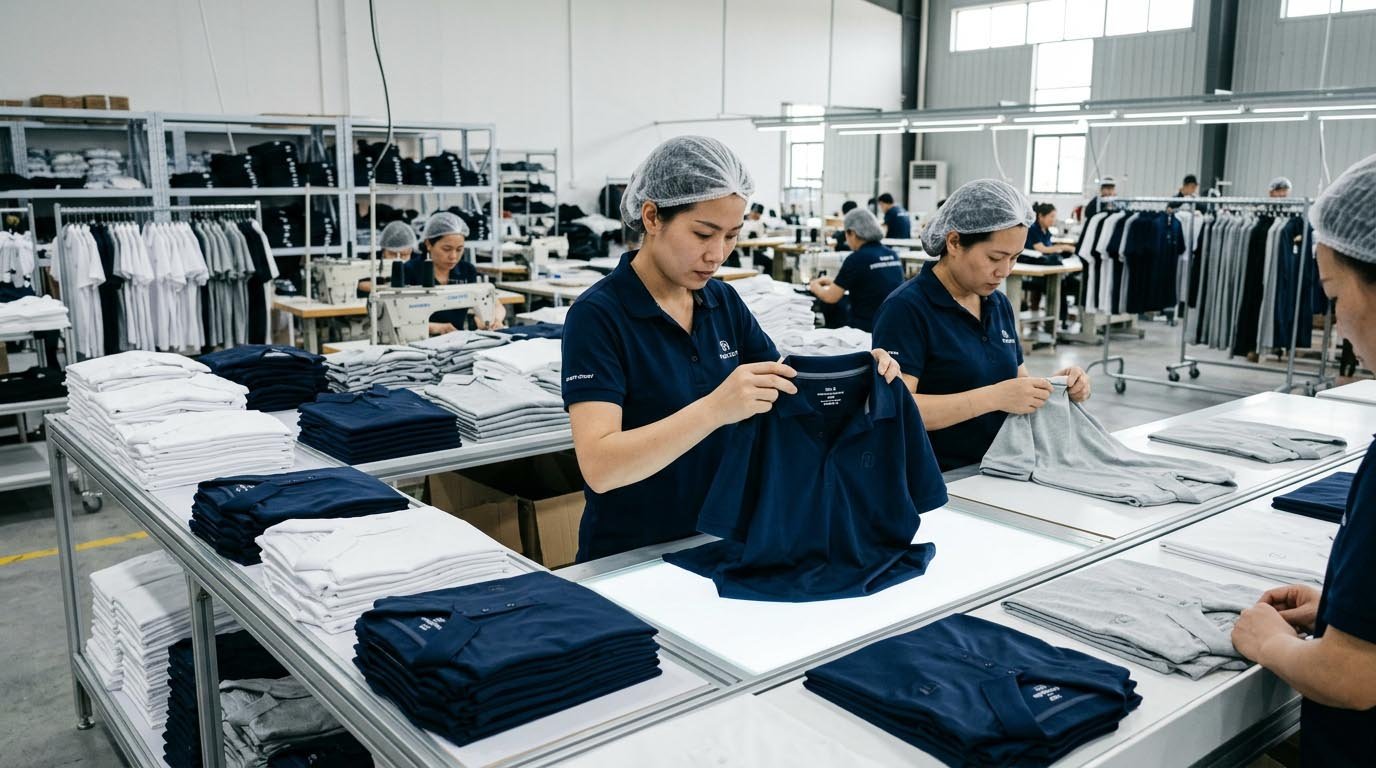
If you are building a golf brand, sourcing private-label products, or replacing an unreliable supplier, this guide will show you what really matters before you place a bulk order.
If you are looking for an OEM/ODM partner, you can also learn more about FUWAY’s golf apparel manufacturing capabilities.
Quick Answers: How Do You Choose a Wholesale Golf Apparel Supplier?
When comparing wholesale golf apparel suppliers, focus on these areas first:
| What to Check | Why It Matters |
|---|---|
| Golf apparel experience | Performance garments require different fabrics and construction from basic fashion apparel |
| Sample-to-bulk consistency | A good sample does not automatically mean good bulk production |
| Fabric sourcing | Fabric affects comfort, stretch, appearance, performance, and repeat orders |
| Production system | A structured process reduces variation during mass production |
| Quality control | Problems need to be found before the finished order ships |
| Customization | Your supplier should support your branding and product requirements |
| MOQ | The minimum should fit your current business stage |
| Communication | Slow or unclear communication creates production risk |
| Lead time | Sampling and bulk schedules need to be realistic |
| Verification | Factory information, production evidence, samples, and test reports help reduce sourcing risk |
The main principle is simple:
Do not judge a supplier by one perfect sample. Judge whether its production system can reproduce that sample consistently at scale.
Manufacturer vs Supplier vs Wholesaler vs Distributor: What Is the Difference?
Before comparing companies, it helps to understand what kind of partner you actually need.
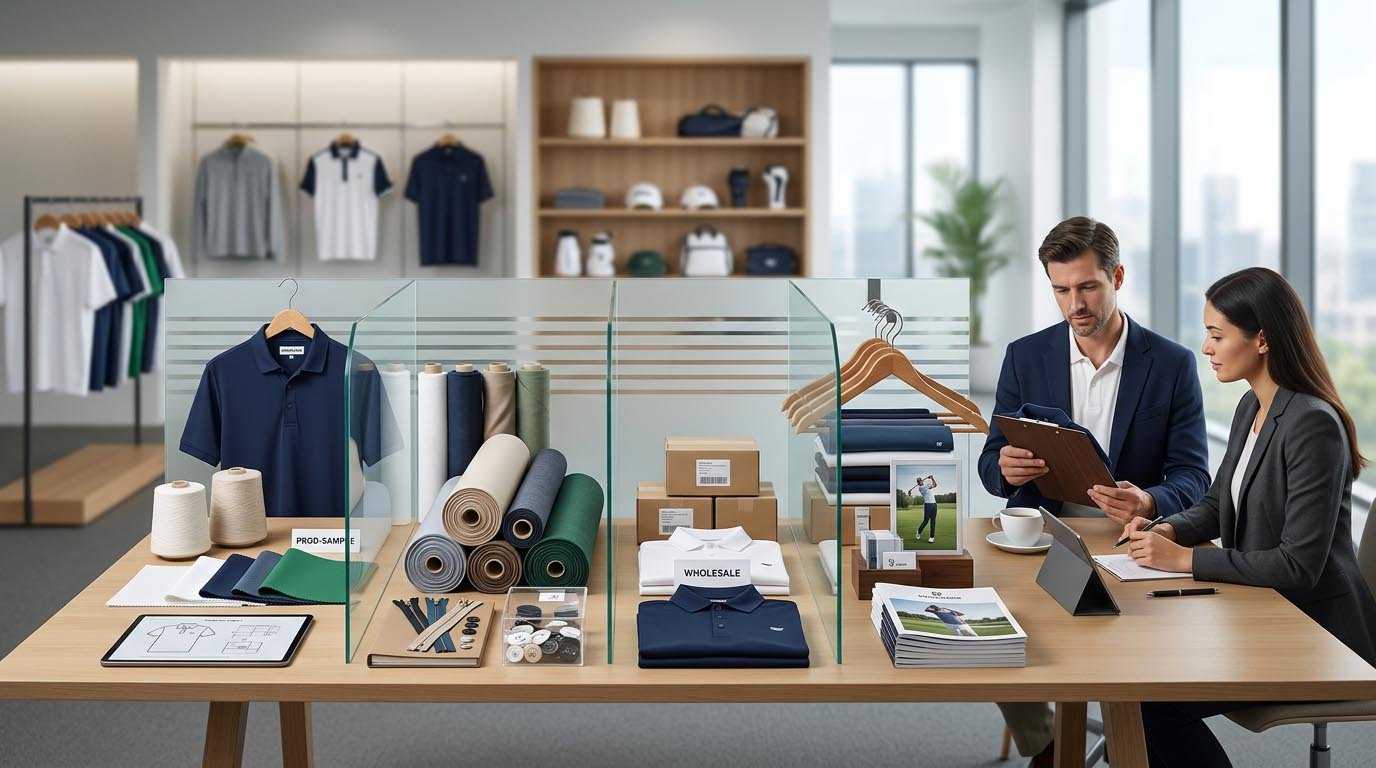
The terms manufacturer, supplier, wholesaler, and distributor are often used interchangeably online, but their business models can be very different.
| Partner Type | Main Function | Customization | Typical Best Fit |
|---|---|---|---|
| Manufacturer | Produces garments | High | Private-label and custom golf brands |
| Supplier | Supplies products and may manufacture or source them | Medium–High | Brands looking for sourcing support |
| Trading Company | Coordinates production through factories | Medium–High | Buyers wanting broader sourcing support |
| Wholesaler | Sells existing products in quantity | Low | Retailers needing ready-made inventory |
| Distributor | Distributes existing brands or product lines | Low | Retailers seeking established products |
When Should You Work With a Manufacturer?
A manufacturer is usually the better fit when your brand needs:
- Custom golf polo designs
- Custom fabrics
- Pantone colors
- Custom sizing
- Embroidery
- Screen printing
- Sublimation
- Heat-transfer logos
- Private labels
- Custom packaging
- Product development based on a tech pack or reference sample
You are not simply buying existing garments.
You are developing a product specifically for your brand.
If your goal is to create your own branded collection rather than buy stock products, a private-label golf apparel service is usually more relevant than a traditional wholesaler.
When Does a Wholesaler Make More Sense?
A wholesaler can work well when you mainly need:
- Existing designs
- Stock colors
- Fast replenishment
- Small quantities
- Limited customization
This can be useful for golf shops, event organizers, corporate uniforms, or businesses that do not need a fully customized product.
For a private-label golf brand, however, manufacturing capability usually matters more than access to a large ready-made catalog.
Why Does Choosing the Right Wholesale Golf Apparel Supplier Matter?
Your supplier affects much more than your unit price.
They influence:
- Product quality
- Customer reviews
- Return rates
- Inventory planning
- Launch dates
- Brand reputation
- Repeat-order consistency
- Your ability to develop new products
For a growing golf brand, the biggest sourcing question is therefore not:
“Who gives me the cheapest quote?”
It is:
“Who can reliably reproduce the product I approved?”
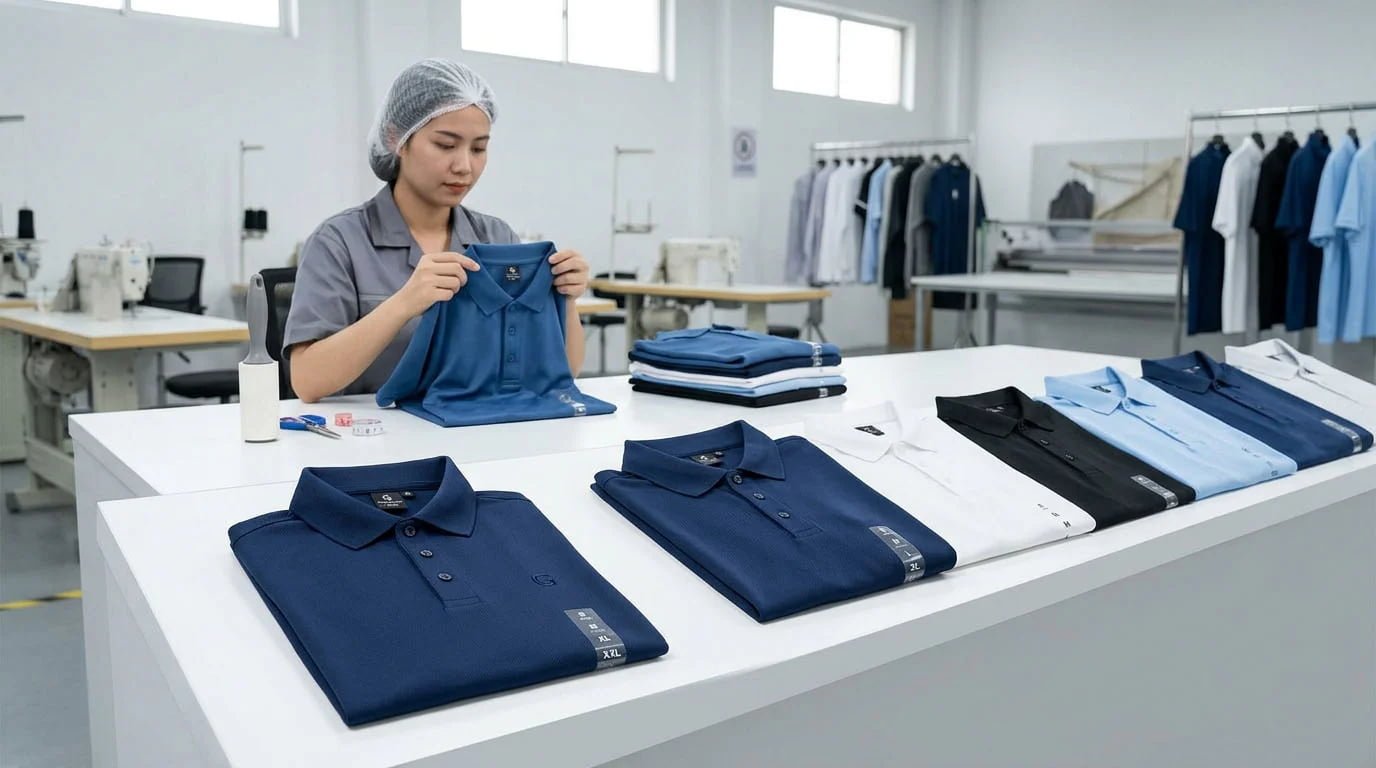
You Are Not Buying One Good Sample
This is one of the most important mindset changes in apparel sourcing.
You are not buying one beautiful polo.
You may eventually be buying:
- 100 identical polos
- 500 identical polos
- Several colors
- Multiple sizes
- Repeat orders months later
The challenge is consistency.
| Common Buying Focus | Better Buying Focus |
|---|---|
| Lowest quotation | Repeatable product quality |
| Biggest catalog | Relevant golf apparel experience |
| Perfect first sample | Stable bulk production |
| Fastest promised lead time | Reliable production schedule |
| Lowest MOQ | MOQ that still supports your required customization |
| Sales promises | Documented production process |
A supplier becomes valuable when good quality can be repeated.
Executive Decision Matrix: How Should You Compare Golf Apparel Suppliers?
You can use the following framework during your initial screening.
| Evaluation Area | Positive Signal | Warning Sign |
|---|---|---|
| Product experience | Can show relevant golf apparel production | Mostly unrelated garments |
| Sampling | Discusses fabric, fit and construction before quoting | Immediately promises an unrealistically easy sample |
| Fabric | Explains fabric options and limitations clearly | Only sends fabric photos |
| Customization | Explains suitable branding methods | Says every process works for every fabric |
| QC | Has several inspection stages | Only mentions final inspection |
| Communication | Gives clear, specific answers | Repeated vague or inconsistent replies |
| MOQ | Explains why the MOQ exists | Gives an extremely low MOQ without explaining limitations |
| Lead time | Separates sample, material and bulk timing | Promises everything unusually quickly |
| Production | Can explain how specifications move to the production line | Only discusses showroom samples |
| Transparency | Will share reasonable production evidence | Avoids basic questions about production |
No single item proves whether a supplier is good or bad.
You are looking for a pattern of operational competence.
Why Can a Perfect Sample Still Fail During Bulk Production?
This is one of the most overlooked risks when sourcing golf apparel.
Samples and bulk garments are produced under different conditions.
A sample may receive individual attention from an experienced sample technician. Bulk production, however, requires your specifications to pass through many different stages and workers.
That creates what we call the sample-to-bulk handoff risk.
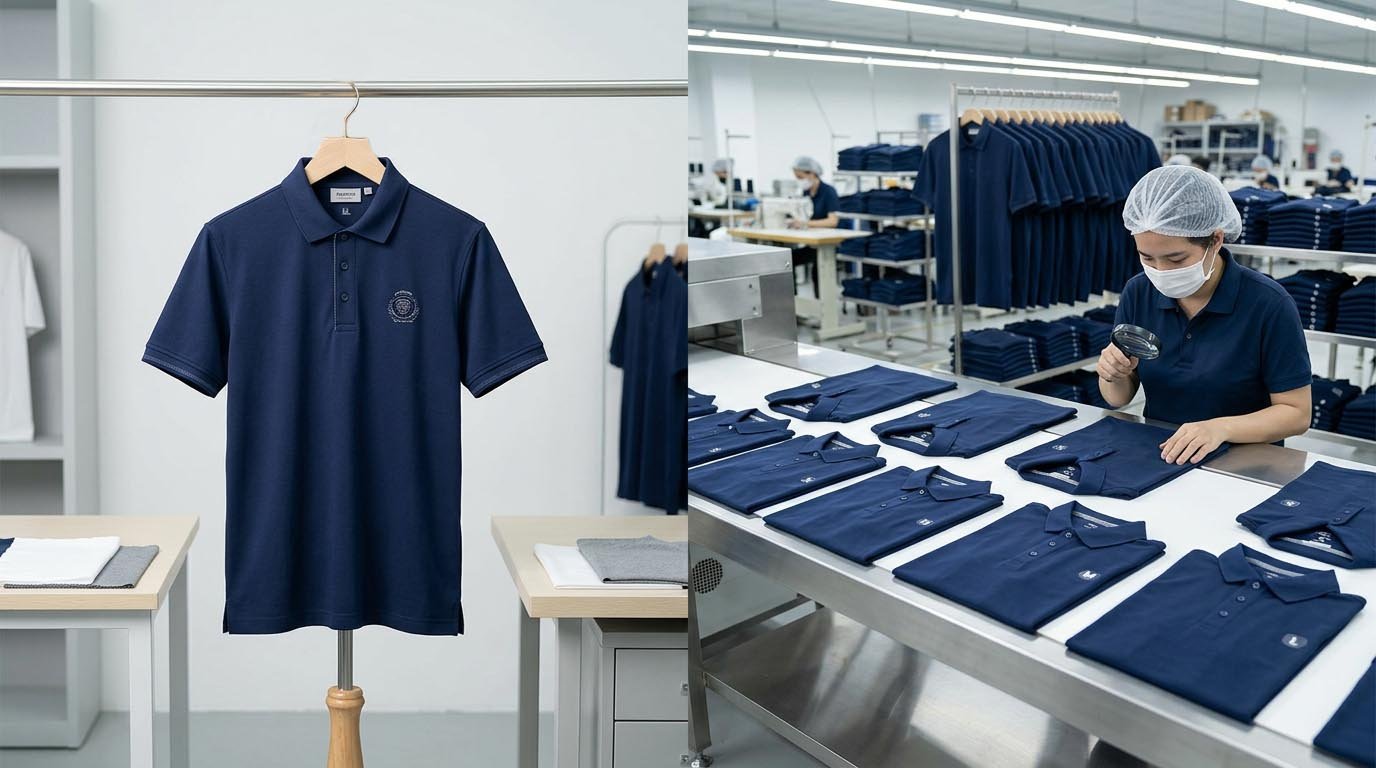
A simplified workflow may look like this:
Approved Sample
↓
Fabric Confirmation
↓
Pattern & Size Specifications
↓
Pre-Production Preparation
↓
Cutting
↓
Printing / Embroidery / Branding
↓
Sewing
↓
Finishing
↓
Quality Control
↓
Packing
Every handoff creates an opportunity for variation.
What Can Change Between Sample and Bulk?
Common examples include:
Fabric
The bulk fabric may feel slightly different from the sample if the material source or batch changes.
Color
Dye lots can vary, particularly when different batches are used.
Measurements
Small sewing or cutting differences can change garment measurements.
Collar Shape
Golf polo collars are highly visible, so small construction differences are easy to notice.
Logo Placement
Embroidery or heat-transfer positioning may shift between pieces.
Labels
Neck labels, care labels, and size labels can be attached inconsistently.
Stitching
Thread tension and sewing workmanship may change when production is scaled.
That is why your supplier needs a process for transferring the approved sample into production specifications.
A perfect sample alone is not enough evidence.
How Do You Evaluate a Supplier's Production System?
Do not evaluate a golf apparel supplier only from its catalog.
A large catalog tells you what the company can sell.
It does not necessarily tell you how well it can produce your specific product.
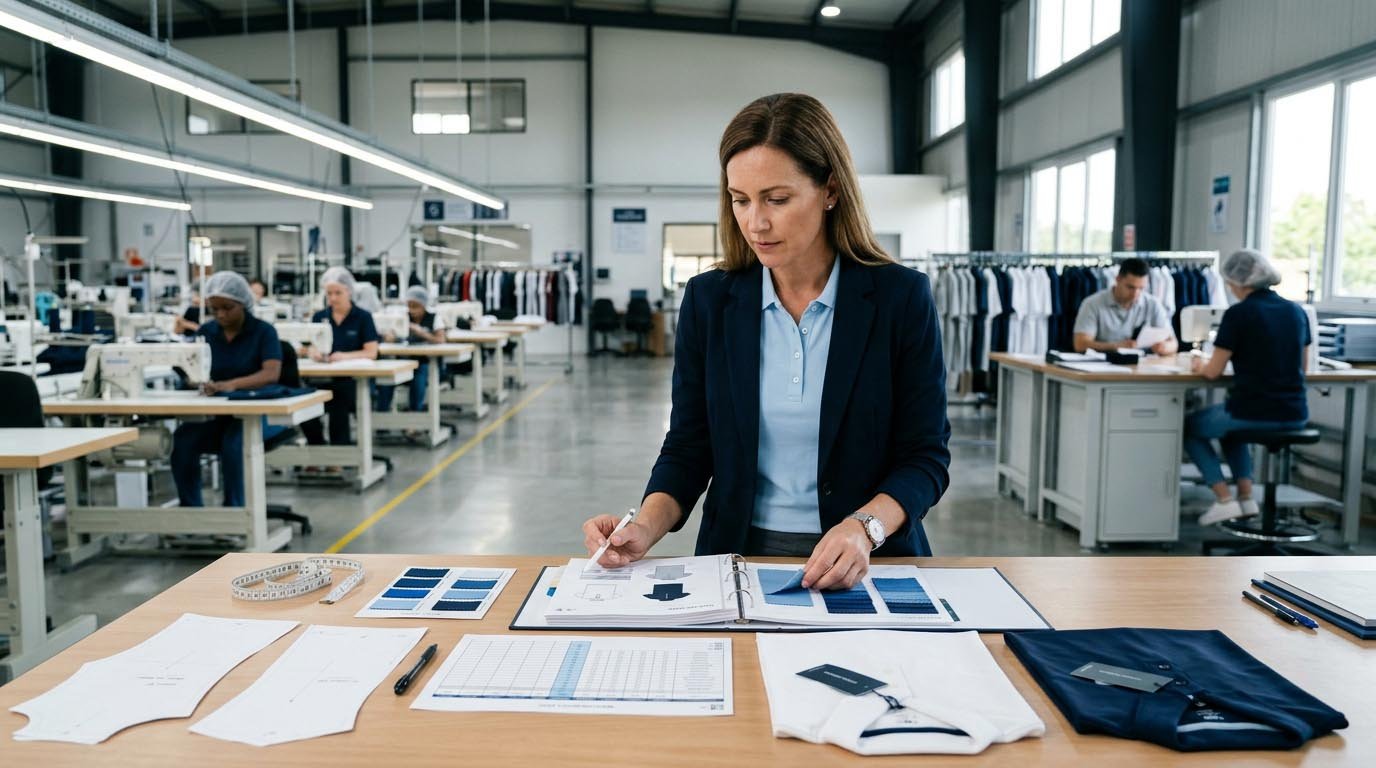
Instead, ask questions about how the supplier actually manages an order.
1. How Are Your Specifications Transferred to Production?
Ask:
- Does the factory work from a tech pack?
- Are measurements documented?
- Are logo positions documented?
- Are approved fabrics recorded?
- Are approved colors recorded?
- How are comments from sampling passed to production?
The clearer this handoff is, the lower the risk of important details being forgotten.
2. Who Handles Pattern Making and Grading?
Fit problems often begin before sewing.
Ask how the factory manages:
- Patterns
- Size grading
- Measurement tolerances
- Fit corrections
- Sample revisions
This becomes especially important when developing an original golf polo or golf bottom rather than using an existing factory pattern.
If golf polos are one of your main products, reviewing a supplier’s custom golf polo shirt capabilities can help you understand whether they support product development beyond basic stock designs.
3. How Is Fabric Managed?
Ask:
- Where is the fabric sourced?
- Is the fabric from stock or custom produced?
- How is the bulk fabric compared with the approved sample?
- How is color approved?
- What happens if the fabric is unavailable for a repeat order?
A strong supplier should understand that fabric is part of the product specification, not simply raw material.
For brands developing performance golfwear, it is also worth reviewing the supplier’s fabric sourcing capabilities before choosing a material.
4. Which Processes Are In-House and Which Are Outsourced?
Not every good manufacturer needs to own every machine.
Embroidery, printing, dyeing, fabric knitting, and specialty finishing may involve specialized partners.
The more important question is:
Who controls the process and who is responsible for quality?
A reliable supplier should be able to explain this clearly.
How Should You Evaluate Golf Apparel Fabric Quality?
Performance fabric is one of the biggest differences between golf apparel and basic casual clothing.
Golfers expect garments to move comfortably, maintain their shape, and perform in warm outdoor conditions.
Depending on your product positioning, you may need to evaluate:
- Breathability
- Moisture management
- Stretch
- Stretch recovery
- Fabric weight
- Softness
- Pilling resistance
- Color fastness
- Shrinkage
- UV protection
- Anti-odor performance
- Appearance after washing
Do Not Choose Fabric From Photos Alone
Fabric photos tell you very little about:
- Hand feel
- Stretch recovery
- Thickness
- Surface texture
- Drape
- Opacity
- Performance
Request actual fabric swatches whenever possible.
Then compare your approved sample with the material planned for production.
For more complex performance products, working with a supplier that offers structured fabric sourcing support can make it easier to compare compositions, weights, stretch levels, and performance finishes.
Ask One Important Question
Before placing the bulk order, ask:
“How do you make sure the fabric used for bulk production matches the fabric I approved?”
This question reveals a lot about a supplier's sourcing and production discipline.
What Quality Control Should a Wholesale Golf Apparel Supplier Have?
Quality control should happen during production, not only after the garments are packed.
A practical system can be divided into three main stages.
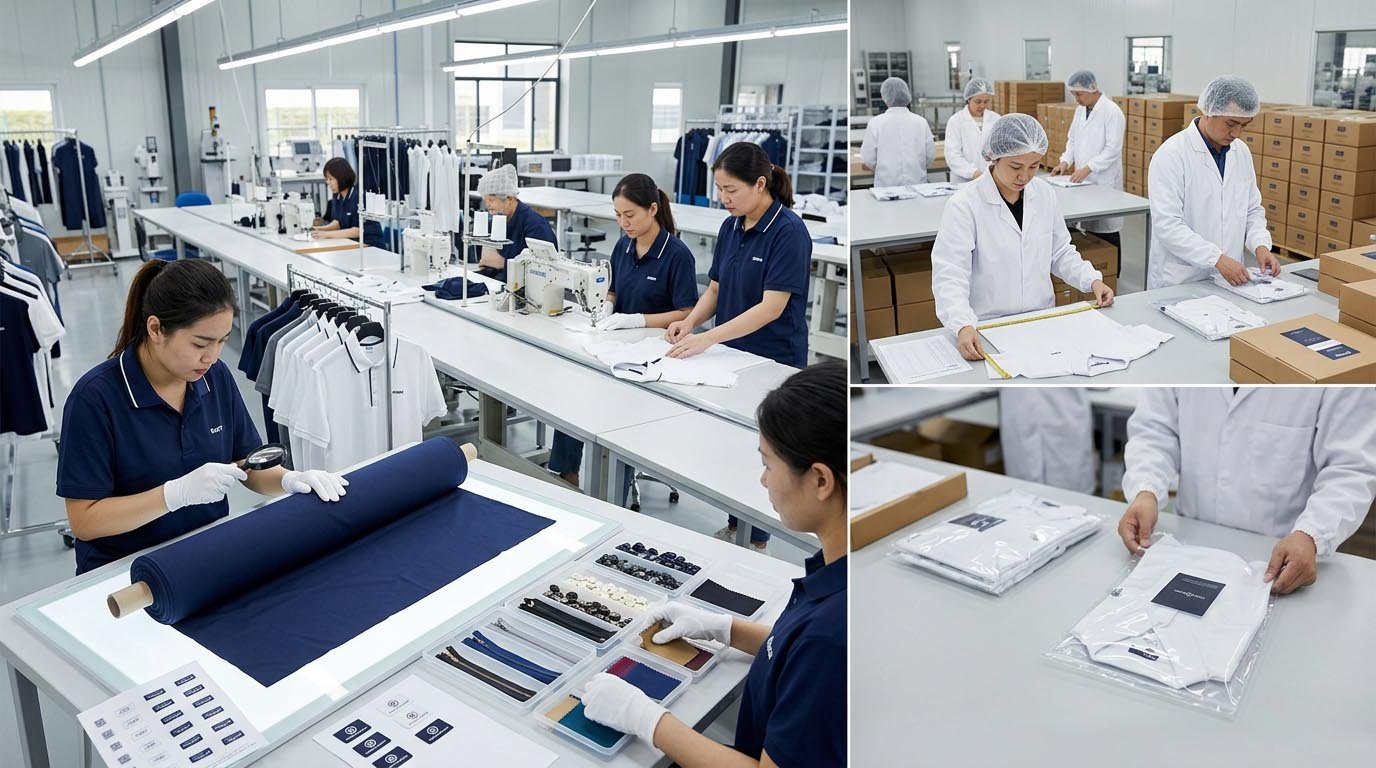
Stage 1: Incoming Fabric and Material Checks
Before cutting, the supplier should inspect important raw materials.
Depending on the order, this may include:
- Fabric appearance
- Color
- Fabric defects
- Shrinkage
- Hand feel
- Weight
- Trims
- Buttons
- Zippers
- Labels
Finding a problem here is far less expensive than finding it after production.
Stage 2: In-Line Production Checks
During production, the factory should monitor the areas that are most likely to create visible defects.
For golf apparel, these may include:
- Collar construction
- Placket shape
- Stitching
- Sleeve attachment
- Seam appearance
- Logo placement
- Embroidery quality
- Printing quality
- Measurements
- Labels
Early checks allow the production team to correct a problem before it affects an entire order.
Stage 3: Final Inspection
Before shipment, finished garments should be checked for:
- Measurements
- Appearance
- Workmanship
- Branding
- Loose threads
- Stains
- Packing
- Labels
- Quantity
- Carton information
The goal of QC is not simply to reject defective pieces.
A better quality system prevents the same defect from being repeated.
When performance claims such as color fastness, UV protection, or other fabric properties are important, ask what documentation is available. You can see an example of the type of evidence buyers may request on FUWAY’s test reports page.
How Do You Evaluate Customization and Private-Label Capability?
If you are building your own golf brand, supplier customization capability can be just as important as sewing quality.
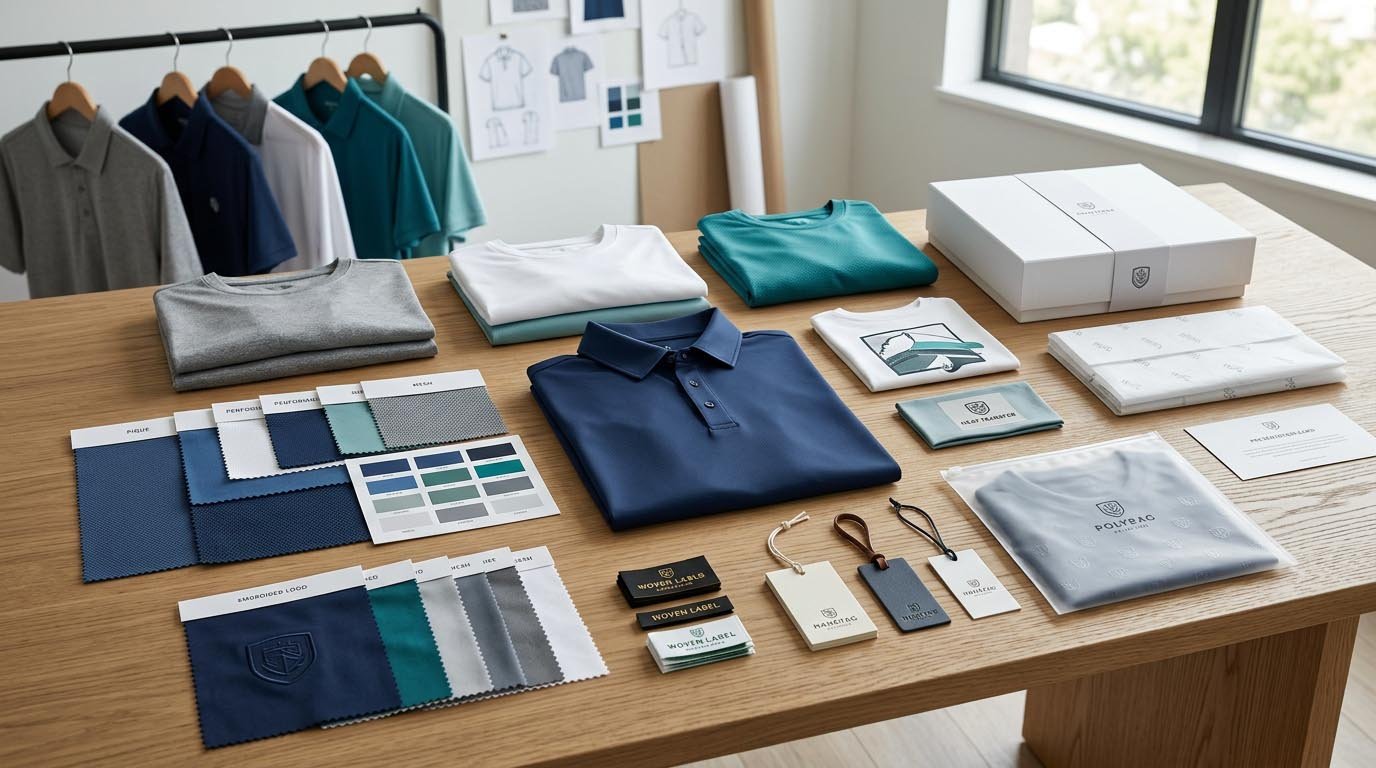
Depending on your collection, you may need:
Custom Fabrics
Including different:
- Compositions
- Weights
- Textures
- Stretch levels
- Performance finishes
Custom Colors
Ask whether the supplier supports:
- Stock fabric colors
- Custom dyeing
- Pantone references
- Multiple colorways
Embroidery
Embroidery works well for many chest logos, sleeve logos, and small premium brand marks.
Before finalizing artwork, review the supplier's golf apparel embroidery options and confirm how the design behaves on your selected fabric.
Screen Printing
Screen printing can be suitable for many graphic applications, depending on the fabric, artwork, and order quantity.
If your design includes printed logos or graphics, compare the available screen printing options before approving the final decoration method.
Sublimation
Sublimation is especially useful for polyester performance garments, all-over graphics, gradients, and complex repeat patterns.
Brands developing more graphic-heavy golfwear can review sublimation printing for golf apparel to understand where this process fits.
Heat Transfer
Heat transfer can be suitable for lightweight logos, inside labels, and certain modern branding applications.
Private Labels
These may include:
- Main labels
- Size labels
- Care labels
- Heat-transfer neck labels
- Hangtags
Custom Packaging
Depending on your sales channel, you may also need:
- Branded polybags
- Stickers
- Barcodes
- Hangtags
- Carton marks
If you want the garment, labels, trims, and packaging to carry your own branding, a complete private-label apparel service is usually more useful than simply purchasing blank wholesale garments.
The key is not whether the supplier offers “everything.”
The key is whether they can recommend the right process for your product.
How Should You Compare MOQ, Price, and Lead Time?
Price, MOQ, and lead time matter.
But they should never be evaluated separately from product requirements.
Low MOQ Is Useful — But Ask What It Includes
A lower MOQ can be ideal for:
- Startup golf brands
- New product launches
- Market testing
- New colorways
But ask whether the MOQ affects:
- Fabric selection
- Custom dyeing
- Printing
- Labels
- Packaging
- Unit price
A flexible MOQ is valuable when you understand the conditions behind it.
The Lowest Quote Is Not Automatically the Best Quote
When comparing quotations, check whether they include the same:
- Fabric
- Fabric weight
- Branding
- Labels
- Packaging
- Quality requirements
- Order quantity
- Shipping terms
Two quotations that look similar may actually describe different products.
Fast Lead Times Also Need Context
Ask whether the quoted timing includes:
- Material sourcing
- Sample development
- Sample revisions
- Pre-production approval
- Bulk manufacturing
- Final inspection
A realistic schedule is often more valuable than the fastest promise.
How Can You Verify a Wholesale Golf Apparel Supplier Before Ordering?
Supplier verification does not need to be complicated.
The goal is to collect enough evidence that the company can perform the work it promises.
1. Ask for Relevant Golf Apparel Examples
A supplier making casual T-shirts may not have the same experience with performance polos, golf bottoms, skorts, or technical fabrics.
Ask for products that are close to what you want to develop.
2. Request Factory or Production Evidence
Depending on the supplier and project, this may include:
- Factory photos
- Production videos
- Video calls
- Cutting areas
- Sewing lines
- Inspection areas
- Packing areas
You are not trying to judge a factory from how modern the building looks.
You are trying to confirm that there is a real production process behind the sales conversation.
3. Ask About Its Quality-Control Process
Do not accept:
“We always check quality.”
Ask:
- What do you inspect?
- When do you inspect it?
- Who records problems?
- What happens if defects are found?
Specific answers are more meaningful than general promises.
4. Ask for Relevant Test Information
If performance or safety claims matter to your product, ask what testing or documentation is available.
Examples may include:
- Fabric performance tests
- Color-fastness testing
- Shrinkage testing
- UV-related test reports
- Material safety information
Do not assume that every fabric automatically carries every performance claim.
A supplier willing to share relevant documentation or verified test reports gives you more evidence to evaluate than a supplier relying only on verbal claims.
5. Evaluate Communication During Sampling
Sampling is not only about the physical sample.
It is also a test of the supplier's working style.
Watch:
- Response speed
- Accuracy
- Attention to comments
- Problem-solving
- Whether questions are understood
- Whether risks are raised early
If communication is already difficult before you place an order, bulk production rarely makes it easier.
Should You Test a Supplier With a Pilot Production Run?
For a new supplier, one of the best ways to reduce risk is to place a manageable first order rather than immediately committing your entire inventory budget.
A useful pilot product should be a real product that represents the kind of work you expect the supplier to handle.
For example:
A custom performance golf polo with:
- Your selected fabric
- Custom color
- Brand logo
- Custom label
- Your required measurements
- Your required packaging
This allows you to evaluate the full process:
Requirement clarification → fabric selection → sampling → revisions → approval → bulk production → QC → packing
What Does a Pilot Order Tell You?
It helps you evaluate:
Communication
Do questions get answered clearly?
Sampling
Does the supplier understand your product?
Technical Execution
Can the factory reproduce the approved design?
Production Consistency
Does the bulk order resemble the approved sample?
Quality Control
Are problems found before shipment?
Schedule Management
Does the supplier keep you informed when something changes?
Problem-Solving
How does the supplier react when an issue occurs?
Real production teaches you more than a catalog ever can.
What Questions Should You Ask Wholesale Golf Apparel Suppliers?
Before choosing a supplier, ask questions that reveal how its production system works.
Here are 15 useful questions.
Product and Experience
-
How much experience do you have producing golf apparel?
-
Can you show products similar to the style I want to develop?
MOQ
-
What is your MOQ per style and color?
-
Can the MOQ change depending on fabric or customization?
Fabric
-
Can you source custom performance fabrics?
-
How do you make sure bulk fabric matches the approved sample?
Sampling
-
How long does sample development normally take?
-
How do you handle sample revisions?
Production
-
How are approved specifications transferred to bulk production?
-
Do you use a pre-production approval process before the full order begins?
Quality
-
What inspections happen during production?
-
How do you control measurements, color, stitching, and branding?
Customization
- Which embroidery, printing, labeling, and packaging options are available?
Lead Time
- What is the normal production timeline after sample approval?
Problems
- What happens if the bulk products do not match the approved specifications?
The quality of the answers can tell you almost as much as the answers themselves.
What Are the Biggest Red Flags When Choosing a Golf Apparel Supplier?
Not every warning sign means you should immediately reject a supplier.
But several warning signs together should make you investigate further.
Extremely Low Pricing Without Explanation
A lower price can be legitimate.
But the supplier should be able to explain why.
Unrealistically Fast Promises
Custom development involves several steps.
Be cautious when every request receives an immediate:
“No problem.”
Vague Fabric Information
“100% premium performance fabric” is not a useful specification.
You need clearer information about composition, weight, stretch, construction, and performance.
No Clear QC Process
Final inspection alone is not a complete quality system.
Poor Communication During Sampling
Small communication problems often become larger during production.
Constantly Changing Information
MOQ, pricing, production timing, or specifications should not change repeatedly without a reasonable explanation.
Reluctance to Show Production Evidence
A legitimate supplier should usually be able to provide reasonable evidence about how the order will be produced.
How Should a Startup Golf Brand Choose Its First Supplier?
Startups face a different sourcing problem from large established brands.
You may need:
- Lower quantities
- More development support
- Flexible customization
- Fabric guidance
- Faster communication
- Help translating an idea into a production-ready garment
This means the biggest supplier is not necessarily the best supplier for you.

A good startup-focused partner should understand that your first order is also part of product development.
You may still be testing:
- Fit
- Customer preference
- Colors
- Logo size
- Price positioning
- Fabric
- Product-market fit
Look for a partner that can grow with you rather than simply offering the lowest price on your first purchase order.
If you already have a design, tech pack, or reference garment and want to discuss development, you can contact FUWAY with your project details.
FAQ About Wholesale Golf Apparel Suppliers
What Is a Wholesale Golf Apparel Supplier?
A wholesale golf apparel supplier provides golf clothing in commercial quantities to brands, retailers, distributors, event businesses, and other B2B buyers.
Some suppliers manufacture products themselves, while others source them from partner factories.
Is a Golf Apparel Manufacturer the Same as a Wholesaler?
Not necessarily.
A manufacturer produces garments, while a wholesaler generally sells products that already exist.
A manufacturer is usually more suitable for private-label and fully customized golf apparel.
Should I Choose the Supplier With the Lowest MOQ?
Not automatically.
MOQ needs to be considered together with fabric options, customization, quality, unit cost, and future scalability.
Is a Good Sample Enough to Trust a Supplier?
No.
A sample proves that the supplier can make that sample.
It does not automatically prove that the same specifications can be reproduced consistently across bulk production.
Ask how the supplier manages the transition from approved sample to mass production.
What Should I Check in a Golf Polo Sample?
Check areas such as:
- Fabric
- Fit
- Measurements
- Collar shape
- Placket
- Sleeve shape
- Stitching
- Logo size
- Logo position
- Labels
- Color
- Washing performance
If you are developing a polo specifically for your own brand, reviewing a factory's custom golf polo manufacturing options can also help you compare available fabrics, construction, and branding possibilities.
How Can I Verify a Golf Apparel Supplier?
Review relevant products, ask about production processes, inspect samples, request appropriate factory evidence, understand the QC system, review relevant testing documentation, and evaluate communication throughout product development.
Should I Place a Trial Order With a New Supplier?
For many brands, starting with one manageable real production order is a practical way to test communication, product development, production consistency, quality control, and delivery performance before scaling.
What Is the Most Important Factor When Choosing a Supplier?
Repeatability.
The real question is whether the supplier can repeatedly manufacture the product you approved—not simply whether it can make one attractive sample.
Final Checklist: Choosing the Right Wholesale Golf Apparel Supplier
Before placing your first bulk order, confirm that you understand:
- [ ] Their golf apparel experience
- [ ] Whether they manufacture, source, wholesale, or distribute
- [ ] Their MOQ structure
- [ ] Their fabric sourcing process
- [ ] Their customization capabilities
- [ ] Their sampling process
- [ ] Their sample-to-bulk handoff
- [ ] Their production workflow
- [ ] Their QC stages
- [ ] Their test-report capabilities where relevant
- [ ] Their lead time
- [ ] Their communication process
- [ ] Their packaging capabilities
- [ ] Their process for handling quality problems
- [ ] Whether you should begin with a pilot order
Conclusion
Choosing among wholesale golf apparel suppliers is ultimately a risk-management decision.
Price, MOQ, and lead time matter, but none of them can compensate for inconsistent bulk production.
Focus on the supplier's ability to control fabric, transfer approved specifications into production, manage quality during manufacturing, communicate clearly, and reproduce your approved product consistently.
Do not choose a partner because they made one impressive sample.
Choose the partner that has a system for making the next 100, 500, or 1,000 pieces look like that sample too.
If you are looking for a partner for custom polos, private-label golfwear, fabric sourcing, branding, or bulk production, you can contact FUWAY to discuss your project.